About this sheet
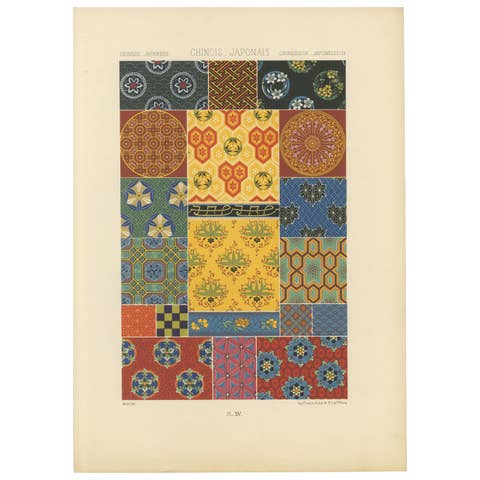
Middle Ages Geometric Tiles – Antique Print of Medieval Mosaic Patterns, c.1869
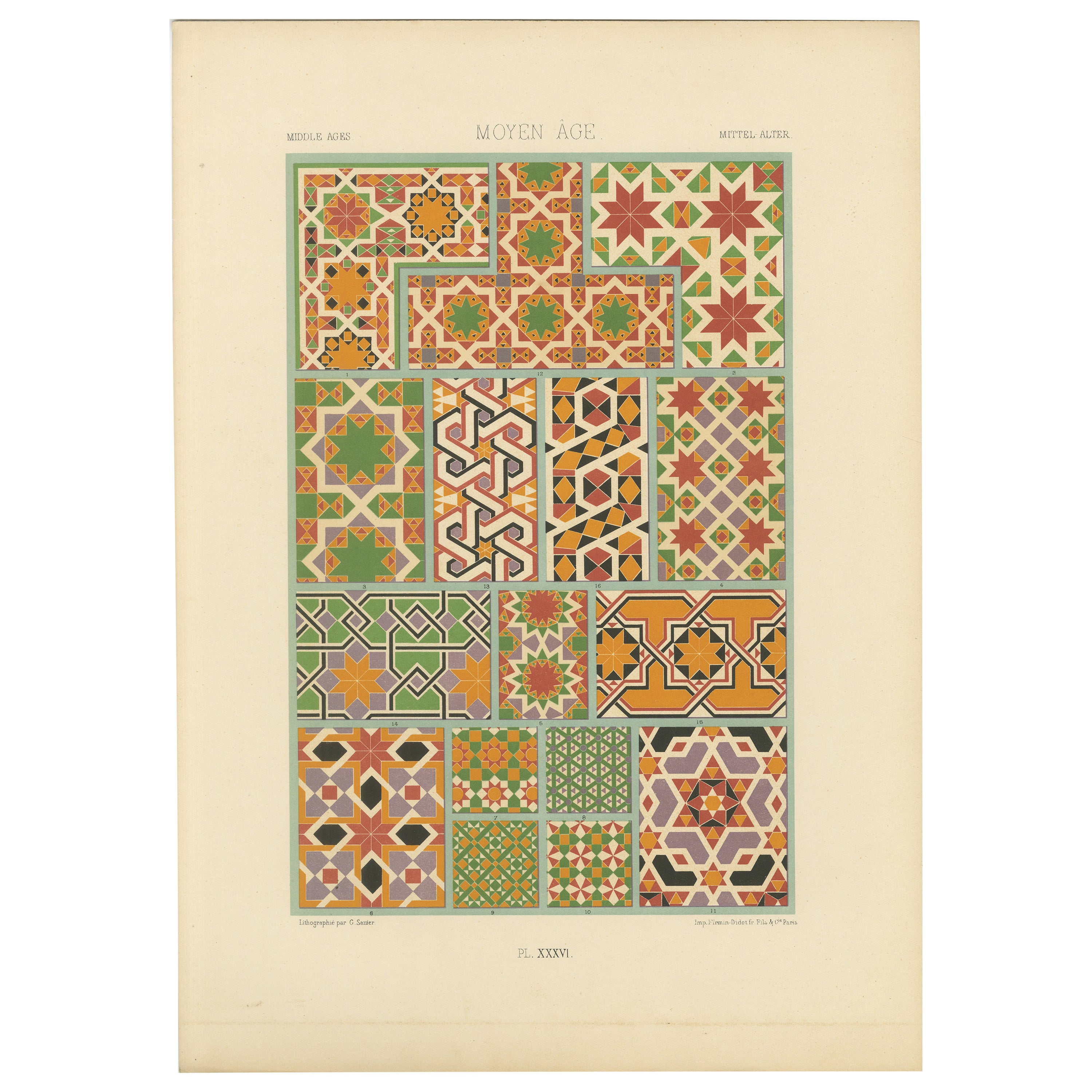
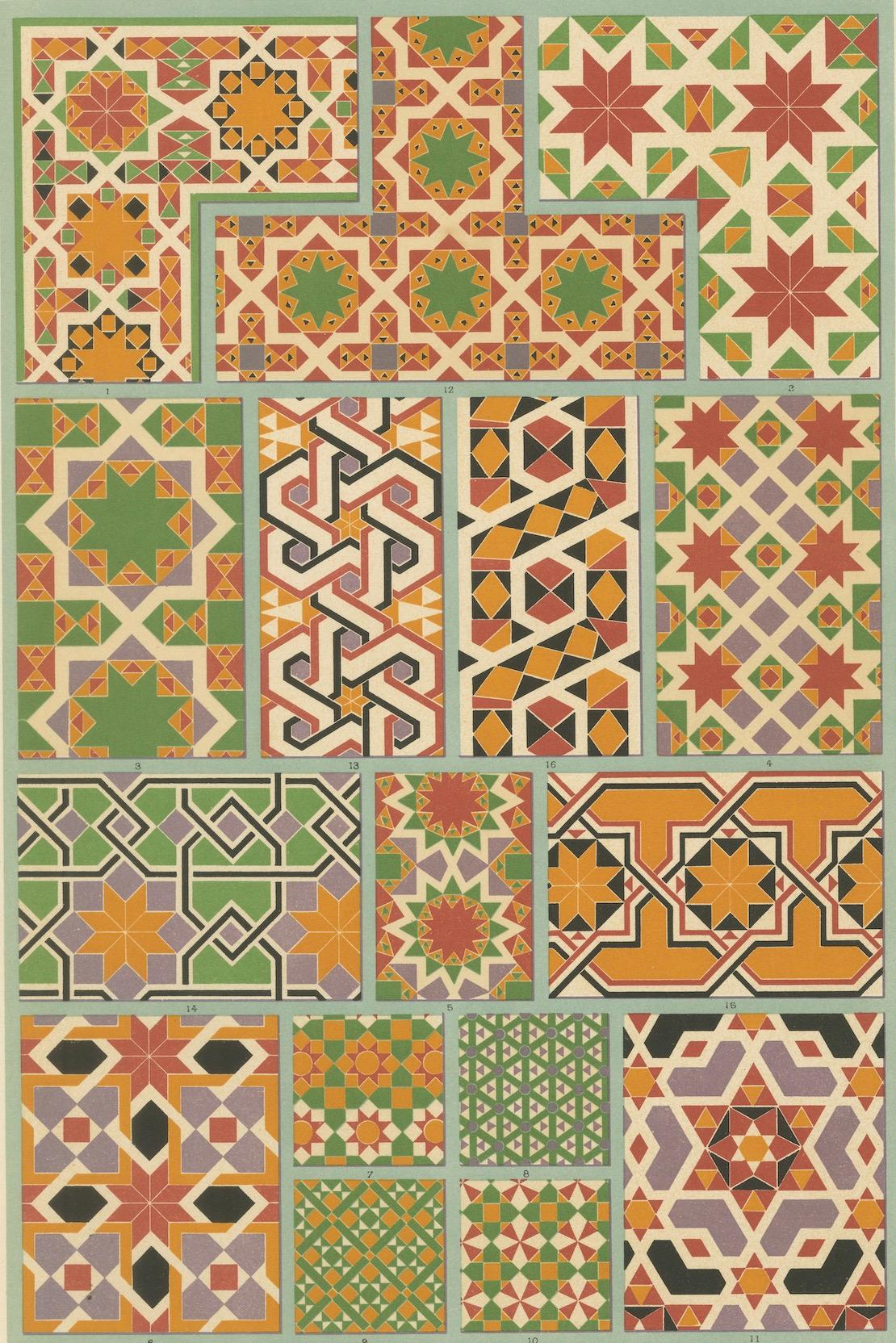
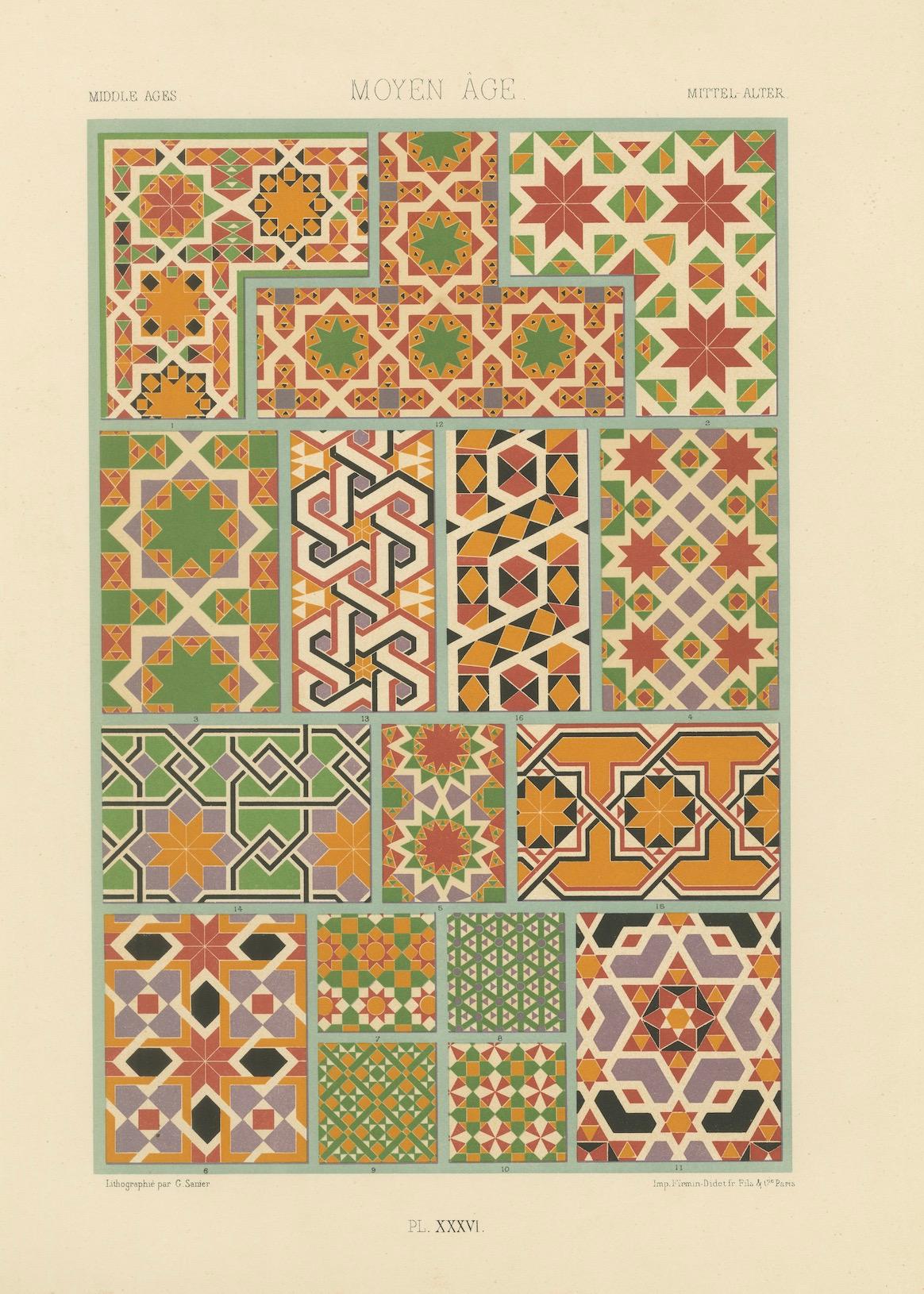
This striking chromolithograph from Plate XXXVI of L'Ornement Polychrome showcases a brilliant array of medieval geometric tile patterns, primarily influenced by Islamic and Moorish decorative traditions that flourished across the Mediterranean during the Middle Ages. These intricate designs demonstrate the mathematical precision and aesthetic complexity that made medieval mosaic work a cornerstone of architectural ornament.
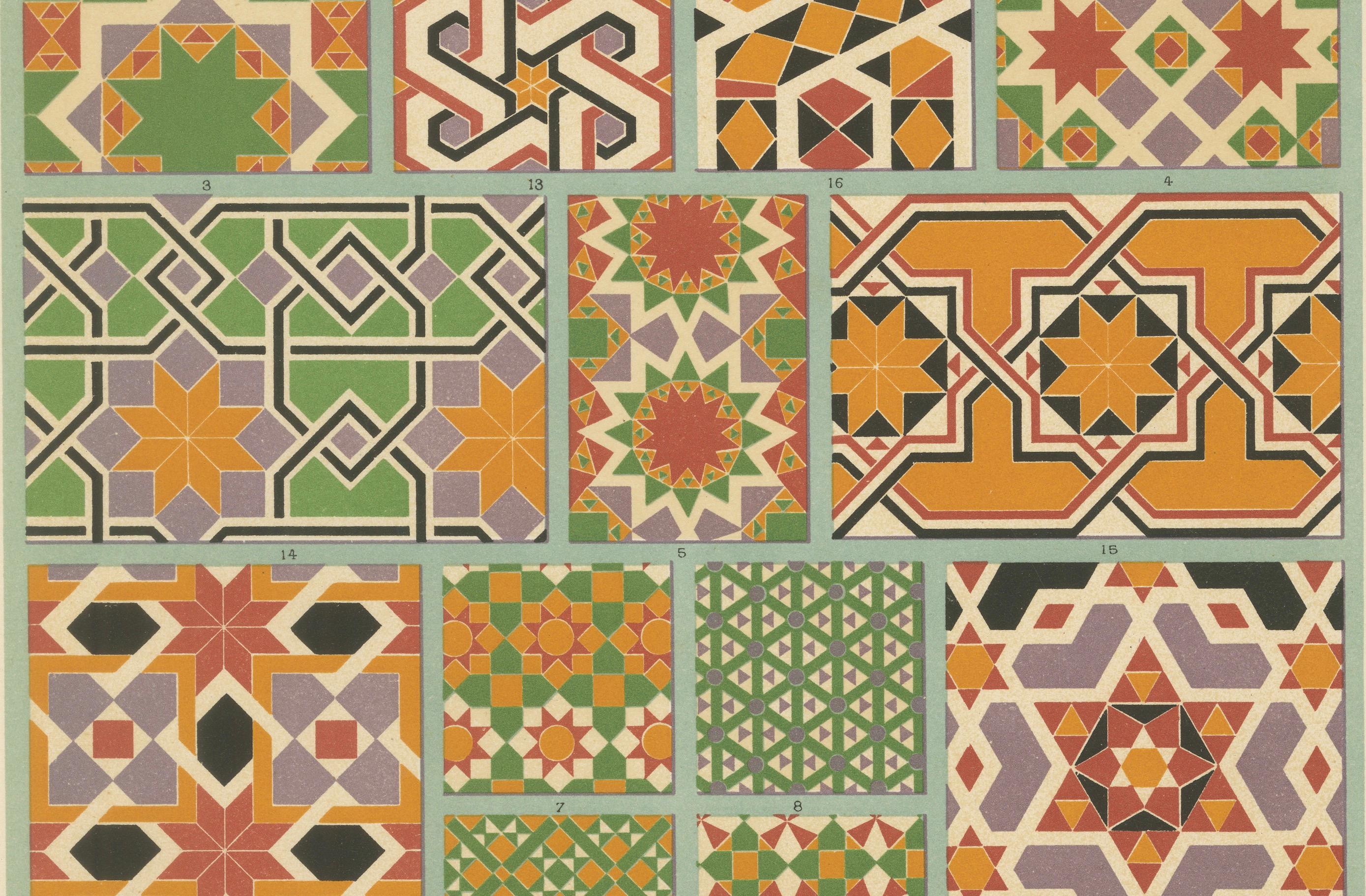
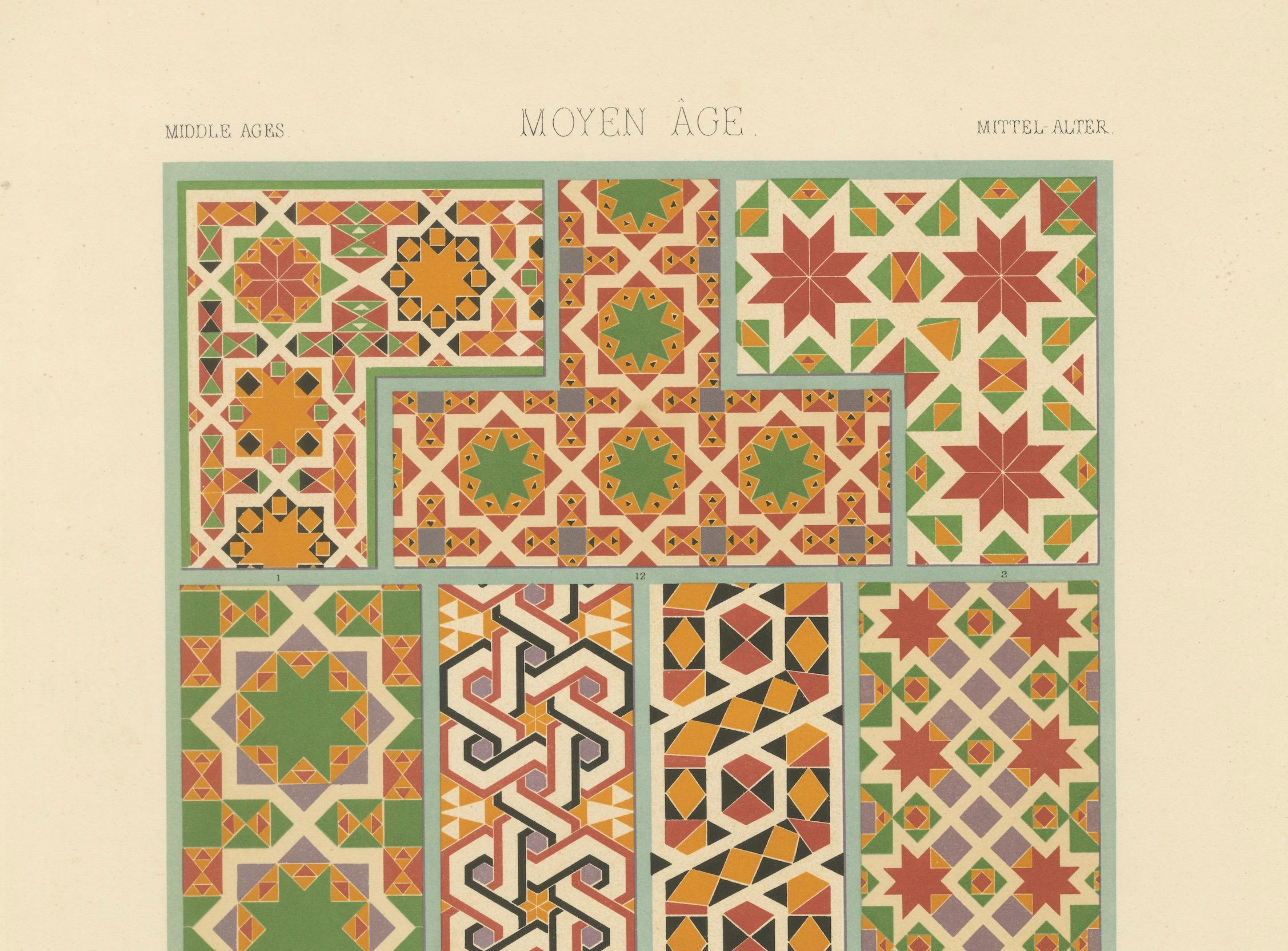
Set against a soft cream background, each tile panel bursts with vivid color and crisp symmetry. The palette—featuring ochre, black, red, green, lavender, and white—contributes to the bold visual rhythm of the composition. Many of the panels exhibit eight-pointed star motifs, interlacing patterns, and tessellated polygons reminiscent of those found in Moorish Spain (notably the Alhambra in Granada) and medieval Islamic architecture in North Africa and the Middle East.
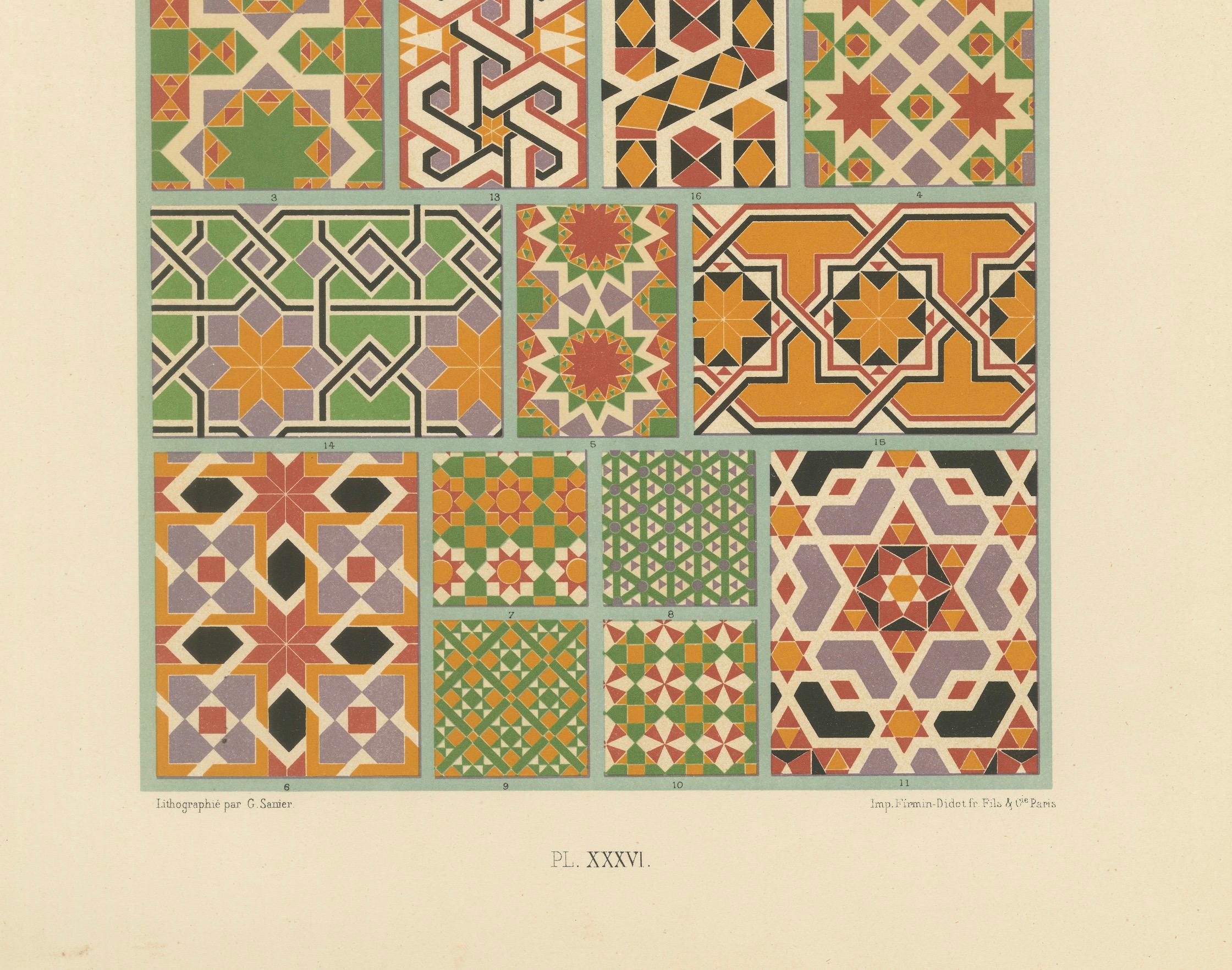
The upper section of the print is dominated by star and rosette designs enclosed within square and octagonal frames, while the middle portion introduces a more dynamic flow with interlocking linear elements and knot-like motifs. The lower row emphasizes rotational symmetry and smaller tessellated elements, suggesting their use in floor tiling, ceramics, or decorative wall panels.
Produced in Paris by Firmin-Didot in the late 1860s, this plate was lithographed by G. Süsser and forms part of Albert Racinet’s influential visual encyclopedia of historic ornamental styles. Racinet’s *L'Ornement Polychrome* was widely used by architects, designers, and artisans of the 19th century to inspire Neo-Gothic, Orientalist, and revivalist interiors.
This captivating print will appeal to lovers of geometric design, tilework, and historical architecture. It also serves as a valuable reference for contemporary designers interested in historical pattern systems.
Condition: Excellent condition. Rich, even color impression and clean margins. Slight marginal age-toning but no tears, folds, or repairs.
Framing tips: Frame with a thin black or walnut molding and a soft cream or light sage green mat to highlight the complex geometry and vivid color palette.
Technique: Chromolithograph
Maker: Firmin-Didot, Paris, after Albert Racinet, c.1869