About this sheet
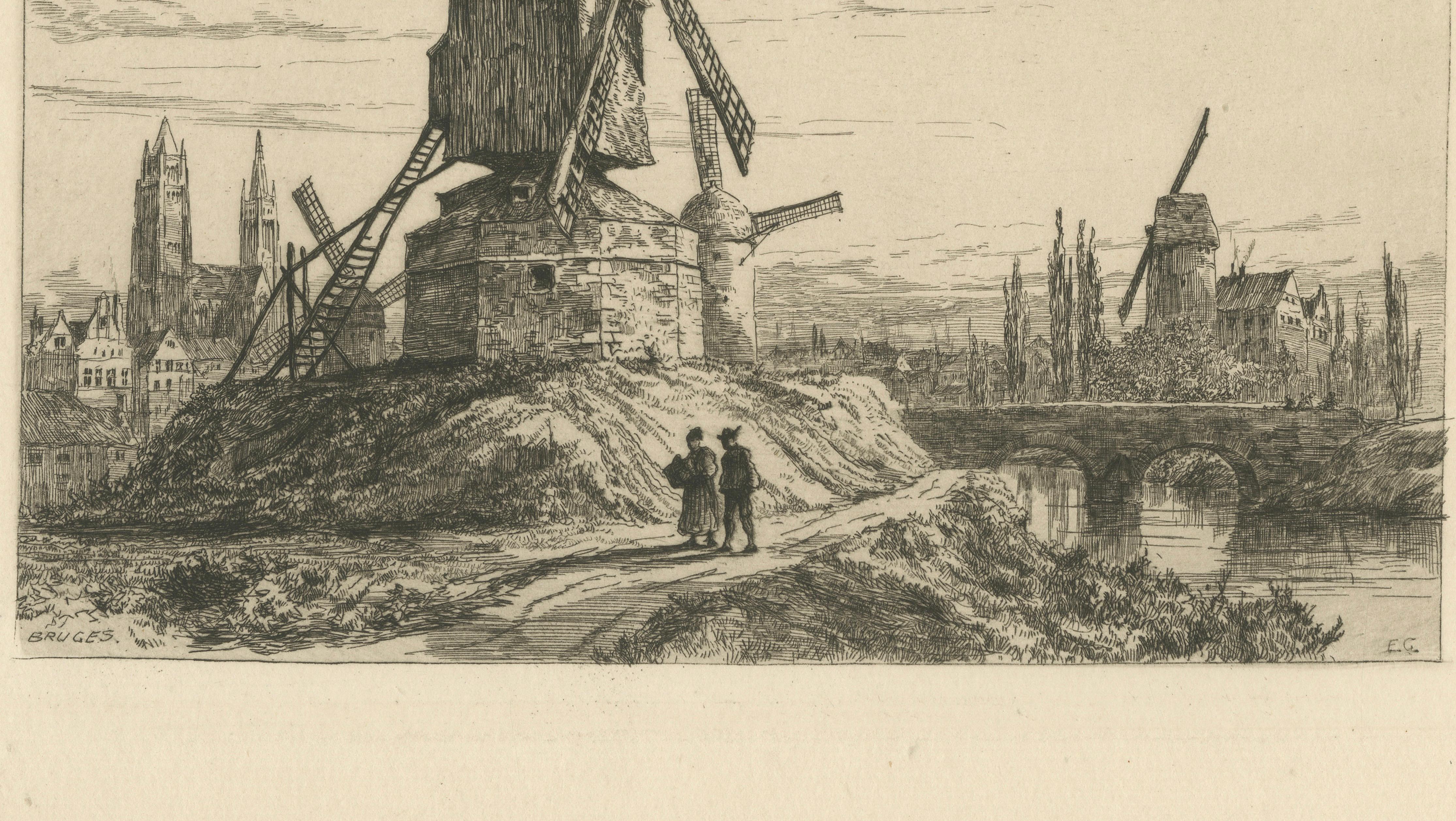
Antique Etching of Bruges Windmills and Canal Bridge – Ernest George, 1876
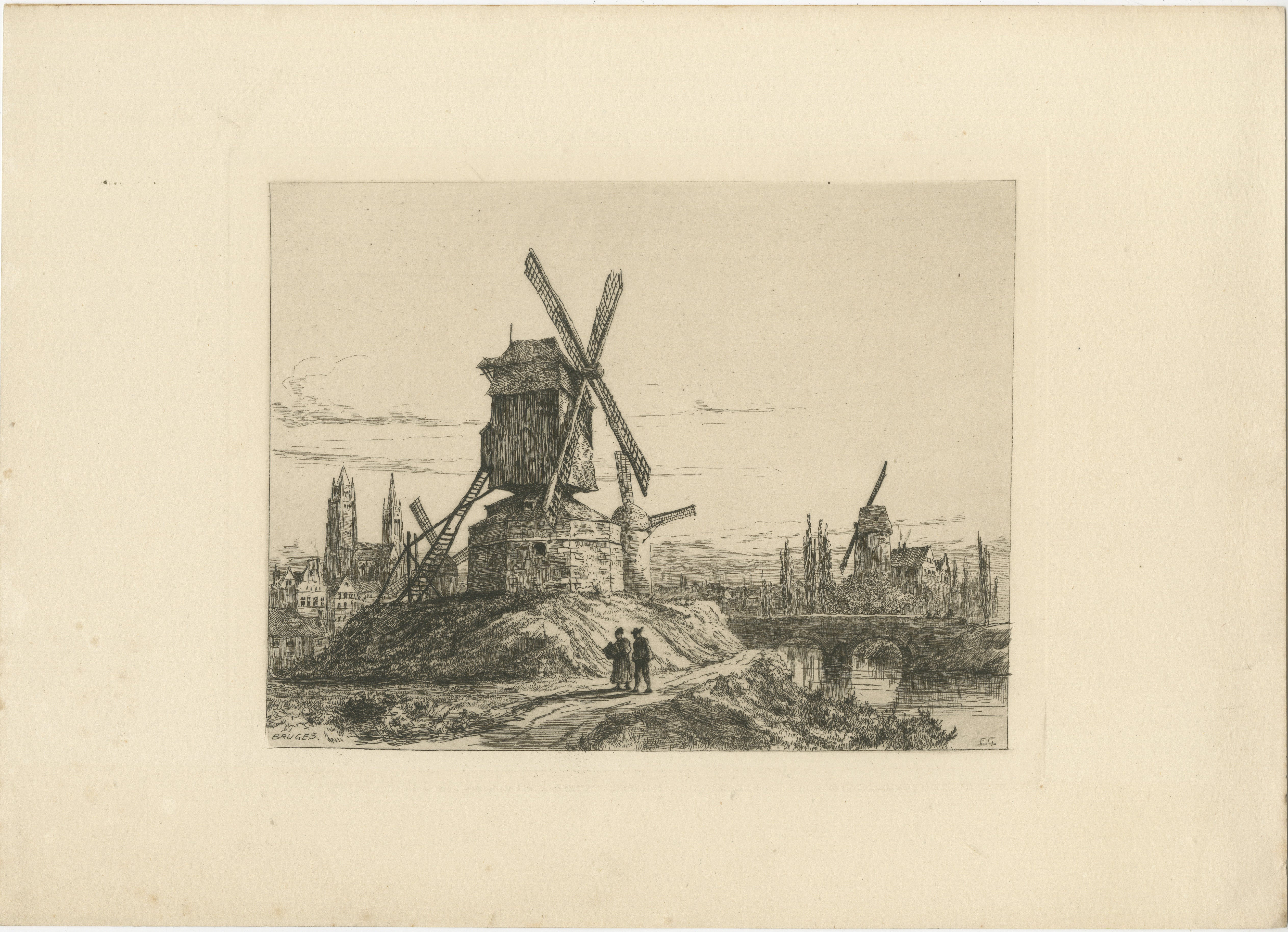
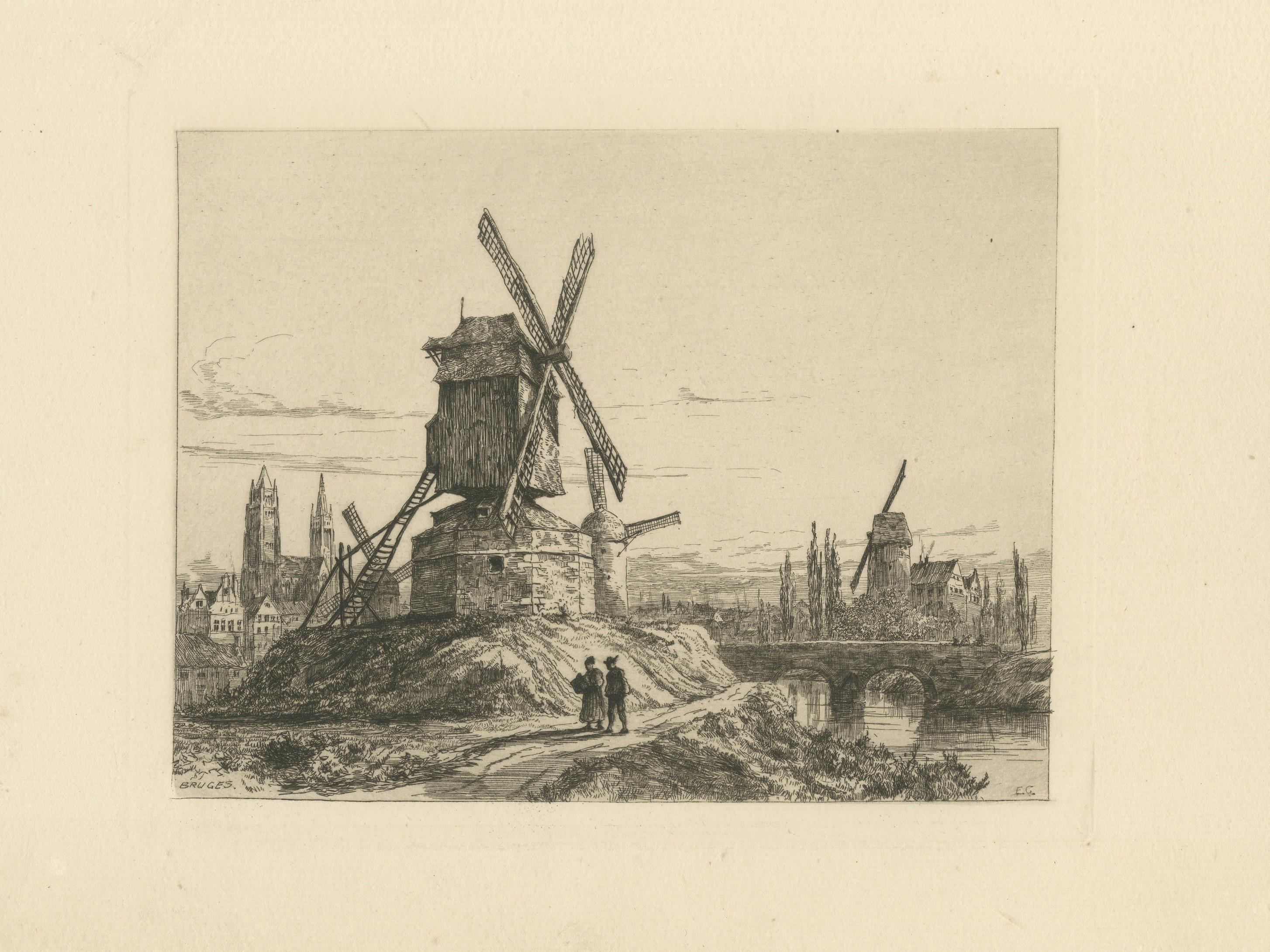
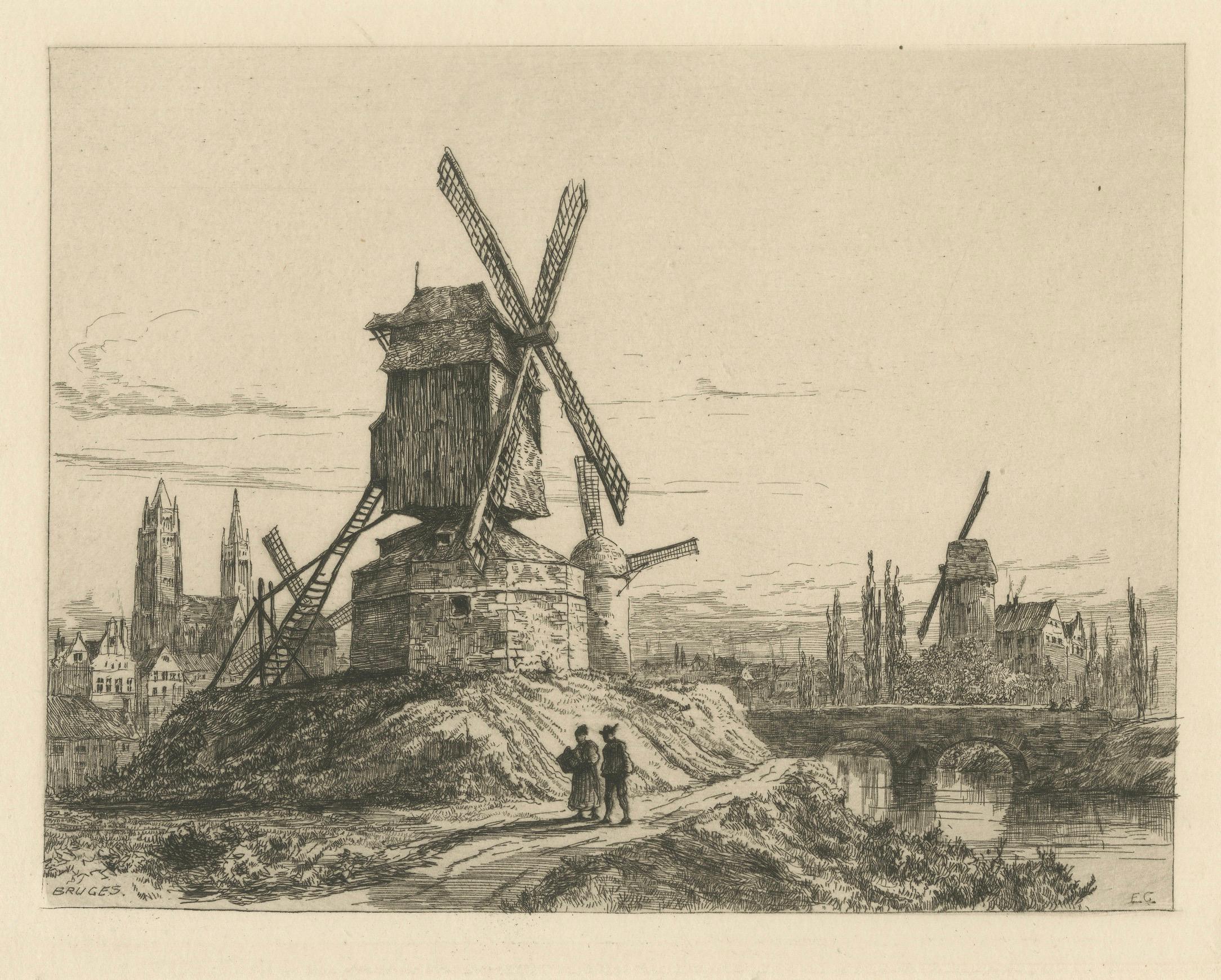
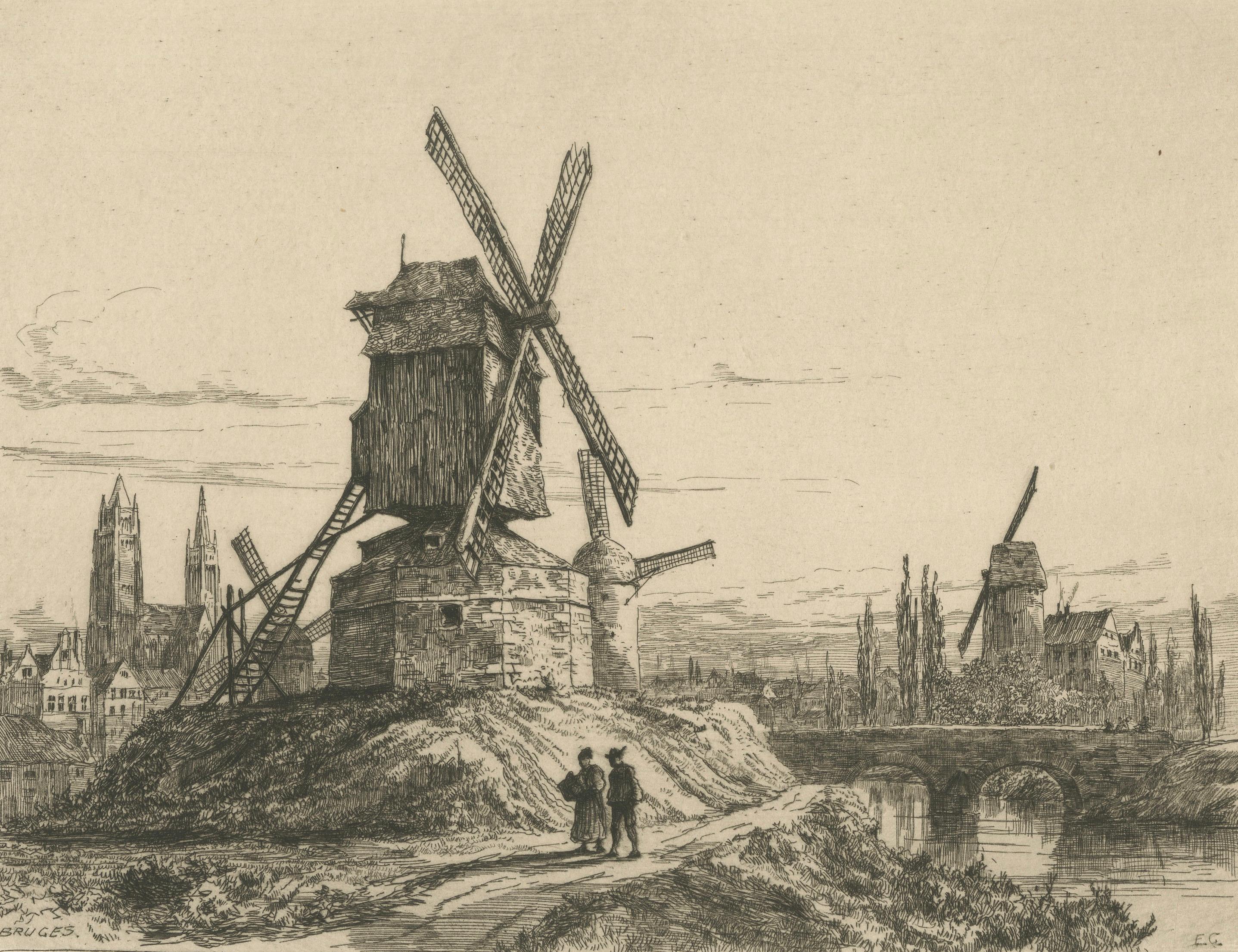
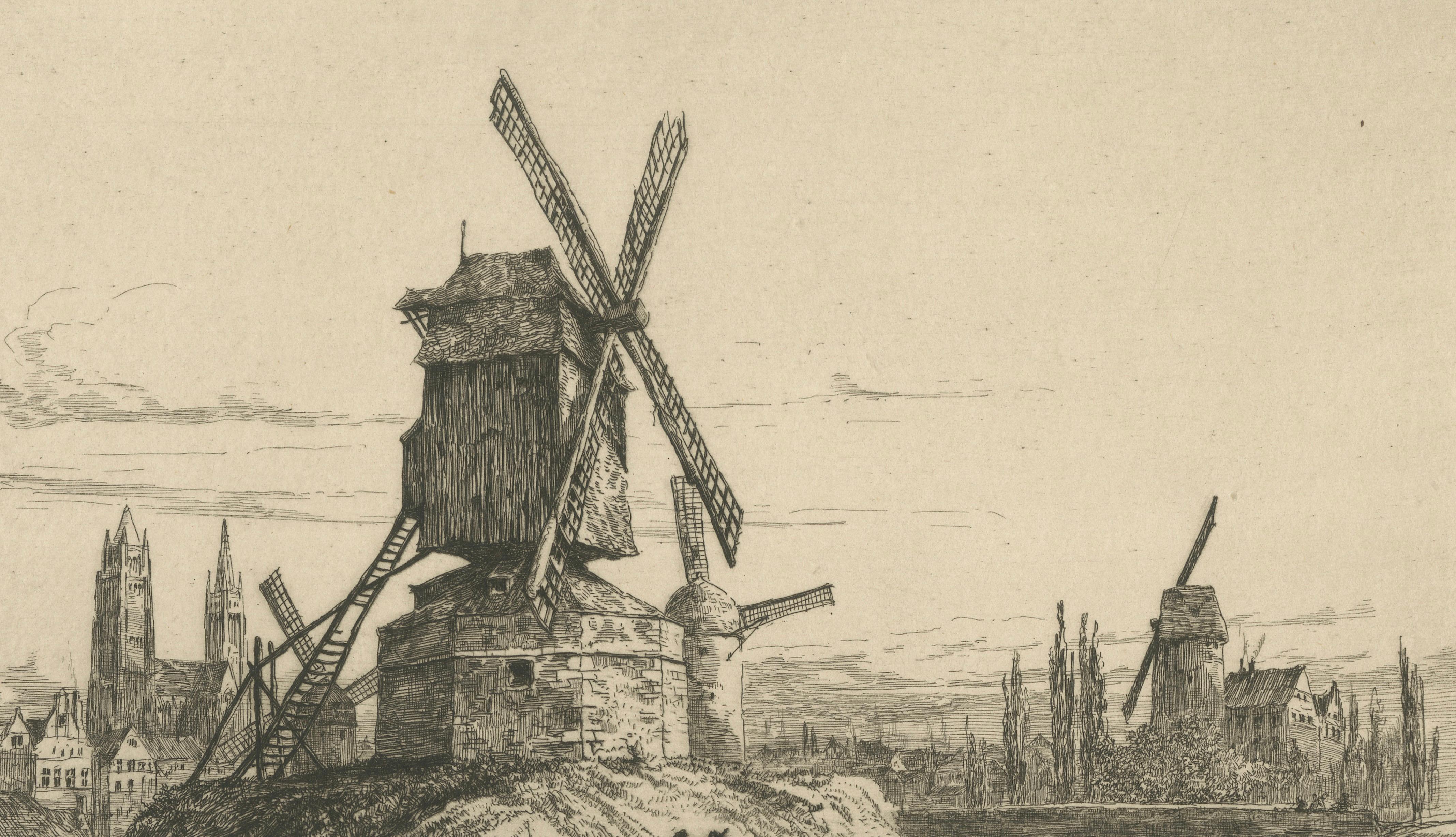
This atmospheric 19th-century architectural landscape etching depicts the historic city of Bruges (Brugge), Belgium, with its iconic windmills overlooking the canals and medieval skyline. The composition centers on a large wooden post windmill standing on an earthen mound in the foreground, a typical feature of the defensive ramparts surrounding Bruges. Nearby figures walking along the path provide scale and a sense of daily life, while a small bridge crosses a calm waterway to the right.
Beyond the windmill, the historic skyline of Bruges rises in the distance. The distinctive towers of the city’s churches and civic buildings are visible above the rooftops, evoking the rich medieval heritage for which Bruges is famous. Additional windmills can be seen further along the ramparts, reinforcing the historical identity of the city as a center of milling and trade during the late medieval and early modern periods.
The etching was created by Sir Ernest George (1839–1922), the renowned British architect and artist. George was one of the most respected architects of the late Victorian period and an important figure in the revival of etching during the 19th century. Alongside his architectural practice, he produced numerous etchings and watercolors depicting historic European cities, landscapes, and architectural monuments. His works are valued for their delicate linework, careful observation of architectural detail, and their ability to capture the atmosphere of historic places.
This particular print was produced around 1876 and published in London in *The Portfolio: An Artistic Periodical*, issued by Seeley, Jackson & Halliday. The journal was known for publishing high-quality original prints by leading artists of the period, making these works both historically significant and collectible examples of the Victorian etching revival.
George’s etching technique is evident in the fine network of lines used to model the wooden structure of the windmill, the textured stone bridge, and the distant cityscape. The composition balances the monumental presence of the windmill with the serene canal landscape, creating a picturesque and historically evocative scene that reflects the Romantic fascination with medieval European towns during the 19th century.
Condition: Good antique condition with light age-related toning to the margins and a few scattered spots in the wide margins. The plate mark is visible, confirming the original intaglio printing process. The printed image remains clear with strong etched lines.
Framing tips: This print displays beautifully in a dark walnut or black frame with a wide ivory or museum-white mat. The generous margins allow for elegant framing, making the delicate etched lines stand out while giving the piece a refined gallery presentation suitable for classic interiors, libraries, or European-inspired spaces.
Technique: Etching
Maker: Sir Ernest George, England, circa 1876