About this sheet
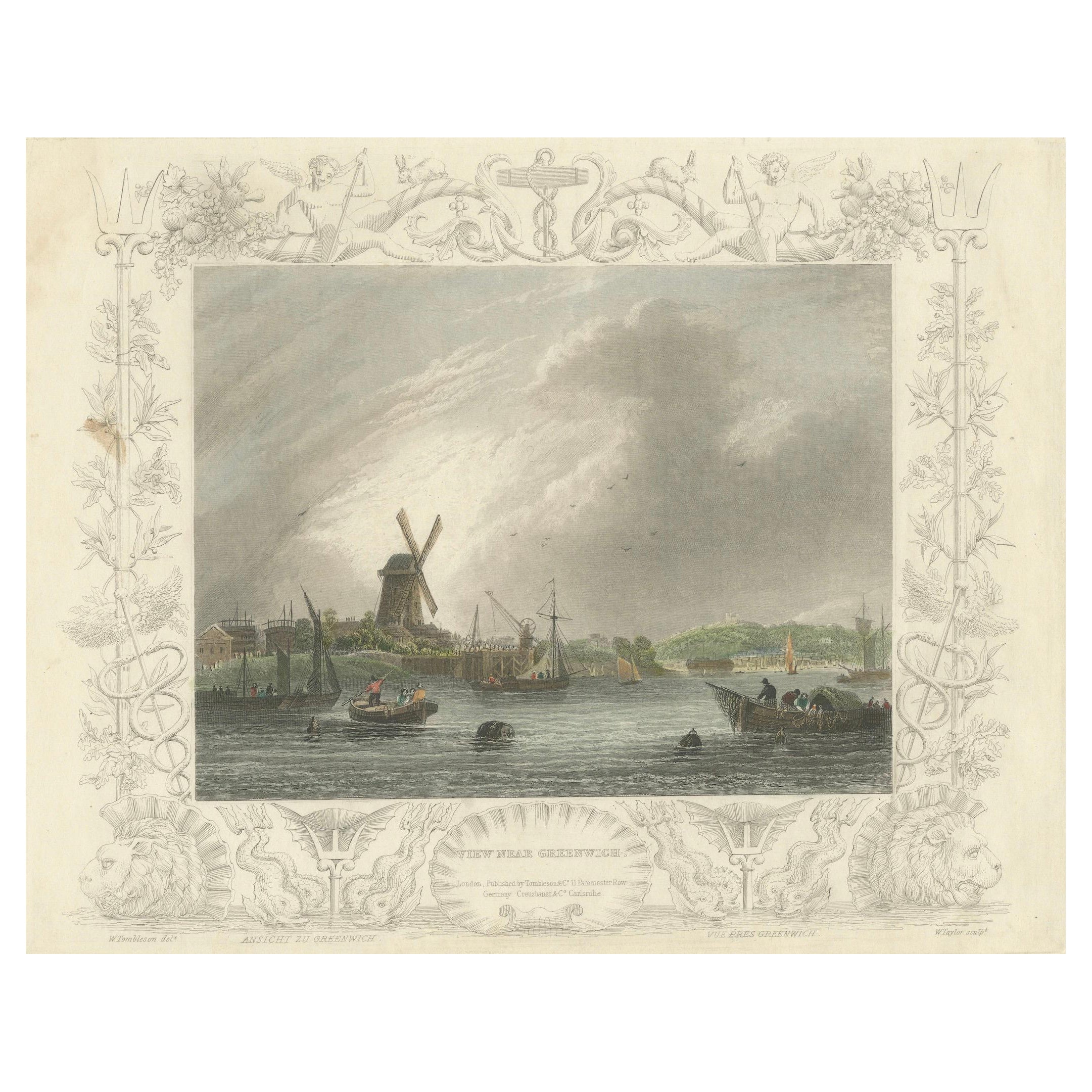
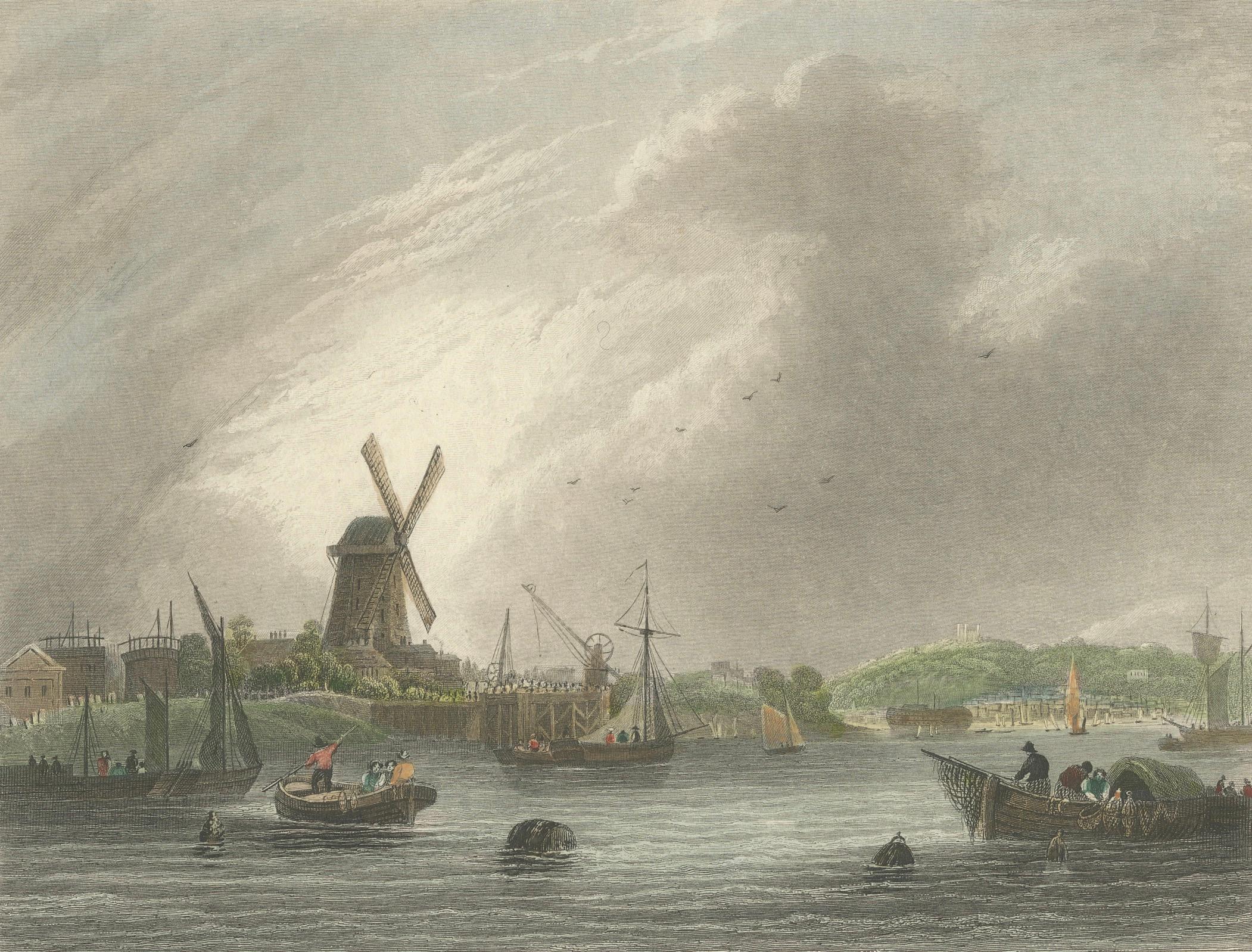
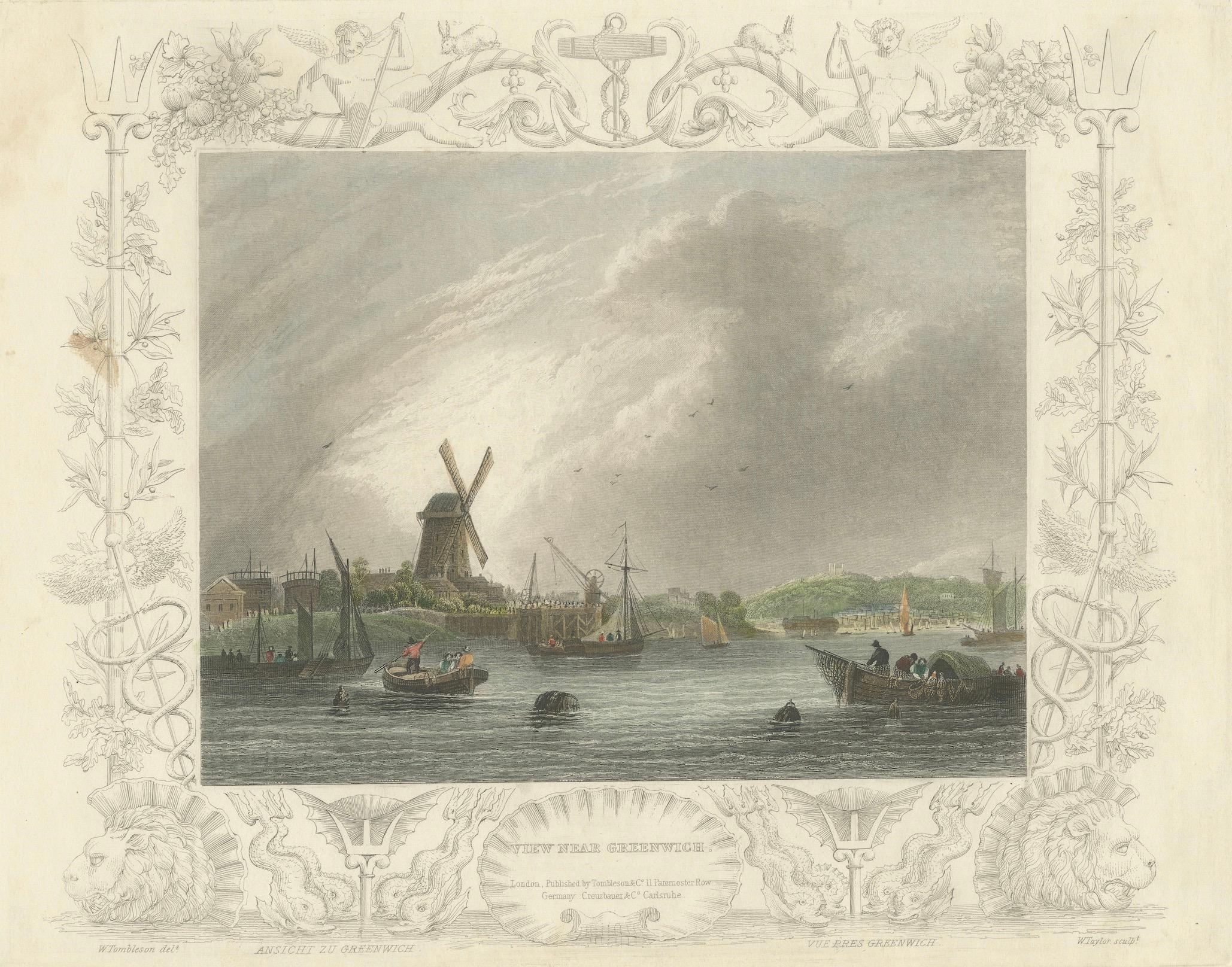
This captivating antique print offers a stunning view of Greenwich, a historic district along the River Thames, as it appeared in the early 19th century.
Published in 1828, the artwork was created by Frederick Christian Lewis, a distinguished British engraver celebrated for his detailed and atmospheric depictions of landscapes and architecture.
Lewis utilized the aquatint technique, an etching method that produces soft, tonal gradations, lending the print a delicate, watercolor-like quality that enhances its evocative mood.
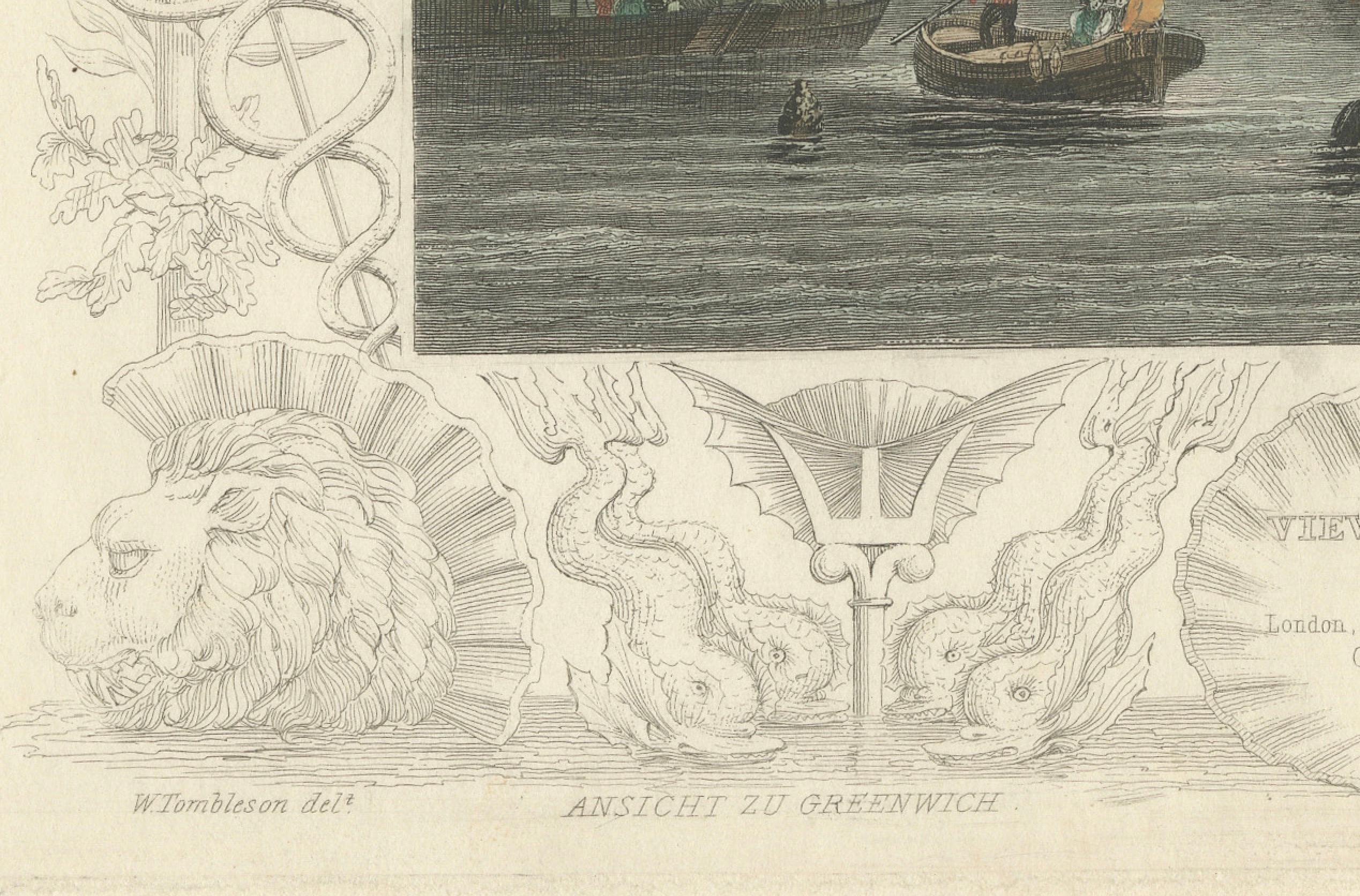
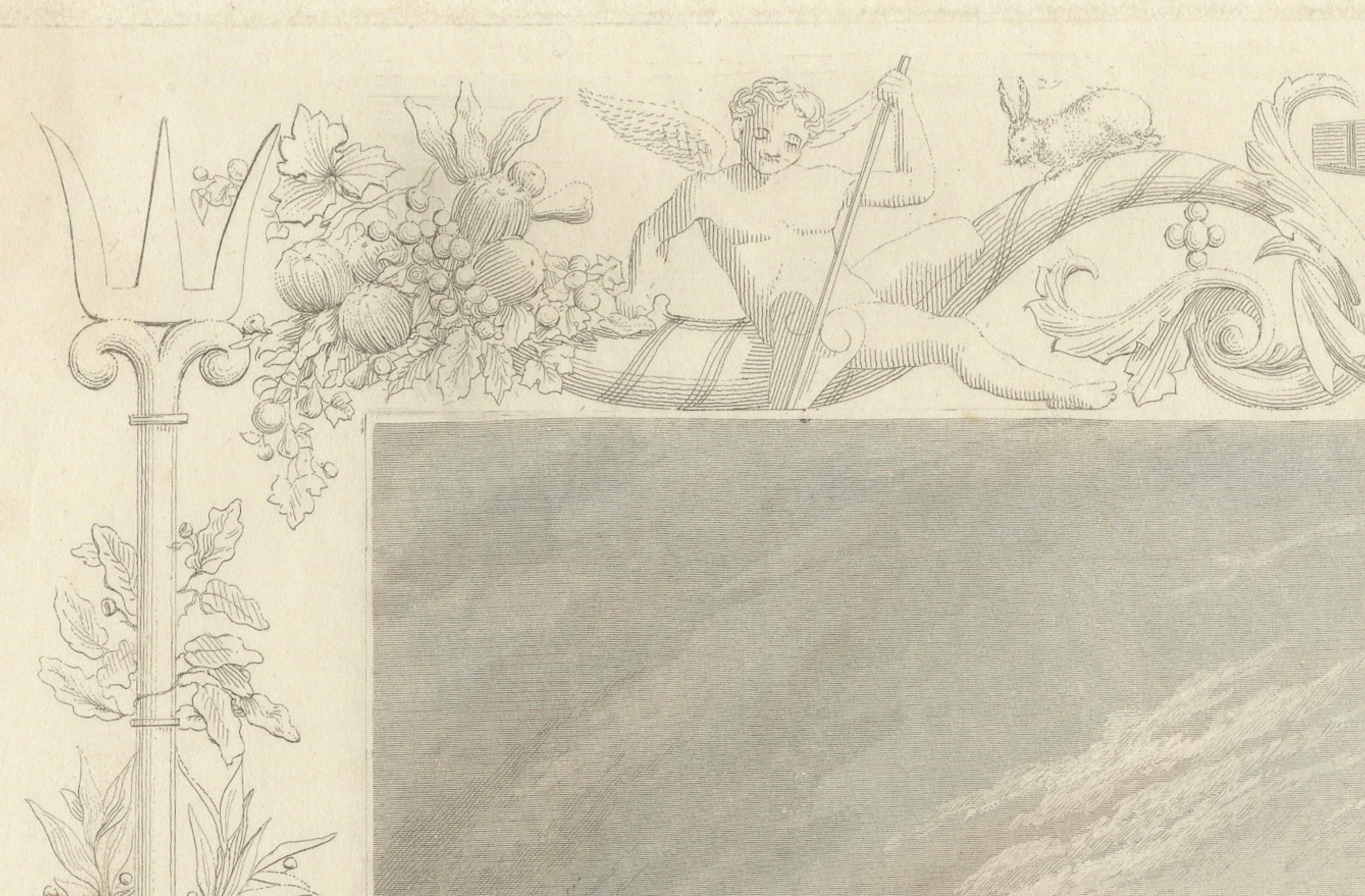
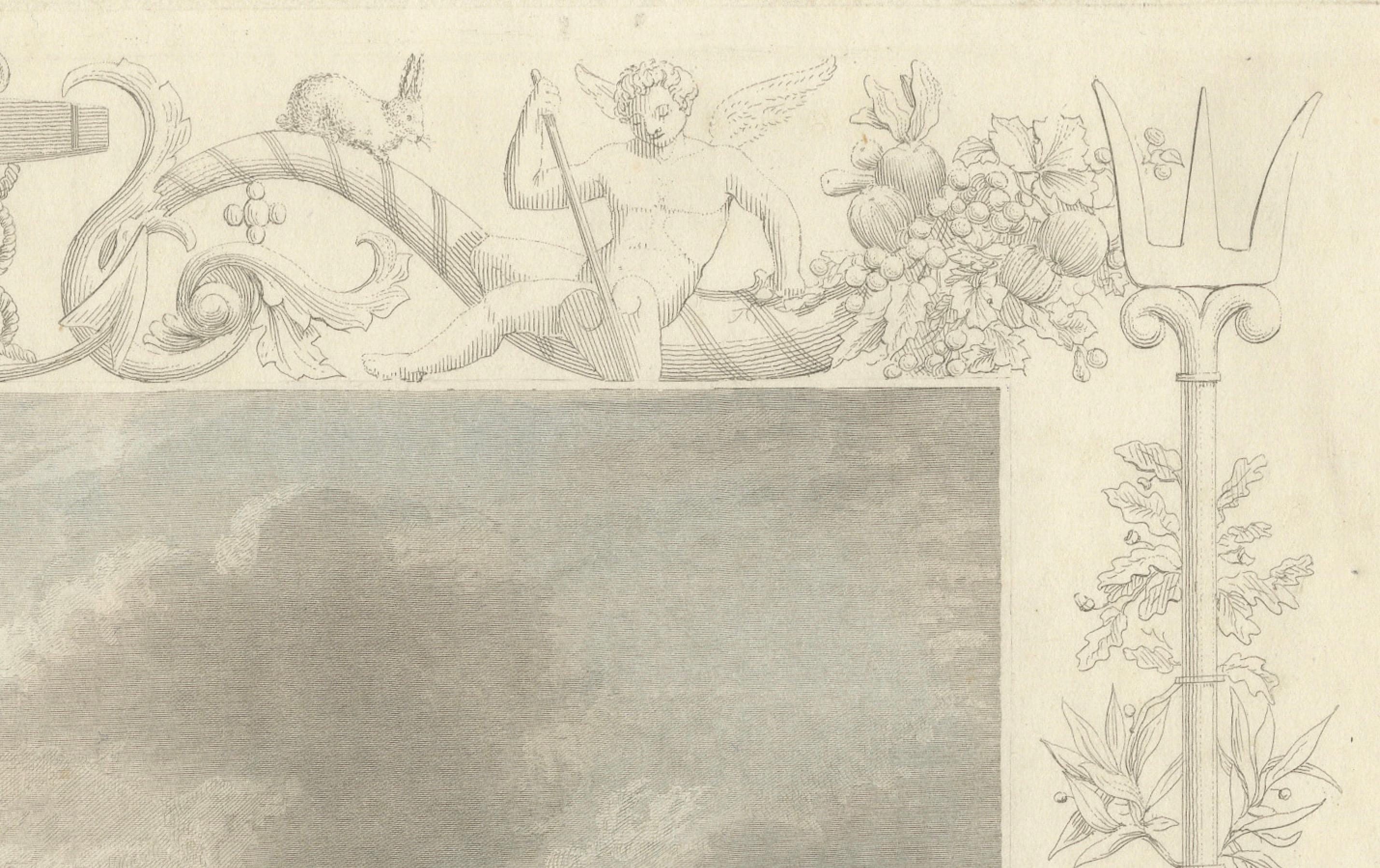
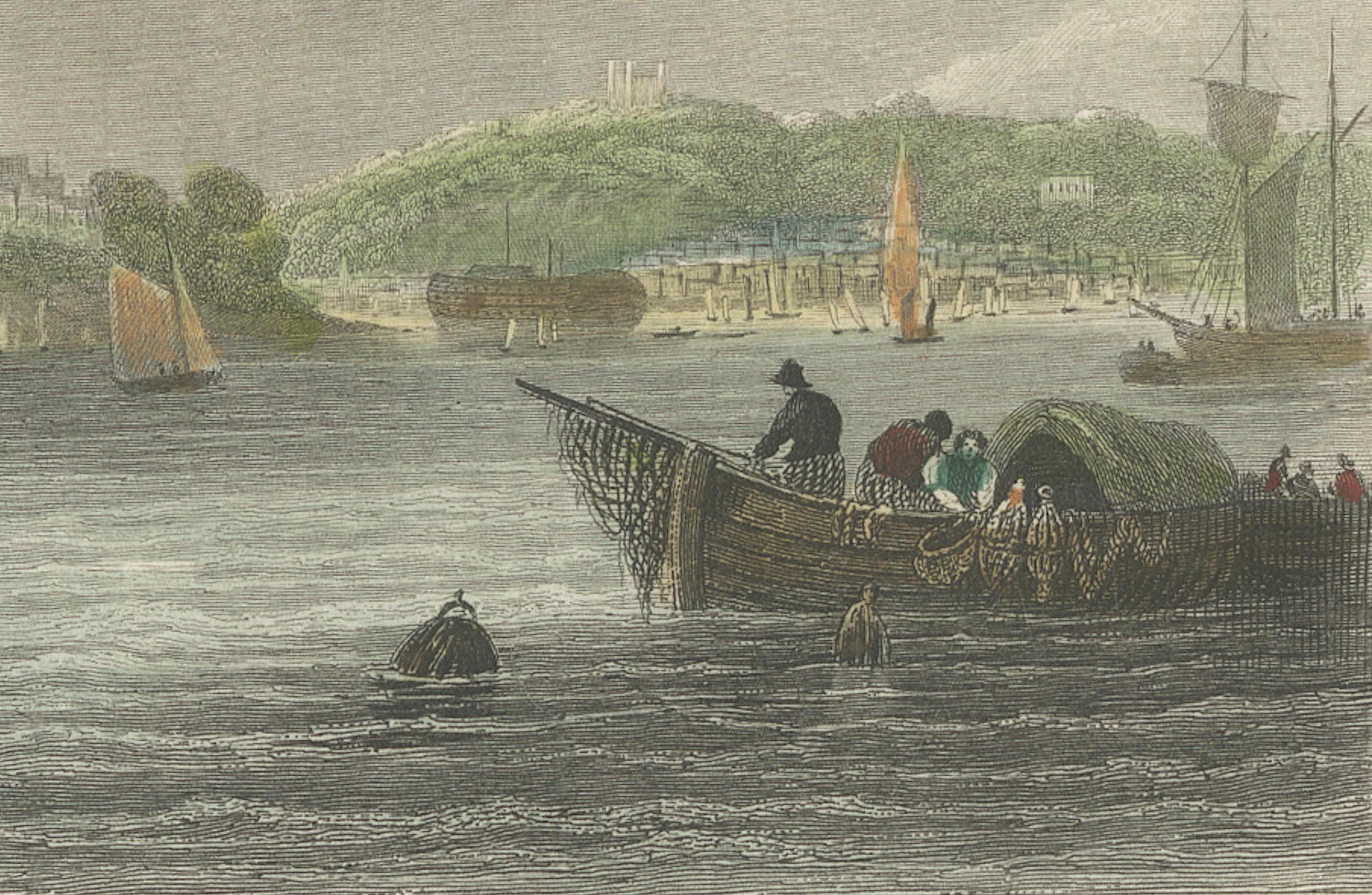
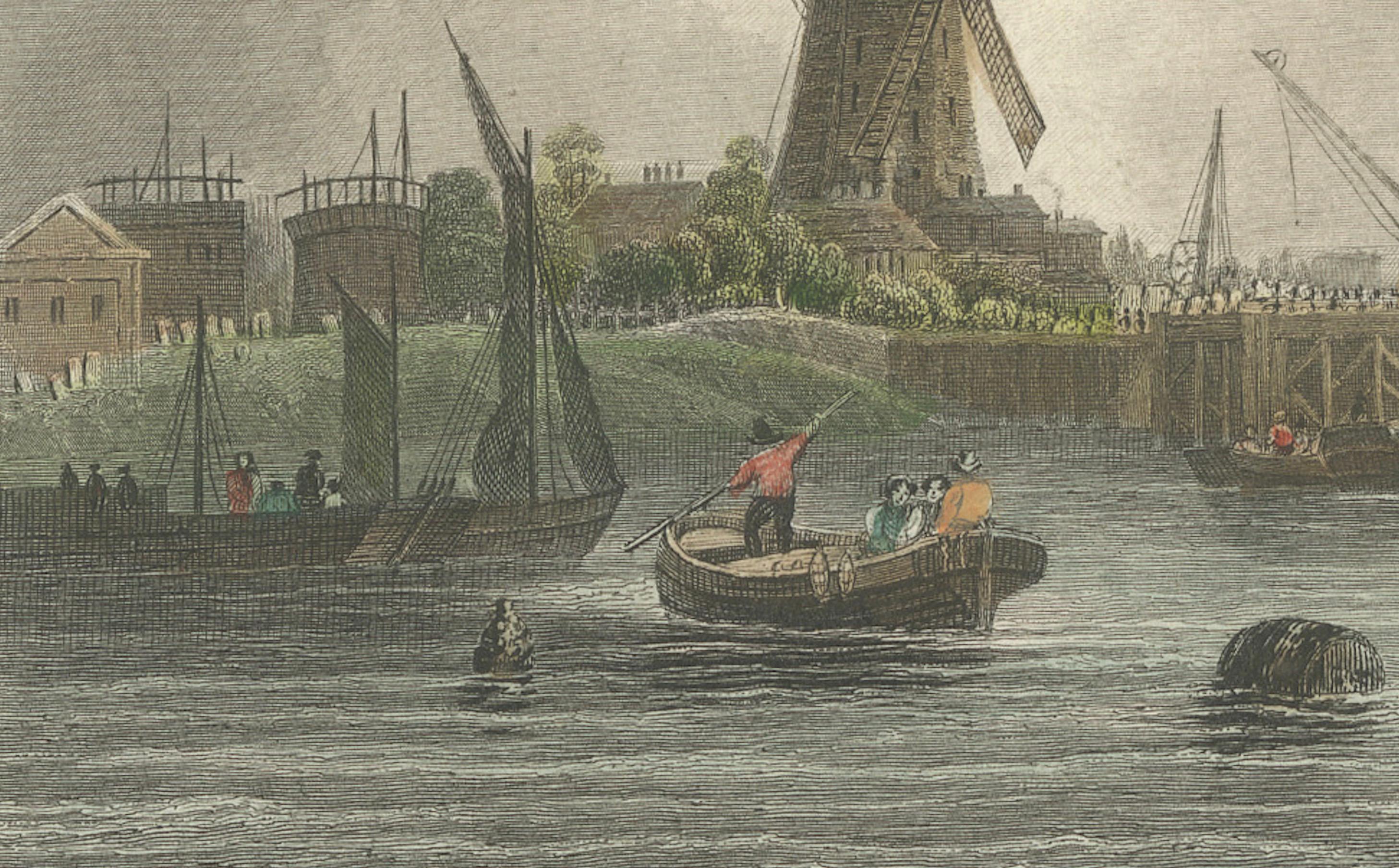
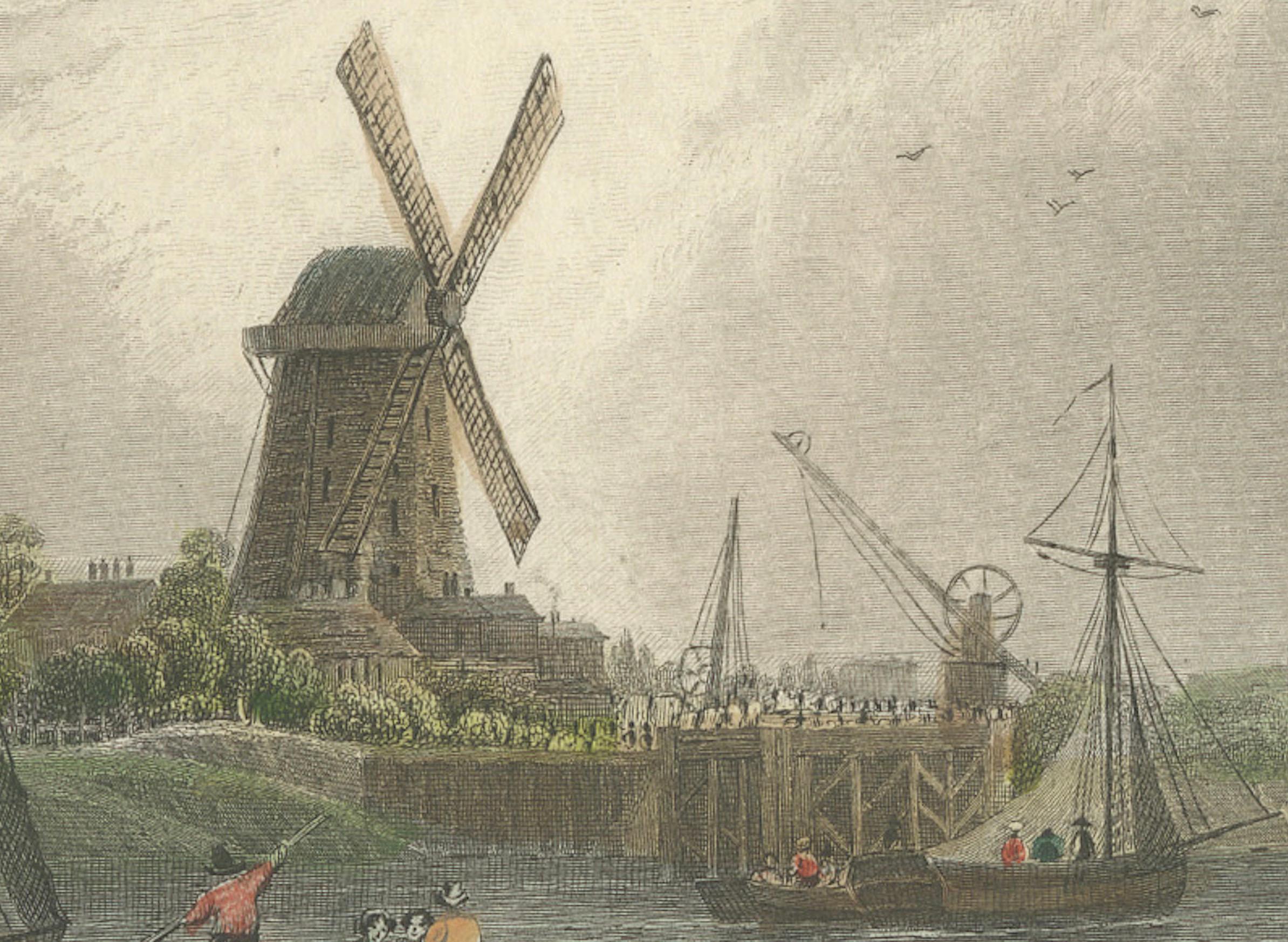
The scene prominently features a windmill, a notable landmark in Greenwich at the time, standing proudly amidst a bustling riverside. Small boats and sailing vessels dot the Thames, with figures rowing and working, capturing the lively maritime activity of the era. The sky, filled with dramatic clouds, adds a sense of depth and movement, while the intricate border—adorned with nautical symbols, cherubs, and floral motifs—reflects the Regency period’s ornate aesthetic.
What makes this print particularly fascinating is its historical context: Greenwich was a hub of naval and scientific significance, home to the Royal Observatory and a key point for maritime navigation. The windmill, a symbol of the area’s industrial past, adds a layer of local character to the scene.
Lewis’s skillful use of aquatint brings out the interplay of light and shadow across the water and buildings, inviting viewers to immerse themselves in a moment of 19th-century life.
This print is a rare and valuable piece for collectors of historical art, offering a window into Greenwich’s past and the artistry of a masterful engraver.
Condition Report: The print exhibits light foxing and faint yellowing at the edges, consistent with its age. The central image is well-preserved, with no tears or major creases in side the platemark, but one small brown spot in the border. The paper is fragile but intact, needing gentle handling.
Framing Tips: Choose a classic frame in antique gold or soft walnut to match the print’s historical tone. Use an off-white or pale beige mat to highlight the details. Avoid bold colors; stick to earthy, muted shades to preserve the artwork’s charm.