Dutch Field Marshals – Van Reede, Lodewyk & Van Nassau, 18th Century Engravings
€ 380
Original antique · The actual sheet photographed · Certificate of authenticity on request · Sold unframed · Worldwide shipping from € 15 (rates)
Mapmaker / artist
Unknown Dutch engraver, Netherlands, c.1750
Technique
Copper engraving on laid paper, with precise cross-hatching and delicate shading to convey depth and texture. The combination of decorative oval frames and call
Sheet size
21.8 × 13.5 cm (8.6 × 5.3 in)
Reference
BG-13185-22, -37, -67
What the condition grades mean
Excellent
Bright and clean, with no faults worth mentioning.
Very good
Only light signs of age, such as faint toning.
Good
Normal signs of age for a sheet of this period: toning, some foxing, small marks or neat old repairs.
Fair
Clear faults such as staining, tears or repairs, priced to match.
Every fault we see is written in the condition note, and the whole sheet is shown uncropped in the photos.
Condition
Very good for age. Paper generally clean with only light toning in margins, minor foxing spots, and faint handling marks. No tears or repairs noted. Plate marks visible, adding to authenticity. Strong, stable paper.
About this sheet
Dutch Field Marshals – Godard van Reede, Lodewyk, and Van Nassau, c.1750 Engravings
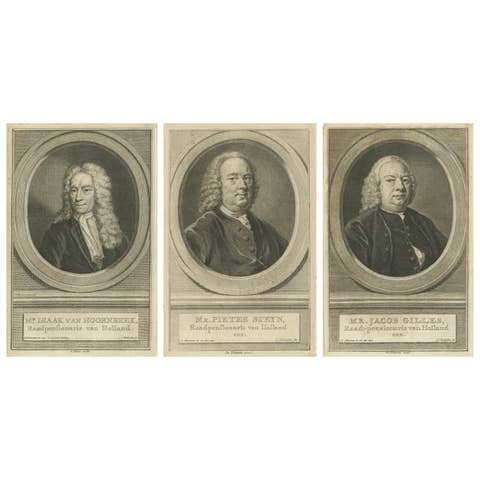
This fine set of three 18th-century portrait engravings depicts prominent Dutch military leaders: Godard van Reede, Count of Athlone; Lodewyk, Duke of Brunswick-Wolfenbüttel; and Willem, Count van Nassau. Each portrait is framed within an elegantly engraved oval border and accompanied by an inscribed cartouche naming the sitter and his titles.
Godard van Reede (1644–1703), Count of Athlone, served as Field Marshal of the United Provinces and is best remembered for his role in the Williamite War in Ireland, notably the Siege of Limerick. Lodewyk, Duke of Brunswick-Wolfenbüttel (1710–1752), was appointed Field Marshal and Commander-in-Chief of the Dutch States Army during the War of the Austrian Succession. Willem, Count van Nassau, was a distinguished Dutch general and statesman who also held the rank of Field Marshal in the service of the United Provinces.
The engravings were executed in the refined style typical of mid-18th-century Dutch portraiture, with meticulous line work capturing the facial features, wigs, armor, and elaborate clothing of the sitters. Produced around 1750, these works are both artistic and historical documents, offering a visual record of some of the Netherlands’ most notable military figures during a period of complex European alliances and conflicts. The portraits likely formed part of a larger series commemorating high-ranking statesmen and officers of the Dutch Republic.
Framing tips: A classic dark wood or black frame will enhance the formality of the portraits, while a cream or off-white mount will draw focus to the engraved detail. For a more stately presentation, consider a gilt frame with a double mount in cream and light gray to complement the period style.