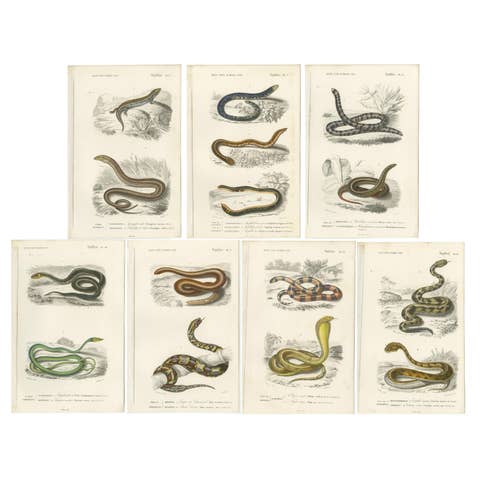
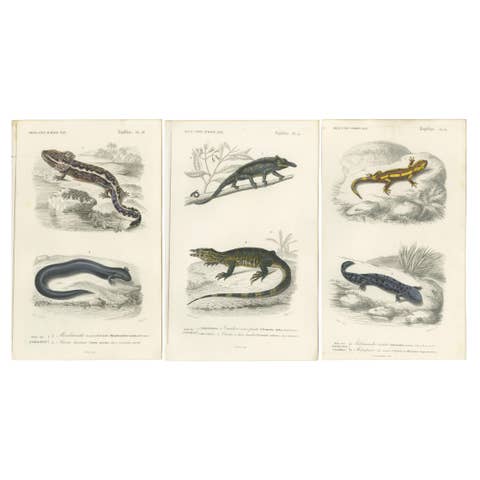
About this sheet
Original antique print. More research is needed, but some info here:
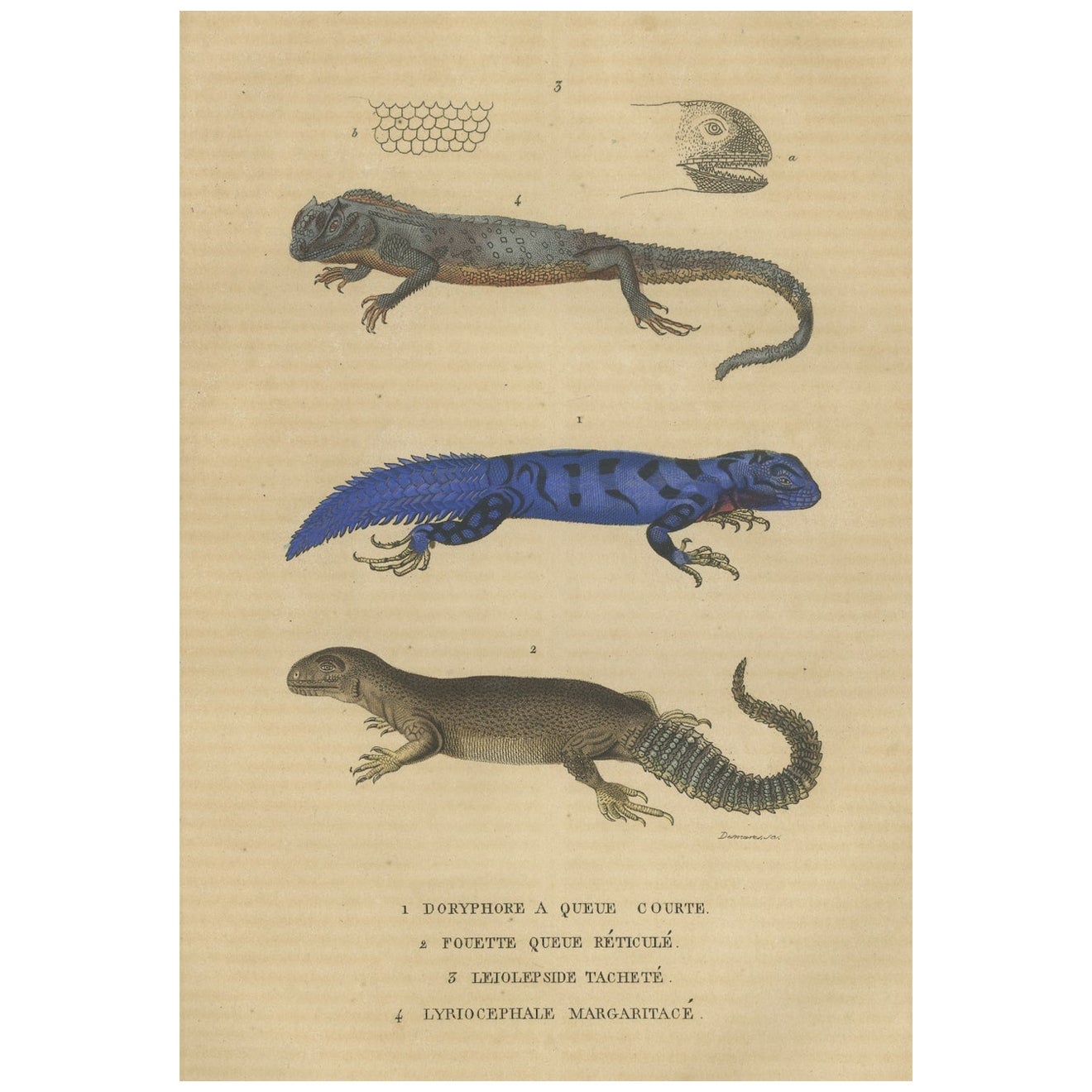
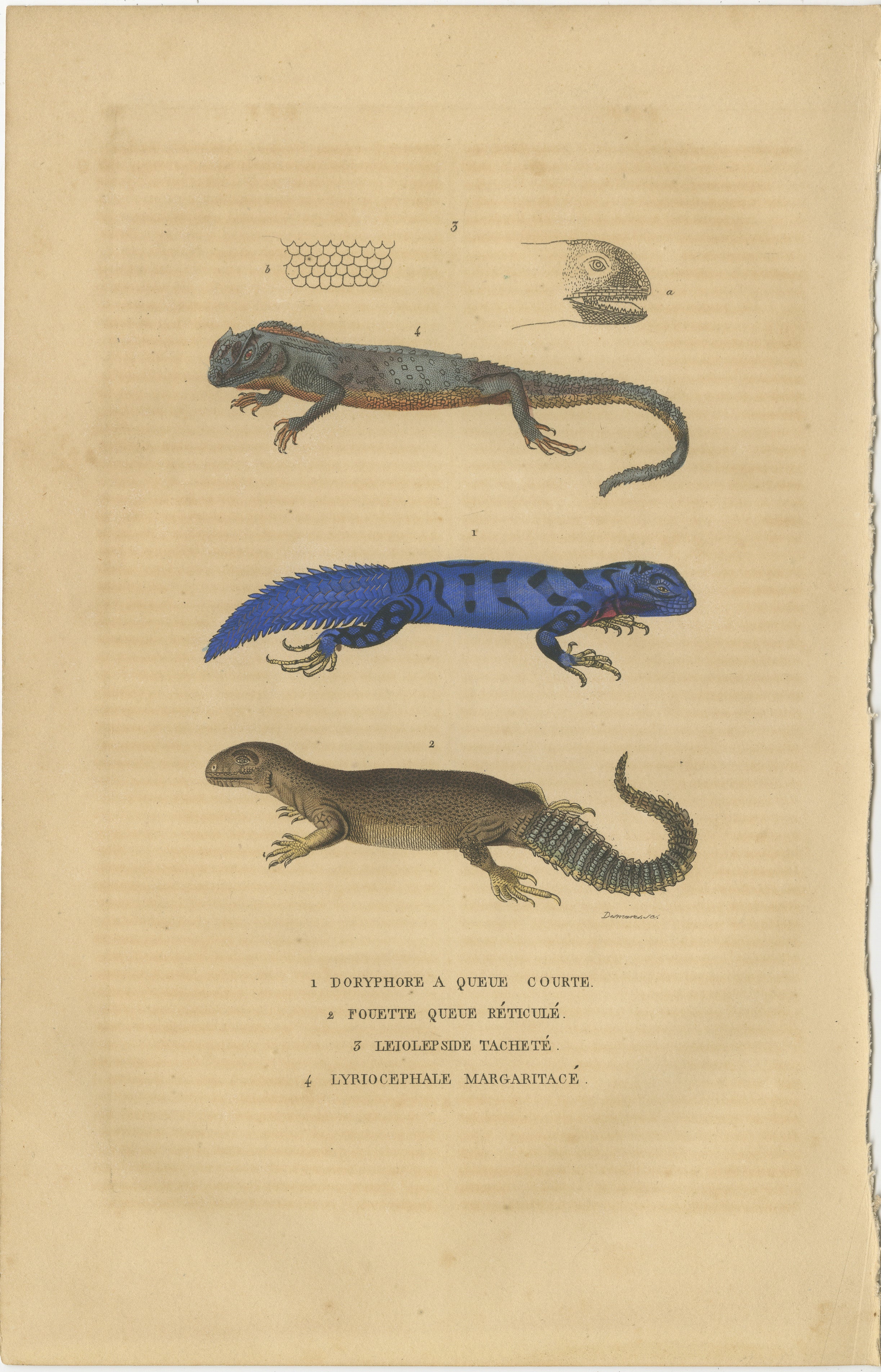
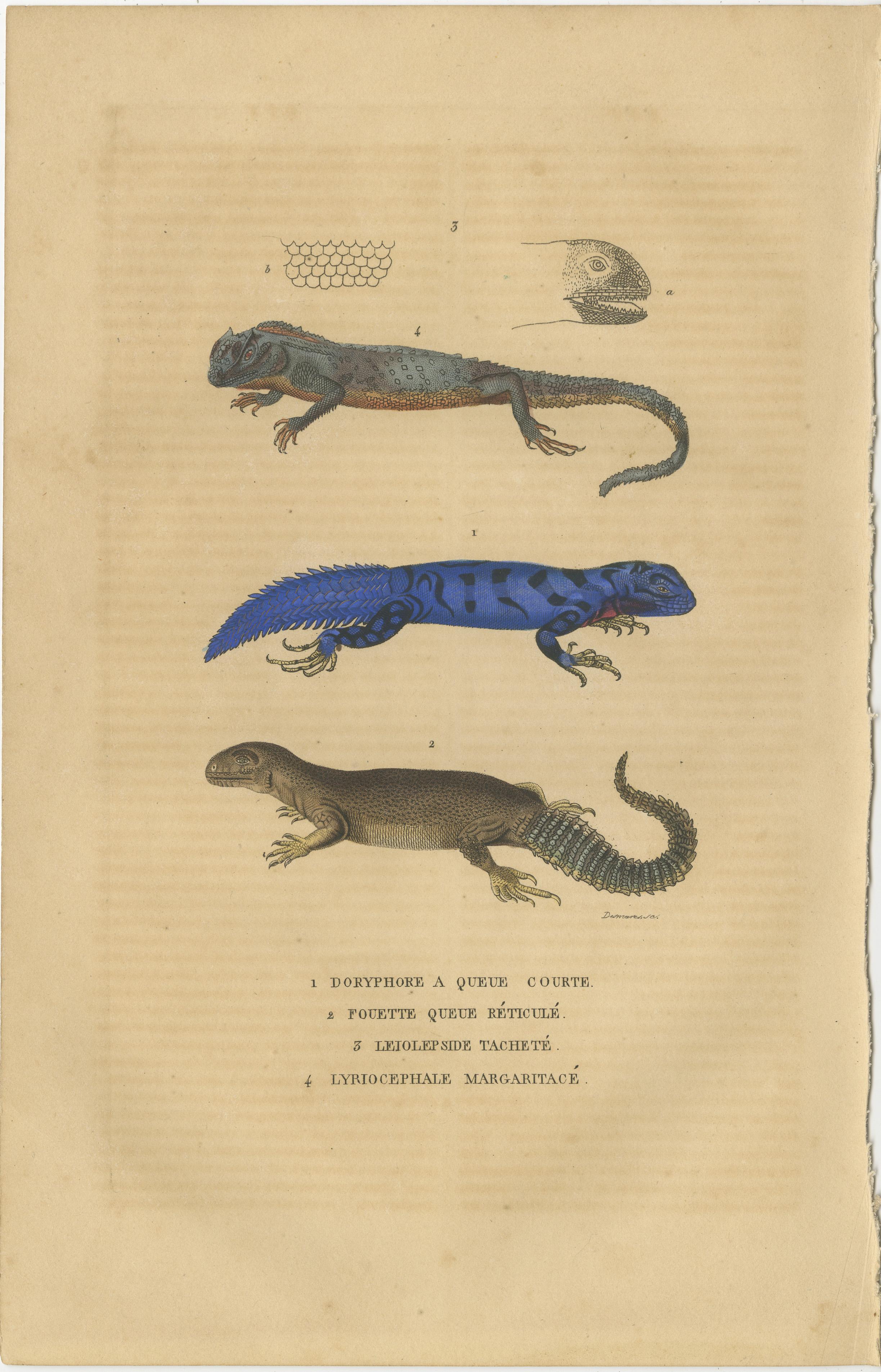
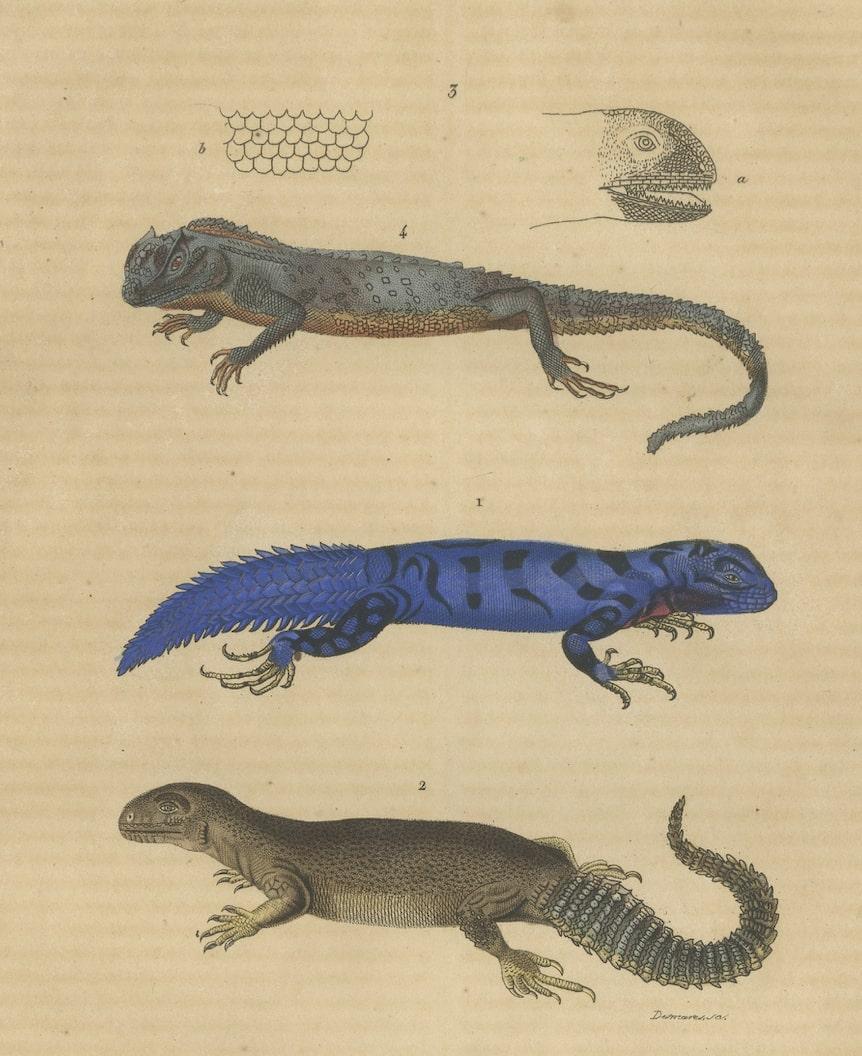
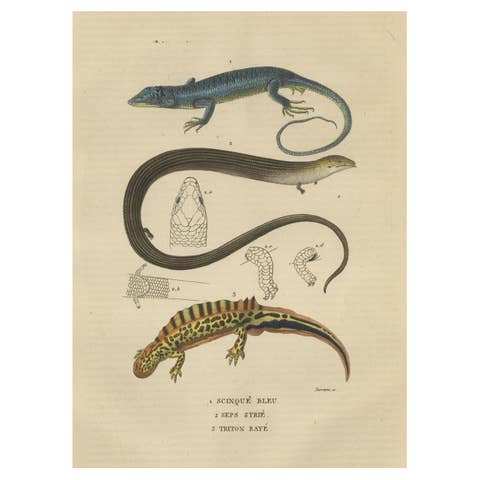
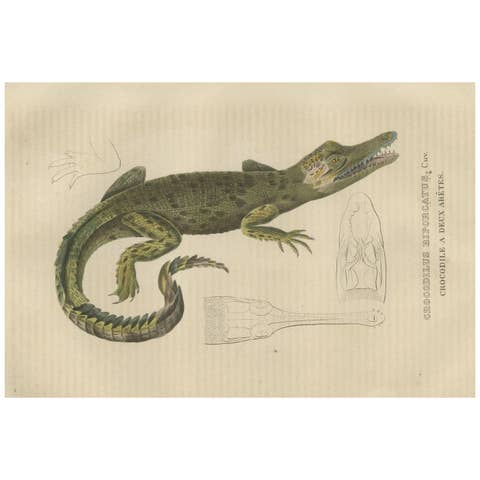
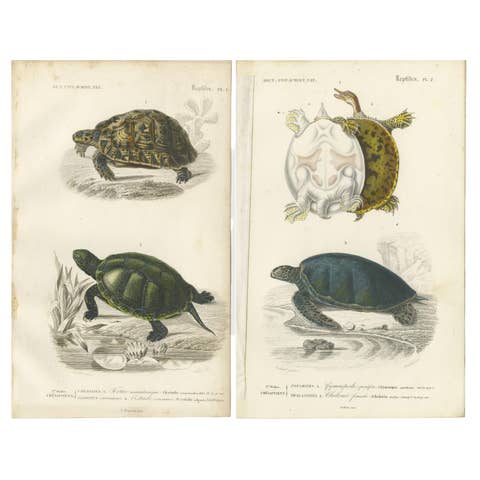
1. **Doryphore à queue courte:"Doryphore" often translates to "potato beetle" in French, but in the context of reptiles, it's unclear without further context or scientific names.
2. **Fouette-queue réticulé:** This could refer to a type of lizard known as a "whip-tailed lizard" due to the translation of "fouette-queue." The term "réticulé" might imply a "reticulated" or patterned species. These lizards are often characterized by their long, slender tails and quick movements.
3. **Leiolepside tacheté:** "Leiolepsis" is a genus of lizards, and "tacheté" translates to "spotted" in French. This could potentially refer to a spotted or speckled species within the Leiolepsis genus, known for their typically marked or patterned appearance.
4. **Lyriocephale margaritacé:** This term appears to refer to a reptile, but "Lyriocephale" doesn’t correspond to a recognized genus or species in herpetology. "Margaritacé" translates to "pearly" or "pearl-like" in French, potentially implying a species with a pearl-like appearance or texture.
Without specific scientific names or further context, it's challenging to provide detailed information about these creatures. More research is needed.
Made by F.J. Desmares after Pierre Auguste Joseph Drapiez (1778-1856).
Engraving with original hand colouring, heightened with arabic gum on wove (vellin) paper.
More info on the book in which it was published:
The 'Dictionnaire Classique des Sciences Naturelles' by Pierre Auguste Joseph Drapiez stands as a remarkable testament to 19th-century natural sciences. Published in Brussels in 1845, this work represents an expansive collation of knowledge, building upon the pioneering works of Buffon, Daubenton, Lacepede, Cuvier, de Jussieu, and other influential naturalists.
The prints within this compendium likely showcase a rich amalgamation of artistic precision and scientific accuracy. Drapiez, himself a Belgian naturalist, would have aimed for detailed representations of flora, fauna, and scientific phenomena, mirroring the illustrative styles prevalent during his time. Given the era's emphasis on illustration, these prints were likely engraved meticulously, possibly portraying intricate anatomical details or lifelike depictions of the natural world.
With Drapiez's background in natural history, the prints might bear testament to his commitment to scientific authenticity, aiming to educate and inspire scholars and enthusiasts alike. These engravings would have complemented the text, offering visual aids that elucidate the concepts and specimens discussed in the volume.
Overall, the prints of 'Dictionnaire Classique des Sciences Naturelles' likely serve as both artistic representations and invaluable scientific resources, encapsulating the essence of 19th-century natural history exploration and documentation.