About this sheet
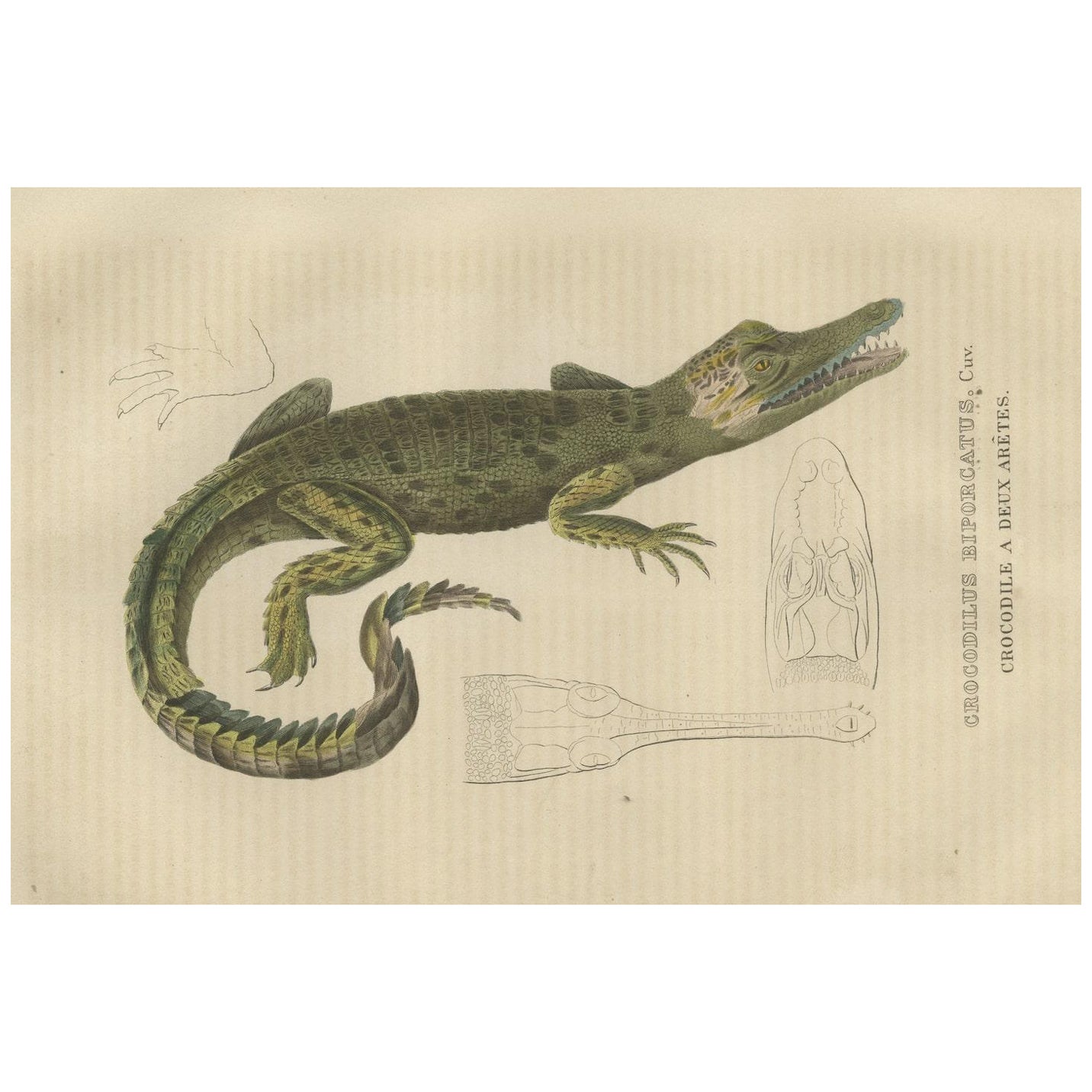
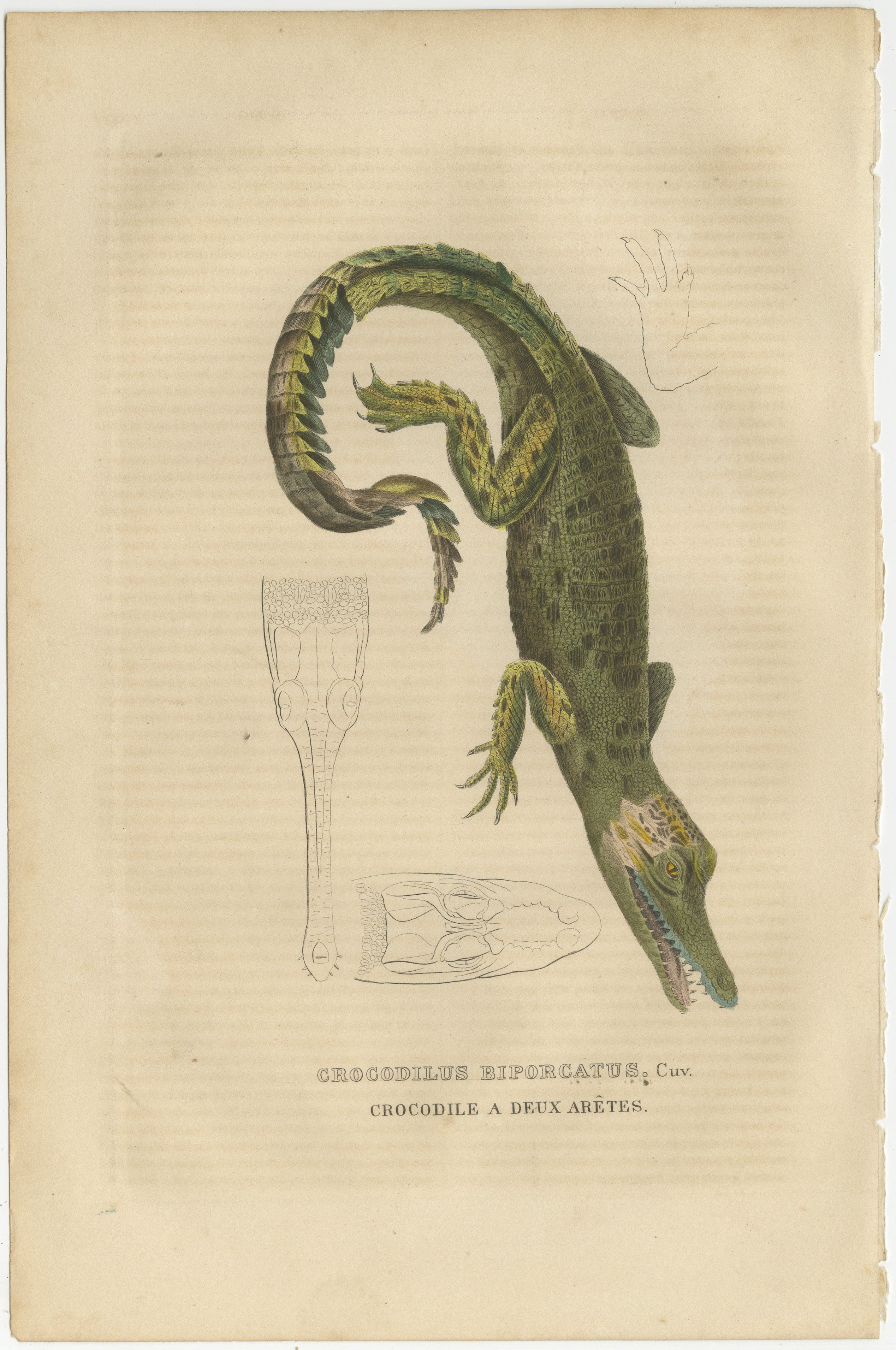
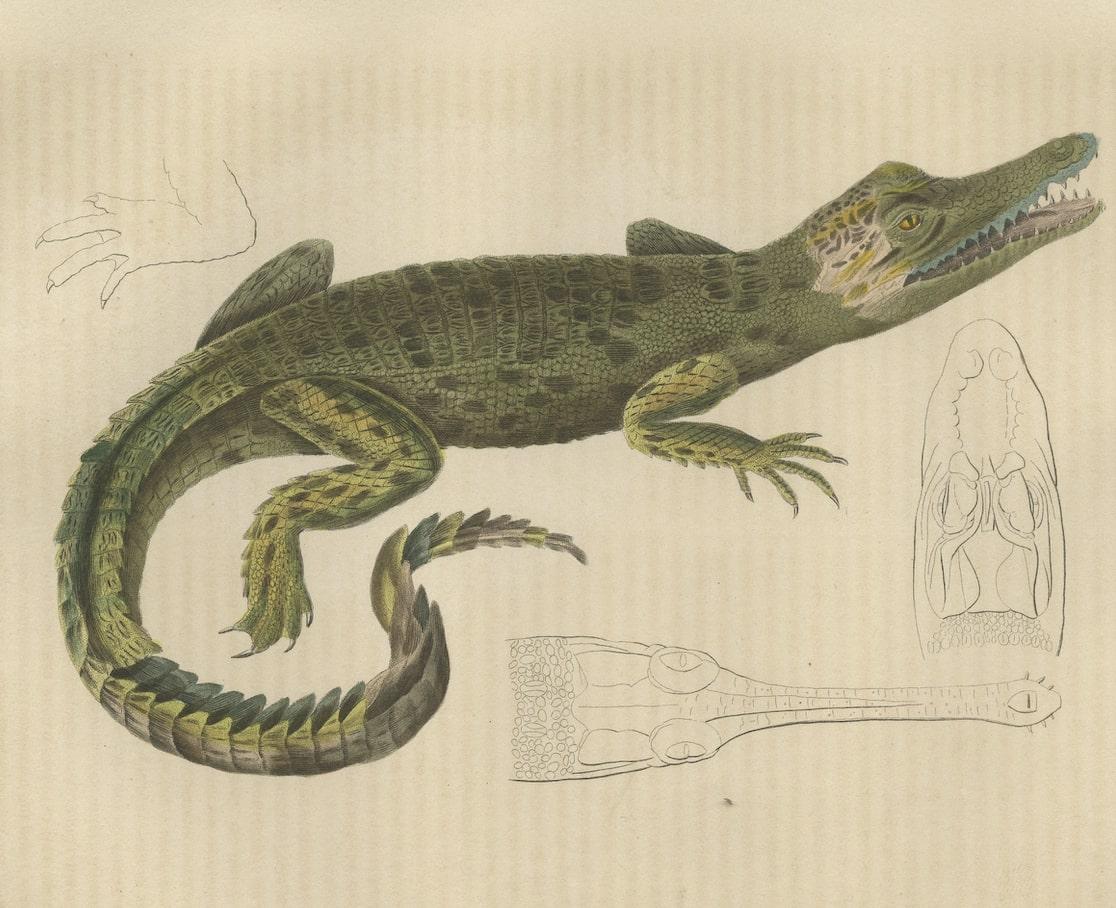
The Crocodilus biporcatus, also known as the "Crocodile à deux arêtes," refers to the species scientifically recognized as the Cuban Crocodile (Crocodylus rhombifer). This species is native to Cuba and is known for its distinctive features and habitat.
The Cuban Crocodile is a medium-sized crocodilian characterized by its robust build, streamlined body, and the presence of two raised ridges or bony crests running down its back, hence the name "à deux arêtes," meaning "with two ridges" in French.
These ridges are prominent features that set them apart from other crocodile species. They serve multiple purposes, potentially aiding in temperature regulation, enhancing maneuverability while swimming, and serving as a display feature during courtship or territorial disputes.
This species prefers freshwater habitats such as rivers, swamps, and marshes, where they are skilled hunters, preying on fish, small mammals, birds, and occasionally larger prey. The Cuban Crocodile is known for its agility on land and in water, making it an adept predator.
Unfortunately, the Cuban Crocodile is listed as critically endangered due to habitat loss, hunting, and the hybridization threat from interbreeding with other crocodilian species. Conservation efforts are ongoing to protect and preserve this unique and iconic species found in the wilds of Cuba.
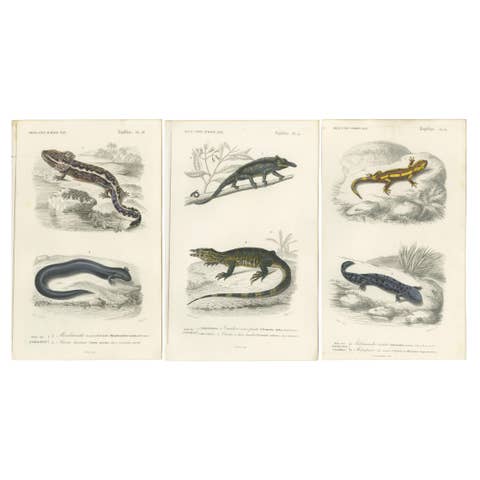
Made by F.J. Desmares after Pierre Auguste Joseph Drapiez (1778-1856).
Engraving with original hand colouring, heightened with arabic gum on wove (vellin) paper.
More info on the book in which it was published:
The 'Dictionnaire Classique des Sciences Naturelles' by Pierre Auguste Joseph Drapiez stands as a remarkable testament to 19th-century natural sciences. Published in Brussels in 1845, this work represents an expansive collation of knowledge, building upon the pioneering works of Buffon, Daubenton, Lacepede, Cuvier, de Jussieu, and other influential naturalists.
The prints within this compendium likely showcase a rich amalgamation of artistic precision and scientific accuracy. Drapiez, himself a Belgian naturalist, would have aimed for detailed representations of flora, fauna, and scientific phenomena, mirroring the illustrative styles prevalent during his time. Given the era's emphasis on illustration, these prints were likely engraved meticulously, possibly portraying intricate anatomical details or lifelike depictions of the natural world.
With Drapiez's background in natural history, the prints might bear testament to his commitment to scientific authenticity, aiming to educate and inspire scholars and enthusiasts alike. These engravings would have complemented the text, offering visual aids that elucidate the concepts and specimens discussed in the volume.
Overall, the prints of 'Dictionnaire Classique des Sciences Naturelles' likely serve as both artistic representations and invaluable scientific resources, encapsulating the essence of 19th-century natural history exploration and documentation.