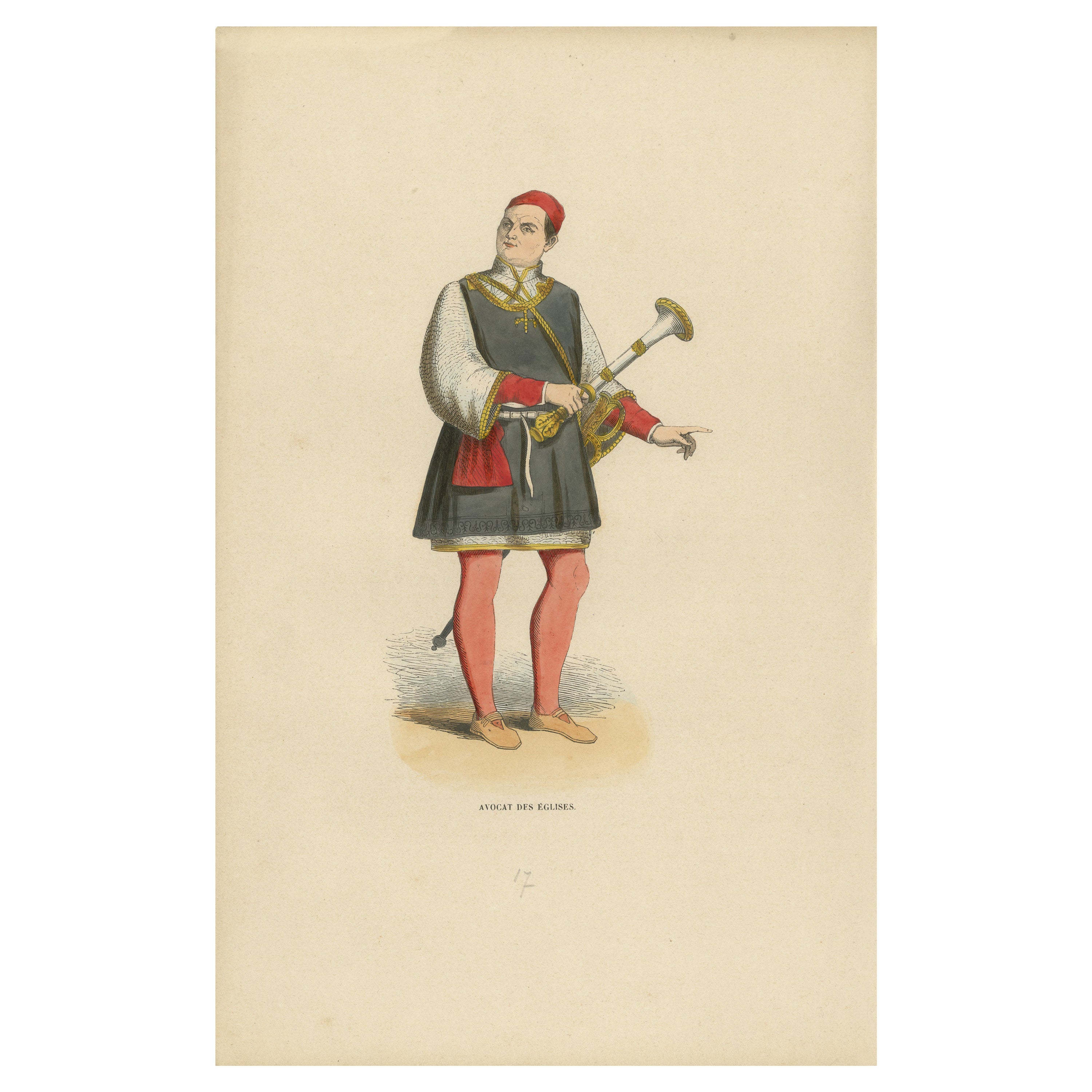
The Church's Defender: Advocate in Arms on a Hand-Colored Lithograph, 1847
€ 160
One of a kind: this is the sheet in the photographs. Ships from Langweer, the Netherlands.
Date
1847
Sheet size
27 × 18 cm (10.6 × 7.1 in)
Condition
Good
Reference
BG-13635-12
Condition
Good. Overal very light toning and light soiling but the image itself clean and hand-colored almost 200 years ago and still in expliciet colors. Aged paper with typically warm, yellowish-brown hue, mostly around the edges. Study the image carefully.
About this sheet
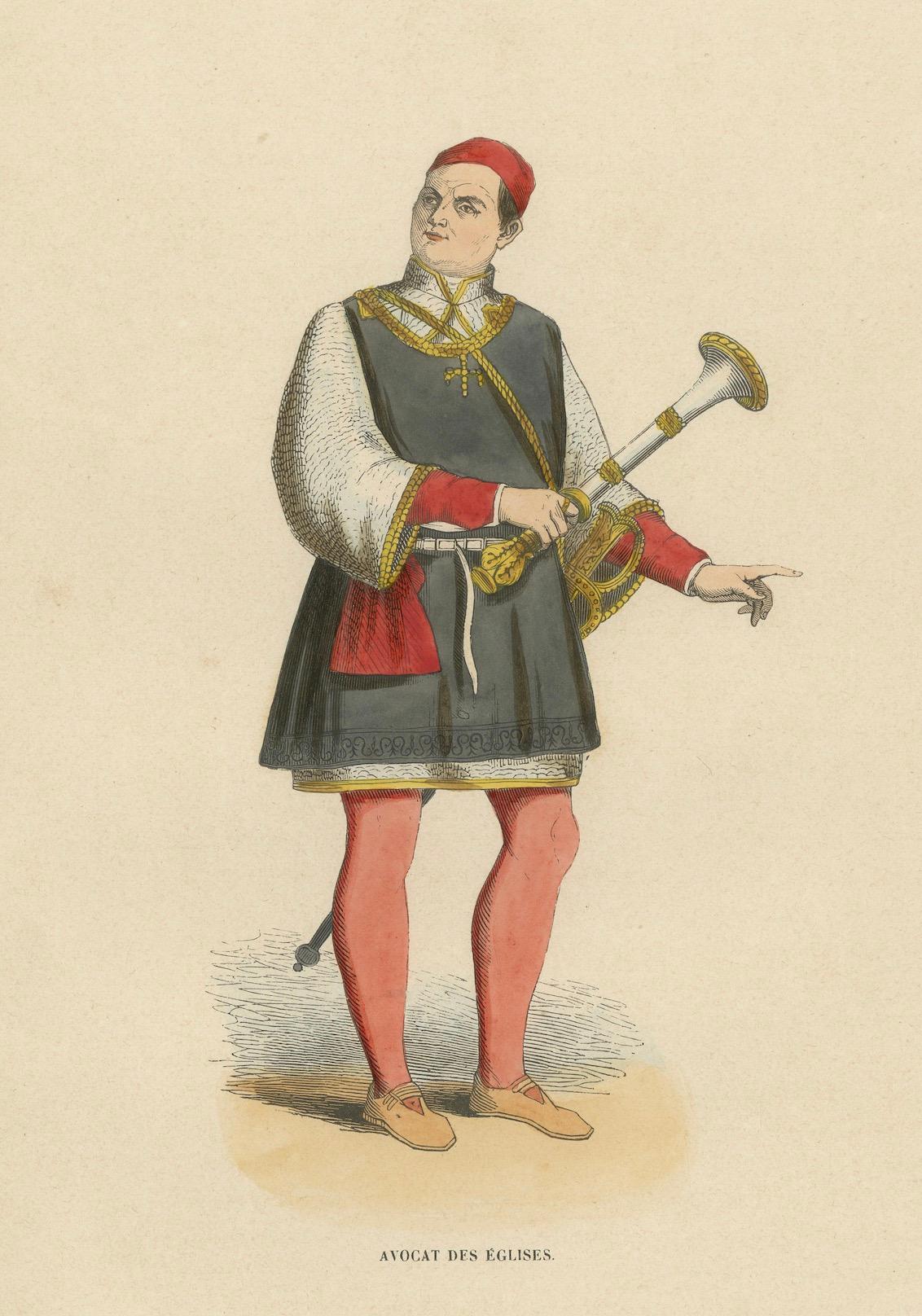
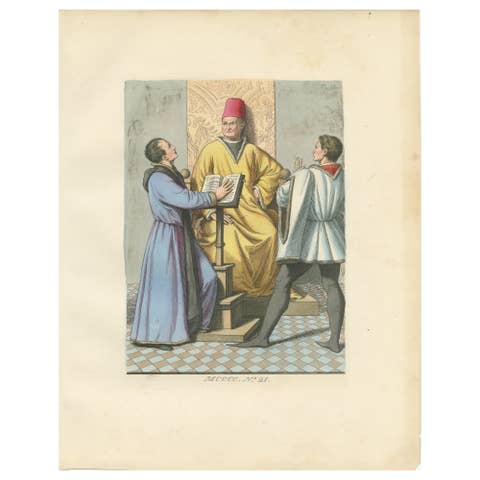
An original hand-colored lithograph showing the "Avocat des Eglises," which translates to "Advocate of the Churches." This title likely refers to a legal position within the church, possibly a canon lawyer or someone who represented the interests of the church in legal matters during medieval times.
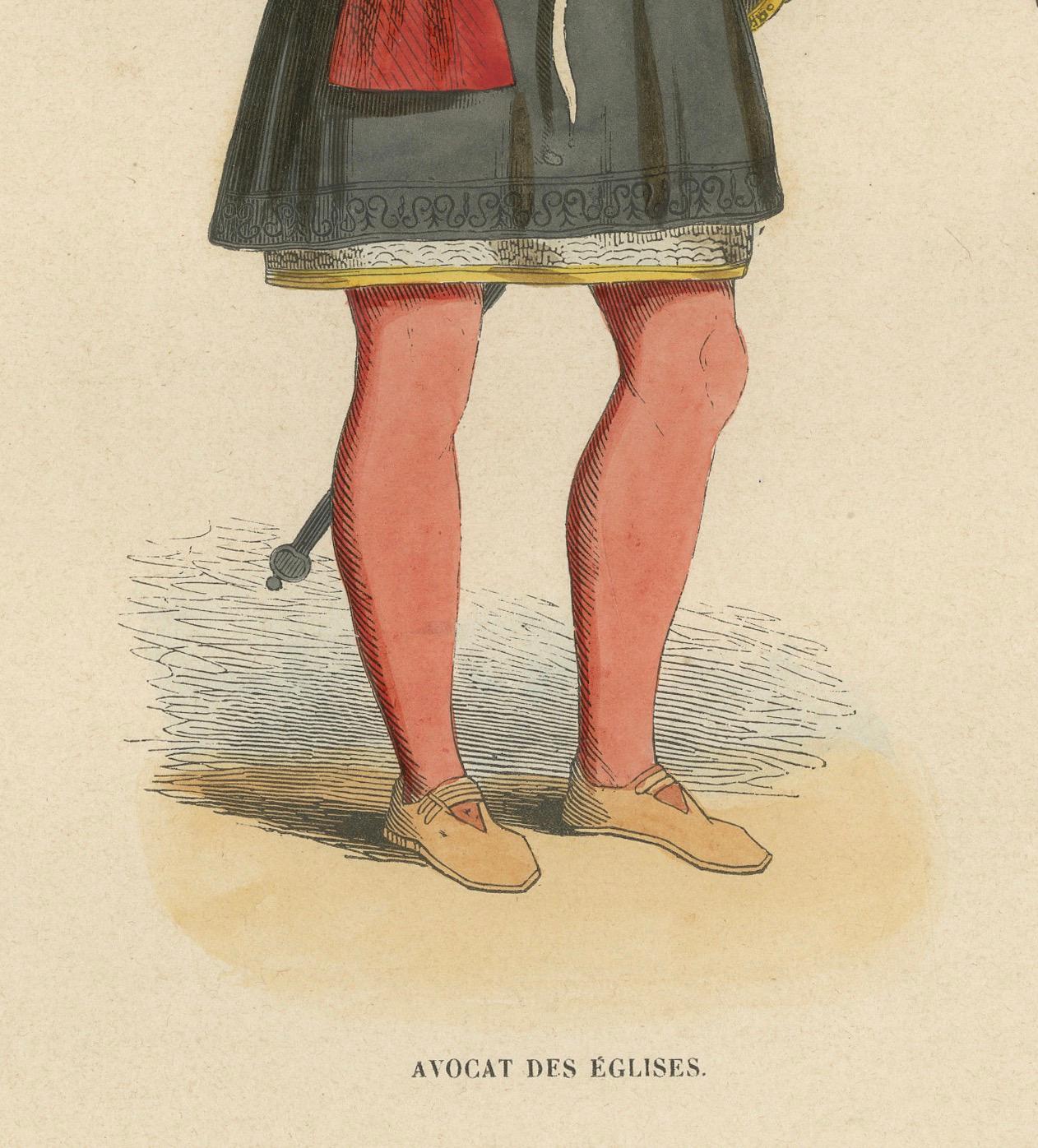
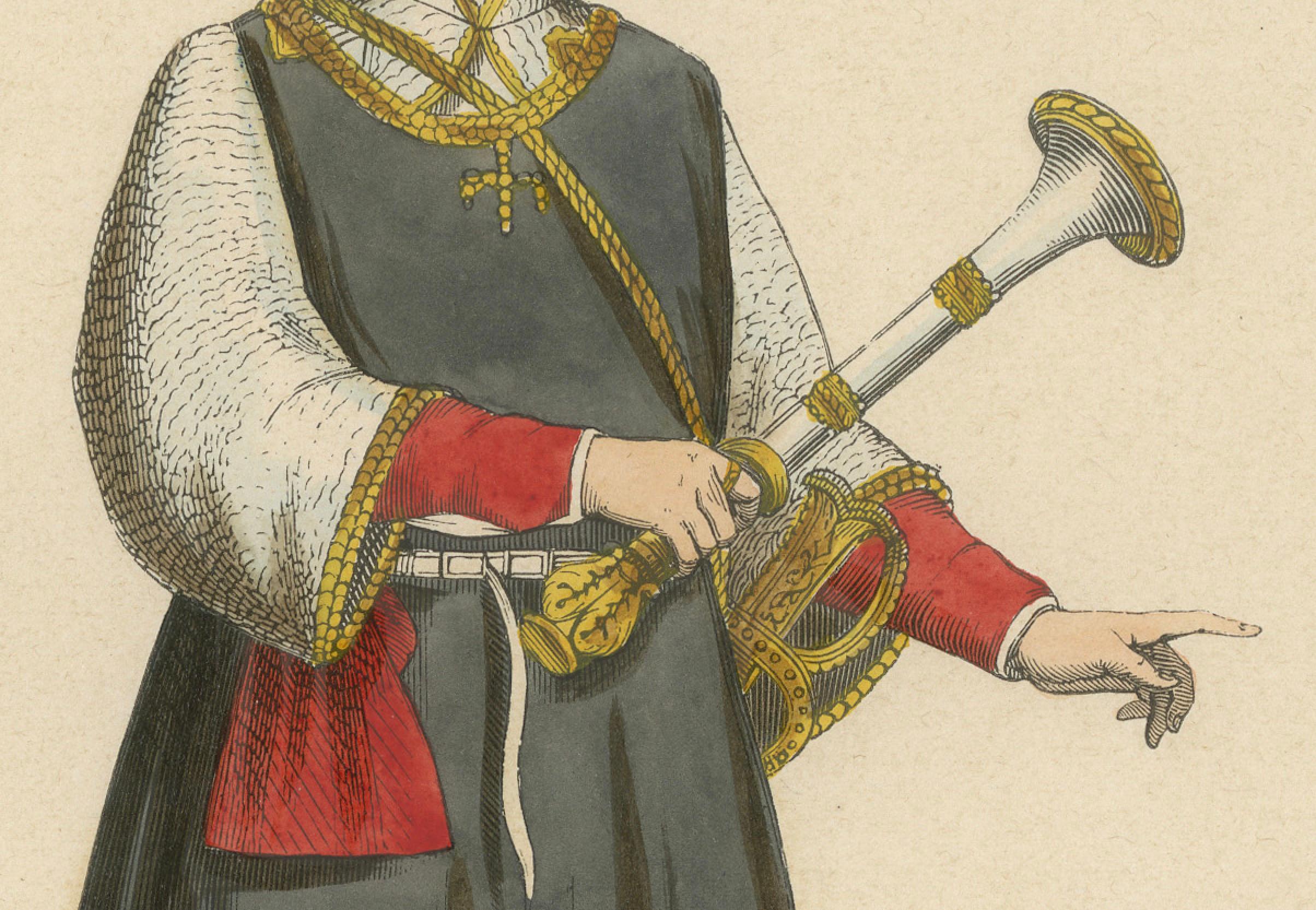
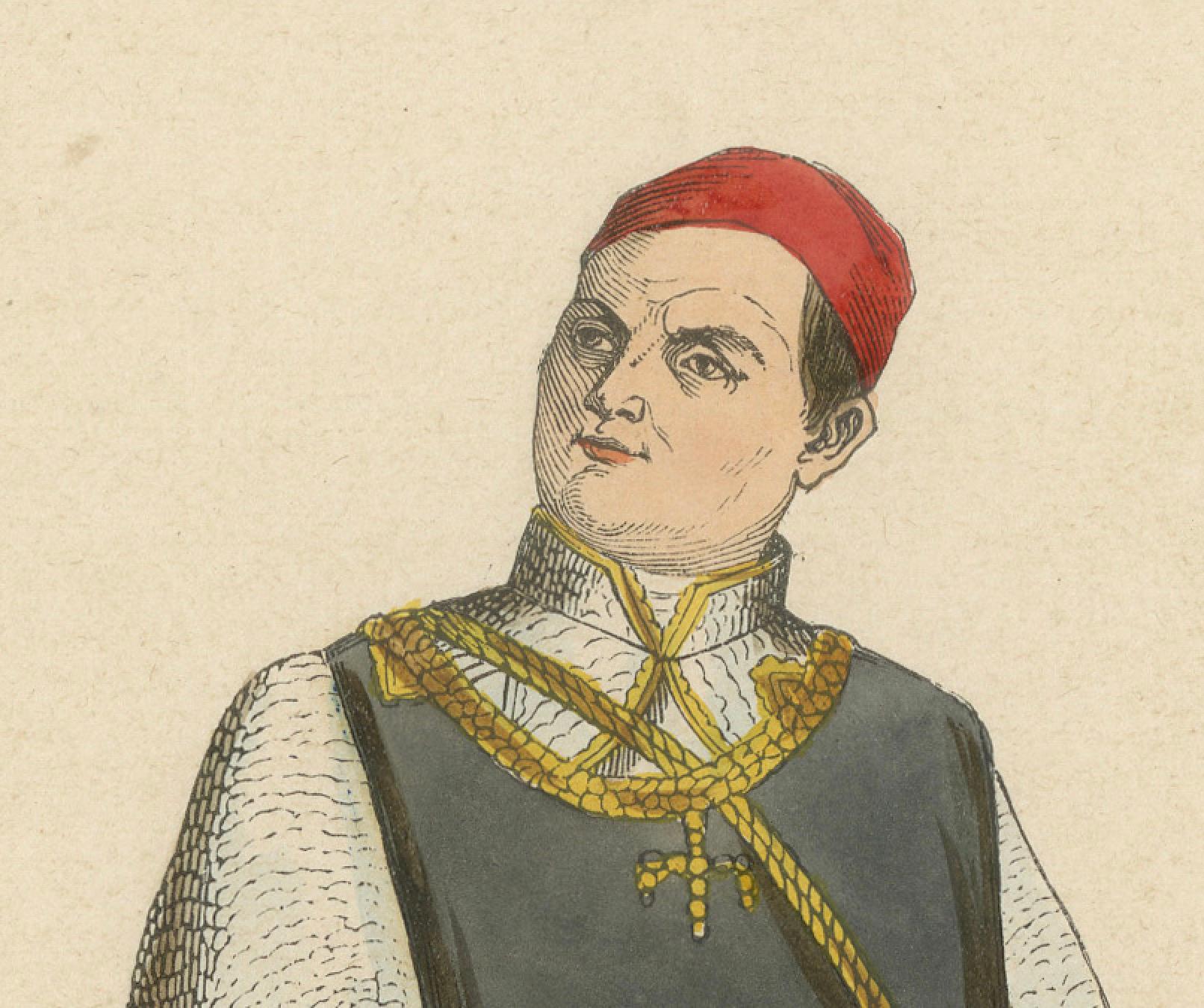
The individual is wearing a red Phrygian cap, which often symbolized freedom and was a common headgear in many European countries. He is dressed in a chain mail shirt for protection, which suggests a readiness for battle or the necessity of self-defense, even for someone associated with the church. Over the mail, he wears a tabard with a decorative pattern and a prominent belt with a sword attached, signifying his status and readiness for conflict.
The combination of martial and ecclesiastical elements in his attire indicates a time when the church held temporal power and was actively involved in governance and conflict. His pointing gesture and facial expression suggest a moment of declaration or command.
Egg whites can be applied as a varnish over pigments to enhance their brightness and to protect the colors. This application could make the colors appear more vivid and also add a slight glossy sheen to the surface of the image.
Egg yolk, on the other hand, was commonly used as a binding agent in paint. It forms the basis of tempera paint, a medium that was widely used before the advent of oil painting. Egg yolk helps to create a durable and long-lasting color that adheres well to various surfaces.
In the context of the print from 1847, it's less likely that egg whites or yolks were used directly on the print, as by that time, commercial printing processes would have been more advanced and less reliant on such manual methods. However, if this print is a representation of an earlier style or is meant to mimic the appearance of hand-painted manuscripts, the original artists might have employed techniques or materials that gave a similar effect to those achieved with egg-based binders and varnishes.