About this sheet
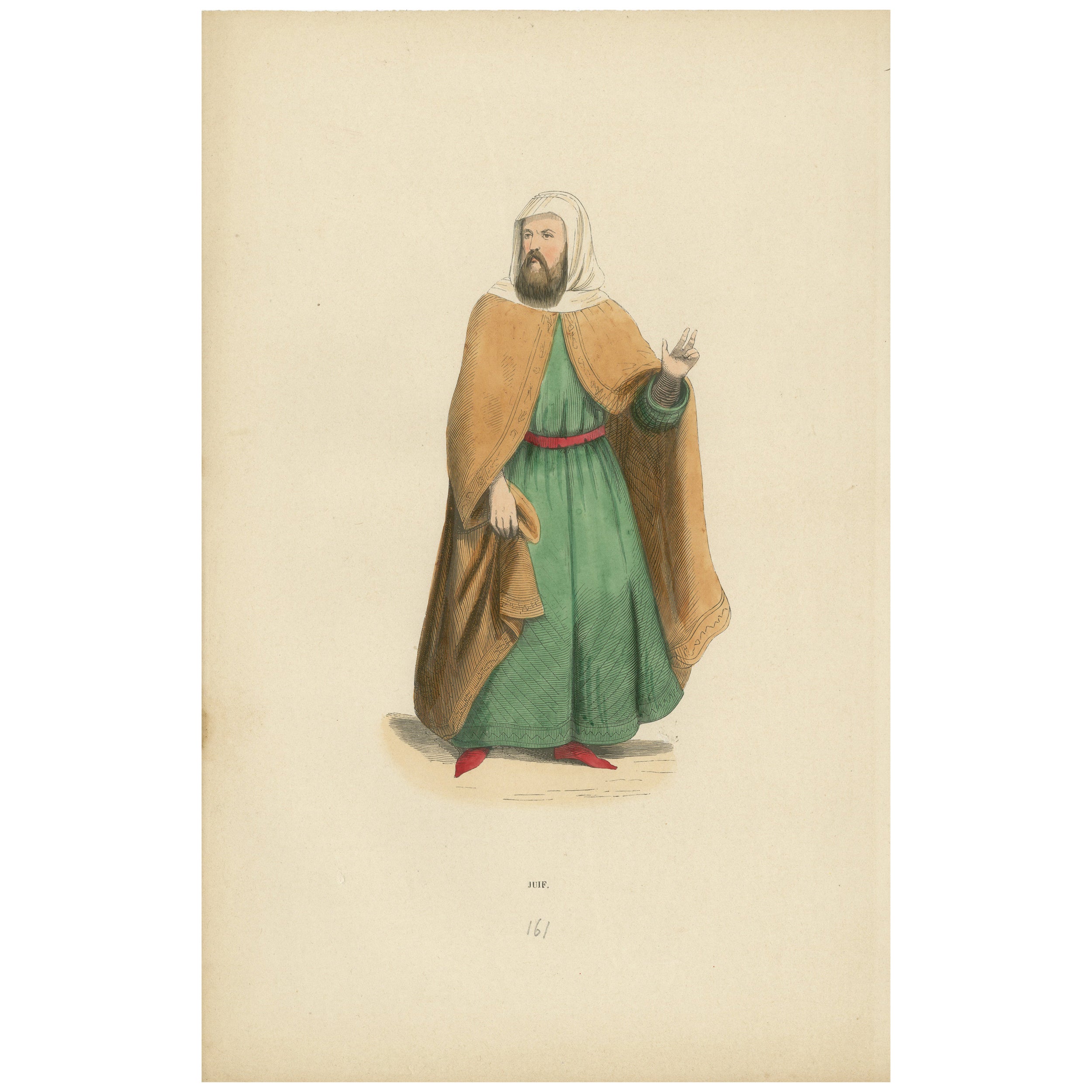
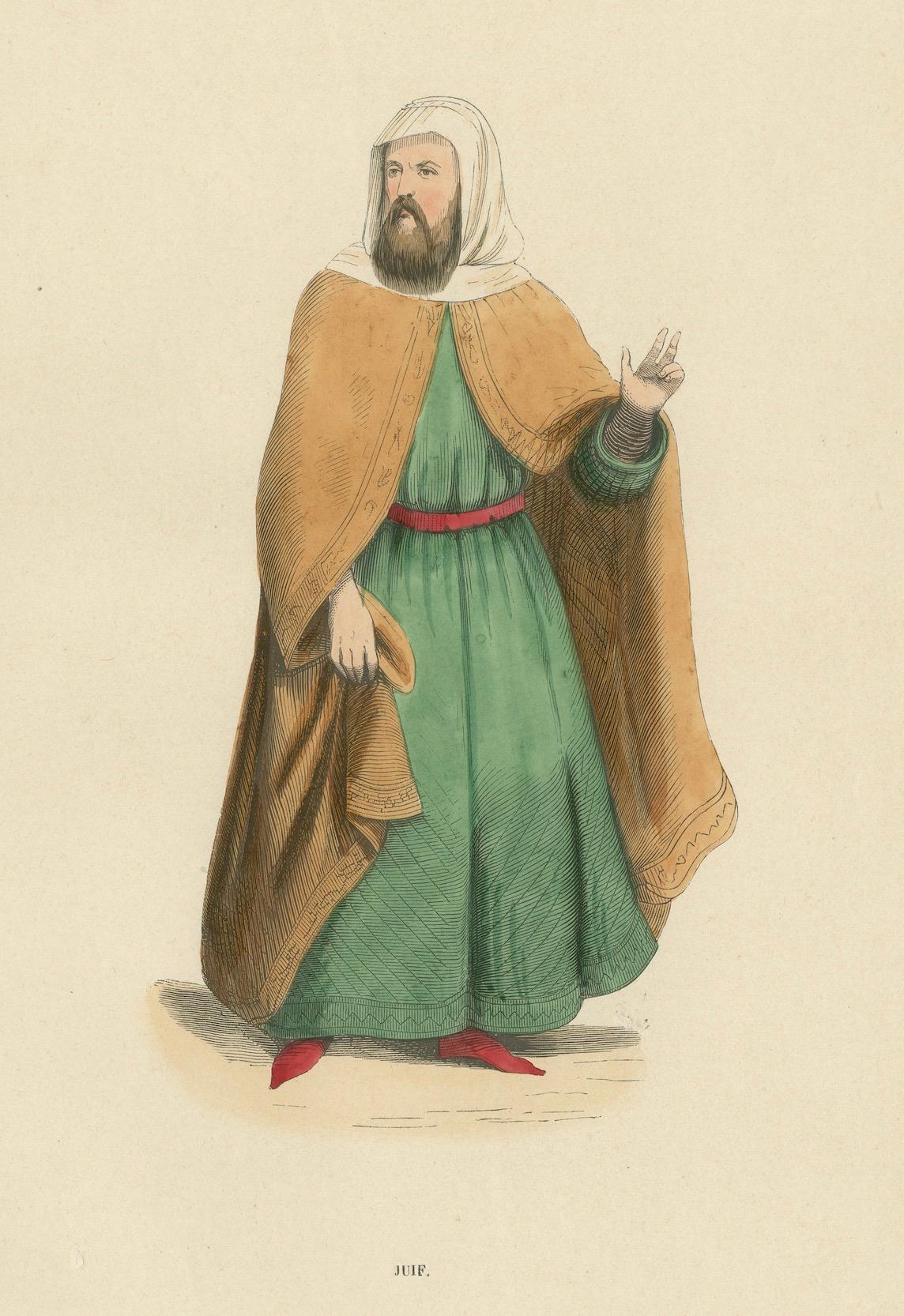
This original antique print depicts a figure labeled "JUIF," which is the French word for "Jew." The character is shown in traditional clothing that could be associated with a Jewish man of a historical period, possibly during the Middle Ages or Renaissance.
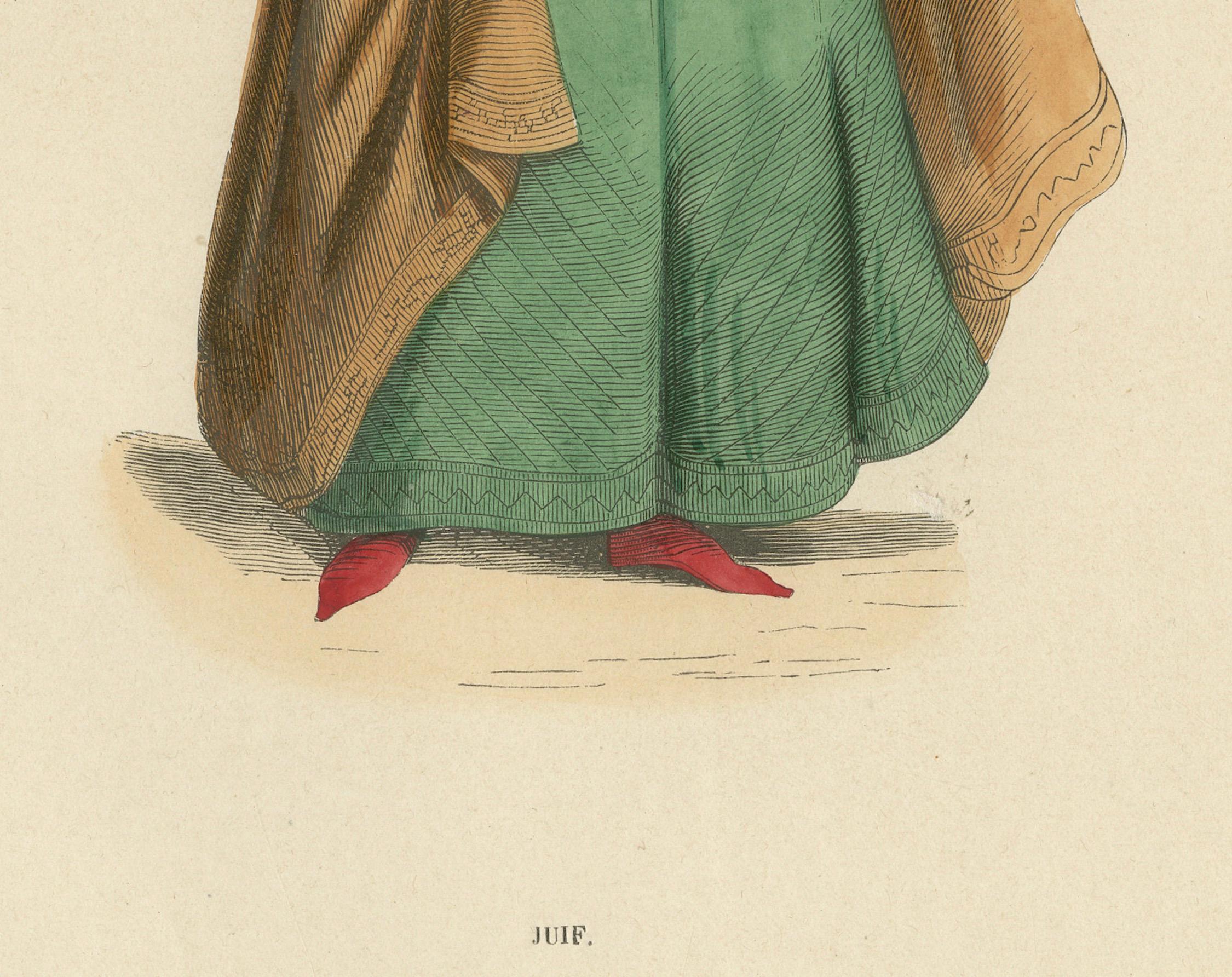
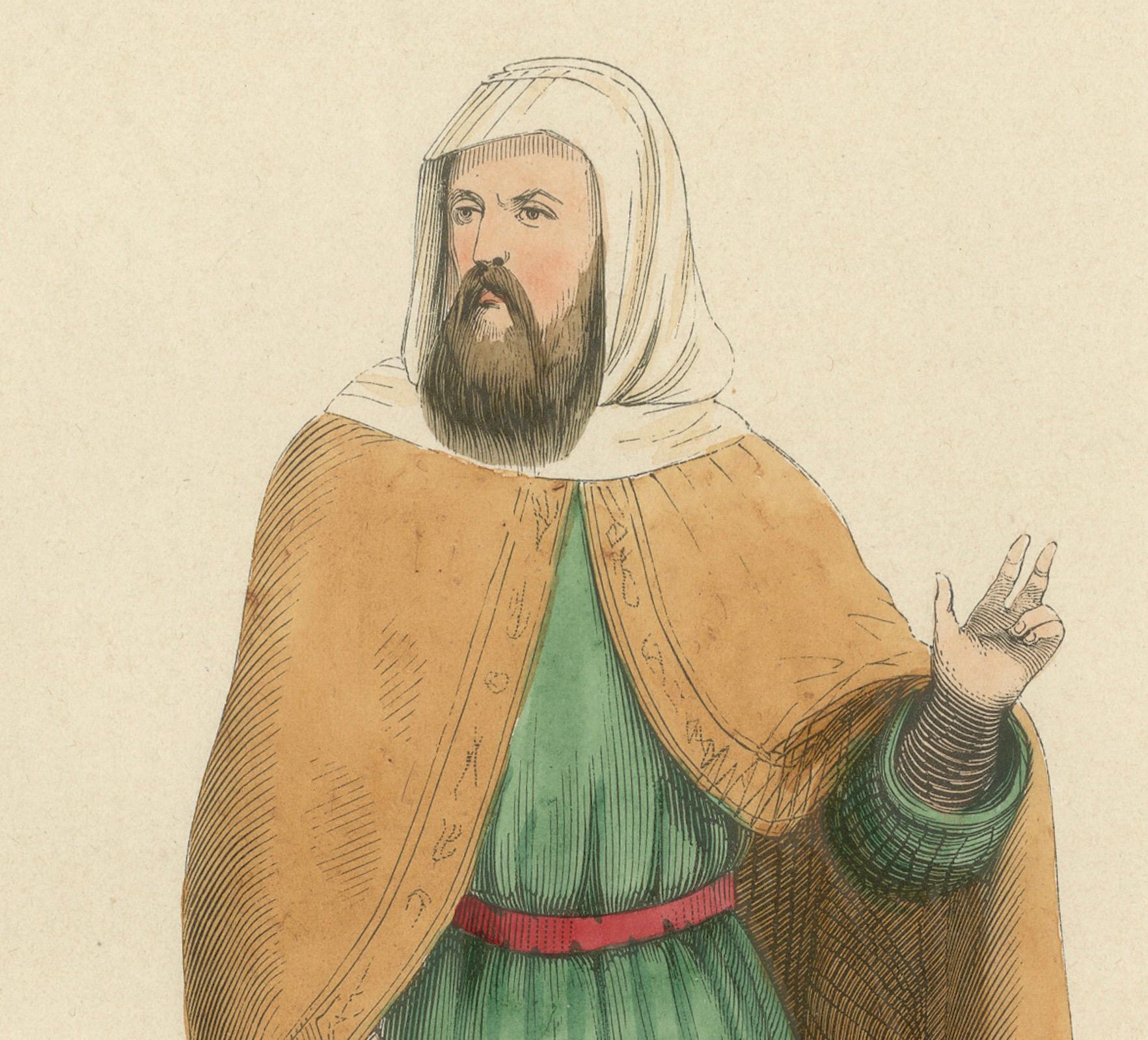
The man is wearing a long green robe with a red belt, and over it, a tan outer garment with brown detailing. He has a white hood or head covering that drapes over his shoulders. The attire suggests a humble yet dignified status, which may be indicative of the social position Jews held during the time period represented. His shoes are red, matching the belt, adding a small but significant pop of color to his outfit.
He is depicted in profile, with a full beard, and appears to be speaking or gesturing, giving him a look of engagement or discourse. The number "161" at the bottom suggests this print is part of a series, likely a collection illustrating various ethnic or social groups from history.
Given the historical context and the attire, a suitable title for this print could be "Portrait of a Jewish Scholar" or "Medieval Jewish Gentleman," depending on the intended representation of the figure's status.
The colors have a nice glow over them. Historically, egg whites, known as glair, and sometimes egg yolk were indeed used in illumination and painting, particularly in manuscripts, to give colors a brighter appearance and to add a sheen or gloss to the work. This technique was quite common during the Middle Ages and into the Renaissance.
Egg whites can be applied as a varnish over pigments to enhance their brightness and to protect the colors. This application could make the colors appear more vivid and also add a slight glossy sheen to the surface of the image.
Egg yolk, on the other hand, was commonly used as a binding agent in paint. It forms the basis of tempera paint, a medium that was widely used before the advent of oil painting. Egg yolk helps to create a durable and long-lasting color that adheres well to various surfaces.
In the context of the print from 1847, it's less likely that egg whites or yolks were used directly on the print, as by that time, commercial printing processes would have been more advanced and less reliant on such manual methods. However, if this print is a representation of an earlier style or is meant to mimic the appearance of hand-painted manuscripts, the original artists might have employed techniques or materials that gave a similar effect to those achieved with egg-based binders and varnishes.