About this sheet
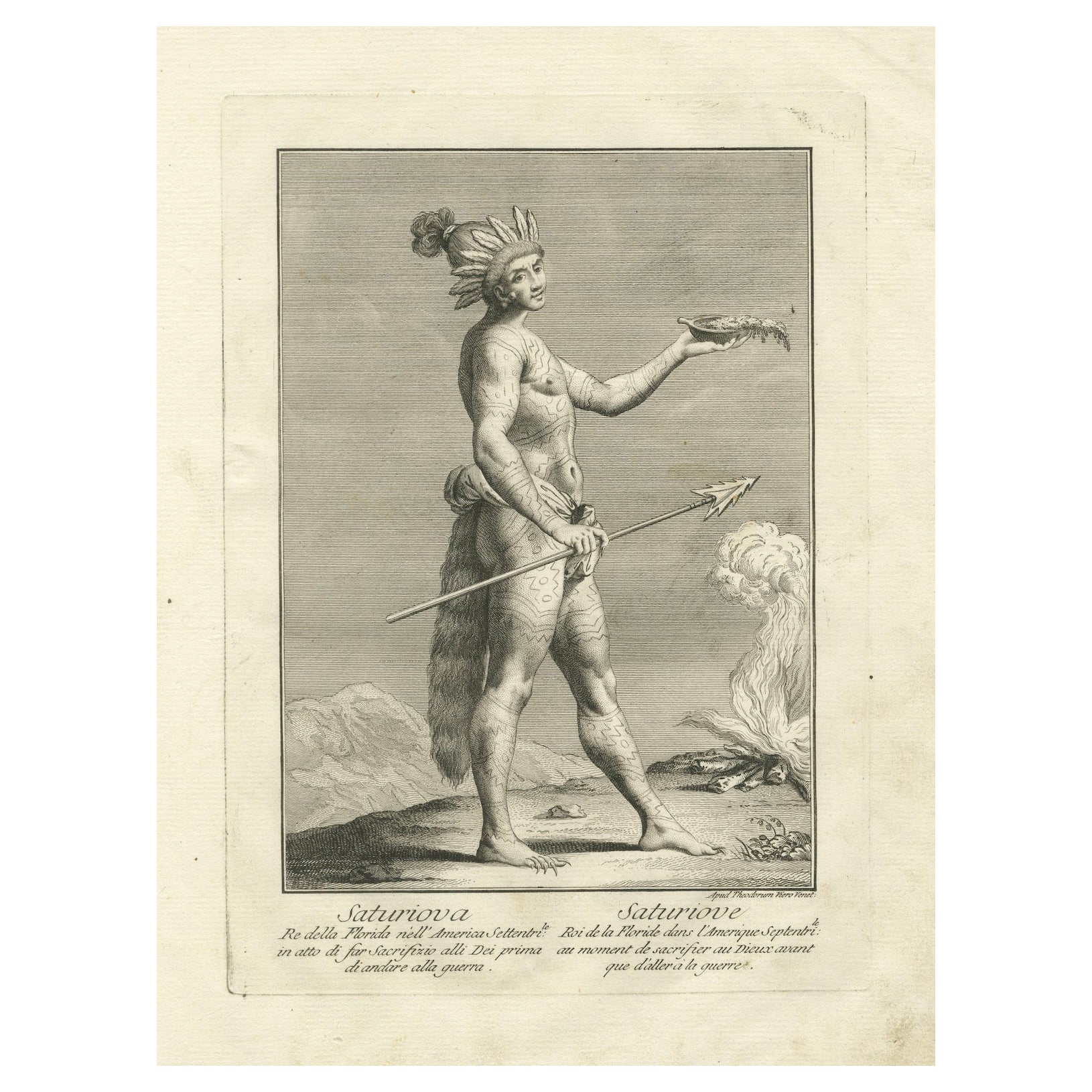
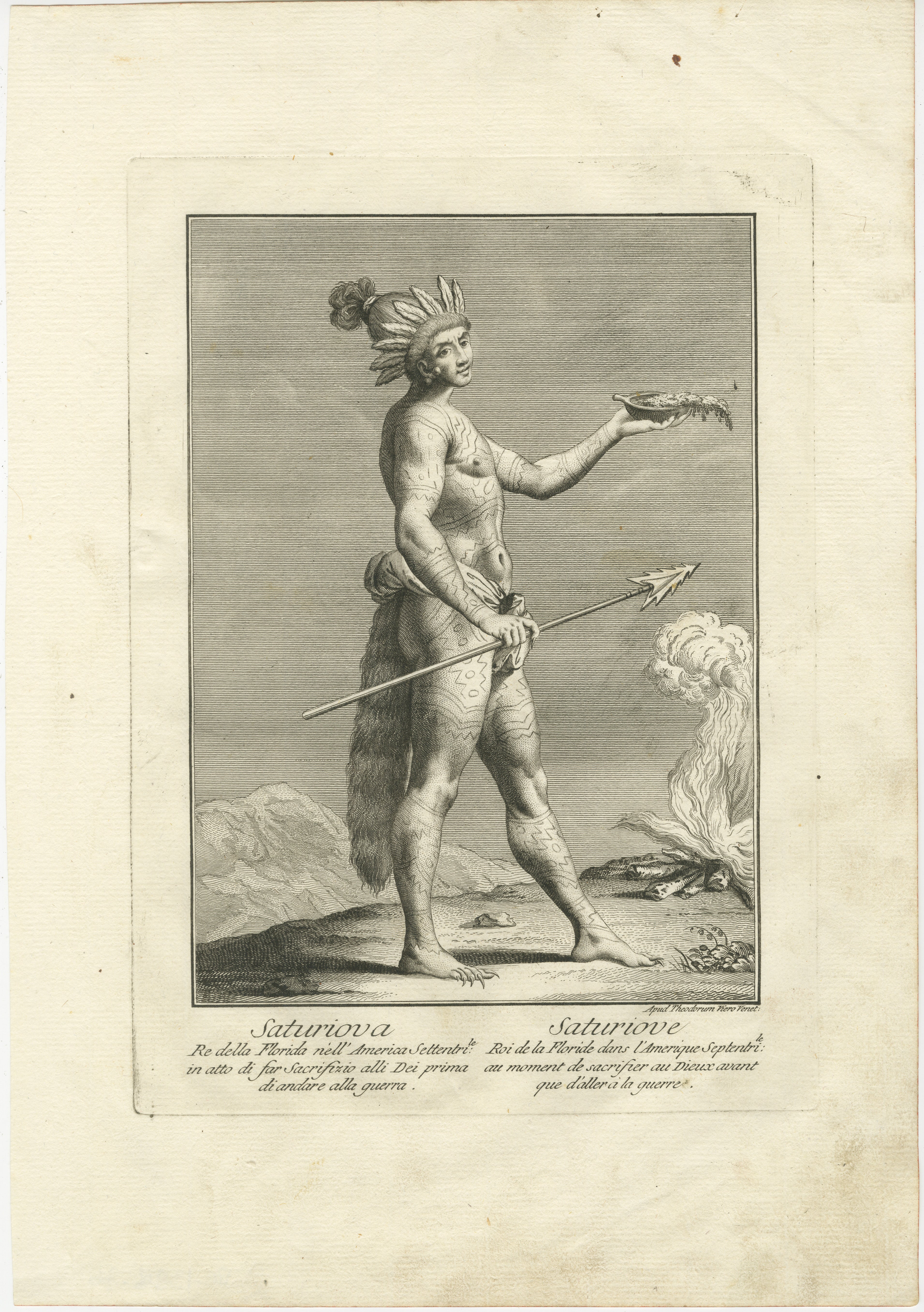
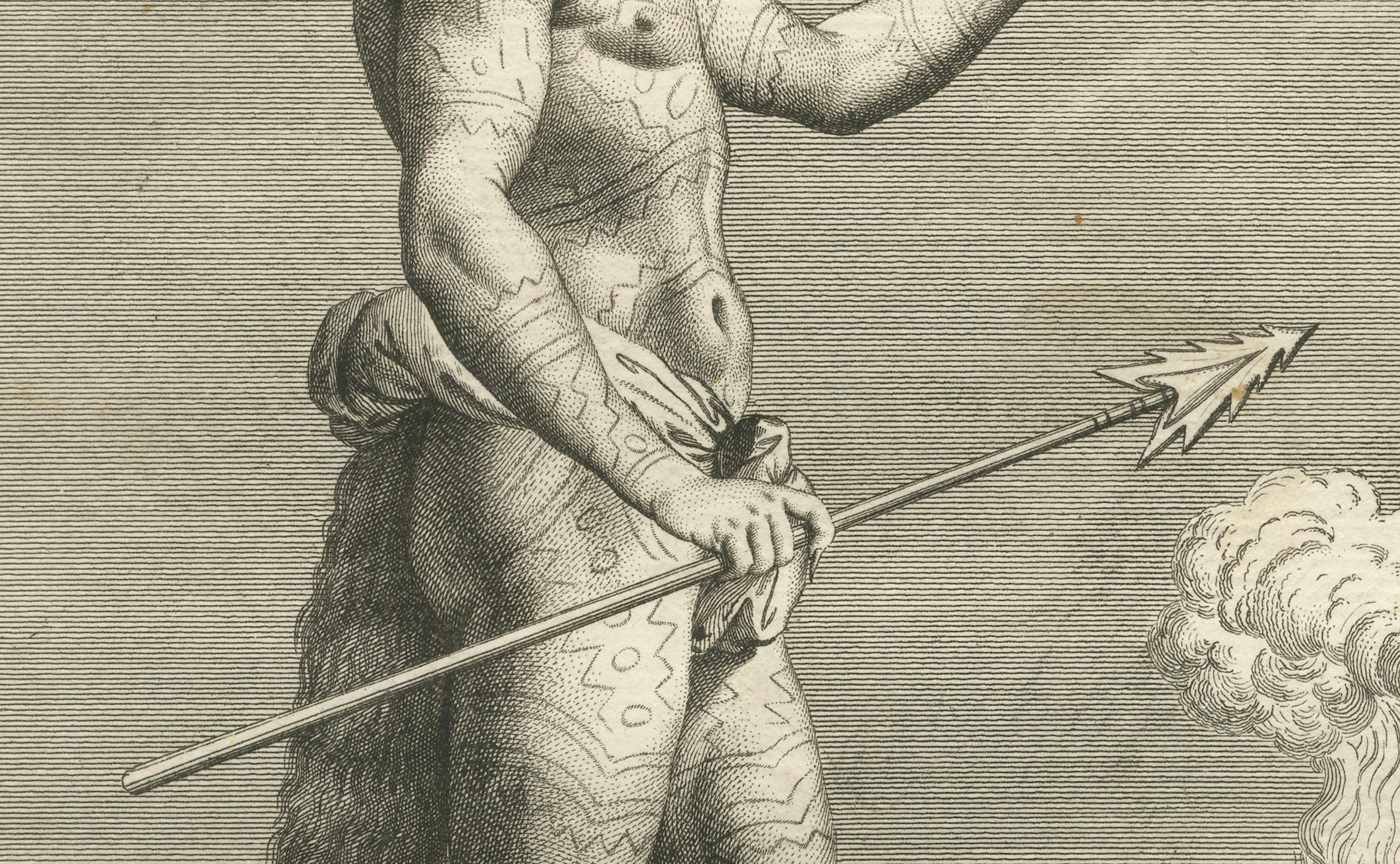
Original engraving titled "Saturiova," also known as "Saturione." The artwork was created by Teodoro Viero, an Italian engraver, painter, and publisher born on March 19, 1740, in Bassano del Grappa, and active mainly in Venice until his death around 1819 or 1821.
The illustration shows a figure referred to as "Saturiova," who is depicted as a warrior or leader, holding a bowl and a spear. The figure is adorned with body markings or tattoos, and a feathered headdress, suggesting a person of significance, possibly a chief or a shaman. The character's stance, with one hand extended holding a bowl, and the other holding a spear, along with the presence of a fire in the background, indicates a ritual or ceremonial act.
Caption and Context
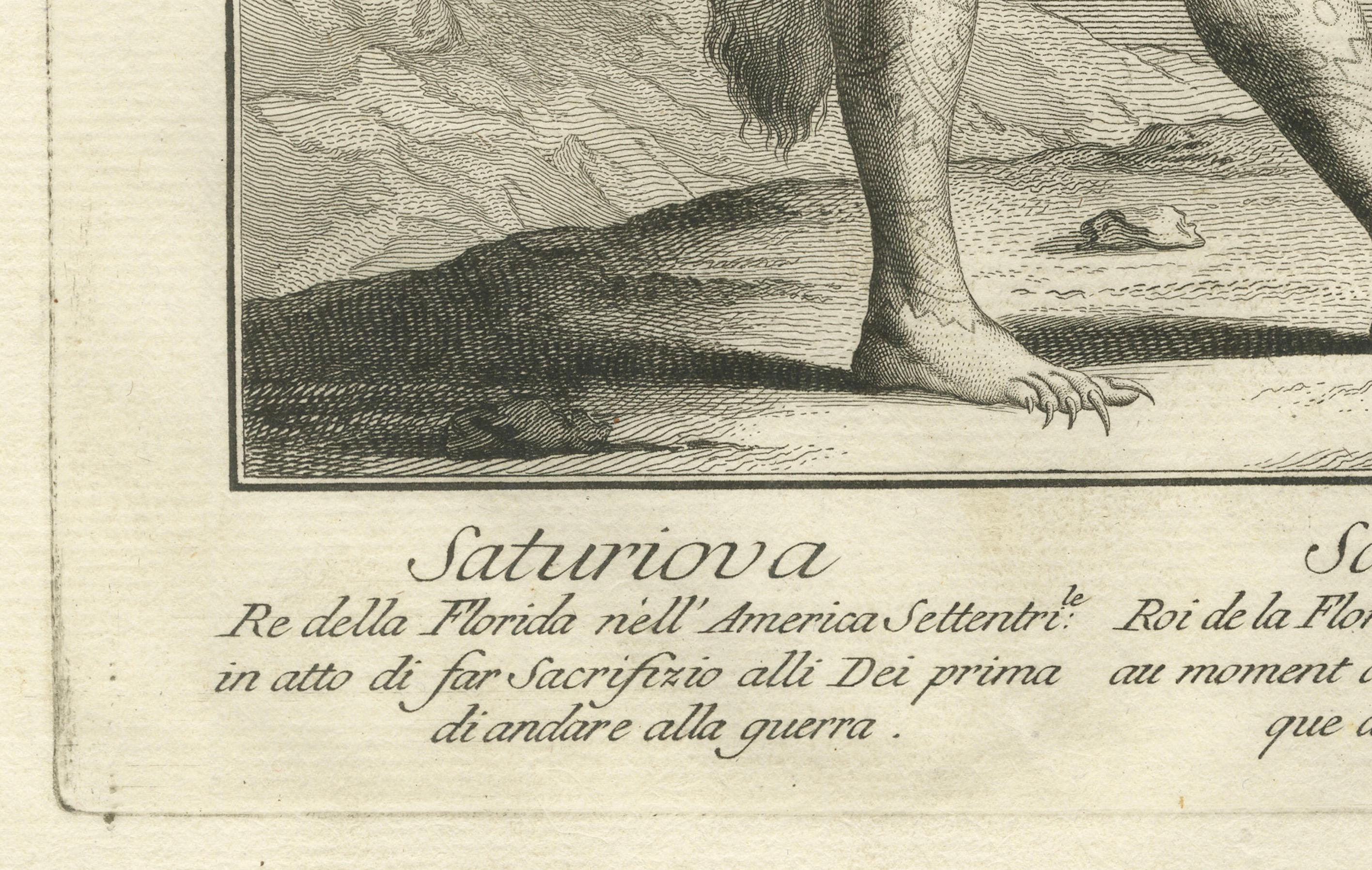
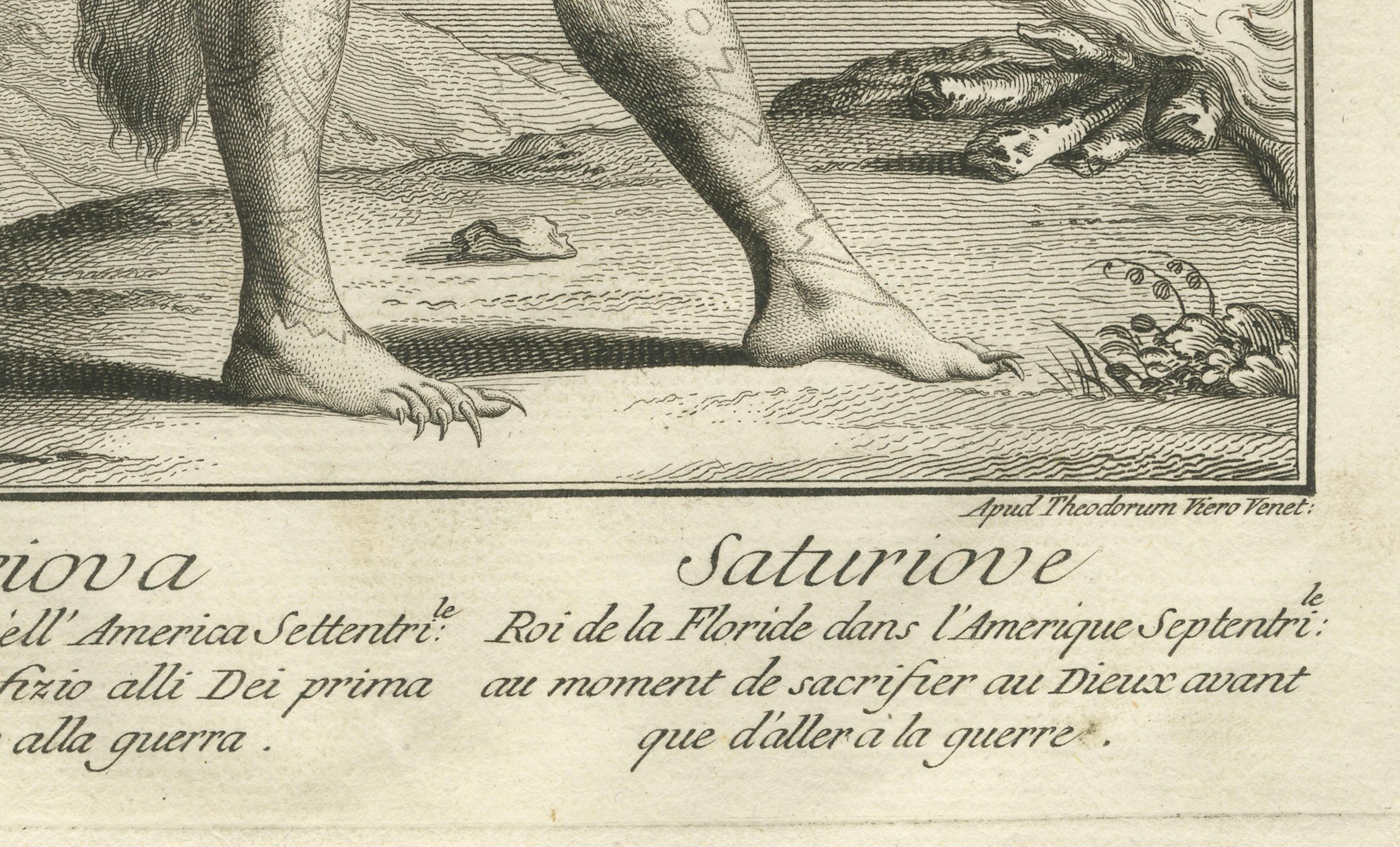
The captions in both Italian and French provide additional context:
- In Italian: "Re della Florida nell'America Settentrionale in atto di far Sacrificio alli Dei prima di andare alla guerra."
- In French: "Roi de la Floride dans l'Amérique Septentrionale au moment de sacrifier aux Dieux avant que d'aller à la guerre."
Translated, both captions describe the figure as a king of Florida in North America, performing a sacrifice to the gods before going to war. This portrayal aligns with European depictions of Native American rituals and leaders during the period, often romanticized or dramatized to fit European notions of the "noble savage" or the exoticism of the New World.
Historical and Artistic Context
Teodoro Viero was known for his engravings that depicted scenes of exotic and distant lands, including the Americas. His works were part of a larger European fascination with the indigenous cultures of the New World, fueled by travel accounts, exploration, and colonial encounters. These engravings were often based on second-hand accounts, illustrations, or imaginative interpretations rather than direct observation.
Viero's engravings, including this one, were likely intended for an educated European audience interested in learning about the diverse cultures and customs of far-off lands. These works contributed to the European perception of the Americas as mysterious and culturally rich.