About this sheet
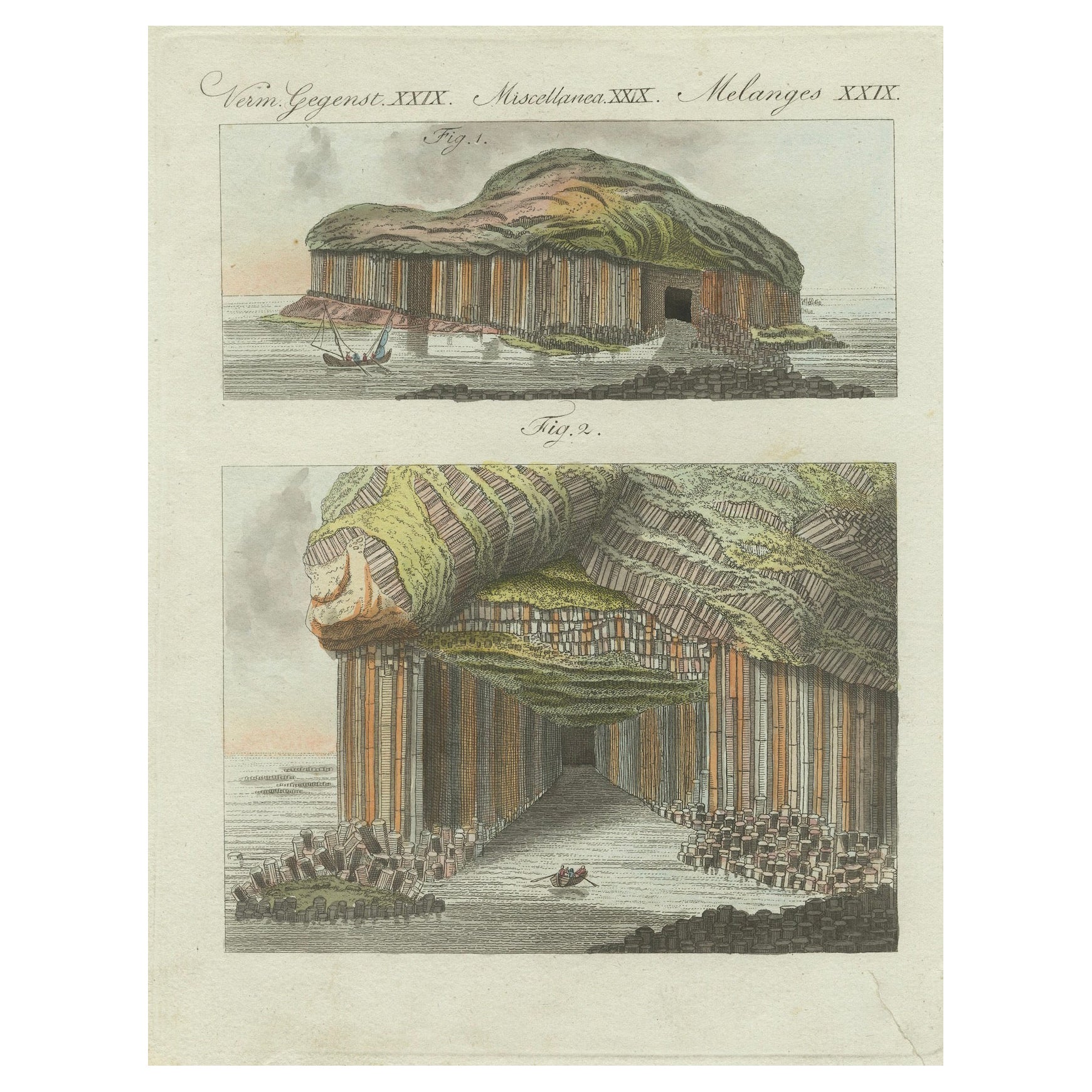
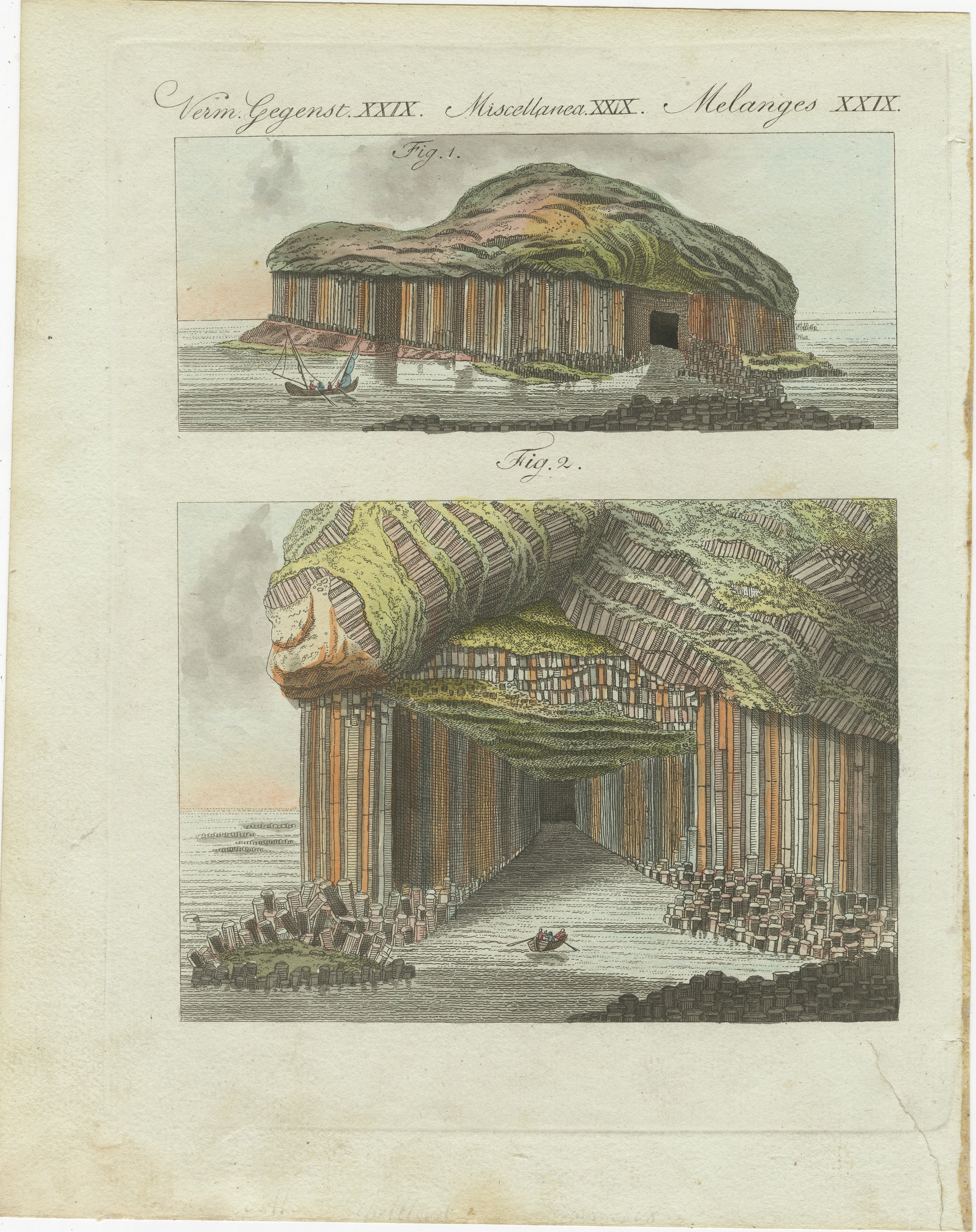
The image depicts Fingal's Cave, a famous sea cave located on the uninhabited island of Staffa, part of the Inner Hebrides in Scotland. This colored engraving is from the "Bilderbuch für Kinder" (Picture Book for Children) collection, published between 1790 and 1830 by Friedrich Justin Bertuch. The artist is from the German School, dating to the 19th century, like the previous illustration.
The engraving consists of two detailed views of Fingal's Cave:
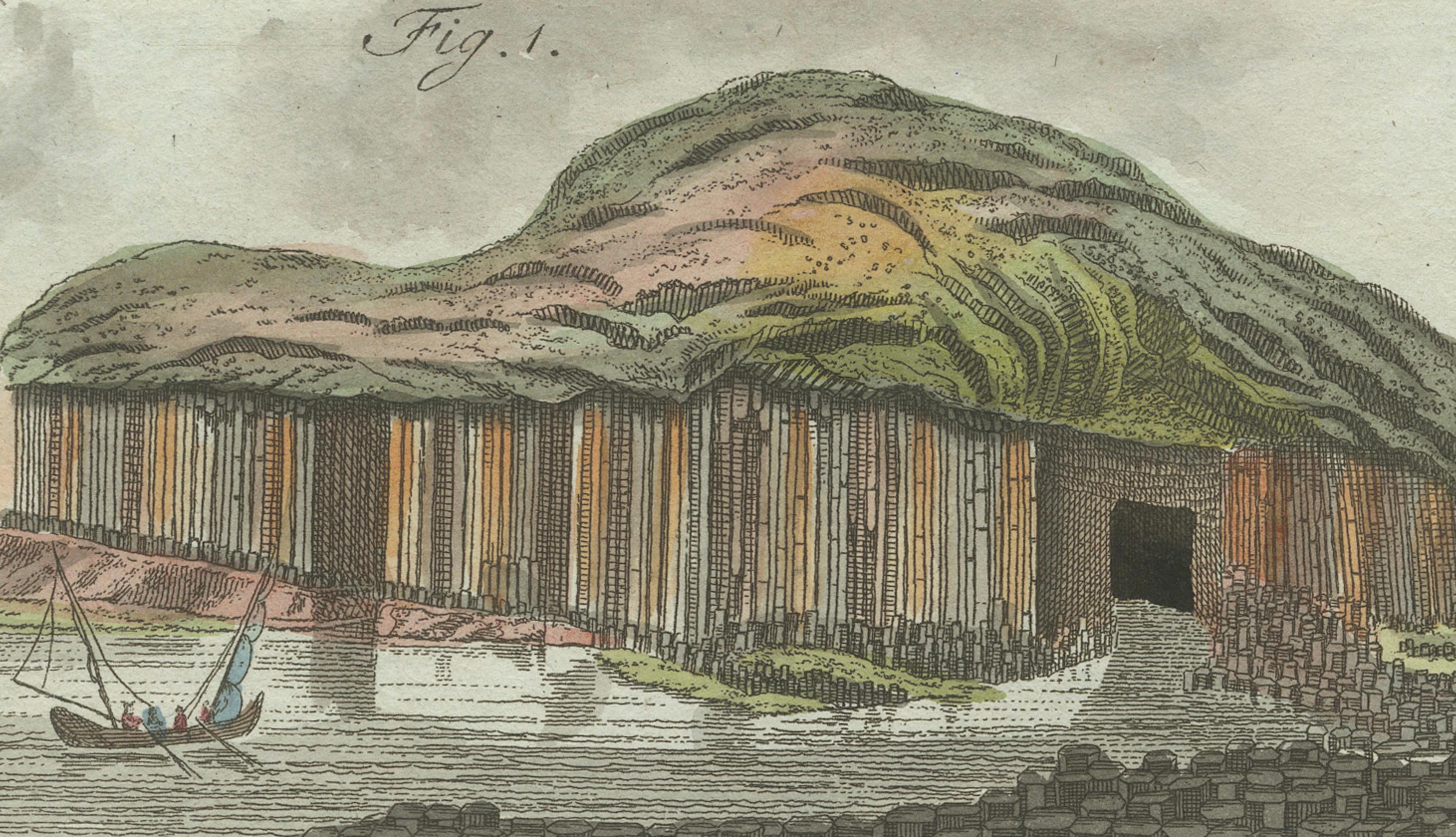
1. Figure 1: Shows the exterior view of the cave from a distance, highlighting the distinctive hexagonal basalt columns that form the cave's walls and entrance. A small boat is shown near the entrance, giving a sense of scale to the massive structure. The scene depicts a serene setting with calm waters and a cloudy sky.
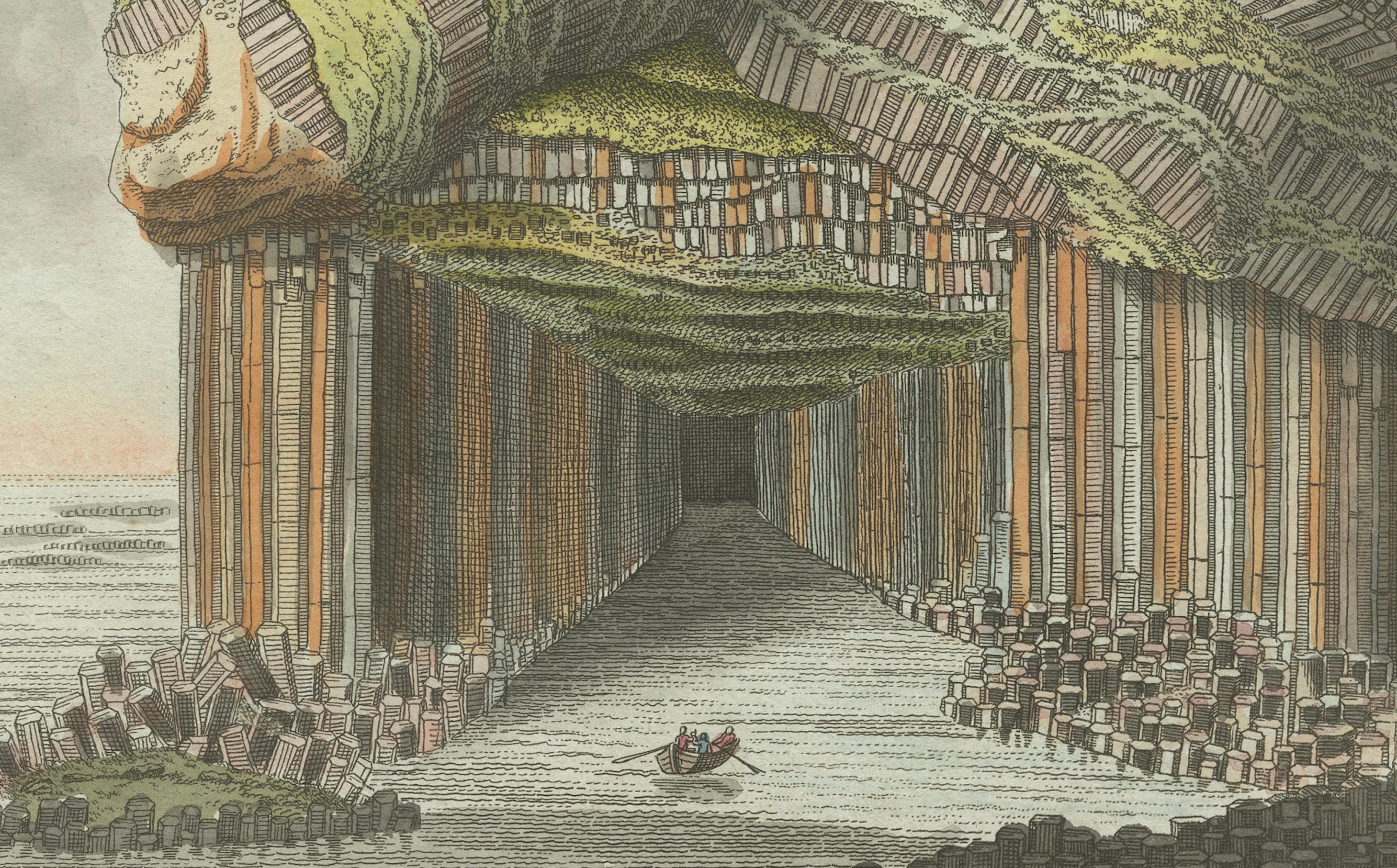
2. Figure 2: Offers a closer, more dramatic view of the cave's entrance, looking into the cavernous interior. The intricate patterns of the basalt columns are clearly visible, illustrating the natural geometric formations. The perspective draws the viewer's eye into the dark, mysterious depths of the cave, where another small boat is depicted, emphasizing the cave's grandeur and the sense of exploration.
History of Fingal's Cave
Fingal's Cave is renowned for its unique geological structure formed by hexagonally jointed basalt columns, similar to those found at the Giant's Causeway in Northern Ireland. These formations were created by ancient volcanic activity, with the lava cooling and fracturing in a characteristic hexagonal pattern. The cave itself is about 70 meters deep, 20 meters high, and has a length of around 85 meters.
The cave was named after the hero Fingal from Scottish and Irish legend, and it gained widespread recognition in the 19th century due to its association with the romantic era of exploration and its inspiring influence on artists, musicians, and writers. The famous composer Felix Mendelssohn visited the cave in 1829, and his experience inspired him to compose the "Hebrides Overture," also known as "Fingal's Cave."
Current State
Today, Fingal's Cave remains a popular tourist destination, drawing visitors to the island of Staffa to experience its natural beauty and acoustics, which are said to resemble a cathedral. The cave's interior is accessible only by boat, and visitors can venture inside to see the stunning basalt formations and hear the unique sounds created by the waves echoing within the cave. Staffa and Fingal's Cave are protected as part of the National Trust for Scotland.
About the Original Work
"Bilderbuch für Kinder" was a pioneering illustrated book that sought to educate and entertain children with a variety of subjects ranging from nature, geography, and technology to cultural landmarks. The publication by Friedrich Justin Bertuch provided a valuable visual record of significant natural and man-made wonders of the time, making it accessible to a wider audience. The use of detailed colored engravings, as seen in this depiction of Fingal's Cave, helped to capture the imagination of its readers and brought distant and exotic locations to life.