About this sheet
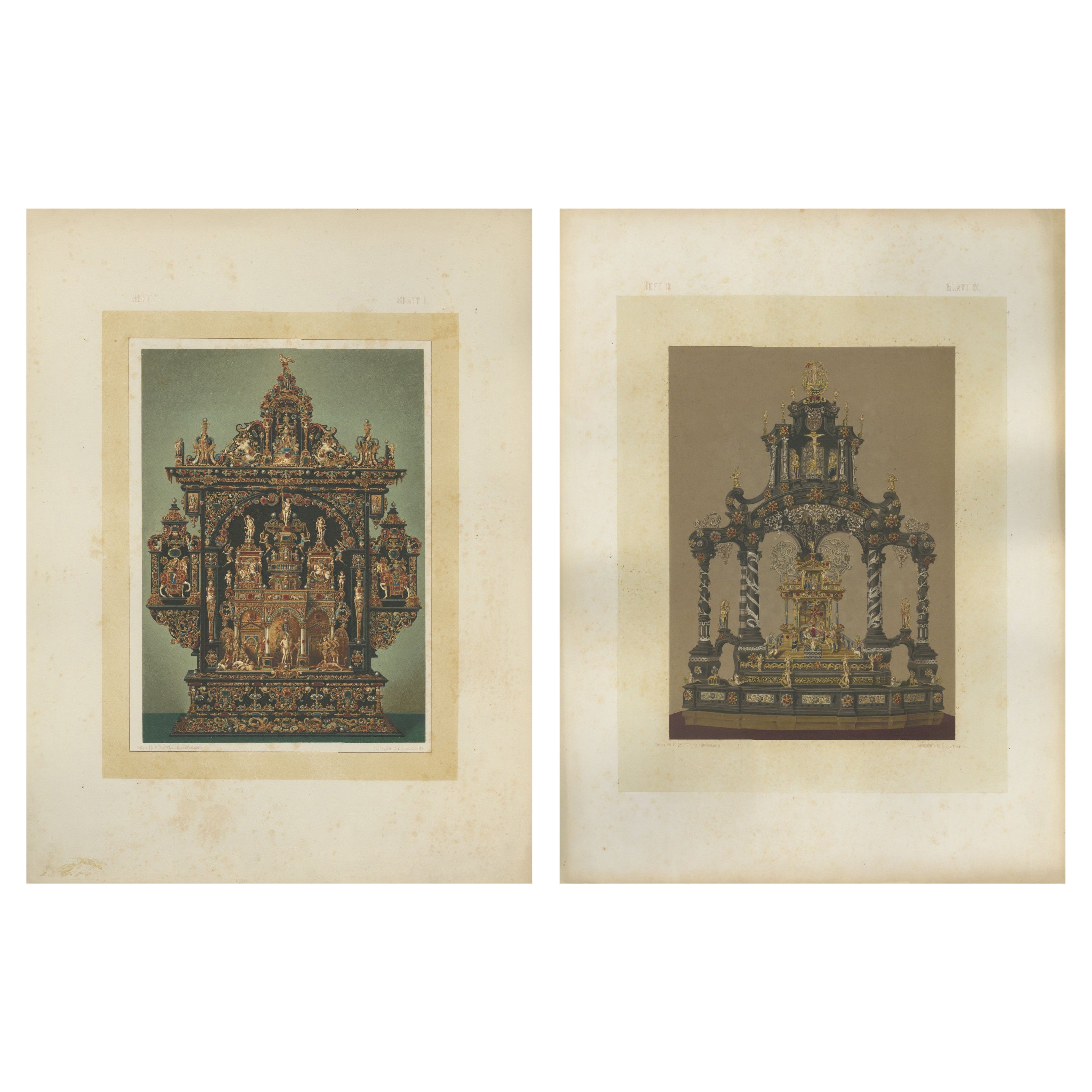
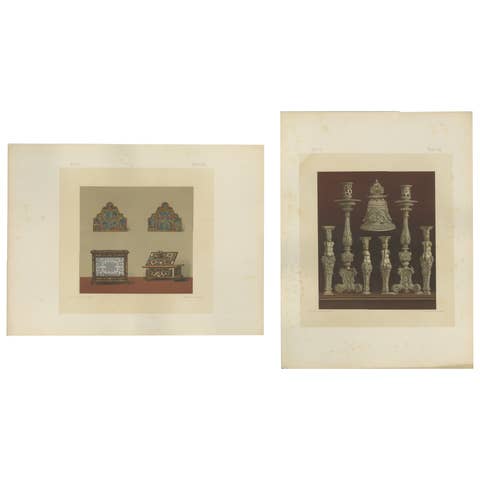
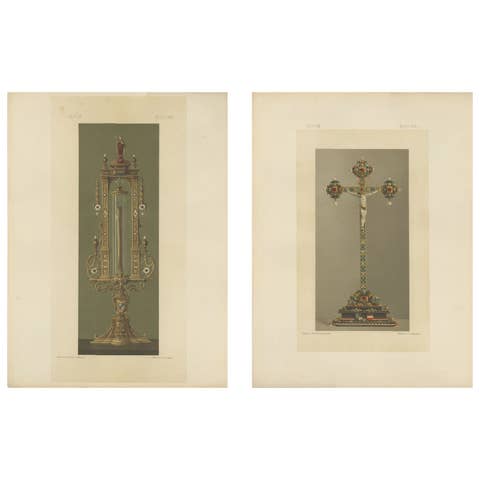
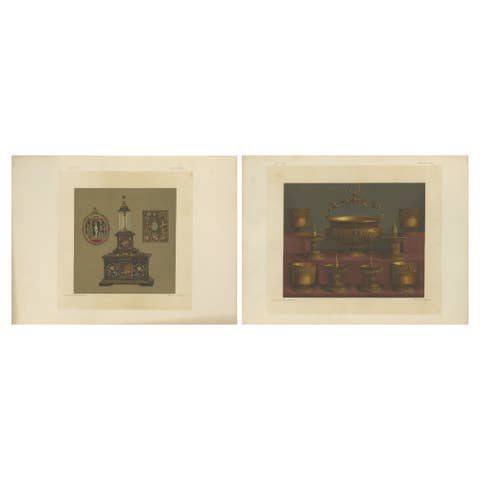
Pair Bavarian Royal Chapel Altar Shrines Chromolithographs, F.X. Zettler Munich 1874
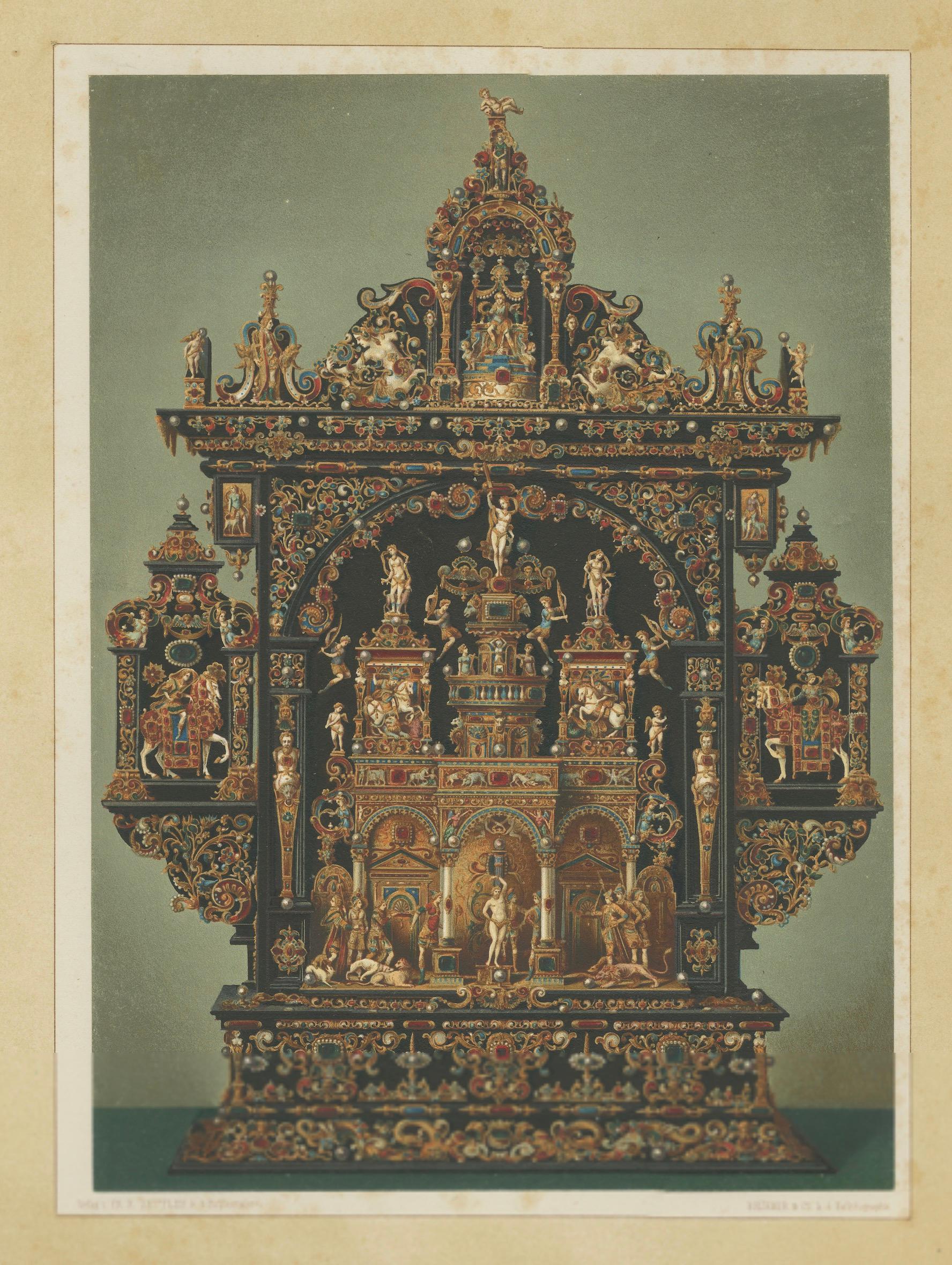
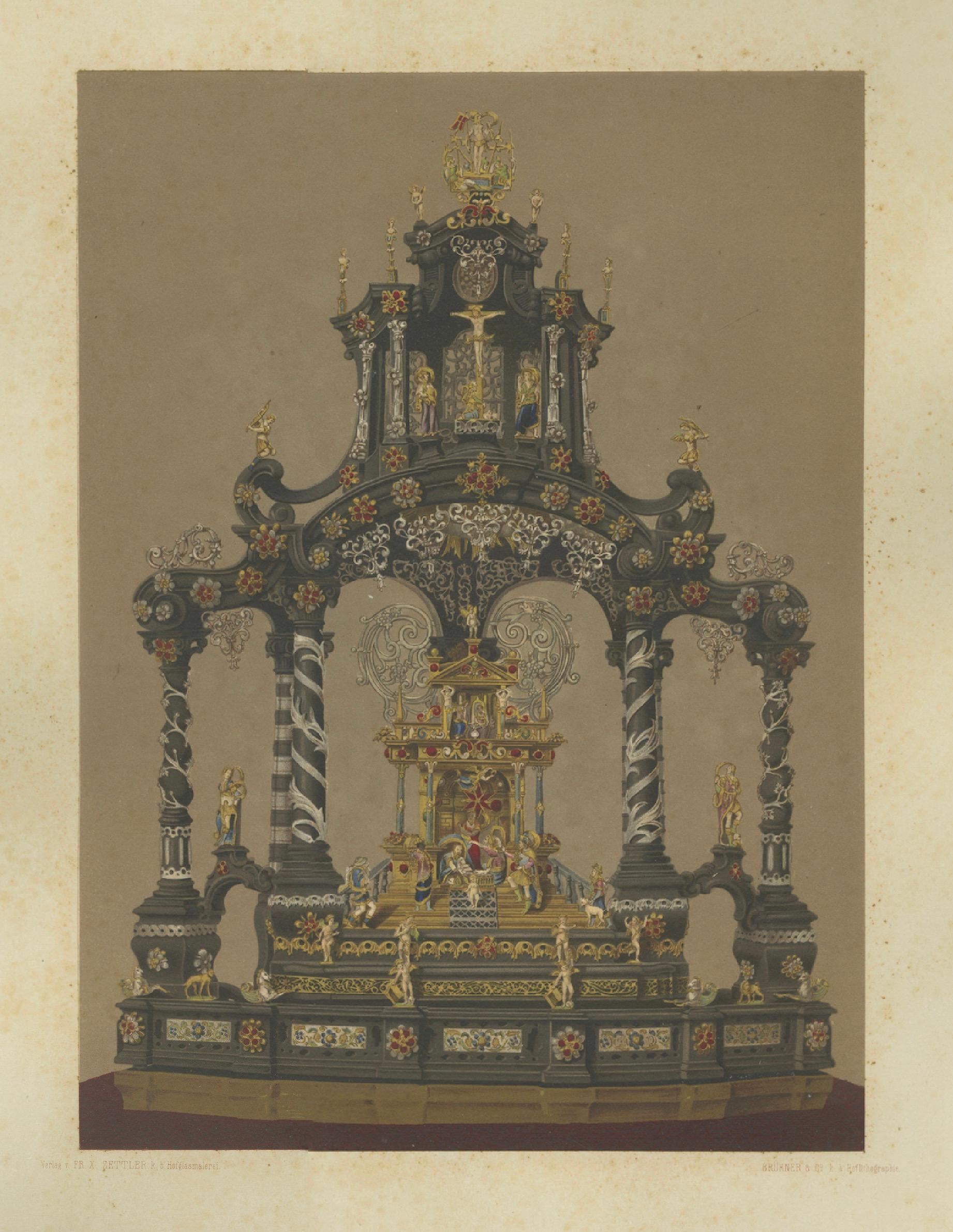
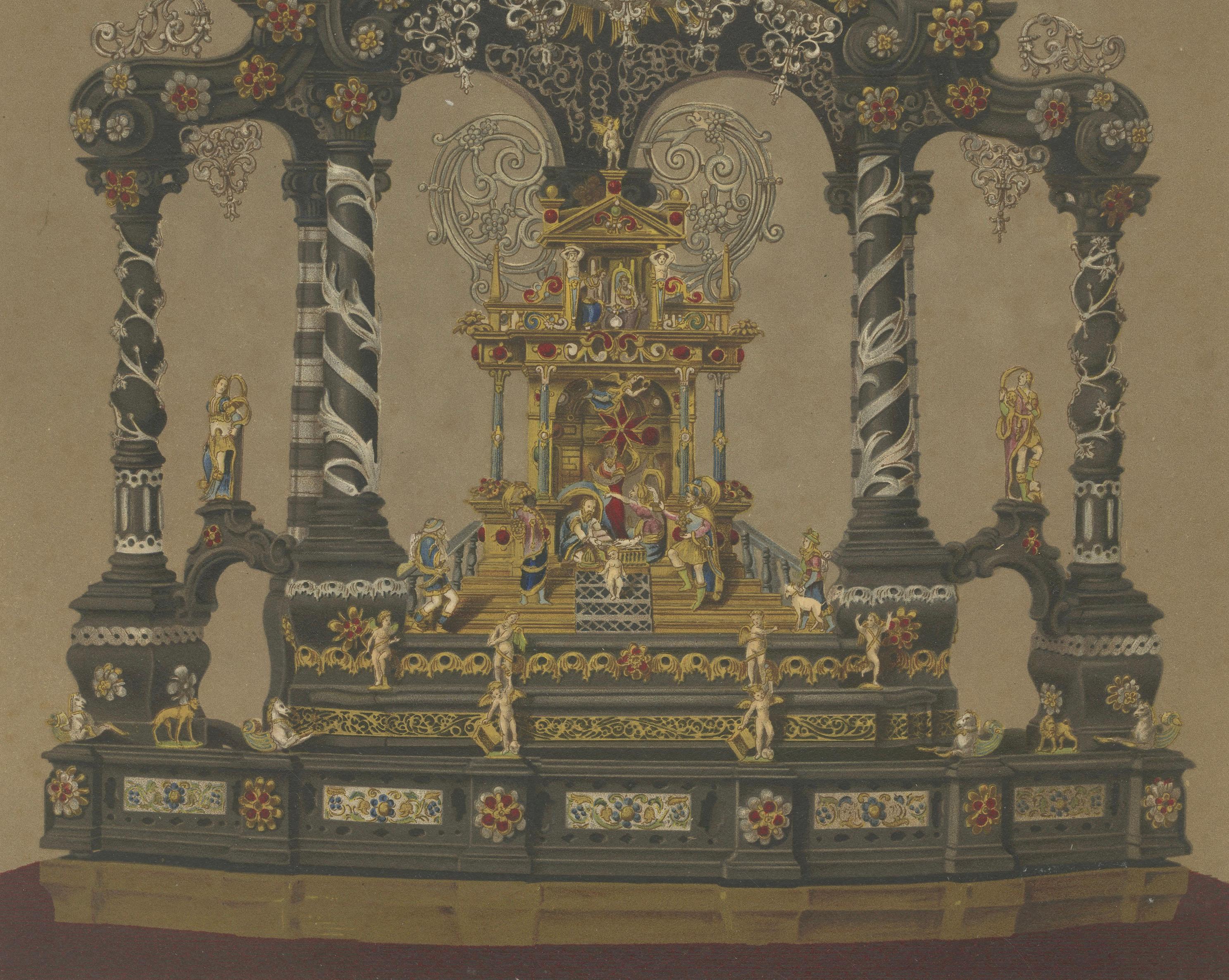
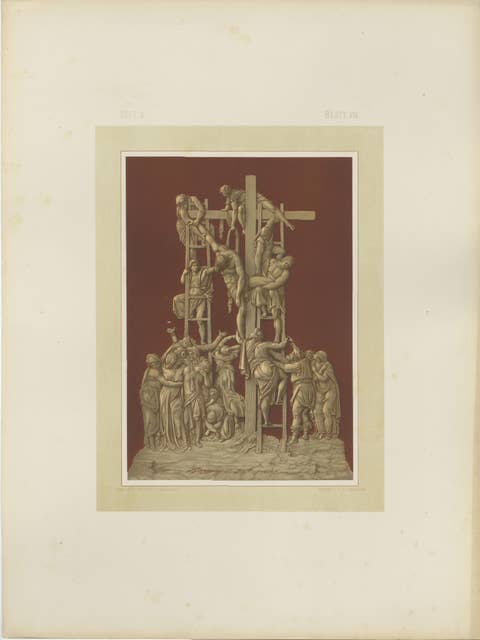
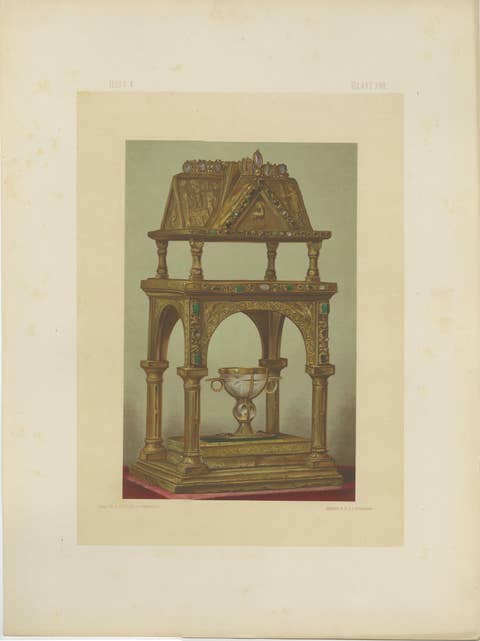
This striking pair of chromolithographs, produced in Munich in 1874 by the renowned ecclesiastical publisher F. X. Zettler, presents two elaborate altar shrine compositions from the treasury of the Reiche Kapelle (Rich Chapel) within the Munich Residenz. Issued during the reign of King Ludwig II of Bavaria as part of the celebrated portfolio Ausgewählte Kunstwerke aus dem Schatze der Reichen Capelle in der königlichen Residenz zu München, the prints document the ceremonial splendor and artistic refinement of Bavarian royal ecclesiastical art.
These plates are offered unframed, allowing the buyer full freedom of framing choice.
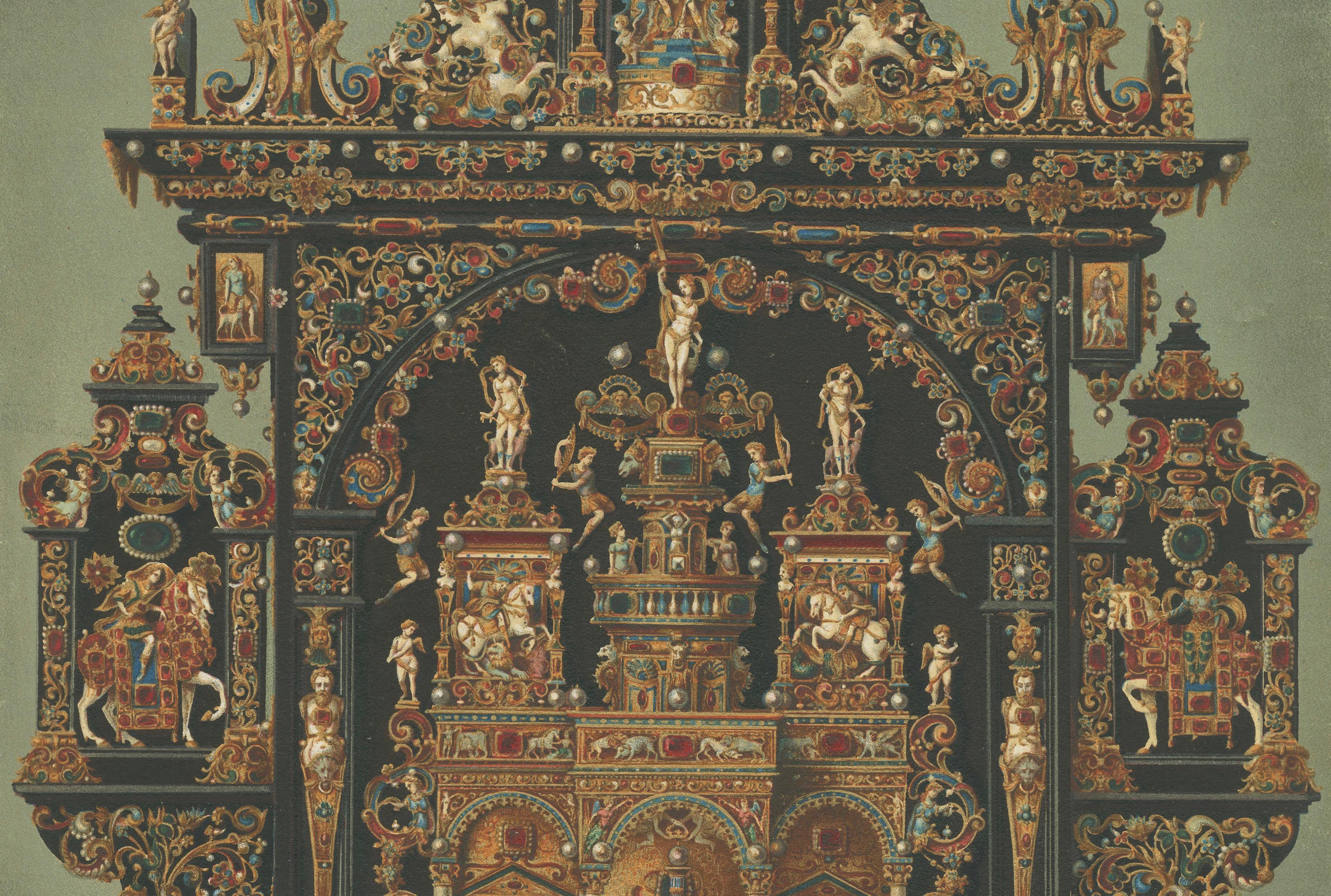
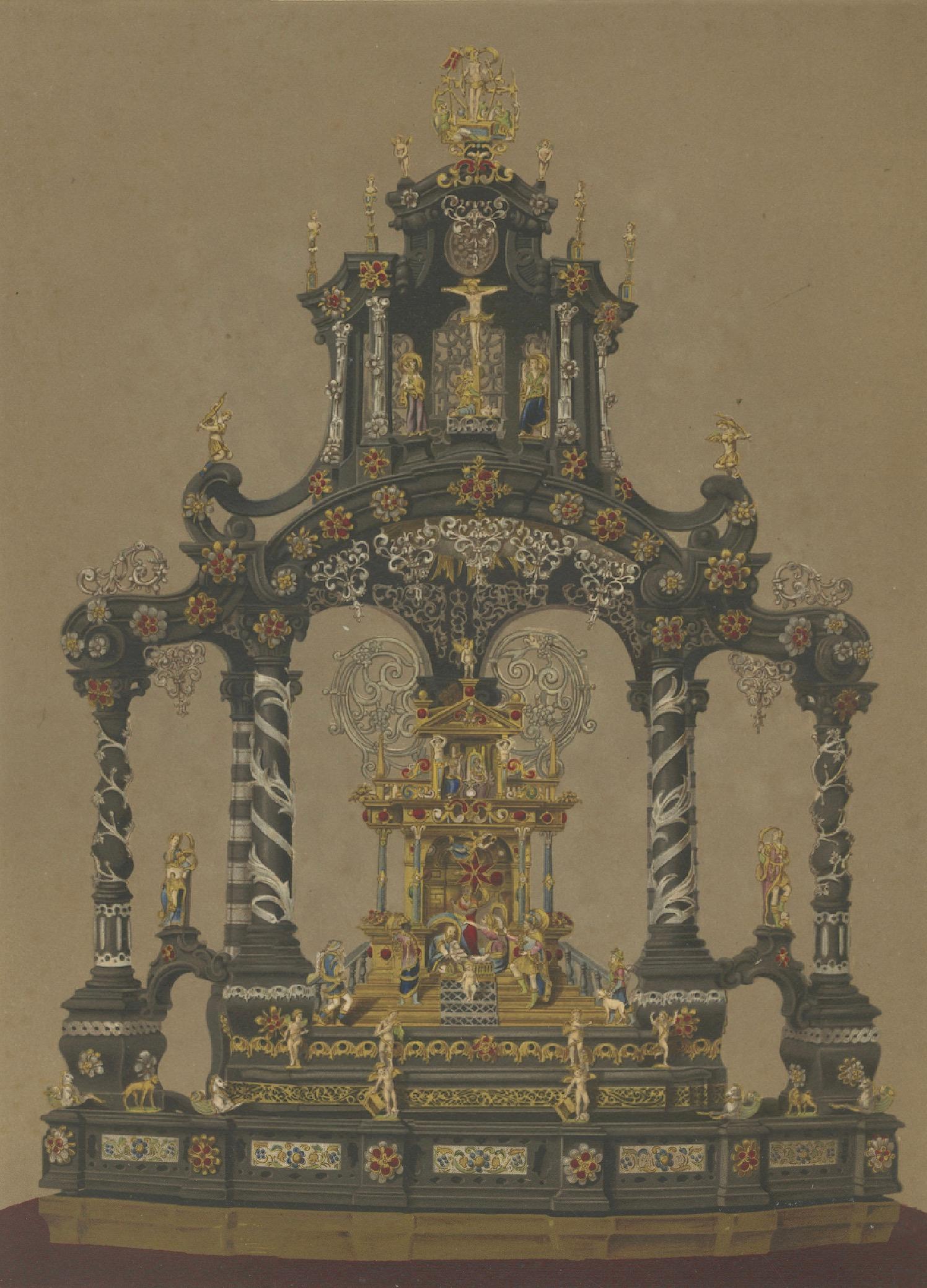
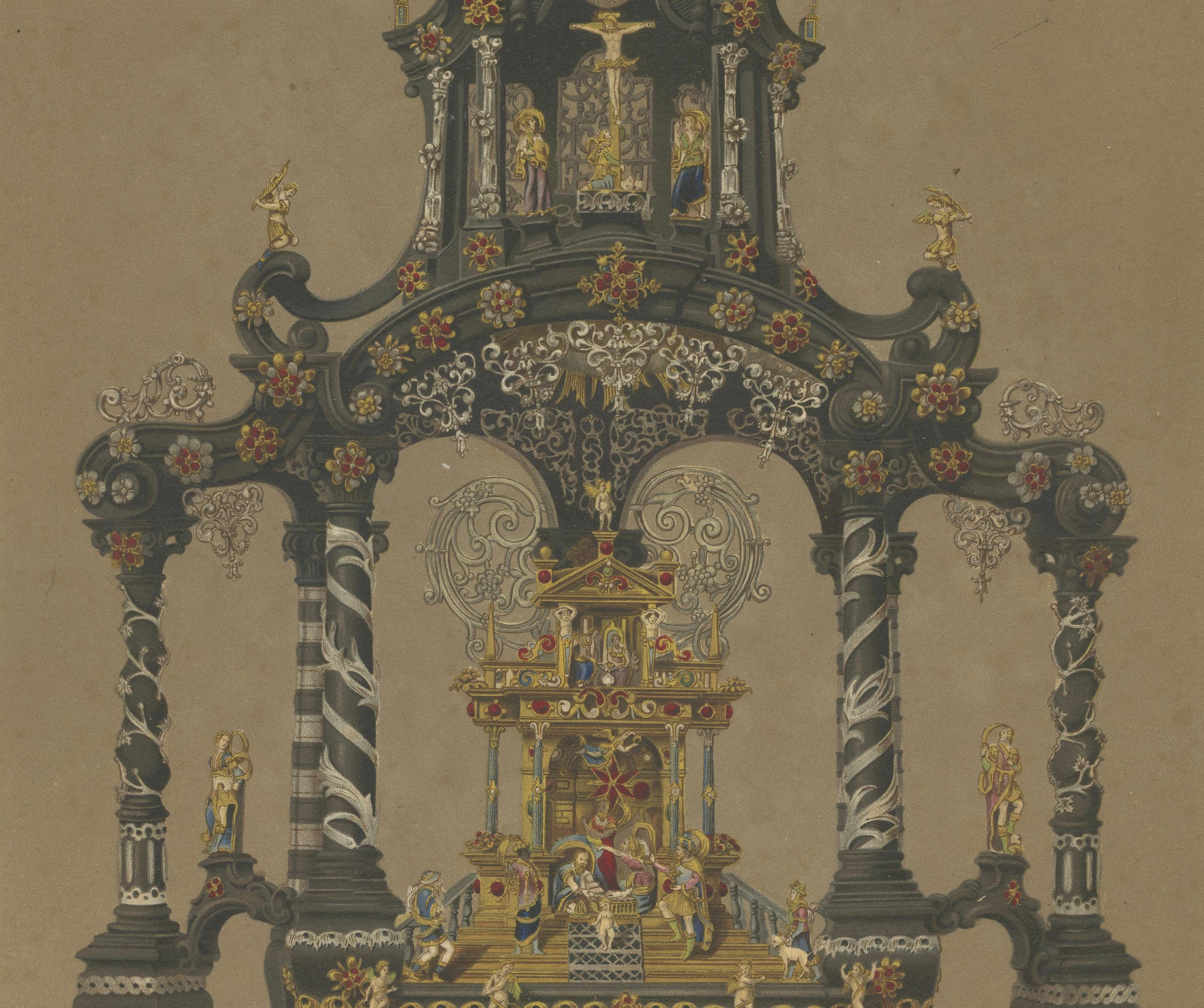
Each plate depicts a richly ornamented altar structure rendered with exceptional chromatic depth and precision. The compositions showcase intricate architectural frameworks adorned with sculptural figures, polychrome decoration, and elaborate ornamental detailing characteristic of historicist and Gothic revival aesthetics. While closely related in theme and origin, the two images present distinct design approaches: one emphasizing dense decorative richness and layered narrative elements, the other highlighting a more open architectural composition centered on a reliquary shrine. This contrast creates a dynamic visual dialogue rather than strict symmetry, making the pair particularly engaging when displayed together.
F. X. Zettler’s Munich workshop was internationally recognized for its mastery of chromolithography, a printing technique that allowed the accurate reproduction of complex color schemes, gilded effects, and delicate ornamental surfaces. These prints were produced both as scholarly documentation of royal treasures and as inspirational design references for artists, architects, and collectors interested in ecclesiastical craftsmanship.
As a pair, the plates appeal to collectors of religious art, Bavarian history, Gothic revival design, and nineteenth-century decorative printmaking. Their complementary yet contrasting compositions make them suitable for curated interiors where visual variation enhances the overall display.
Condition report: Age-related toning and scattered foxing consistent with nineteenth-century paper; colors remain strong with clear detail. Margins intact with normal handling wear.
Framing tips: Frame with matching dark wood or gilt frames and wide ivory mats; equalizing outer frame dimensions will visually unify the pair despite differences in internal composition.