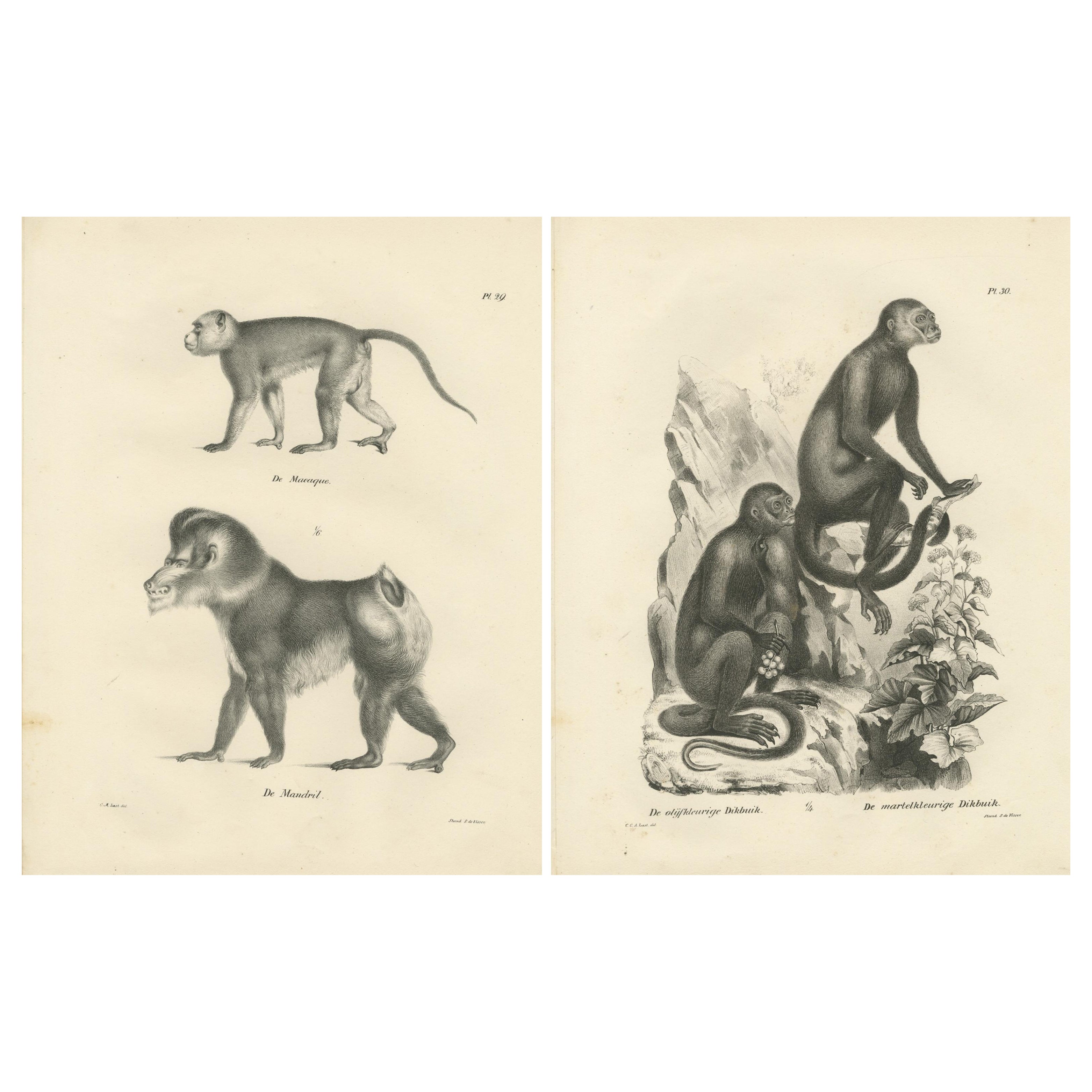
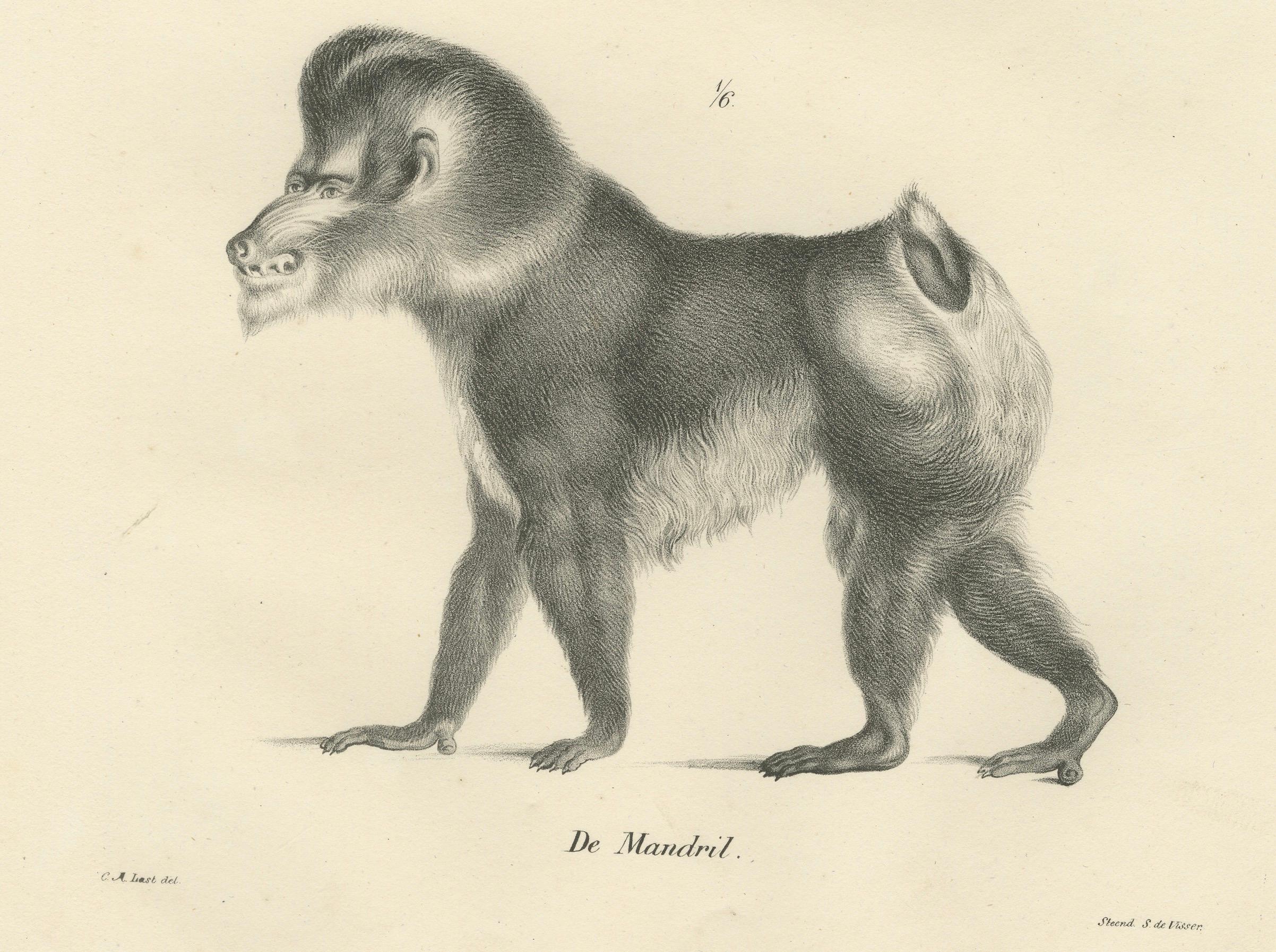
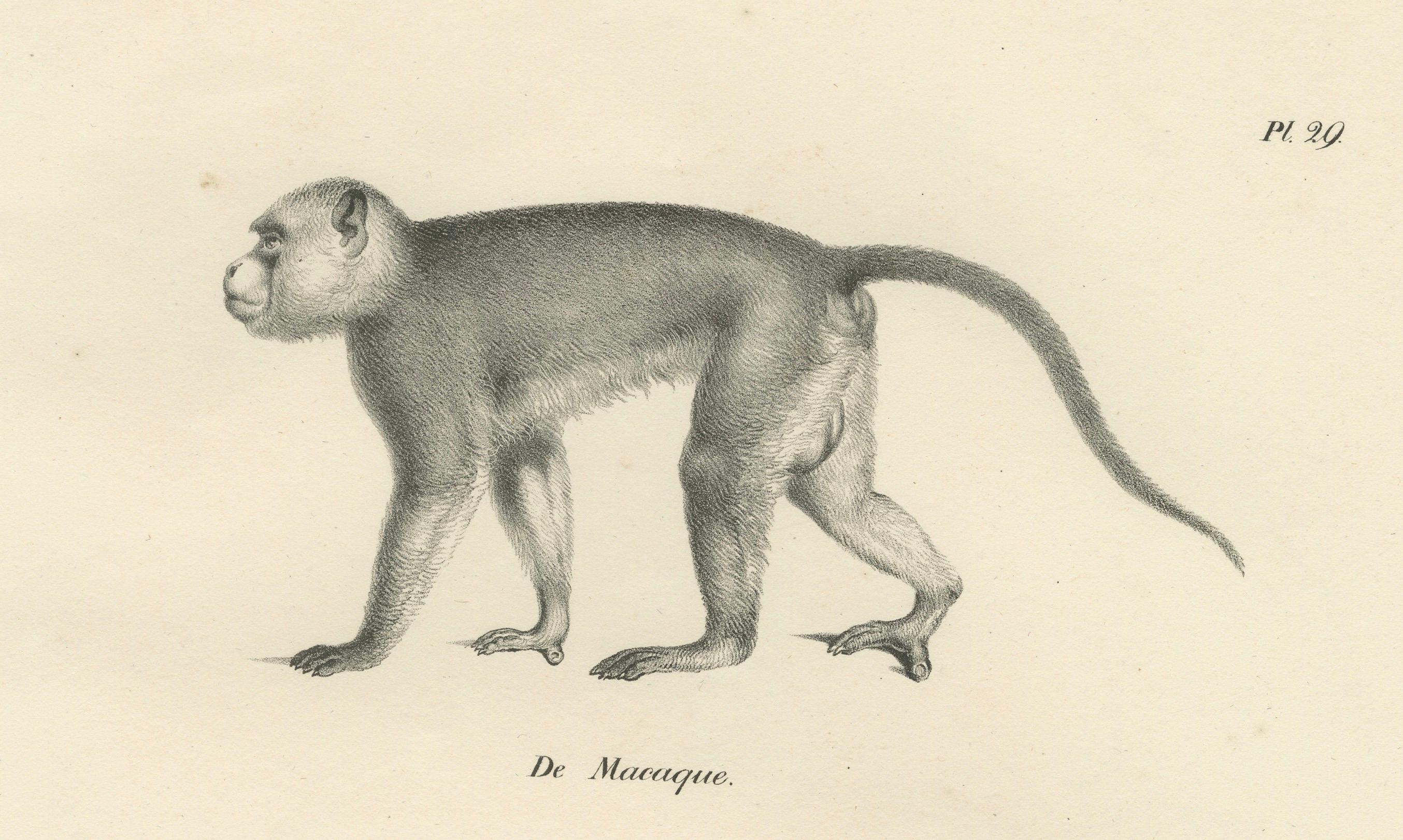
Macaque, Mandrill & Dikbuik Monkeys, Lithographs by C.C. Last, 1836
€ 599
One of a kind: this is the sheet in the photographs. Ships from Langweer, the Netherlands.
Date
1836
Sheet size
32.2 × 26 cm (12.7 × 10.2 in)
Reference
BG-13176-29 and BG-13176-30
Condition
good, given age. Light foxing / soiling. General age-related toning and/or occasional minor defects from handling. Please study scan carefully.
About this sheet
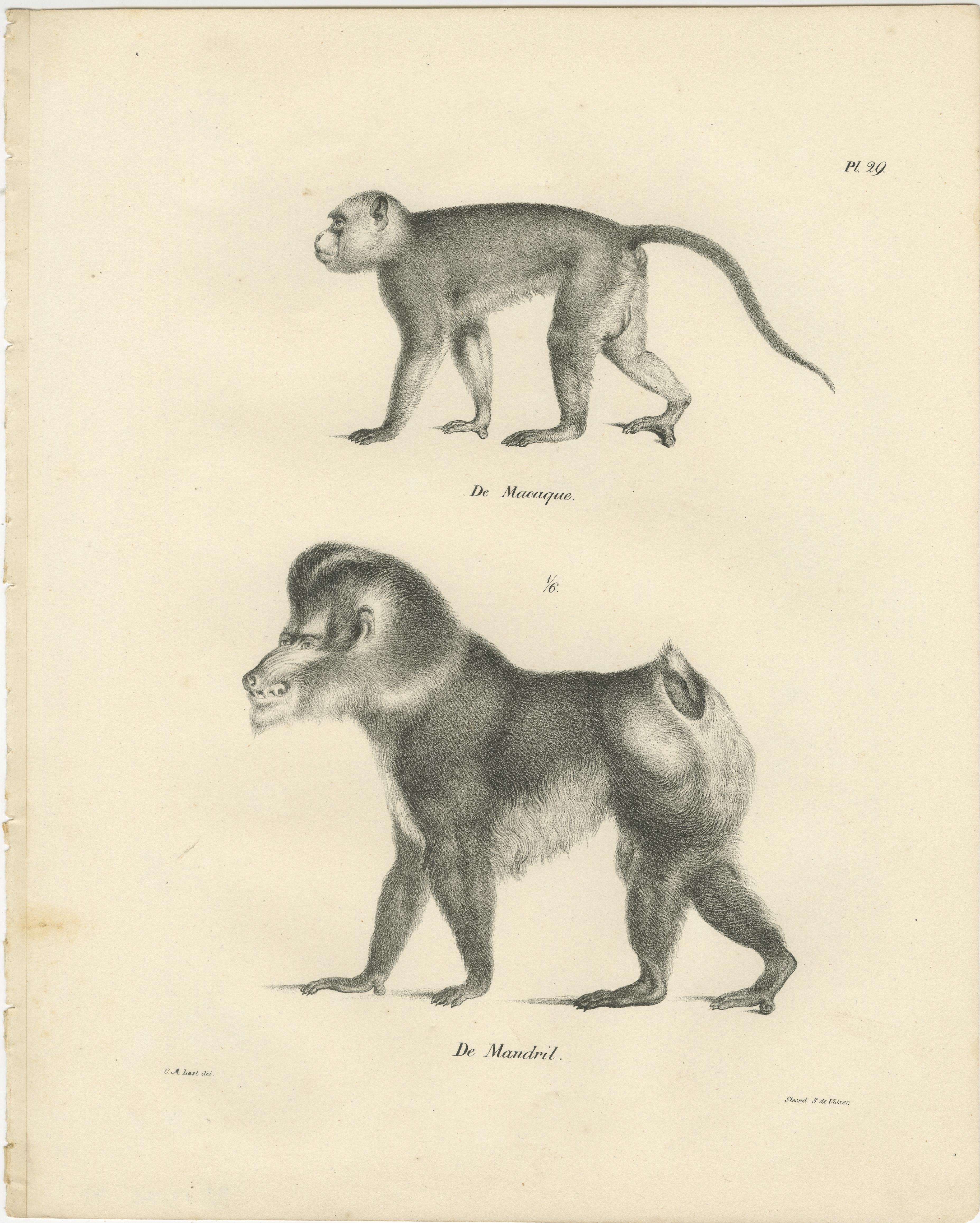
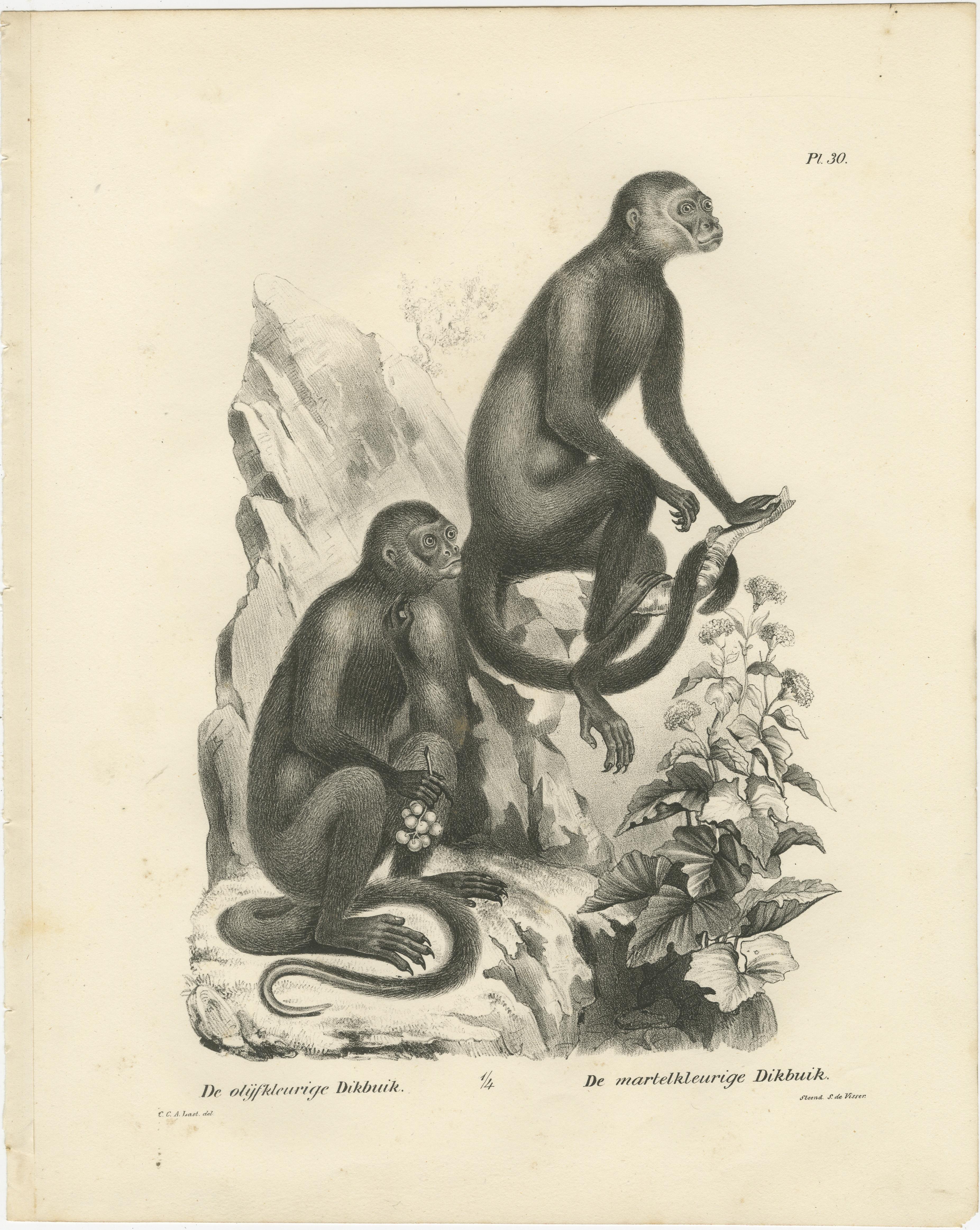
This image presents two lithographs depicting different species of primates, drawn by Carel Christiaan Antony Last and printed by S. de Visser en Zoon in The Hague in 1836. These detailed engravings were part of *Volledige Natuurlijke Historie der Zoogdieren*, a comprehensive natural history book authored by Heinrich Rudolf Schinz. These particular prints are part of a zoological study, offering an artistic and scientific representation of various primates.
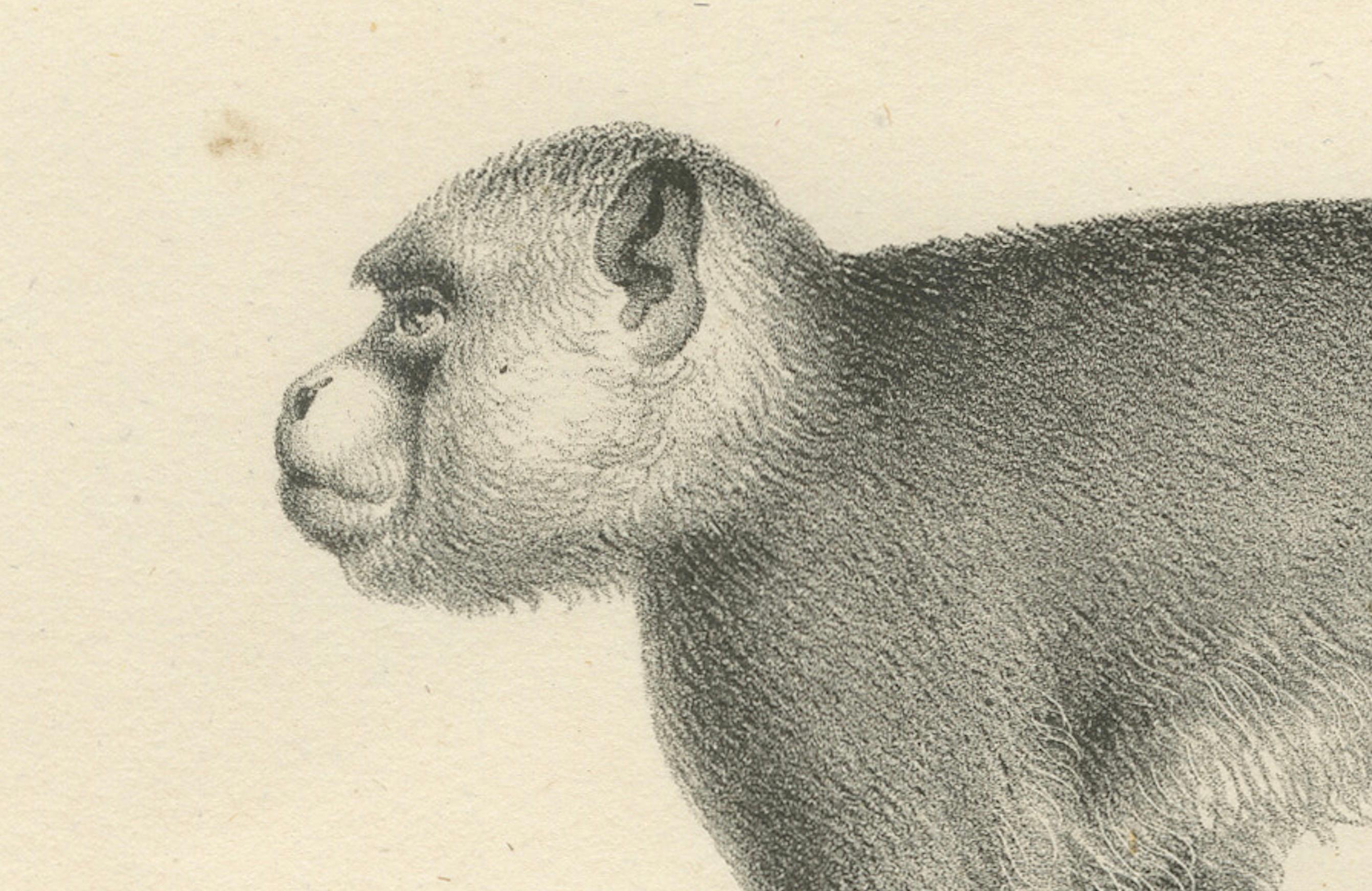
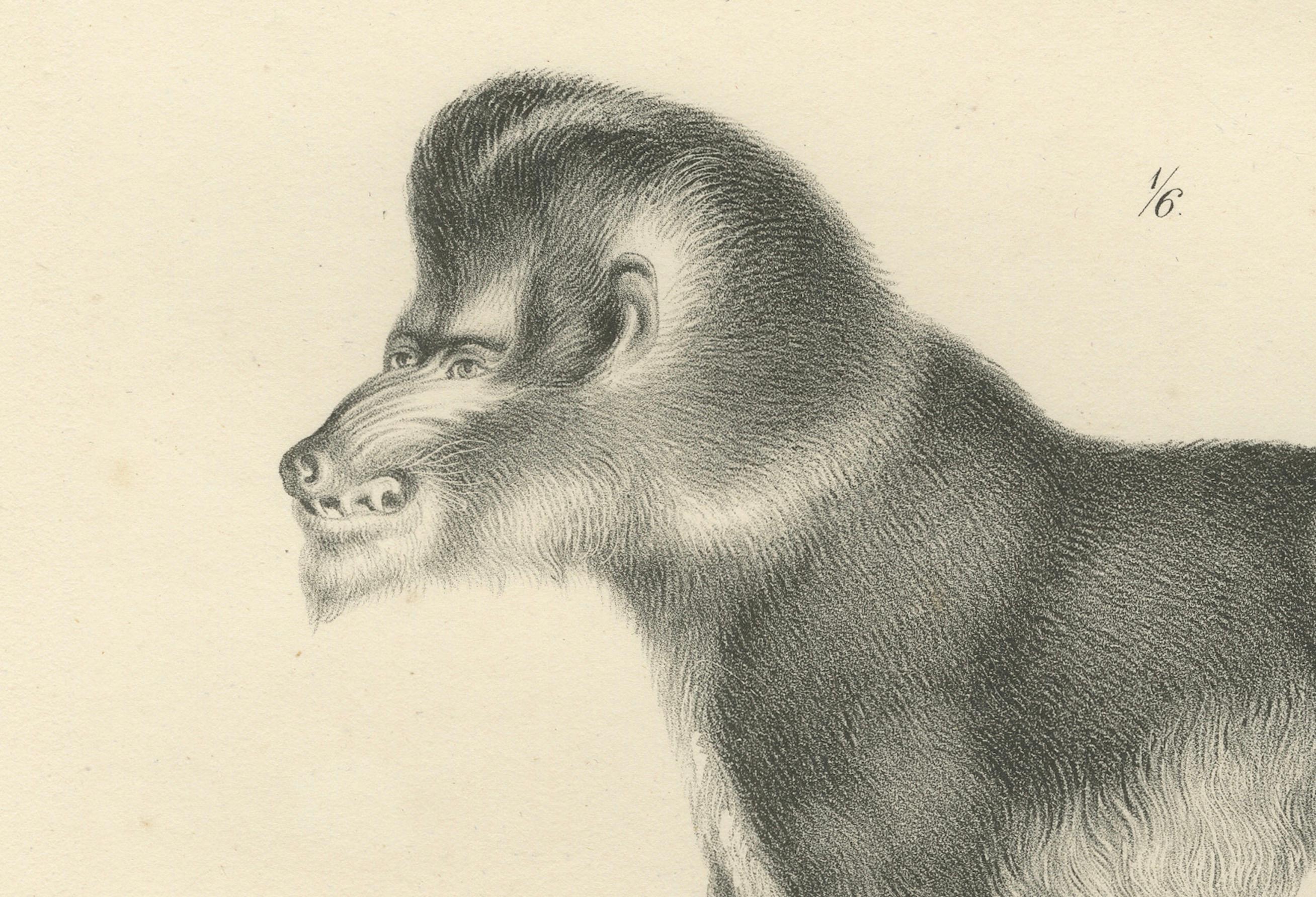
The first lithograph (Pl. 29) features a macaque (De Macaque) and a mandrill (De Mandril). The macaque is shown walking, with a focus on its sturdy posture and strong limbs. The mandrill is depicted standing, its prominent facial features and muscular build captured in a manner that emphasizes its unique appearance, particularly its large, colorful face, which is a well-known characteristic of the species.
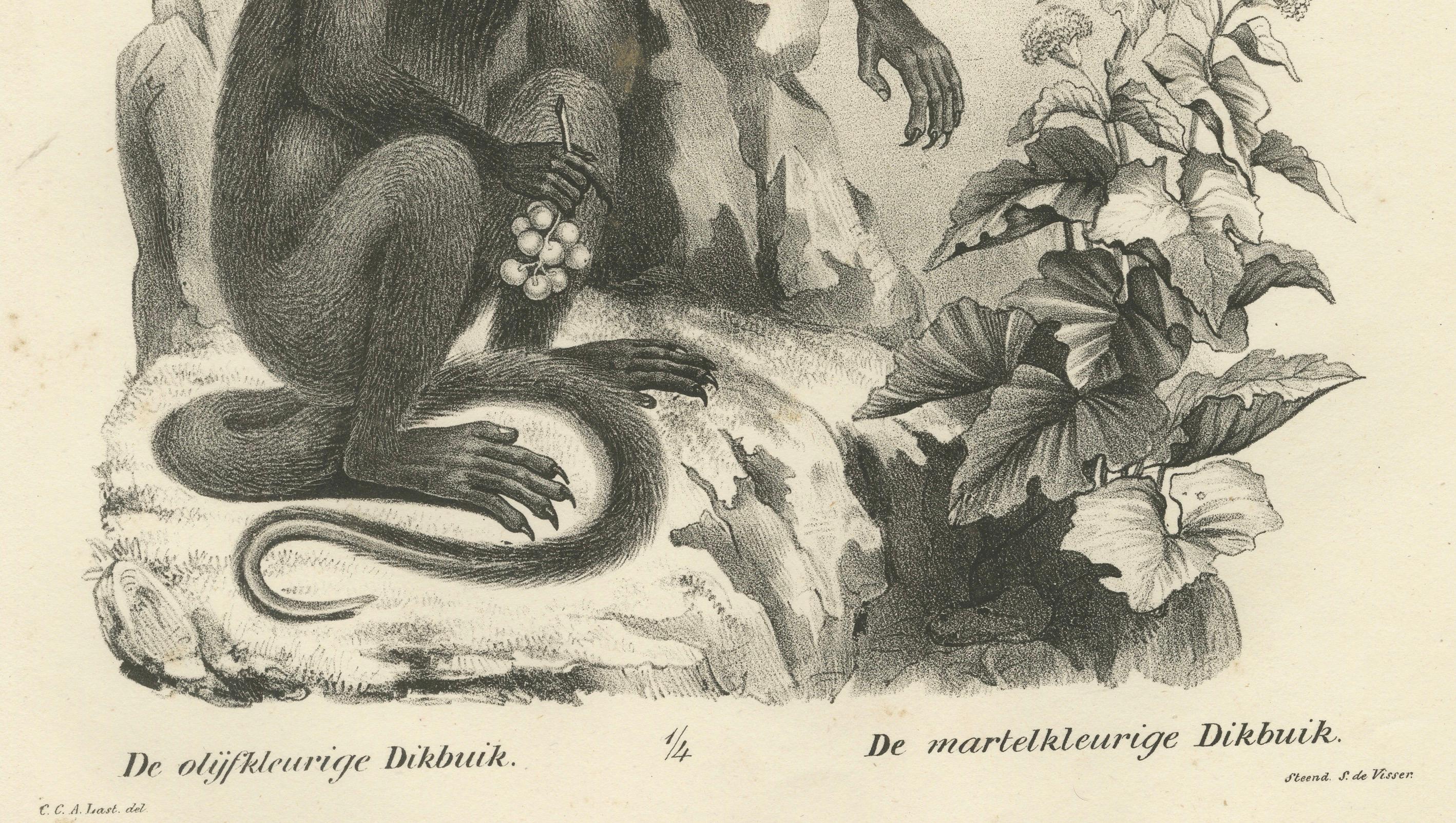
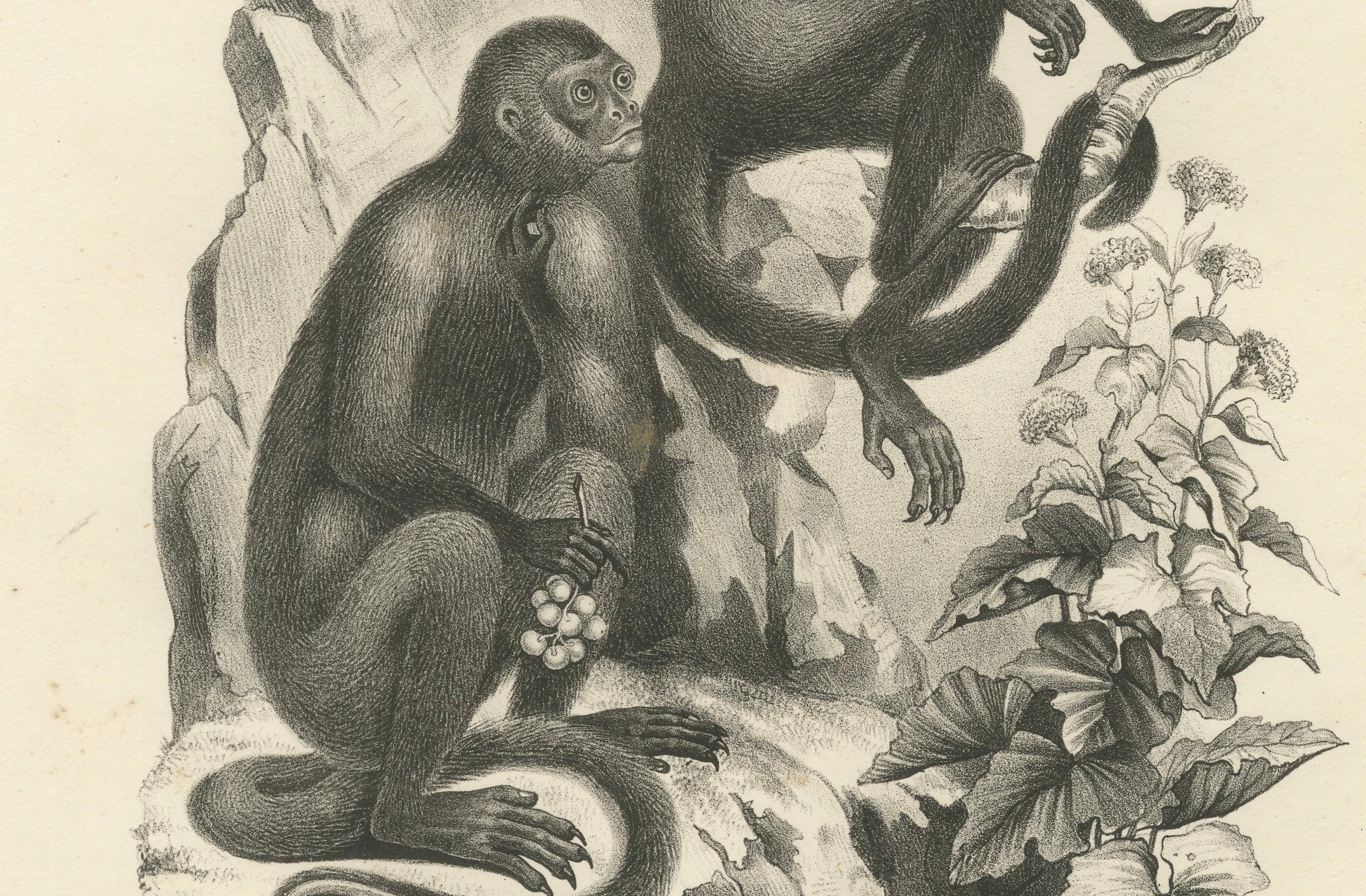
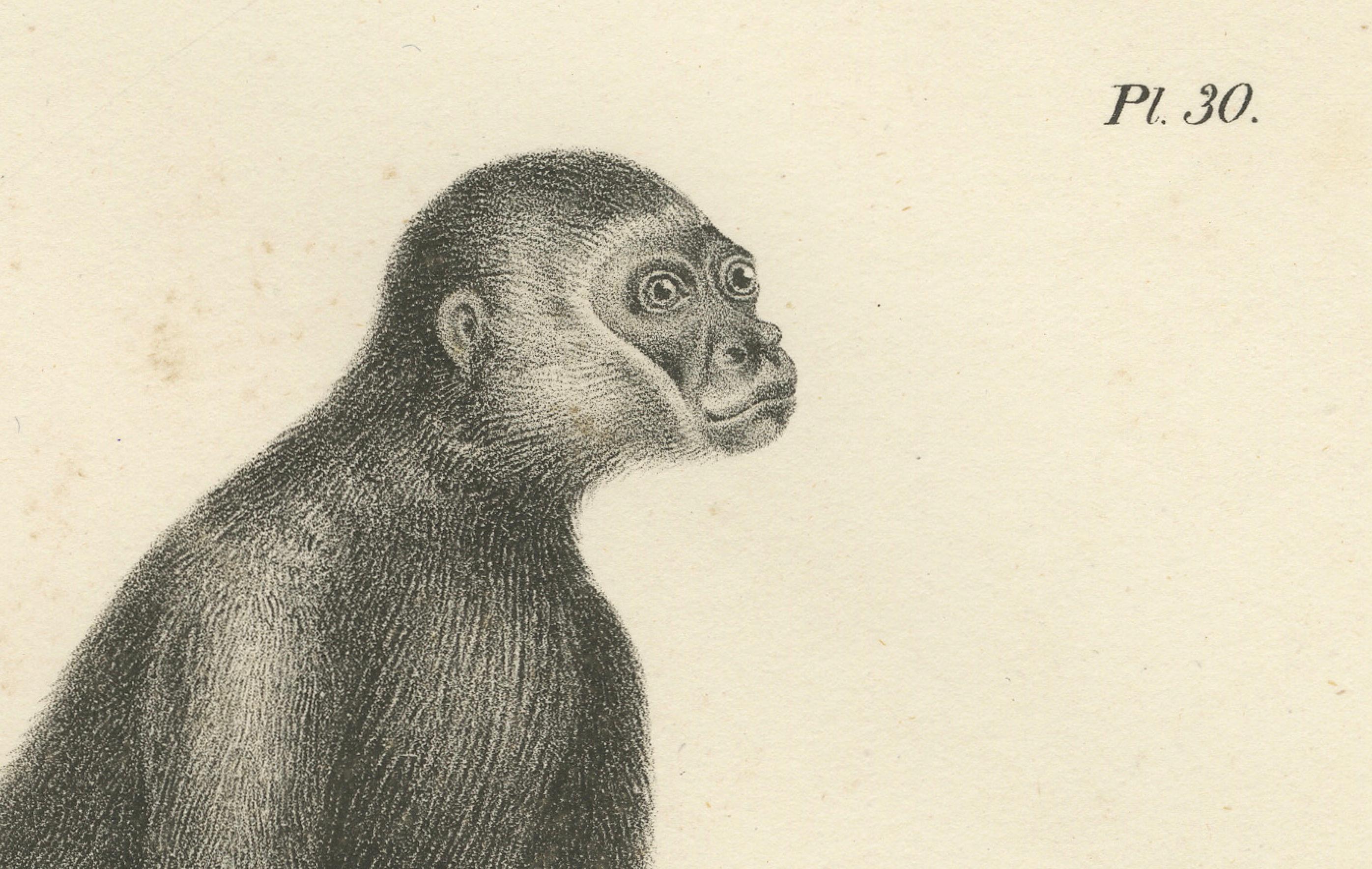
The second lithograph (Pl. 30) shows two *Dikbuik* monkeys, labeled as the "olive-colored" (De olijfkleurige Dikbuik) and the "multicolored" (De martelkeurige Dikbuik). These monkeys are portrayed in a rocky landscape, with one holding a fruit while the other gazes outward. The inclusion of plants in the background adds a naturalistic touch to the scene, emphasizing the monkeys' habitat.
These lithographs are part of a broader 19th-century tradition of documenting exotic animals for European audiences. The careful attention to anatomy, posture, and facial features reflects the European fascination with primates and their behavior, contributing to the scientific and artistic knowledge of the time.