About this sheet
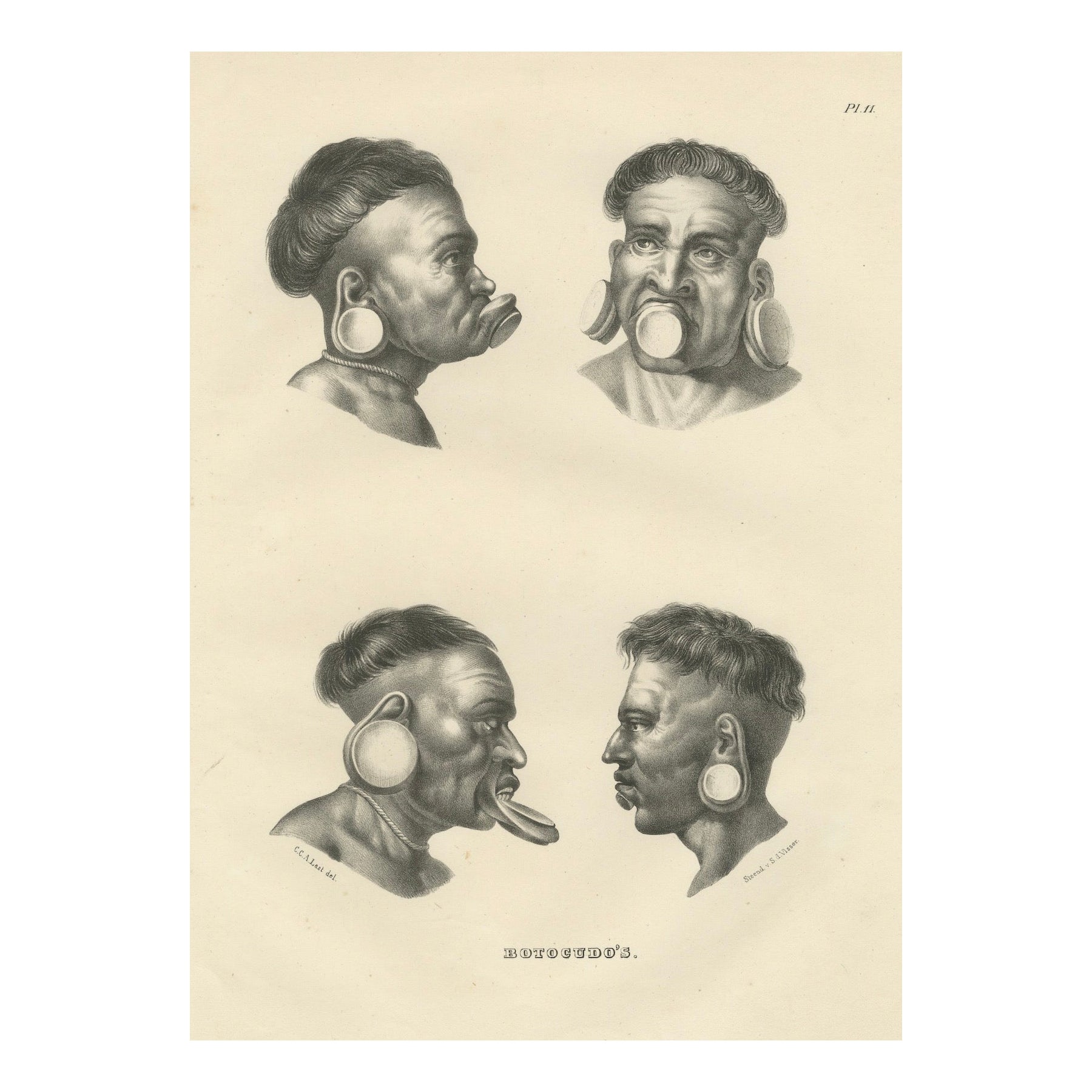
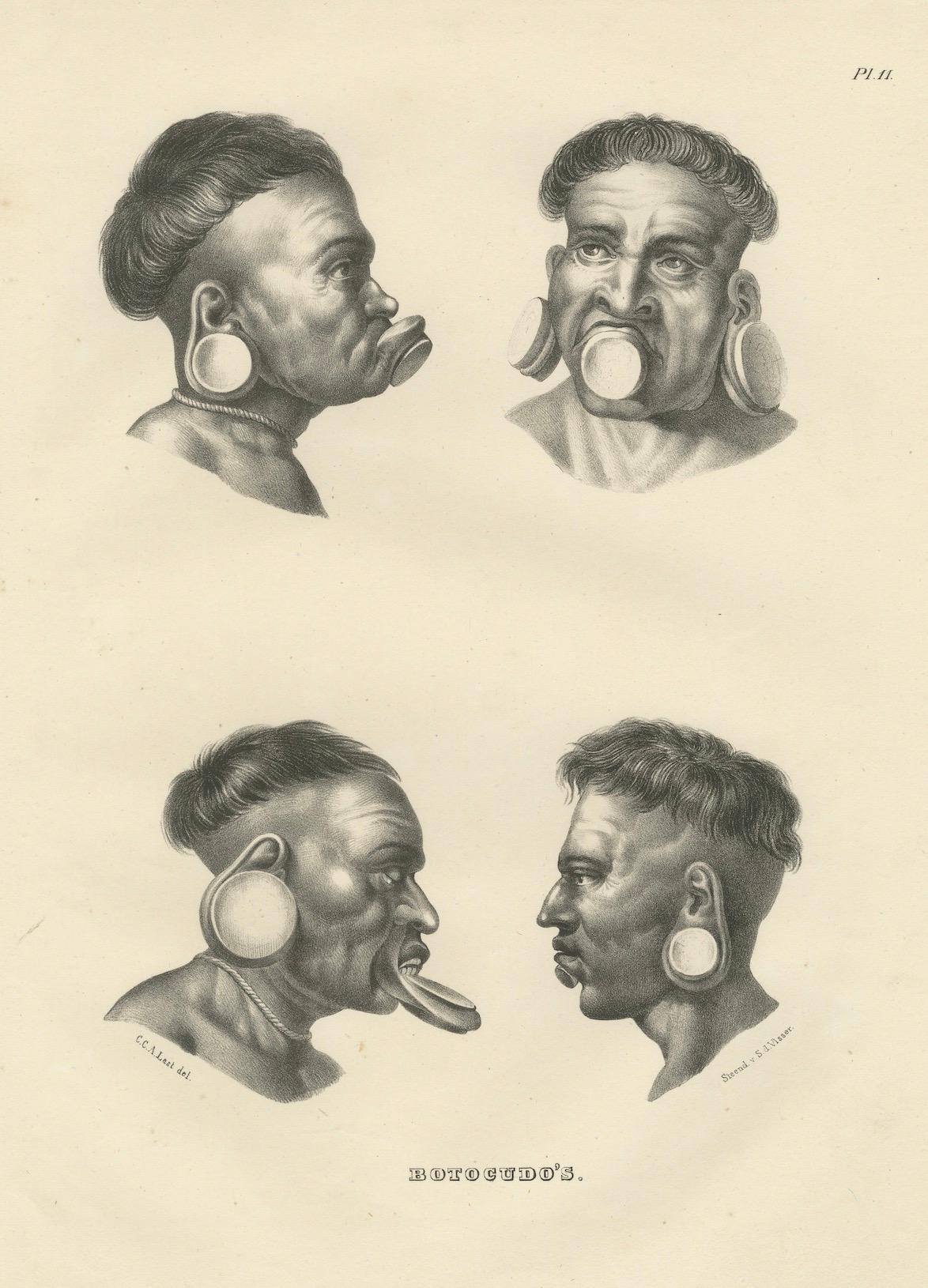
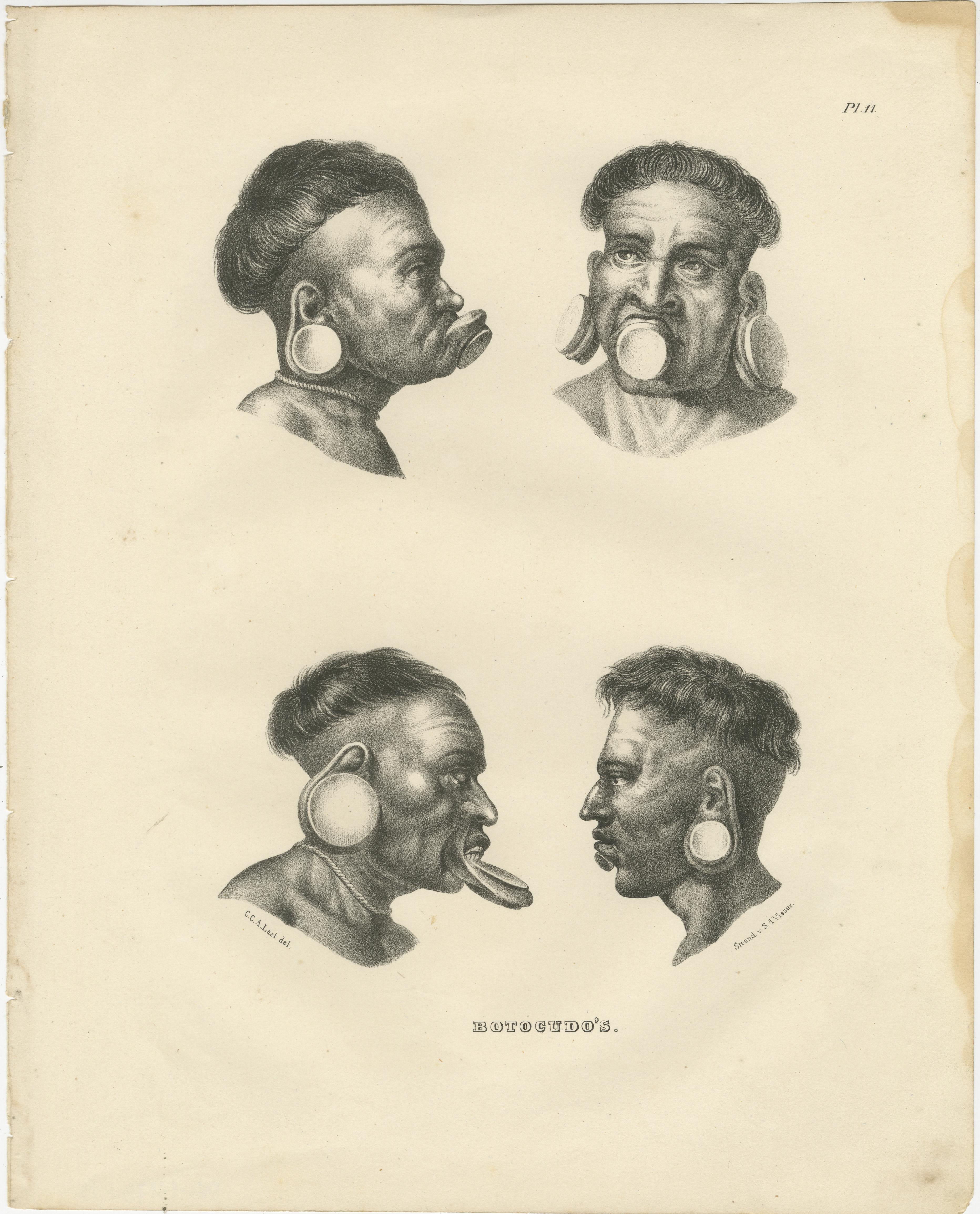
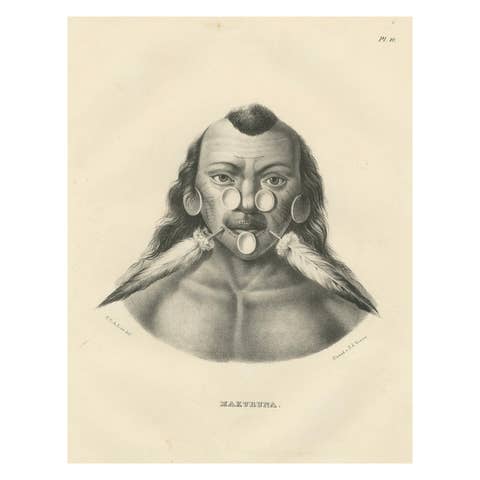
This lithograph by Karl Joseph Brodtmann depicts members of the Botocudo people, an indigenous group from Brazil. The Botocudo are historically known for their distinctive use of large lip and ear plugs, which are prominently featured in this illustration. The print likely dates from Brodtmann's 1835 series on ethnographic studies, aimed at documenting the physical and cultural characteristics of various indigenous peoples.
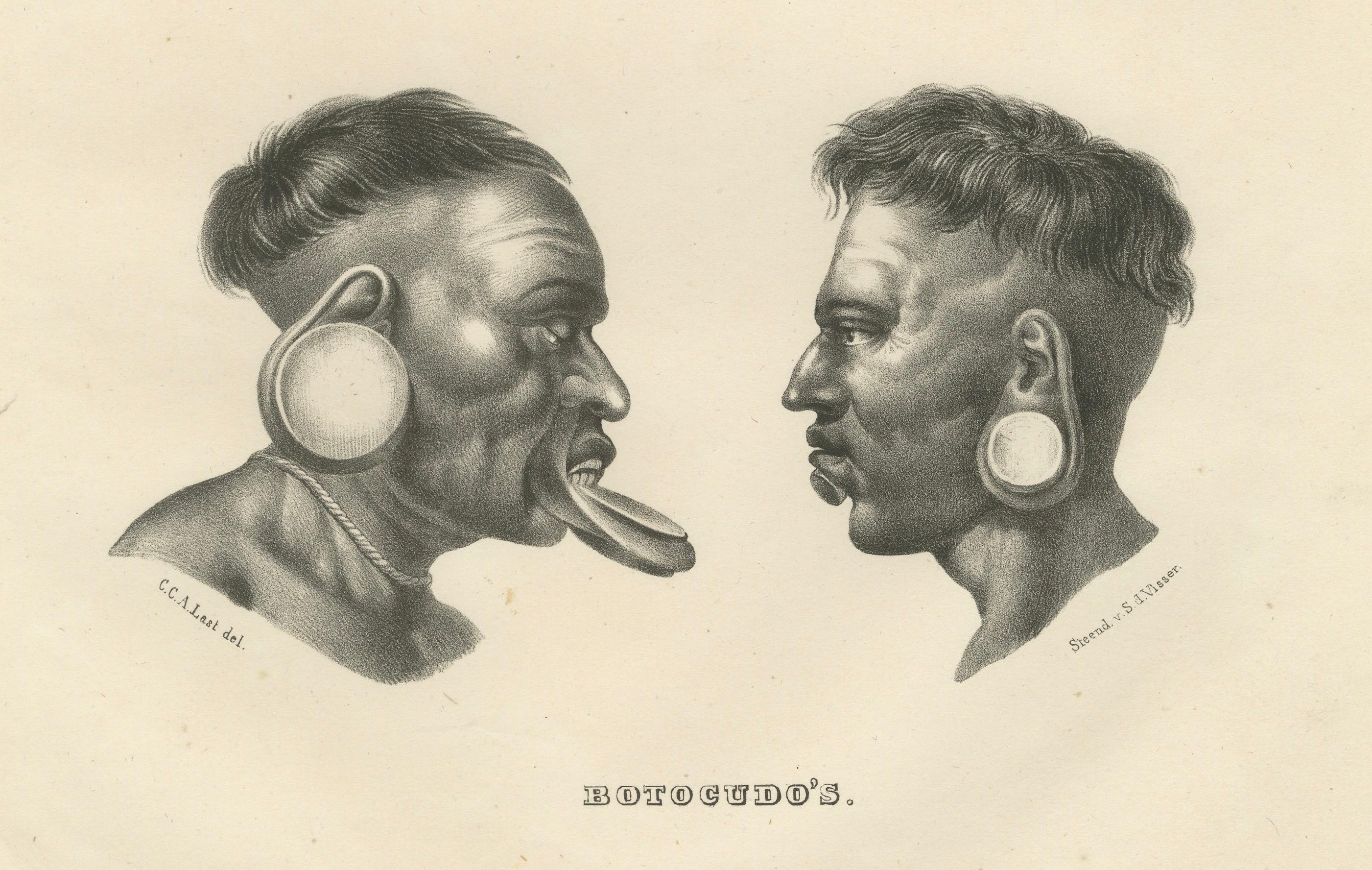
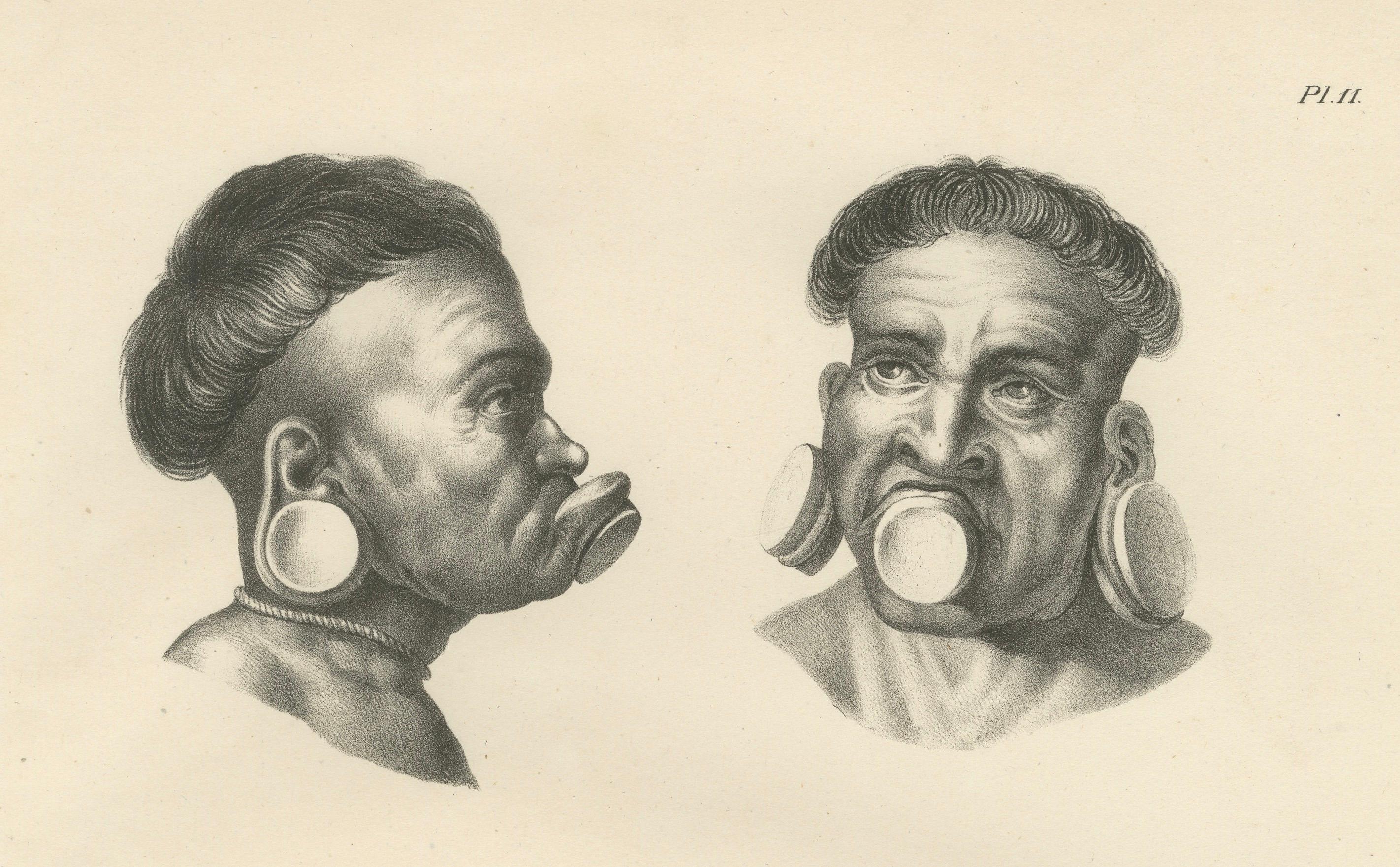
The lithograph shows four individual portraits of Botocudo people, each highlighting the prominent lip and ear plugs for which the group is known. These types of body modifications were a significant cultural practice among the Botocudo, who inhabited the interior forests of southeastern Brazil.
1. Top left and right figures: These two individuals are shown in profile and in partial frontal views. Both wear large lip and ear plugs, known as "botoques", made from wood or bone. Their hair is cut short, and their facial expressions are neutral. The exaggerated size of the lip plugs, particularly visible in these views, emphasizes the importance of this cultural practice. The men also have ear plugs of considerable size, suggesting their high rank or full participation in traditional Botocudo practices.
2. Bottom left and right figures: These two figures are also portrayed in profile views, similarly adorned with large lip and ear plugs. The profile perspective allows for a more detailed depiction of the way these plugs were inserted and worn. The posture and calm expressions of these individuals give them a dignified air, suggesting the importance of the practice as an integral part of their cultural identity.
The lithograph focuses entirely on the facial features and the characteristic adornments, with little background or clothing depicted, ensuring that the viewer's attention is directed to the lip and ear modifications.
Maker:
Karl Joseph Brodtmann (1787–1862) was a Swiss lithographer and illustrator known for his ethnographic and scientific works. His illustrations were often published in books and studies focused on anthropology and natural history, and they served to introduce European audiences to the customs and appearances of non-European peoples. His works were detailed, realistic, and focused on cultural markers that were deemed exotic or unusual at the time.
### Technique and Style:
This lithograph, like others by Brodtmann, uses **lithography**, a printmaking technique that allows for detailed, reproducible images. Brodtmann’s style is one of **ethnographic realism**, with a focus on accurately depicting the physical characteristics of his subjects. The shading in the lithograph adds depth to the figures, and the fine lines highlight the texture of the lip and ear plugs, as well as the skin and facial features of the individuals.
Brodtmann’s work reflects a European fascination with the cultural practices of indigenous peoples, particularly those practices that were seen as markedly different from European customs. The **botocudos**, with their large lip and ear plugs, became a symbol of cultural difference, and their portrayal in this lithograph would have intrigued 19th-century European viewers.
Cultural Context:
The Botocudo (or Aimoré) people were indigenous to southeastern Brazil. The name “Botocudo” was given by the Portuguese and refers to the botoques (plugs) that they wore in their lips and ears. These body modifications were an important part of Botocudo culture, likely symbolizing adulthood, status, or affiliation within the tribe.
During the 19th century, the Botocudo were subject to displacement and conflict with Portuguese colonizers, who attempted to control and assimilate indigenous populations. The Botocudo's resistance to European rule and their distinctive appearance made them a subject of curiosity in European ethnographic studies.
Botocudo, South American Indian people who lived in what is now the Brazilian state of Minas Gerais. They spoke a language of the Macro-Ge group. Their culture was similar to that of other nomadic tribes of the forests and mountains of eastern Brazil. Hunting bands of from 50 to 200 members were led by men considered most powerful in the supernatural realm. The Botocudo believed that spirits inhabited the sky and interceded in human affairs through the mediation of shamans, persons to whom were granted extraordinary powers. Interband conflicts were common, but these were usually resolved by duels between pairs of opponents using long sticks. Resistance to white expansion met with a policy of ruthless extermination. The few remaining Botocudo are descendants of those who took to agriculture and came to terms with the colonial advance.
This lithograph serves as both a document of their unique cultural practices and a reflection of European interest in non-Western peoples during the age of exploration and colonization.