About this sheet
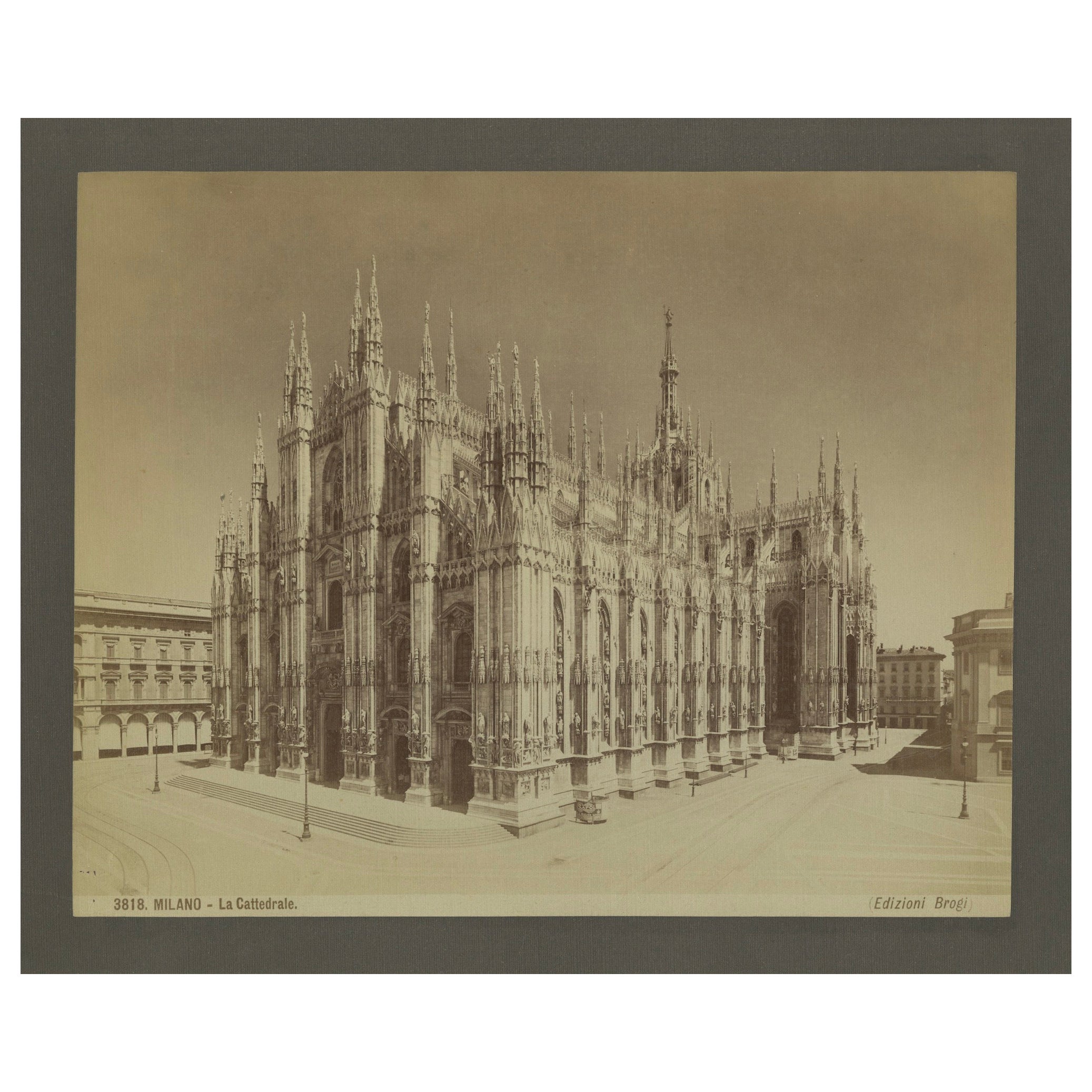
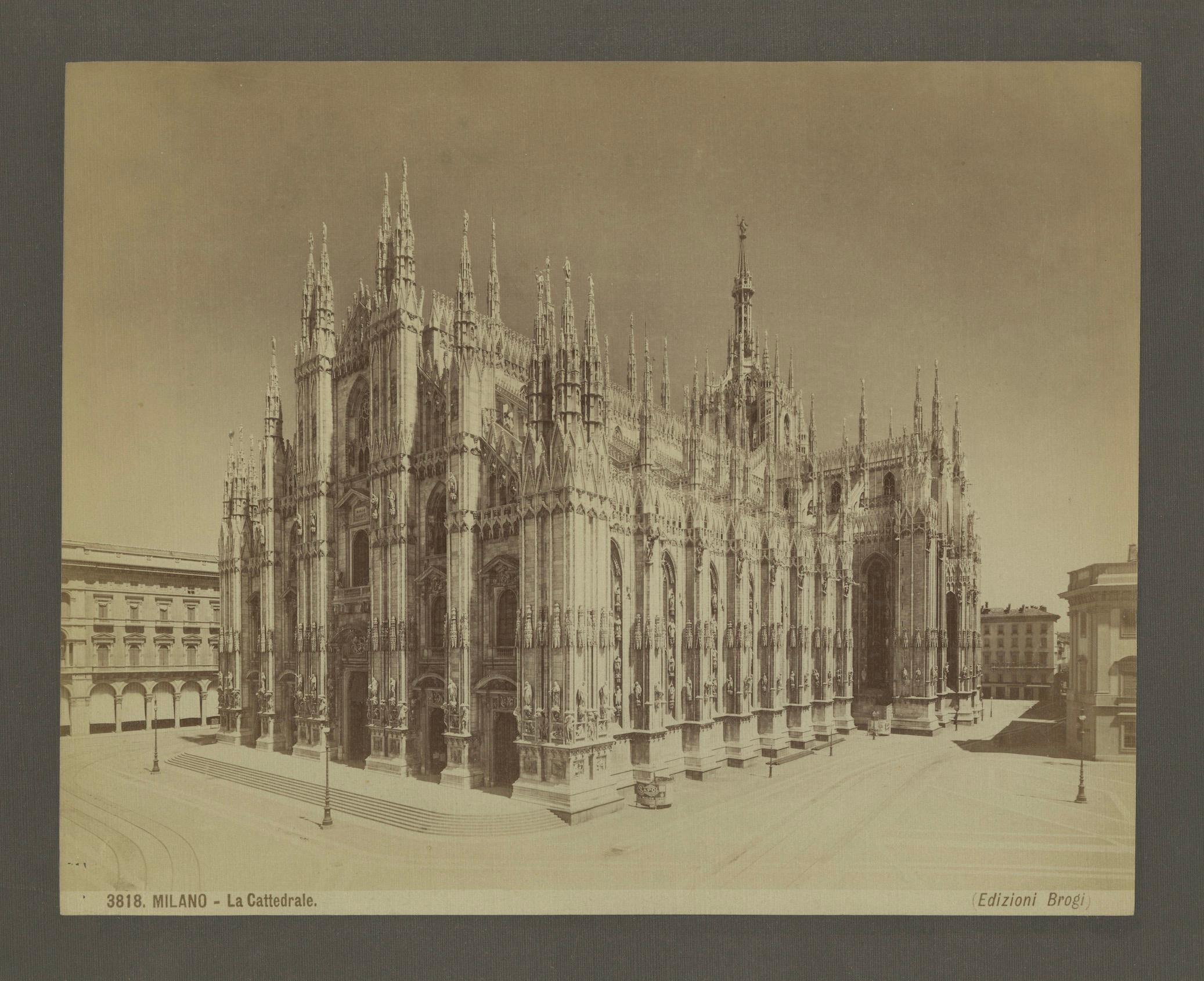
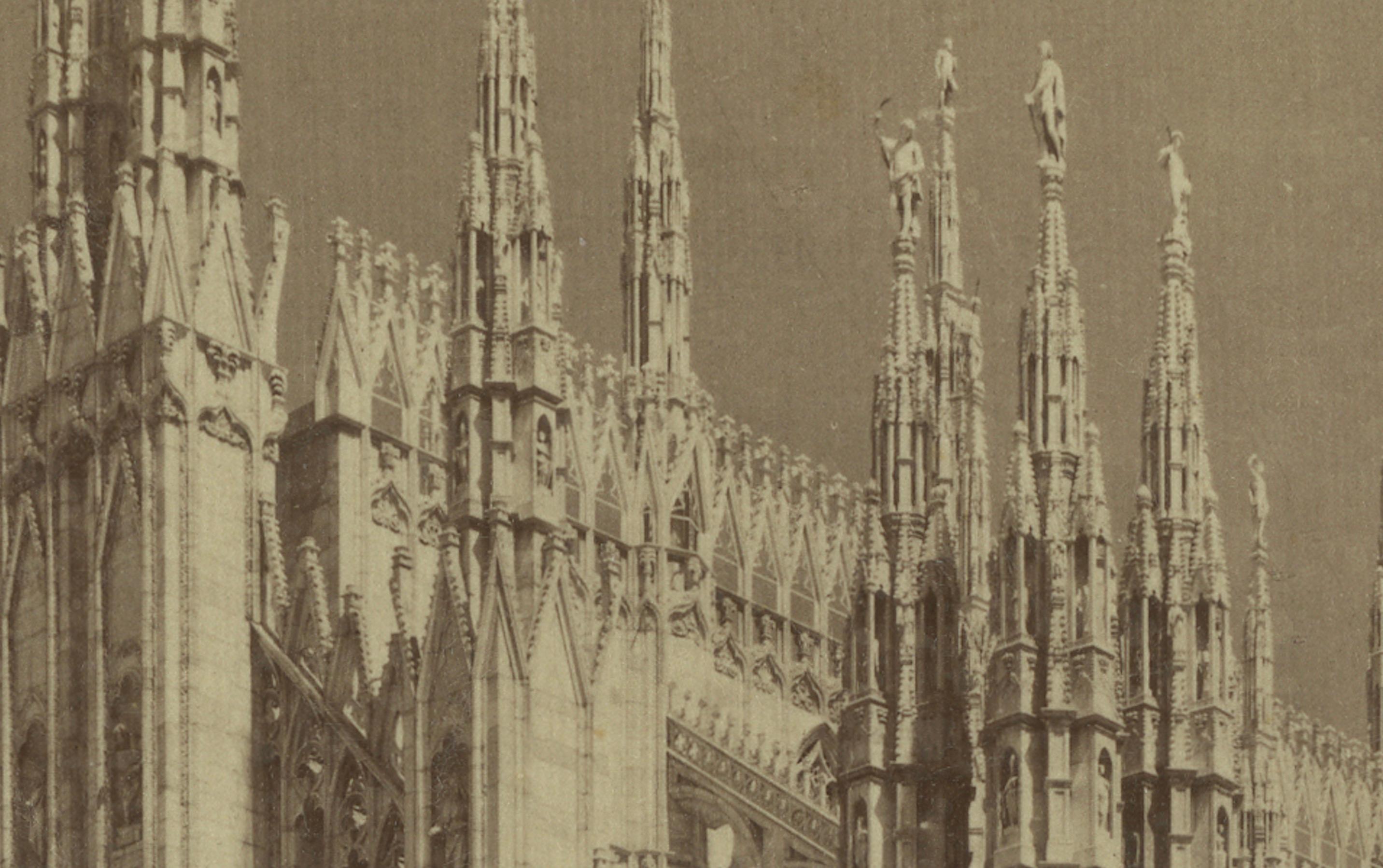
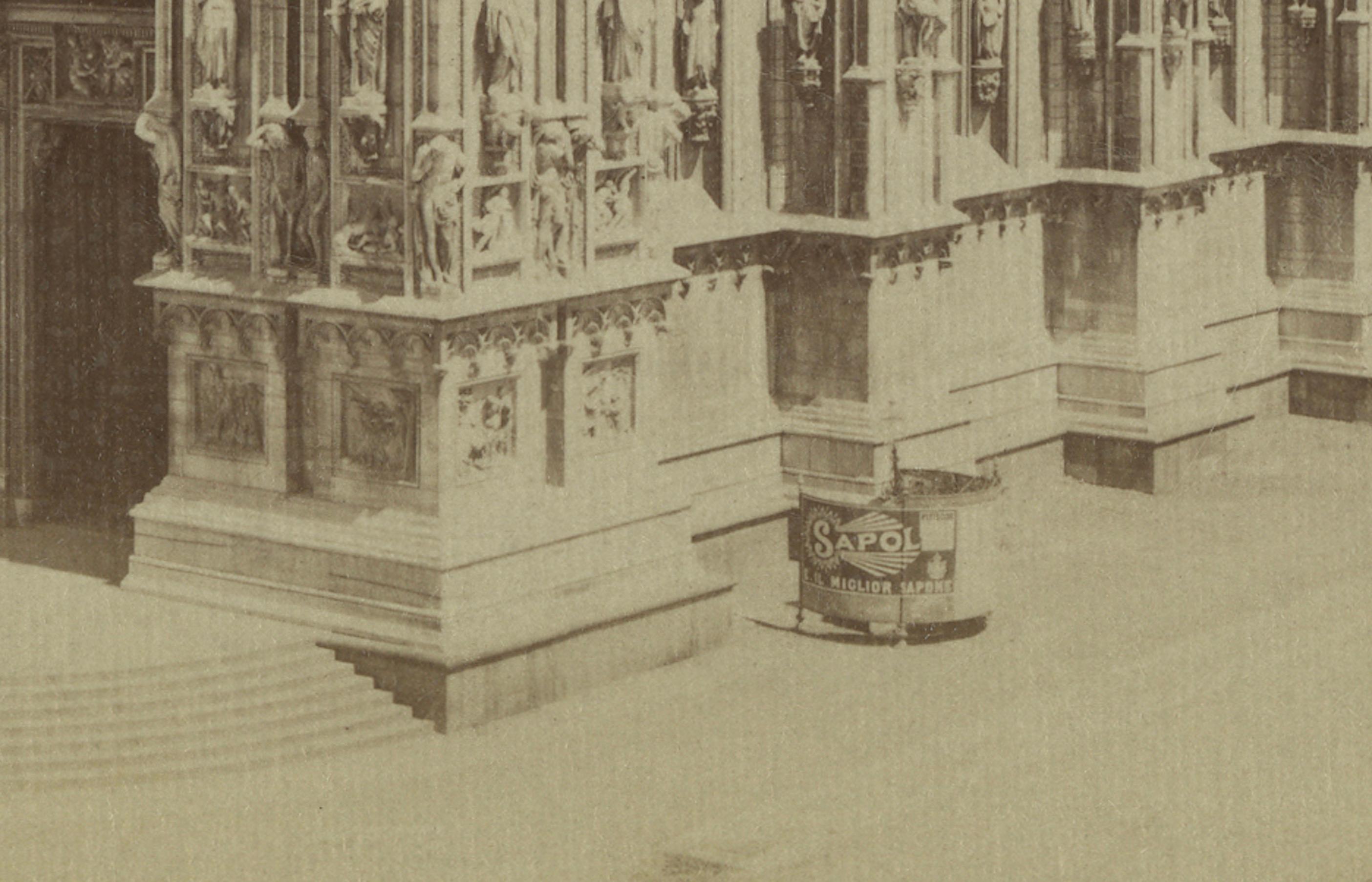
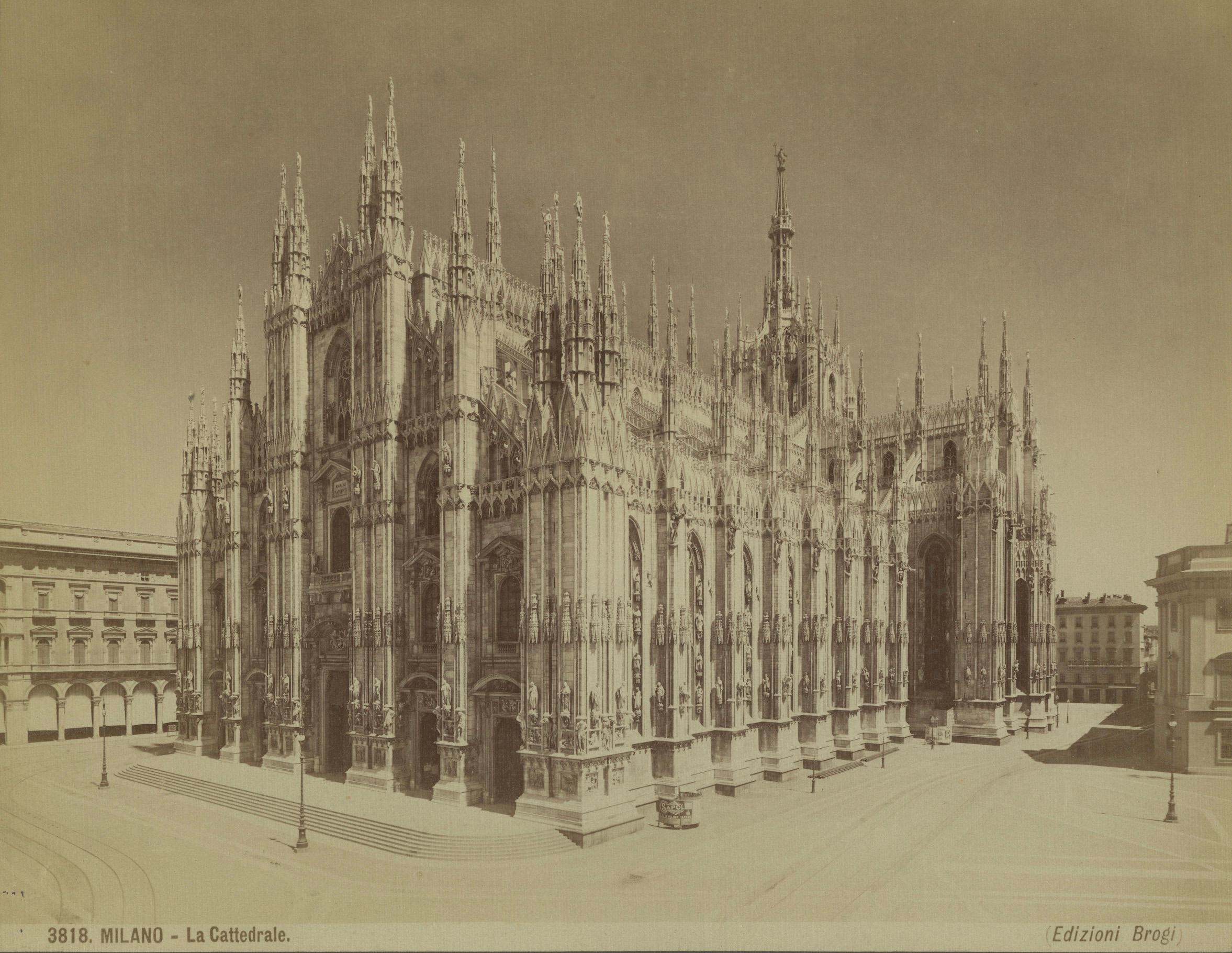
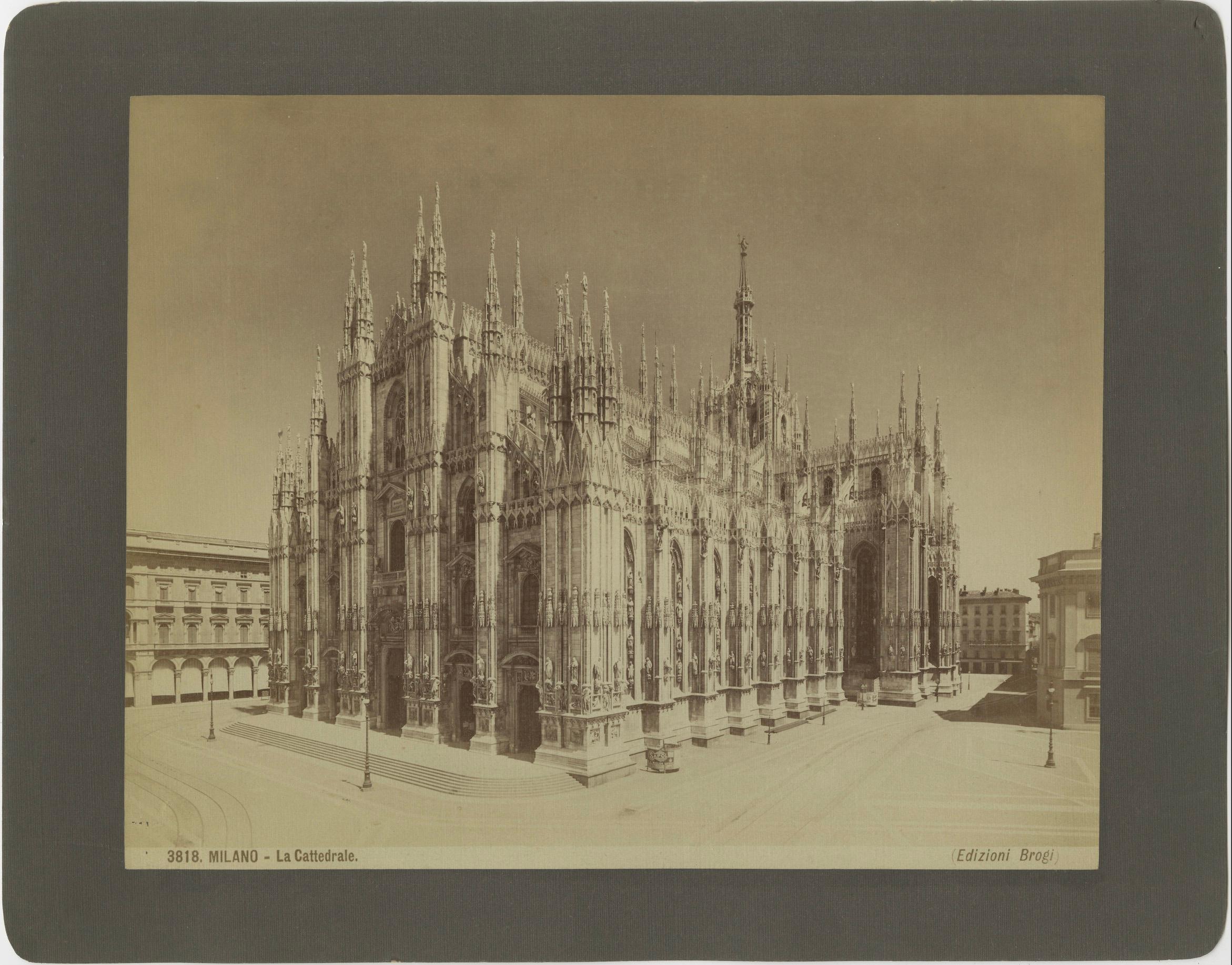
This photograph depicts the Milan Cathedral (Duomo di Milano), one of the largest and most iconic Gothic cathedrals in Europe. The image showcases the intricate facade and towering spires, taken from a side perspective, emphasizing the grandeur and detailed architecture of the building. The photo is labeled "3818. MILANO – La Cattedrale" and was produced by Edizioni Brogi, a well-known Italian photography studio active in the late 19th and early 20th centuries.
Condition: The photograph is mounted on dark backing and appears well-preserved with minimal visible wear. The image quality is sharp, with good contrast, and the sepia tone is consistent throughout. There is no noticeable fading or significant damage on the photo itself.
The photograph is an albumen print photography, a popular technique used from the mid-19th century until the early 20th century, particularly in the production of landscape and architectural images.
Key Aspects of the Albumen Print Process:
1. Process: Albumen prints were made by coating paper with a mixture of egg whites (albumen) and a salt solution, which would form a glossy surface. The paper was then sensitized with silver nitrate, making it light-sensitive.
2. Exposure: The sensitized paper was placed in contact with a glass negative (usually in large format for sharp detail), and exposed to sunlight. The exposure time could be long, depending on the light intensity, usually several minutes.
3. Development and Fixing: After exposure, the print was developed in a chemical solution and then fixed to remove unexposed silver salts. This would leave the image permanently on the paper.
4. Characteristics:
- Sepia Tone: Albumen prints often have a warm, sepia tone, which matches the slight yellowing visible in this photograph.
- Glossy Finish: The egg white coating gives these prints a smooth and shiny finish.
- Detail: This process allowed for a high level of detail, which is evident in the buildings in this photo.
Likely Timeframe:
The albumen process was widely used between the 1850s and 1890s, and continued somewhat into the early 20th century.
Other early photographic techniques like gelatin silver prints became more popular after 1900.