About this sheet
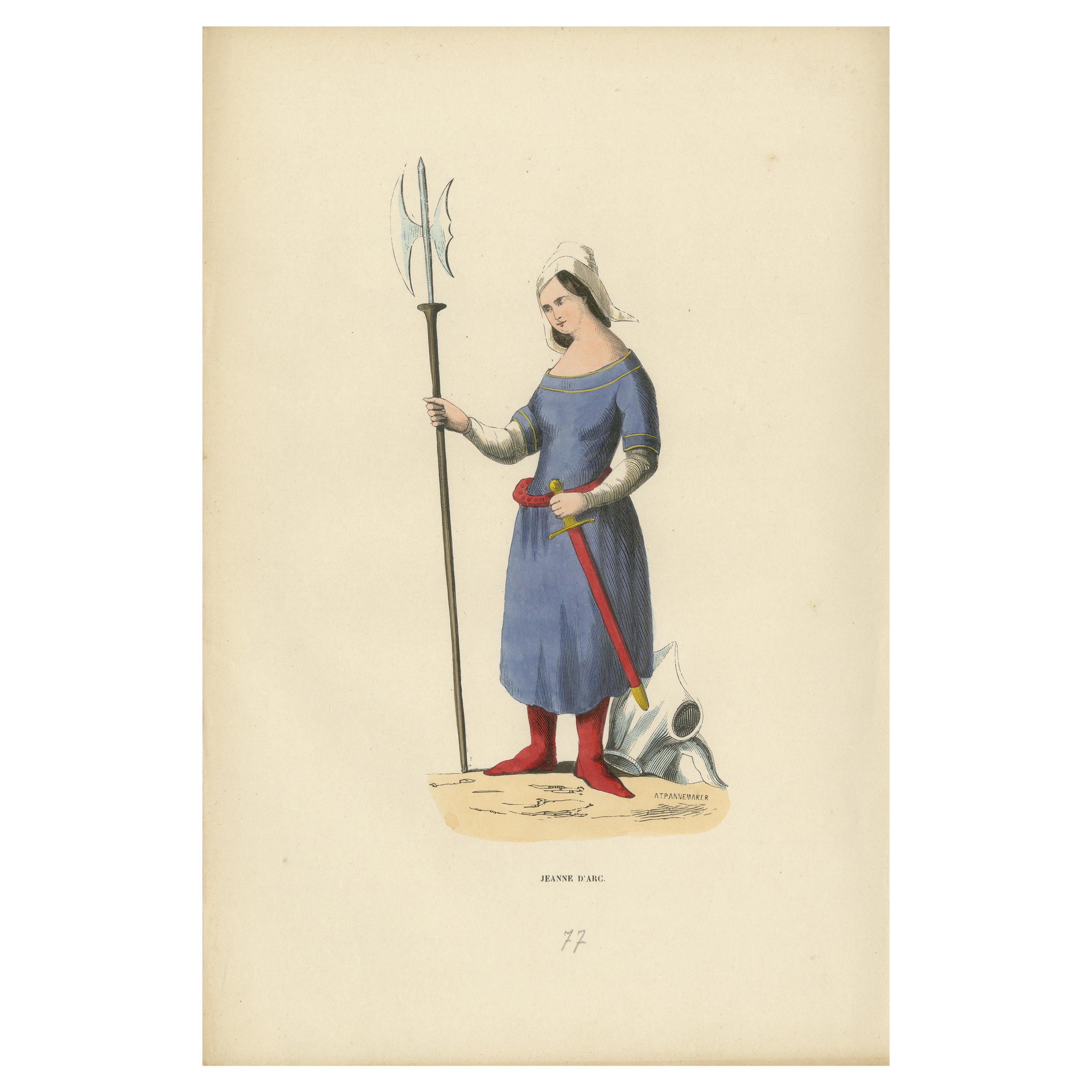
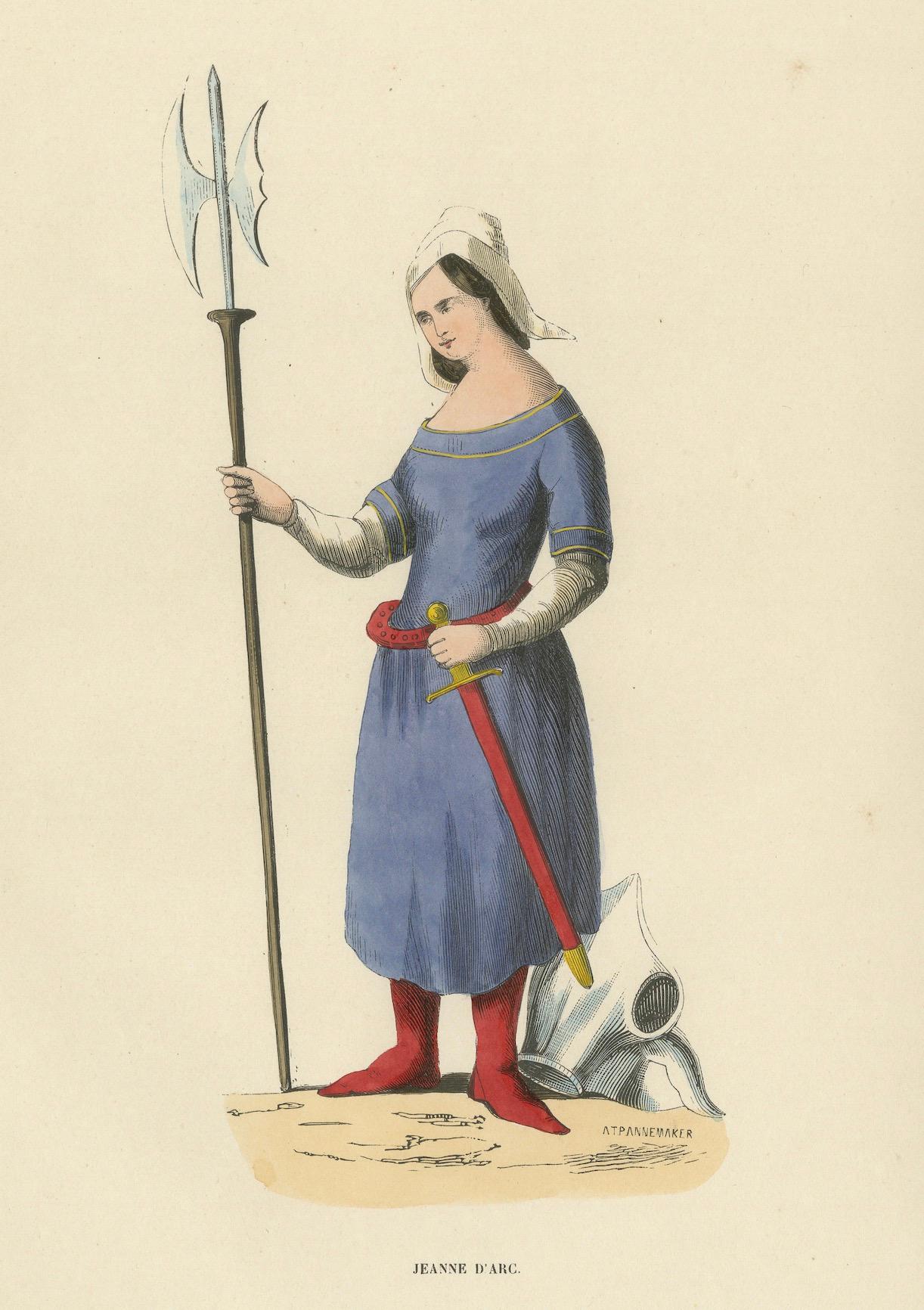
This original handcolored antique print portrays an iconic historical figure, the Maid of Orléans, known for her pivotal role during the Hundred Years' War. She stands in a martial pose, evoking her status as a warrior and symbol of French resistance and nationalism.
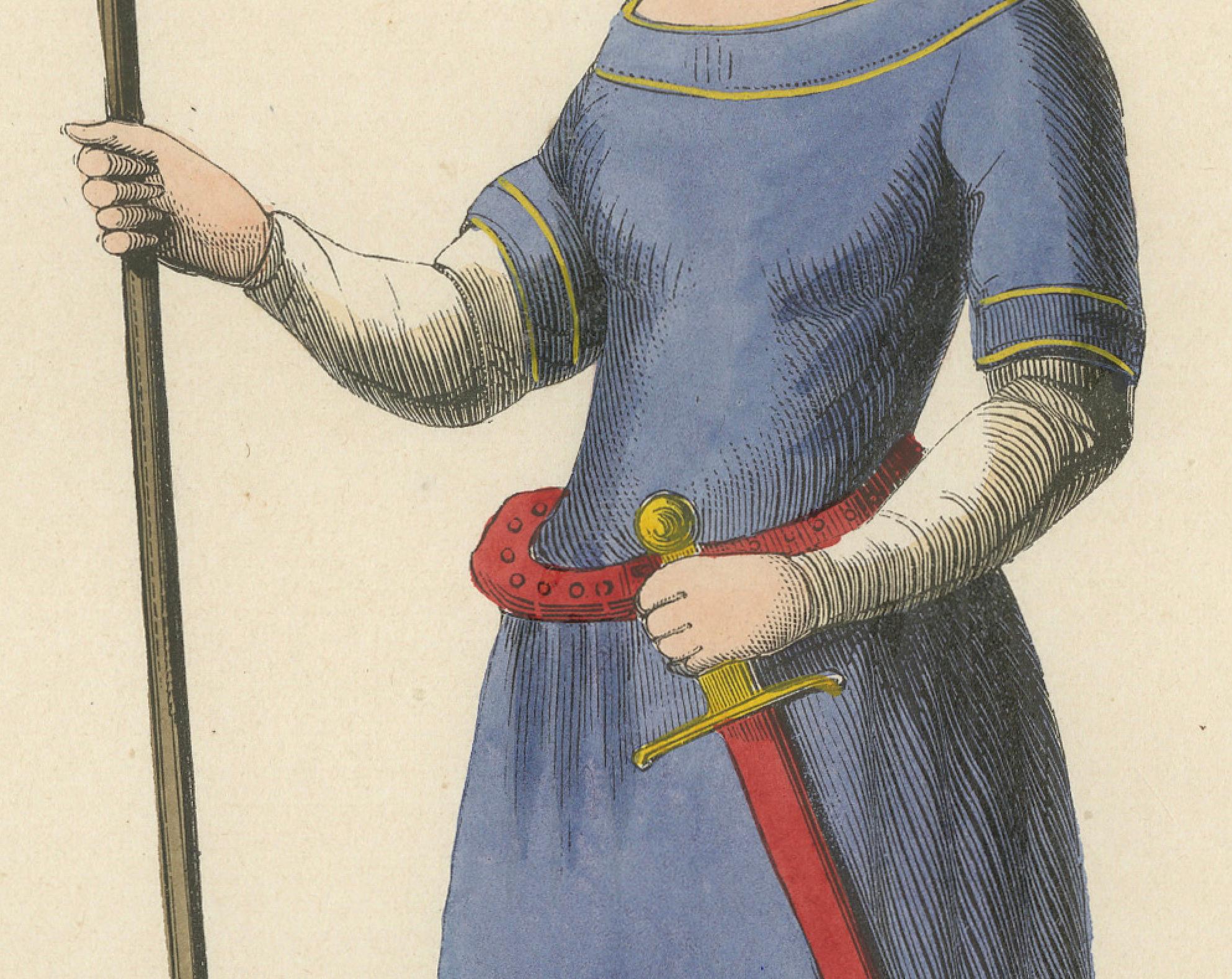
She is attired in a simple blue tunic, which falls modestly to her mid-calf, allowing for ease of movement in battle. The tunic is cinched at the waist with a red belt, from which hangs a sword—a testament to her readiness to fight. The inclusion of a sword also serves to underline her unique position as a female figure who broke contemporary gender norms by taking on a traditionally male role in the military.
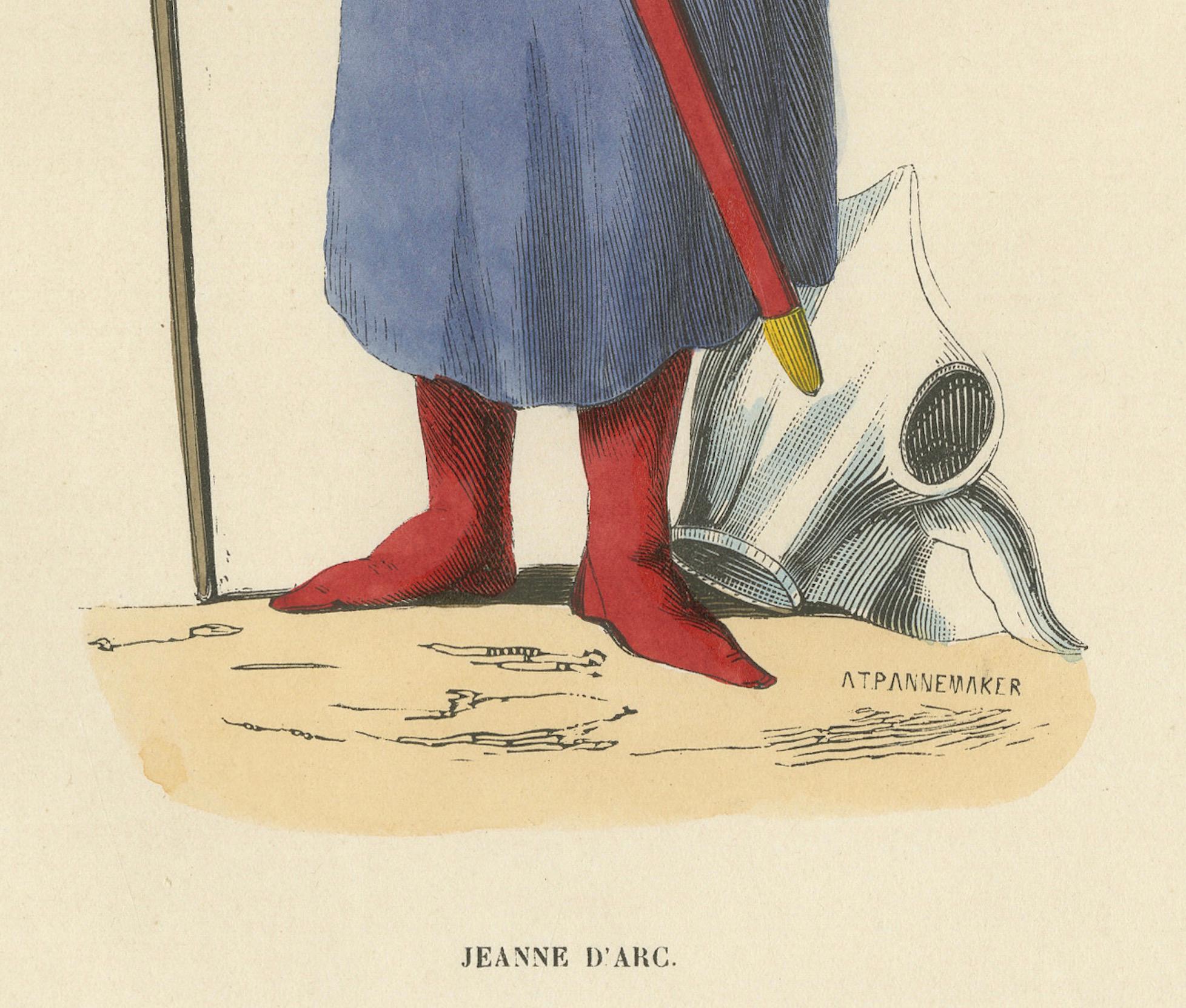
Her red hosen are practical for mobility, and she wears armored greaves to protect her legs, a detail that speaks to her participation in active combat. The blue of her tunic and the red of her hosen may also carry a symbolic representation of her loyalty to France.
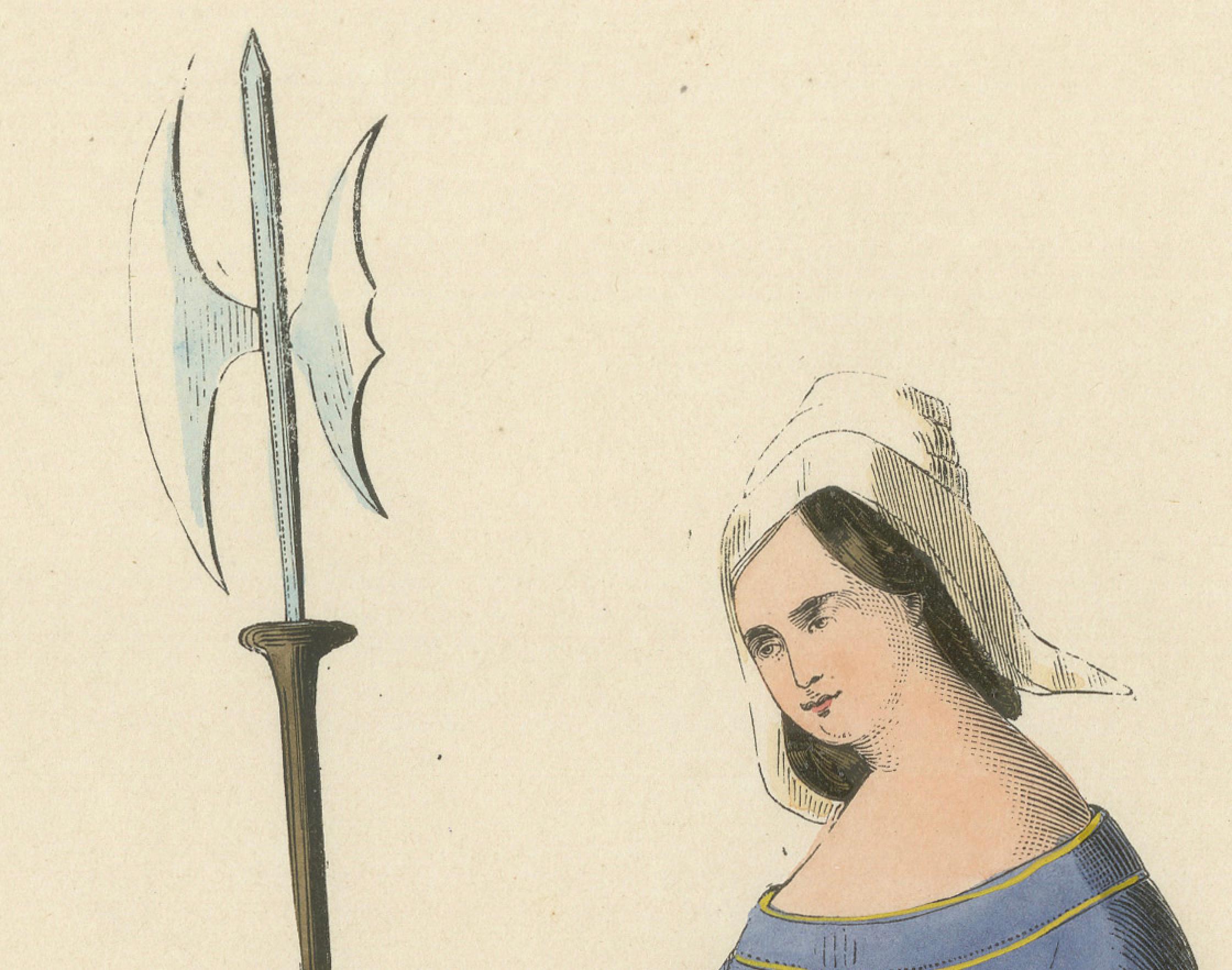
In her hand, she holds a long polearm, a weapon used by infantry in the Middle Ages, indicating her role on the front lines. At her feet lies a helmet, suggesting that she is prepared for battle, yet her head is bare, which could be a nod to her reported claim that she did not wish to wear a helmet, though historical accounts vary.
Her countenance is one of determination and solemn duty, reflecting the seriousness of her mission and her unwavering commitment to her cause. This print encapsulates the spirit of the Maid of Orléans as a figure of courage, leadership, and deep religious conviction, celebrated for her part in altering the course of French history.
The colors have a nice glow over them. Historically, egg whites, known as glair, and sometimes egg yolk were indeed used in illumination and painting, particularly in manuscripts, to give colors a brighter appearance and to add a sheen or gloss to the work. This technique was quite common during the Middle Ages and into the Renaissance.
Egg whites can be applied as a varnish over pigments to enhance their brightness and to protect the colors. This application could make the colors appear more vivid and also add a slight glossy sheen to the surface of the image.
Egg yolk, on the other hand, was commonly used as a binding agent in paint. It forms the basis of tempera paint, a medium that was widely used before the advent of oil painting. Egg yolk helps to create a durable and long-lasting color that adheres well to various surfaces.
In the context of the print from 1847, it's less likely that egg whites or yolks were used directly on the print, as by that time, commercial printing processes would have been more advanced and less reliant on such manual methods. However, if this print is a representation of an earlier style or is meant to mimic the appearance of hand-painted manuscripts, the original artists might have employed techniques or materials that gave a similar effect to those achieved with egg-based binders and varnishes.