About this sheet
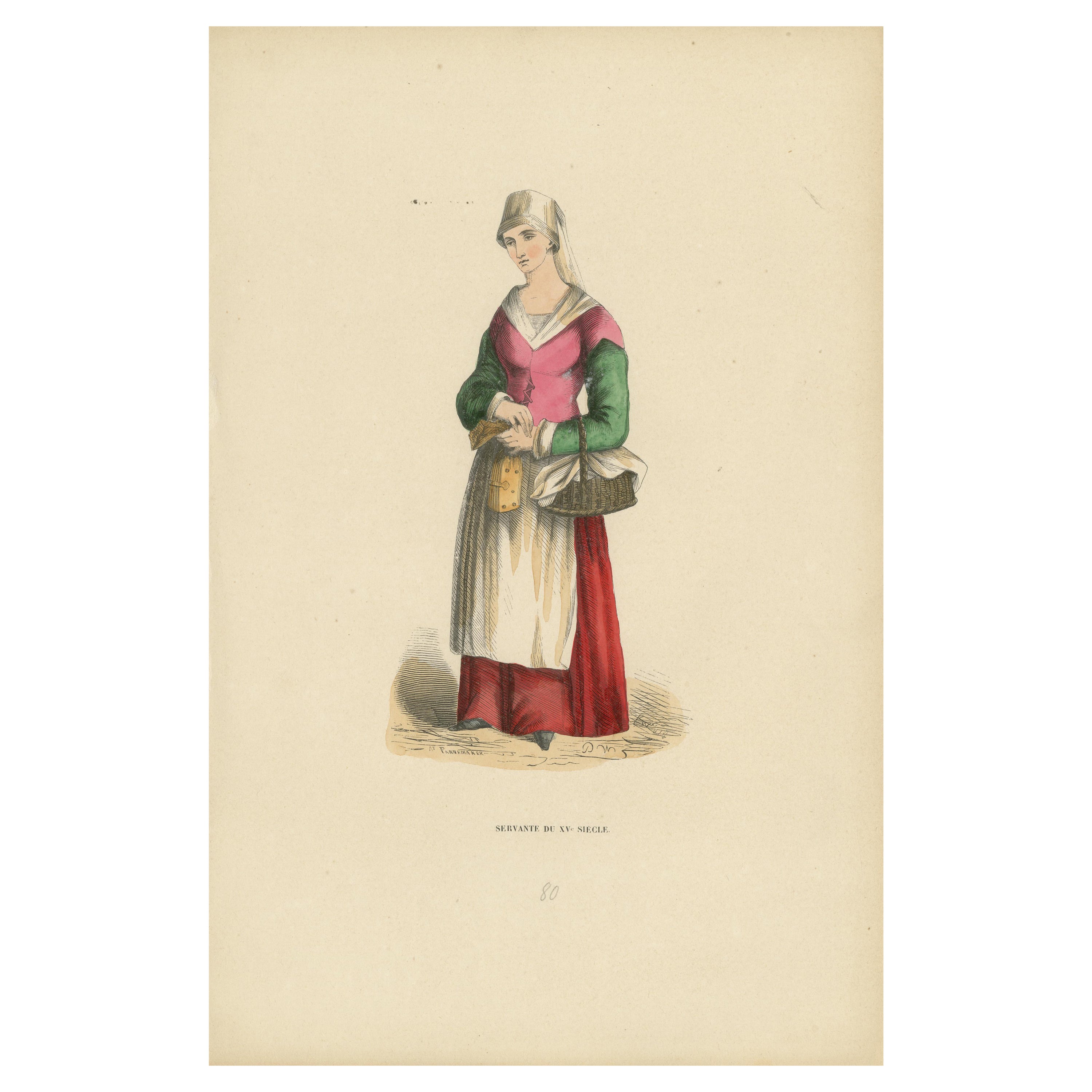
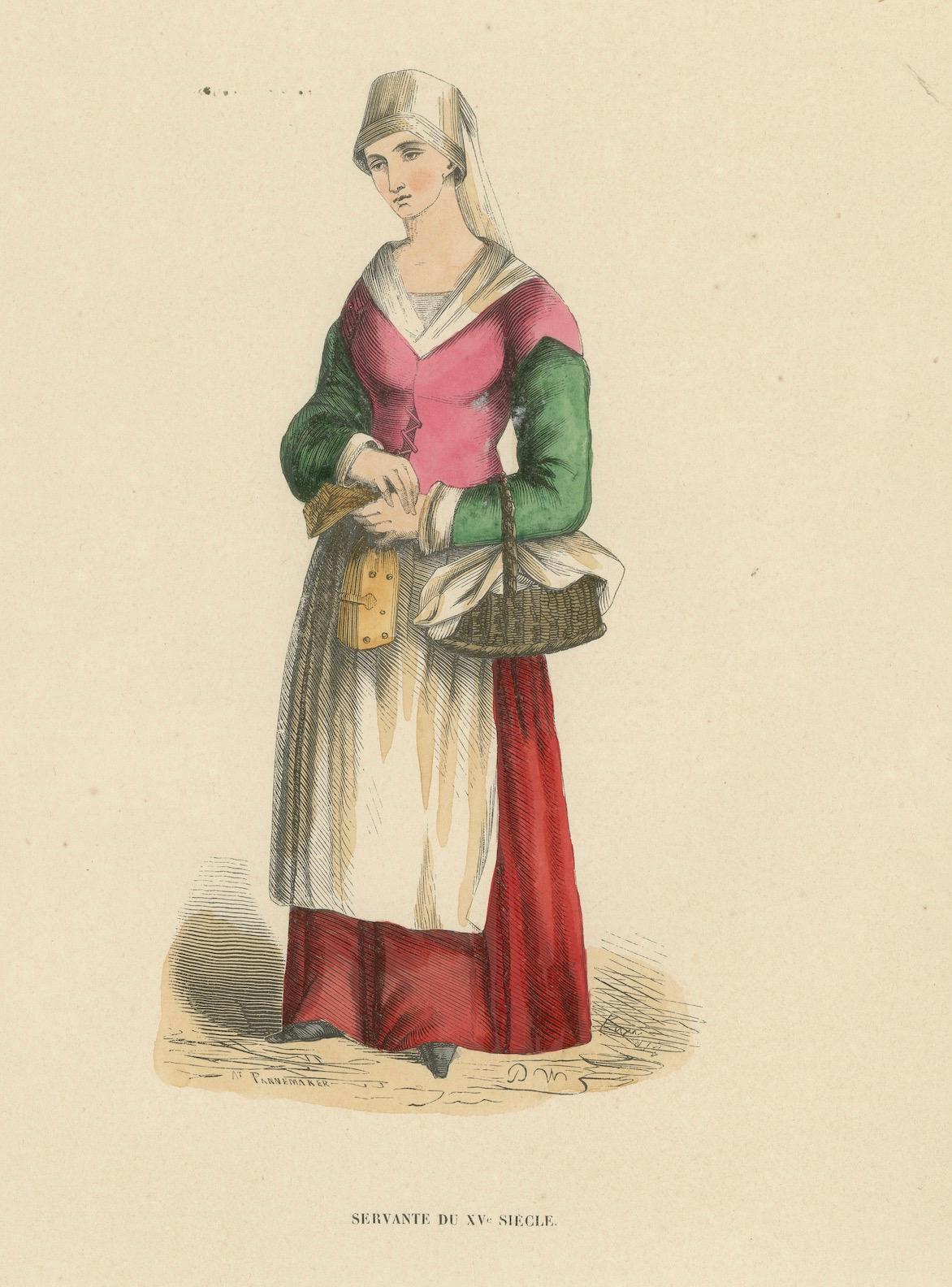
This print portrays a servant or maid from the 15th century, captured in a moment of stillness, perhaps while going about her daily tasks. Her attire is a mix of practicality for her work and modesty, befitting her station in society during this period.
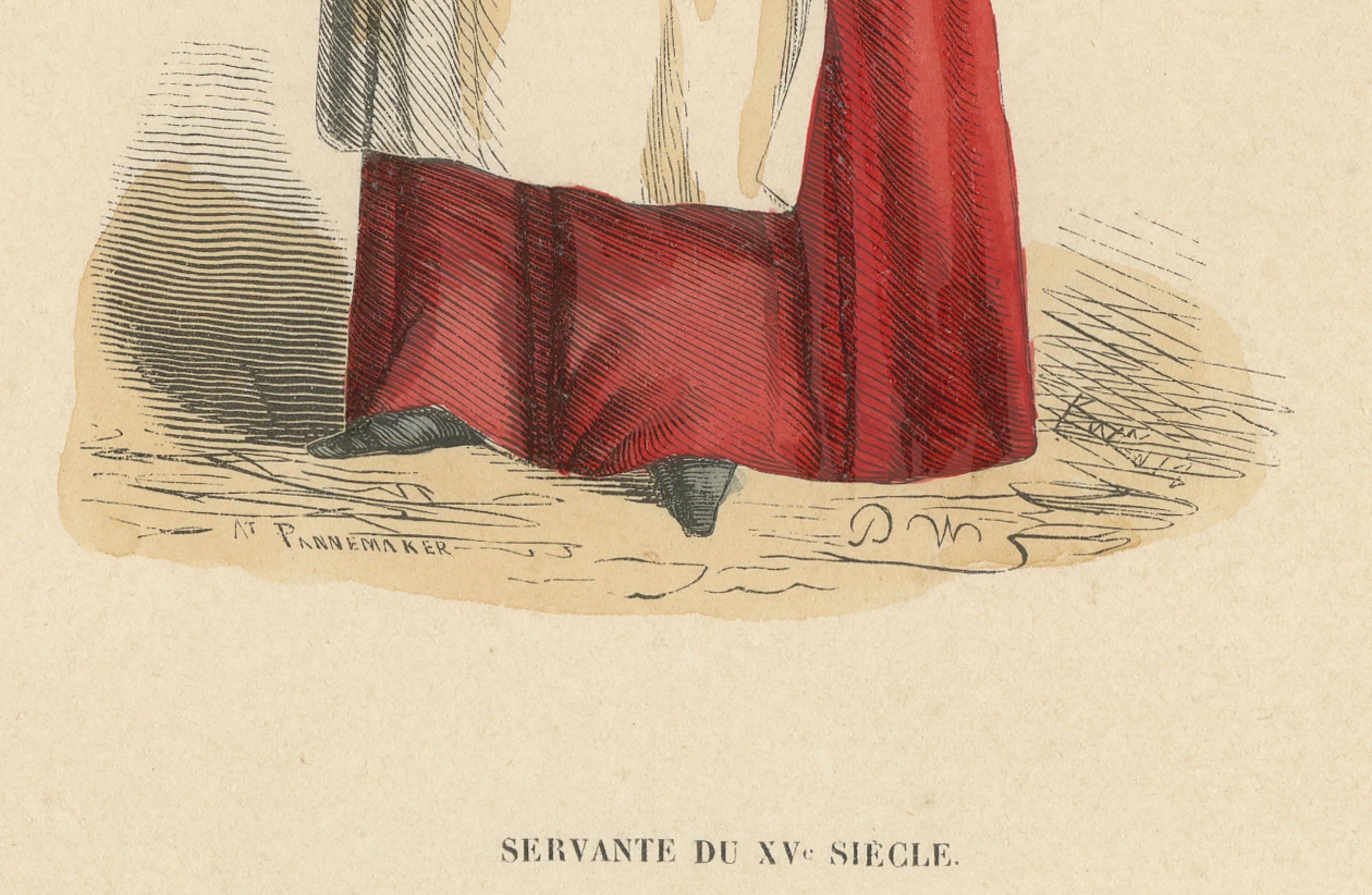
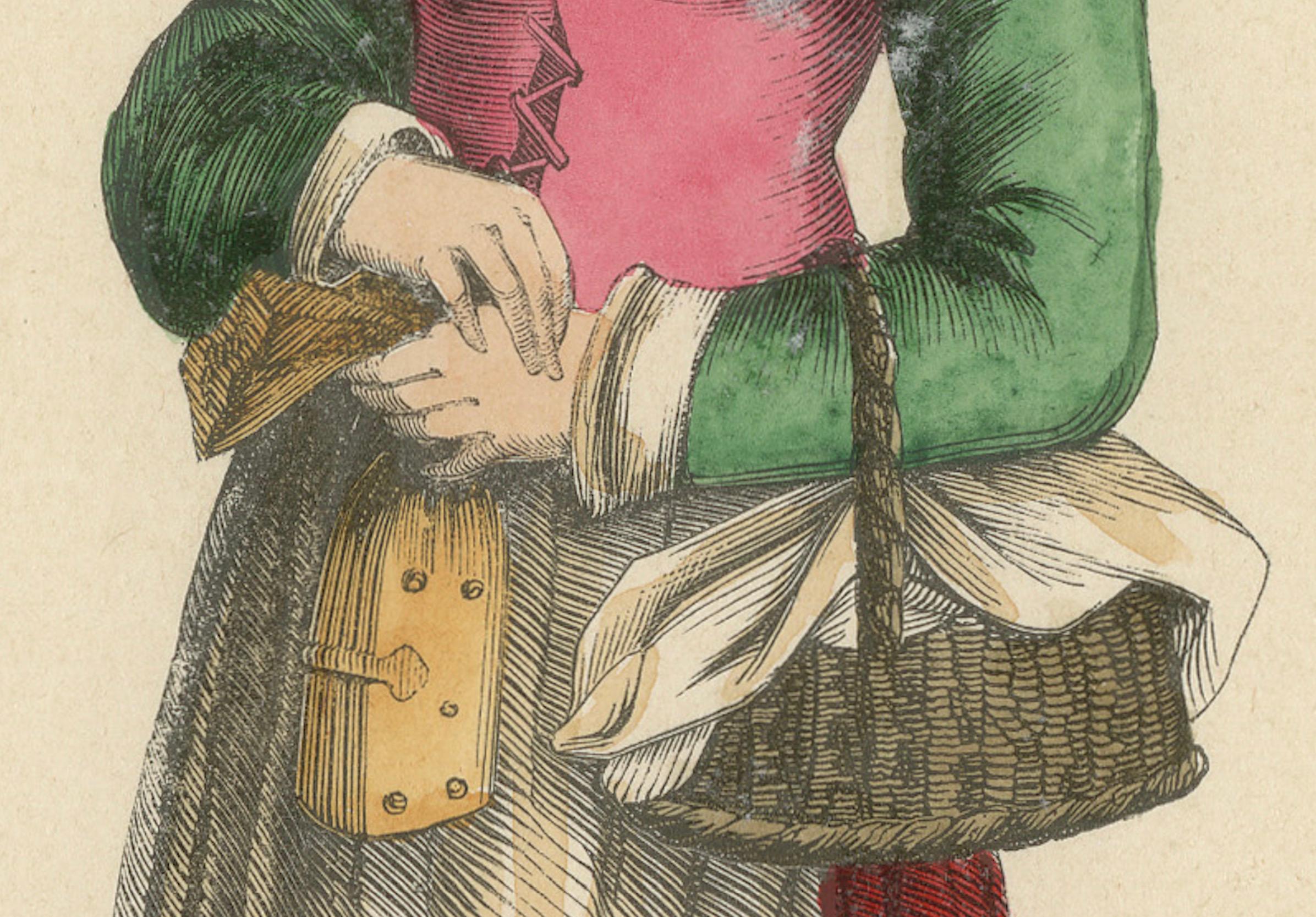
She is dressed in a long-sleeved red kirtle, a common garment for women of lower status during the medieval period. Over the kirtle, she wears a green overgown with a laced bodice that would provide both warmth and a degree of fashion. The bodice is fitted, which is characteristic of the era's clothing styles, and has a practical belt at the waist where she can attach tools or a pouch.
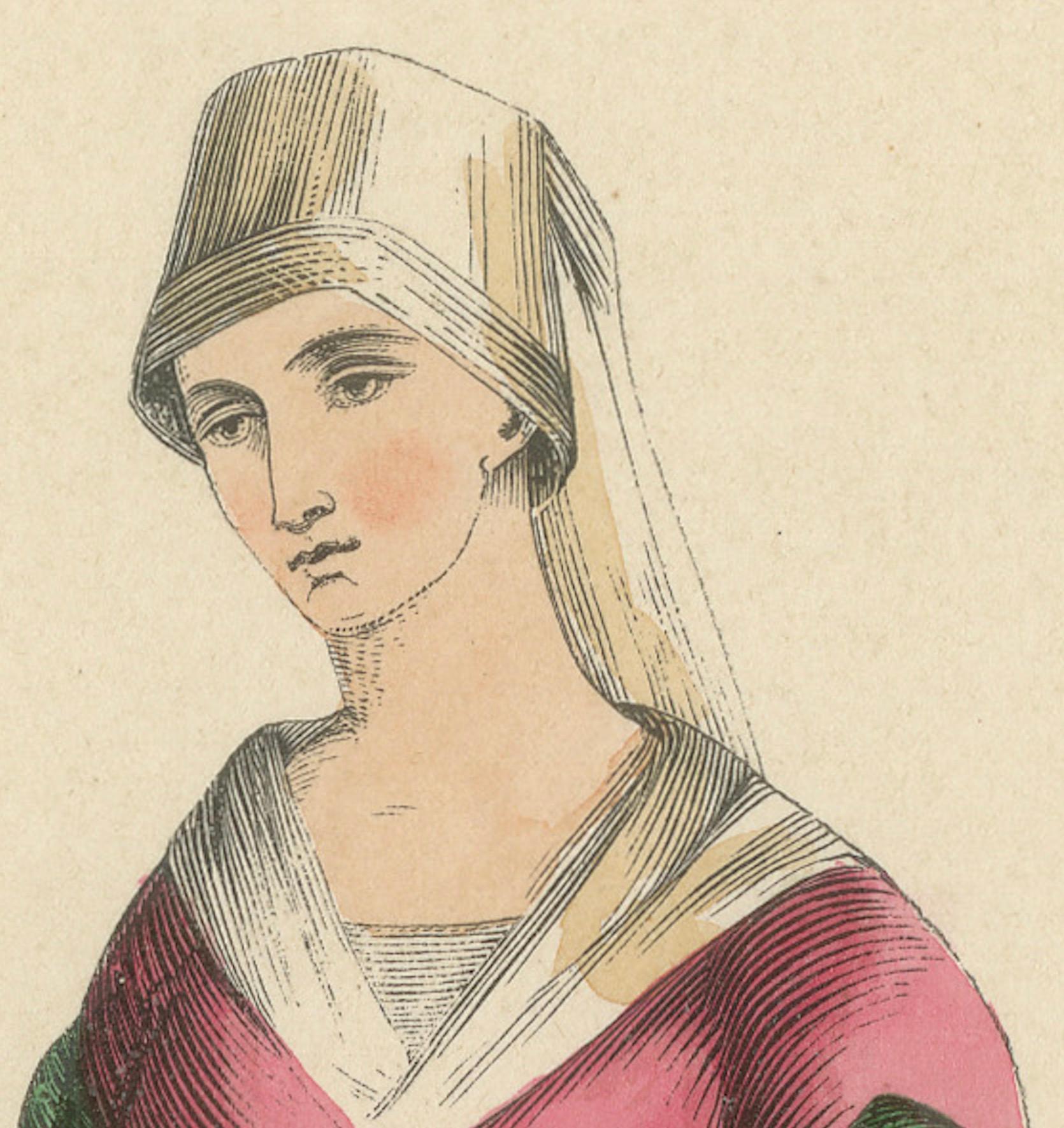
The apron tied around her waist is a clear indicator of her role as a maid, protecting her clothing underneath and serving as a functional garment for her work. Her attire is completed with a simple white headdress that keeps her hair neatly out of the way, a necessity for both cleanliness and propriety.
Her expression is one of quiet composure, with a hint of attentiveness, suggesting she may be listening to instructions or is momentarily distracted from her work. Her hands are clasped together, a gesture that conveys a sense of patience or perhaps a brief pause in her busy day.
This image gives us a window into the life of a domestic worker in the 15th century, highlighting the role and attire of women who formed the backbone of day-to-day life in a household of the time. It reflects the understated elegance and the essential functions performed by such individuals in the fabric of medieval society.
The colors have a nice glow over them. Historically, egg whites, known as glair, and sometimes egg yolk were indeed used in illumination and painting, particularly in manuscripts, to give colors a brighter appearance and to add a sheen or gloss to the work. This technique was quite common during the Middle Ages and into the Renaissance.
Egg whites can be applied as a varnish over pigments to enhance their brightness and to protect the colors. This application could make the colors appear more vivid and also add a slight glossy sheen to the surface of the image.
Egg yolk, on the other hand, was commonly used as a binding agent in paint. It forms the basis of tempera paint, a medium that was widely used before the advent of oil painting. Egg yolk helps to create a durable and long-lasting color that adheres well to various surfaces.
In the context of the print from 1847, it's less likely that egg whites or yolks were used directly on the print, as by that time, commercial printing processes would have been more advanced and less reliant on such manual methods. However, if this print is a representation of an earlier style or is meant to mimic the appearance of hand-painted manuscripts, the original artists might have employed techniques or materials that gave a similar effect to those achieved with egg-based binders and varnishes.