Museum-Quality Illustration of Rare Pacific Fish, Hand-Colored 1846
€ 780
One of a kind: this is the sheet in the photographs. Ships from Langweer, the Netherlands.
Date
1846
Sheet size
34 × 48.7 cm (13.4 × 19.2 in)
Condition
Good
Reference
BG-09920
Condition
Very good condition with only minor scattered foxing, mostly in the outer margins. Strong plate impression. No visible damage or restoration. Colors remain crisp and luminous.
About this sheet
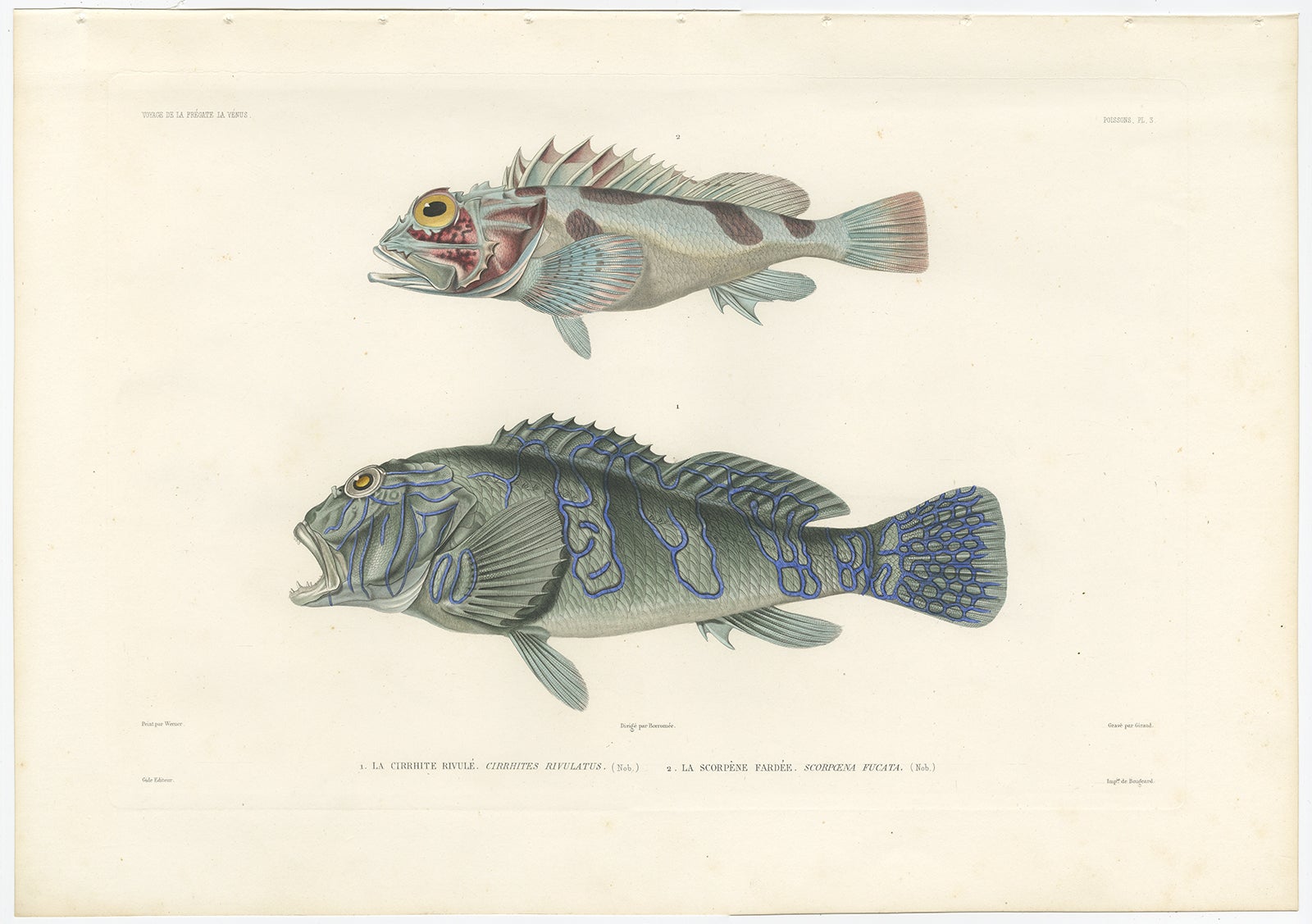
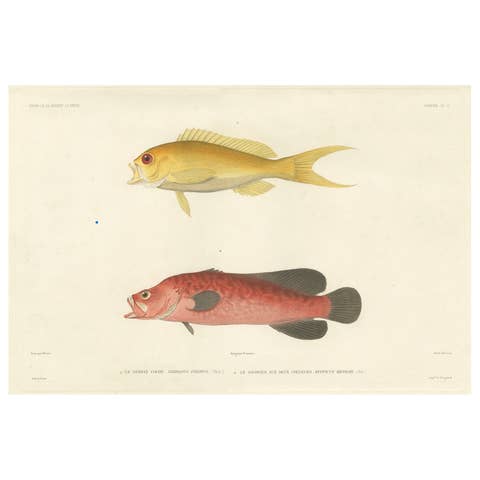
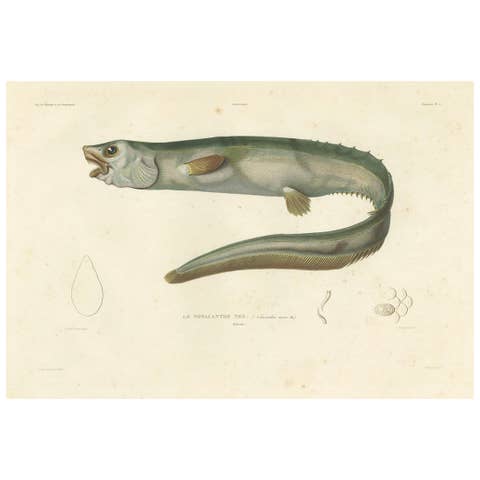
Antique Print of Bluebanded Hawkfish and Ornamented Scorpionfish, 1846
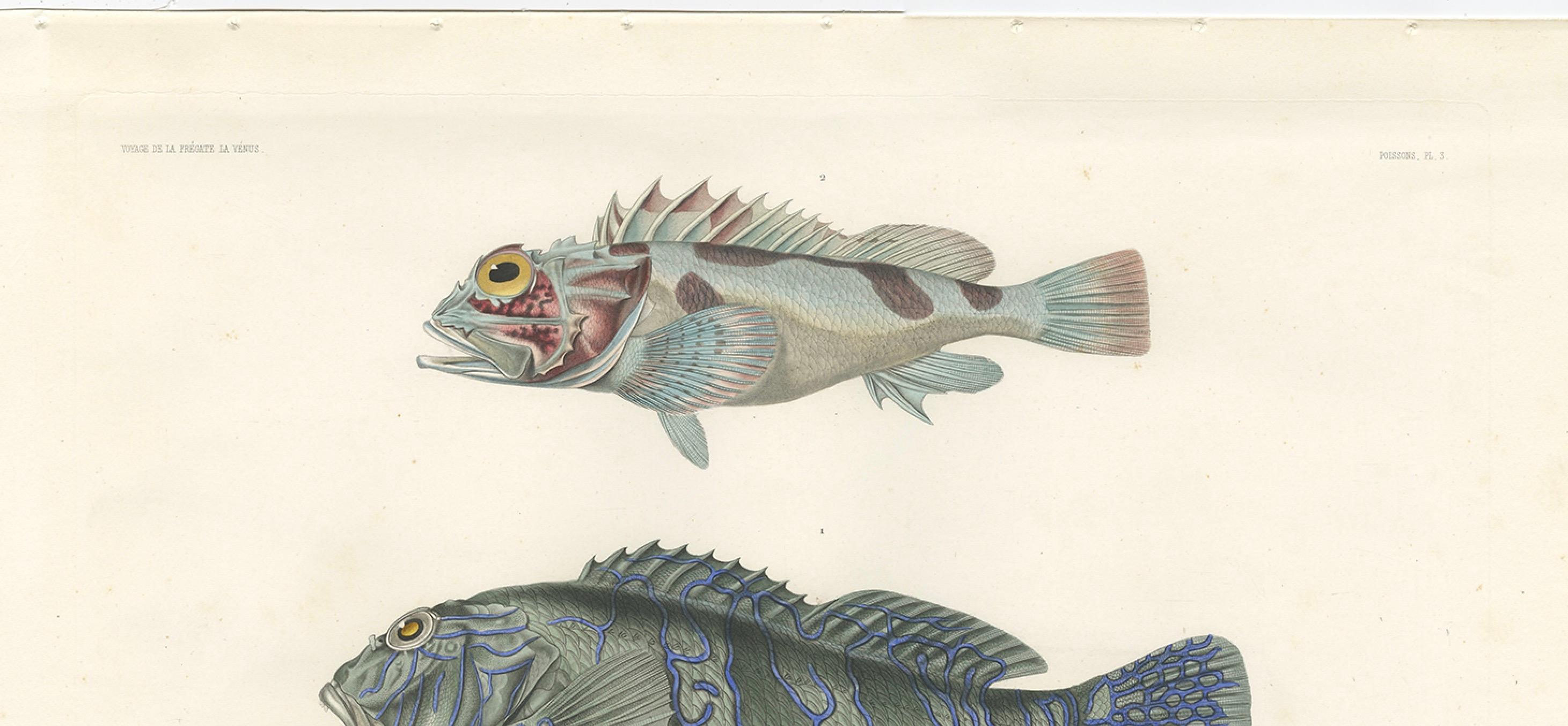
This vibrant hand-colored lithograph features two striking reef fish species: Cirrhites rivulatus (the Bluebanded Hawkfish) and Scorpaena fucata (the Ornamented Scorpionfish). The print was produced for the zoological section of Voyage de la frégate La Vénus, a major French scientific expedition published in Paris by Gide in 1846.
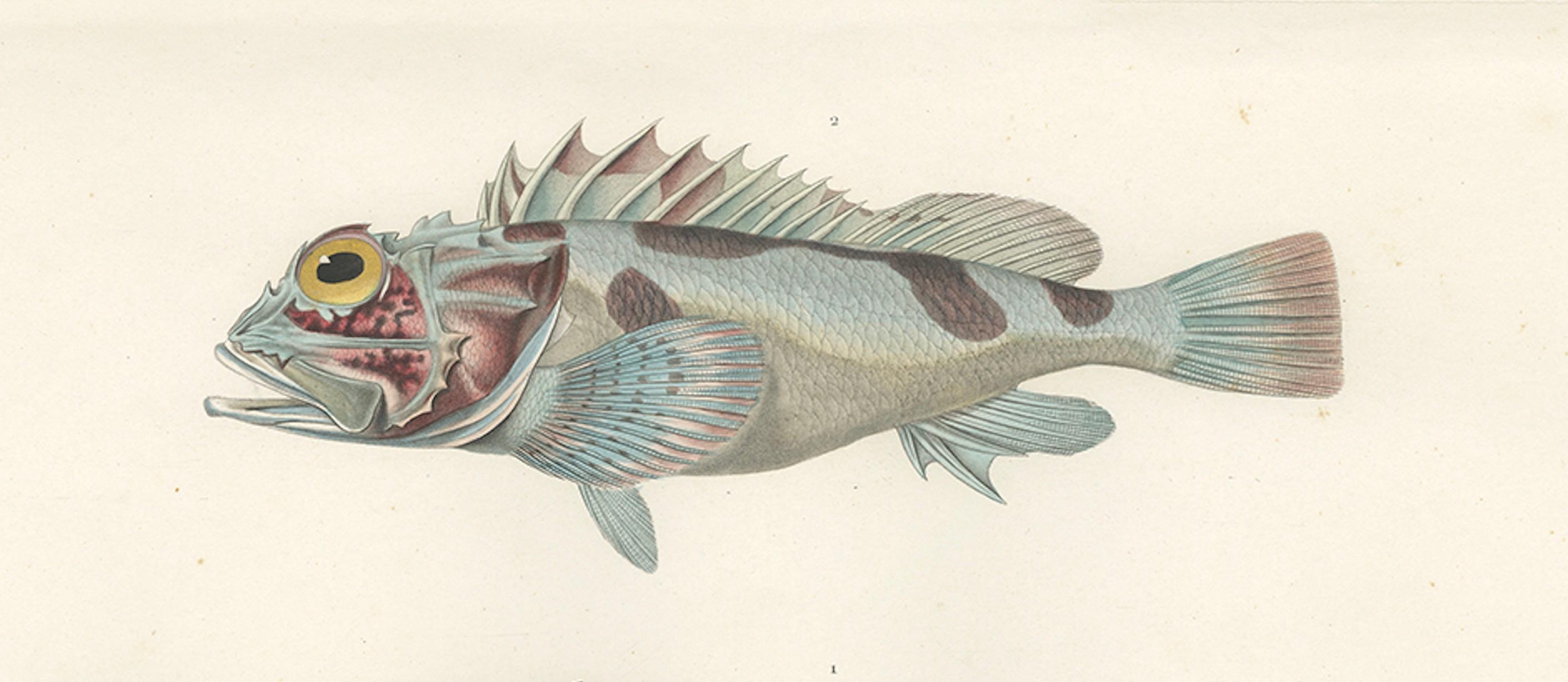
The upper fish, *Scorpaena fucata*, known for its cryptic appearance and reddish blotches, is a type of scorpionfish recognized for its venomous spines and ability to blend into rocky seafloors. The illustration emphasizes its broad head, large golden eyes, and robust pectoral fins.
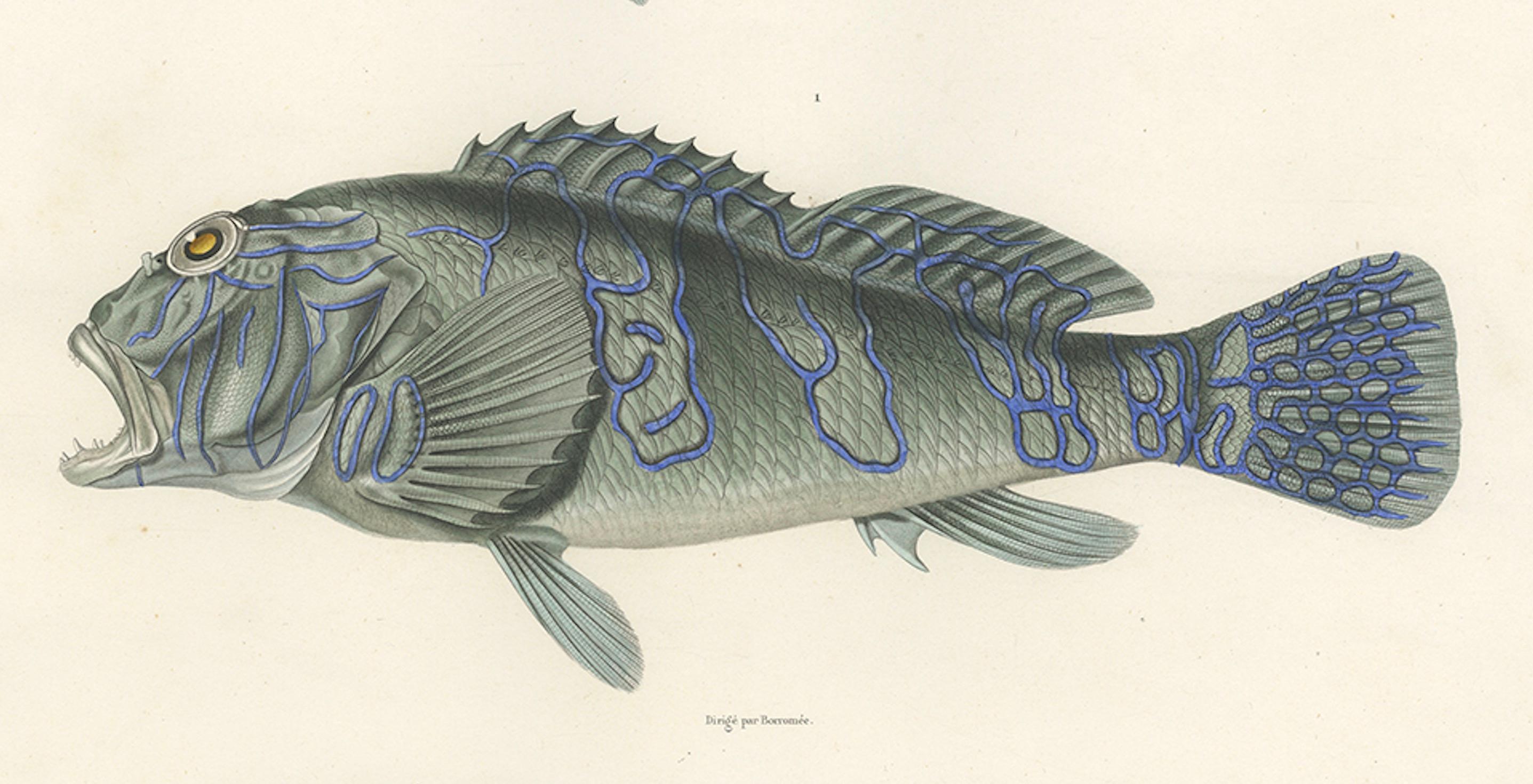
The lower fish, *Cirrhites rivulatus*, is immediately eye-catching with its vivid greenish-blue body intricately patterned in cobalt-blue lines and bars. Commonly referred to as the Bluebanded Hawkfish, this species is found in Eastern Pacific coral reefs and is admired for its ornate coloring and perching behavior atop coral outcrops.
This plate, titled "Poissons Pl. 3", was drawn by Werner, engraved by Bernard, and printed by Bougeard. The detail and precision of this lithograph reflect the commitment to both artistic refinement and scientific accuracy that characterized 19th-century natural history publishing.
The *Voyage de la Vénus* (1836–1839) was one of the great French exploratory journeys of the era, combining maritime navigation with the systematic study of flora, fauna, and ethnography across the Pacific and beyond. The zoological plates, such as this one, serve as historical documents of species distribution and early marine taxonomy, while also standing on their own as decorative and collectable works of art.
Condition: Very good condition with only minor scattered foxing, mostly in the outer margins. Strong plate impression. No visible damage or restoration. Colors remain crisp and luminous.
Framing tips: A natural wood or black frame paired with a cream or light blue mat will accentuate the delicate marine hues in this print. Consider using museum-grade glass to protect the original hand-coloring. A perfect statement piece for a coastal interior or marine-themed study, as well as a prized addition to any natural history collection.