About this sheet
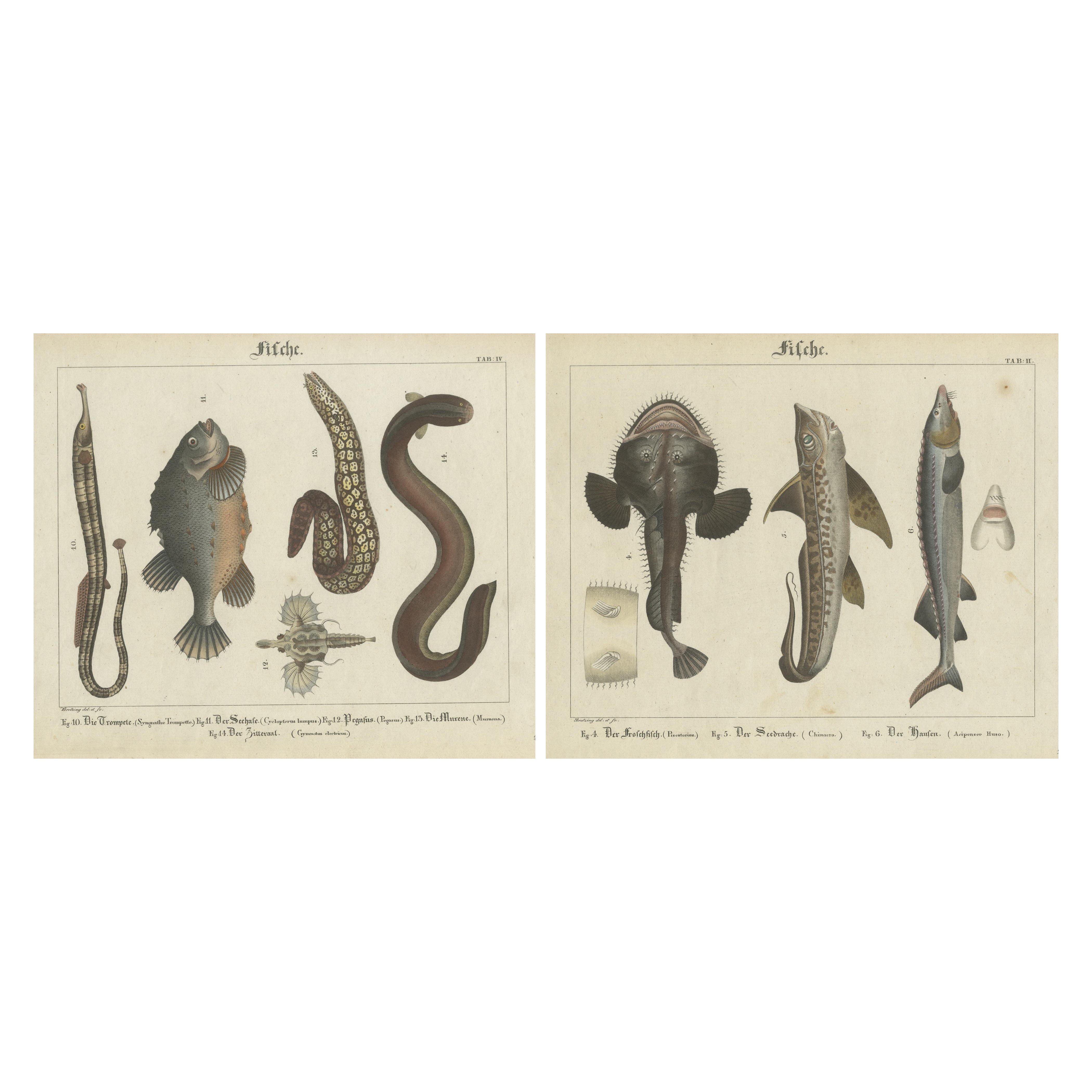
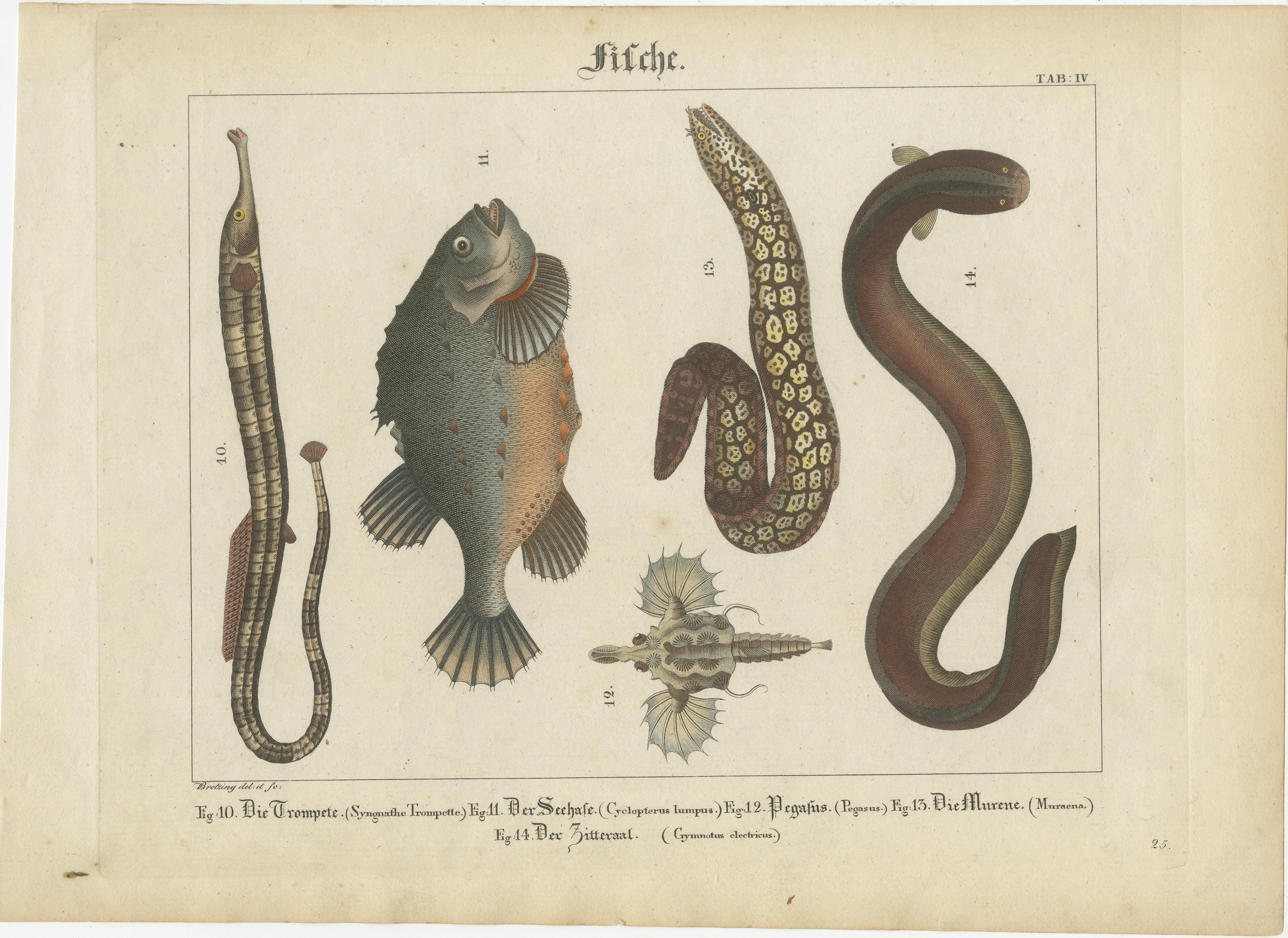
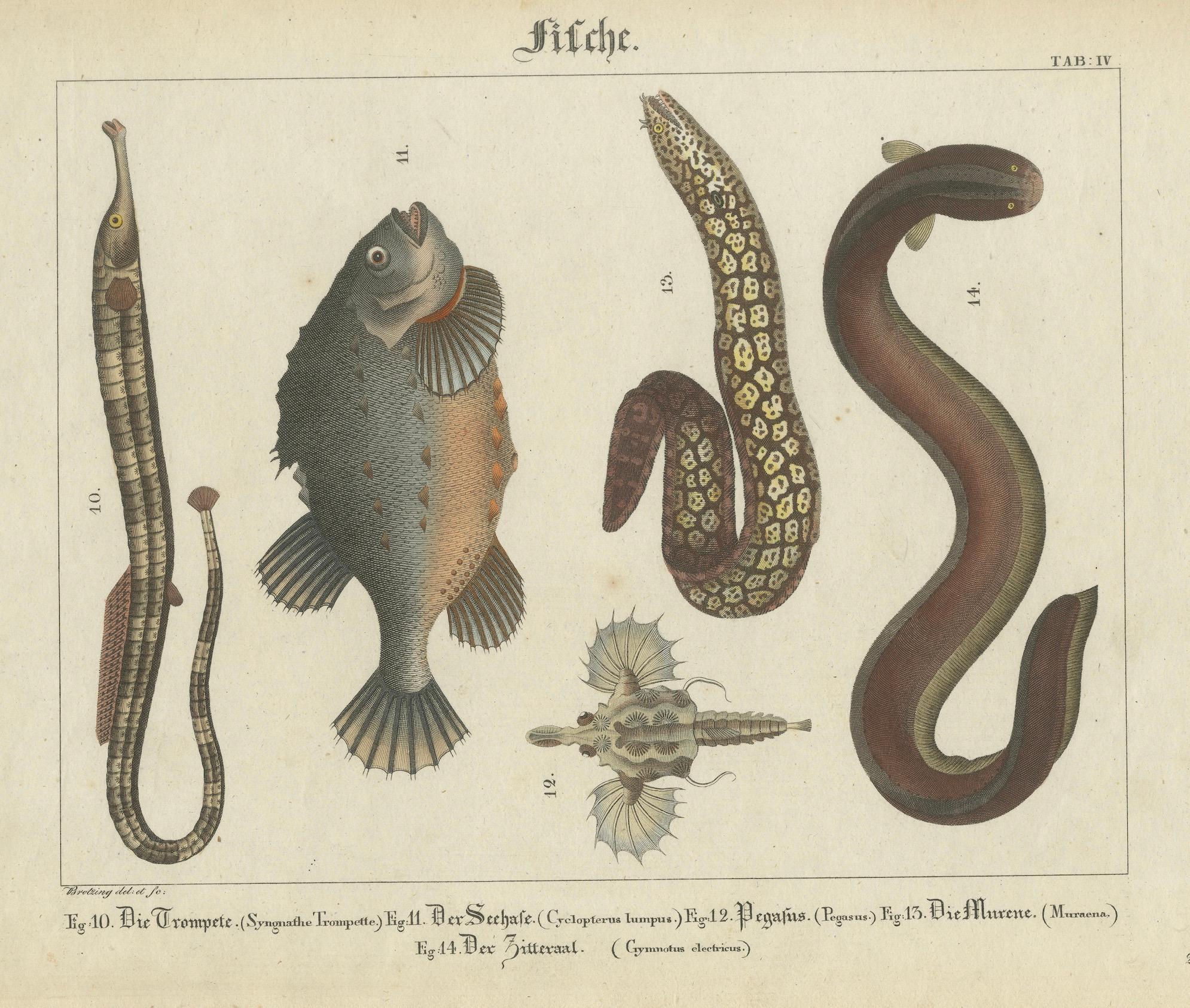
Antique Print – TRUMPETFISH, MORAY, ELECTRIC EEL, LUMPSUCKER, SEAMOTH – Wilmsen – 1821
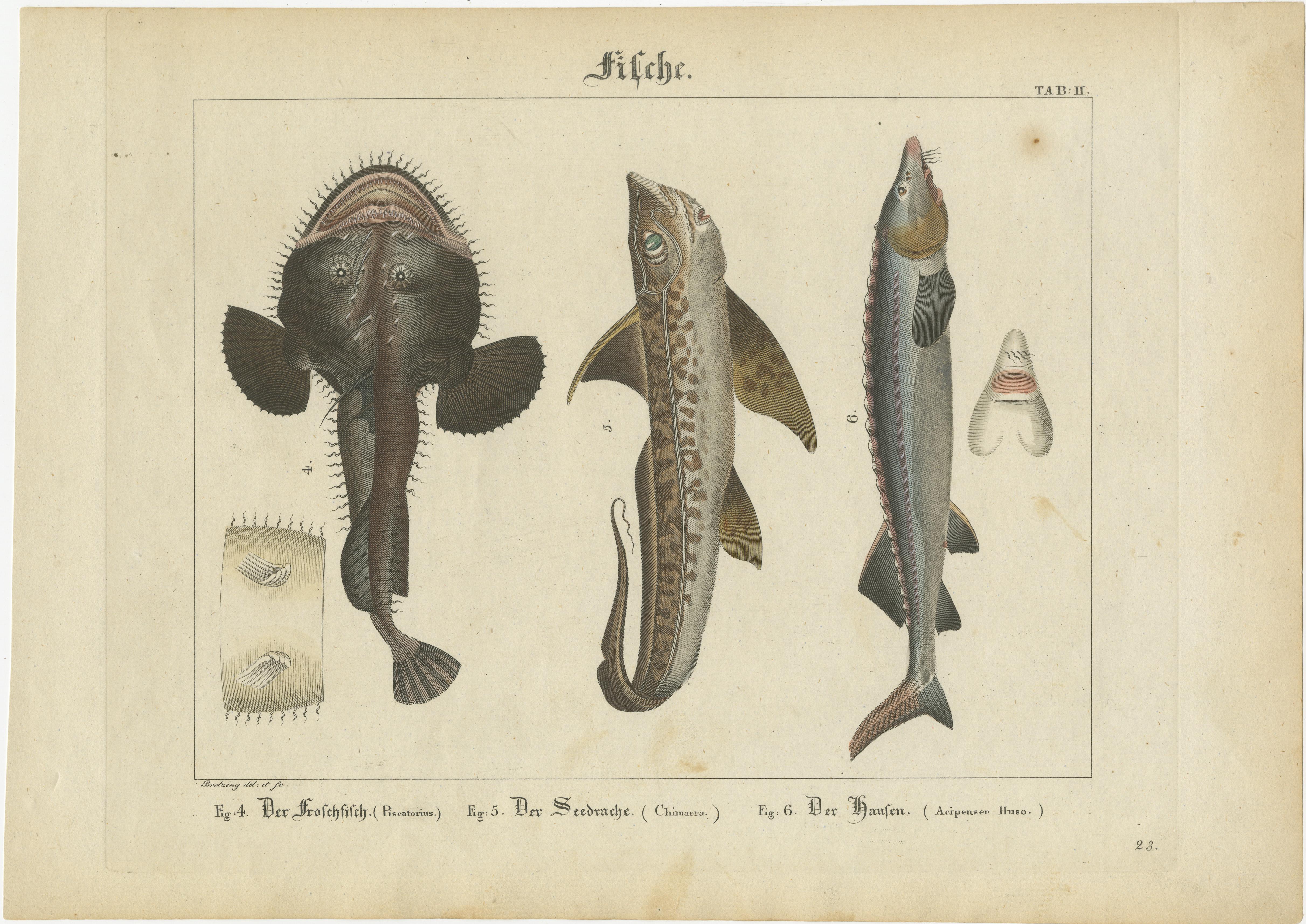
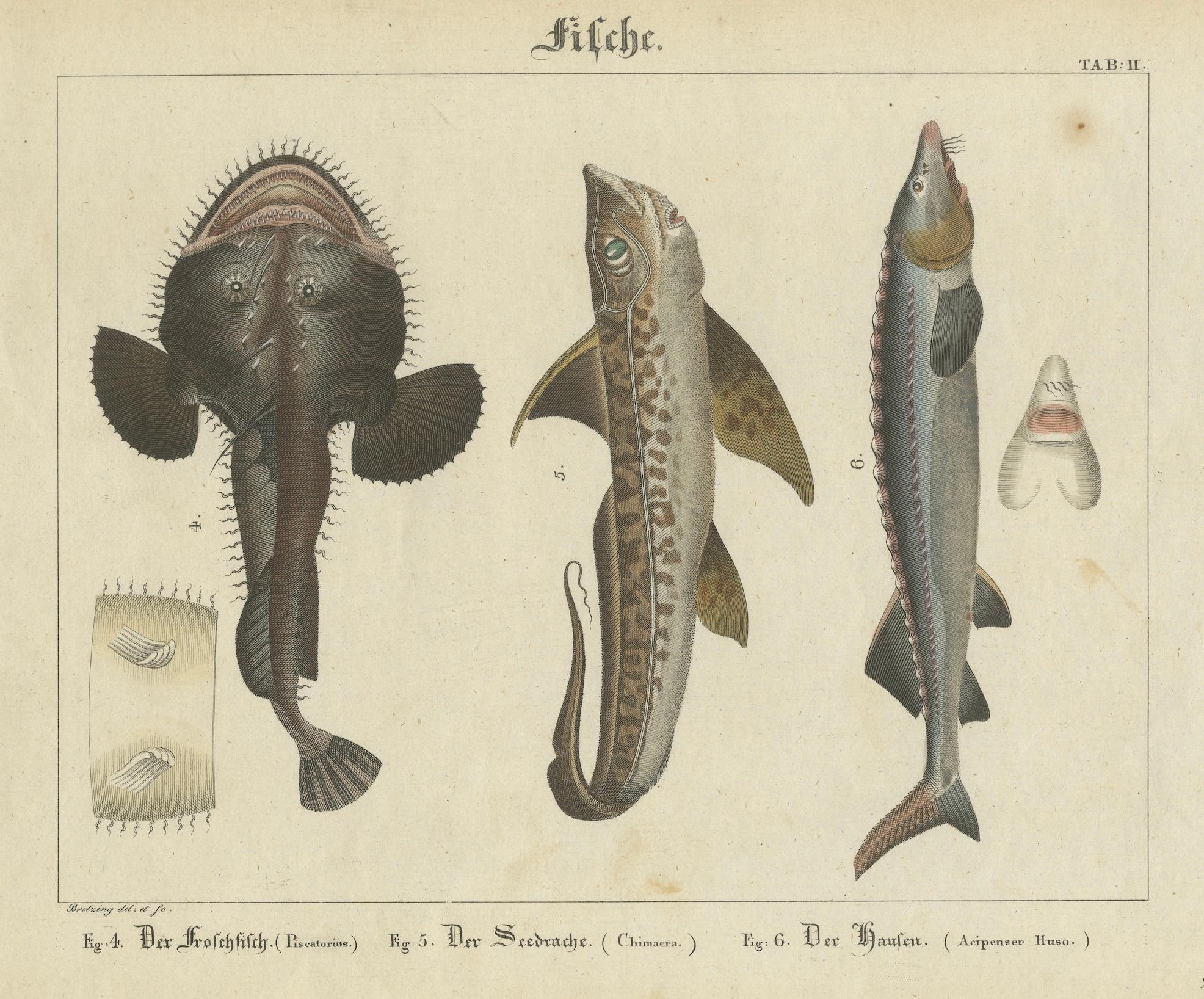
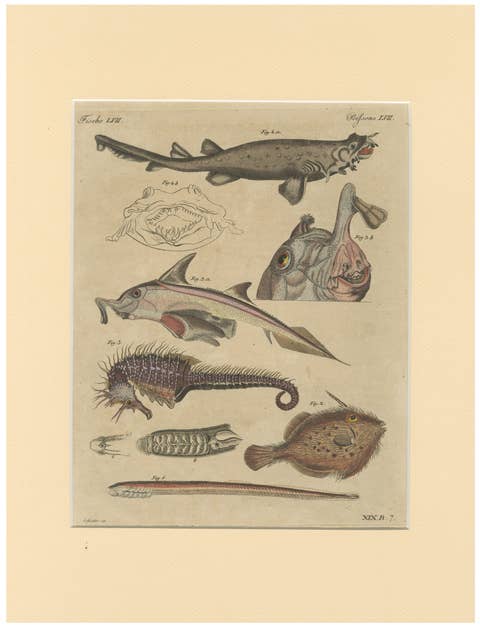
Antique Print – TOADFISH, CHIMAERA, BELUGA STURGEON – Wilmsen – 1821
Etching and engraving on vellin-type paper. Original hand colouring.
Plate IV: “Fische. (Fish)”
Fig. 10 Die Trompete (Trumpetfish, Syngnathus trumpet)
Fig. 11 Der Seehase (Lumpsucker, Cyclopterus lumpus)
Fig. 12 Pegasus (Seamoth, Pegasus)
Fig. 13 Die Murene (Moray Eel, Muraena)
Fig. 14 Der Zitteraal (Electric Eel, Gymnotus electricus)
Plate II: “Fische. (Fish)”
Fig. 4 Der Froschfisch (Toadfish, Batrachoid)
Fig. 5 Der Seevache (Chimaera)
Fig. 6 Der Hausen (Beluga Sturgeon, Acipenser huso), with inset detail of gill structure
These rare and highly decorative original prints originate from “Kupfer-Sammlung besonders zu F. P. Wilmsens Handbuch der Naturgeschichte für die Jugend und ihre Lehrer, aber auch zu jedem anderen Lehrbuche der Naturgeschichte brauchbar,” (translation: “Copper plate collection in particular for F.P. Wilmsen’s manual of natural history for the youth and their teachers, but also suitable for any other tutorial on natural history”). With an introduction by Dr. H. Lichtenstein and Dr. F. Klug, directors of zoological museums, published by Carl Friedrich Amelang, Berlin, 1821. The plates were created to accompany three volumes of text and are now scarce.
Artists and Engravers: Friedrich Philipp Wilmsen (Magdeburg 1770–1831 Berlin) was a German reformed theologian and educator. The plates were drawn after nature by Bretzing, Ludwig Meyer, Müller and Weber, and engraved by Bretzing, Guimpel, Meno Haas, Friedrich Wilhelm Meyer, Ludwig Meyer, Tissot and Wachsmann. Plate IV was engraved by Bretzing; Plate II also originates from the same series with comparable craftsmanship and style. Each plate demonstrates both scientific accuracy and decorative appeal, reflecting the era’s growing fascination with natural history and marine zoology.
Condition summary: Very good impressions with strong plate marks and original hand coloring. Paper remains stable and clean with only minor toning and occasional small spots of foxing consistent with age. No tears or repairs noted.
Framing tips: These prints are best presented as a pair. A black or dark wood frame with a cream or ivory mount will emphasize their detailed engraving and hand coloring. For a lighter setting, natural oak or maple frames with soft off-white mounts create a classic, scholarly appearance ideal for a study, library, or collection wall.
Technique: Etching and engraving with original hand coloring
Maker: Plates from F.P. Wilmsen’s Handbuch der Naturgeschichte, Berlin, 1821