Reflective Resilience: Timeless Profiles by Pigné, 1740
€ 340
One of a kind: this is the sheet in the photographs. Ships from Langweer, the Netherlands.
Date
1740
Sheet size
26 × 42 cm (10.2 × 16.5 in)
Reference
BG-13675-35
Condition
General age related toning and occasional staining from handling or damp, mostly in the marges as visible on the scans. Strong impressions, no tears, crisp lines.
About this sheet
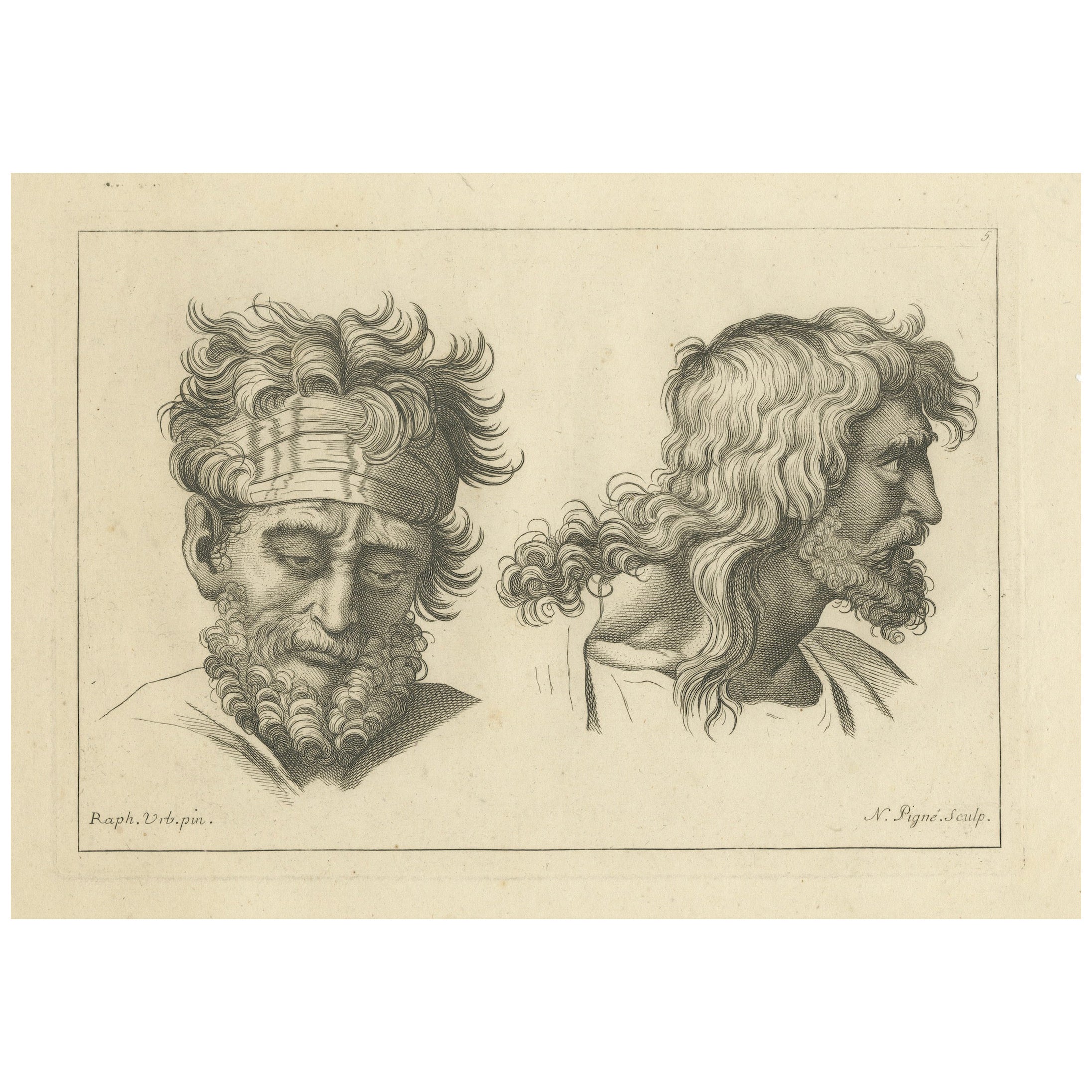
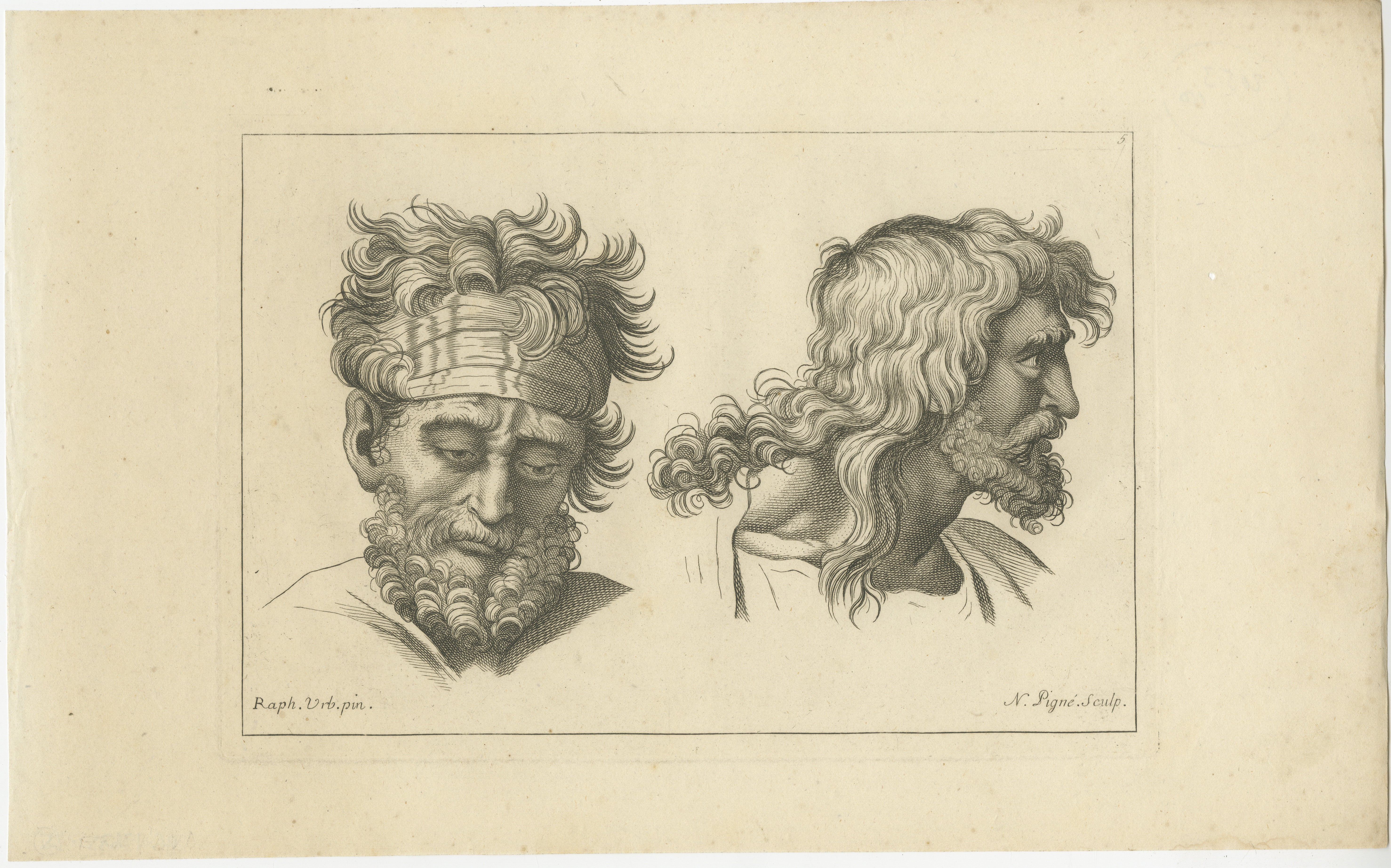
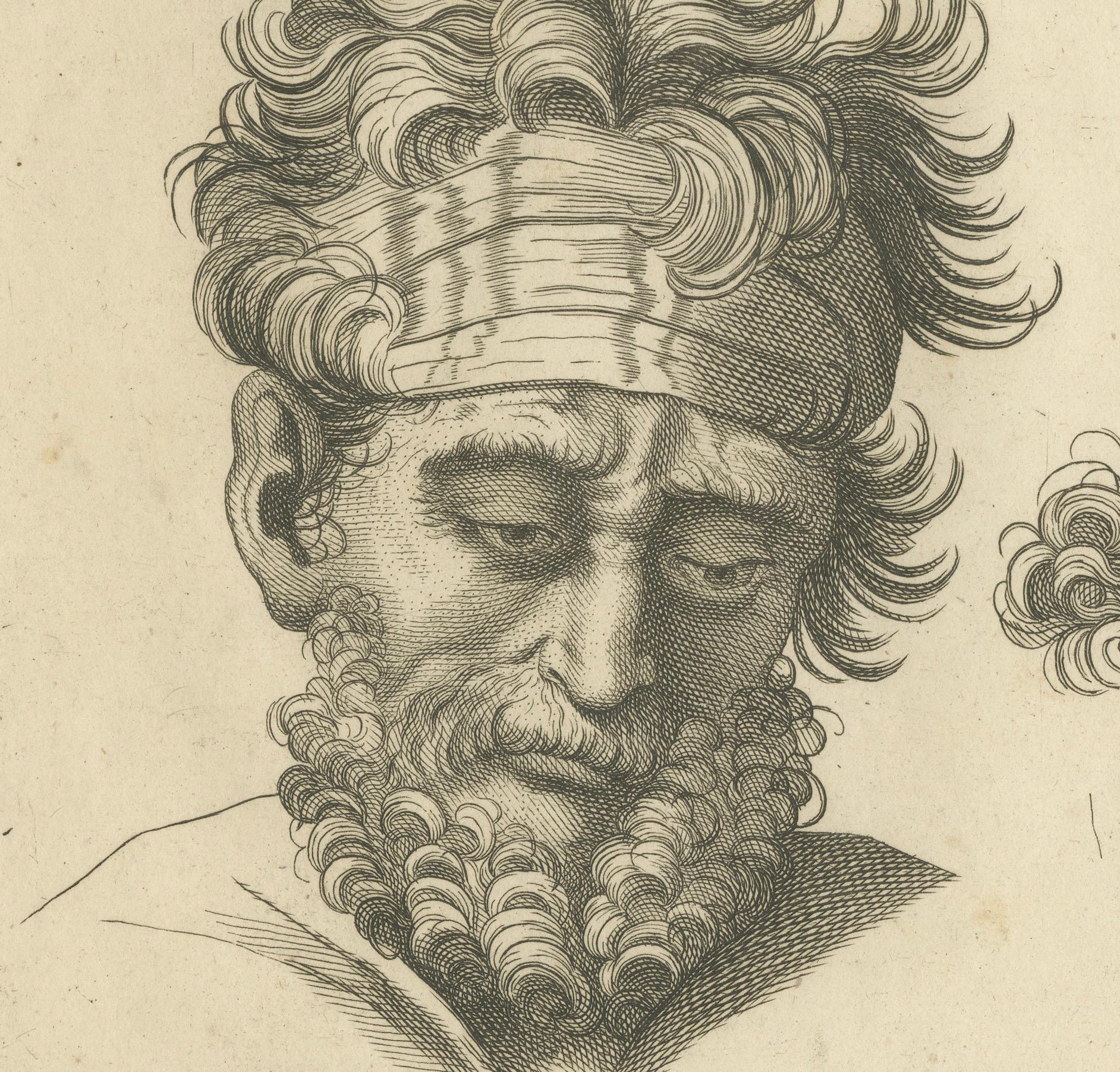
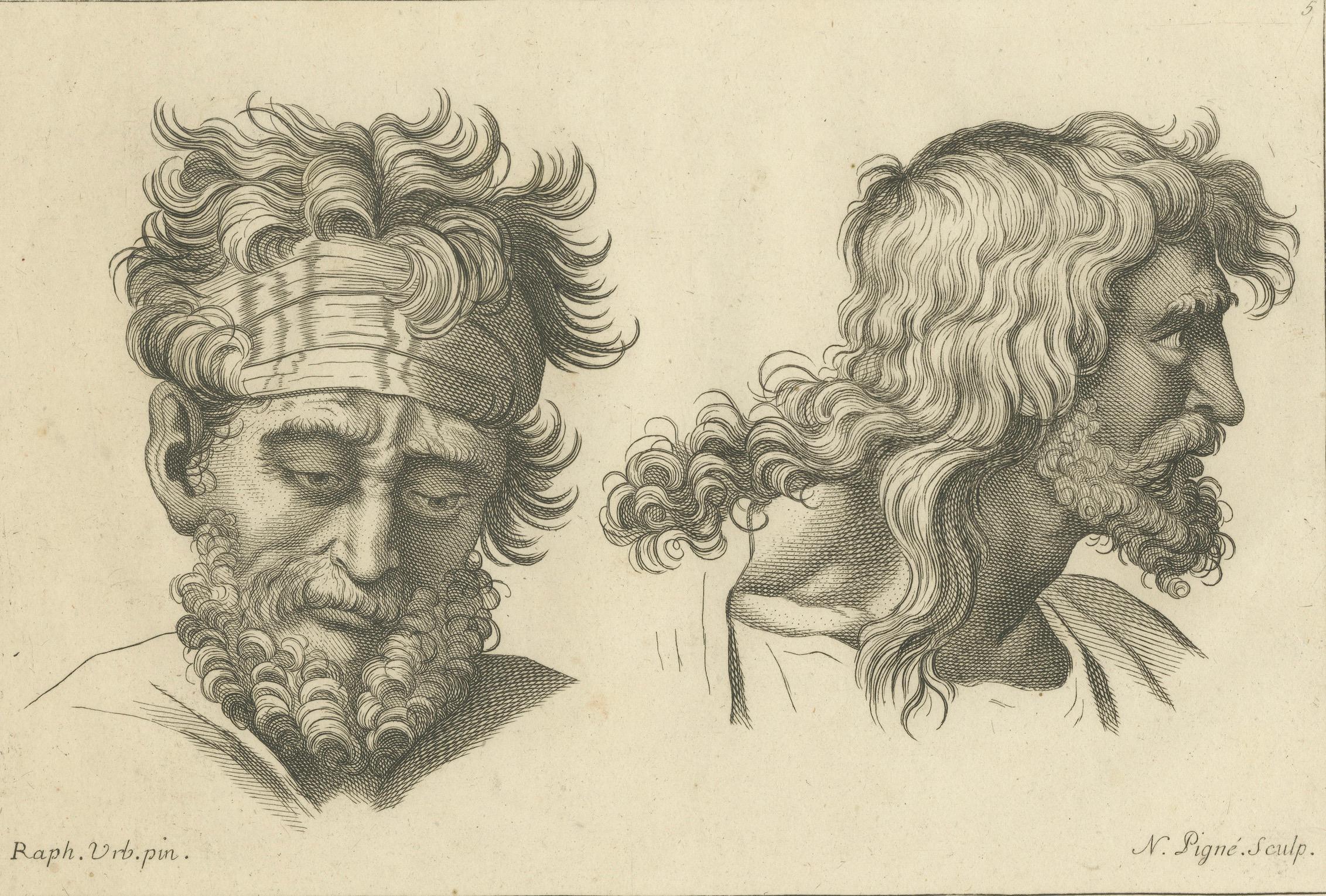
The engraving presented here exhibits two male figures, each bearing a unique expression and hairstyle, likely echoing the artistic style of Raphael's Renaissance works. On the left, we see a figure with a headband wrapped around his forehead, his eyes cast downward in a moment of solemn reflection or sorrow. His beard is neatly curled, signifying a careful grooming typical of the period's depictions of sagacious men.
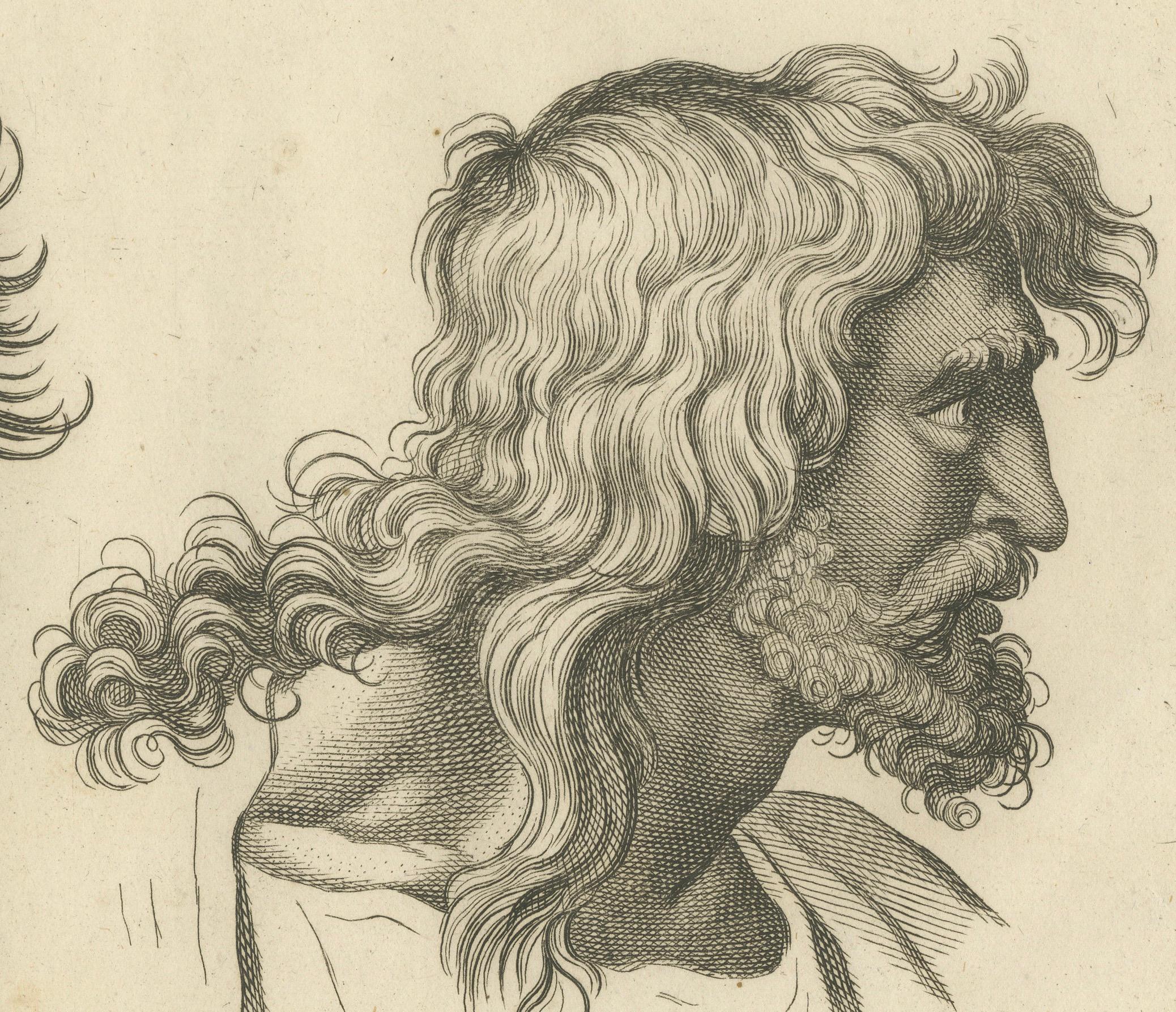
The figure on the right appears in profile, with a gaze directed outward, his hair and beard are more unruly, perhaps symbolizing a wilder, more passionate nature. The contrast in their expressions could represent different aspects of human experience — introspection versus outward focus, or calm versus fervor.
In the lower left corner, the inscription "Raph. Urb. pin." confirms the original painter, Raphael Sanzio from Urbino, and the lower right corner states "N. Pigné. sculp.", identifying Nicolas Pigné as the engraver. This piece is part of the extensive efforts to translate Raphael's frescoes and paintings into engravings, making the master's works accessible to a broader audience and preserving them for posterity. The meticulous detail in the engraving captures the texture of hair and the subtlety of emotion, hallmarks of Raphael's portraiture.
The engraving is part of a series known as "Recueil de XC Tetes tirees des Sept Cartons des Acts des Apotres peints par Raphael Urbin," which translates to "Collection of 90 Heads drawn from the Seven Cartoons of the Acts of the Apostles painted by Raphael of Urbino." This series was derived from the Raphael Cartoons at Hampton Court, which are famous works by the Italian Renaissance master Raphael. These cartoons were originally created as full-size designs for tapestries depicting scenes from the lives of Saints Peter and Paul.
Nicolas Dorigny, a renowned French engraver, was responsible for creating these engravings. He was invited to England and worked on engraving the Raphael Cartoons, which he completed in 1719. Dorigny's engravings were sold by subscription and were highly regarded for their fidelity to Raphael's original designs and for their artistic excellence. His work was part of the broader European tradition of reproducing and disseminating the works of great Renaissance artists.
These particular engravings are historically significant as they represent one of the key moments in the history of printmaking, providing an elite educated market with access to Raphael's artistry through the medium of engraving. Dorigny's work, including this series, was aimed at a knowledgeable audience, with all the lettering in the engravings done in Latin, highlighting the scholarly nature of the intended patrons.