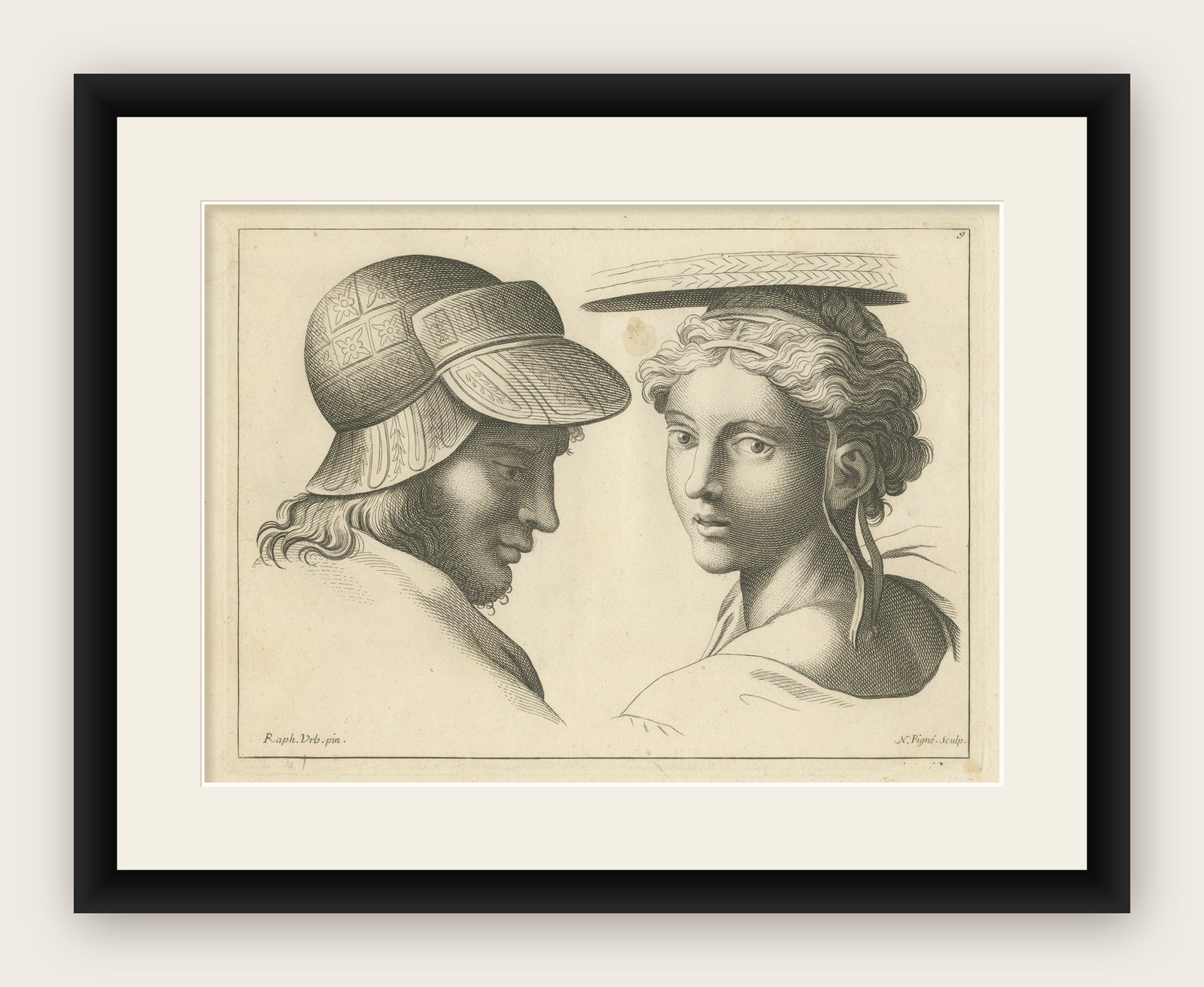
Dialogue of Eras: Cap and Feather in Profile by Pigné, 1740
€ 340
Original antique · The actual sheet photographed · Certificate of authenticity on request · Sold unframed · Worldwide shipping from € 15 (rates)
Date
1740
Sheet size
26 × 42 cm (10.2 × 16.5 in)
Reference
BG-13675-24
What the condition grades mean
Excellent
Bright and clean, with no faults worth mentioning.
Very good
Only light signs of age, such as faint toning.
Good
Normal signs of age for a sheet of this period: toning, some foxing, small marks or neat old repairs.
Fair
Clear faults such as staining, tears or repairs, priced to match.
Every fault we see is written in the condition note, and the whole sheet is shown uncropped in the photos.
Condition
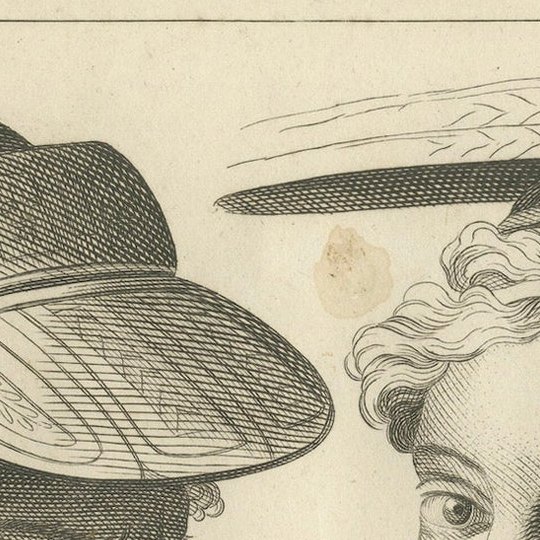
General age related toning and occasional staining from handling or damp as visible on the scans, with one or two spots within the plate-mark. Study the images carefully.
About this sheet
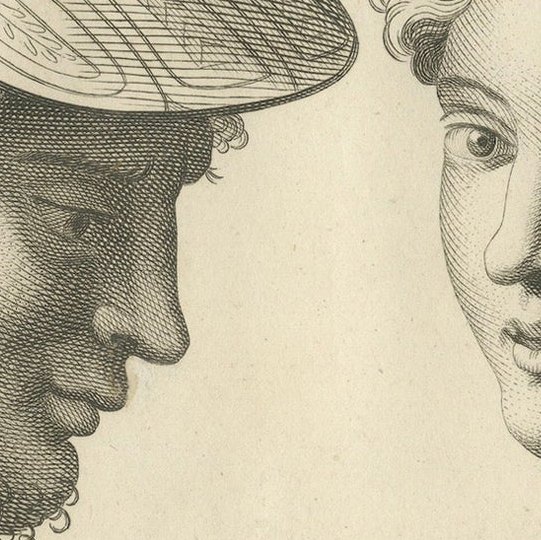
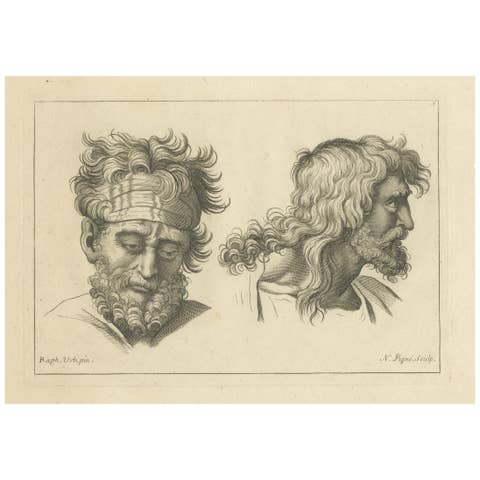
This engraving depicts two contrasting profiles. On the left is a male figure adorned with a detailed, patterned cap, his features marked by a hooked nose and a small, tightly curled beard. He appears to be in mid-conversation, his mouth slightly open as if speaking.
The figure on the right is a female, her gaze direct and serene. She is crowned with an ornate, feathered headdress, and her hair is styled in an elaborate manner that suggests a person of importance or an allegorical figure. The woman's clear, calm gaze contrasts with the man's active expression, creating a dynamic interplay between the two characters.
The engraving is marked "Raph. Urb. pin." on the left, identifying the original painting by Raphael Sanzio from Urbino, and "N. Pigné. sculp." on the right, indicating that Nicolas Pigné executed the engraving. This work is likely part of the "Recueil de XC Têtes" project, where Sir Nicolas Dorigny directed skilled engravers like Pigné to bring Raphael's cartoons to a wider audience through prints.
The distinct personalities captured in these profiles reflect the Renaissance's emphasis on individual character and emotion. The engraving technique used allows for fine detail, especially in the textures of the cap and the feathers, highlighting the artisans' skills in translating Raphael's work into engravings.