About this sheet
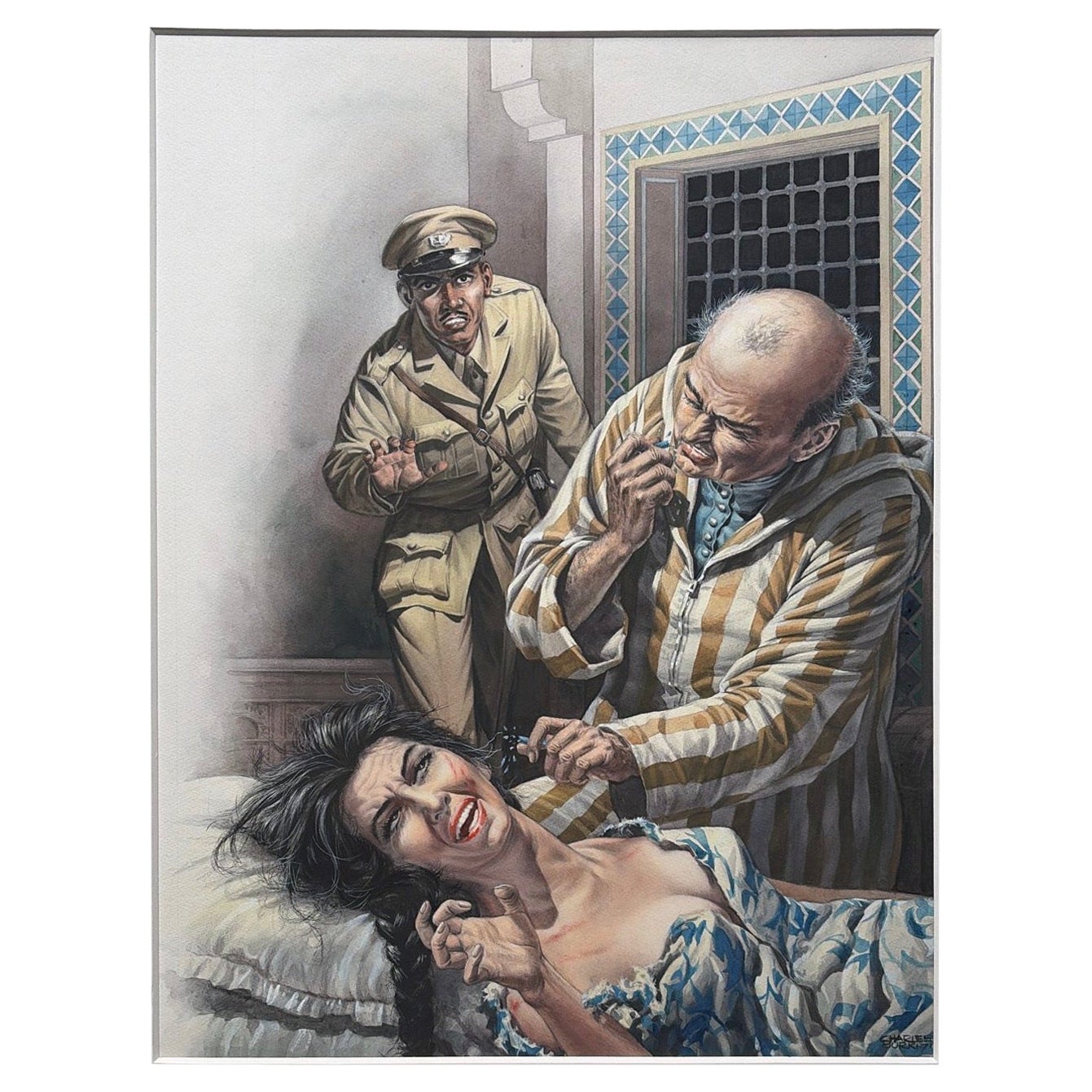
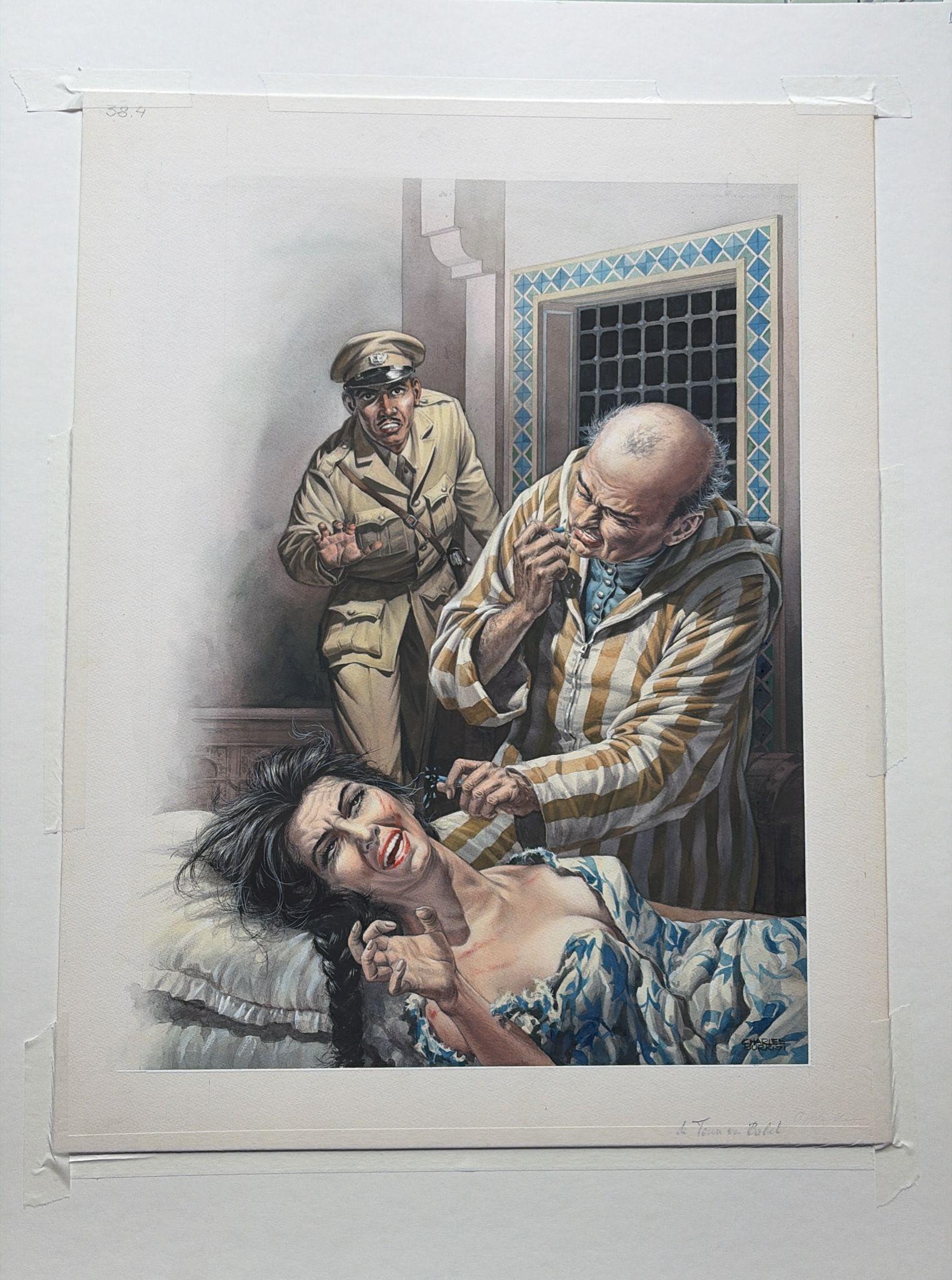
Original Illustration “Le Faucon d’Or” by Charles Burki, 1971 – Gouache on Board
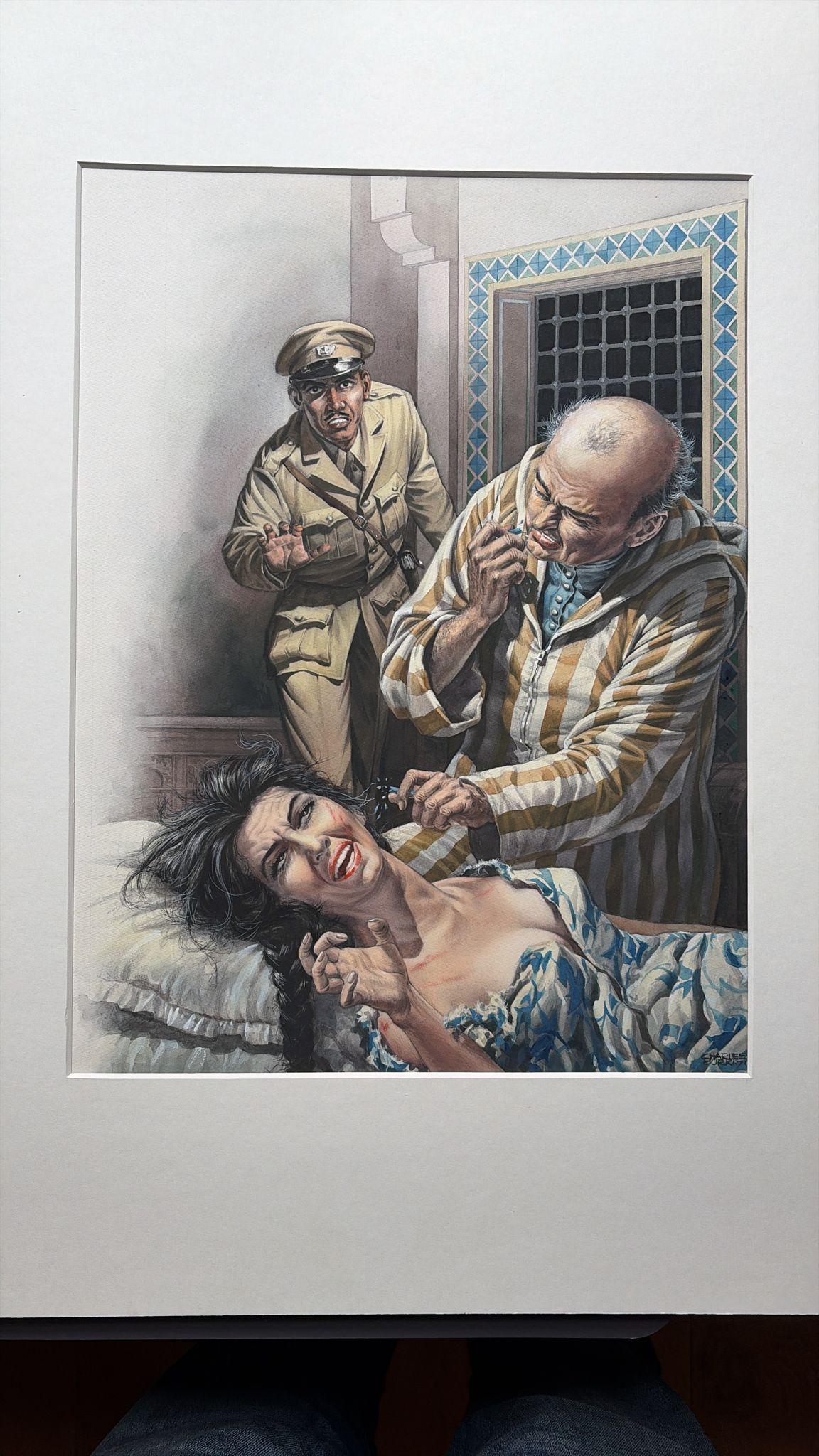
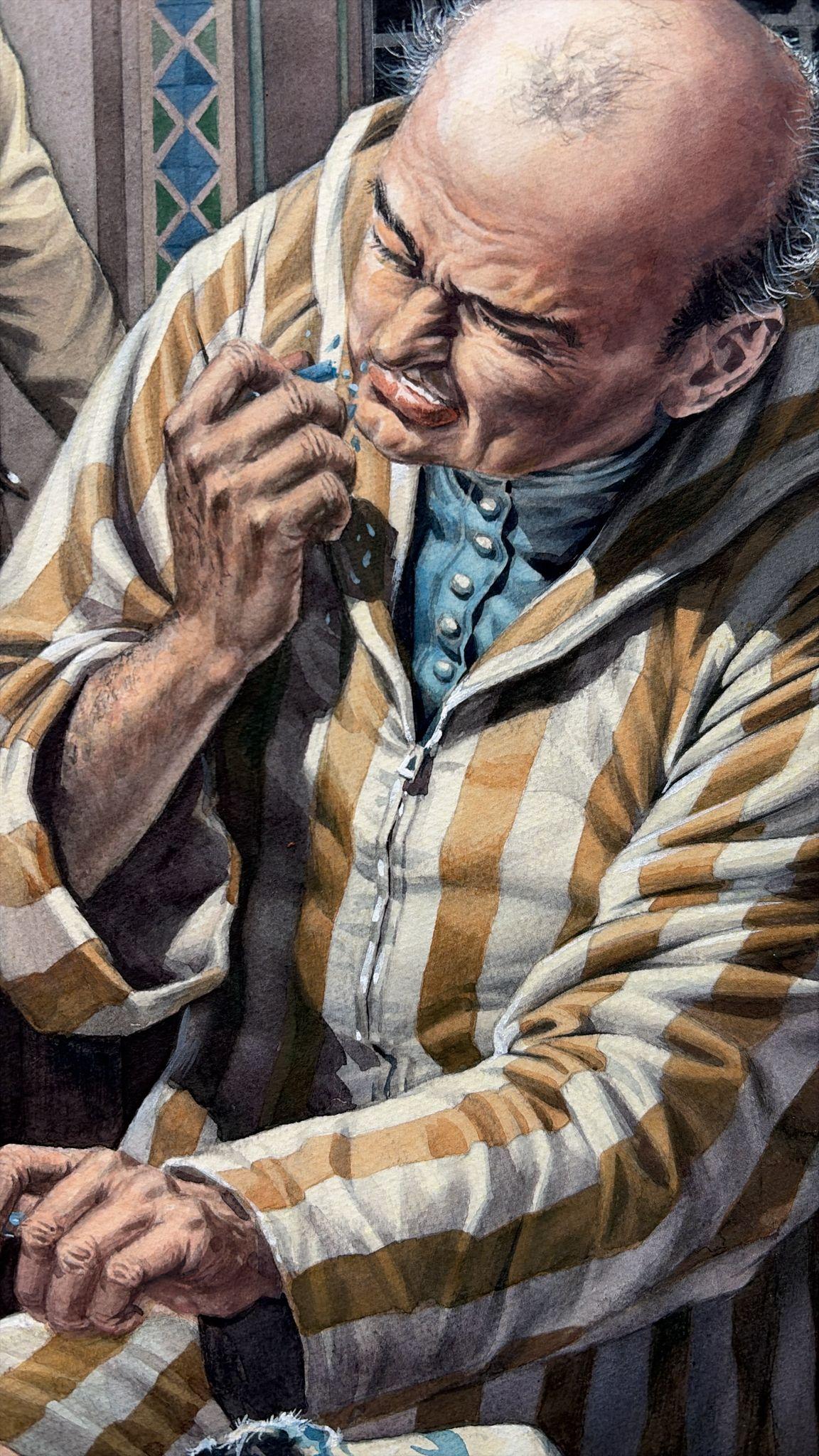
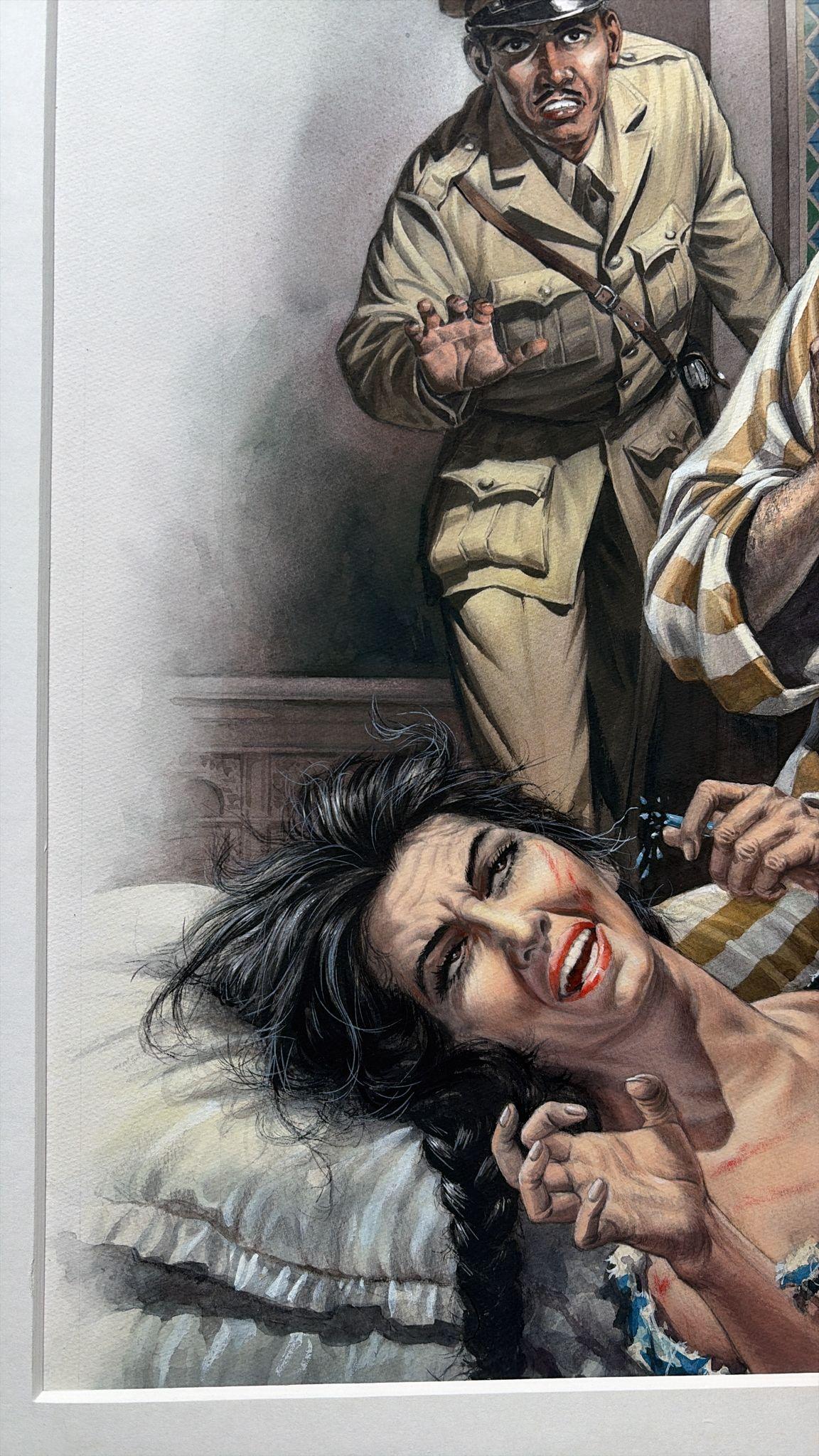
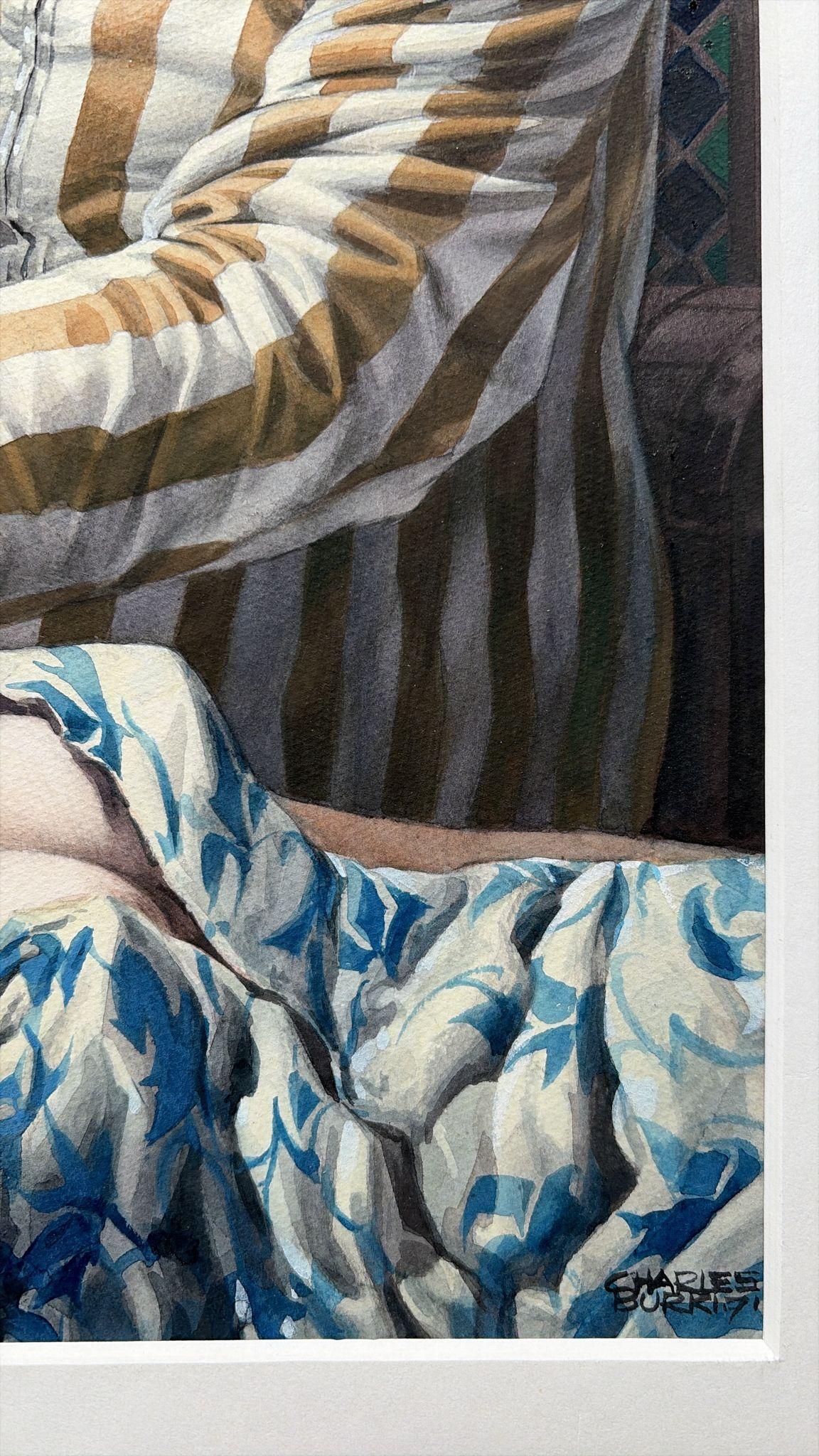
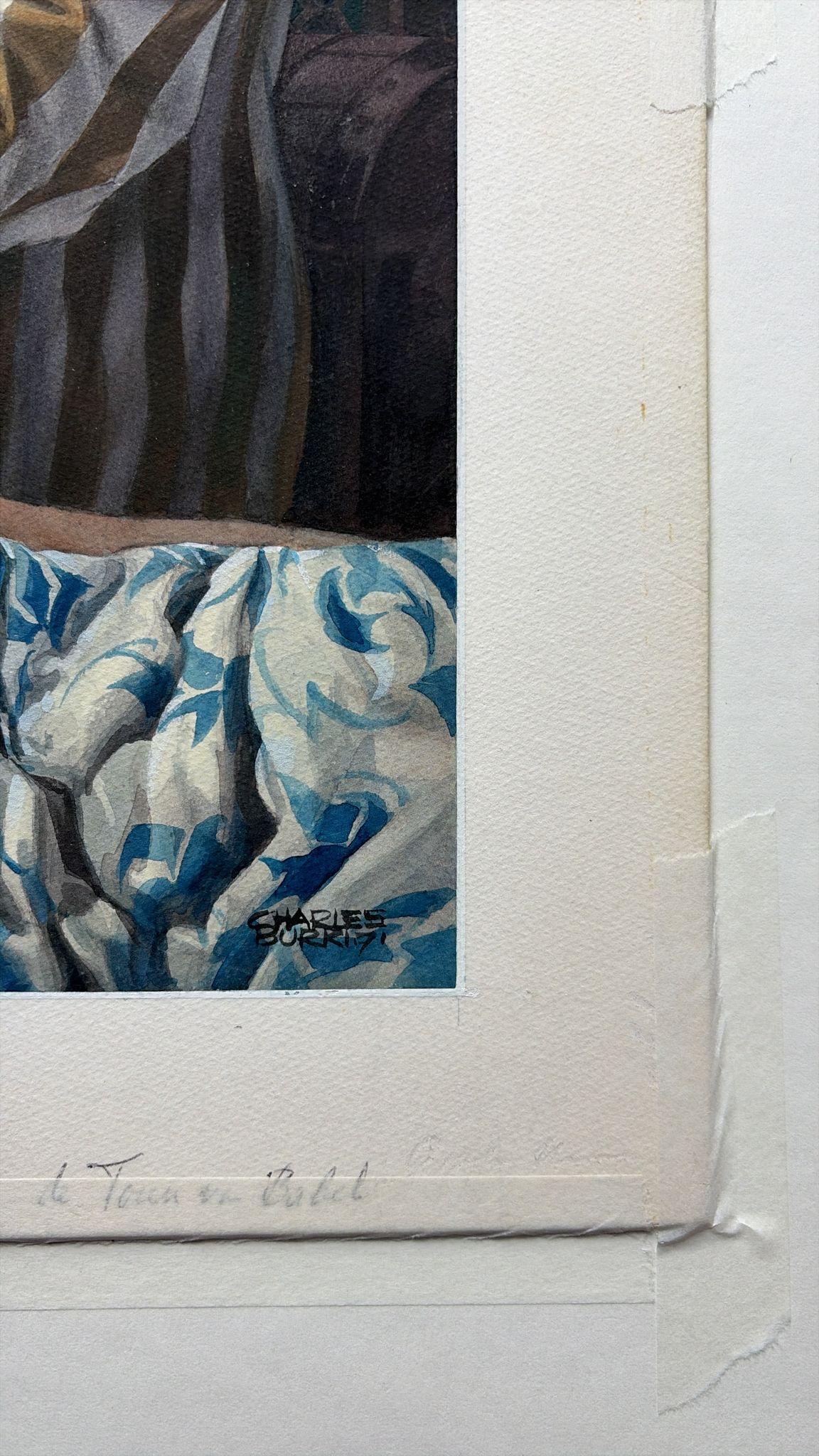
Original gouache illustration by Dutch artist Charles Burki (1909–1994), signed and dated “Charles Burki ’71” lower right, and titled in pencil “Le Faucon d’Or” (The Golden Falcon). This dramatic scene, rendered in Burki’s cinematic realist style, depicts a tense confrontation in what appears to be a North African or Middle Eastern interior. A woman recoils in distress on a bed while a man in striped robes grips her braid and examines a small object under light; behind them, a uniformed officer bursts into the room in alarm.
Executed with masterful technical control, the composition is charged with psychological intensity and rich visual detail. The patterned wall tiles, textured fabrics, and dramatic chiaroscuro all contribute to the sense of depth and realism that defined Burki’s later work for European pulp and adventure publications.
Burki’s color palette here is bold yet controlled—ochres, blues, and flesh tones harmonize under a subdued interior light. His treatment of facial expressions and fabric folds reflects both his architectural precision and his training as a draughtsman. The style, subject, and title suggest that this piece was created as cover or interior art for a French or Dutch illustrated adventure novel, likely from the “romans d’espionnage” (spy or intrigue) genre popular in the 1960s–1970s.
“Le Faucon d’Or” is an excellent example of Burki’s ability to balance realism and tension, placing him among Europe’s foremost illustrators of mid-century narrative art.
Biographical Note:
Charles Burki (1909–1994) was a Dutch painter, illustrator, and graphic artist whose career bridged colonial, wartime, and postwar eras. After training in architecture, he worked in the Dutch East Indies, survived imprisonment during World War II, and later established himself in the Netherlands as a leading illustrator. His work appeared in countless book covers, adventure serials, and cultural publications from the 1950s through the 1970s. Burki’s hallmark is his combination of anatomical accuracy, realistic lighting, and cinematic drama—qualities that make his original works highly sought-after today.
Condition report:
Very good condition; vivid original colors and clean surface. Minor handling traces and slight edge toning from former mounting, well outside the painted area.
Framing tips:
Best displayed in a dark wood or black frame with a neutral ivory or light grey mat to highlight the dramatic color contrasts. A shadowbox mount can enhance its depth and preserve the signature area.
Technique: Gouache on illustration board
Maker: Charles Burki, The Netherlands, 1971