Blue Basset of Gascogne – Antique Dog Illustration, 1915
€ 140
One of a kind: this is the sheet in the photographs. Ships from Langweer, the Netherlands.
Date
1915
Sheet size
17.7 × 24 cm (7.0 × 9.4 in)
Reference
BG-11-086
Condition
Very good for its age. Light toning consistent with early 20th-century paper. No major tears or repairs. Mounted on a cream backing for presentation. Plate mark faintly visible.
About this sheet
Blue Basset of Gascogne – Antique Dog Illustration, 1915
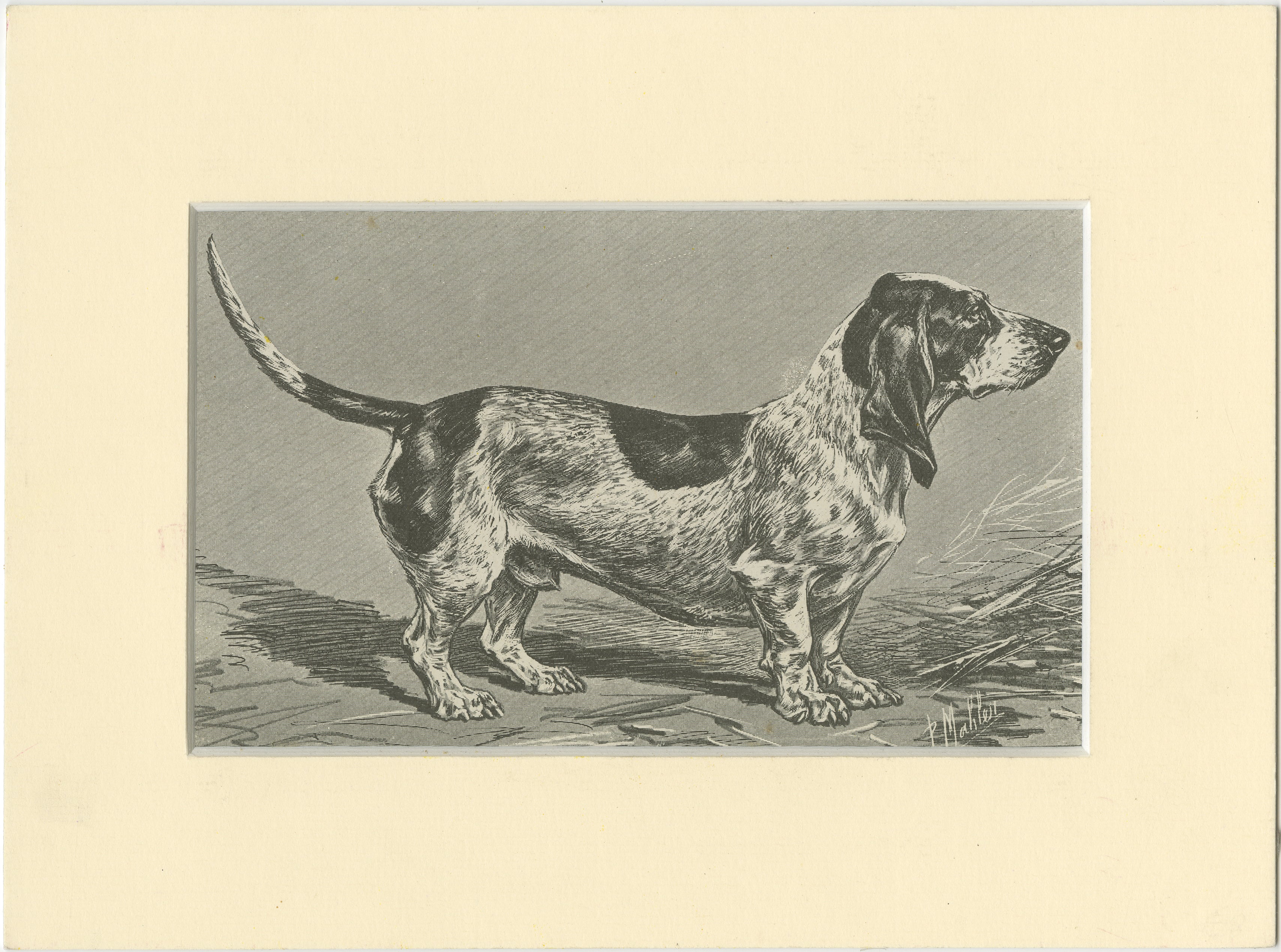
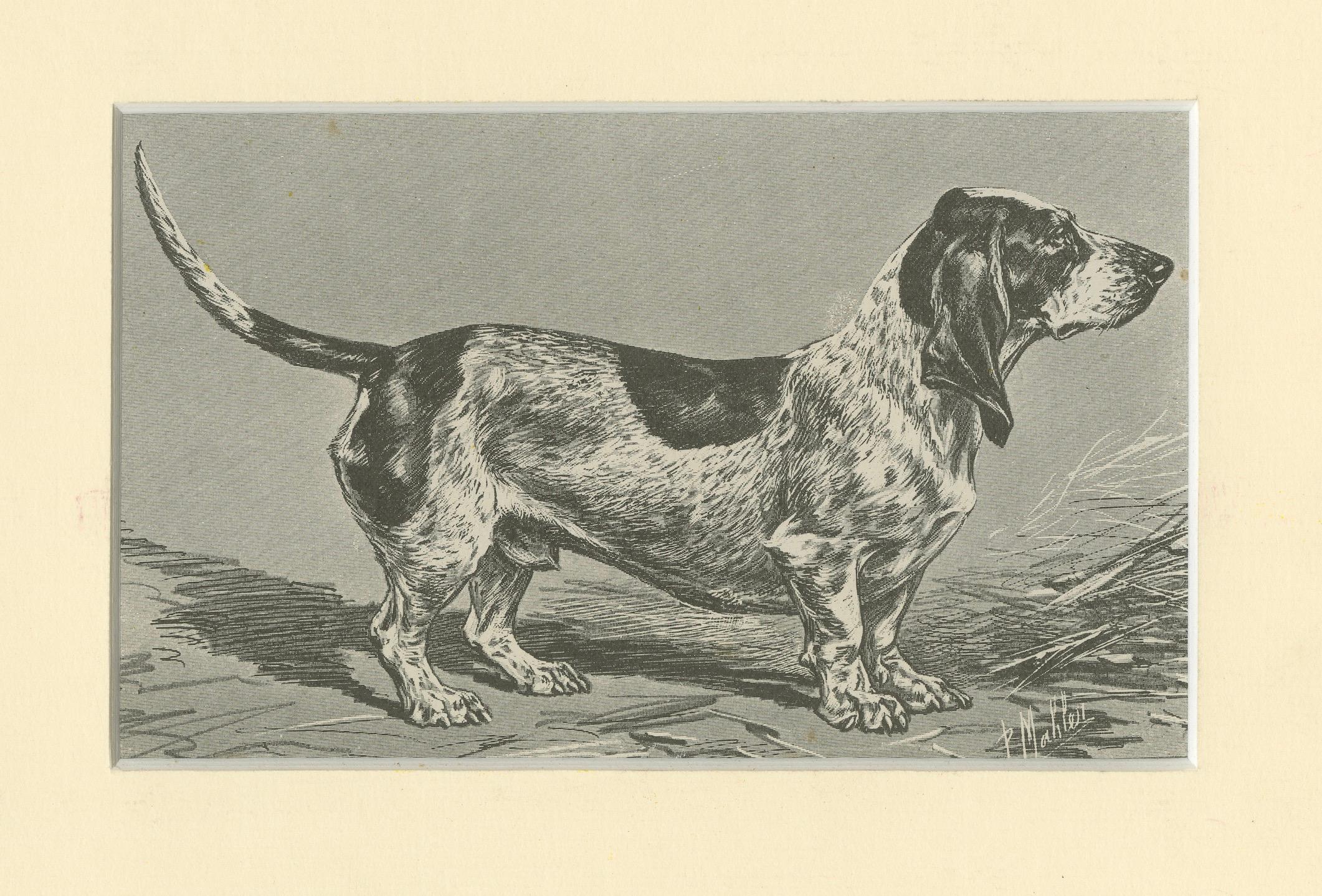
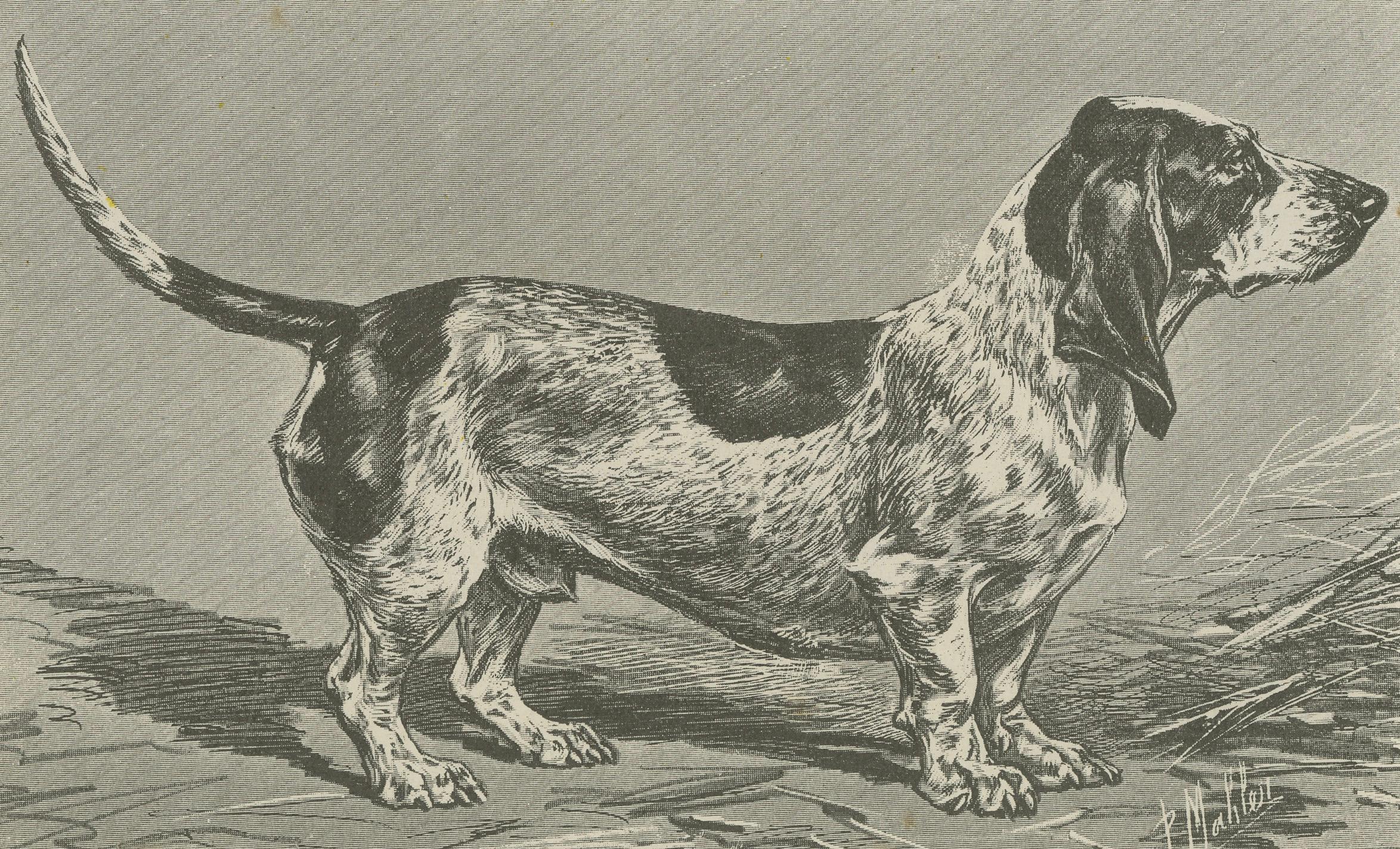
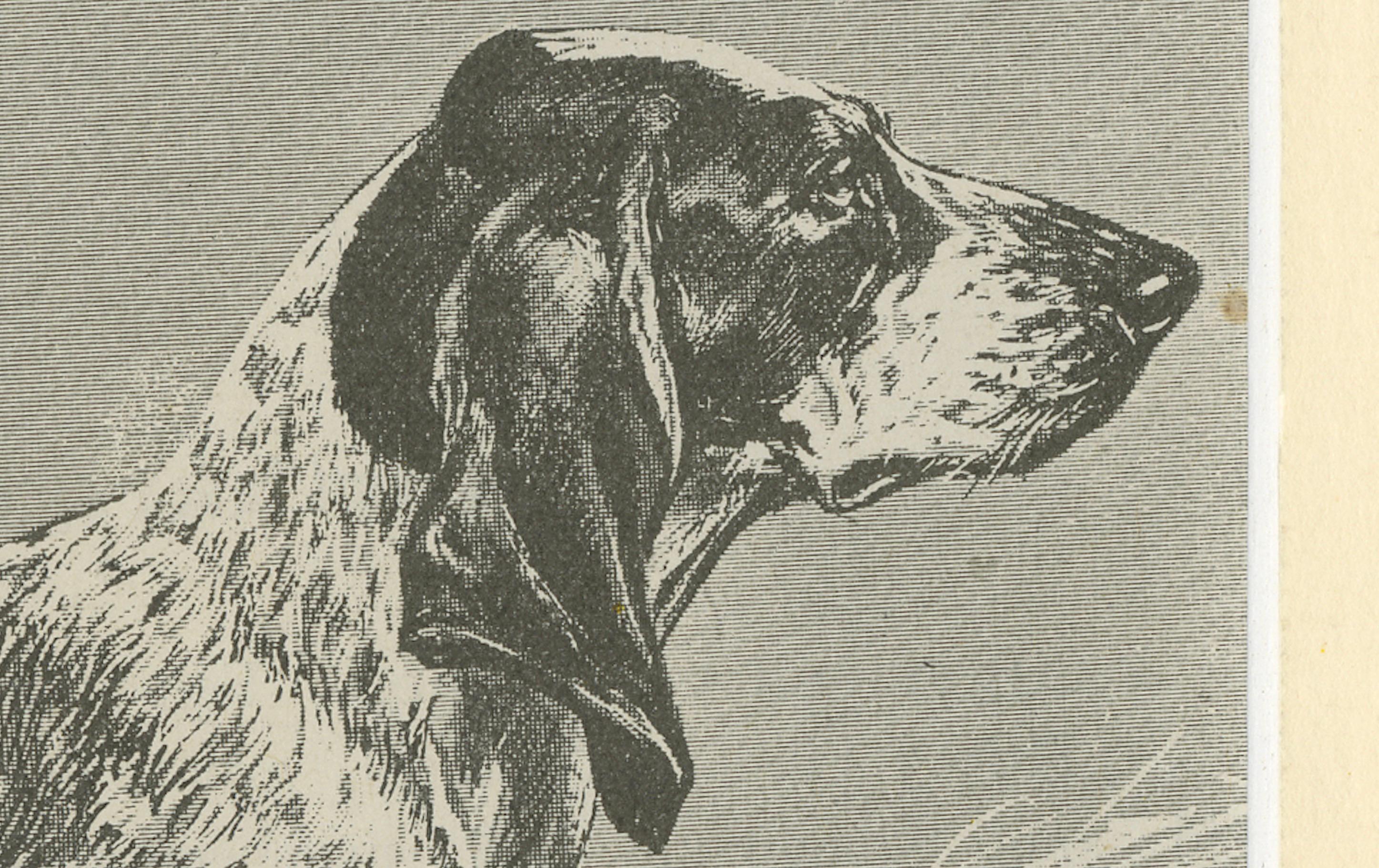
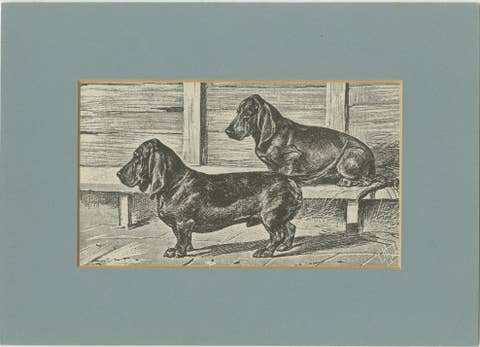
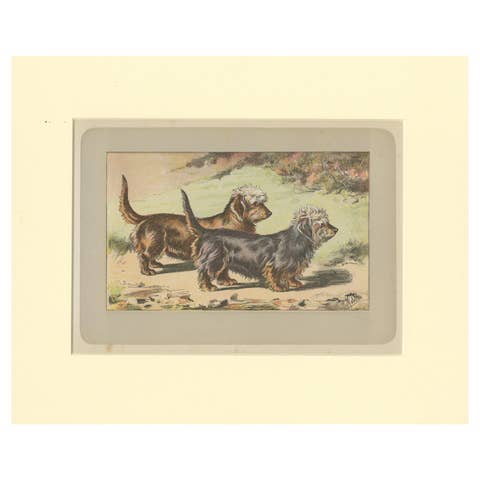
This fine early 20th-century illustration depicts the Blue Basset of Gascogne, a rare and distinctive breed from southwest France. Known for its elongated body, short legs, and finely mottled blue-grey coat, the Blue Basset was bred primarily for scent hunting, particularly in tracking hare and small game. The artist has rendered the dog in profile, showing the characteristic long, low stance, drooping ears, and noble head carriage. The coat pattern is accurately depicted, with the darker saddle blending into the lighter mottled fur, adding texture and realism.
The print originates from Dogs of All Nations by W. E. Mason, published in 1915. This work, aimed at cataloguing and illustrating dog breeds from around the world, served as both a reference and a celebration of canine diversity during the early 1900s. The Blue Basset of Gascogne, a variation of the Basset Bleu de Gascogne, is now relatively uncommon, making this depiction an appealing piece for collectors of breed-specific art.
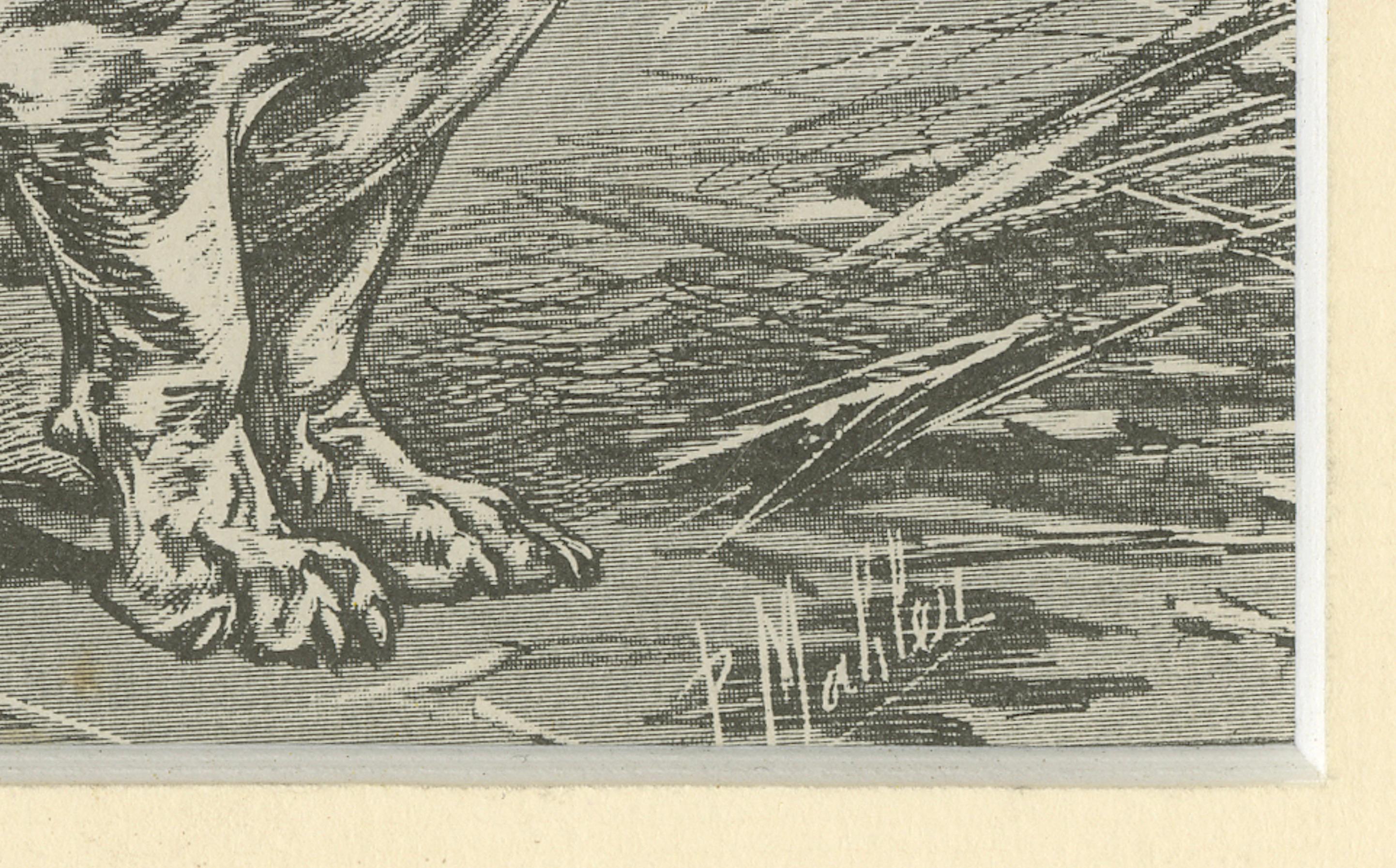
The illustration is executed in fine halftone engraving style, with subtle tonal gradations and sharp detailing that convey the dog’s muscular build and alert posture. The artist’s signature appears in the lower right corner, adding authenticity to the work.
Condition: Very good for its age. Light toning consistent with early 20th-century paper. No major tears or repairs. Mounted on a cream backing for presentation. Plate mark faintly visible.
Framing tips: A dark wooden frame with a soft grey or muted blue mount will enhance the print’s monochrome tones and complement the breed’s characteristic colouring. A museum-grade UV-protective glass is recommended to preserve the paper’s condition.
Technique: Halftone engraving Maker: W. E. Mason, United States, 1915