About this sheet
Moles, Shrews, and Burrowing Mammals from 'The Mammals' Natural History Lithographs
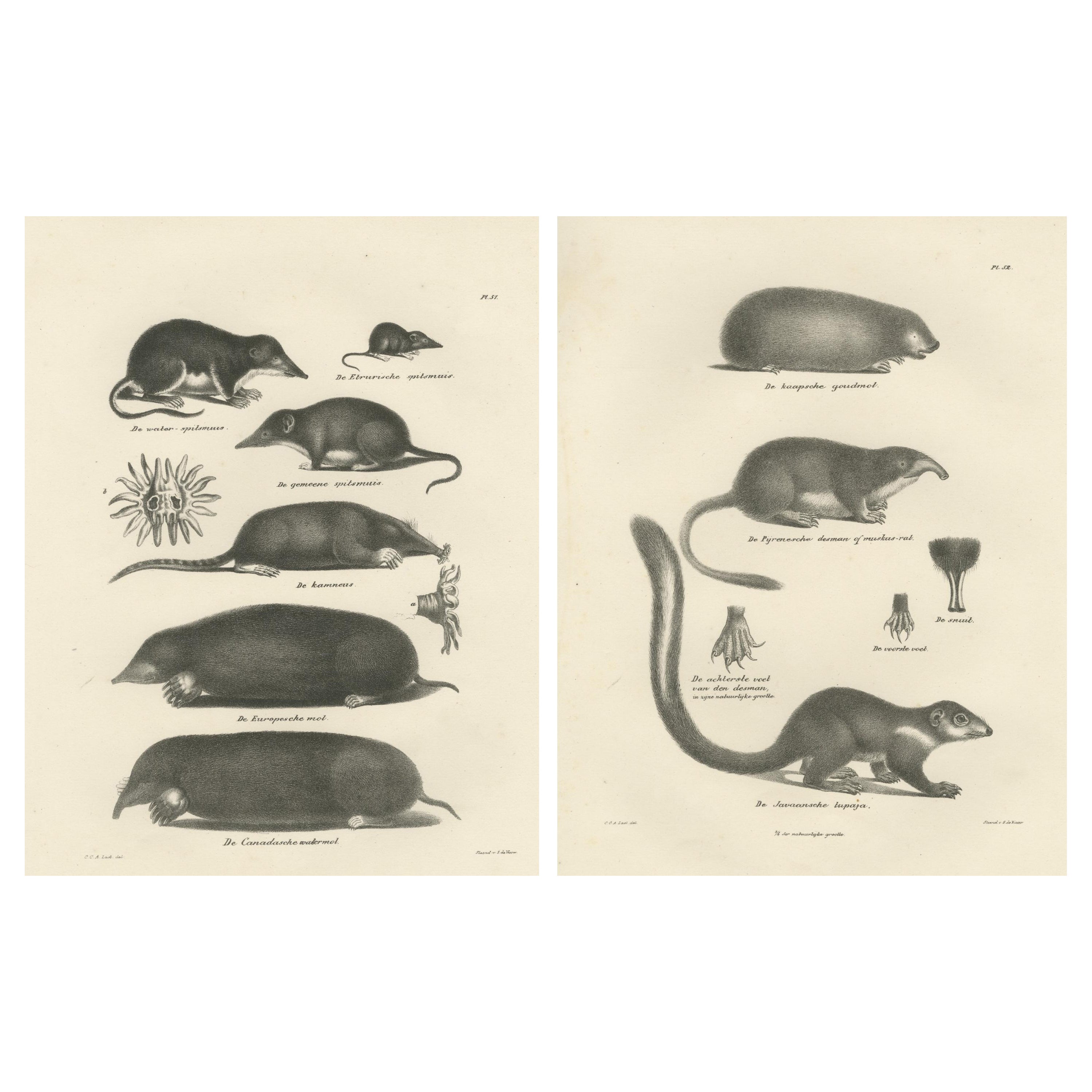
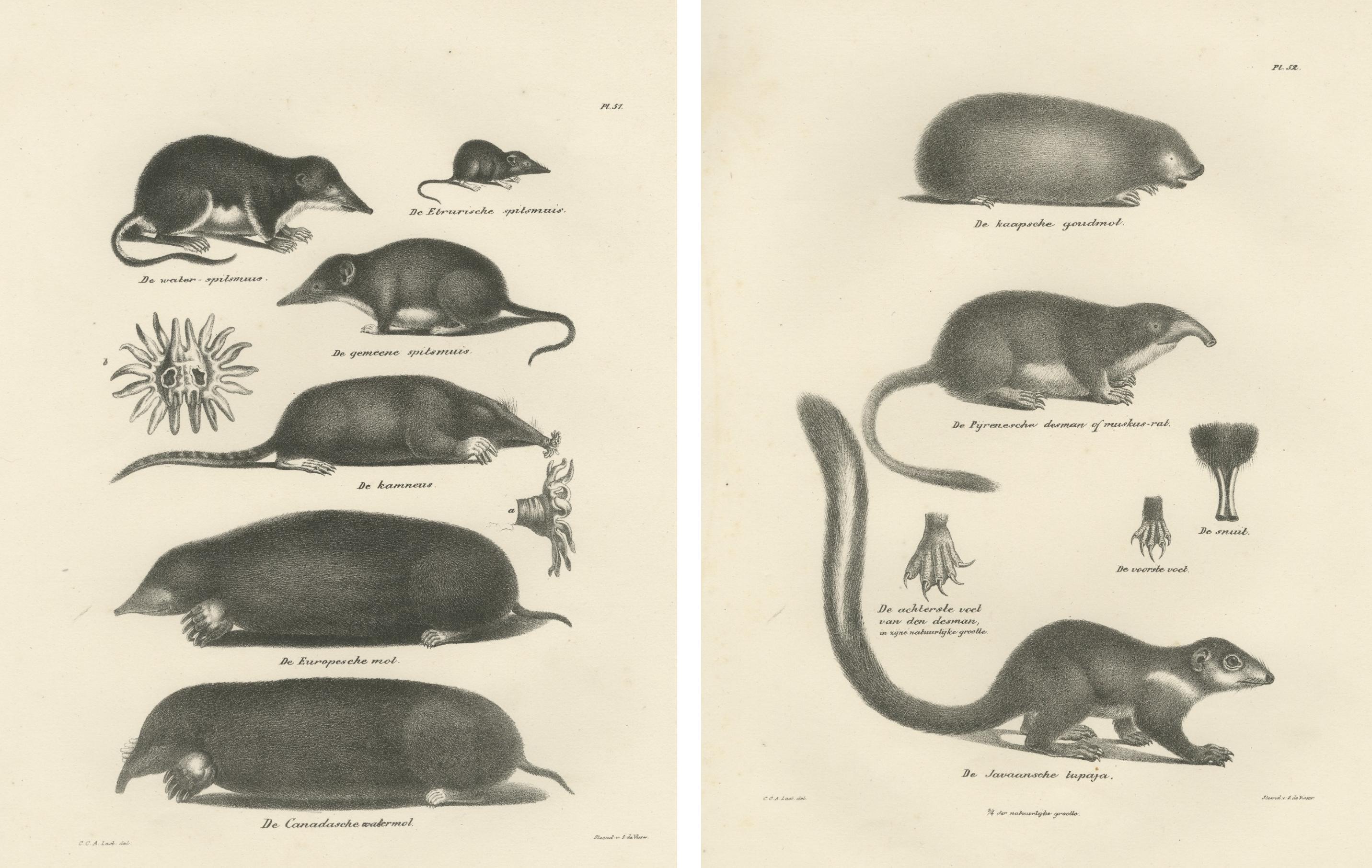
Here is a detailed description of the two lithographs, which focus on moles and related species. These prints are part of "De Zoogdieren: afgebeeld en in hunne levenswijze geschetst" (The Mammals: Illustrated and Described in Their Habits) by Cornelis Christiaan Antonie Last, and published by S. de Visser. They showcase a variety of burrowing and insectivorous mammals, emphasizing their adaptations for life underground and their unique body structures.
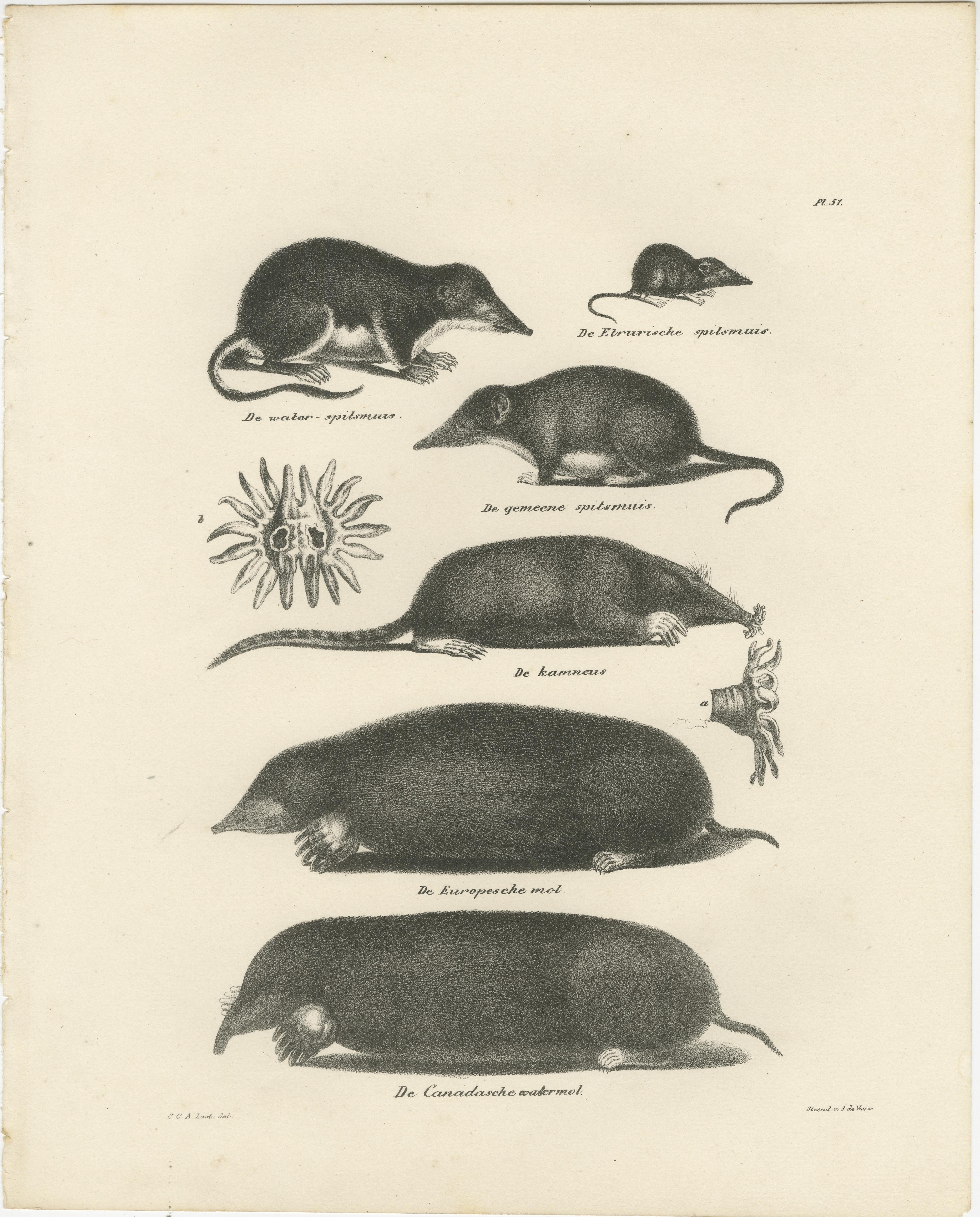
### First Lithograph (BG-13176-51):
This plate features various species of mole-like creatures, including different types of moles and shrews, each depicted in side profile to highlight their physical adaptations.
1. de water-spitsmuis – water shrew
A semi-aquatic mammal with webbed feet and a long tail, perfectly adapted to a life spent partly in the water.
2. de Etrurische spitsmuis – Etruscan shrew
The smallest known mammal by mass, this tiny and fast-moving shrew has an incredibly high metabolism.
3. de gemeene spitsmuis – common shrew
A small, insect-eating mammal with a pointed snout and dense fur, common throughout Europe.
4. de kameel – star-nosed mole
This unique mole is distinguished by its star-shaped nose, which is used for detecting prey through touch, making it a highly specialized digger.
5. de Europeesche mol – European mole
Common across Europe, this mole is adapted for burrowing with strong forelimbs and large paws, perfect for digging tunnels.
6. de Canadasche ondermol – Canadian under-mole
Similar to the European mole, but native to North America, it has a streamlined body and strong claws for efficient burrowing underground.
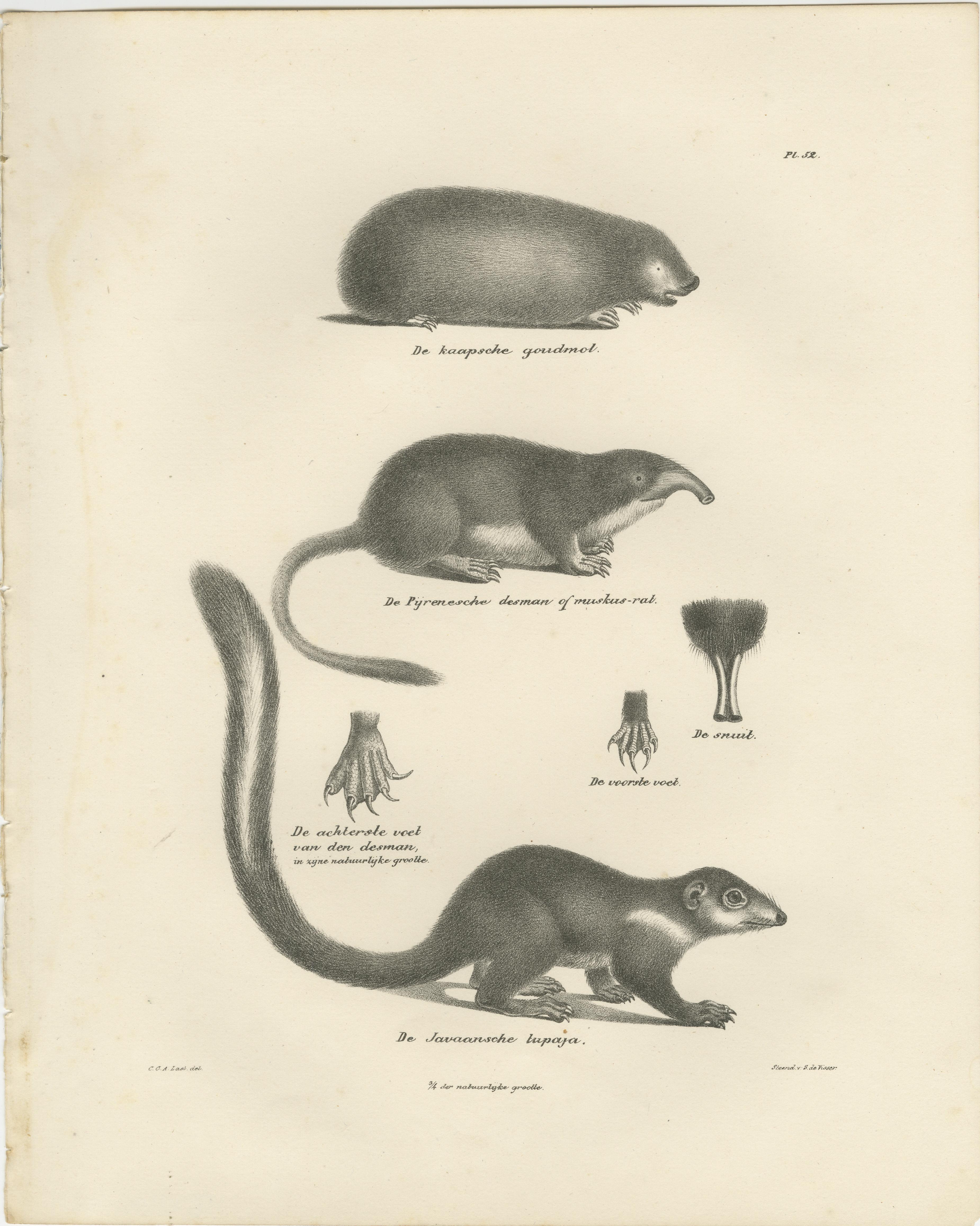
### Second Lithograph (BG-13176-52):
This plate shows a mix of mole-like animals and other burrowing or semi-burrowing creatures, highlighting their unique digging abilities and specialized features.
1. de kaapsche goudmol – Cape golden mole
Native to South Africa, this species has dense, soft fur with a metallic sheen, specialized for burrowing through sandy soils.
2. de Pyreneësche desman of musk-rat – Pyrenean desman or musk rat
A semi-aquatic mammal with a long, flexible snout, adapted to rivers and streams in the Pyrenees.
3. de achterste voet van den desman, in zijne natuurlijke grootte – hind foot of the desman, shown in natural size
This figure shows the webbed hind foot of the desman, which aids in swimming.
4. de voorste voet – fore foot
A detailed view of the desman’s forefoot, showing adaptations for grasping and swimming.
5. de snuit – snout
An anatomical close-up of the desman’s long, flexible snout, which helps it detect prey underwater.
6. de Javaansche lupaya – Javanese treeshrew
Native to Southeast Asia, this small mammal is an agile climber, with a long tail and a diet consisting mainly of insects and fruit.
---
These lithographs present a fascinating array of small mammals, particularly those that have adapted to burrowing or aquatic environments. Each species is depicted with great attention to detail, providing insight into their anatomical features and ecological roles.