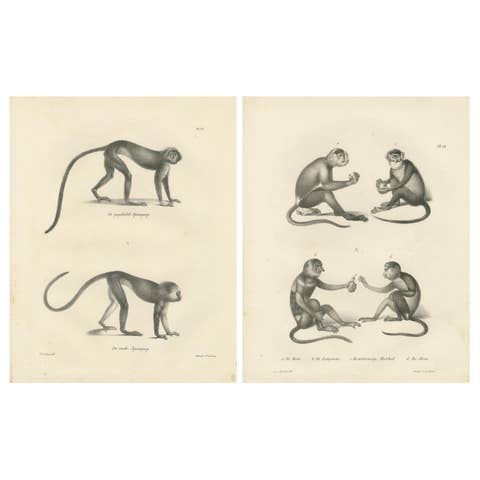
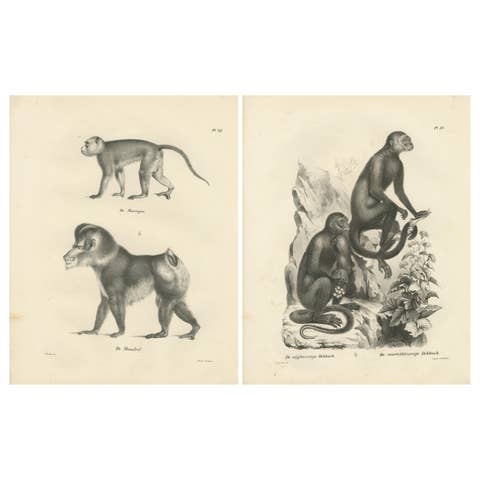
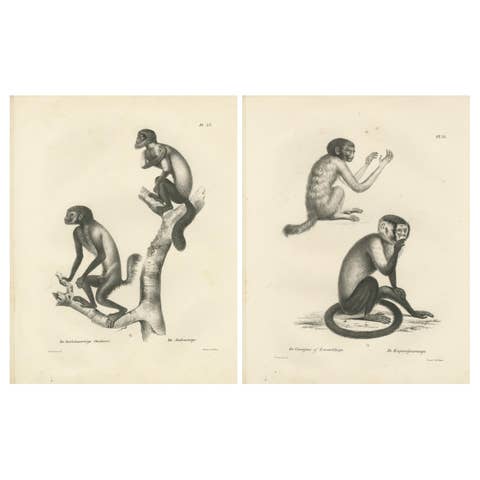
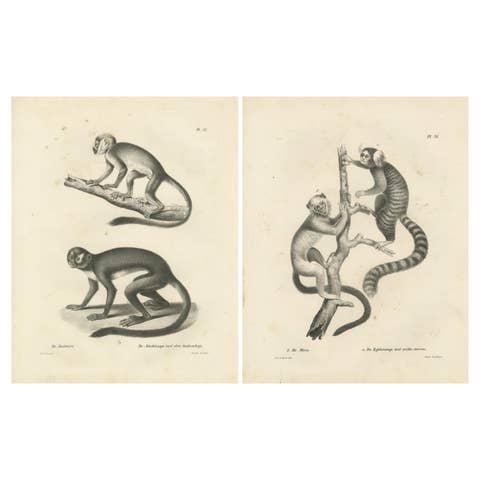
Forest Devil, Miriki & Long-bearded Howler Monkeys, Lithographs by C. Last, 1836
€ 599
Original antique · The actual sheet photographed · Certificate of authenticity on request · Sold unframed · Worldwide shipping from € 15 (rates)
Date
1836
Sheet size
32.2 × 26 cm (12.7 × 10.2 in)
Reference
BG-13176-31 and BG-13176-32
What the condition grades mean
Excellent
Bright and clean, with no faults worth mentioning.
Very good
Only light signs of age, such as faint toning.
Good
Normal signs of age for a sheet of this period: toning, some foxing, small marks or neat old repairs.
Fair
Clear faults such as staining, tears or repairs, priced to match.
Every fault we see is written in the condition note, and the whole sheet is shown uncropped in the photos.
Condition
Good, given age. Light foxing / soiling. General age-related toning and/or occasional minor defects from handling. Please study scan carefully.
About this sheet
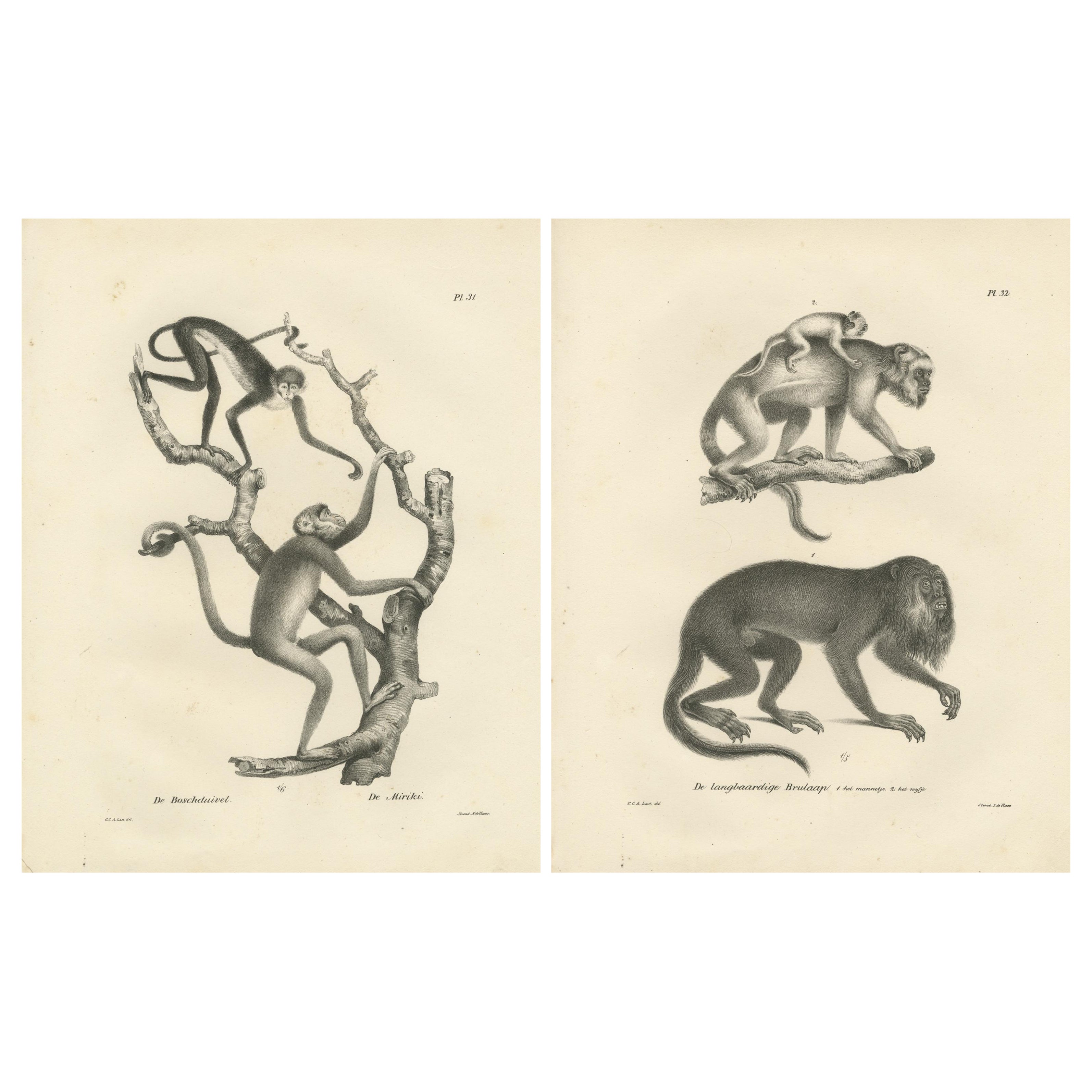
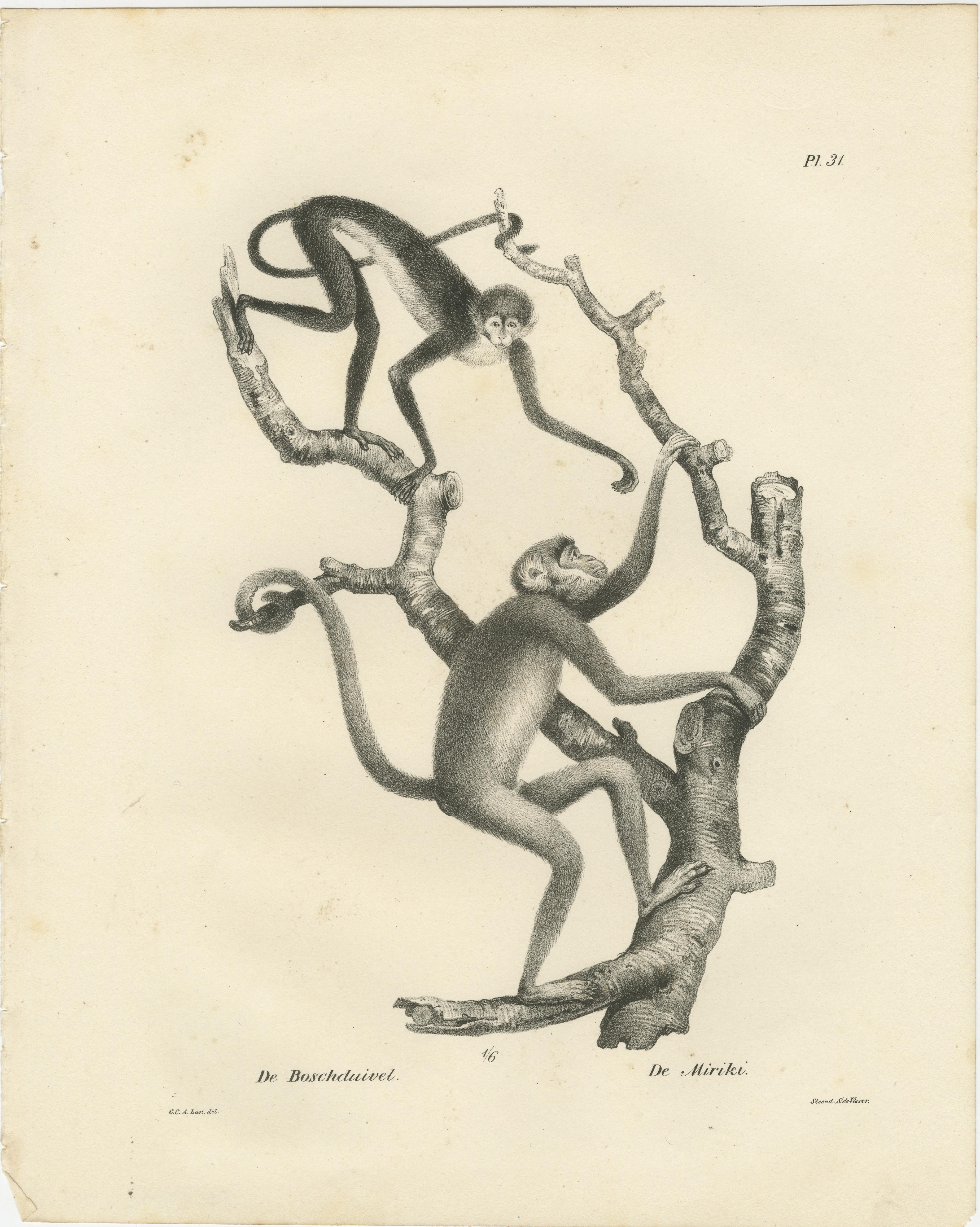
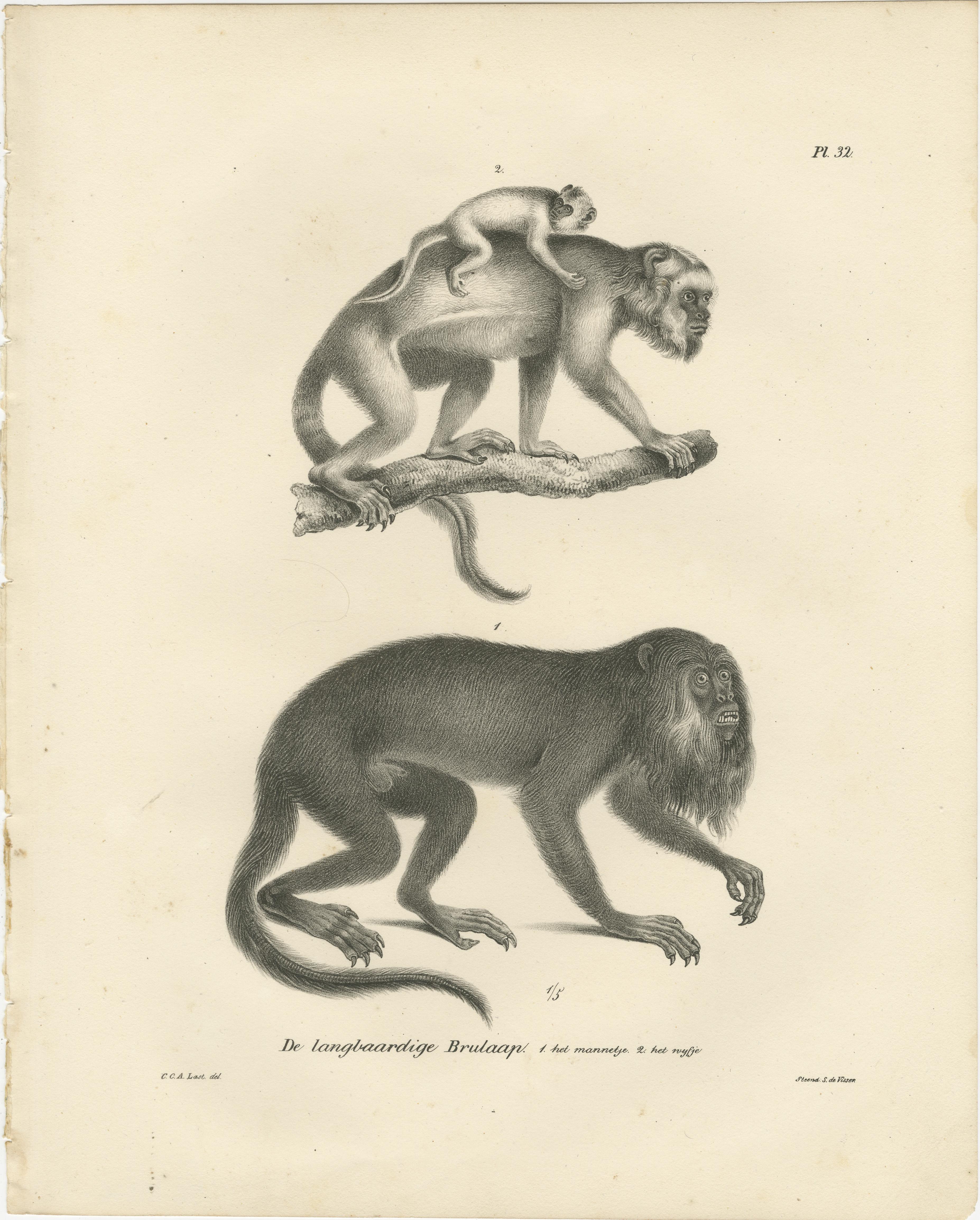
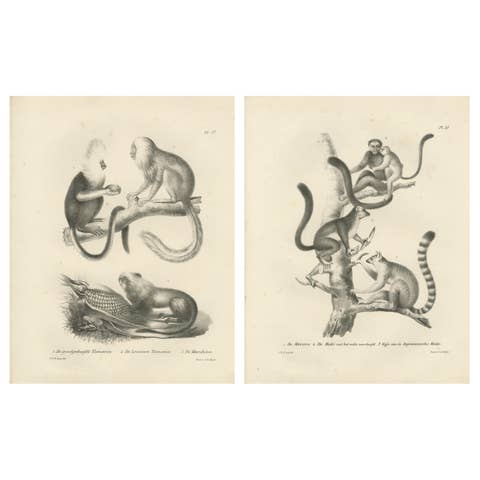
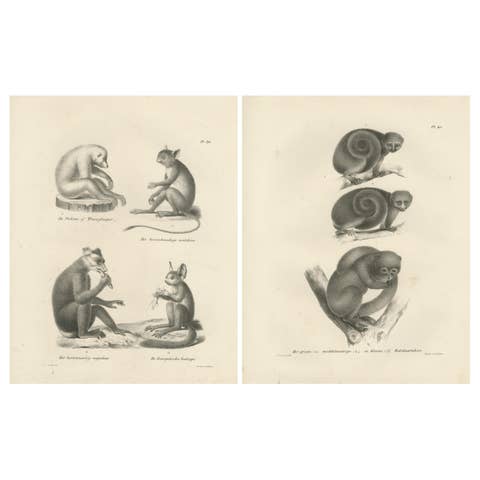
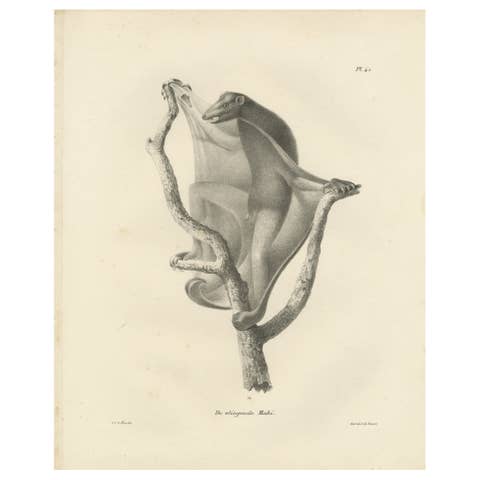
This image features two lithographs depicting different species of primates, originally drawn by Carel Christiaan Antony Last for Heinrich Rudolf Schinz's Volledige Natuurlijke Historie der Zoogdieren in 1836. These detailed depictions of primates were printed by S. de Visser en Zoon in The Hague and form part of a larger natural history series that aimed to catalog the animal world for European audiences.
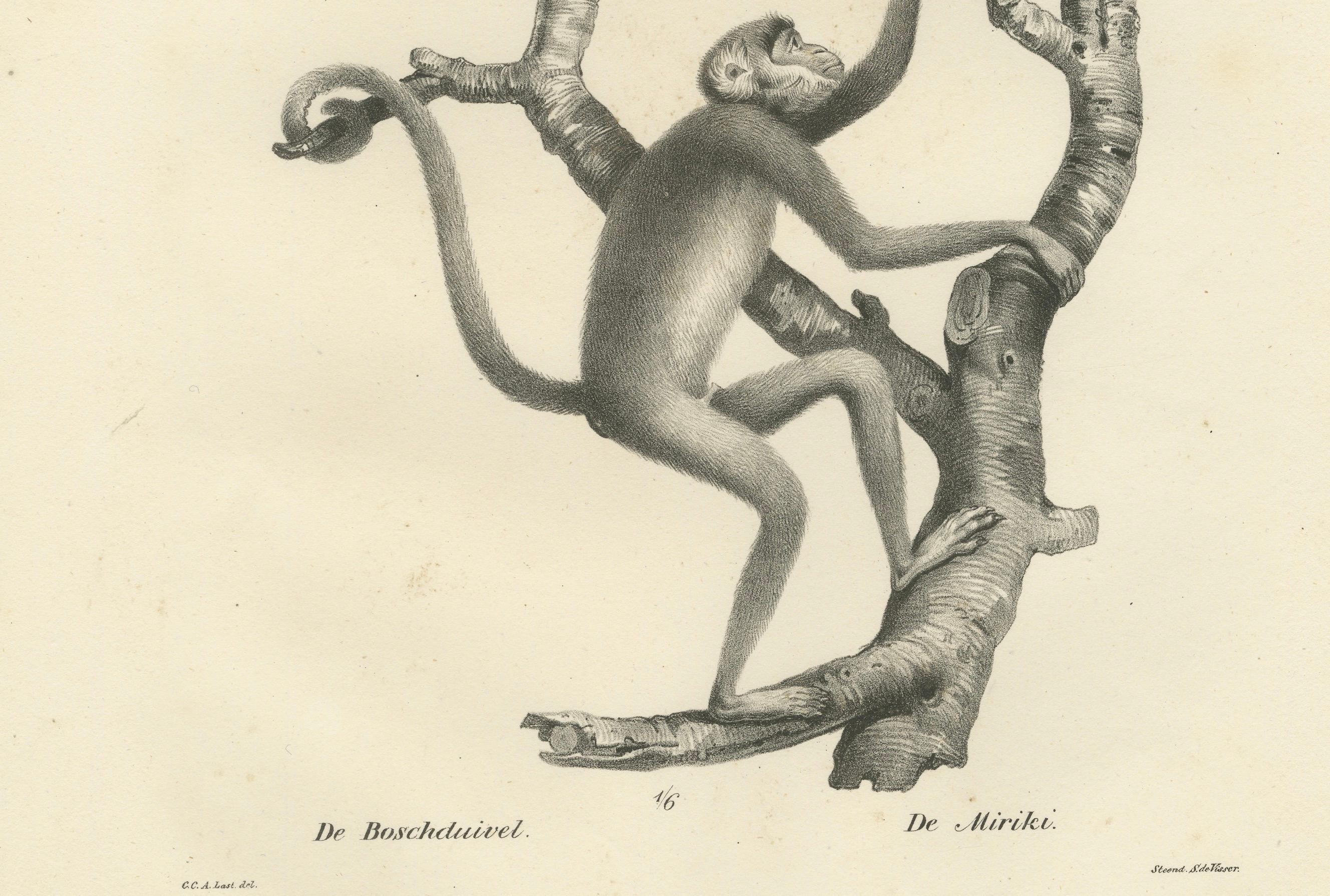
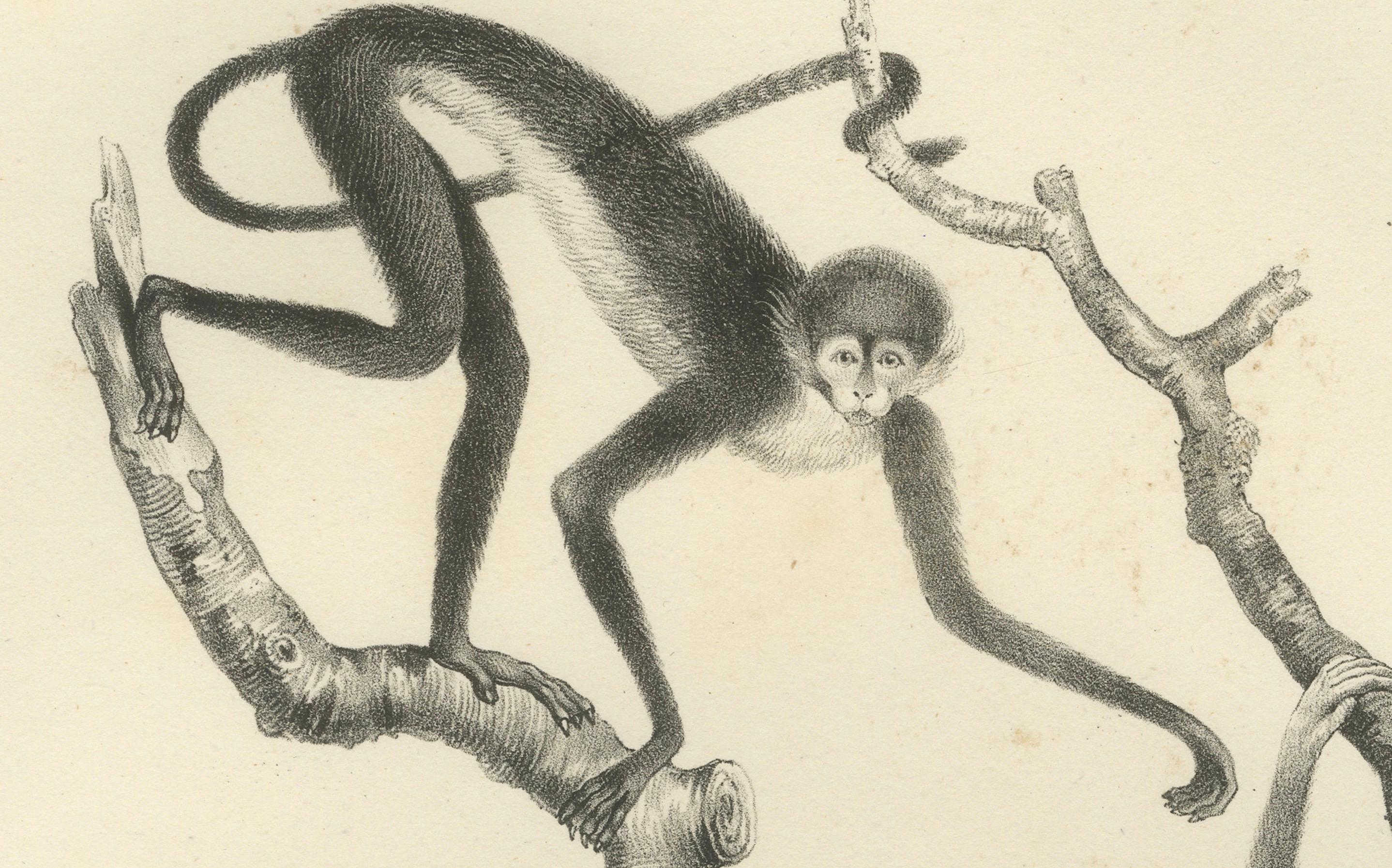
The first lithograph (Pl. 31) shows the Boschduivel (Forest Devil) and the Miriki. These monkeys are depicted in their natural habitat, climbing and hanging from tree branches. The artist's attention to the lithe bodies and elongated limbs captures the movement and agility of the primates, especially in their tree-dwelling activities.
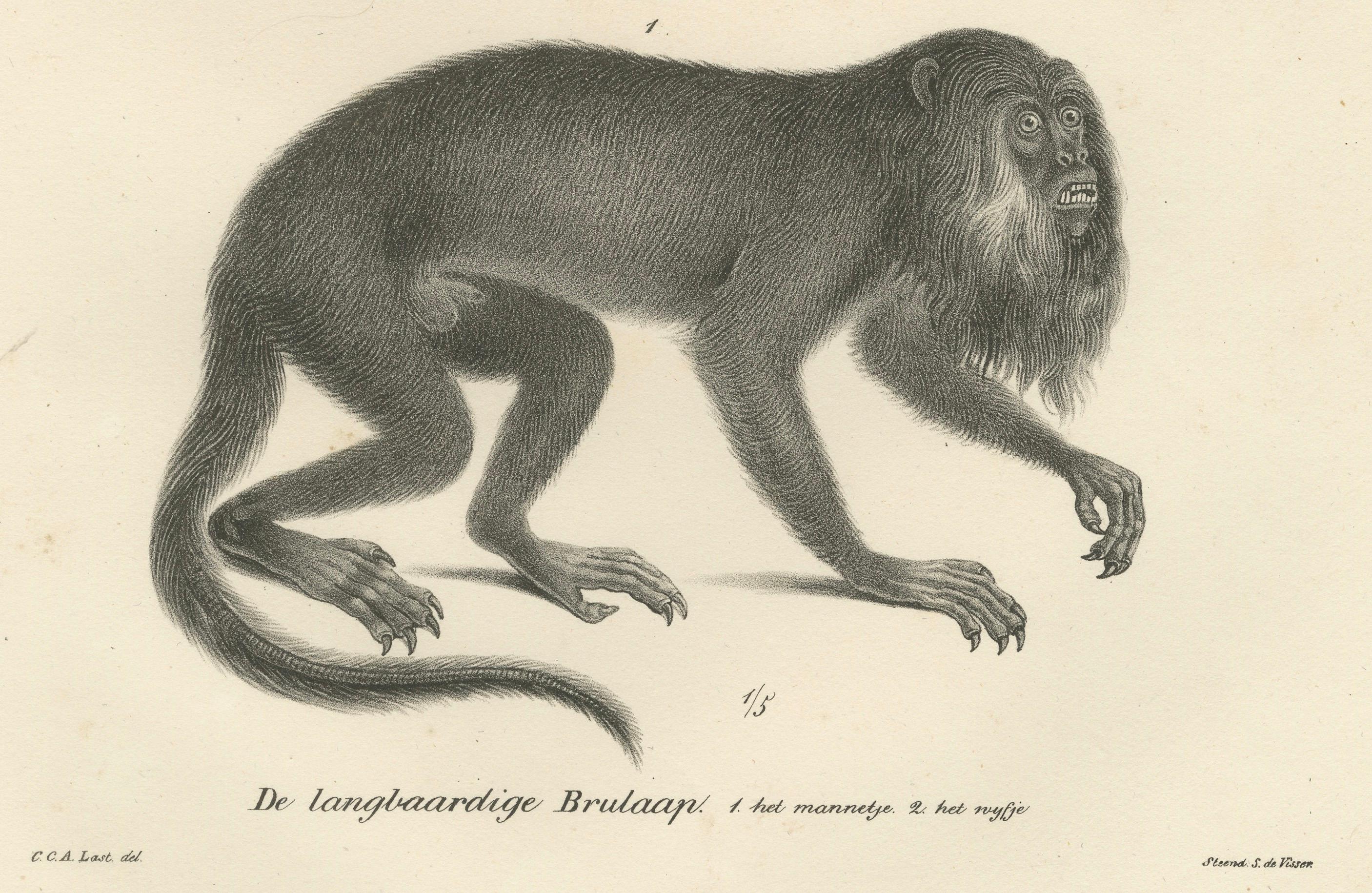
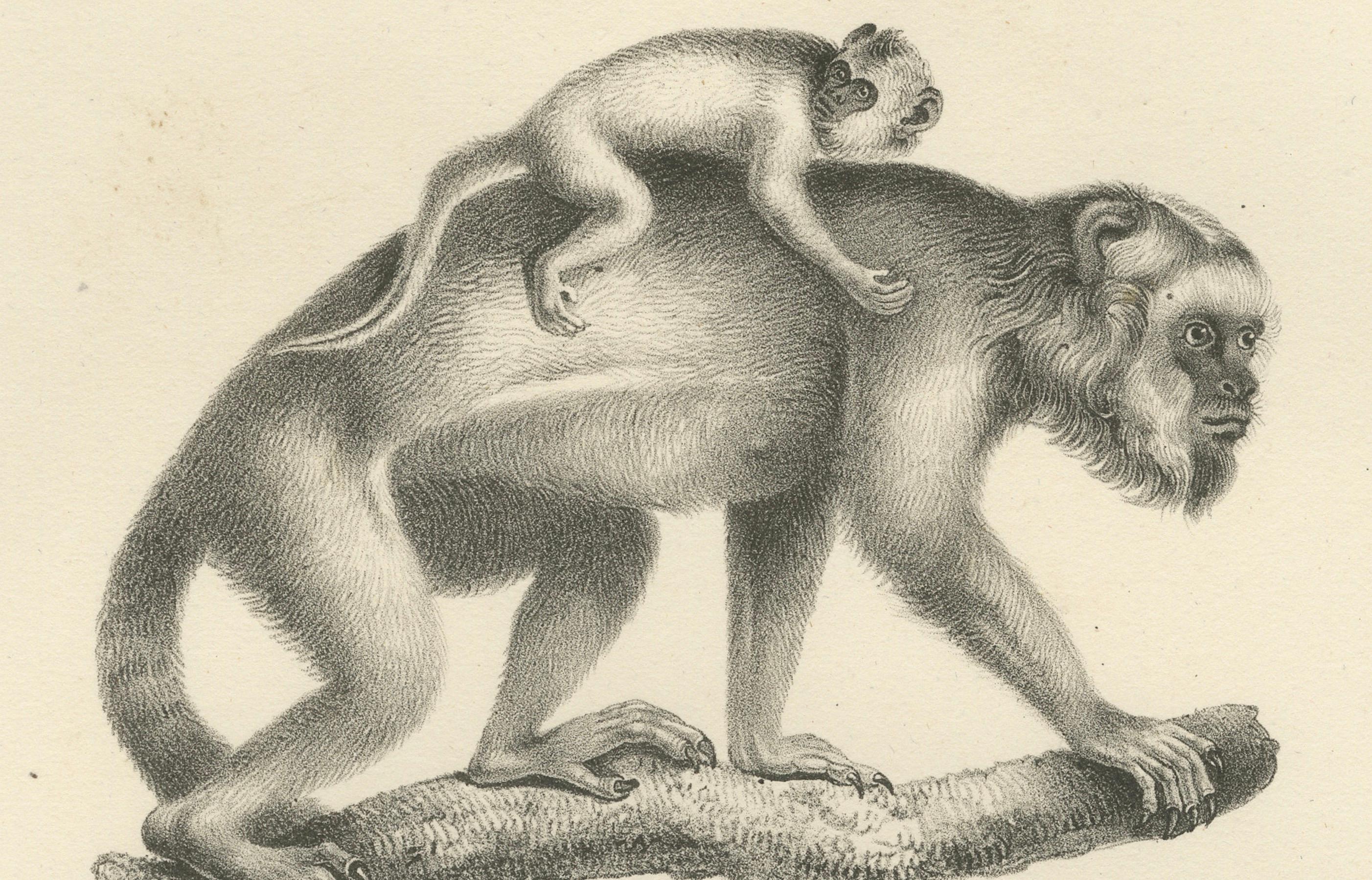
The second lithograph (Pl. 32) depicts the Langbaardige Brulaap (Long-bearded Howler Monkey), including a mother carrying her young. The second primate in the composition is a male of the species, shown walking on a branch. The detailed rendering of their fur, facial features, and body proportions highlights their robust appearance and iconic long beards, which characterize this species.
These illustrations, as part of Schinz's natural history work, reflect the scientific and artistic efforts of the 19th century to document the world's fauna. The careful attention to anatomical detail and natural behavior in these prints is typical of the era's blending of art and science, where visual representations of animals were meant to be both educational and aesthetically pleasing.