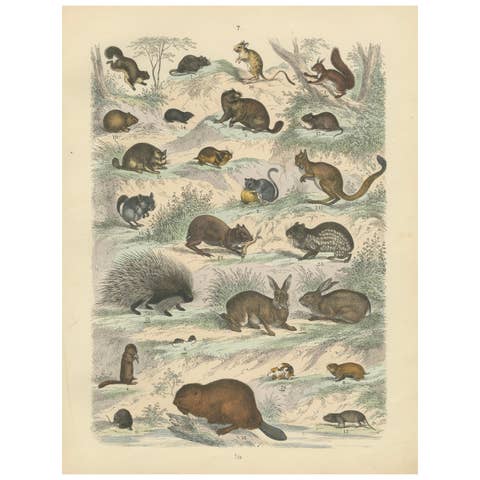
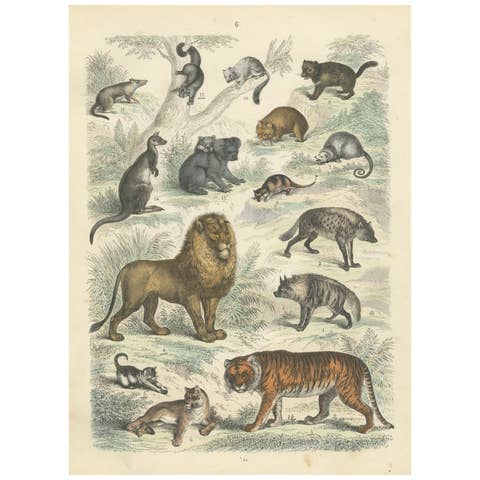
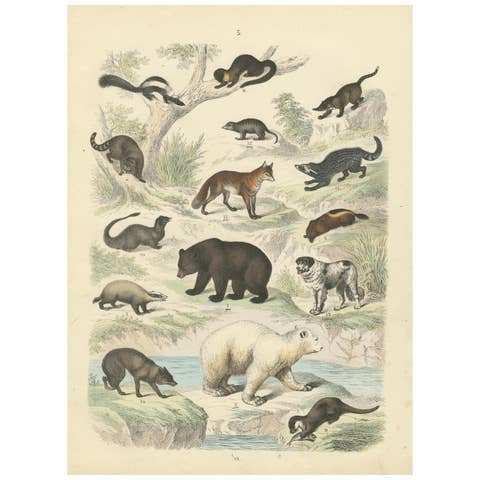
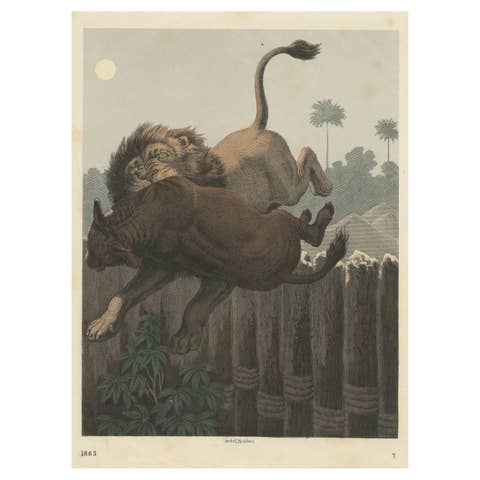
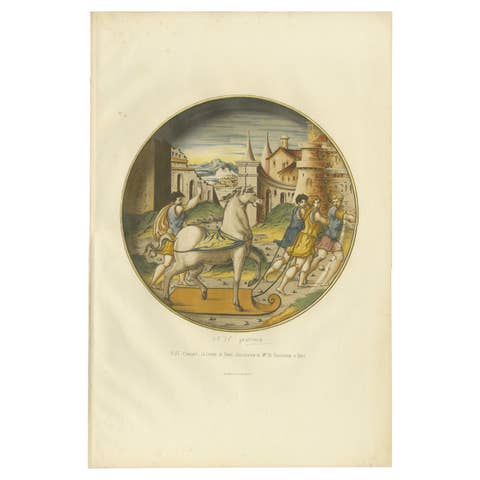
One of a kind: this is the sheet in the photographs. Ships from Langweer, the Netherlands.
Date
1867
Sheet size
28.5 × 22 cm (11.2 × 8.7 in)
Condition
Good
Reference
BG-12980-8
Condition
Good condition considering its age, with slight overall toning and minor foxing mainly in the margins. The paper is strong with no tears or repairs, and the hand colouring remains vivid and fresh.
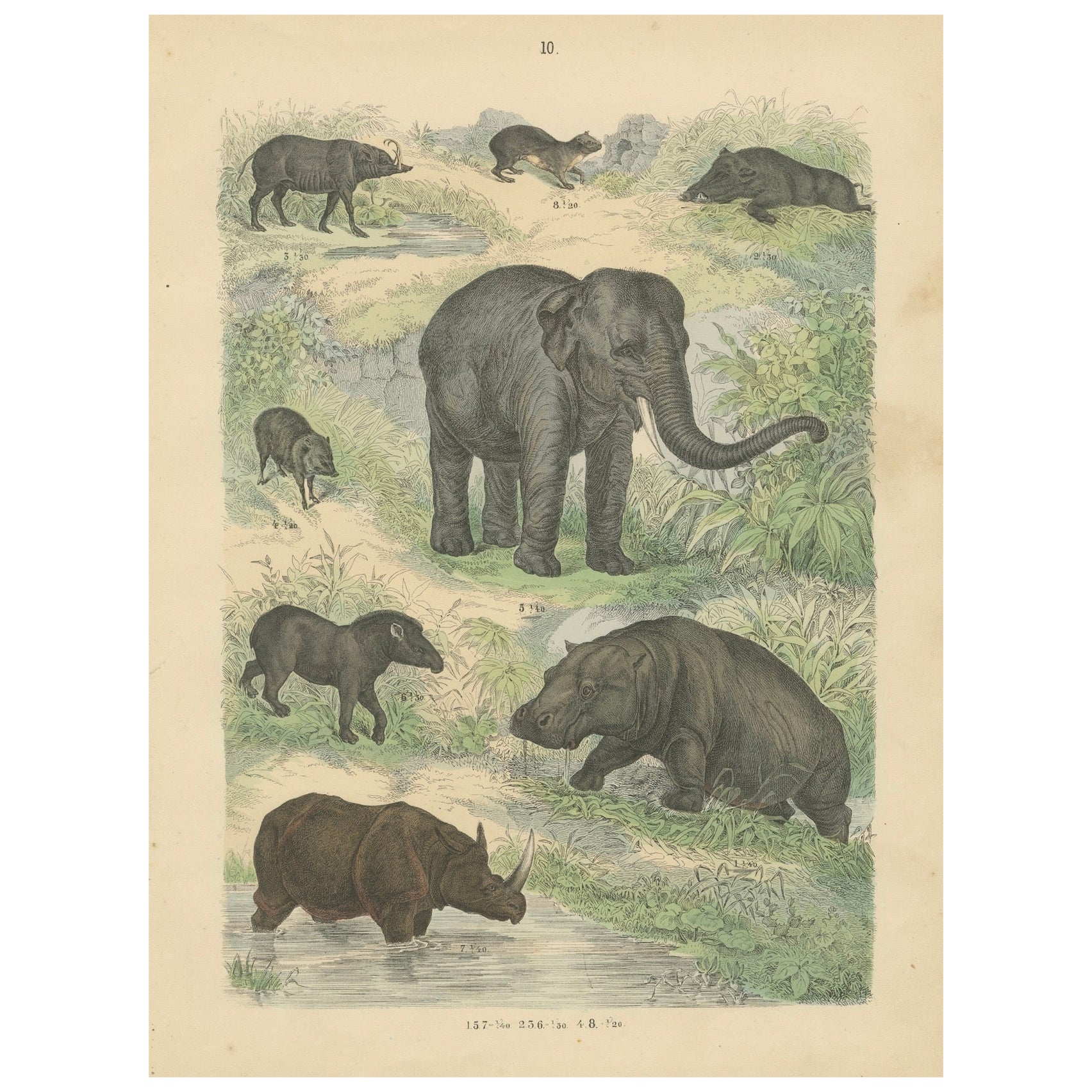
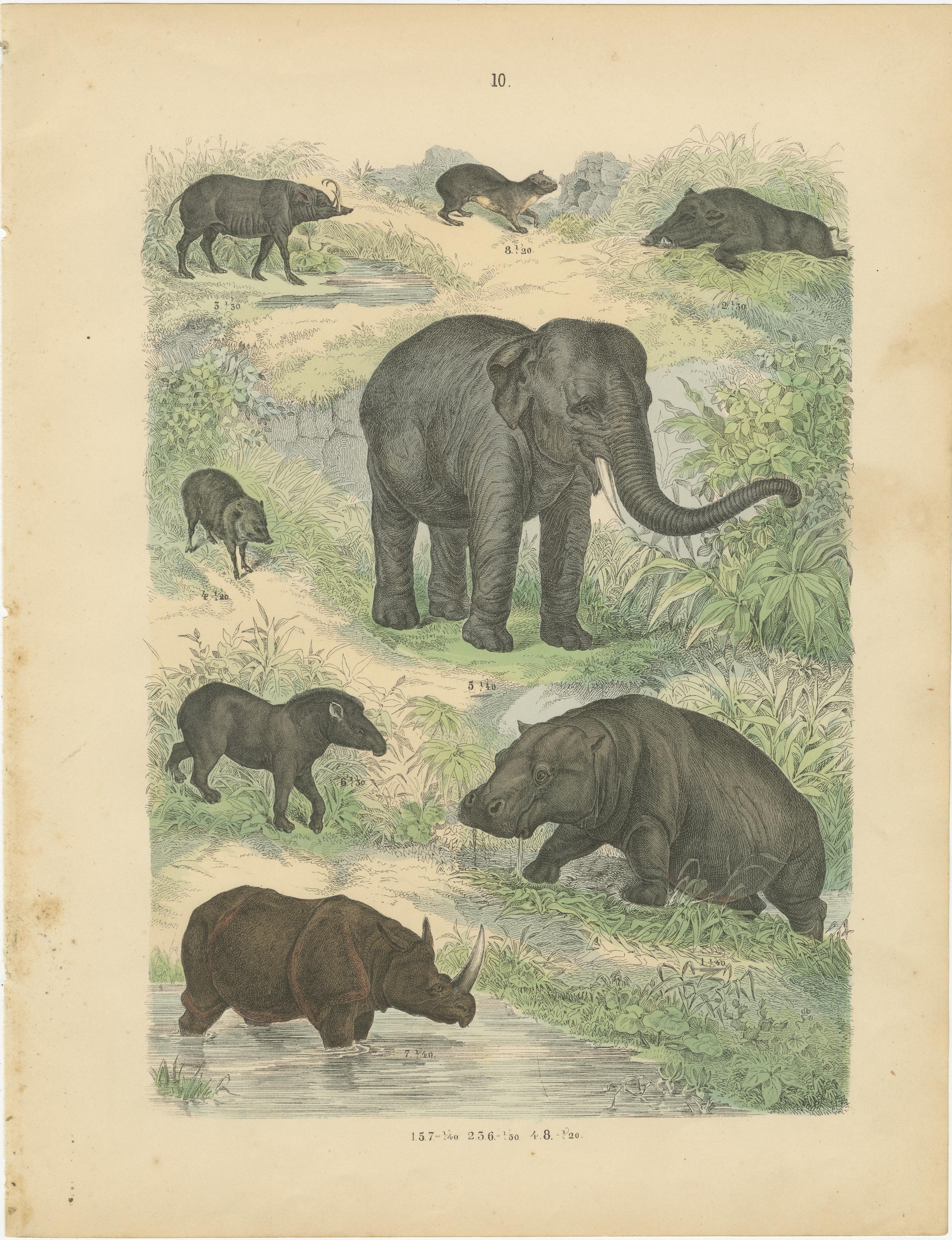
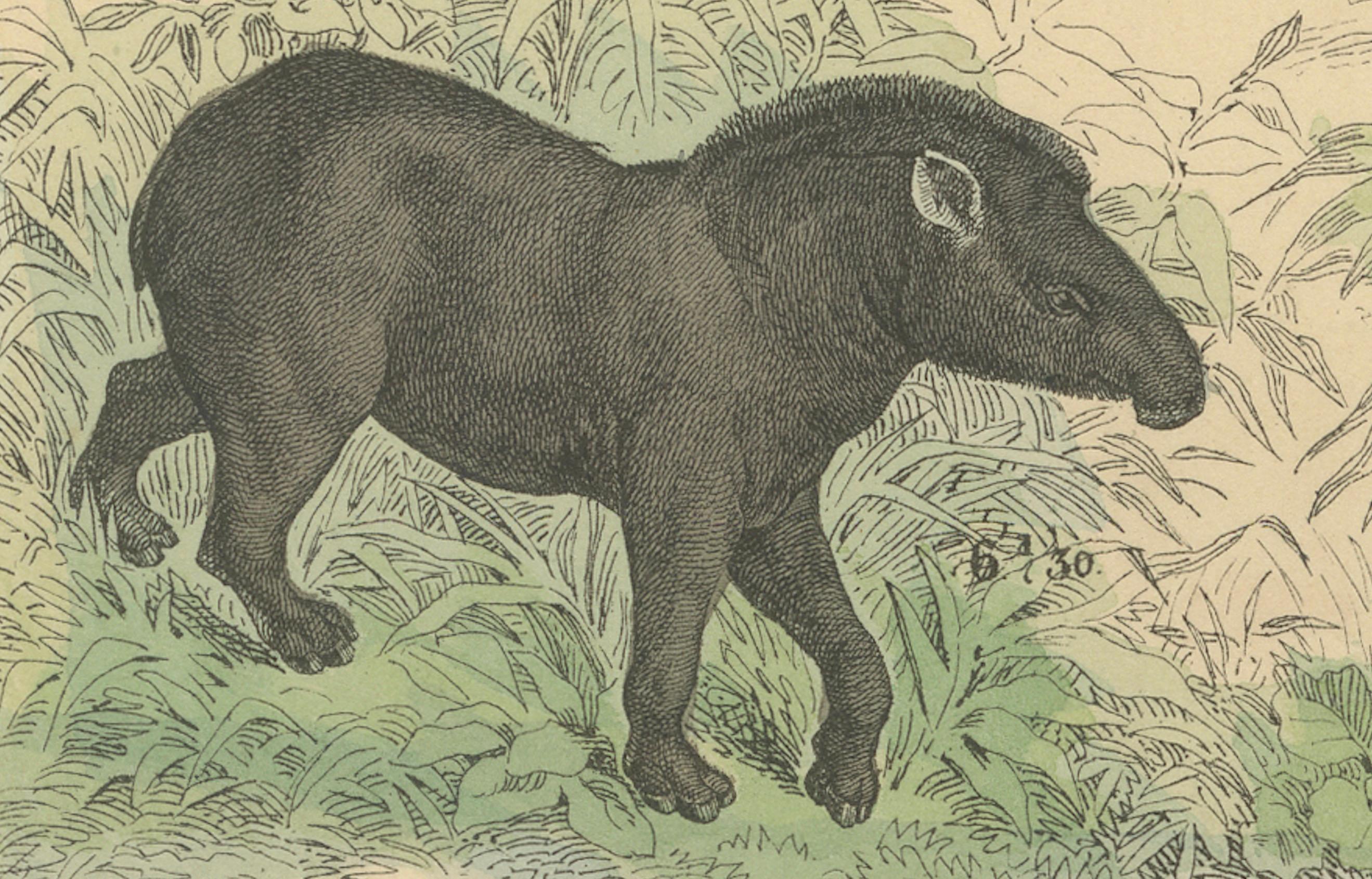
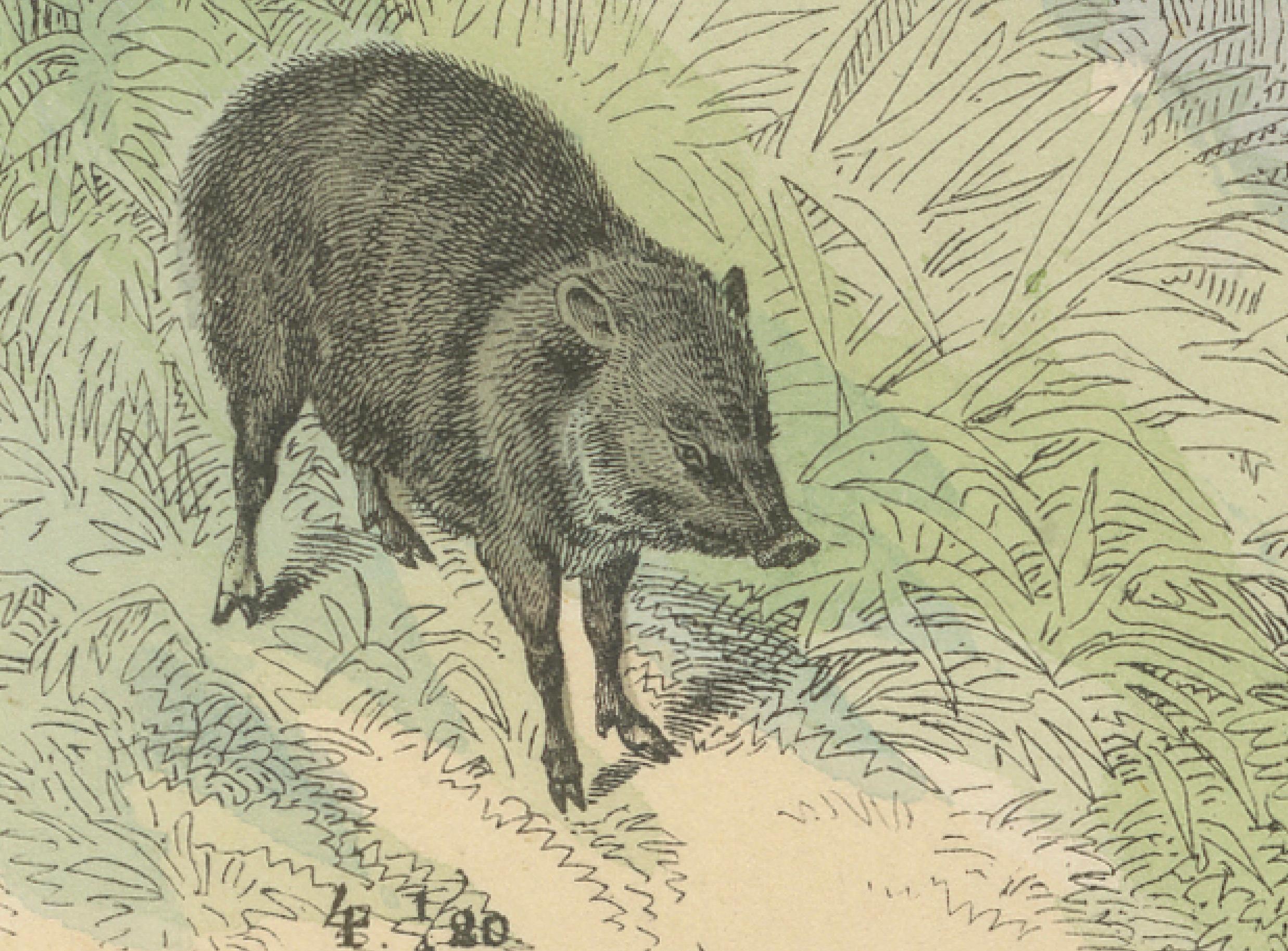
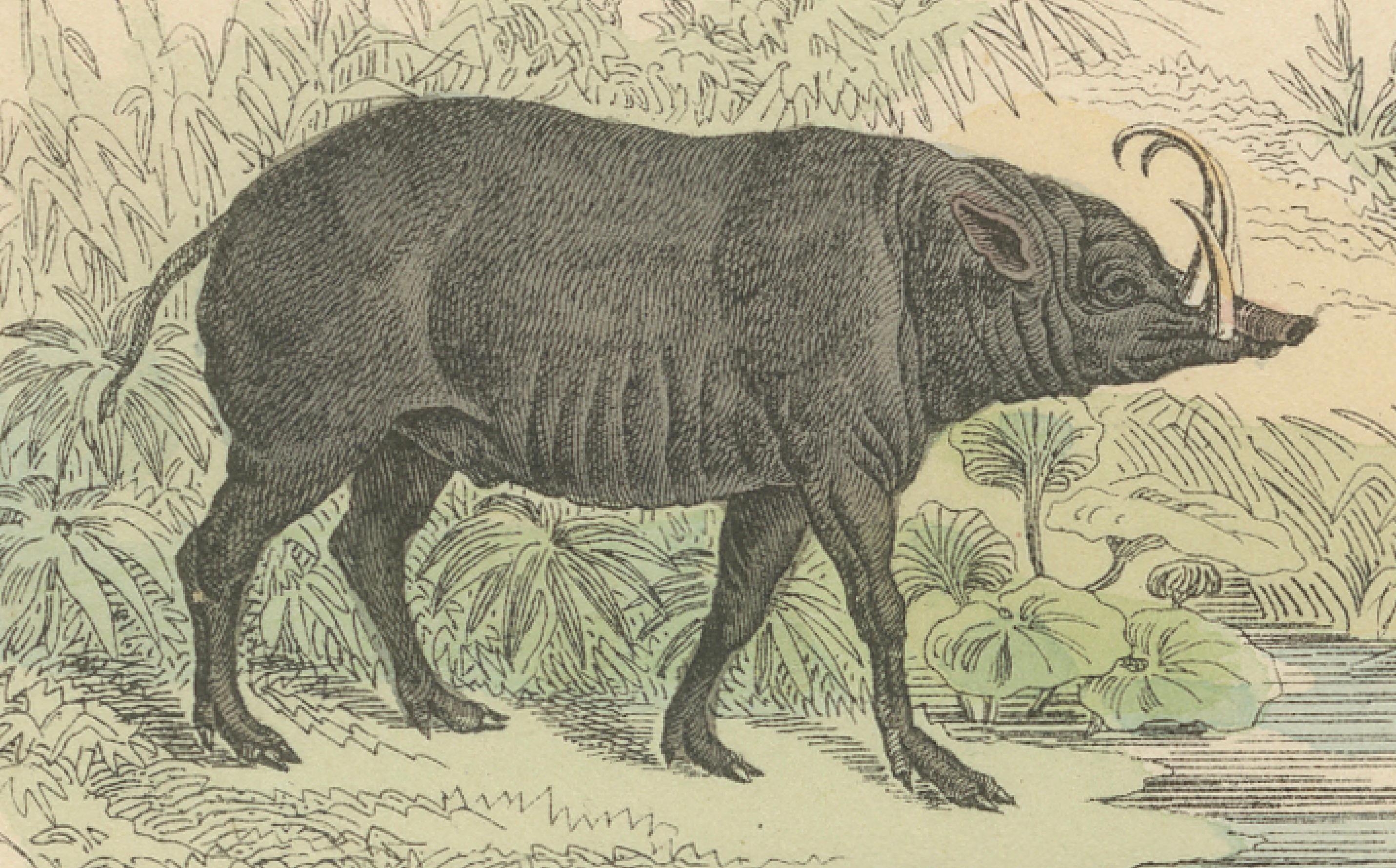
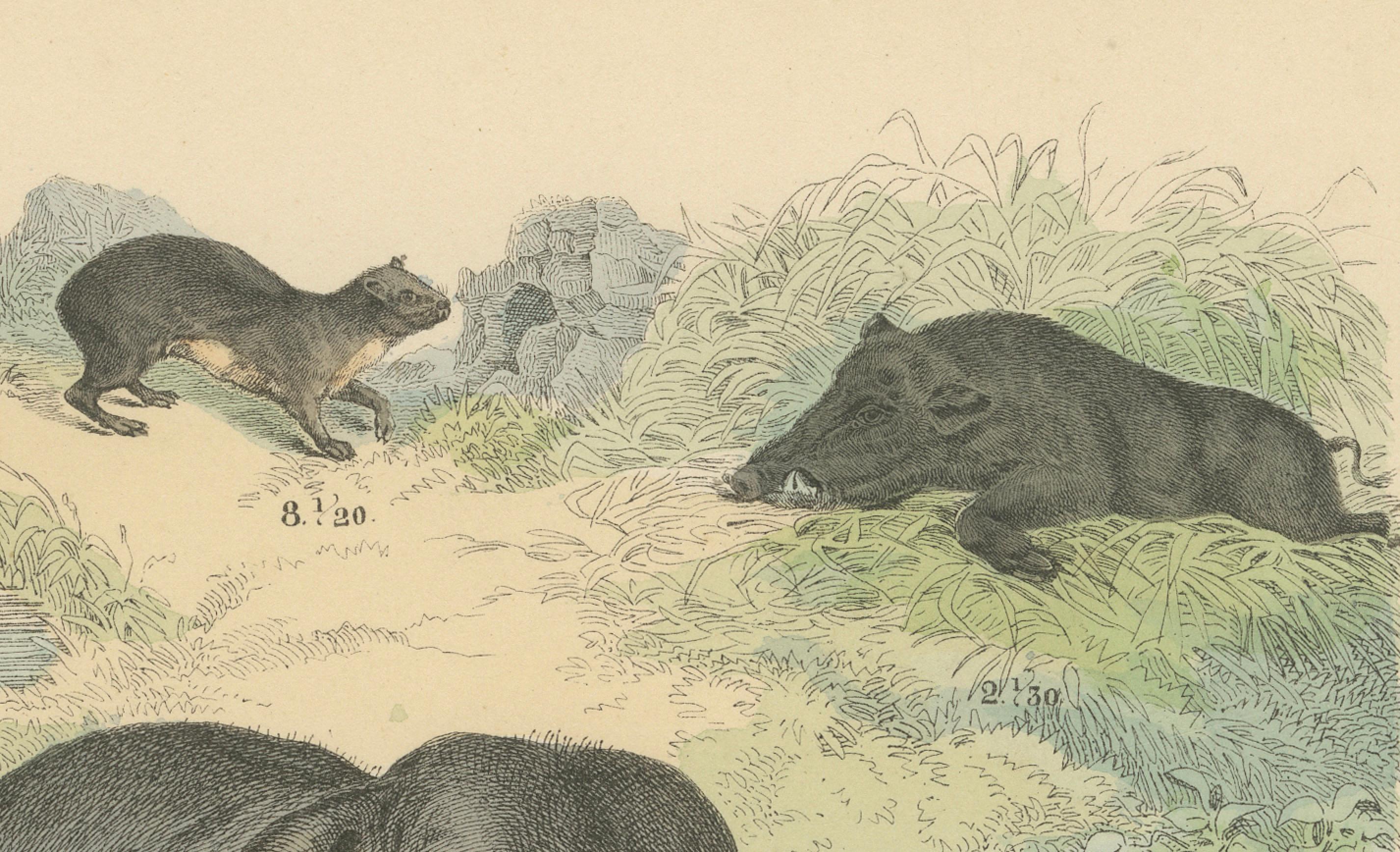
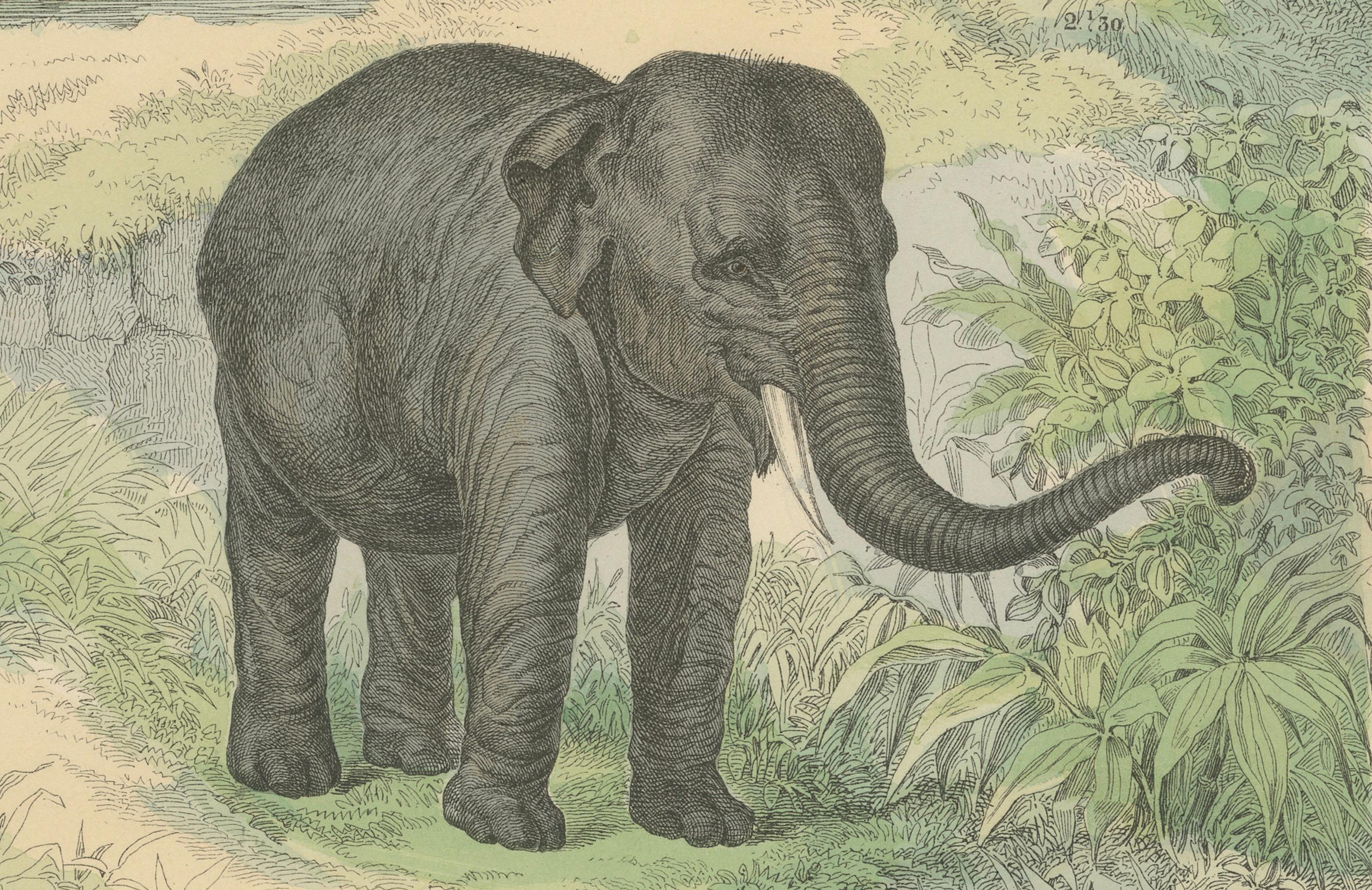
This impressive antique print depicts large mammals including elephants, rhinoceroses, hippopotamuses, and tapirs, shown in fine hand-coloured engravings. It originates from the Atlas der Natuurlijke Geschiedenis voor scholen en huisgezinnen, adapted into Dutch by T.C. Winkler after Traugott Bromme, and published in Amsterdam by J.C. Loman in 1867. Created for educational use, it illustrates powerful animals from Africa, Asia, and South America, teaching 19th-century students about global zoological diversity.
The labelled figures include:
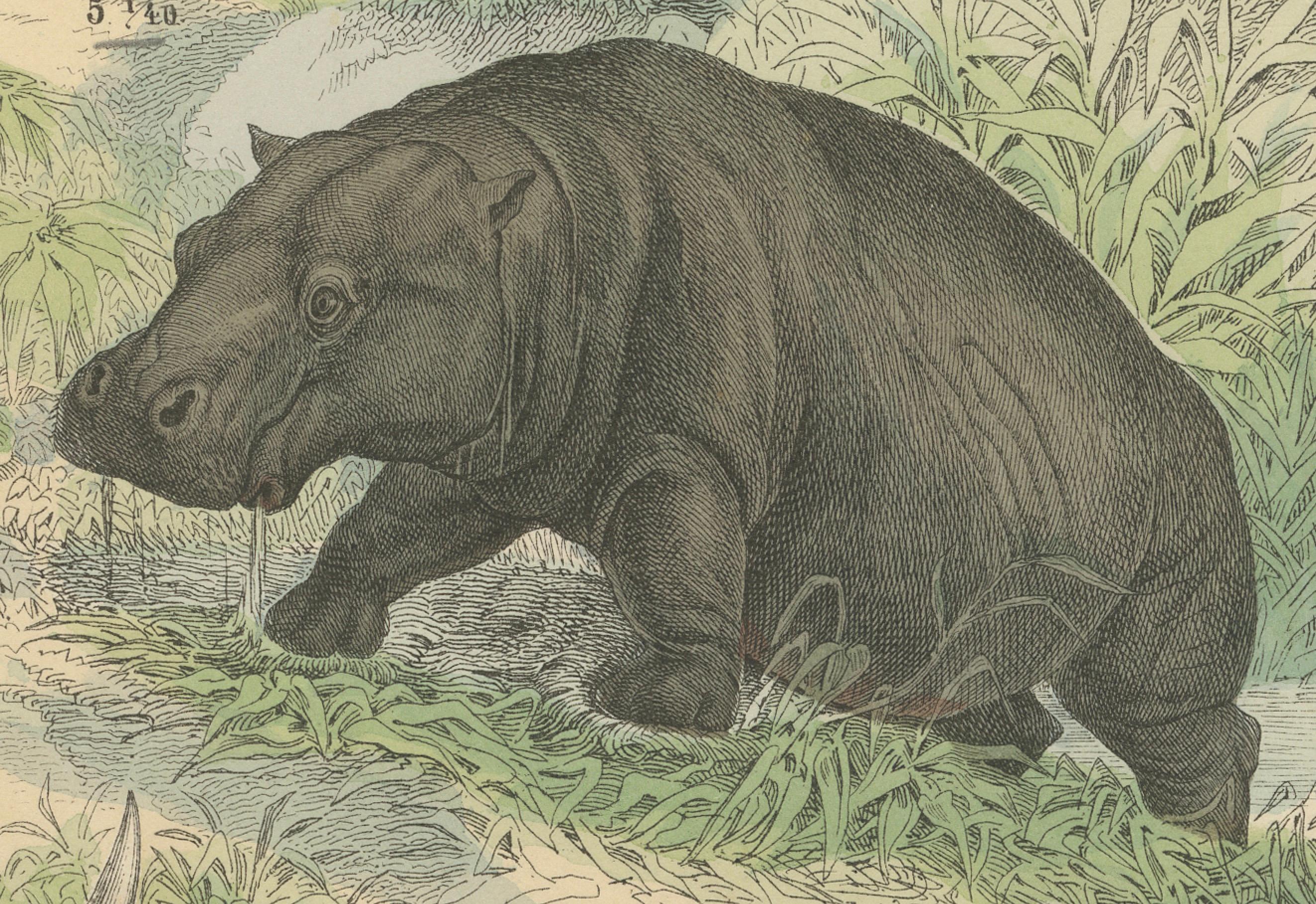
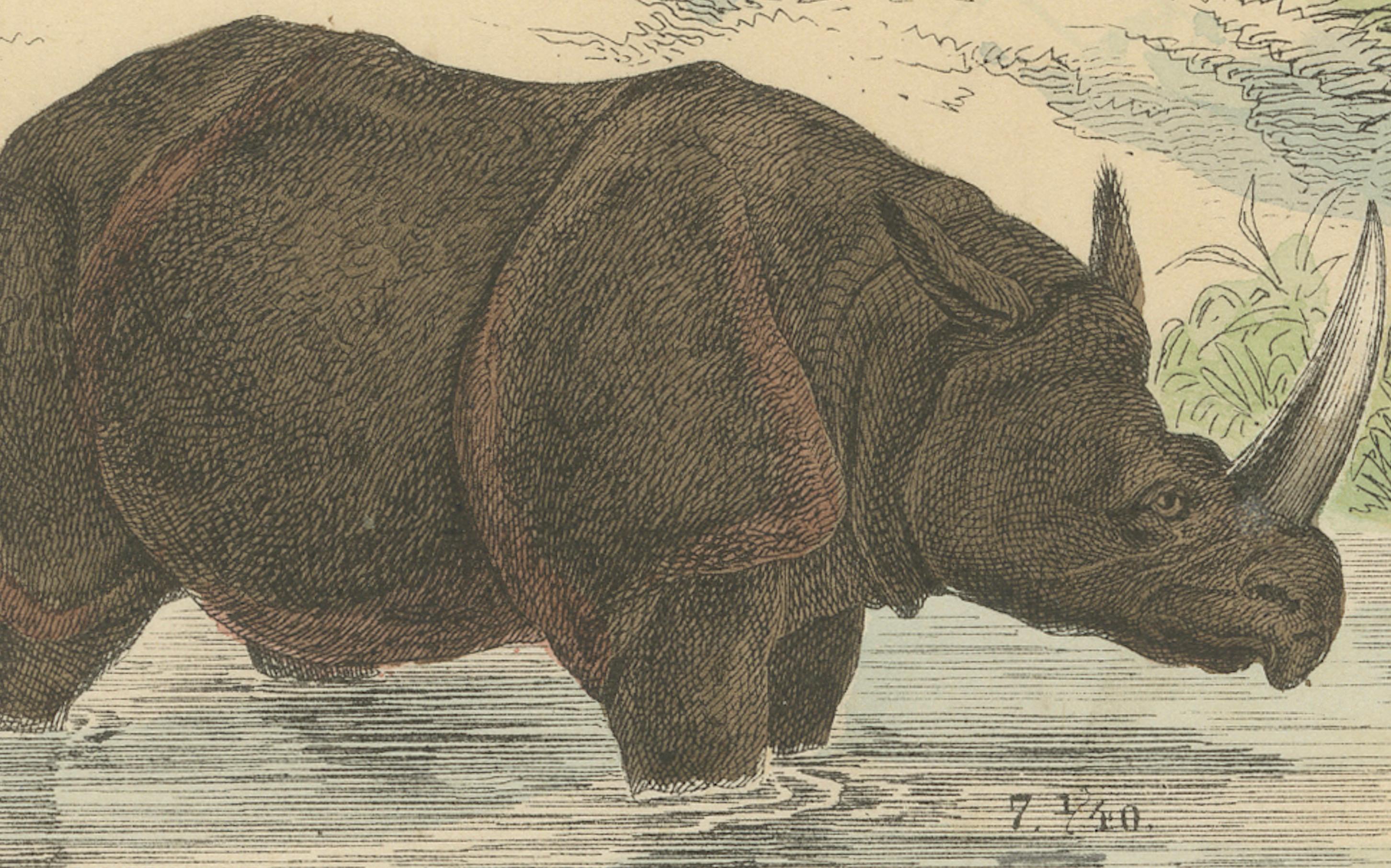
1. Malayan tapir (Tapirus indicus) 2. Capybara (Hydrochoerus hydrochaeris) 3. Saola or related antelope (Pseudoryx nghetinhensis or similar species) 4. Wild boar (Sus scrofa) 5. Asian elephant (Elephas maximus) 6. Hippopotamus (Hippopotamus amphibius) 7. Rhinoceros (likely Indian rhinoceros, Rhinoceros unicornis)
Produced using copper engraving with meticulous hand colouring, the print shows precise anatomical lines and naturalistic poses, highlighting each animal’s distinctive size, skin texture, and horn or tusk structure. These illustrations were used widely in schools and libraries as essential teaching aids, bringing distant wildlife vividly to life in an era before photography was commonplace.
Condition summary: Good condition considering its age, with slight overall toning and minor foxing mainly in the margins. The paper is strong with no tears or repairs, and the hand colouring remains vivid and fresh.
Framing tips: Frame this striking zoological print in a dark wood, walnut, or black frame with a cream or off-white mount to enhance its fine engraved detail and natural tones. A gold frame can add classic warmth for traditional interiors. UV-protective glass is recommended to maintain its colour quality and prevent further toning. This antique natural history print will enrich any collection or educational interior, bringing timeless scientific beauty and powerful decorative appeal to your wall.