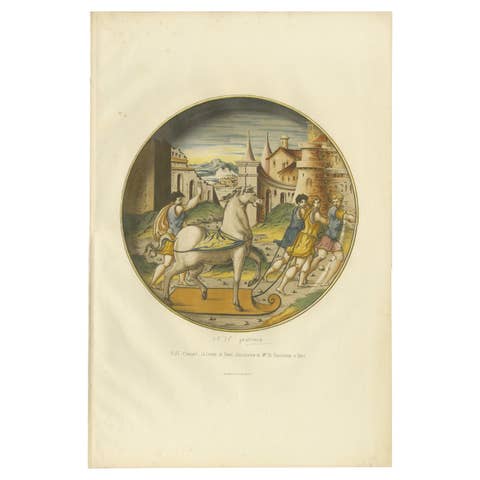
Original antique · The actual sheet photographed · Certificate of authenticity on request · Sold unframed · Worldwide shipping from € 15 (rates)
Date
1867
Sheet size
28.5 × 22 cm (11.2 × 8.7 in)
Condition
Good
Reference
BG-12980-4
What the condition grades mean
Excellent
Bright and clean, with no faults worth mentioning.
Very good
Only light signs of age, such as faint toning.
Good
Normal signs of age for a sheet of this period: toning, some foxing, small marks or neat old repairs.
Fair
Clear faults such as staining, tears or repairs, priced to match.
Every fault we see is written in the condition note, and the whole sheet is shown uncropped in the photos.
Condition
Good condition for its age, with light overall toning and minor scattered foxing, mainly in the margins. The paper is strong with no tears or repairs, and the colors remain fresh and vibrant.
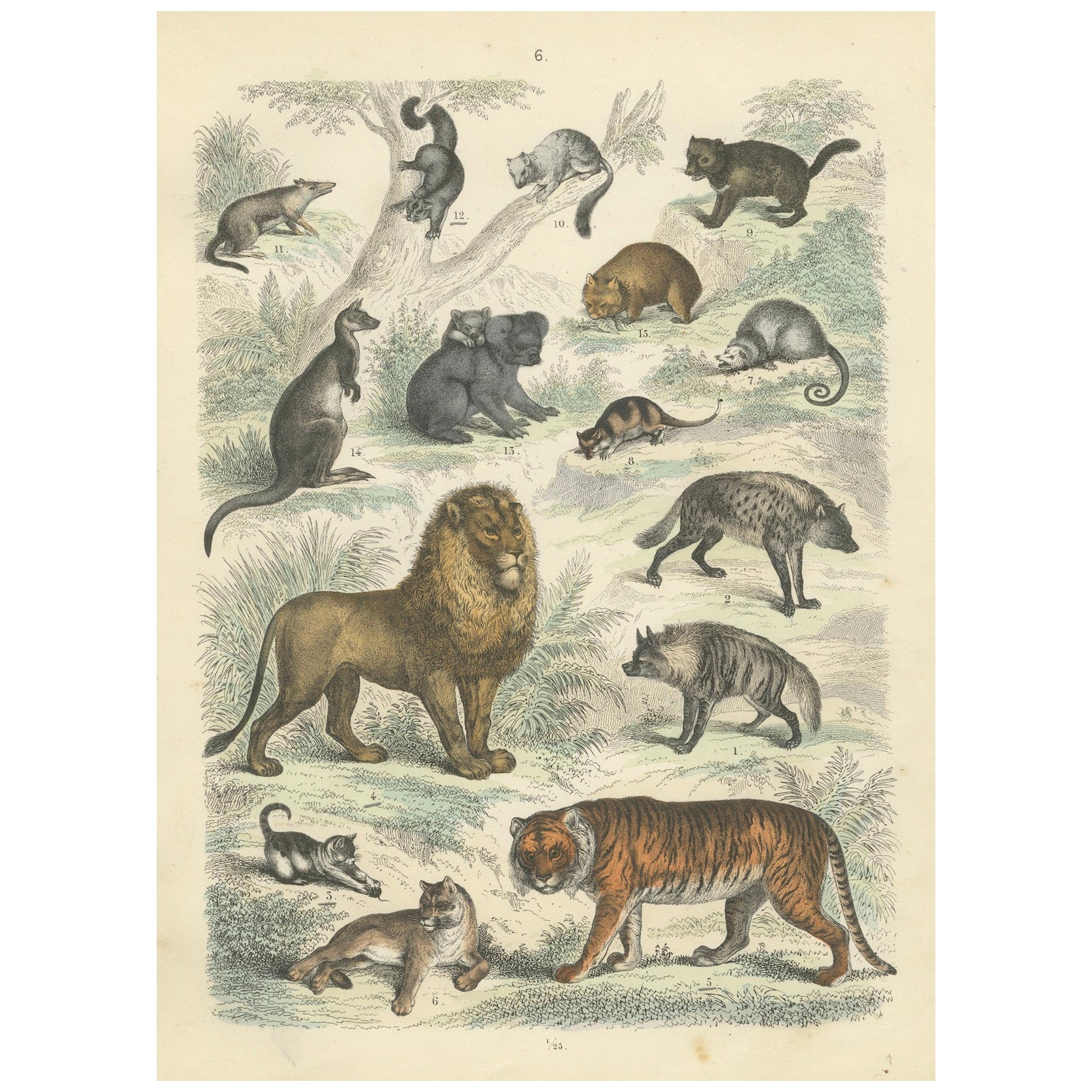
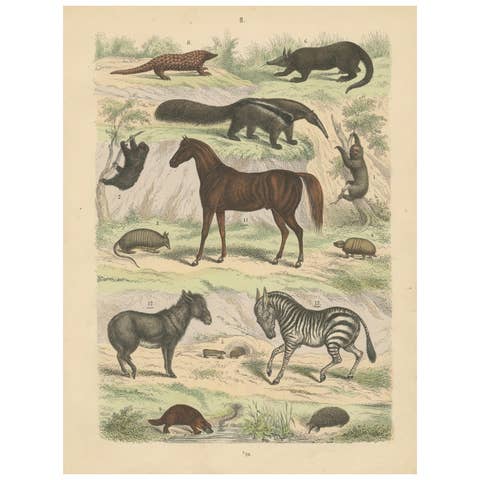
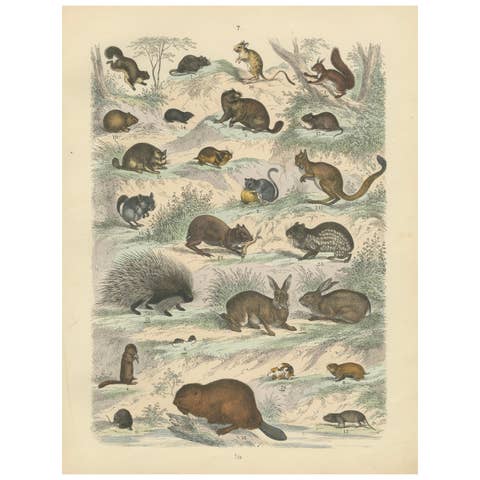
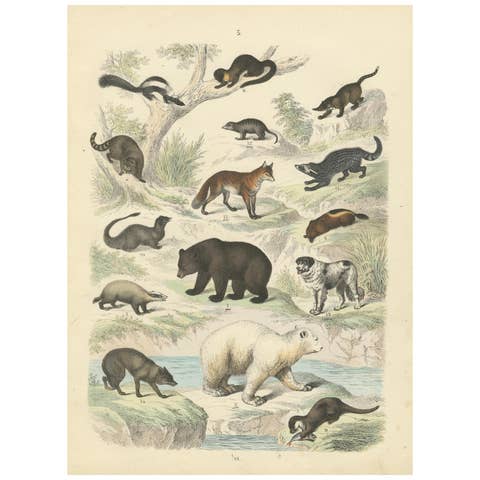
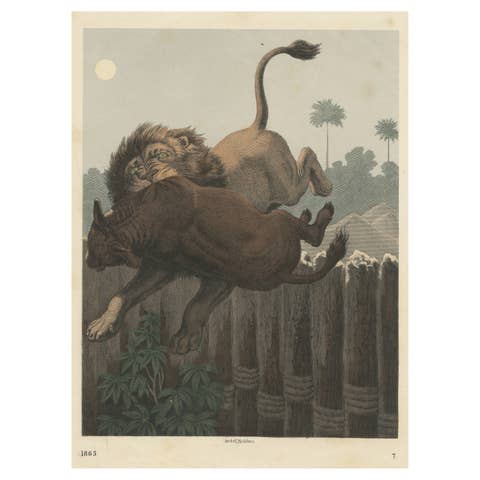
This striking antique print depicts a variety of big cats, marsupials, and other mammals in detailed hand-colored engravings. It originates from the Atlas der Natuurlijke Geschiedenis voor scholen en huisgezinnen, adapted into Dutch by T.C. Winkler after Traugott Bromme, published in Amsterdam by J.C. Loman in 1867. Designed for educational use, it combines zoological accuracy with artistic illustration to teach students about the diversity of animal life worldwide.
The labeled figures include:
At the center stands the powerful African lion (Panthera leo), and to its right is the boldly colored tiger, both rendered with careful anatomical proportion and texture. The engraving technique used is copper engraving with delicate hand coloring, typical of mid-19th century scientific publications, combining precise engraved lines with subtle watercolor washes to bring each animal to life.
These prints served as essential teaching aids in schools and homes, merging natural science education with decorative art. Today they are valued for their academic beauty and as historical records of zoological knowledge and illustration style.
Condition summary: Good condition for its age, with light overall toning and minor scattered foxing, mainly in the margins. The paper is strong with no tears or repairs, and the colors remain fresh and vibrant.
Framing tips: Frame this print in a dark wood, walnut, or black frame with an off-white or cream mount to emphasize the fine coloring and engraved details. For a more classic interior, a gold frame adds warmth and antique character. UV-protective glass is recommended to preserve color and prevent further toning. This zoological print will enrich any natural history collection or interior with its combination of scientific accuracy, rich illustration, and decorative appeal.