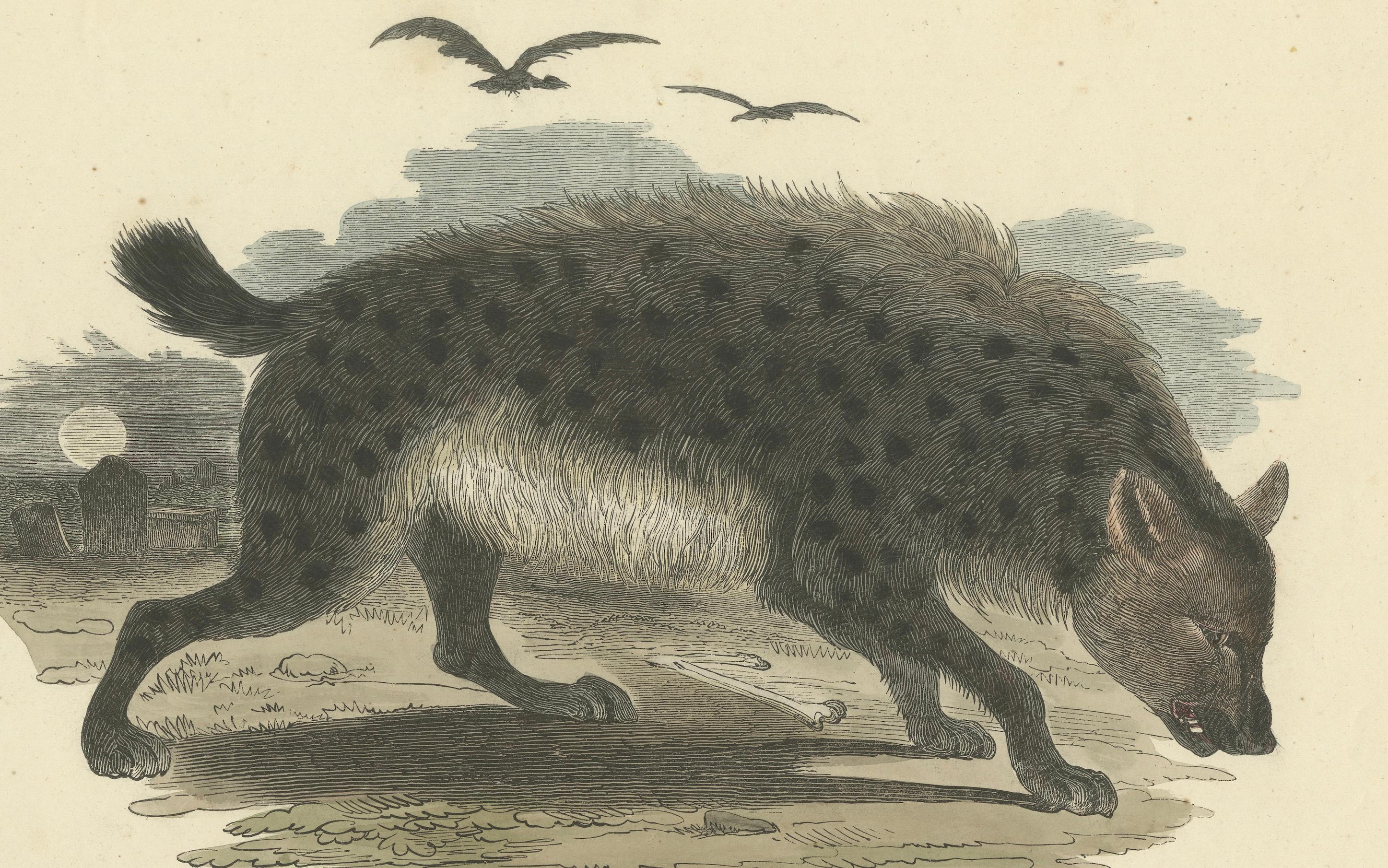
Die gefleckte Hyäne (Spotted Hyena) - Hand-Colored Zoological Print, Circa 1840
€ 320
One of a kind: this is the sheet in the photographs. Ships from Langweer, the Netherlands.
Date
1840
Sheet size
30 × 38.5 cm (11.8 × 15.2 in)
Condition
Good
Reference
BG-12678-144
Condition
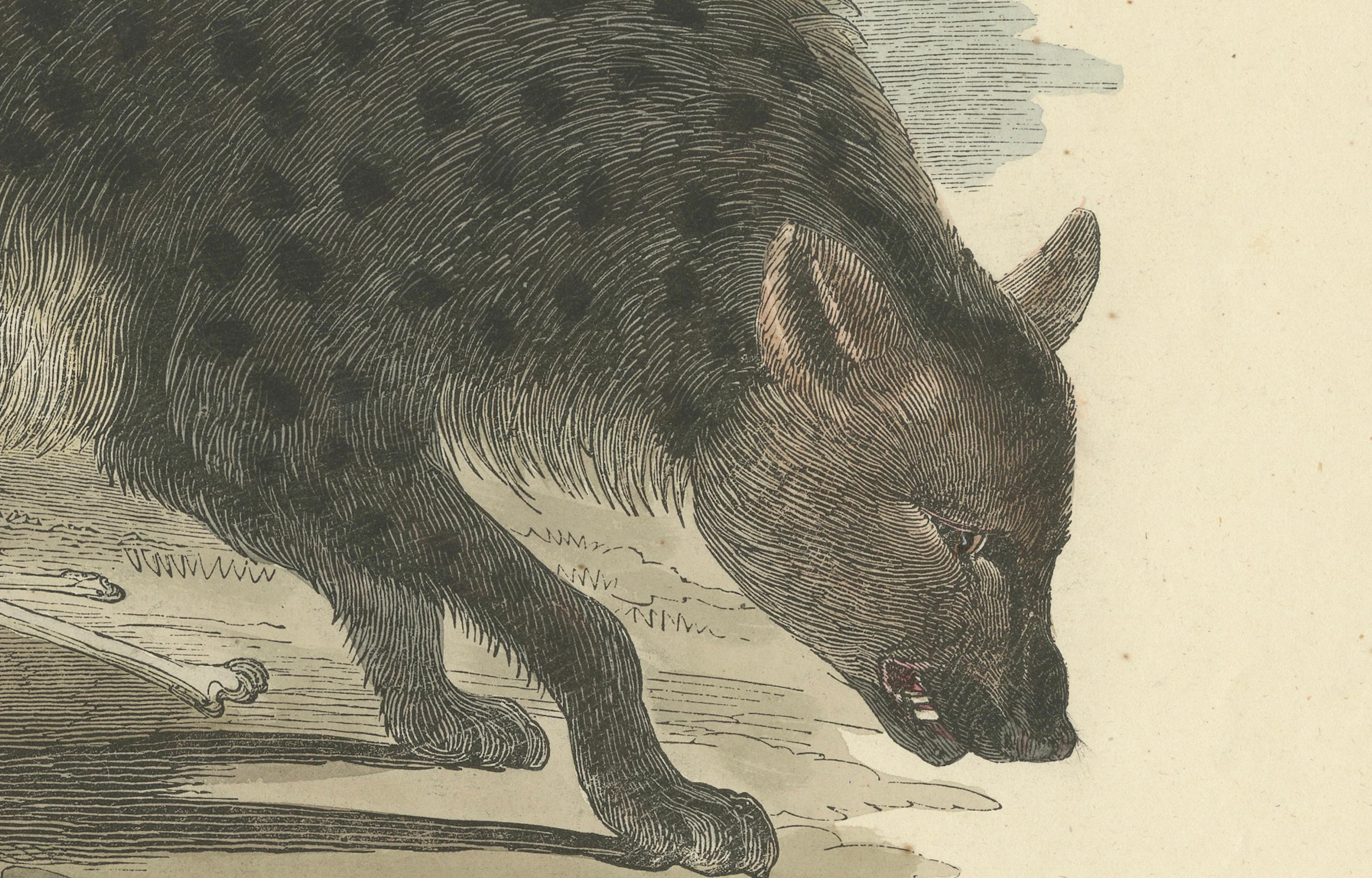
Good condition for its age. The image is crisp, with strong details and vivid colors that have been preserved well. The paper shows minor foxing and some slight discoloration at the edges, which adds to its authenticity and charm.
About this sheet
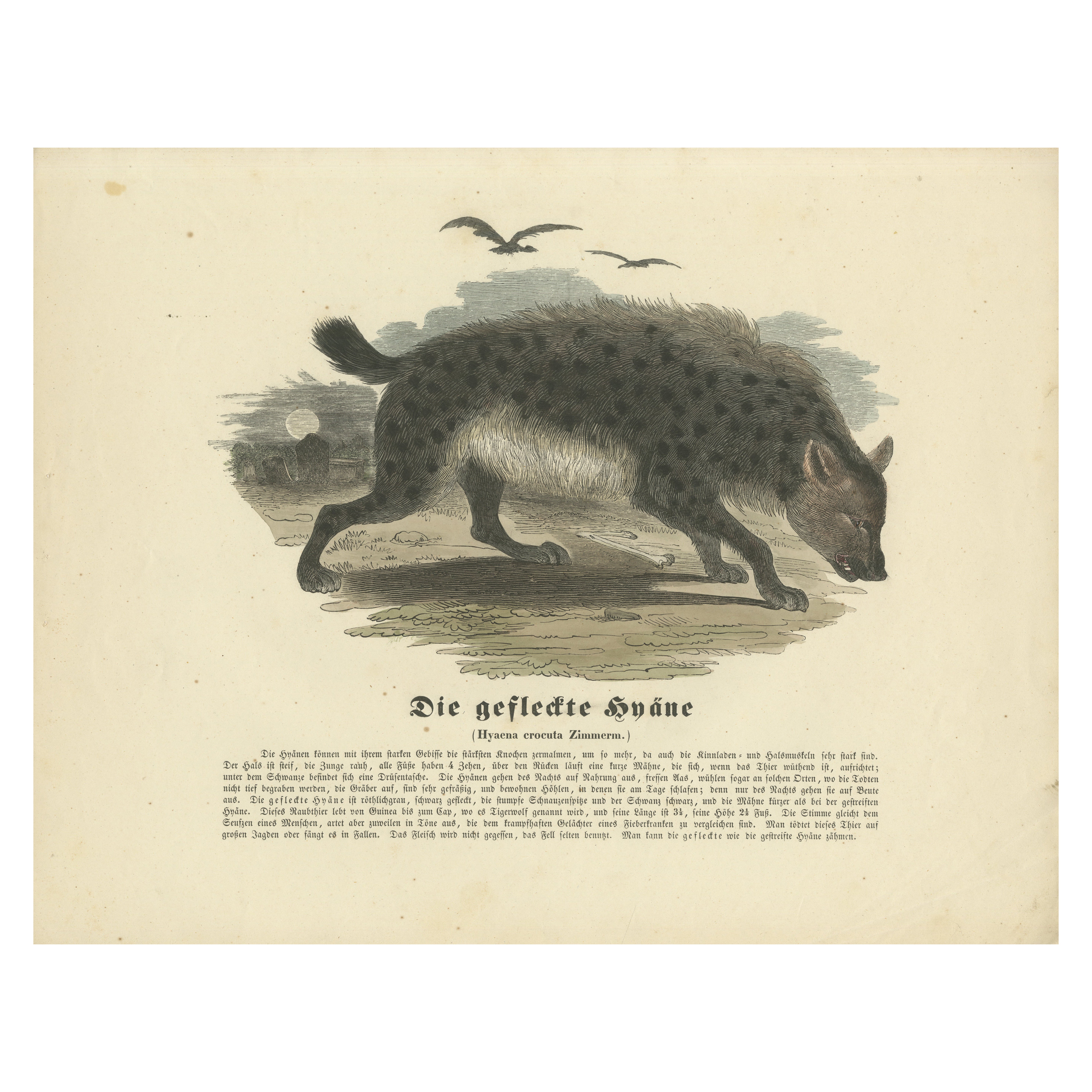
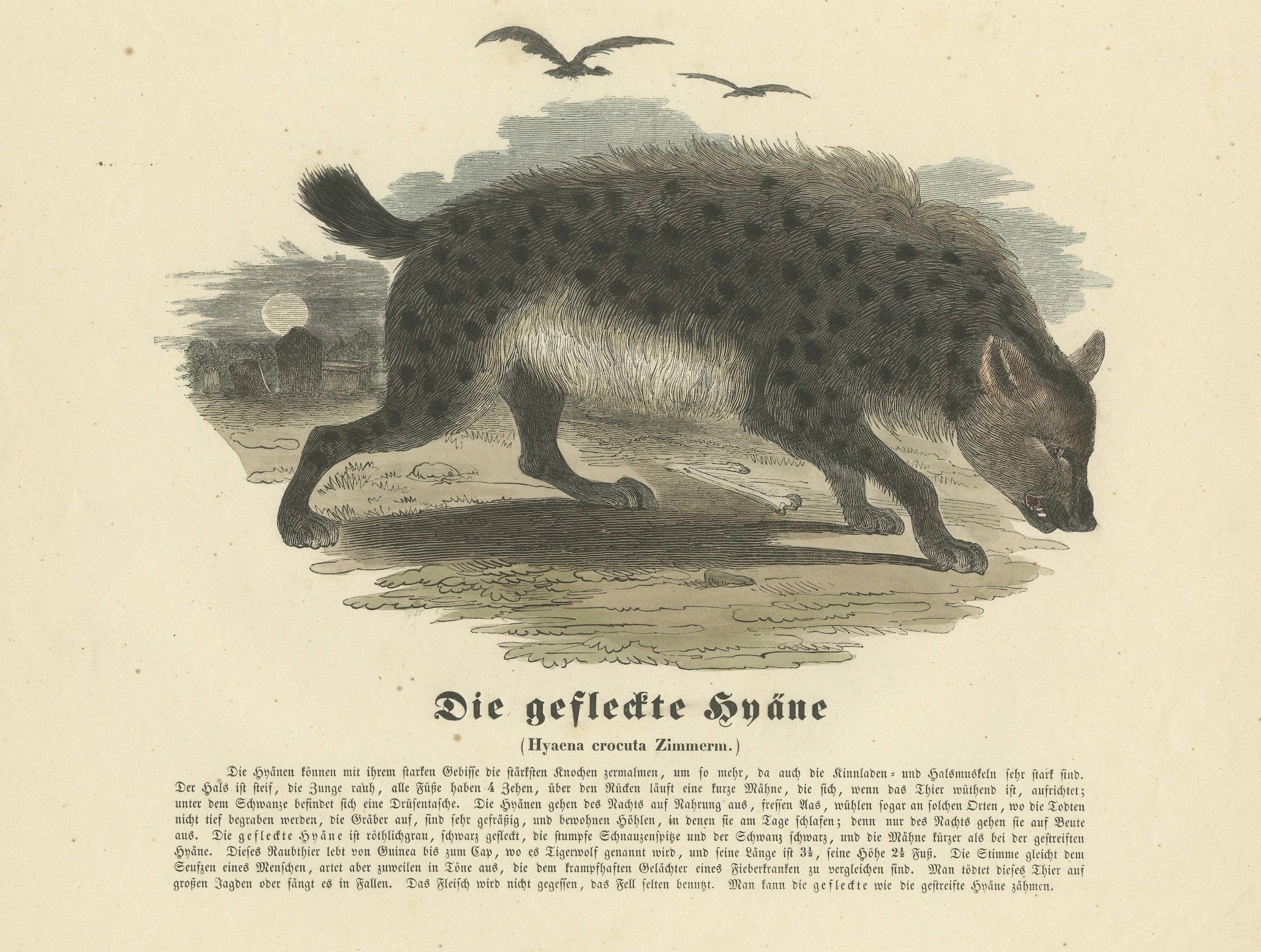
This beautifully hand-colored zoological print titled "Die gefleckte Hyäne" (Spotted Hyena) showcases the Hyena crocuta as described by Zimmerman. The artwork is a stunning example of mid-19th-century natural history illustration, combining scientific accuracy with artistic elegance. The spotted hyena is depicted in a natural setting, with dramatic evening tones, a full moon in the background, and birds circling overhead, creating a vivid sense of its nocturnal habitat.
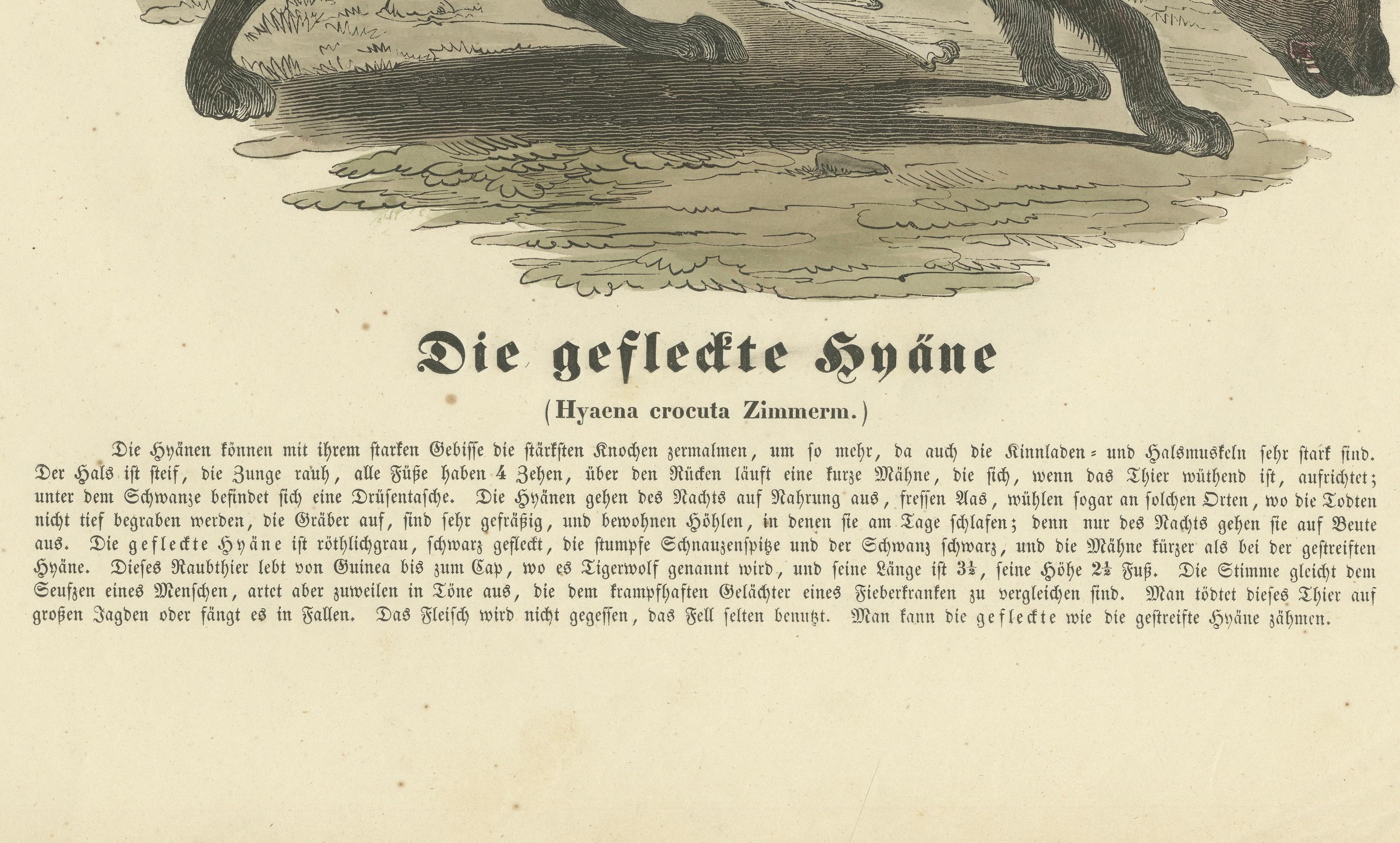
The German text below the illustration provides an engaging description of the spotted hyena's behavior, habitat, and features, making it an excellent resource for both collectors and enthusiasts of historical zoological studies. Here's a translated summary:
"Hyenas are recognized by their tough, spotted fur, robust limbs, and strong jaws. They are predominantly nocturnal and hunt in packs, feeding on carrion as well as actively hunting prey. Their laughter-like call is infamous, especially when echoed during the silent hours of the night. The spotted hyena is known for its adaptability and intelligence, making it a fascinating subject of study."
The print was created around 1840 and is part of a larger series of zoological studies, reflecting the growing interest in documenting the natural world during this period. The hand-coloring adds a unique and vibrant touch, making each piece one-of-a-kind.
This piece is in good condition for its age. The image is crisp, with strong details and vivid colors that have been preserved well. The paper shows minor foxing and some slight discoloration at the edges, typical of prints from this era, which adds to its authenticity and charm.
This rare antique print would make an ideal addition to a collection of natural history artworks or as a statement piece for display. Its combination of scientific content and artistic quality ensures it will captivate both collectors and admirers of historical zoological illustrations.