About this sheet
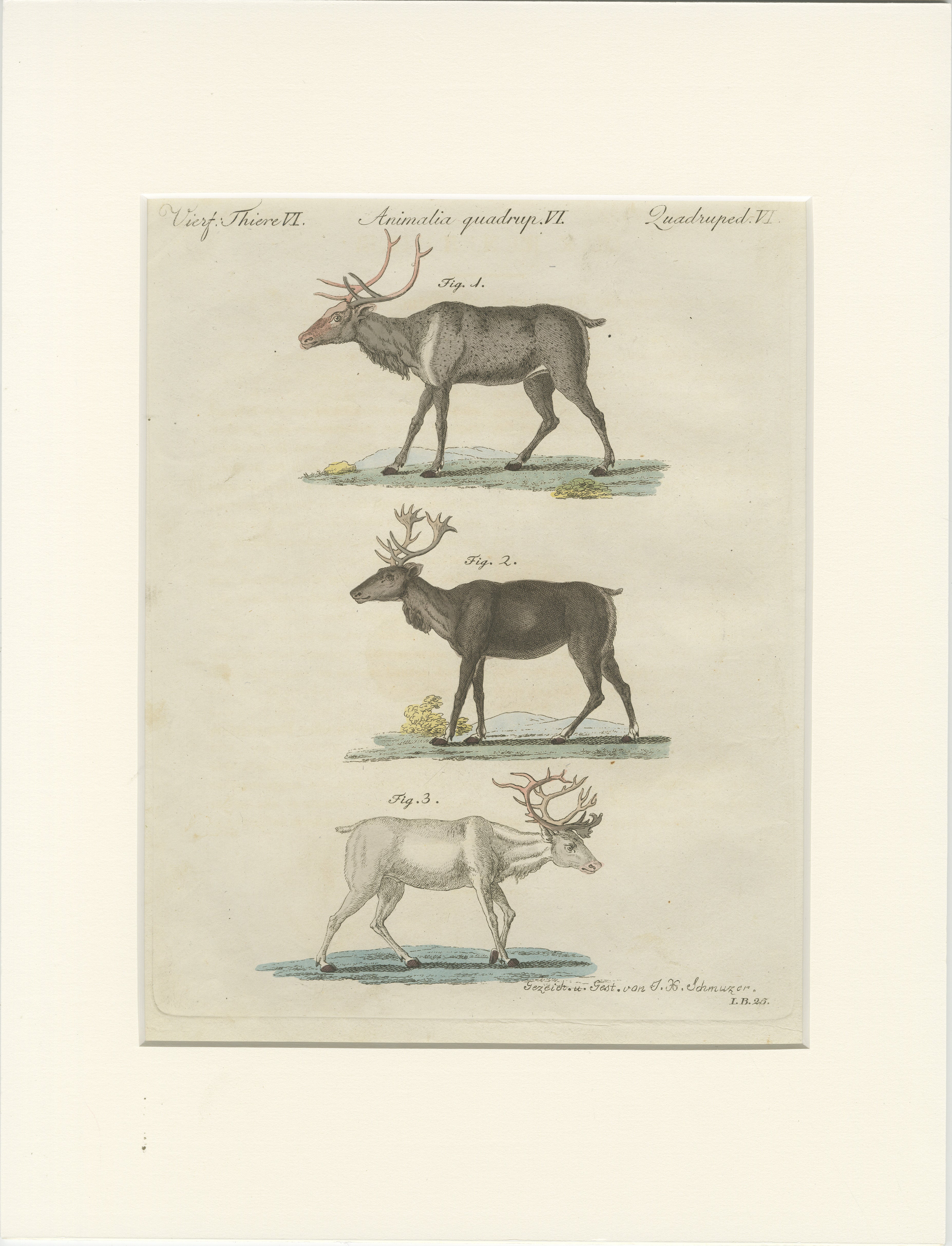
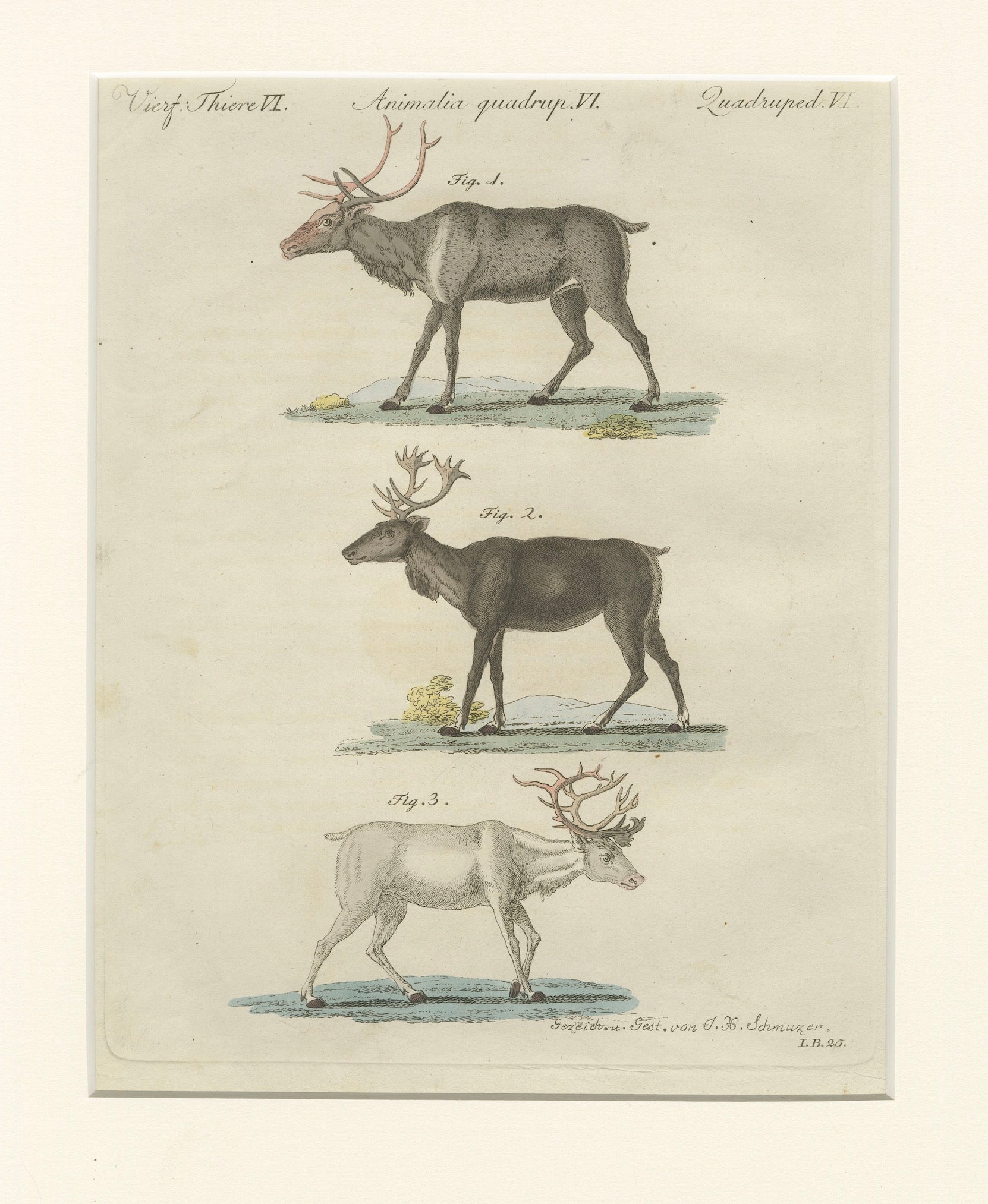
Original antique hand-colored copper engraving depicting three varieties or forms of northern deer and reindeer, published in Friedrich Justin Bertuch’s celebrated “Bilderbuch für Kinder” in Weimar around 1792.
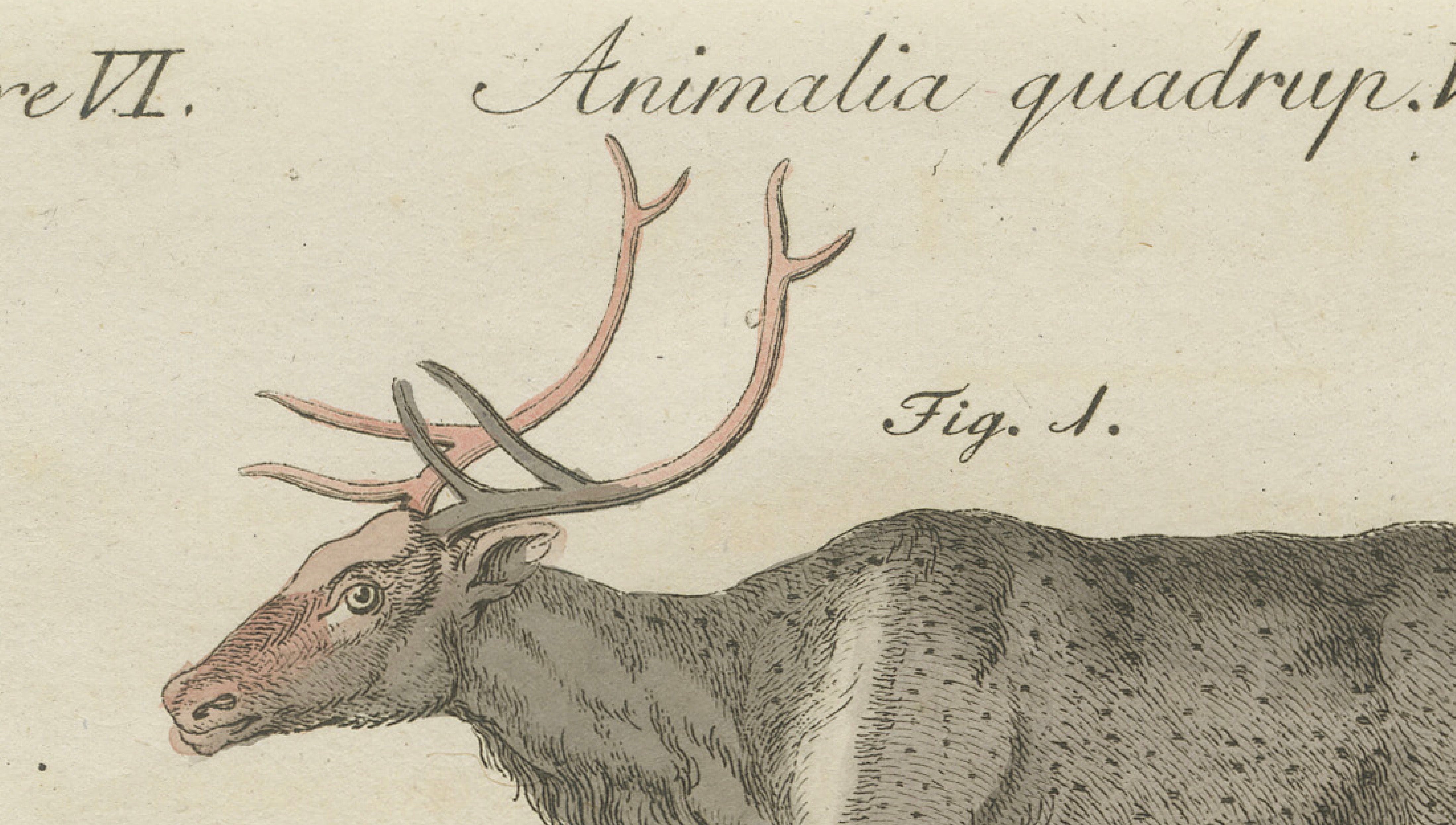
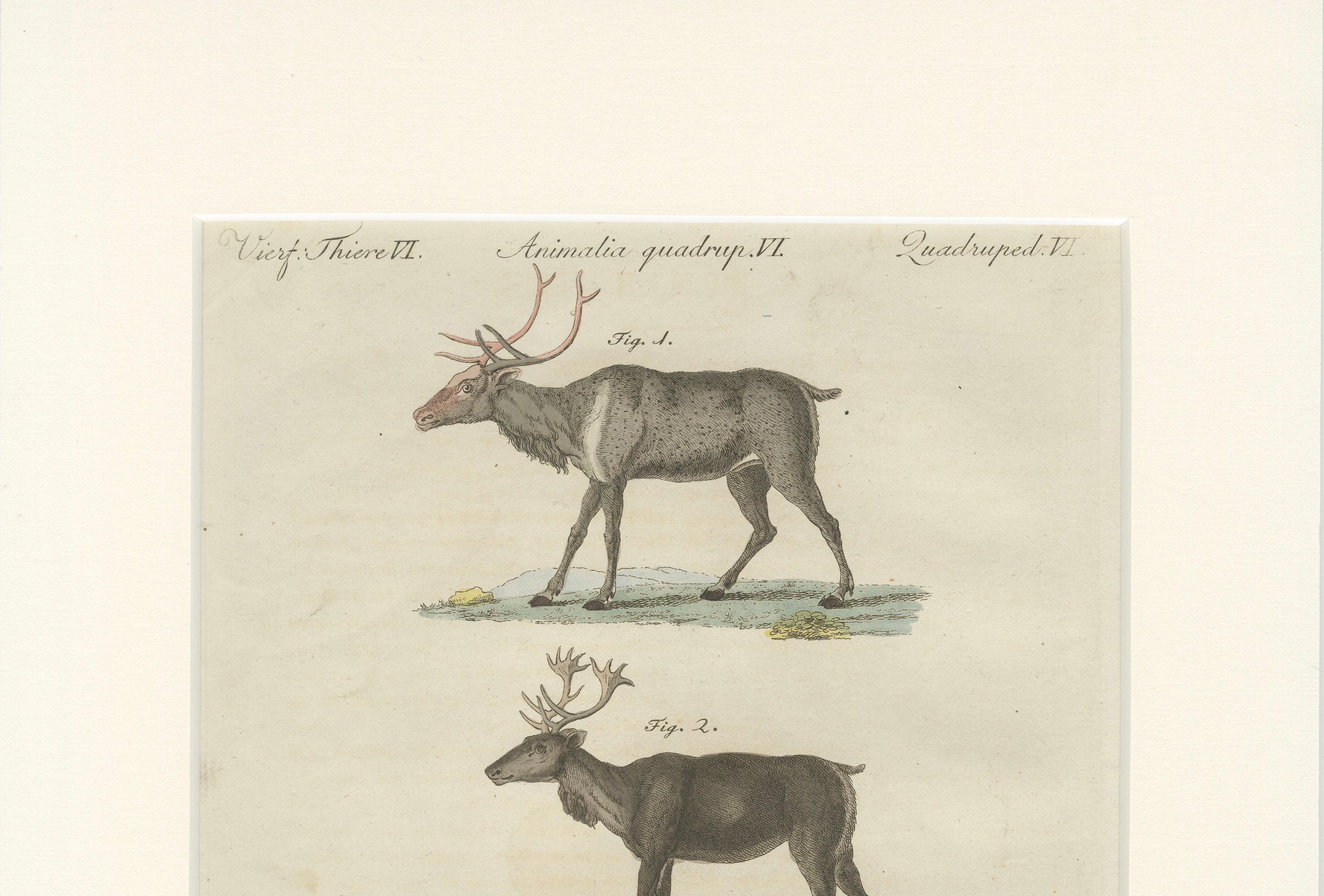
The plate is headed “Vierfüßige Thiere VI / Animalia quadrup. VI / Quadrupèdes VI” and presents three impressive antlered deer in profile.
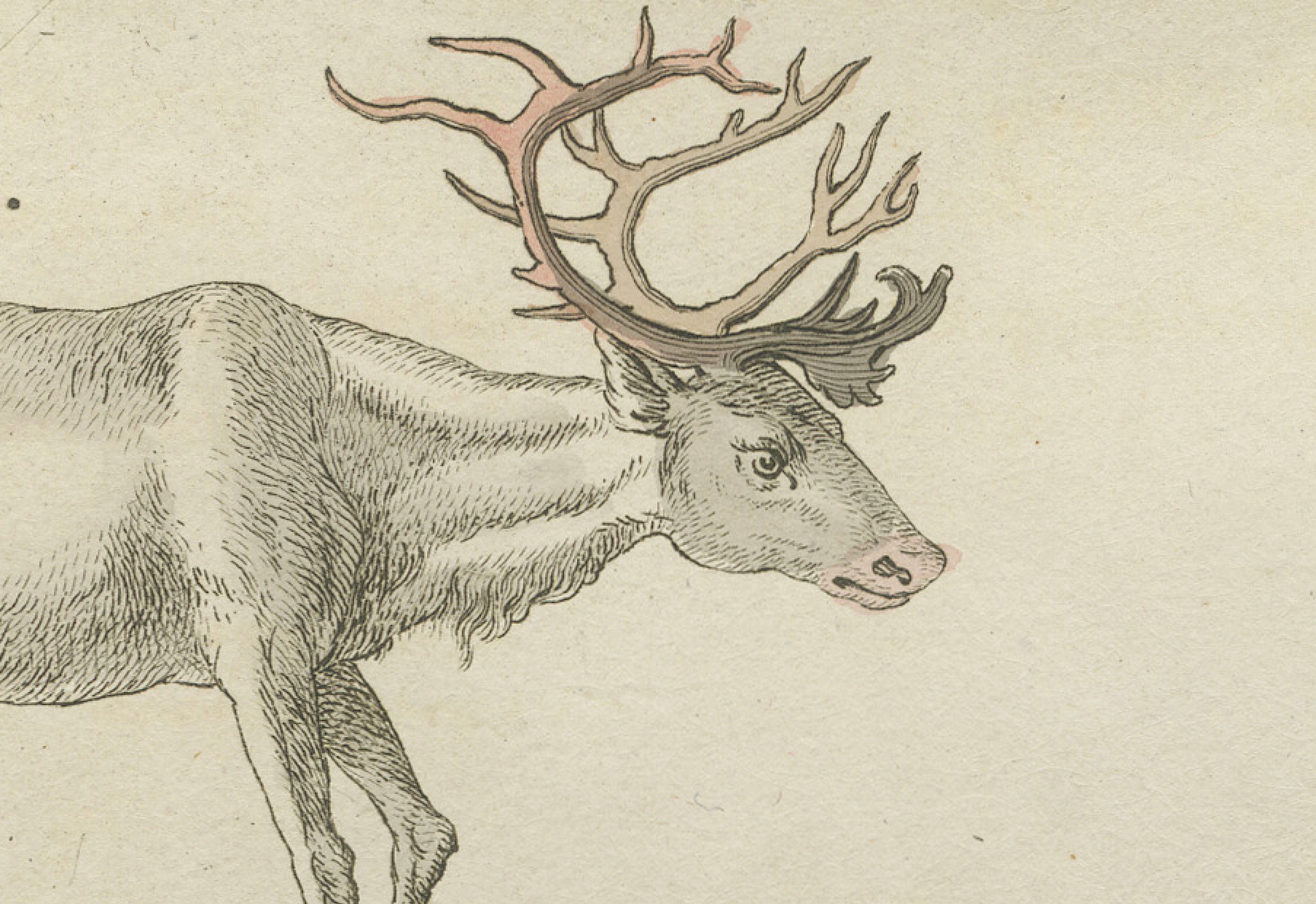
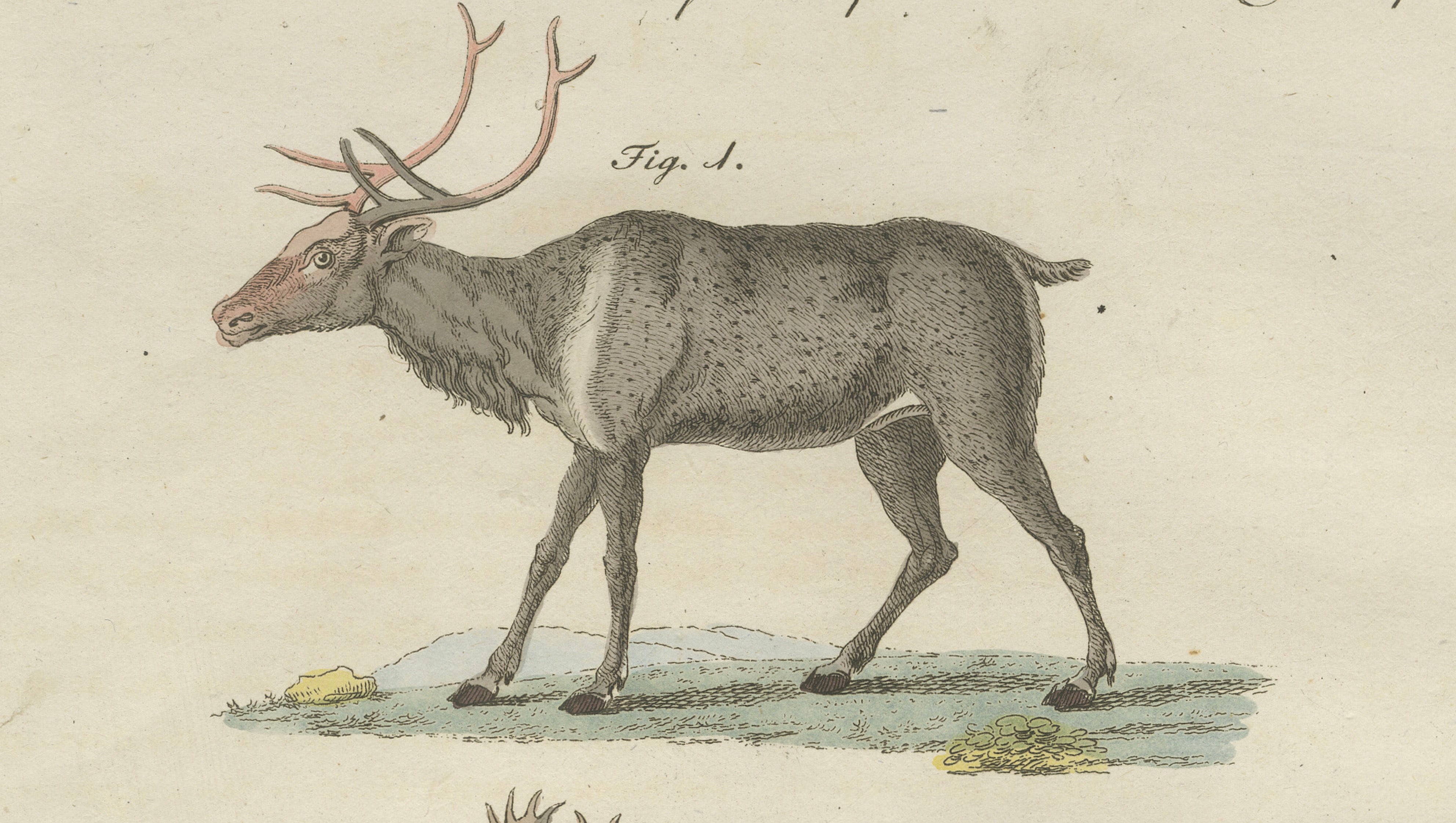
Fig. 1 – Reindeer / Caribou Type
The upper animal is a large northern deer with a grey-brown coat and long, sweeping antlers.
Its antler structure and heavy neck are characteristic of the reindeer or caribou group, Rangifer tarandus.
Reindeer are among the most characteristic mammals of the Arctic and sub-Arctic regions of Europe, Asia and North America. Unlike most members of the deer family, both male and female reindeer can grow antlers, although those of mature males are generally considerably larger.
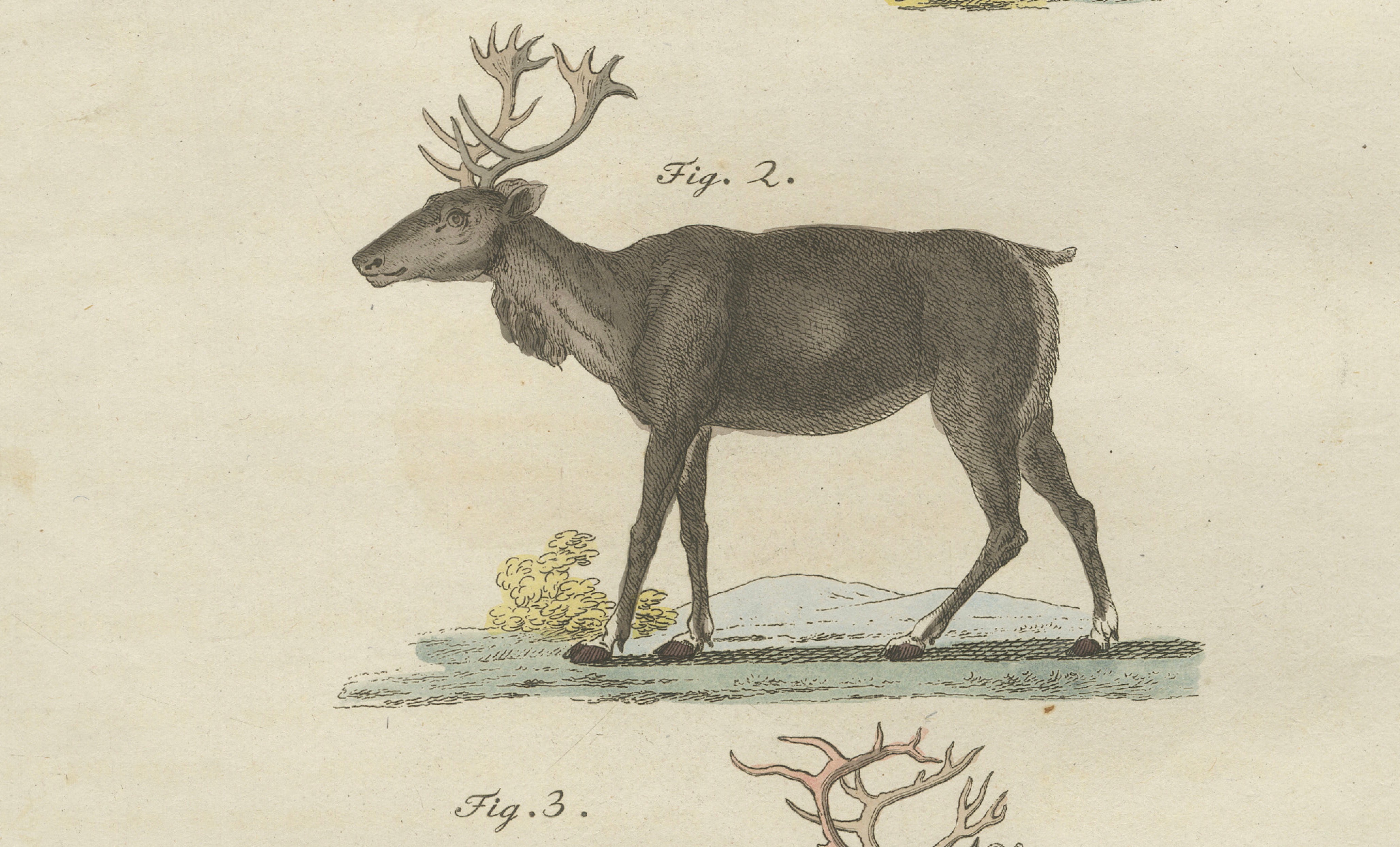
Fig. 2 – Northern Reindeer / Woodland Form
The central animal is represented with a darker coat and particularly elaborate branching antlers.
Early European naturalists described numerous geographical forms and varieties of reindeer, often treating differences in size, coloration and antler structure more distinctly than modern zoological classification does.
The animal's imposing branched antlers are particularly well rendered in this engraving.
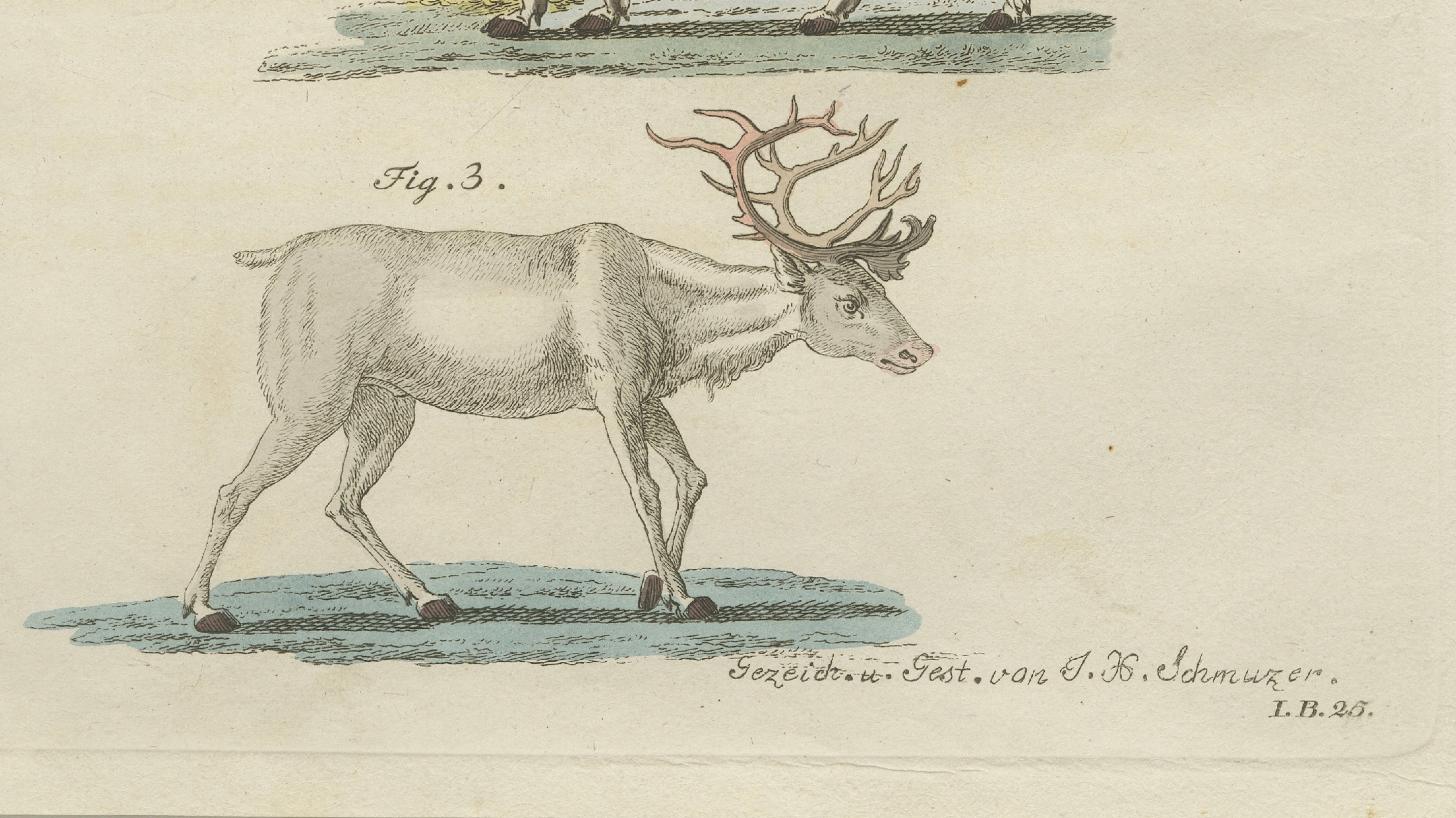
Fig. 3 – Pale or White Reindeer
The lower figure represents a much paler reindeer or northern deer with large branching antlers.
Very pale, cream-colored and occasionally almost white reindeer have long been known in northern populations. Such color variations were especially noteworthy to early naturalists and travellers and frequently appeared separately in historical zoological descriptions.
Modern scientific classification generally places the reindeer and caribou forms within the species Rangifer tarandus, although numerous geographical subspecies and populations are recognized.
Reindeer and Caribou
“Reindeer” and “caribou” refer essentially to the same species.
The name reindeer is generally used for European and Asian populations, including domesticated animals traditionally herded by northern peoples, while caribou is the usual North American name for wild populations.
For Europeans around 1800, the reindeer was strongly associated with Lapland, Scandinavia and the peoples of the far north. It was admired not only as an exotic northern animal but also for its remarkable importance to human life, providing transport, meat, milk, hides, antler and other materials.
Friedrich Justin Bertuch (1747–1822) was a German publisher, writer and patron of the arts. His monumental “Bilderbuch für Kinder” (Picture Book for Children), first published in Weimar in 1790, became one of the great illustrated educational encyclopedias of the late 18th and early 19th centuries.
Its hundreds of engraved and hand-colored plates introduced readers to animals, plants, geography, science, technology, antiquity and cultures from around the world.
The plate is inscribed:
“Gezeich. u. Gest. von J. B. Schmuzer”
indicating that it was drawn and engraved by Schmuzer.
The three animals are beautifully arranged one above another, allowing their differing antlers, body forms and coloration to be compared. The restrained grey, brown, pale cream, blue and green original coloring gives the plate an especially elegant appearance.
Technique: Original hand-colored copper engraving
Publisher: Friedrich Justin Bertuch / Industrie-Comptoir
Publication: Bilderbuch für Kinder
Place: Weimar, Germany
Date: late 18th century, circa 1792
Plate: Vierfüßige Thiere VI / Animalia quadrup. VI / Quadrupèdes VI
Artist / Engraver: J. B. Schmuzer
Subject: Reindeer / Northern Deer / Caribou
Modern scientific name: Rangifer tarandus
Family: Cervidae
Condition:
Good antique condition with overall age-related toning and scattered light foxing and spotting. Some minor marks, handling traces and age-related imperfections are visible, together with faint show-through or offsetting from printed text. The original hand coloring remains attractive and delicate. Please study the photographs carefully as they form part of the condition description.
The engraving is loosely inserted in an acid-free matting board.
Please note: This is an original antique hand-colored copper engraving from the late 18th century, not a modern reproduction. The print is sold unframed. Framed images or interior views, if shown, are for presentation and inspiration only.
Other companion animal and natural-history plates from Bertuch’s “Bilderbuch für Kinder” are also available separately.
Keywords: Friedrich Justin Bertuch, Bilderbuch für Kinder, reindeer, caribou, Rangifer tarandus, antique reindeer print, antique deer print, northern deer, white reindeer, Lapland reindeer, Scandinavian wildlife, Arctic animals, Arctic wildlife, antlers, deer engraving, Cervidae, natural history illustration...