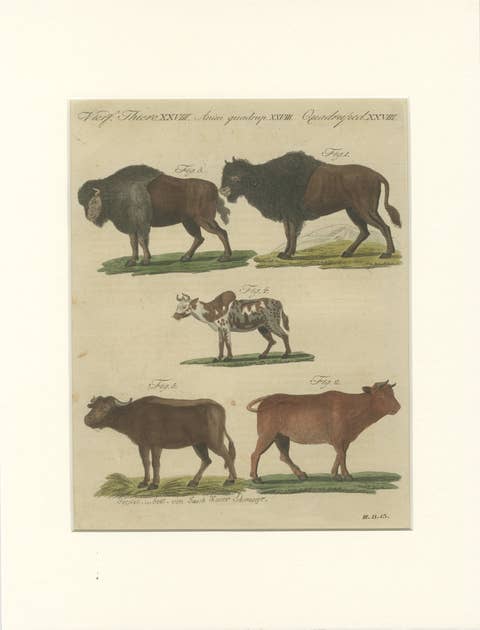
About this sheet
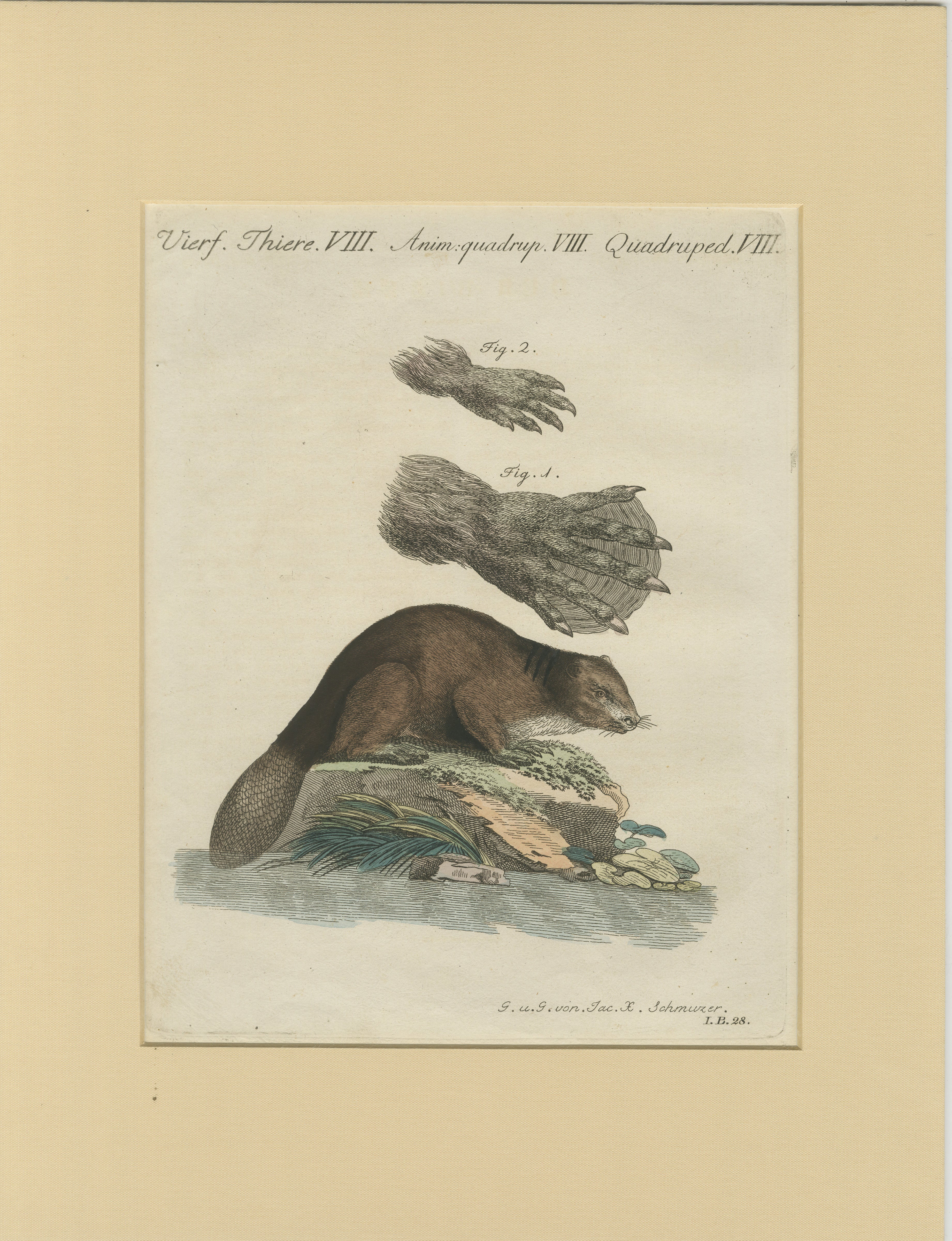
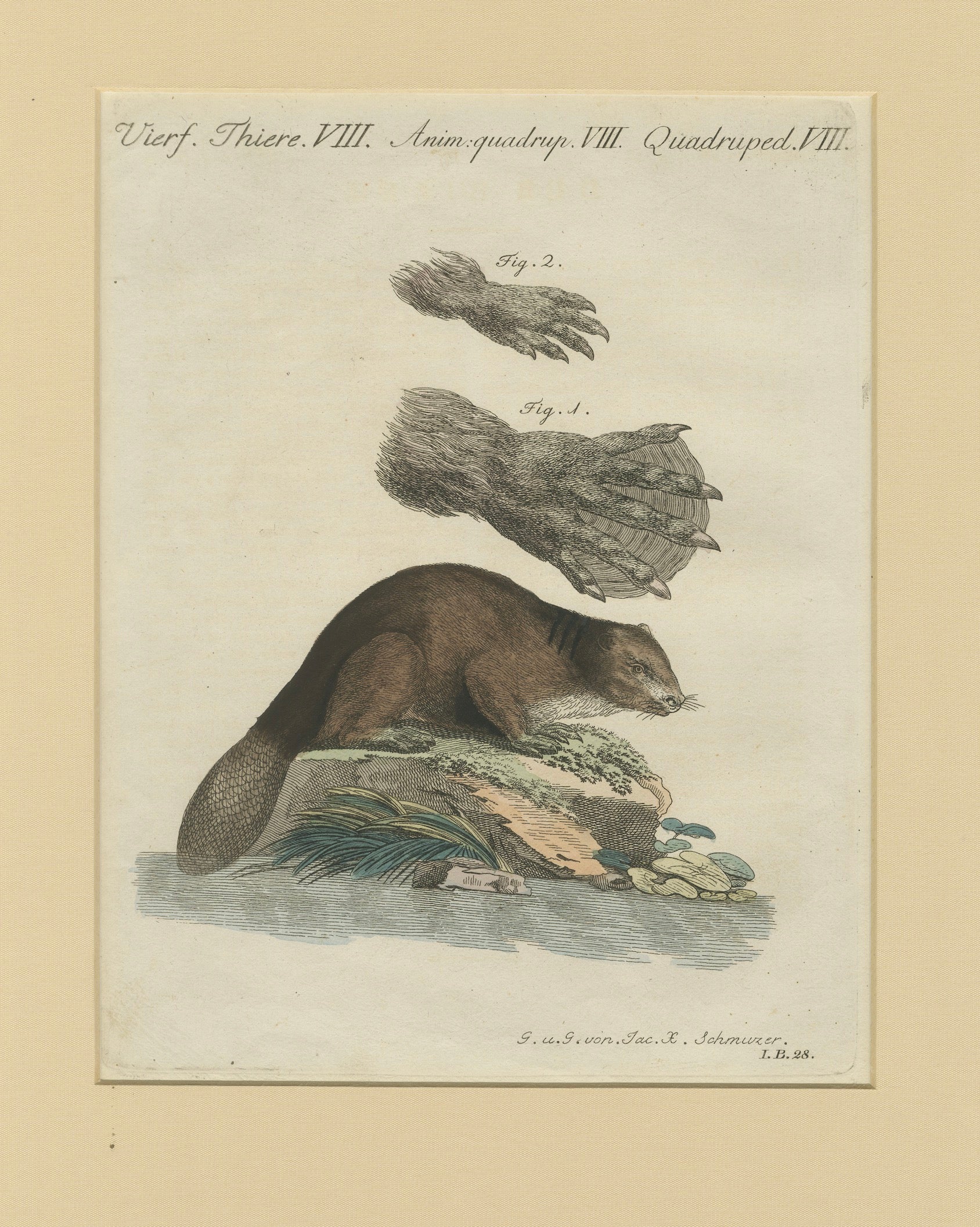
Original antique hand-colored copper engraving depicting a beaver together with detailed anatomical studies of its remarkable feet, published in Friedrich Justin Bertuch’s celebrated “Bilderbuch für Kinder” in Weimar at the end of the 18th century.
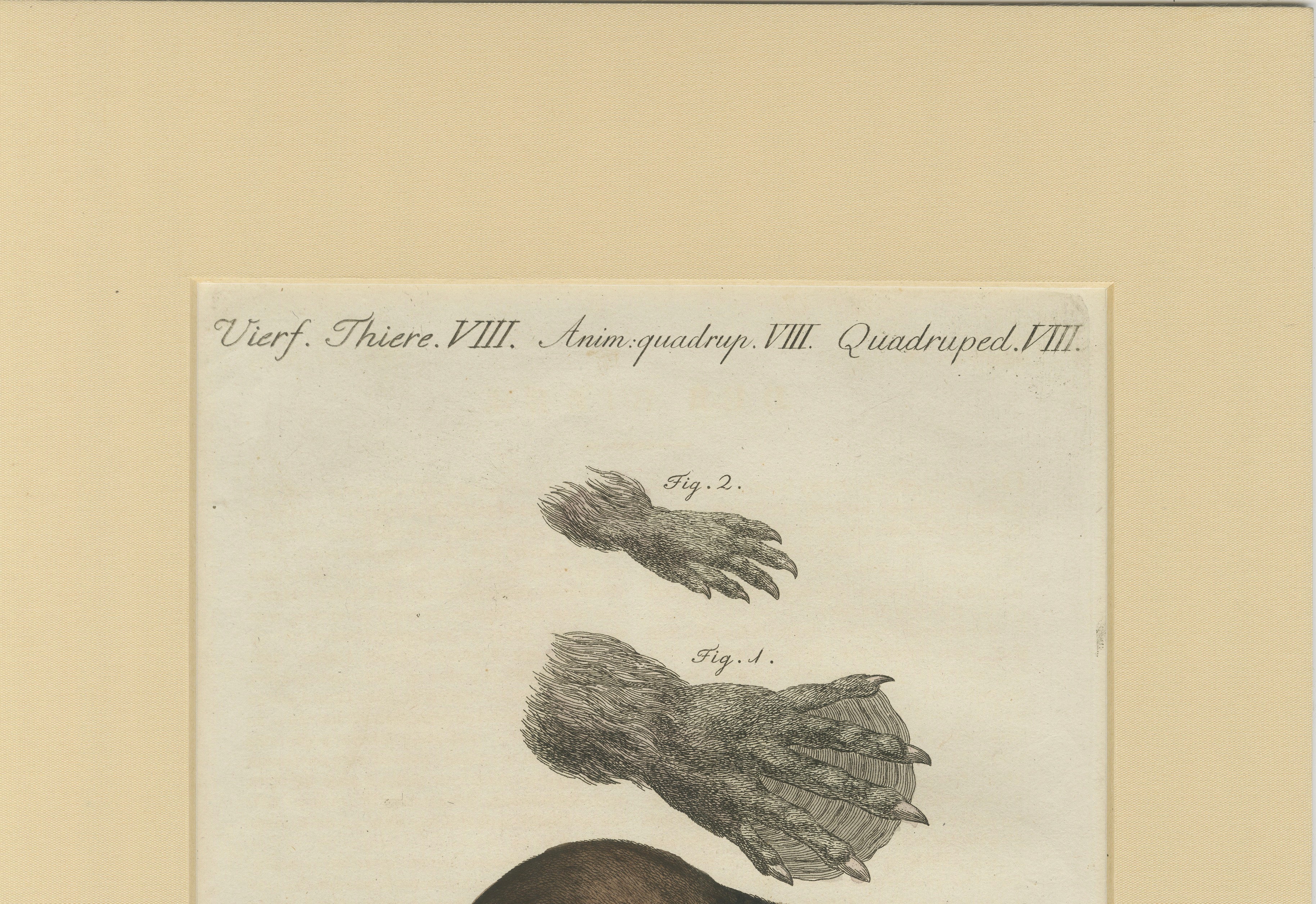
The plate is headed “Vierfüßige Thiere VIII / Anim. quadrup. VIII / Quadrupèdes VIII” and shows the animal beside water in its characteristic semi-aquatic habitat.
The Beaver
Common name: Beaver
Scientific name: Castor fiber / Castor species
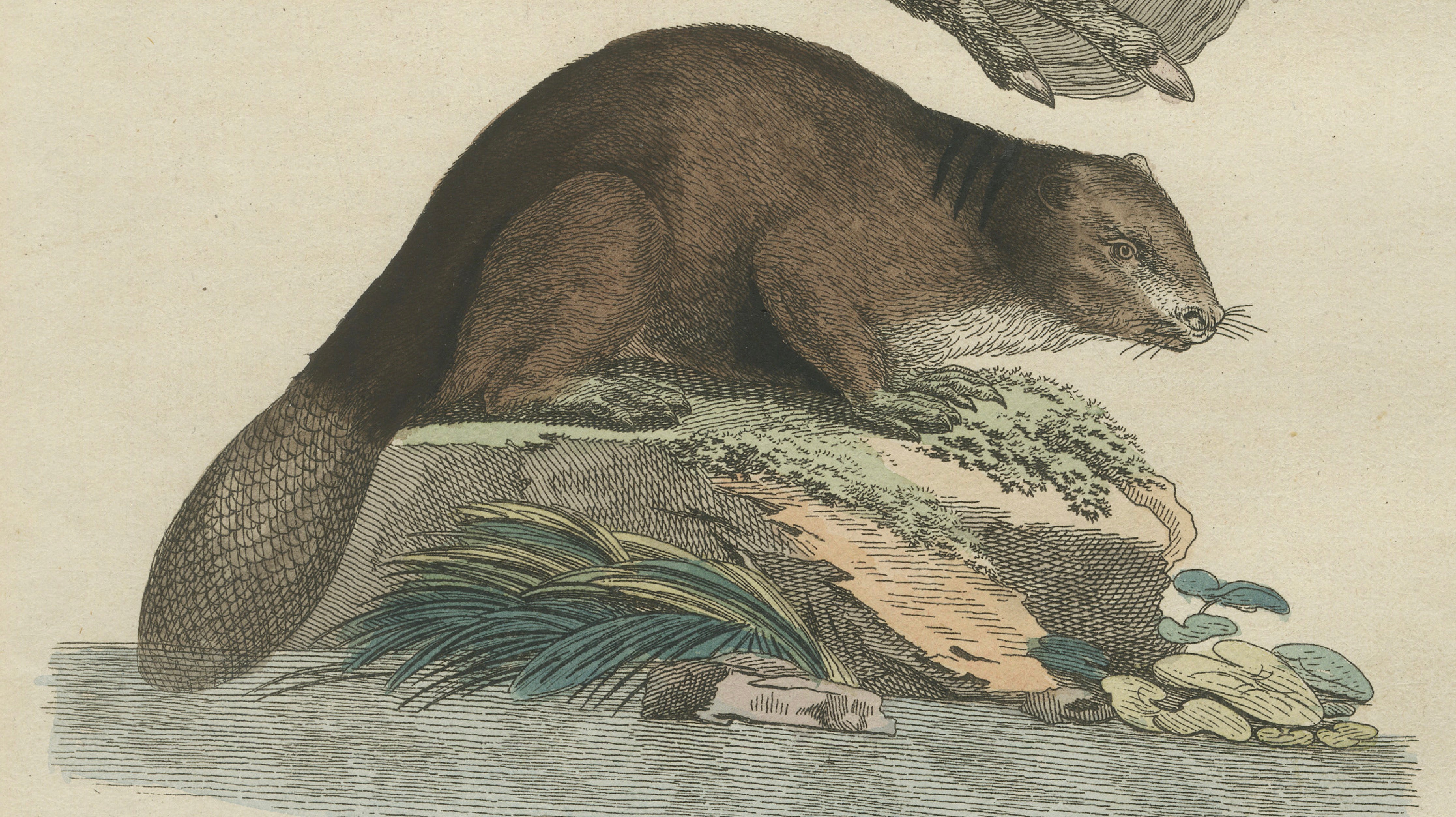
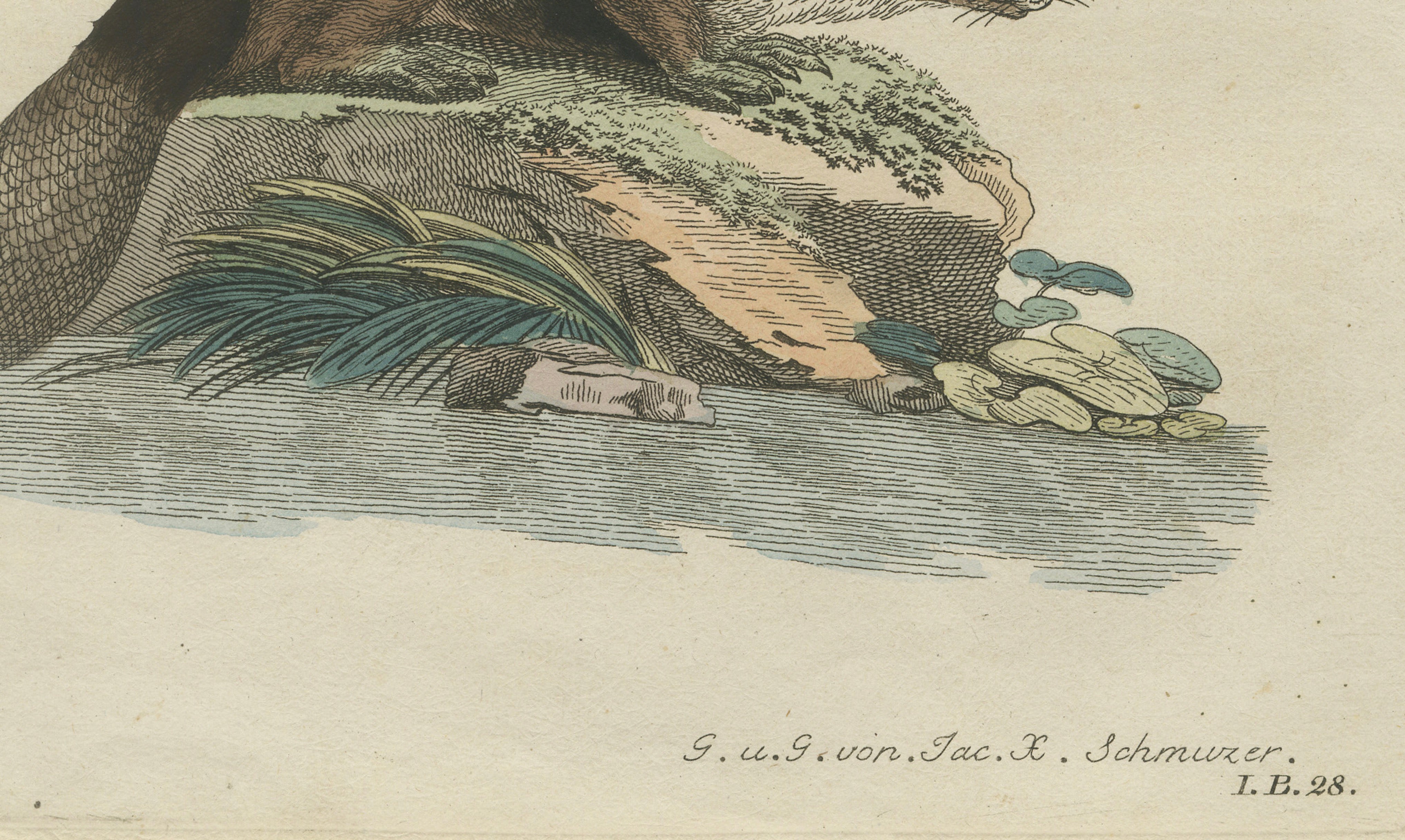
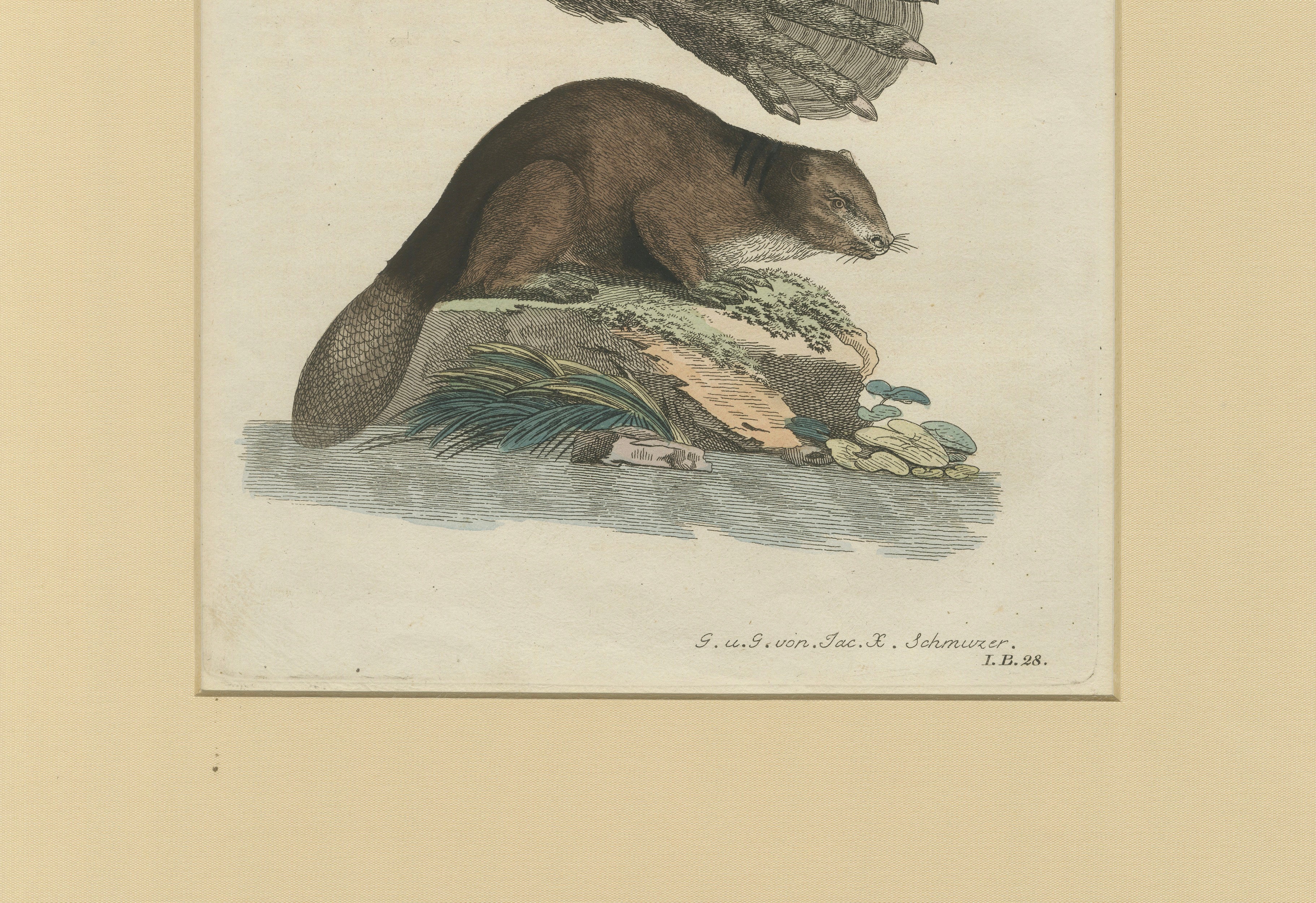
The principal illustration depicts a large beaver resting on the bank of a stream. Its most recognizable feature is its broad, flattened and scaly tail, shown extending down into the water.
Beavers are among the most remarkable engineering animals in nature. Using their powerful teeth, they cut branches and small trees and construct dams, canals and lodges that can dramatically transform the surrounding landscape.
Their dams slow the movement of water and create ponds and wetlands, providing the beavers with protection and access to food. These constructions can also create important habitats for numerous other species.
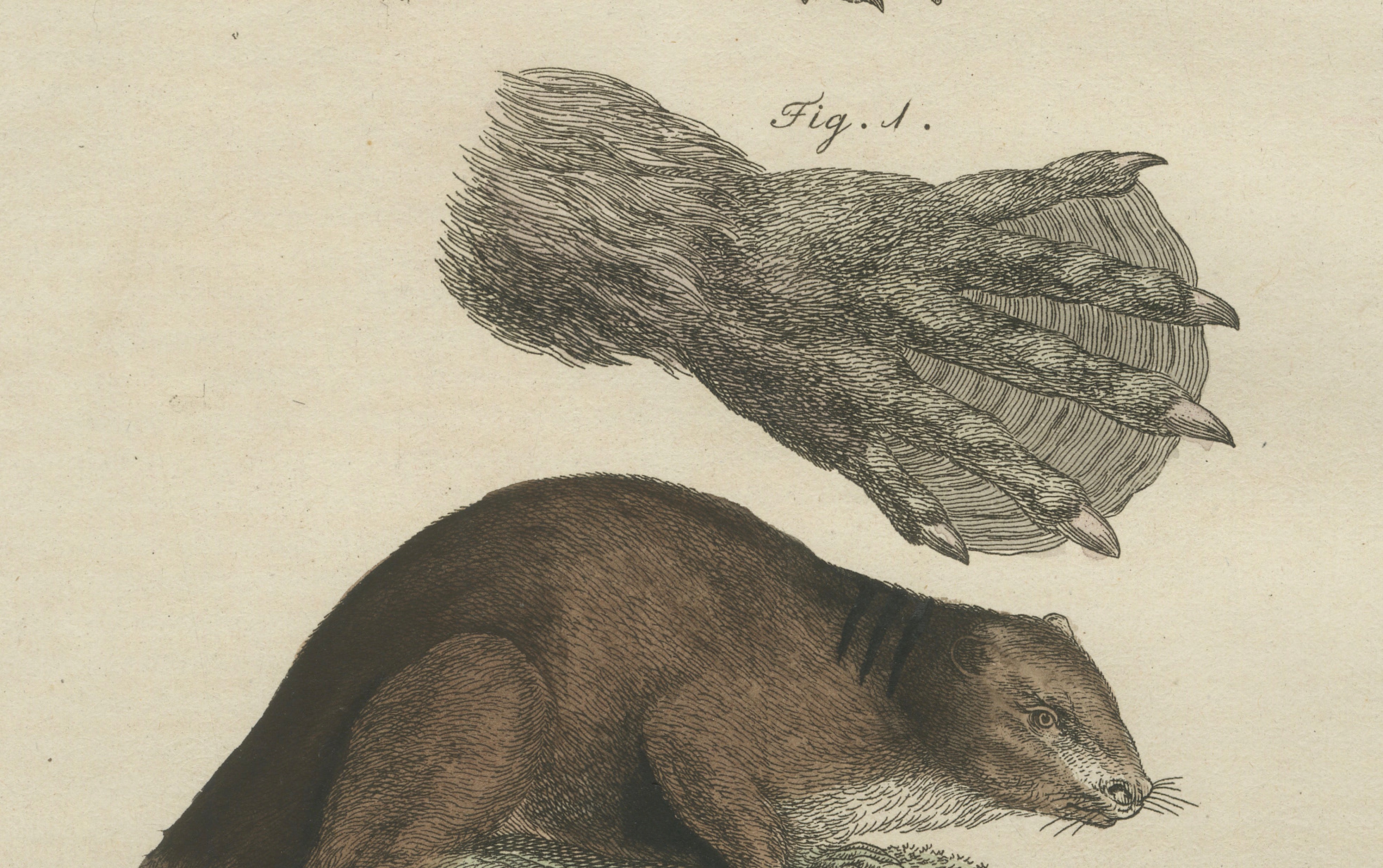
Fig. 1 – Webbed Hind Foot
The large anatomical study above the animal shows the beaver’s powerful hind foot.
The toes are connected by broad webbing, creating an efficient paddle that helps propel the animal through the water. This adaptation makes the beaver an exceptionally capable swimmer.
Fig. 2 – Front Paw
The smaller upper study illustrates the front foot or paw.
Unlike the strongly webbed hind feet, the beaver’s front paws are smaller and remarkably dexterous. They are used for digging, manipulating branches and vegetation and handling food and building materials.
The Beaver’s Extraordinary Tail
The beaver’s broad tail is another remarkable adaptation to its aquatic way of life.
It helps the animal maneuver in water, provides support when sitting or working on land and serves as an important fat-storage organ. Beavers can also slap the surface of the water with their tails as an alarm signal when danger approaches.
The combination of the complete animal with enlarged anatomical details reflects the educational purpose of Bertuch’s Bilderbuch. Readers were not simply shown what an exotic or interesting animal looked like, but were introduced to the particular anatomical adaptations that allowed it to live and behave as it did.
Friedrich Justin Bertuch (1747–1822) was a German publisher, writer and patron of the arts. His monumental “Bilderbuch für Kinder” (Picture Book for Children), first published in Weimar in 1790, became one of the great illustrated educational encyclopedias of the late 18th and early 19th centuries.
Its hundreds of engraved and hand-colored plates introduced readers to animals, plants, geography, science, technology, antiquity and cultures from around the world.
The plate bears a Schmuzer attribution at the lower right and is numbered I.B.28.
This is a particularly appealing natural-history engraving because it combines an atmospheric portrait of the beaver beside water with two unusually large anatomical studies of its feet.
Technique: Original hand-colored copper engraving
Publisher: Friedrich Justin Bertuch / Industrie-Comptoir
Publication: Bilderbuch für Kinder
Place: Weimar, Germany
Date: late 18th century, circa 1792
Plate: Vierfüßige Thiere VIII / Anim. quadrup. VIII / Quadrupèdes VIII
Plate reference: I.B.28
Subject: Beaver with anatomical studies of the feet
Common name: Beaver
Scientific name: Castor fiber / Castor species
Condition:
Good antique condition with overall age-related toning, scattered light foxing and spotting and minor marks and imperfections consistent with its age. Some faint show-through or offsetting from printed text may be visible. The original hand coloring remains attractive, particularly the subtle blue, green and ochre coloring of the water and vegetation. Please study the photographs carefully as they form part of the condition description.
The engraving is loosely inserted in an acid-free matting board.
Please note: This is an original antique hand-colored copper engraving from the late 18th century, not a modern reproduction. The print is sold unframed. Framed images or interior views, if shown, are for presentation and inspiration only.
Other companion animal and natural-history plates from Bertuch’s “Bilderbuch für Kinder” are also available separately.
Keywords: Friedrich Justin Bertuch, Bilderbuch für Kinder, beaver, Eurasian Beaver, Castor fiber, antique beaver print, beaver engraving, beaver anatomy, webbed feet, beaver paw, beaver tail, beaver dam, aquatic mammal, wetland wildlife, animal anatomy, natural history illustration, antique zoology, hand-colored copper engraving, Schmuzer, German engraving, Weimar, 18th century natural history, circa 1792, original antique print