About this sheet
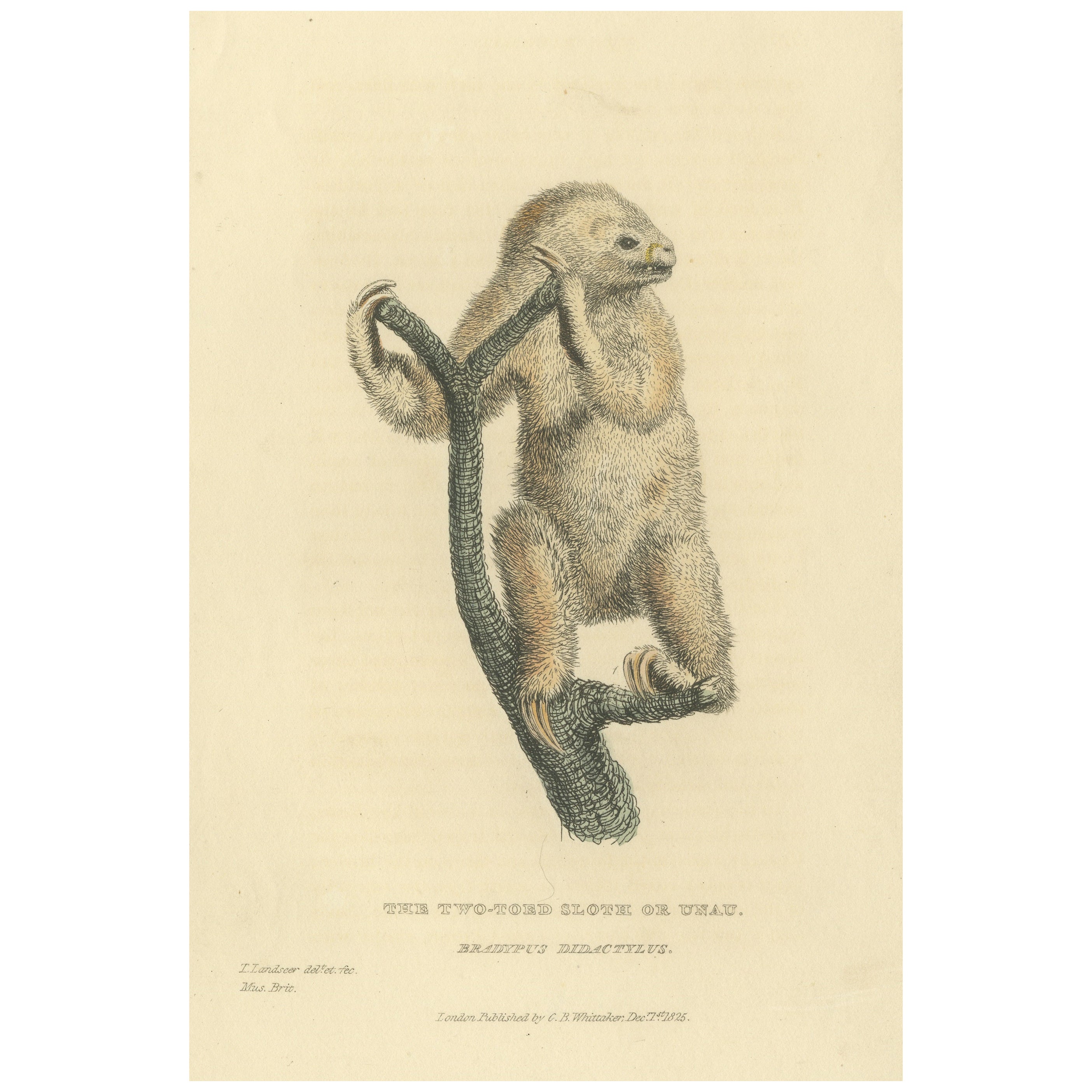
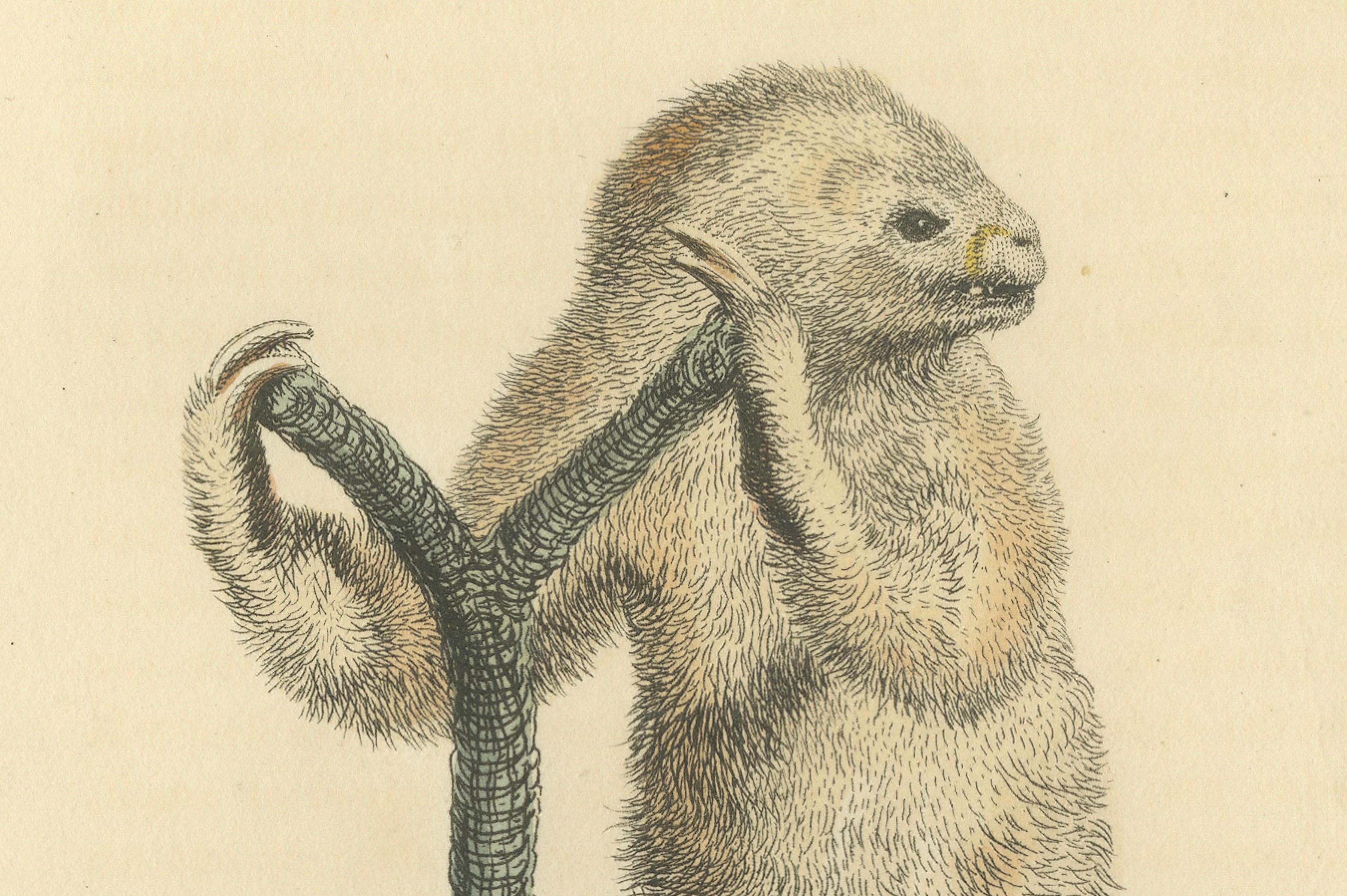
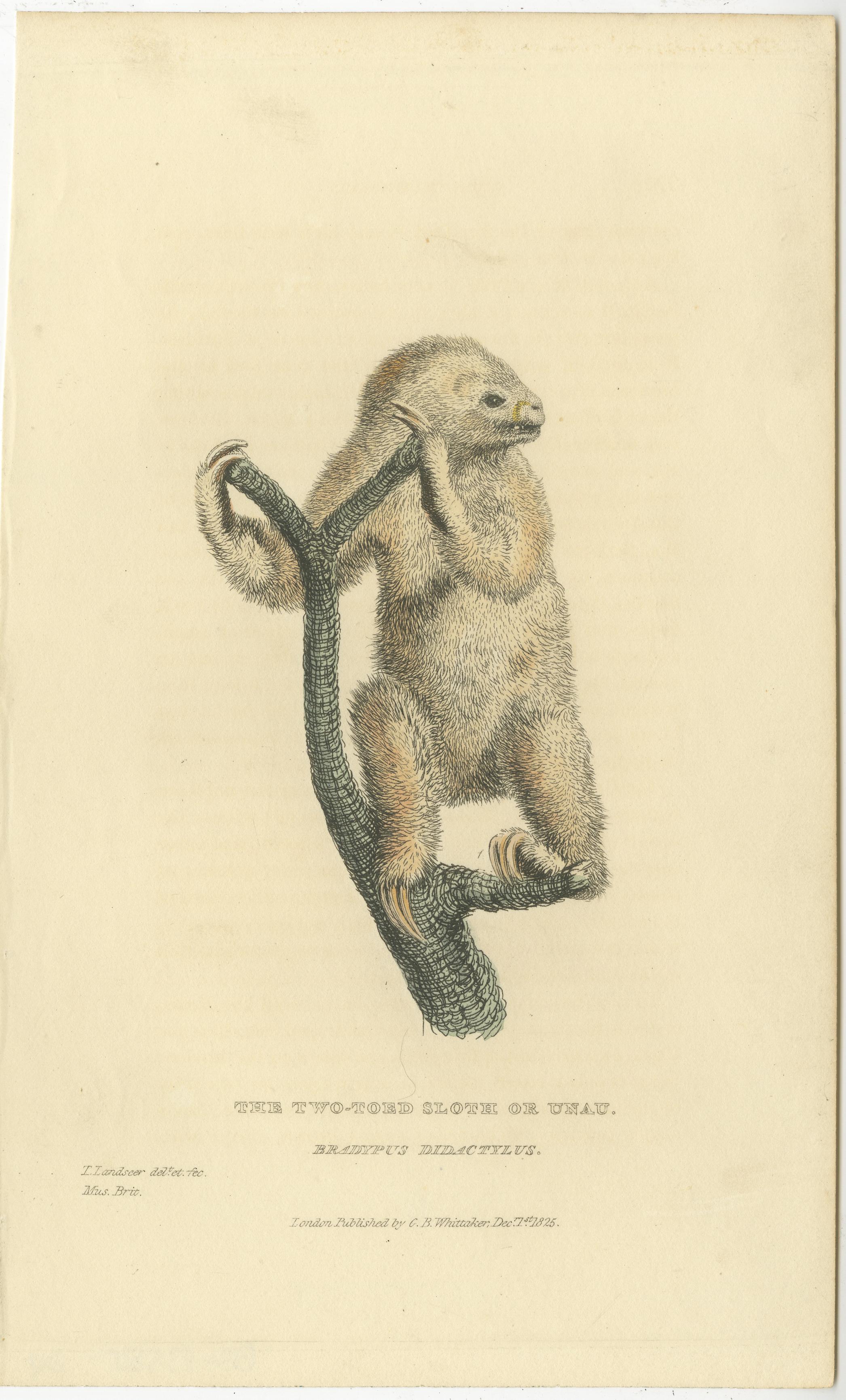
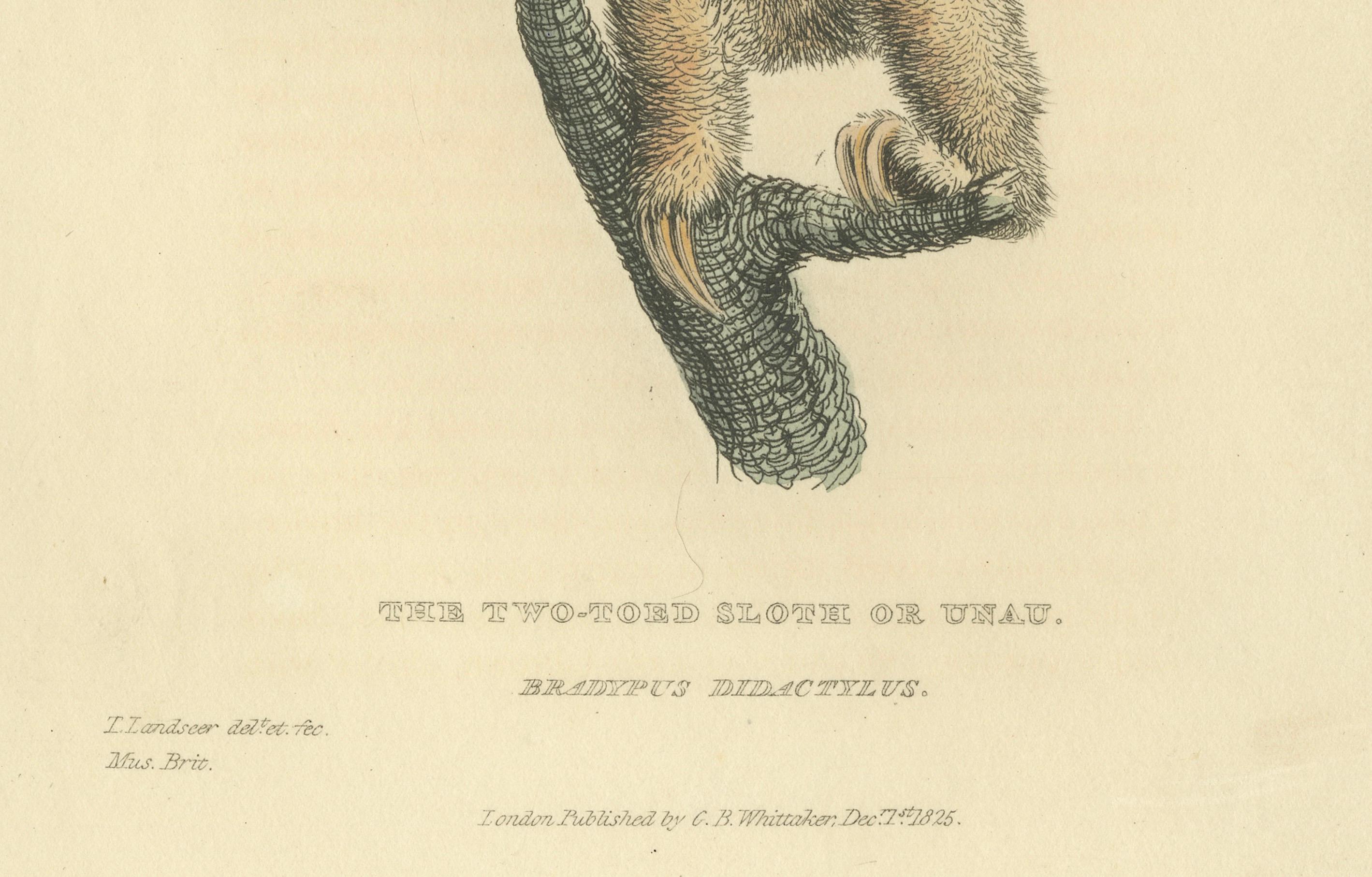
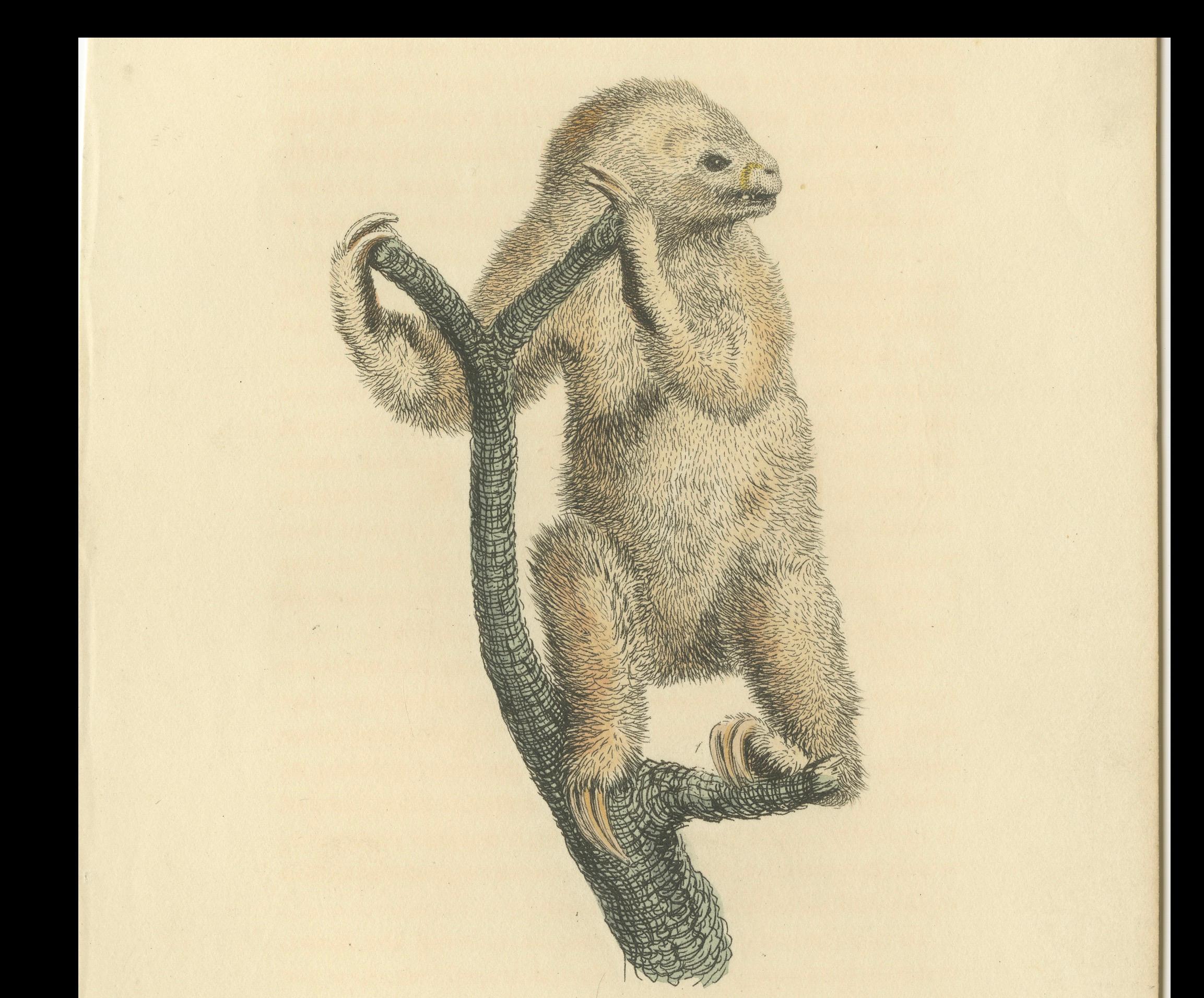
A vintage depiction of Linnaeus's two-toed sloth, labeled as "The Two-Toed Sloth or Unau, Bradypus Didactylus". The sloth is illustrated in a rather detailed manner, clinging to a branch with both of its feet, which is characteristic of its arboreal lifestyle. The print is hand-colored, a common practice in the 19th century to add aesthetic value to printed illustrations.
The image is credited to Charles Hamilton Smith as the illustrator, with the print having been published by G.B. Whittaker in December of 1825. This suggests the print is from an early 19th-century publication, likely intended for scientific education or natural history enthusiasts.
Linnaeus's two-toed sloth, scientifically named Choloepus didactylus, is known for residing in the northern regions of South America, including countries like Venezuela, Suriname, Guyana, French Guiana, Colombia, Ecuador, Peru, and Brazil, specifically in areas north of the Amazon River. Recent findings suggest that its habitat may also extend into Bolivia. It's noted as the largest species of sloth currently in existence, distinguishable by its fewer toes and typically more solitary and nocturnal behavior compared to other sloth species.