Antique Animal Engraving with Sloth, Armadillos and Pangolin – ca.1825
€ 140
One of a kind: this is the sheet in the photographs. Ships from Langweer, the Netherlands.
Date
1825
Sheet size
26.5 × 17.5 cm (10.4 × 6.9 in)
Condition
Good
Reference
BG-13261-116
Condition
Condition Report: This print is in good antique condition with some minor foxing, offset and slight toning consistent with its age. The colors remain vivid and the paper is stable, showing only gentle wear along the edges.
About this sheet
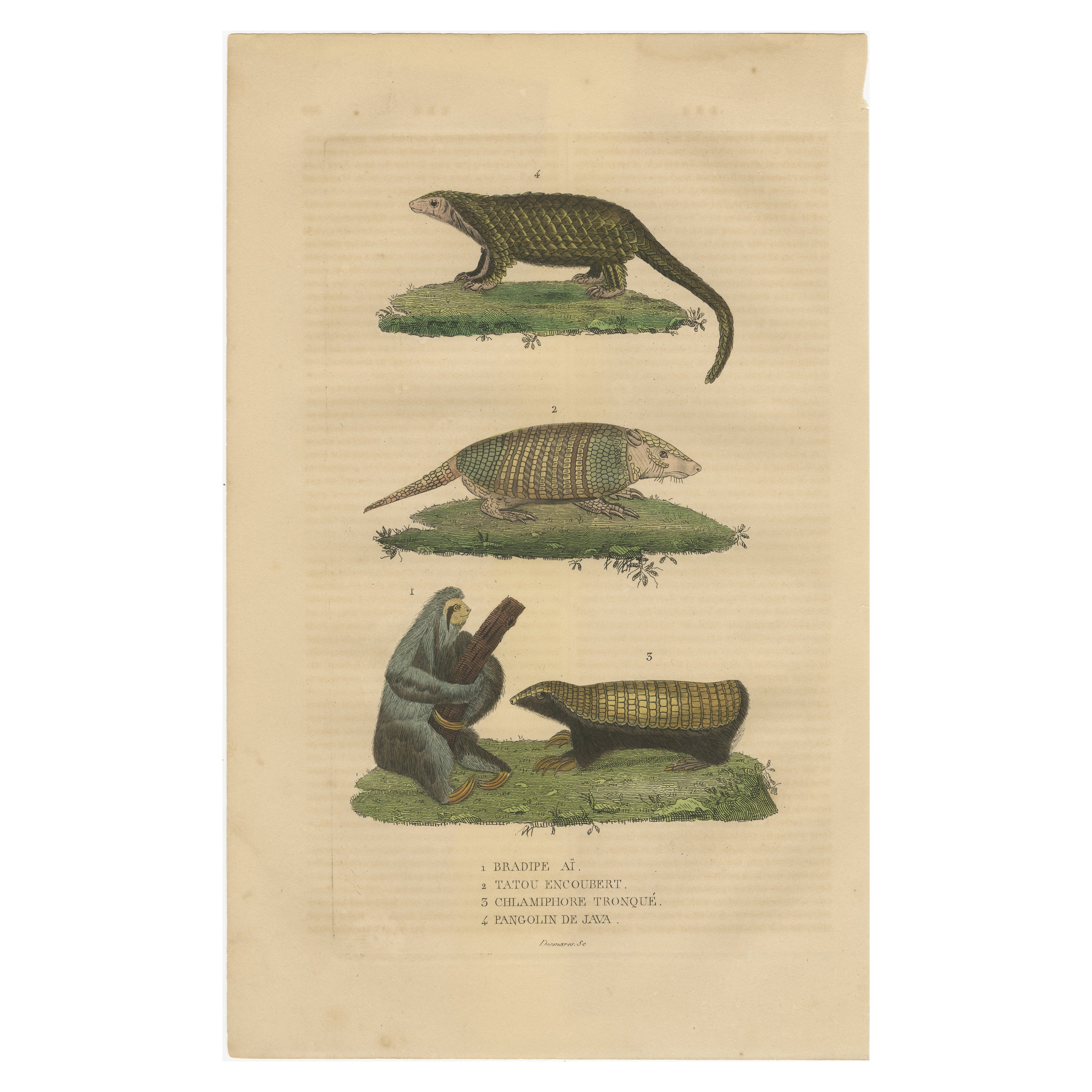
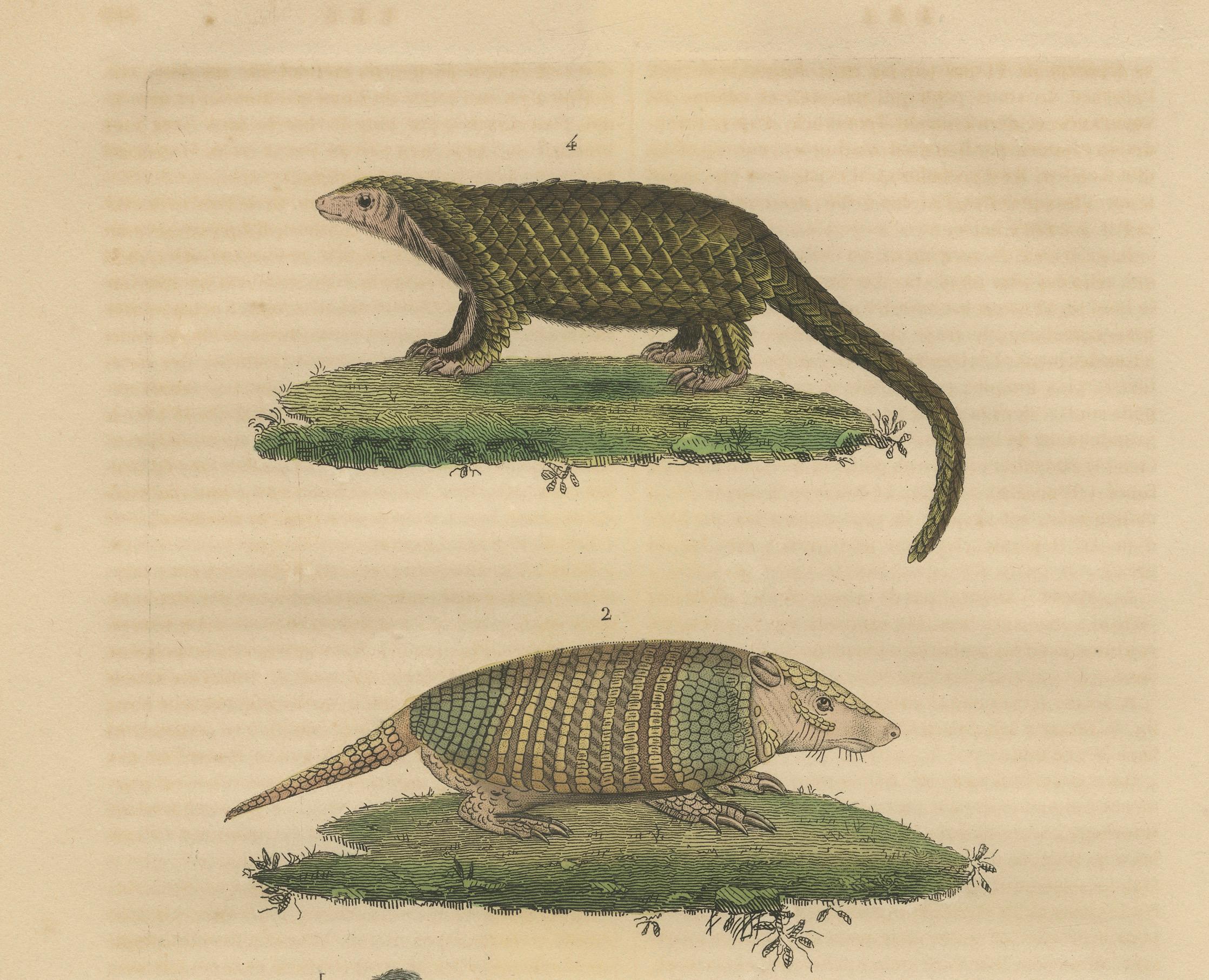
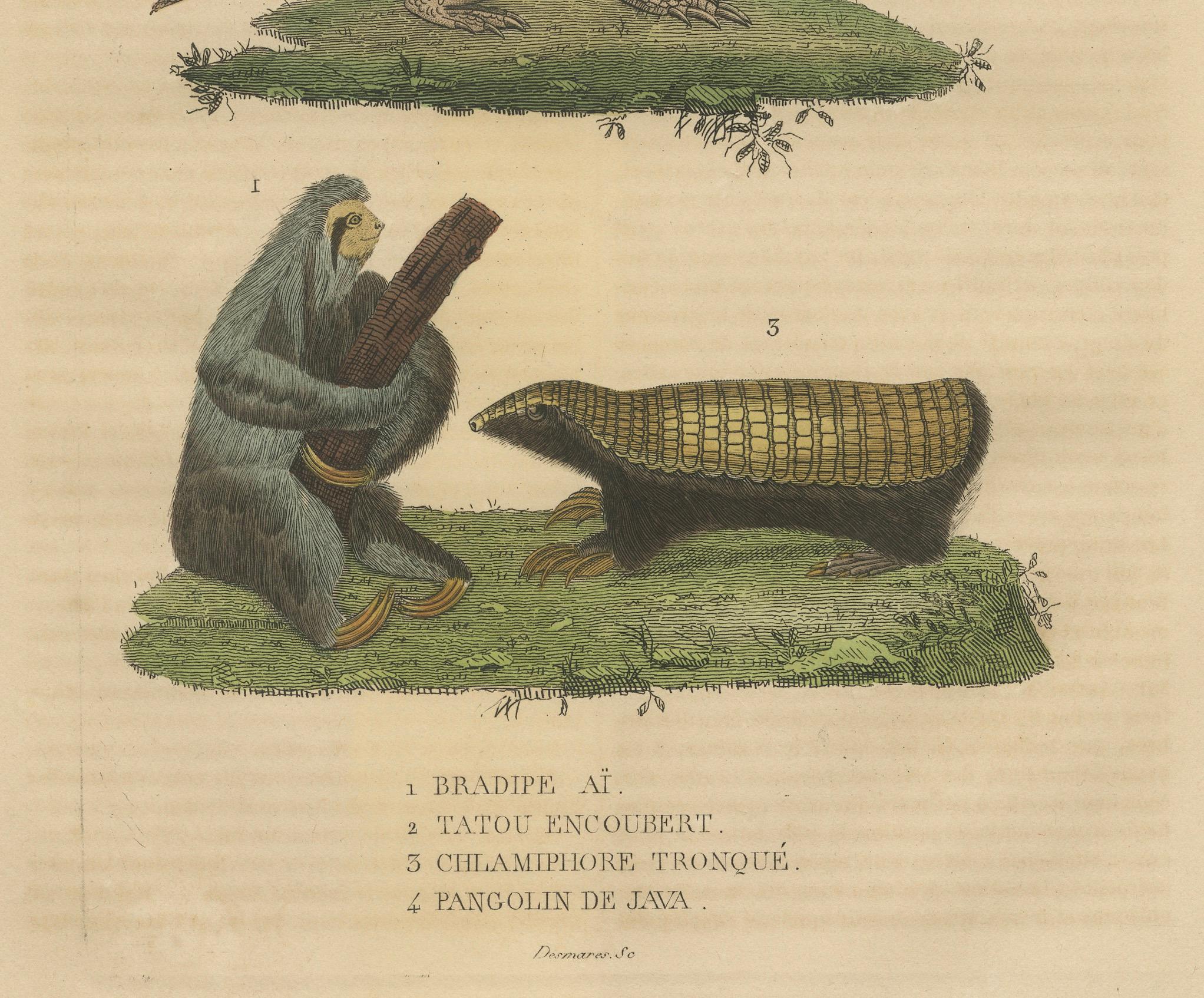
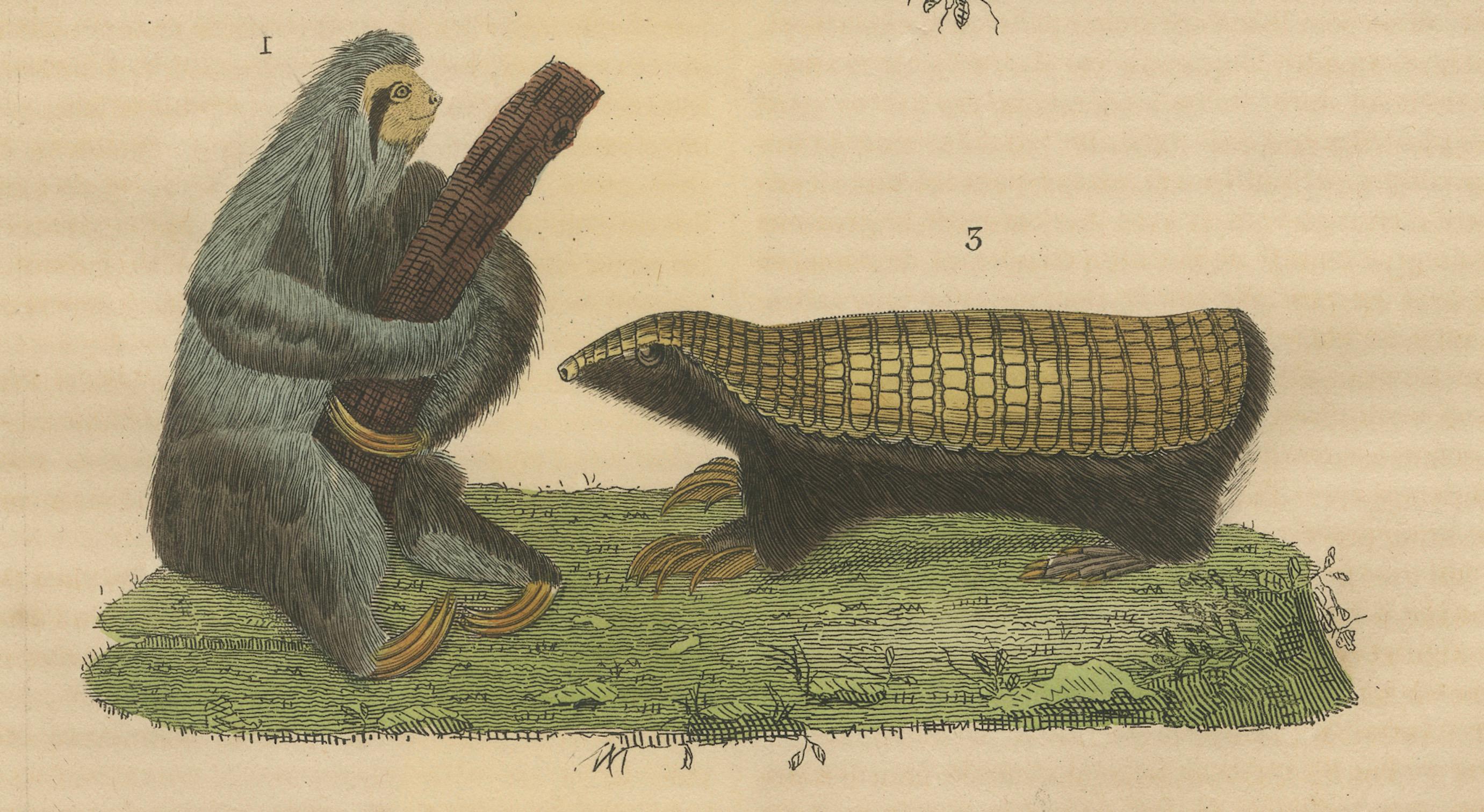
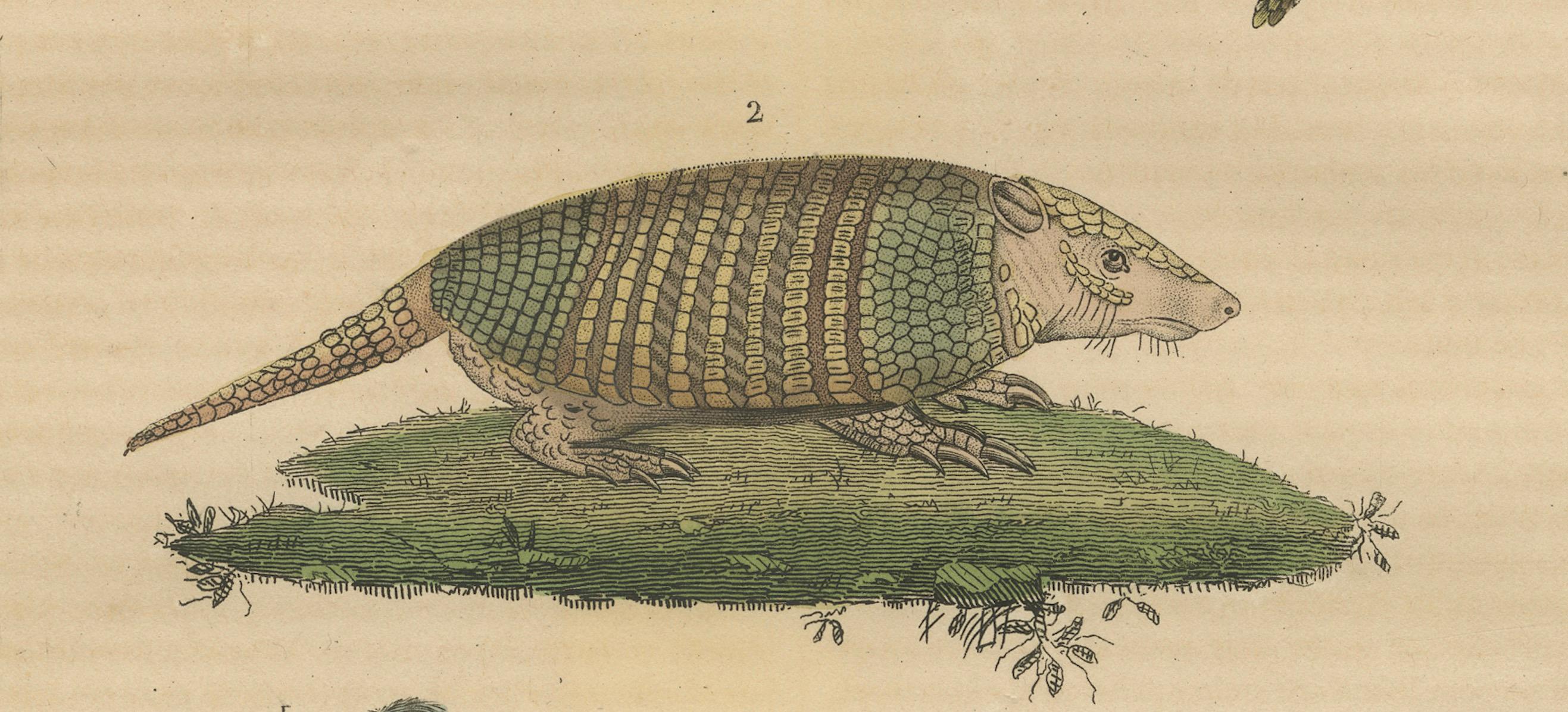
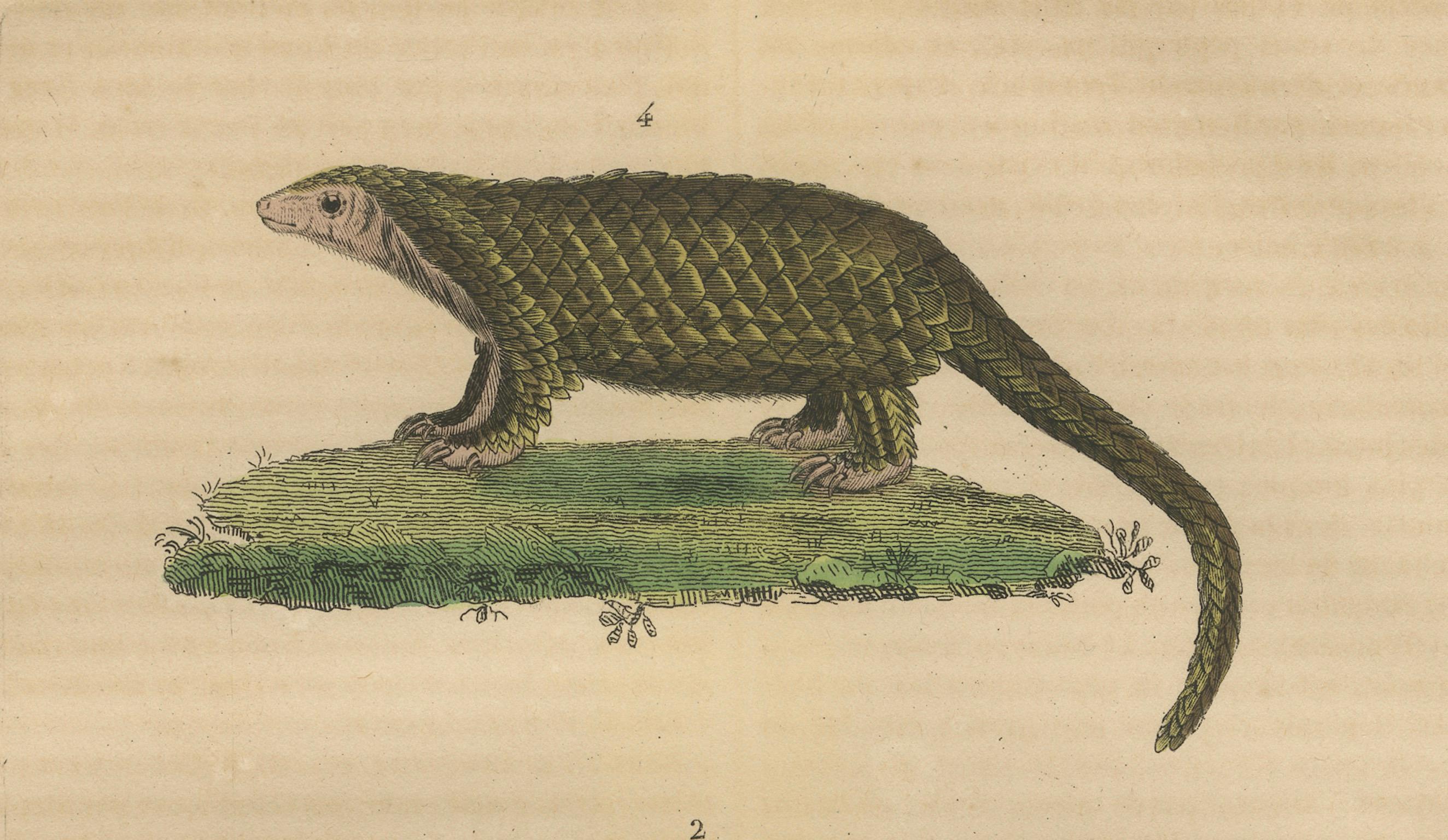
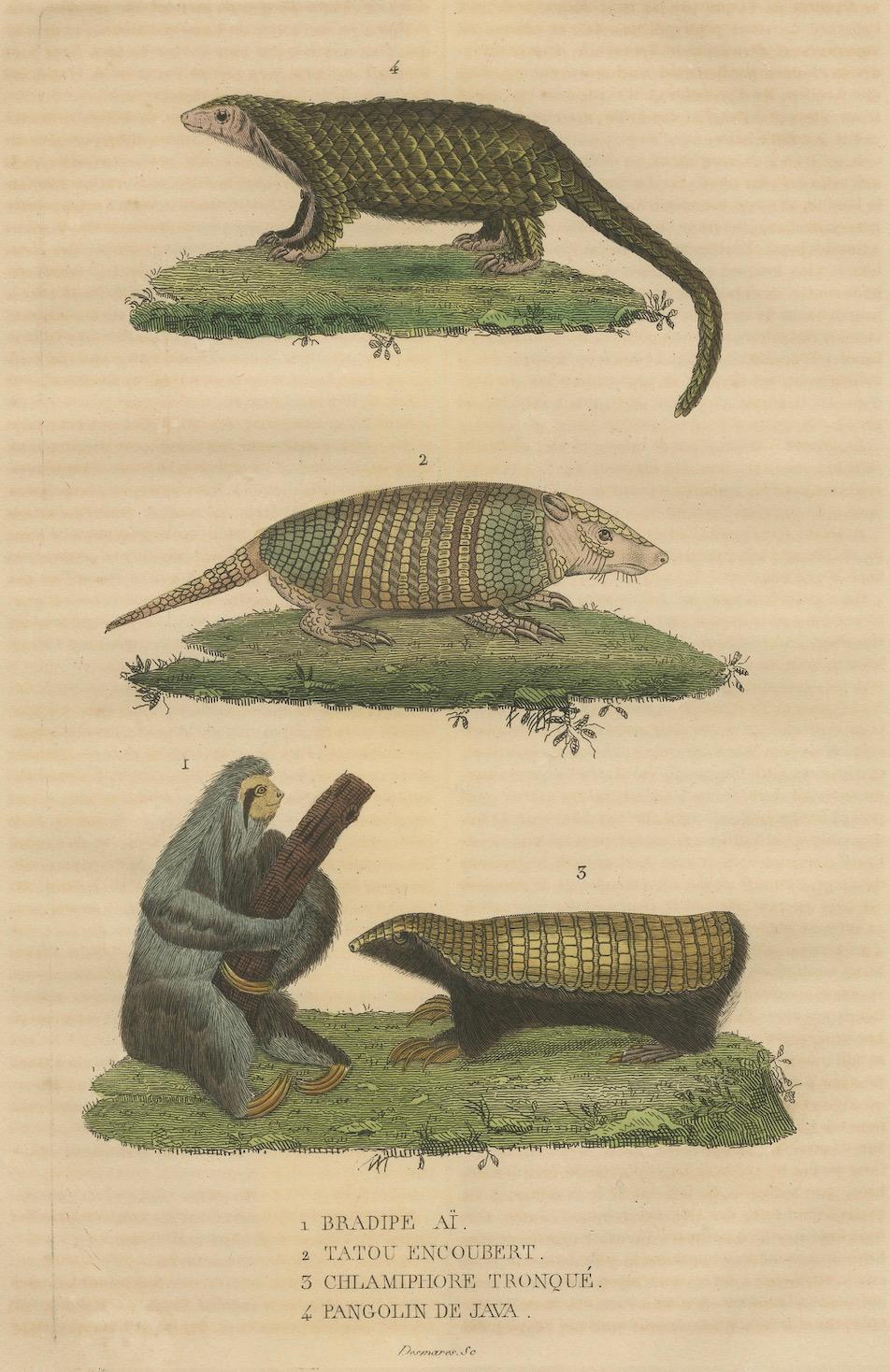
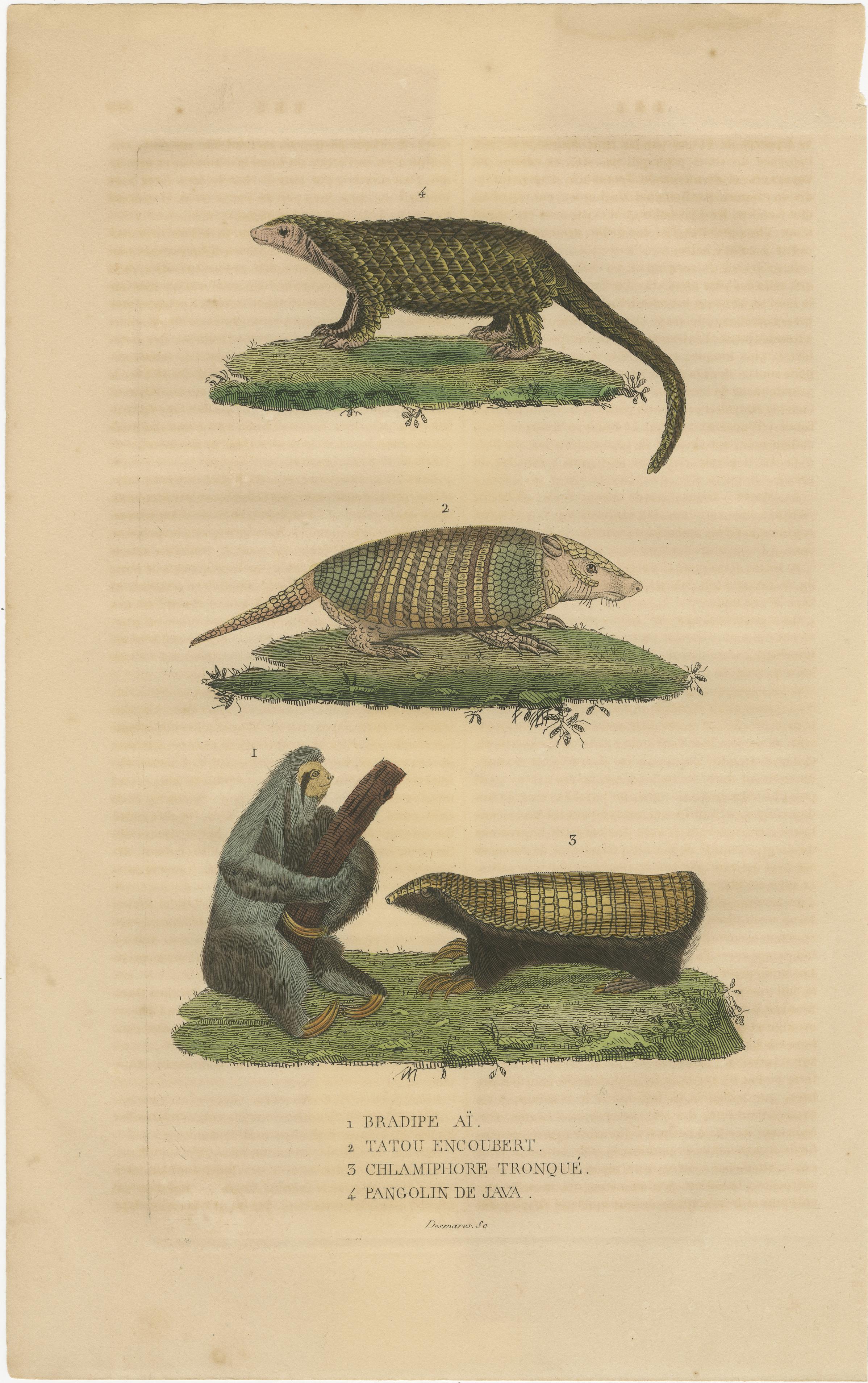
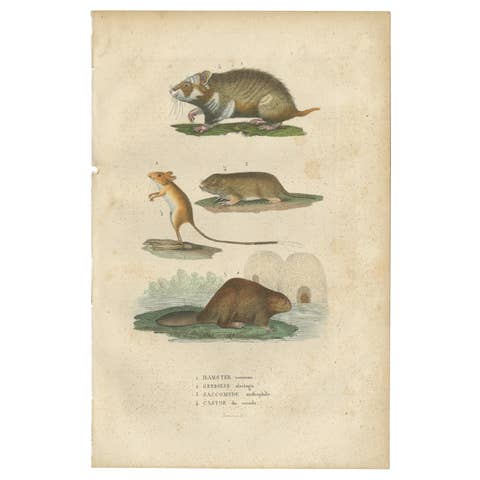
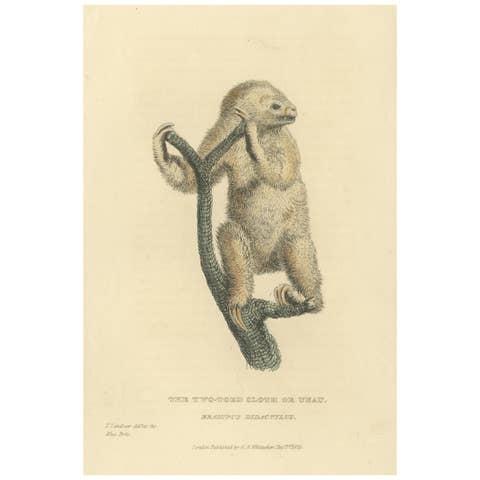
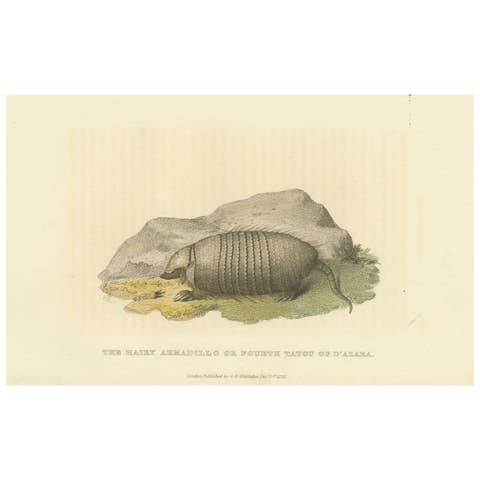
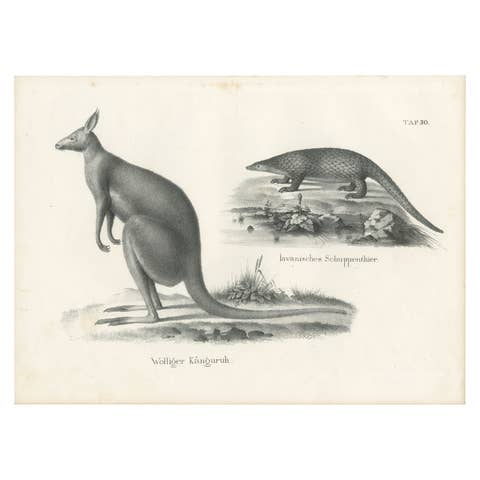
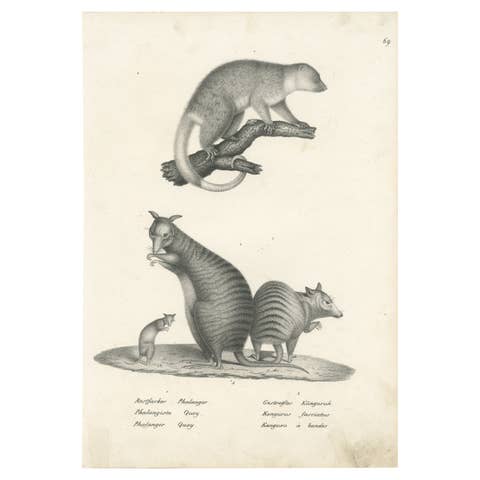
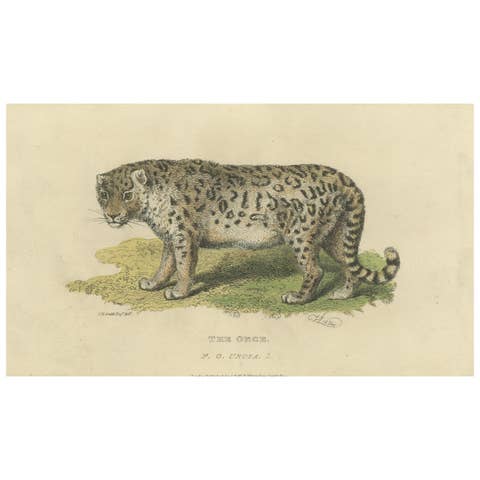
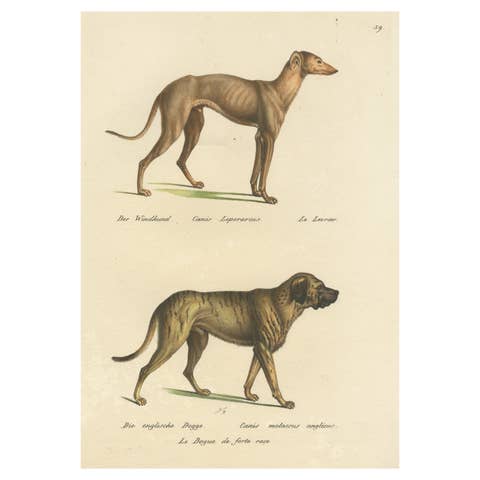
This striking early 19th-century hand-colored engraving captures a fascinating array of exotic animals, meticulously rendered in delicate detail. The print features four intriguing species: the Bradype Ai (sloth), Tatou Encoubert (armadillo), Chlamyphore Tronqué (pichiciego or truncated armadillo), and Pangolin de Java (Javan pangolin). The composition’s artistry and scientific precision reflect the era’s growing passion for natural history illustration and the exploration of global fauna.
This engraving was created for the renowned natural history publications of the time, likely from works influenced by Buffon or other naturalists whose texts and illustrations captivated European audiences. Each animal is posed gracefully upon a green patch of grass, with botanical elements and soft earth tones providing a naturalistic setting. The animals themselves are beautifully hand-colored, with vibrant greens, warm browns, and golden accents highlighting the unique textures of their fur, scales, and armor.
Collectors and enthusiasts of natural history will be drawn to this engraving not only for its aesthetic appeal but also for its historical significance. The detailed representations of these animals offer a glimpse into the early 19th-century scientific curiosity that helped shape modern zoological studies. These prints were integral in making the natural world accessible to a broader public, fostering a deeper appreciation for biodiversity.
Condition Report: This print is in good antique condition with some minor foxing, offset and slight toning consistent with its age. The colors remain vivid and the paper is stable, showing only gentle wear along the edges.
Tips for Framing: Enhance this natural history print with a simple wooden frame in natural oak or walnut for a warm, classic look. A cream or light green mat will complement the earthy tones and highlight the delicate hand coloring, ensuring this charming engraving remains a captivating focal point in your decor.