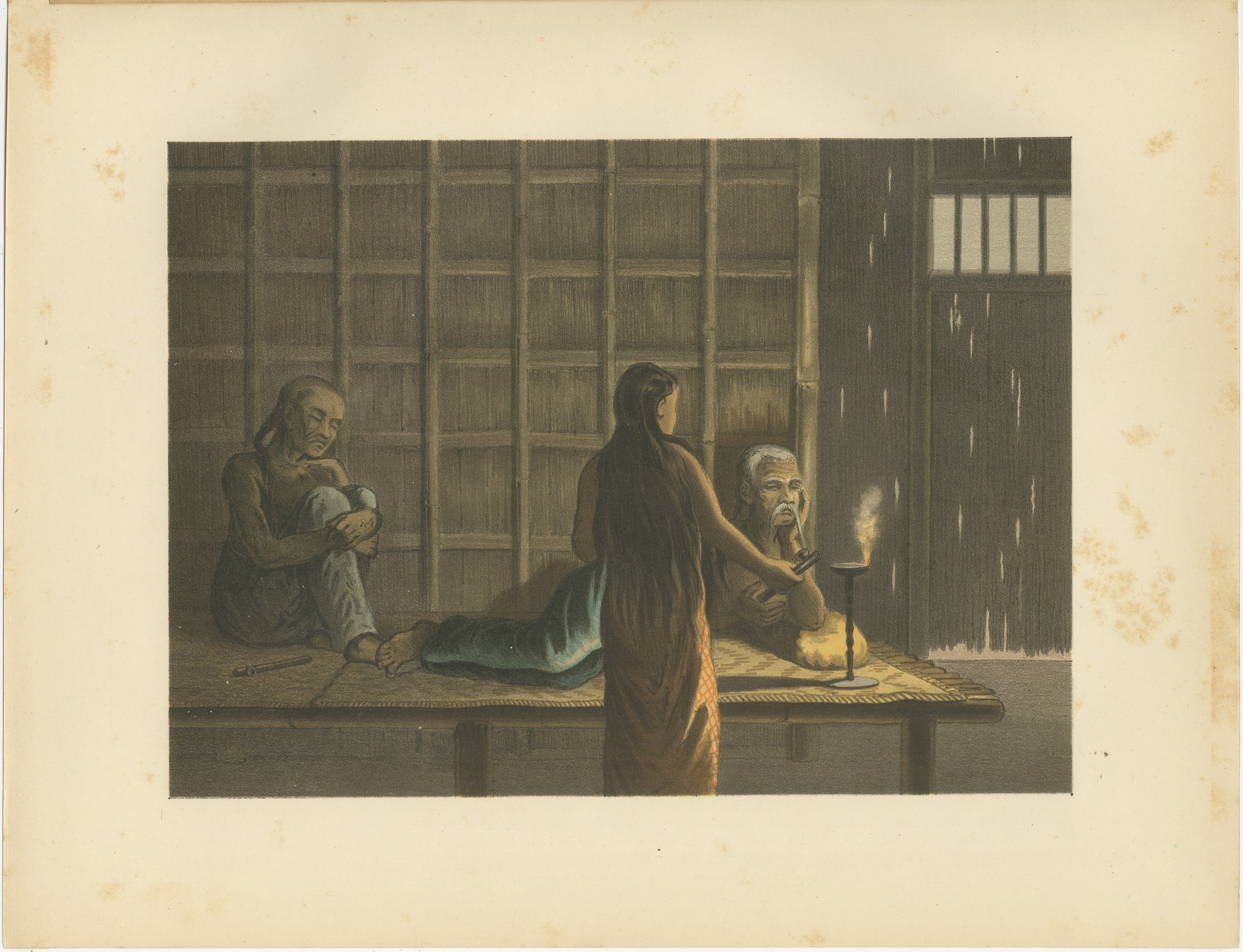
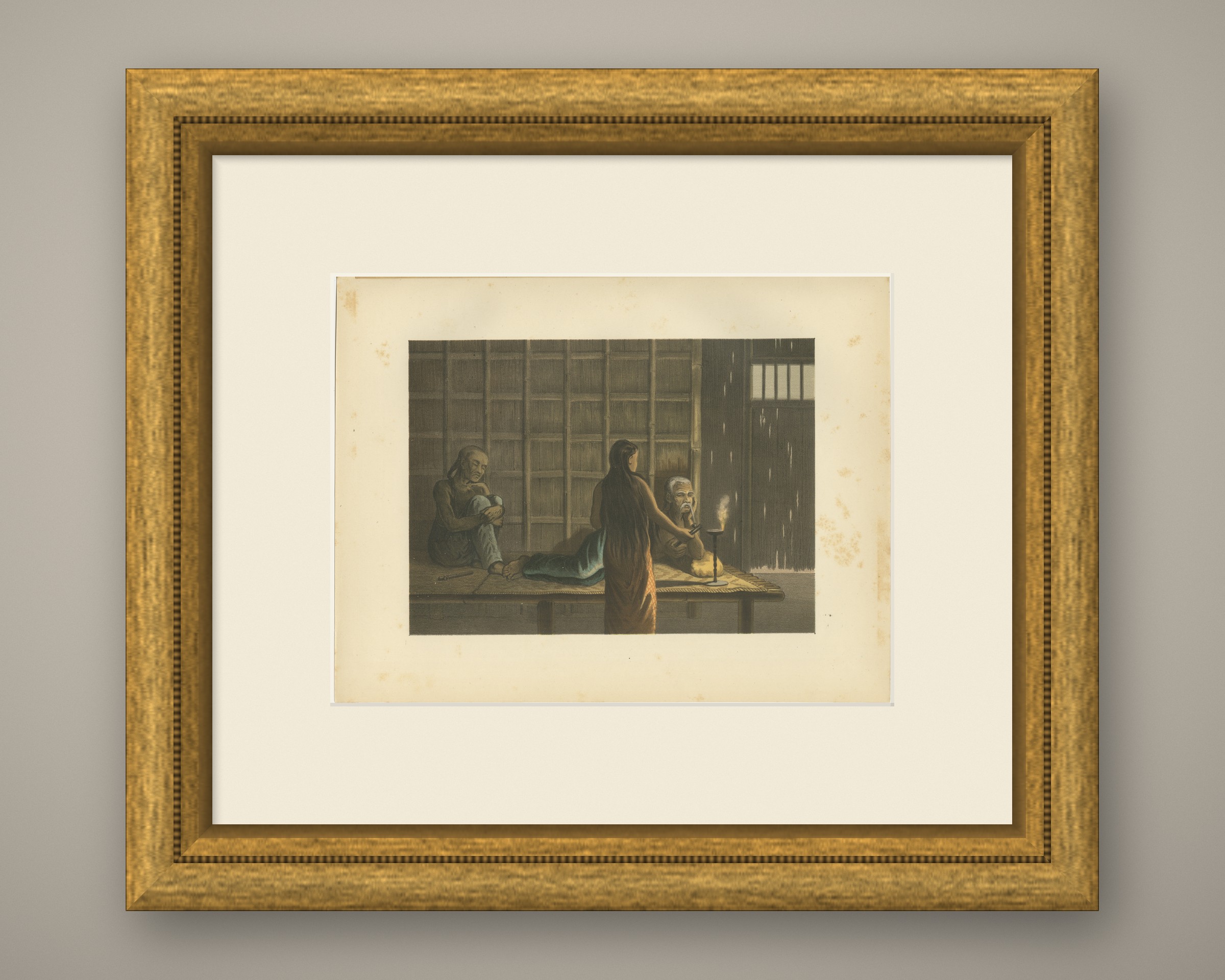
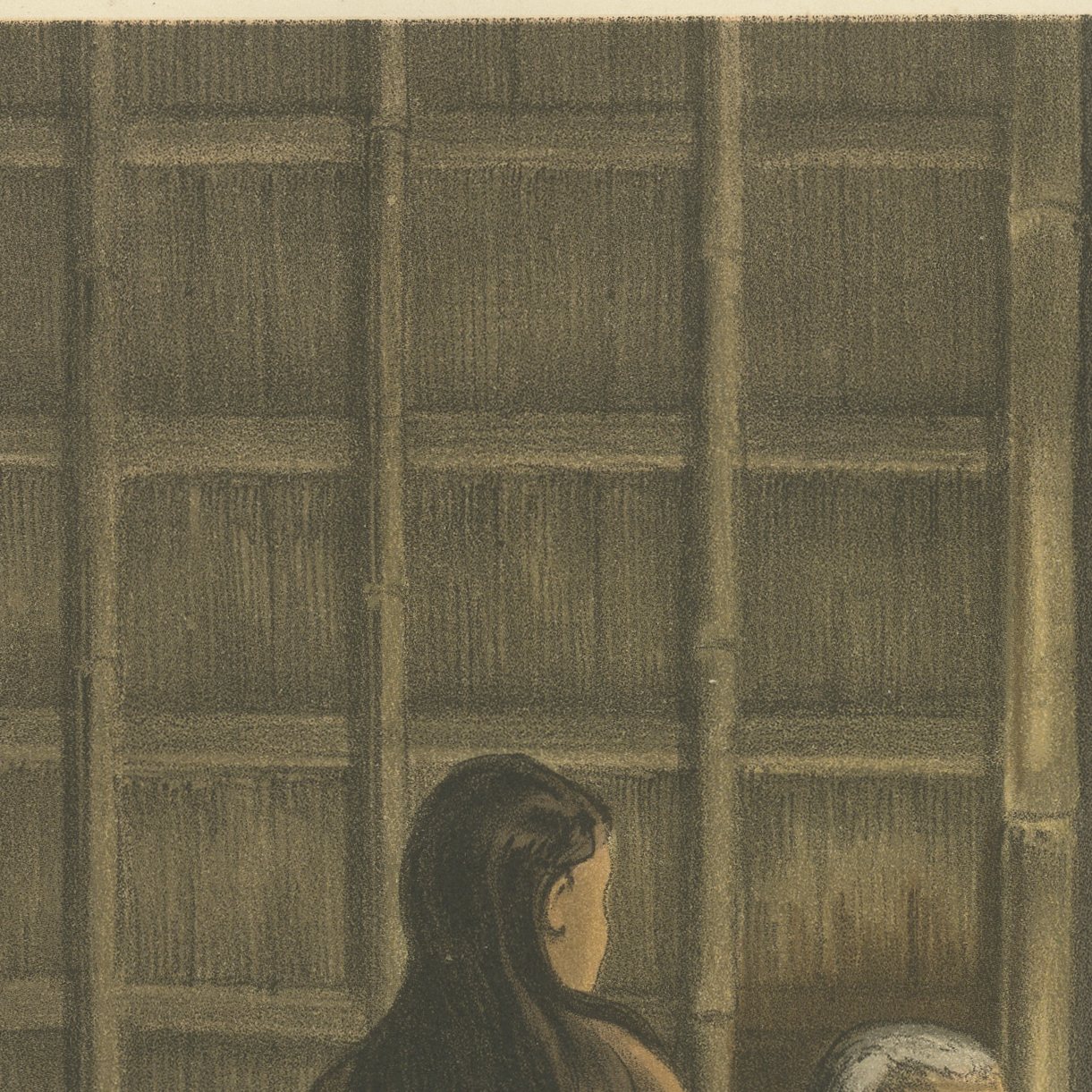
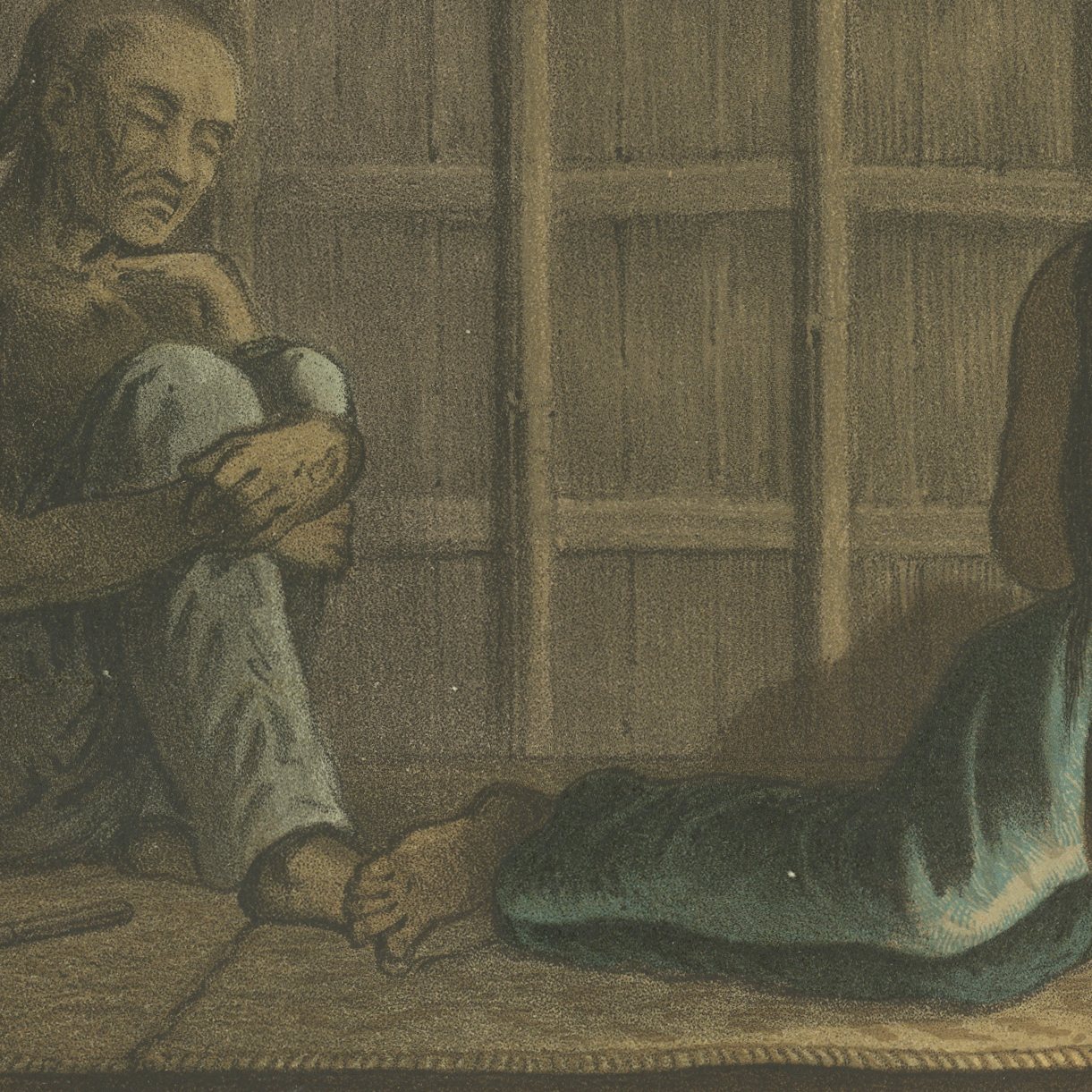
Inside a Javanese Opium Den, Antique Print, Rappard, 1888
US$318
Original antique · The actual sheet photographed · Certificate of authenticity on request · Sold unframed · Worldwide shipping from € 15 (rates)
Date
1888
Mapmaker / artist
Jonkheer Josias Cornelis Rappard
Publisher
A. W. Sijthoff, Leiden
Technique
Chromolithograph
Coloring
Printed color
Sheet size
24.5 × 32 cm (9.6 × 12.6 in)
Condition
Good
Reference
BG-14425-2-14
What the condition grades mean
Excellent
Bright and clean, with no faults worth mentioning.
Very good
Only light signs of age, such as faint toning.
Good
Normal signs of age for a sheet of this period: toning, some foxing, small marks or neat old repairs.
Fair
Clear faults such as staining, tears or repairs, priced to match.
Every fault we see is written in the condition note, and the whole sheet is shown uncropped in the photos.
Condition
Moderate overall age toning, with light brown spotting and soft tide marks in the blank margins.
About this sheet
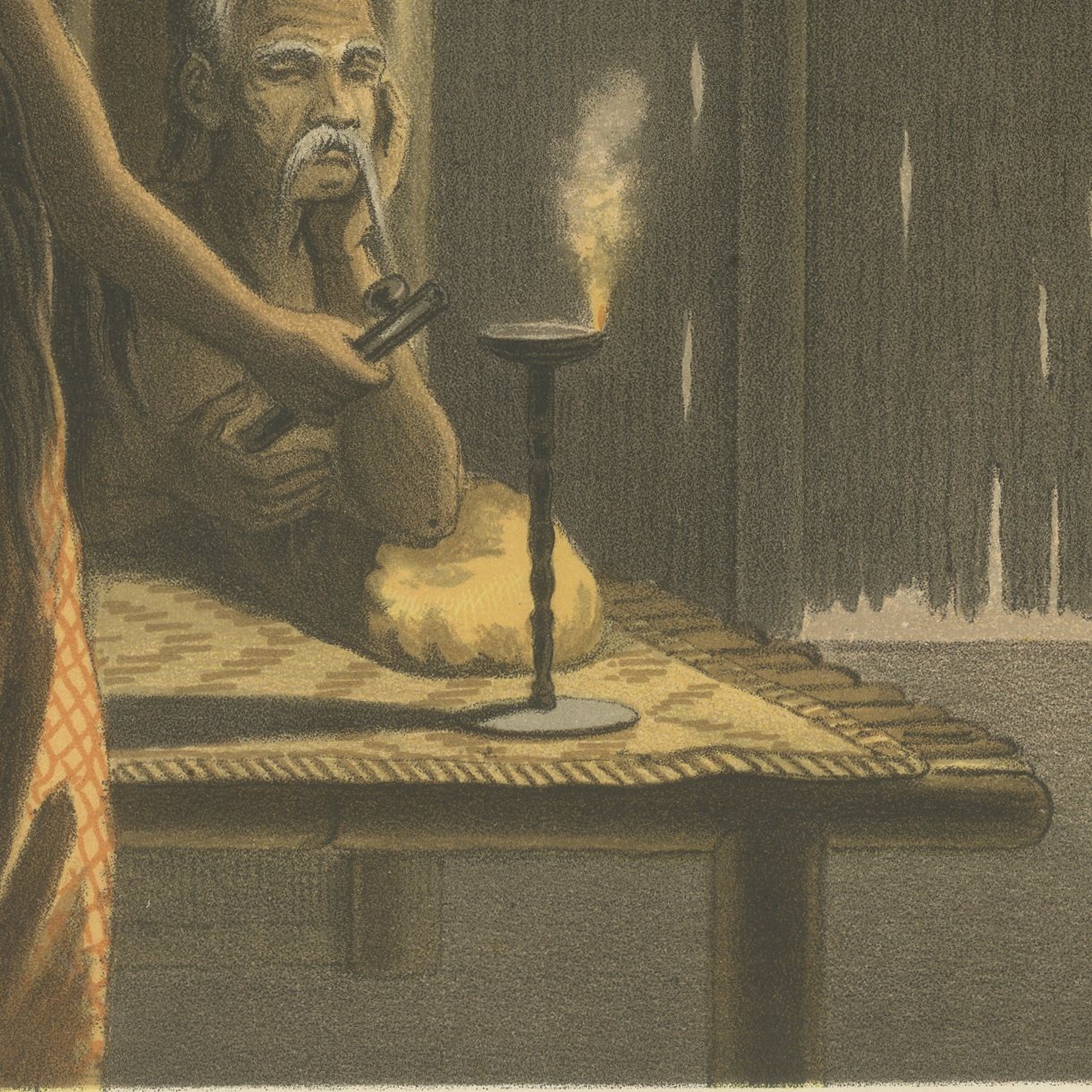
An original antique color lithograph of smokers in an opium den at night, drawn by Jonkheer Josias Cornelis Rappard and published at Leiden by A. W. Sijthoff in 1888. Two men lie on a low wooden platform in a dark timber room, one propped on an elbow holding a pipe over a small lamp whose flame is the only light, a third figure sitting back in the shadow.
Het Kamerlid van Berkenstein in Nederlandsch-Indie was Perelaer's attempt to show the Dutch public what their colony actually looked like. Published by A. W. Sijthoff at Leiden from 1888, it follows a member of parliament on a tour of the archipelago, and the story is really a frame for the hundred and seven plates after Jonkheer Josias Cornelis Rappard that fill the two volumes. His watercolors were worked up into color lithographs for this book, printed with a softness that suits the heat and light of Java.
Opium was a government monopoly in the Dutch East Indies and a central fact of its finances. Printed as a color lithograph, the sheet carries its color from the stone rather than from a brush, which is why the tints are even and the drawing stays crisp. The process was at its height in the Netherlands in the eighteen eighties, and Sijthoff used it here to reproduce watercolors without losing their atmosphere.
Moderate overall age toning, with light brown spotting and soft tide marks in the blank margins.
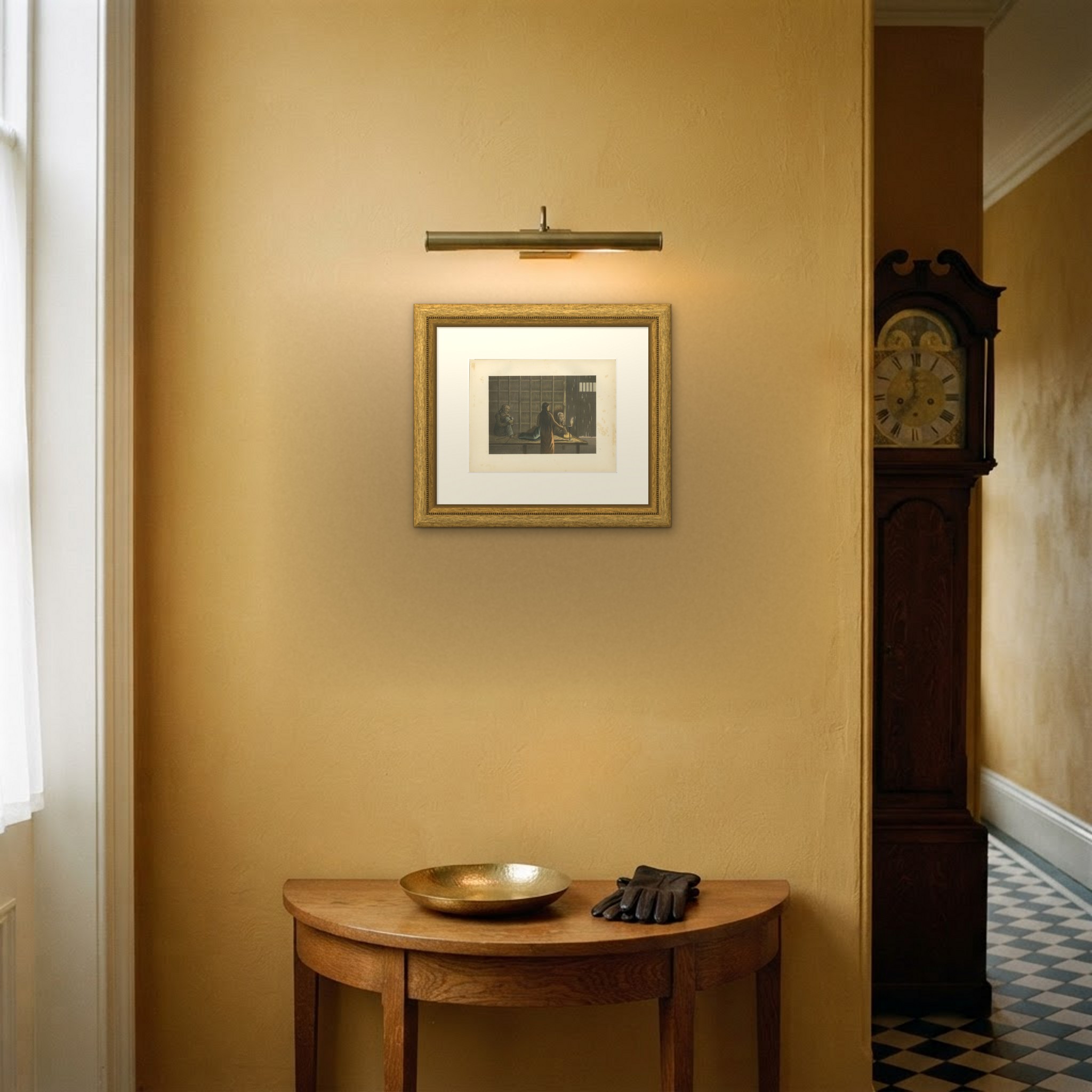
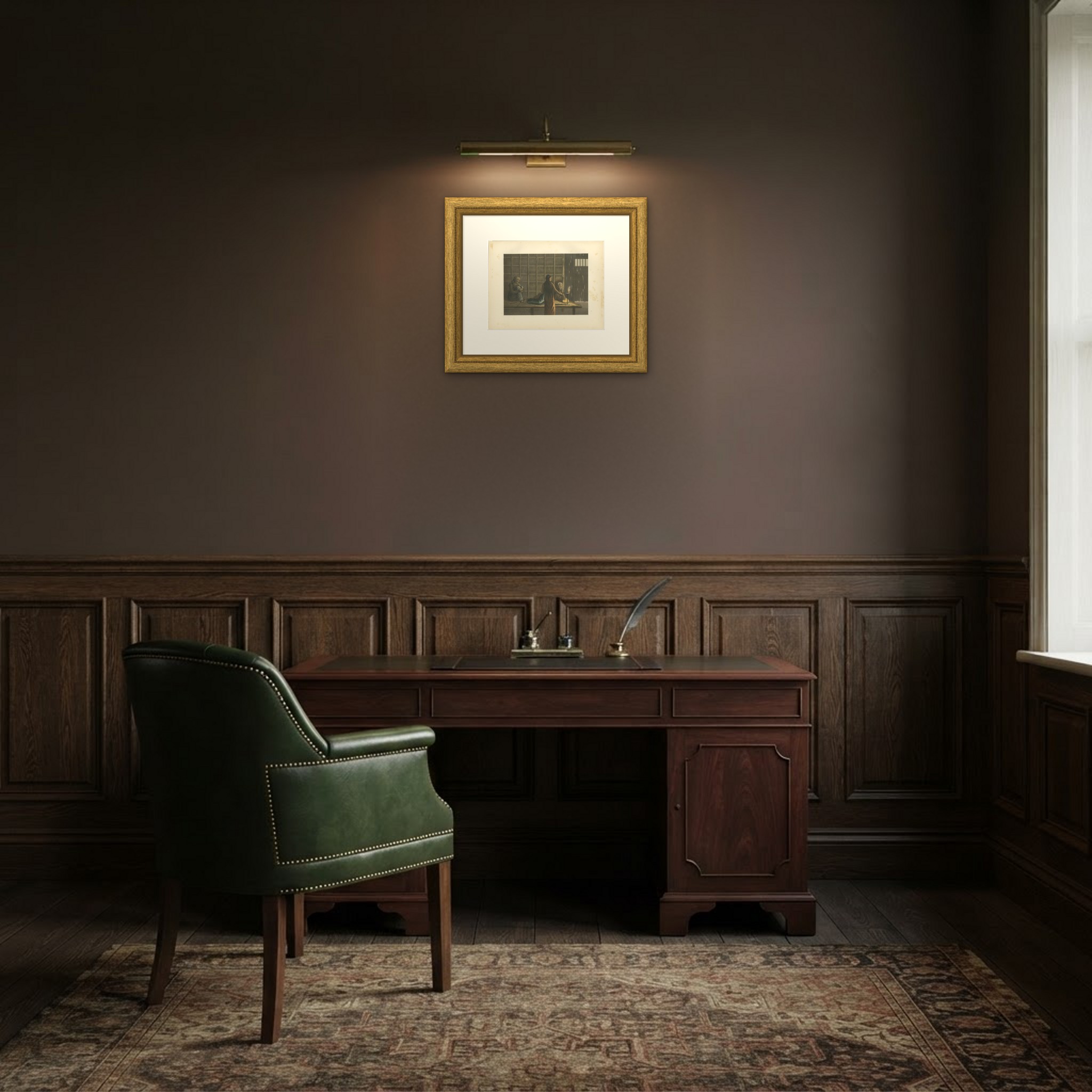
A sheet of this size suits a narrow frame and a generous mat, and looks its best where there is daylight but no direct sun. This is an original antique print, not a modern reproduction. This item is sold unframed. Any framed or interior images are shown for presentation and inspiration only, unless the listing explicitly states that the item is sold framed.