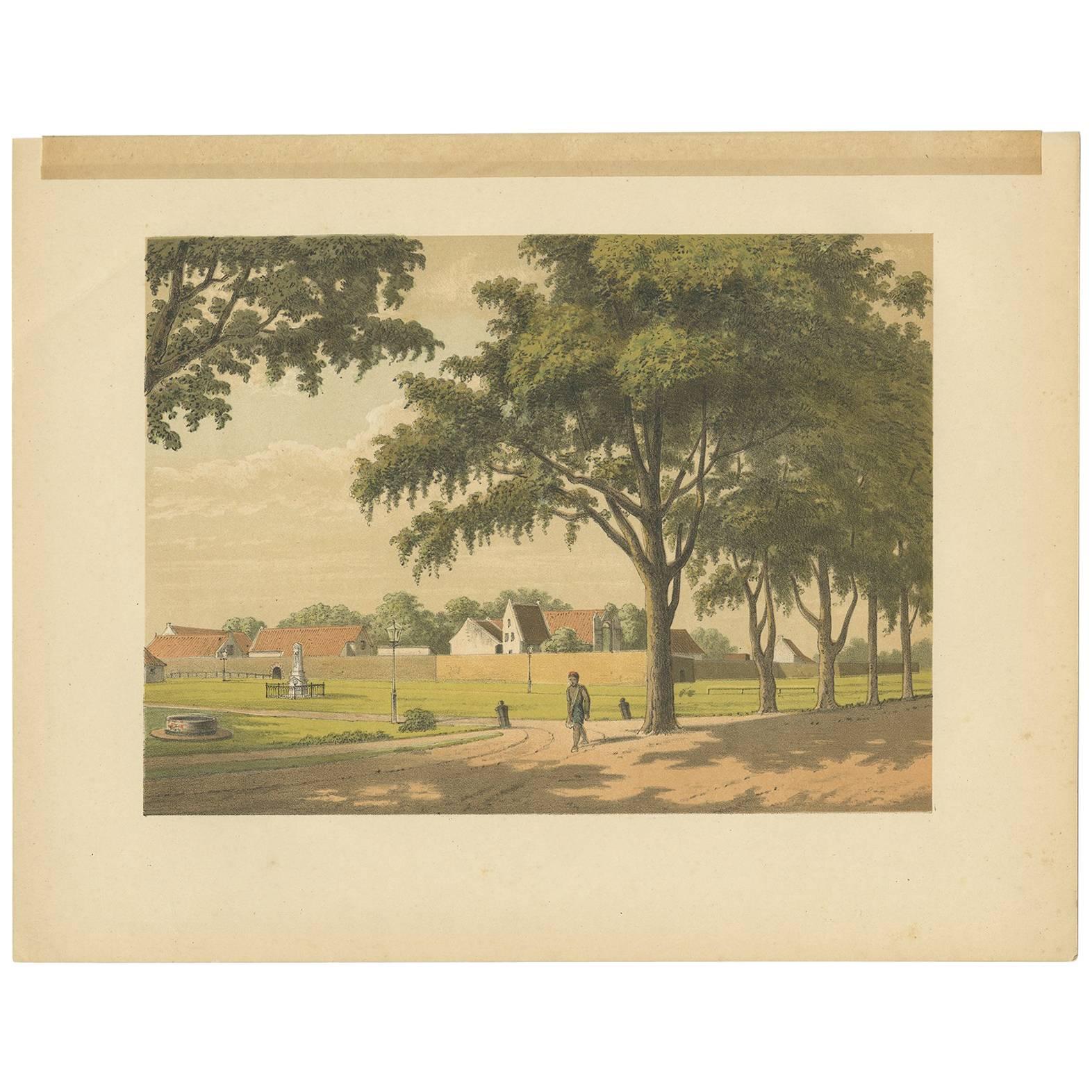
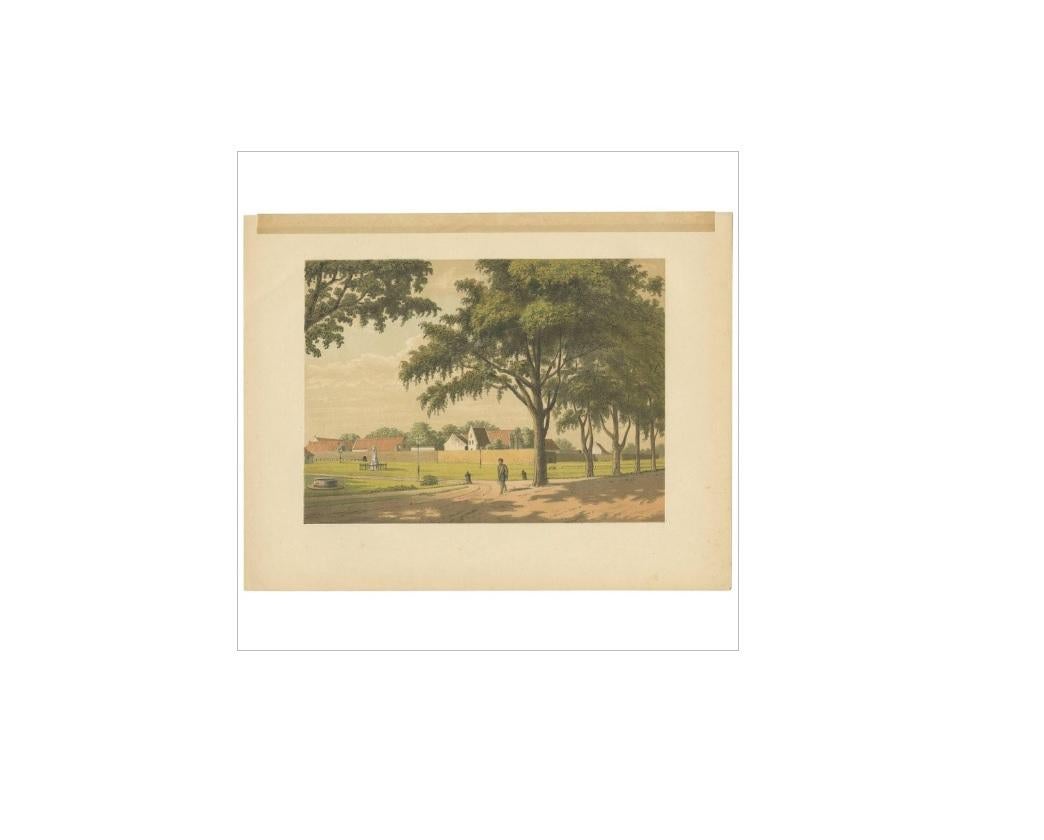
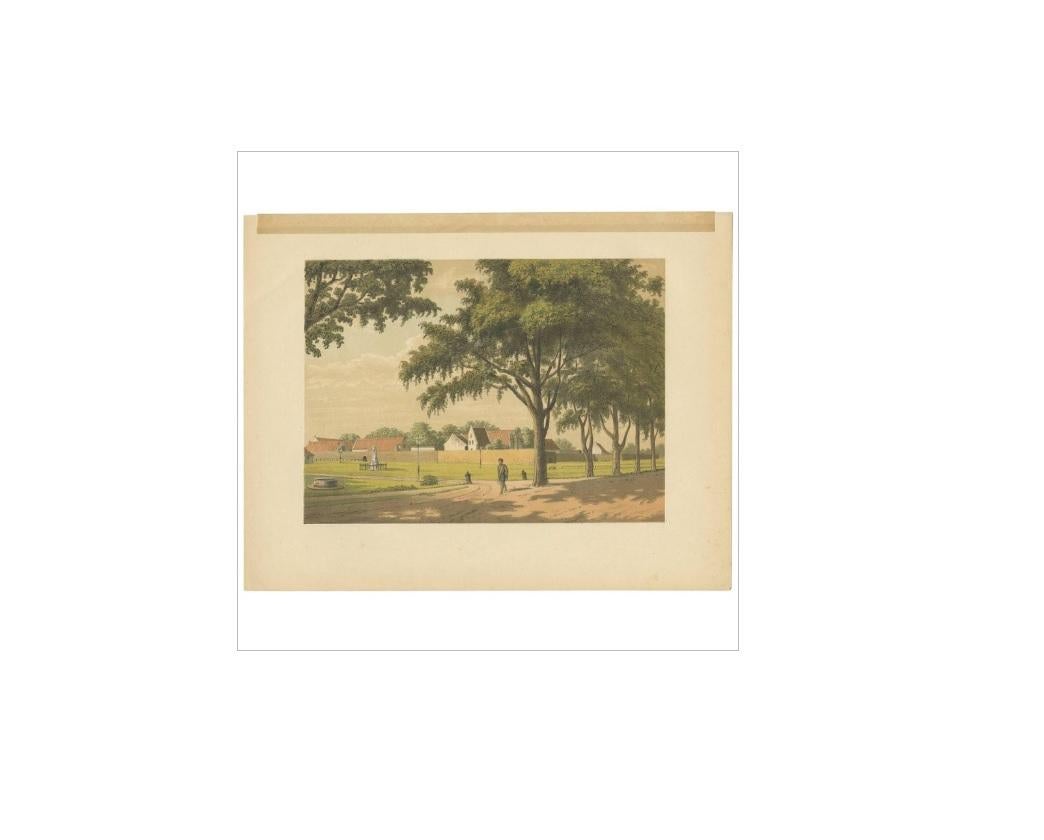
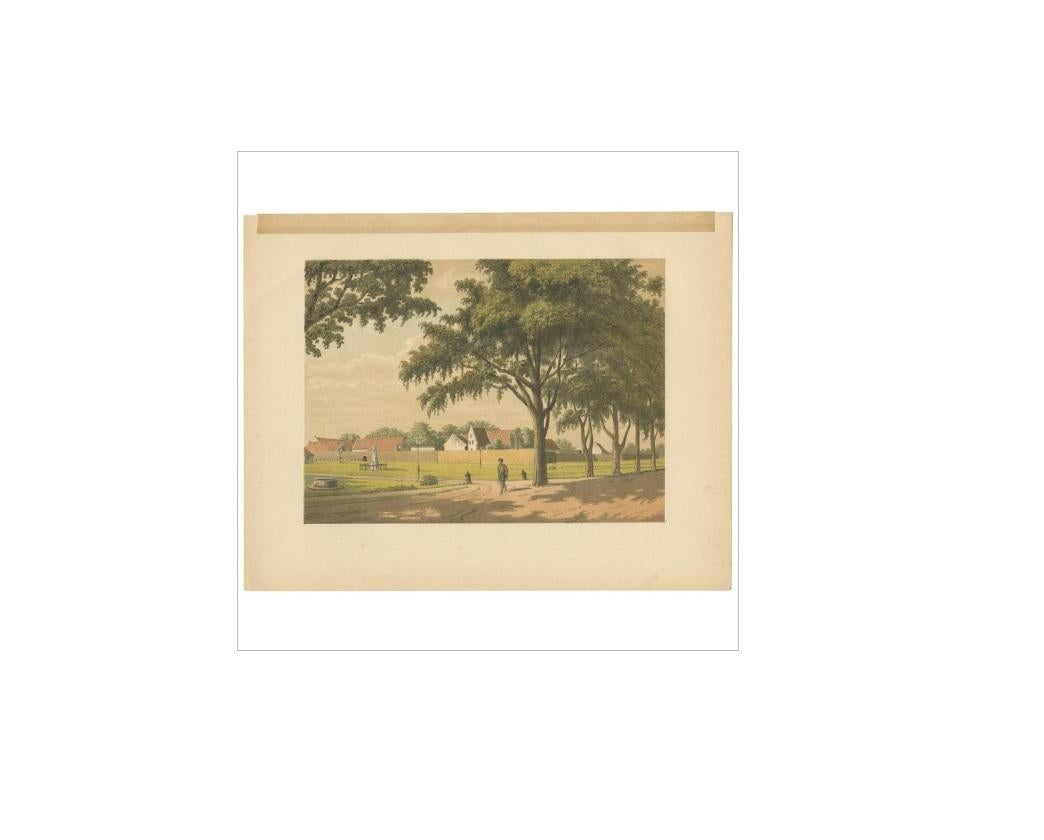
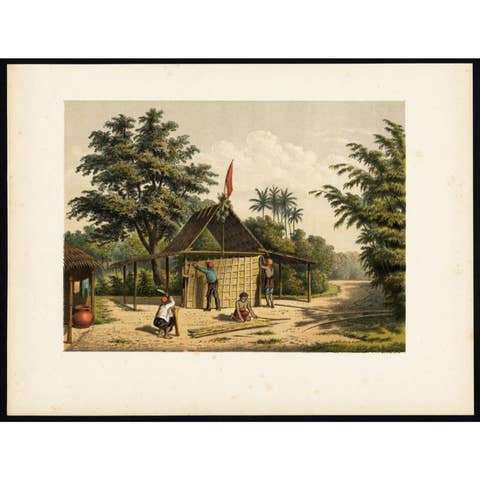
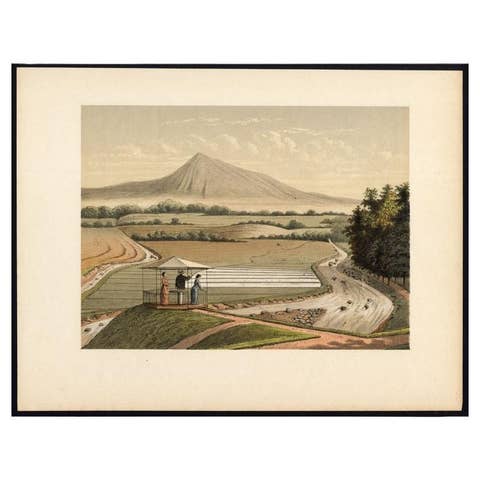
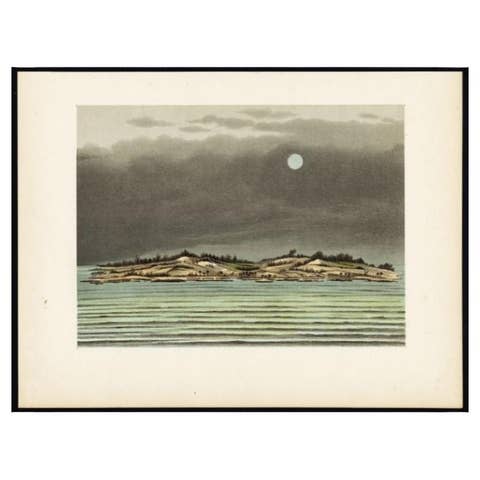
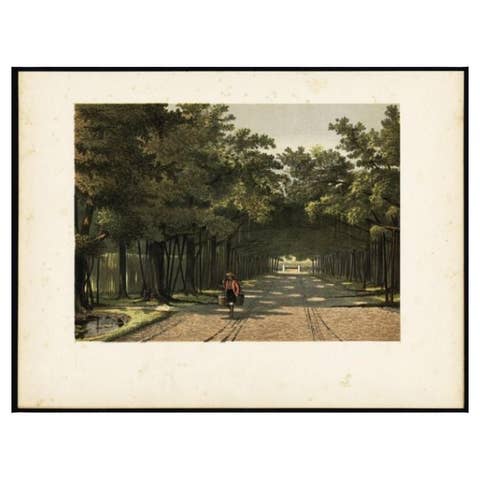
Antique Print of Makassar by M.T.H. Perelaer, 1888
€ 120
One of a kind: this is the sheet in the photographs. Ships from Langweer, the Netherlands.
Date
1888
Sheet size
24.2 × 31.5 cm (9.5 × 12.4 in)
Condition
Good
Reference
BG-05915/23
Condition
Original cover sheet included. General age-related toning. Please study image carefully.
About this sheet
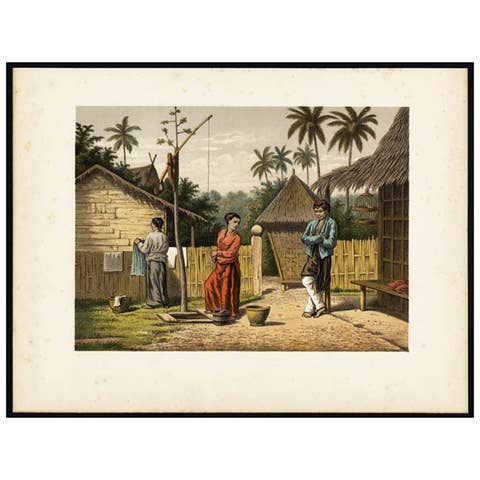
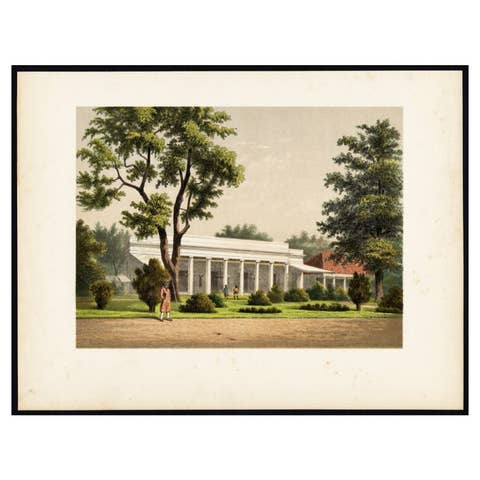
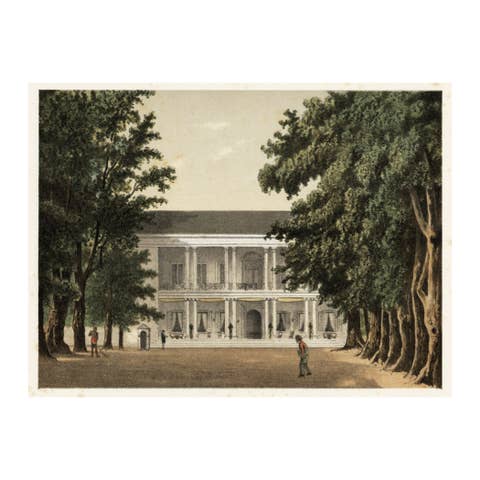
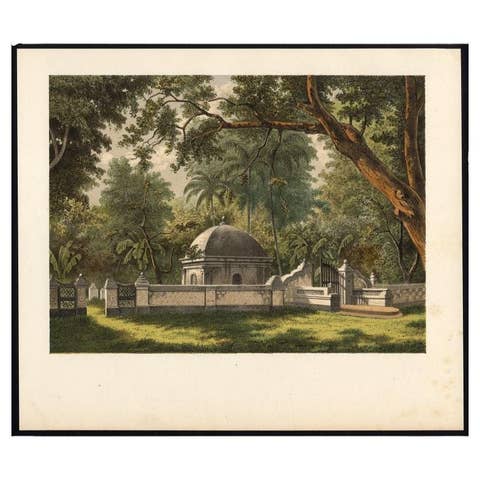
The antique print depicting the view of Makassar on Celebes (now known as Sulawesi) in Indonesia, from 'Het Kamerlid van Berkestein in Nederlandsch-Indië' by M.T.H. Perelaer, published circa 1888 in Leiden, is a fascinating historical artwork. Here's a description:
1. **Scene Depiction - Makassar on Celebes**: The print presents a detailed view of Fort Rotterdam in Makassar, capturing the essence of this important fort in the port city in the late 19th century. The colonial buildings and local architecture, along with the natural landscape in the background.
2. **Artistic Style and Technique**: Given the period of its creation, the print is in the style typical of late 19th-century European depictions of colonial territories.
3. **Cultural and Historical Context**: As part of the book 'Het Kamerlid van Berkestein in Nederlandsch-Indië', which relates to a member of the Dutch Parliament in the Dutch East Indies, the print is significant in illustrating the Dutch colonial presence and influence in Indonesia. It reflects the socio-political dynamics of the era, including the interaction between European colonizers and local populations.
5. **Quality and Craftsmanship**: As an antique print, it exhibits the craftsmanship of the period, with attention to detail and accuracy in its representation of the landscape and people. The quality of the print reflects the skill of the artist and the techniques used at the time.
6. **Rarity and Value**: Being a part of a publication from 1888, the print holds historical value, especially for those interested in colonial history, Indonesian culture, or historical cartography. Its rarity would add to its appeal as a collectible item.
This print would not only serve as a beautiful piece of art but also as an important document, offering insights into the history and culture of Makassar, and more broadly, the Dutch East Indies during the late 19th century.