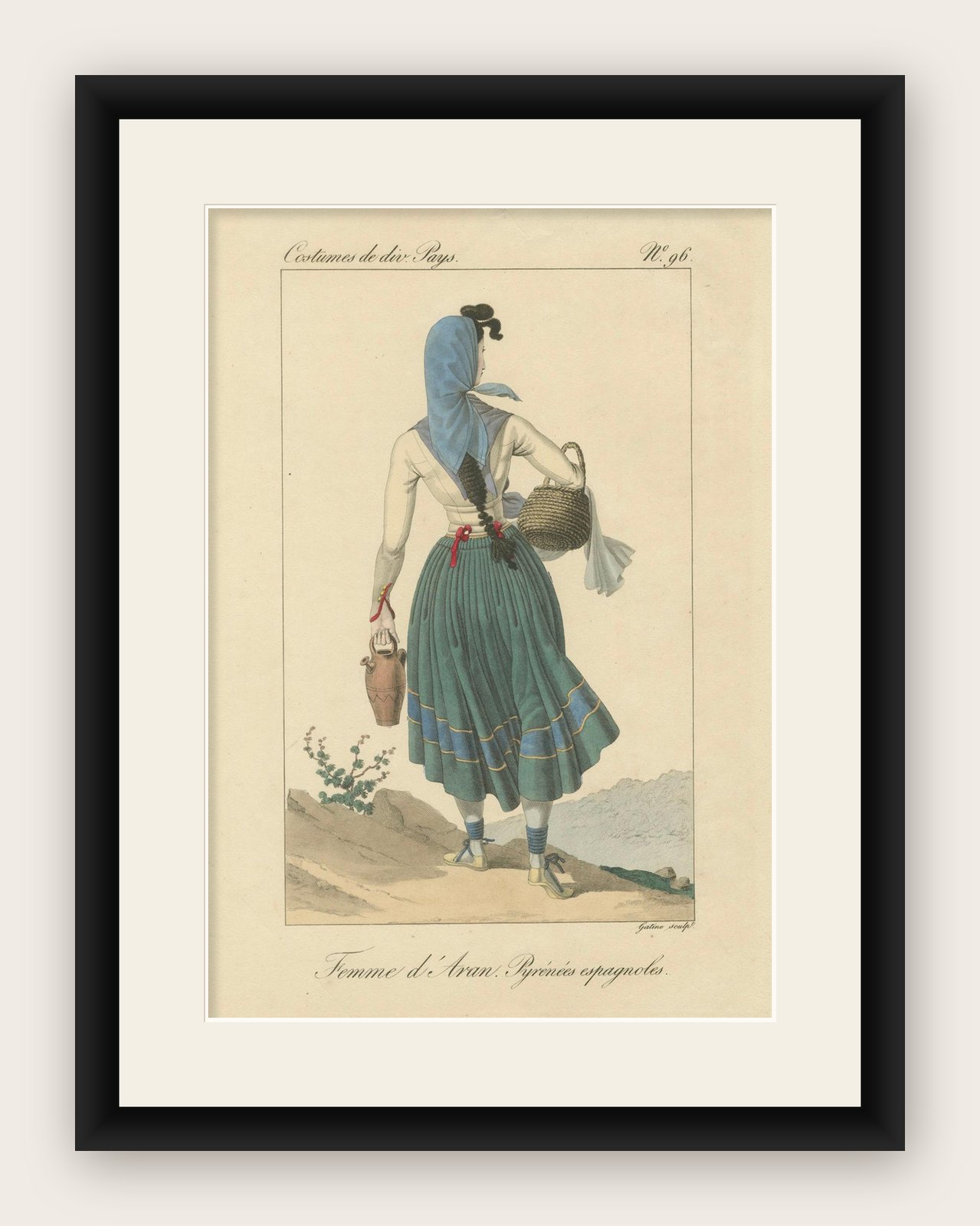
Woman of Aran, Spanish Pyrenees – Hand-Colored Engraving, c.1820
€ 260
Original antique · The actual sheet photographed · Certificate of authenticity on request · Sold unframed · Worldwide shipping from € 15 (rates)
Date
1820
Mapmaker / artist
Gatine sculp.; published in Paris, c.1820
Technique
Hand-colored engraving
Sheet size
35 × 26 cm (13.8 × 10.2 in)
Condition
Good
Reference
BG-14149-21
What the condition grades mean
Excellent
Bright and clean, with no faults worth mentioning.
Very good
Only light signs of age, such as faint toning.
Good
Normal signs of age for a sheet of this period: toning, some foxing, small marks or neat old repairs.
Fair
Clear faults such as staining, tears or repairs, priced to match.
Every fault we see is written in the condition note, and the whole sheet is shown uncropped in the photos.
Condition
A fine and clean impression with bright, original coloring. Light toning and a few faint handling marks in the wide margins, typical for age but unobtrusive. Image sharp and well-preserved.
About this sheet
Woman of Aran, Spanish Pyrenees – Hand-Colored Engraving, c.1820
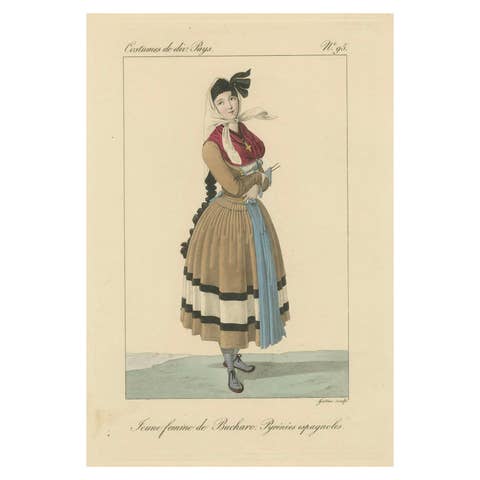
This striking hand-colored engraving, titled Femme d’Aran, Pyrénées espagnoles (Woman of Aran, Spanish Pyrenees), is plate No. 96 from the celebrated series Costumes de divers Pays, published in Paris around 1820. Engraved by Gatine, it depicts a woman from the Aran Valley, a high mountain region in the Spanish Pyrenees known for its distinctive culture, language, and attire.
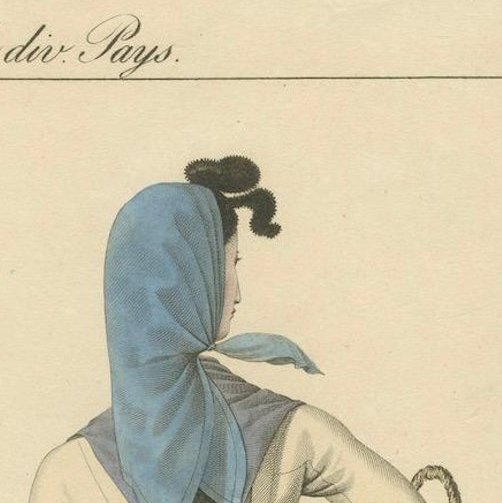
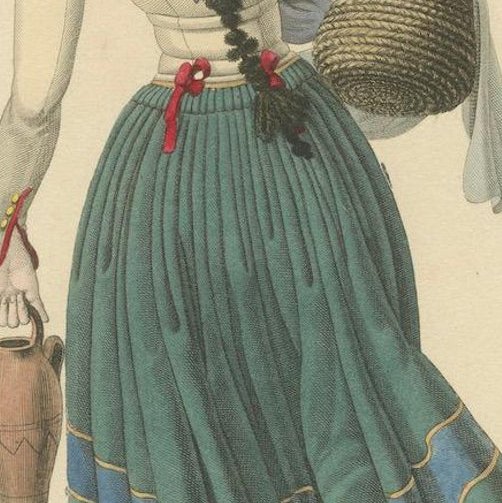
Seen from behind, the woman stands on a rocky hillside overlooking a mountain stream, embodying the simple grace of rural life. Her outfit consists of a green pleated skirt trimmed with blue and gold bands, a cream blouse, and a blue headscarf tied firmly around her braided hair. She wears soft yellow shoes fastened with blue ribbons, and her stockings are wrapped with matching blue bands. In her hands she carries a traditional clay water jug and a woven basket, everyday tools that complete this vivid portrayal of a mountain villager’s routine.
The artist’s rendering captures not only the costume’s practical details but also its rhythmic beauty—the flow of the skirt and the subtle interplay of textures and tones reflect the refined artistry of early 19th-century French engraving. This print is part of a movement in which European artists sought to document local and regional costumes, creating valuable ethnographic records imbued with romantic sentiment.
Condition report: A fine and clean impression with bright, original coloring. Light toning and a few faint handling marks in the wide margins, typical for age but unobtrusive. Image sharp and well-preserved.
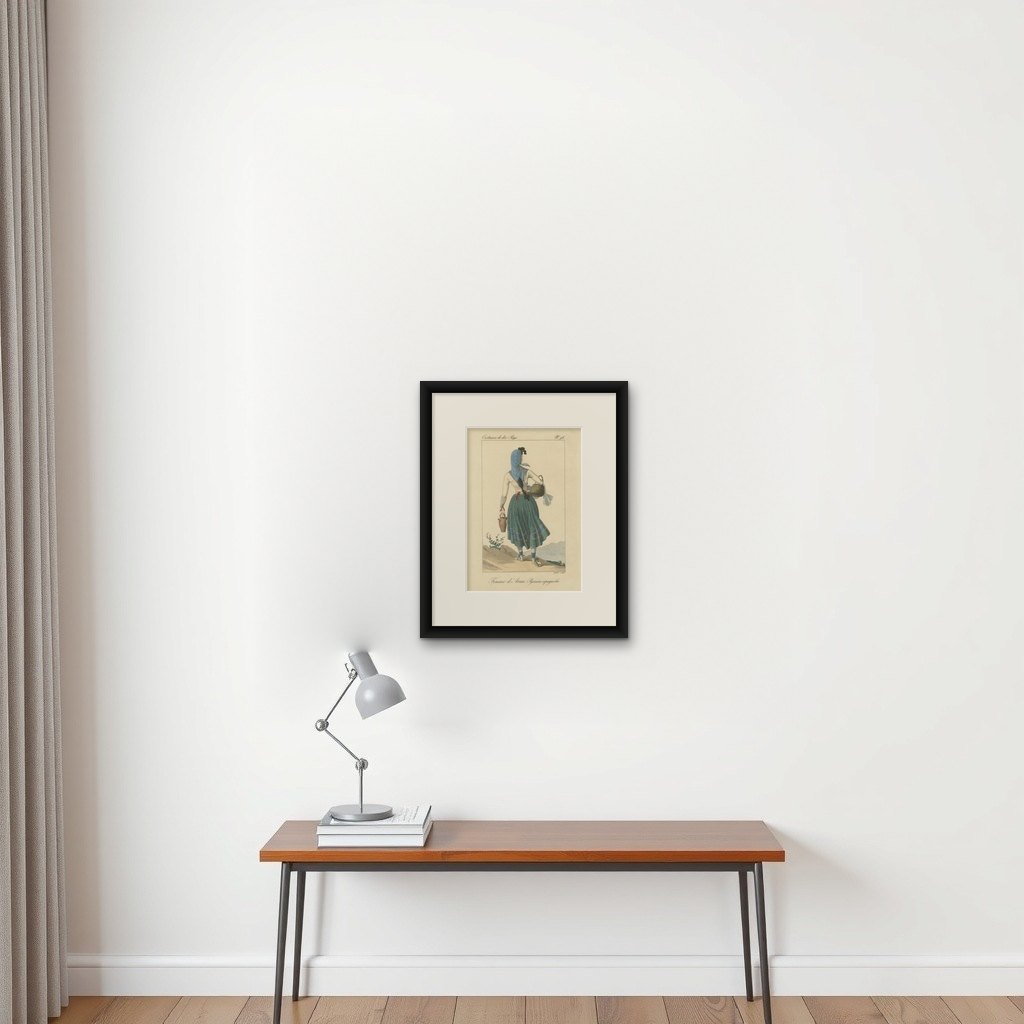
Framing tips: An elegant cream or light gray mat with a walnut or black frame enhances the contrast between the blue headscarf and the earthy tones of the landscape. Perfect for pairing with other Spanish or Pyrenean costume engravings from the same series.