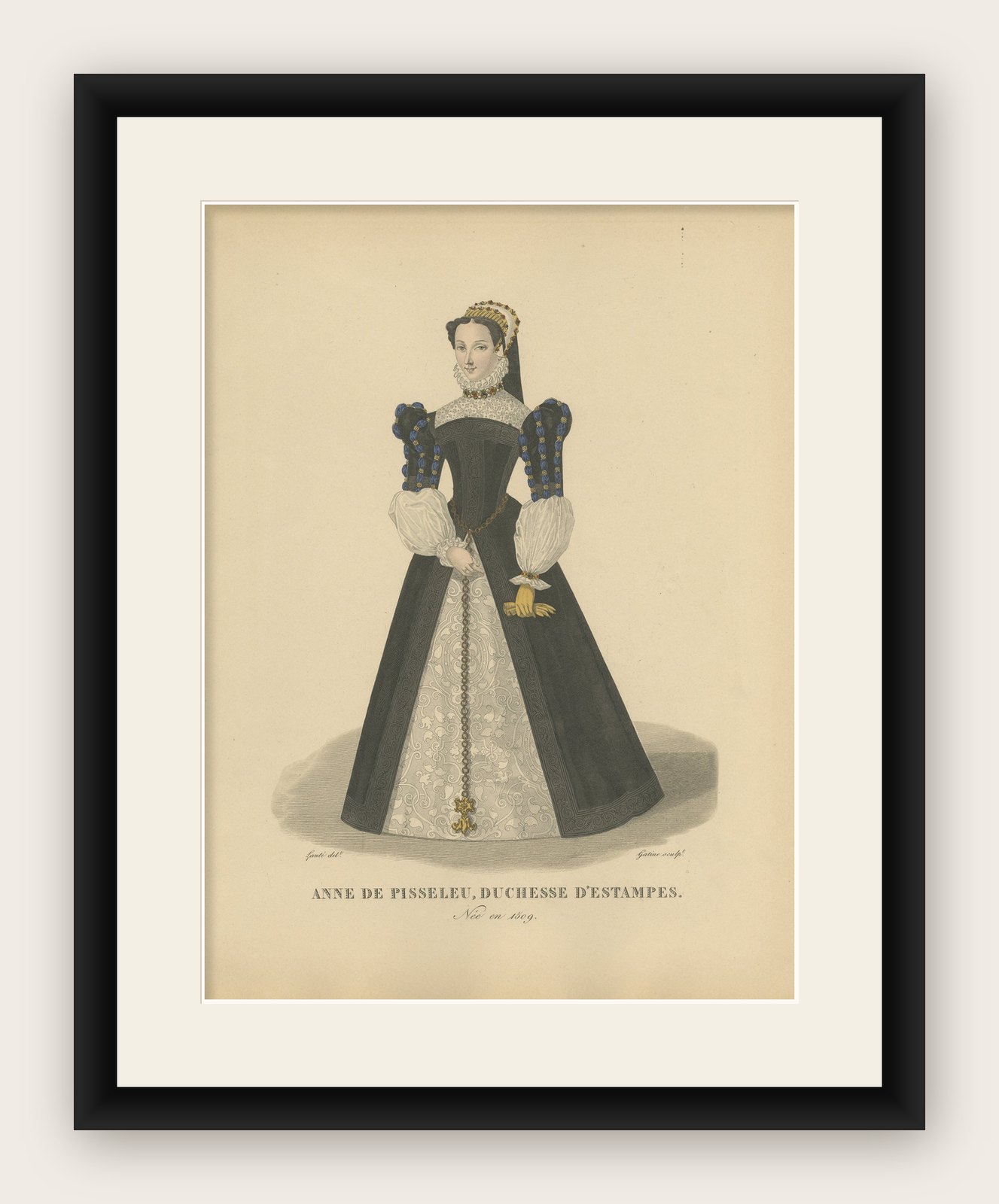
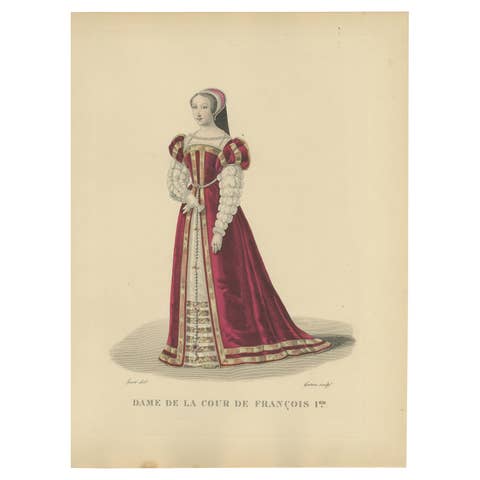
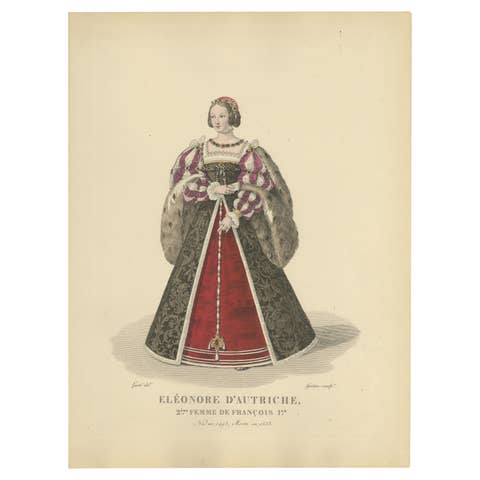
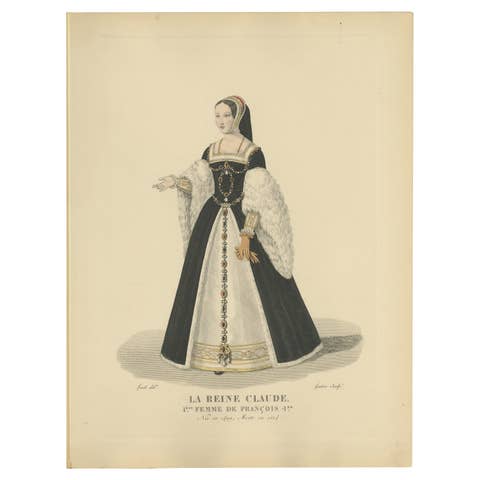
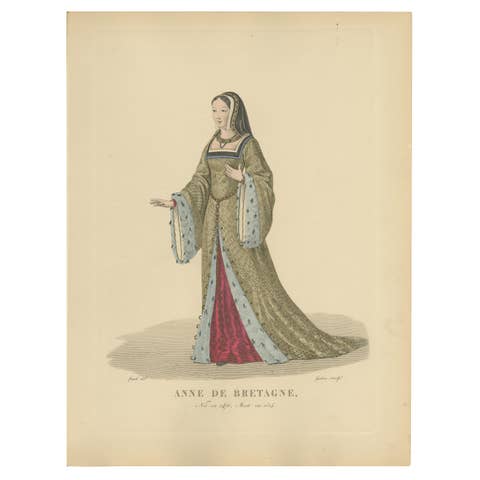
Hand-Colored Portrait of Anne de Pisseleu, Duchesse d’Étampes, 1900
€ 290
Original antique · The actual sheet photographed · Certificate of authenticity on request · Sold unframed · Worldwide shipping from € 15 (rates)
Date
1900
Mapmaker / artist
After Georges Jacques Gatine (engraver) and Louis-Marie Lanté (artist), Paris, original 1827 design
Technique
Hand-colored engraving (later impression, ca. 1900)
Sheet size
33.5 × 25 cm (13.2 × 9.8 in)
Condition
Good
Reference
BG-13158-31
What the condition grades mean
Excellent
Bright and clean, with no faults worth mentioning.
Very good
Only light signs of age, such as faint toning.
Good
Normal signs of age for a sheet of this period: toning, some foxing, small marks or neat old repairs.
Fair
Clear faults such as staining, tears or repairs, priced to match.
Every fault we see is written in the condition note, and the whole sheet is shown uncropped in the photos.
Condition
Condition report: Very good condition. Clean paper with strong hand coloring, light age-related toning in the margins. Blank verso.
About this sheet
Hand-Colored Portrait of Anne de Pisseleu, Duchesse d’Étampes, ca. 1900 (after 1827)
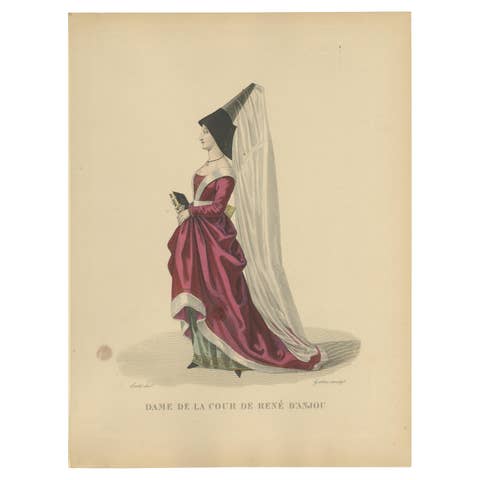
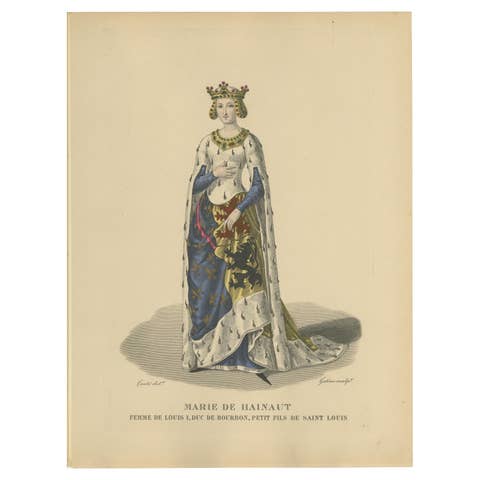
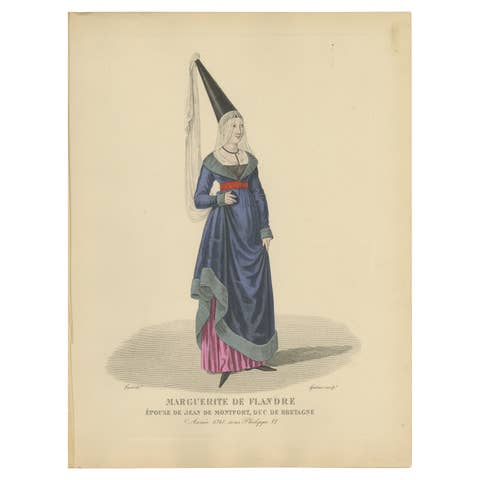
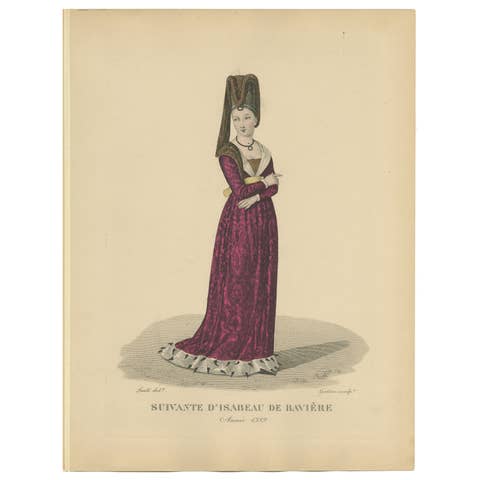
Finely hand-colored engraving of Anne de Pisseleu (1508–1580), Duchesse d’Étampes, produced circa 1900 after the original plate from Galerie Française de Femmes Célèbres (first published in Paris in 1827). The series was originally engraved by Georges Jacques Gatine after designs by Louis-Marie Lanté, and later republished at the turn of the century due to renewed interest in historical costume and portraiture.
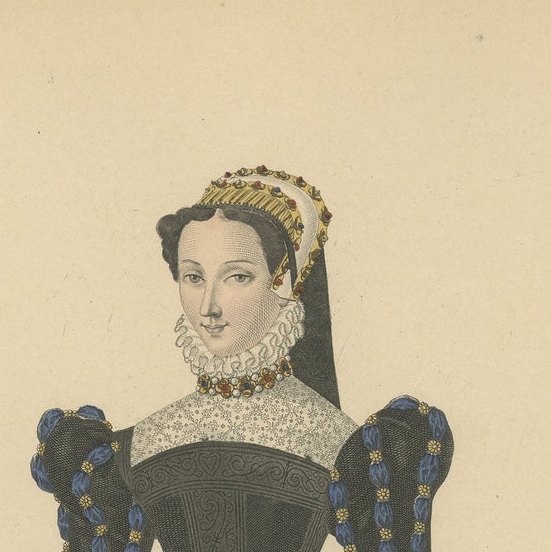
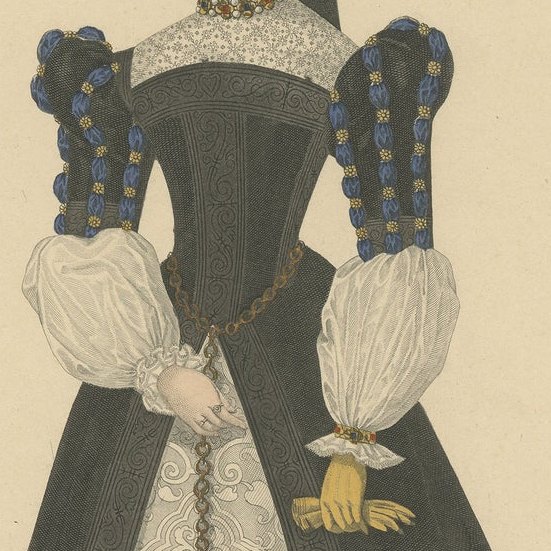
Anne de Pisseleu, mistress of King Francis I of France, is shown in full Renaissance costume. She wears a black gown with embroidered borders, puffed sleeves in blue and gold, a high lace ruff, and a richly patterned white underskirt. A gold chain and girdle accentuate her waist, while a French hood with pearls completes the ensemble. The detailing of the engraving, enhanced by delicate hand-coloring, reflects the opulence and refinement of the French Renaissance court.
These later impressions, produced around 1900, preserved the charm and decorative qualities of the earlier works while making them more widely available to collectors and connoisseurs of costume history. Today, they remain valued for their historical subject, decorative appeal, and the fine execution of color.
Condition report: Very good condition. Clean paper with strong hand coloring, light age-related toning in the margins. Blank verso.
Framing tips: Works beautifully in a gilt frame with a cream or ivory mount. A double mat with a fine gold inner line highlights the Renaissance costume details and adds to the overall elegance.