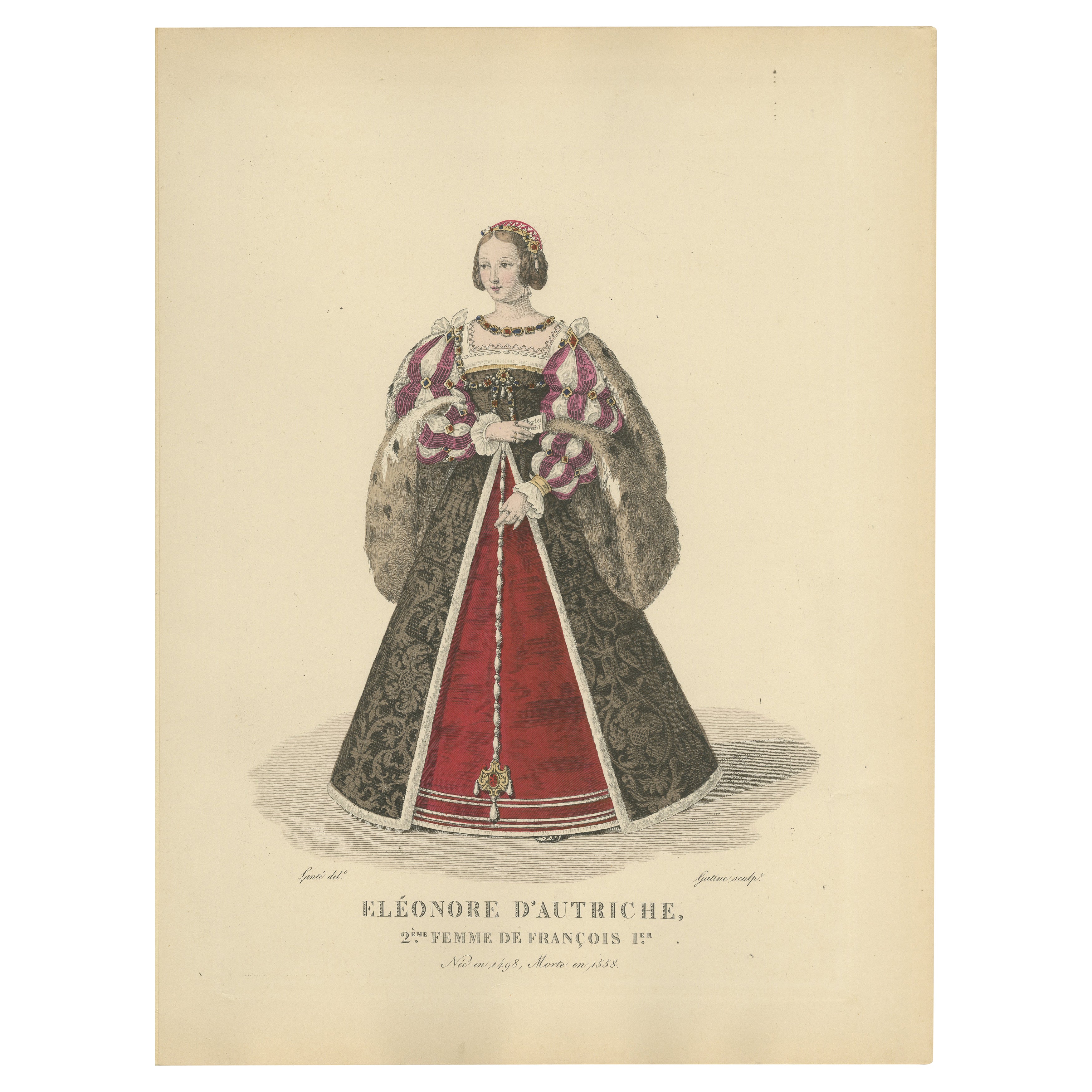
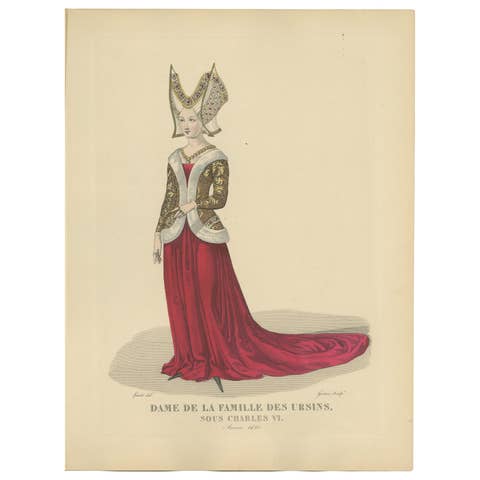
Éléonore d’Autriche, Queen of France – Hand-Colored Portrait Print, c.1900
€ 350
One of a kind: this is the sheet in the photographs. Ships from Langweer, the Netherlands.
Date
1900
Sheet size
33.5 × 25 cm (13.2 × 9.8 in)
Condition
Good
Reference
BG-13158-64
Condition
Condition report: Excellent condition with vivid hand-coloring, strong impression, and wide margins. Very light toning consistent with age, blank verso, and a visible platemark.
About this sheet
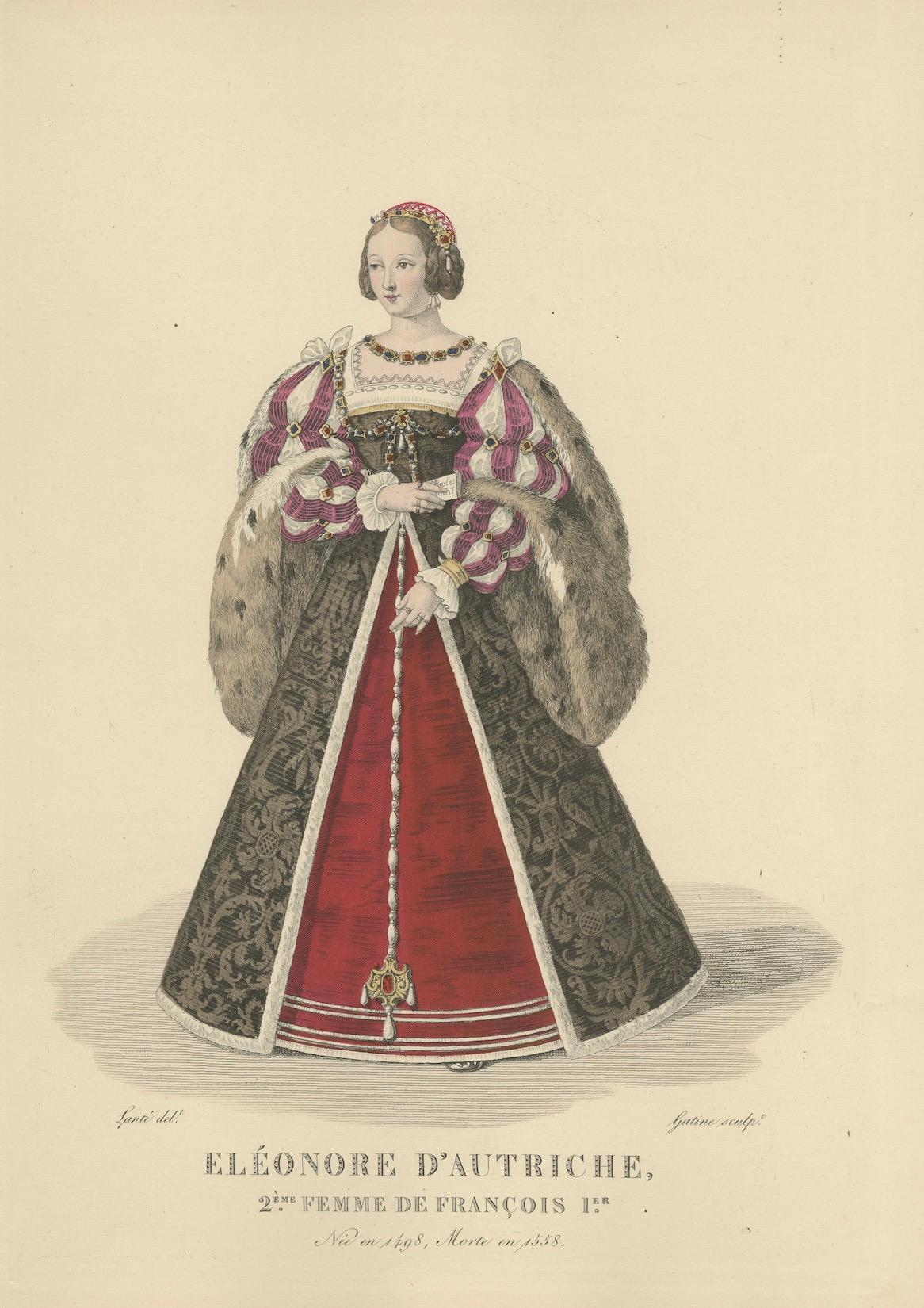
Hand-Colored Engraving of Éléonore d’Autriche, Queen of France, ca. 1900 edition
This hand-colored engraving represents Éléonore d’Autriche (1498–1558), also known as Eleanor of Austria, the second wife of François I of France. Born a princess of the Habsburg dynasty, Eleanor was the sister of Emperor Charles V and Archduke Ferdinand I. Her marriage to François I in 1530 was the result of the Treaty of Cambrai, a political union that symbolized peace between France and the Habsburgs after years of conflict.
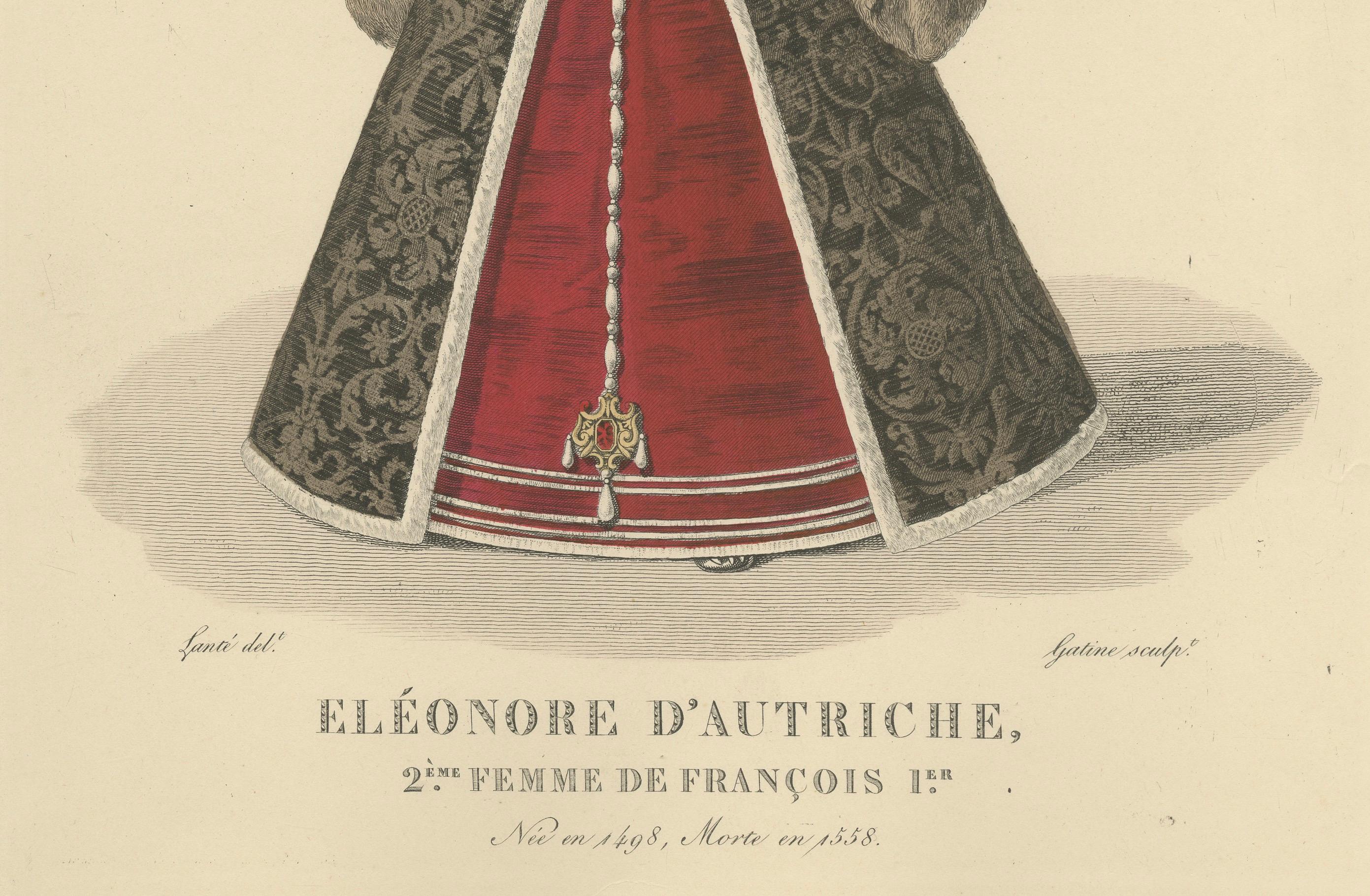
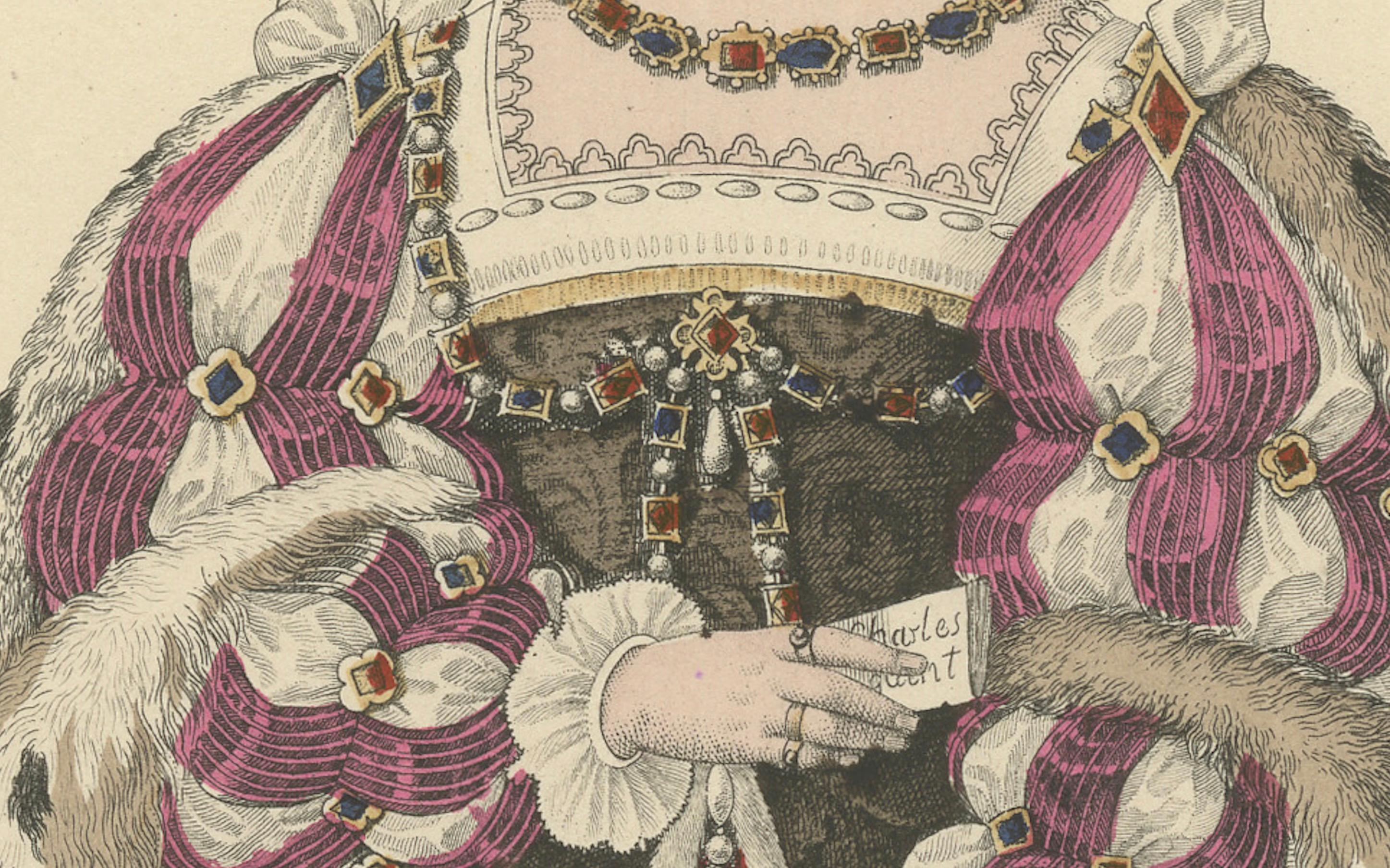
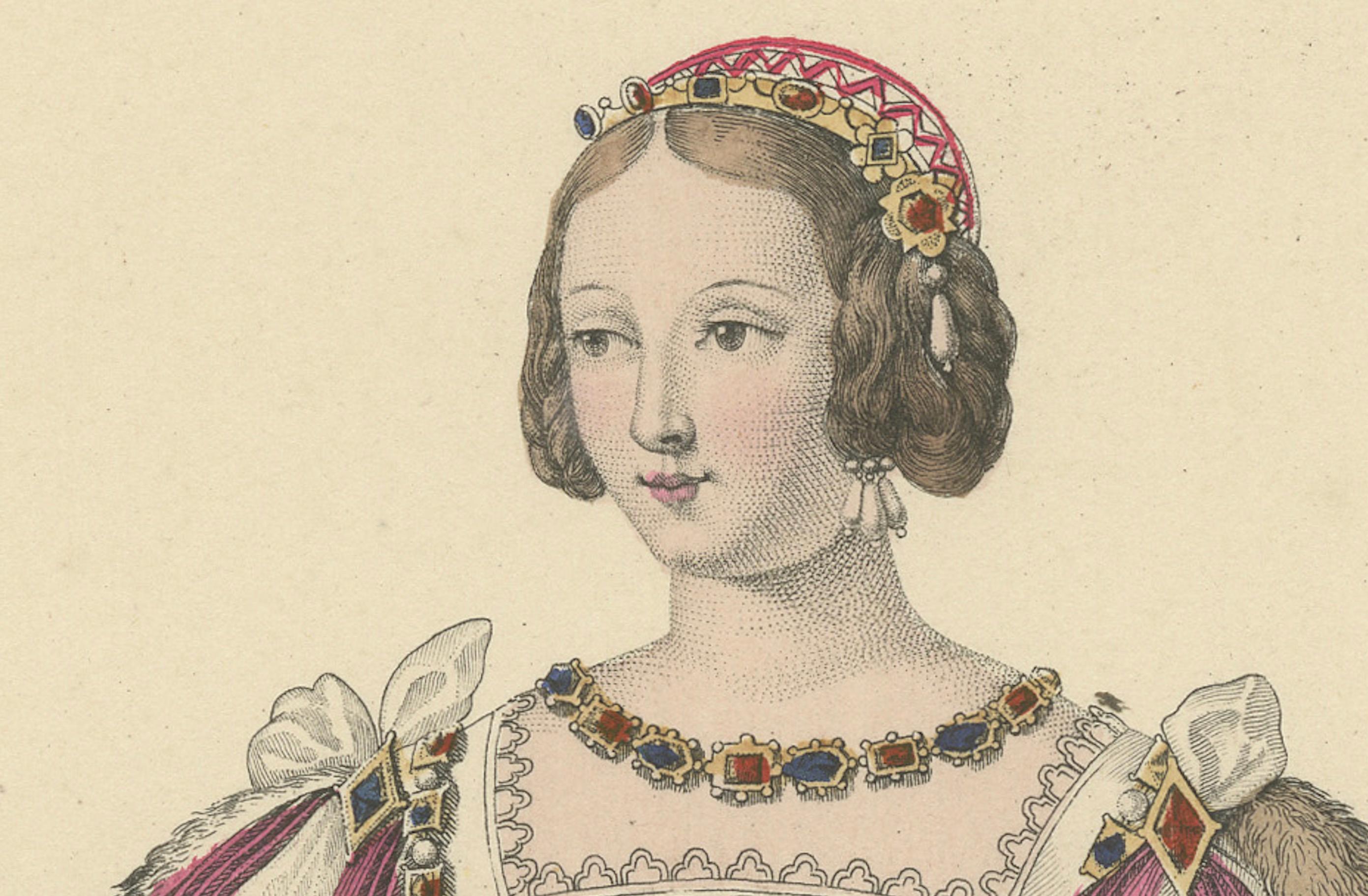
The portrait shows Eleanor adorned in a richly decorated gown of black and gold brocade with wide fur-trimmed sleeves, contrasted by a deep crimson front panel embellished with jeweled ornaments. Her puffed sleeves of alternating white and violet stripes reflect the opulent fashion of the early 16th century. She wears a necklace and headdress, underscoring her royal stature and connection to one of Europe’s most powerful dynasties.
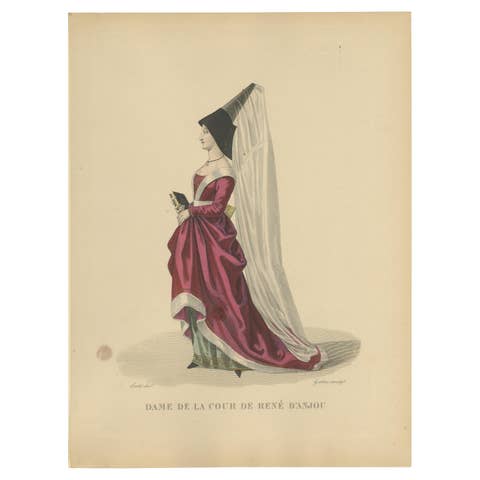
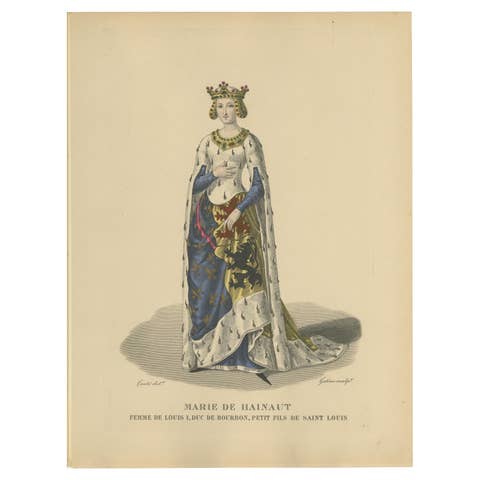
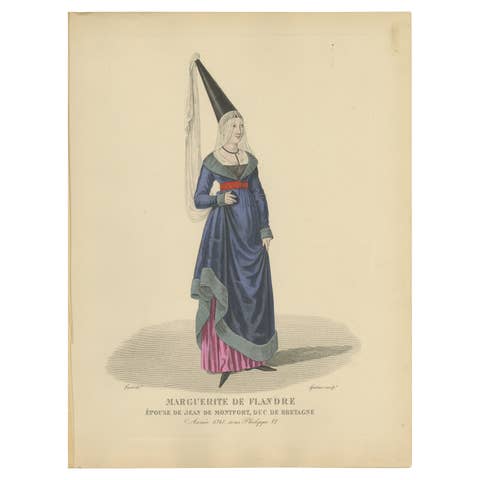
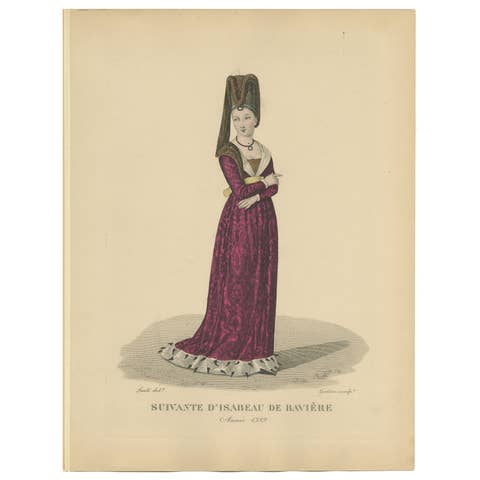
The image originates from the celebrated series Galerie Française de Femmes Célèbres (Paris, 1827), created by Louis-Marie Lanté (artist) and engraved by Georges Jacques Gatine. The present sheet is a later impression from around 1900, when the plates were republished for collectors and costume historians, catering to the turn-of-the-century revival of interest in Renaissance court fashion.
Condition report: Excellent condition with vivid hand-coloring, strong impression, and wide margins. Very light toning consistent with age, blank verso, and a visible platemark.
Framing tips: Best displayed in a gold-leaf frame with a soft cream or ivory mat to accentuate the richness of the crimson and gold tones. Alternatively, a dark wood frame with double matting—cream with a narrow burgundy inner line—would bring out the warmth of the fur details and balance the deep contrasts in the gown.
Technique: Hand-colored engraving (later edition, ca. 1900) Maker: After Louis-Marie Lanté (artist) and Georges Jacques Gatine (engraver), Paris, 1827