About this sheet
Antique Portrait of Sir Thomas More – Holbein, Bartolozzi Stipple Engraving, 1793
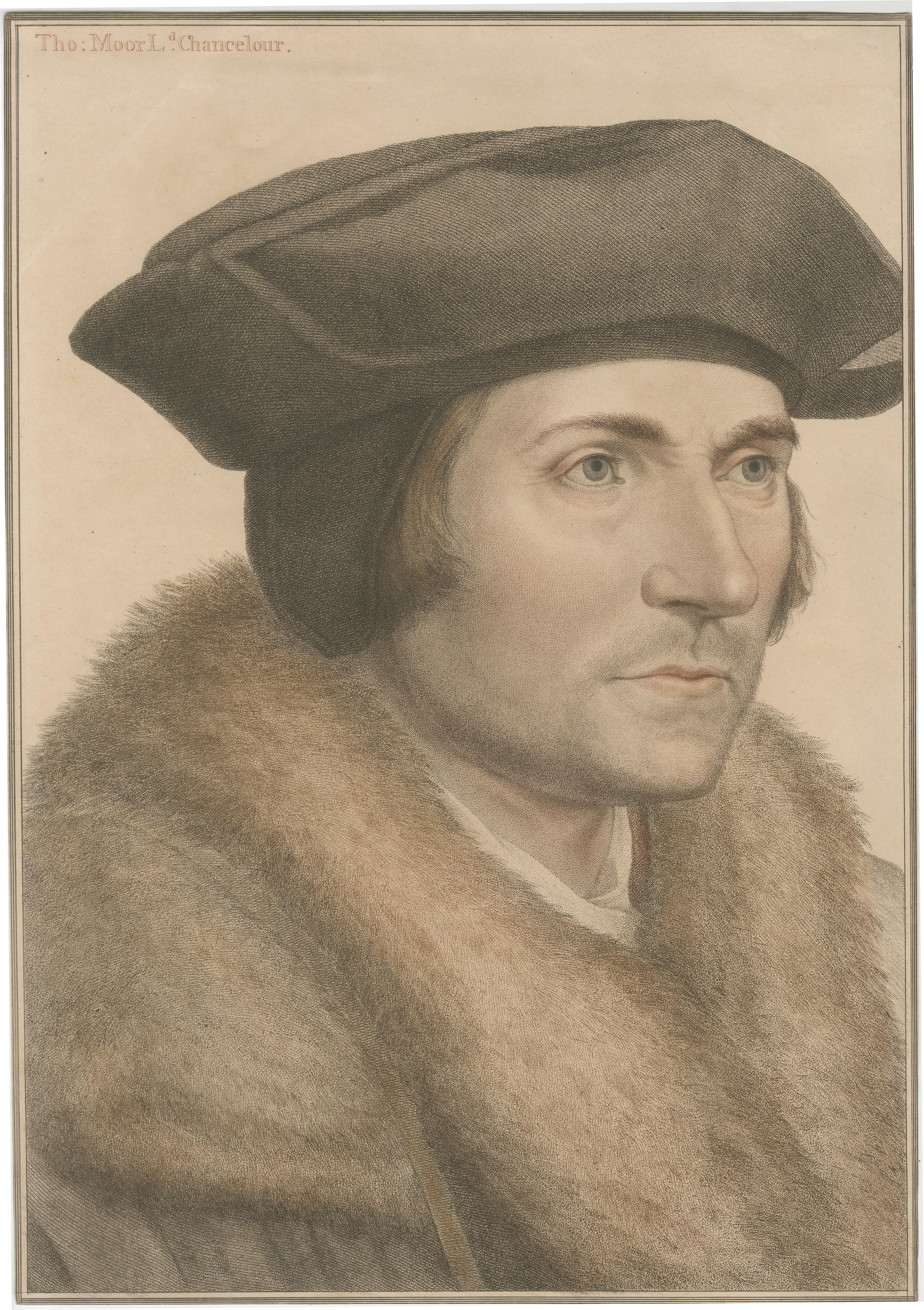
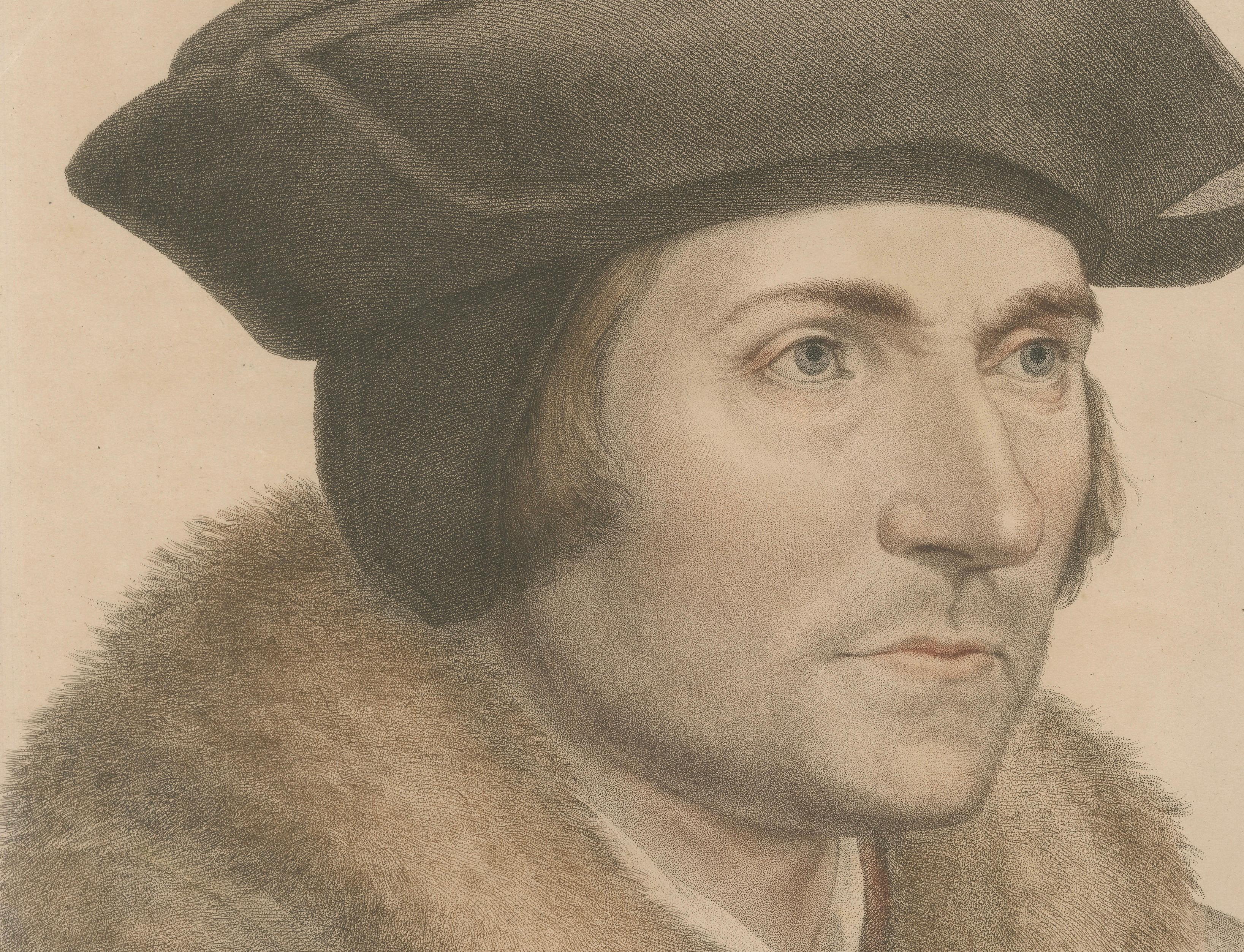
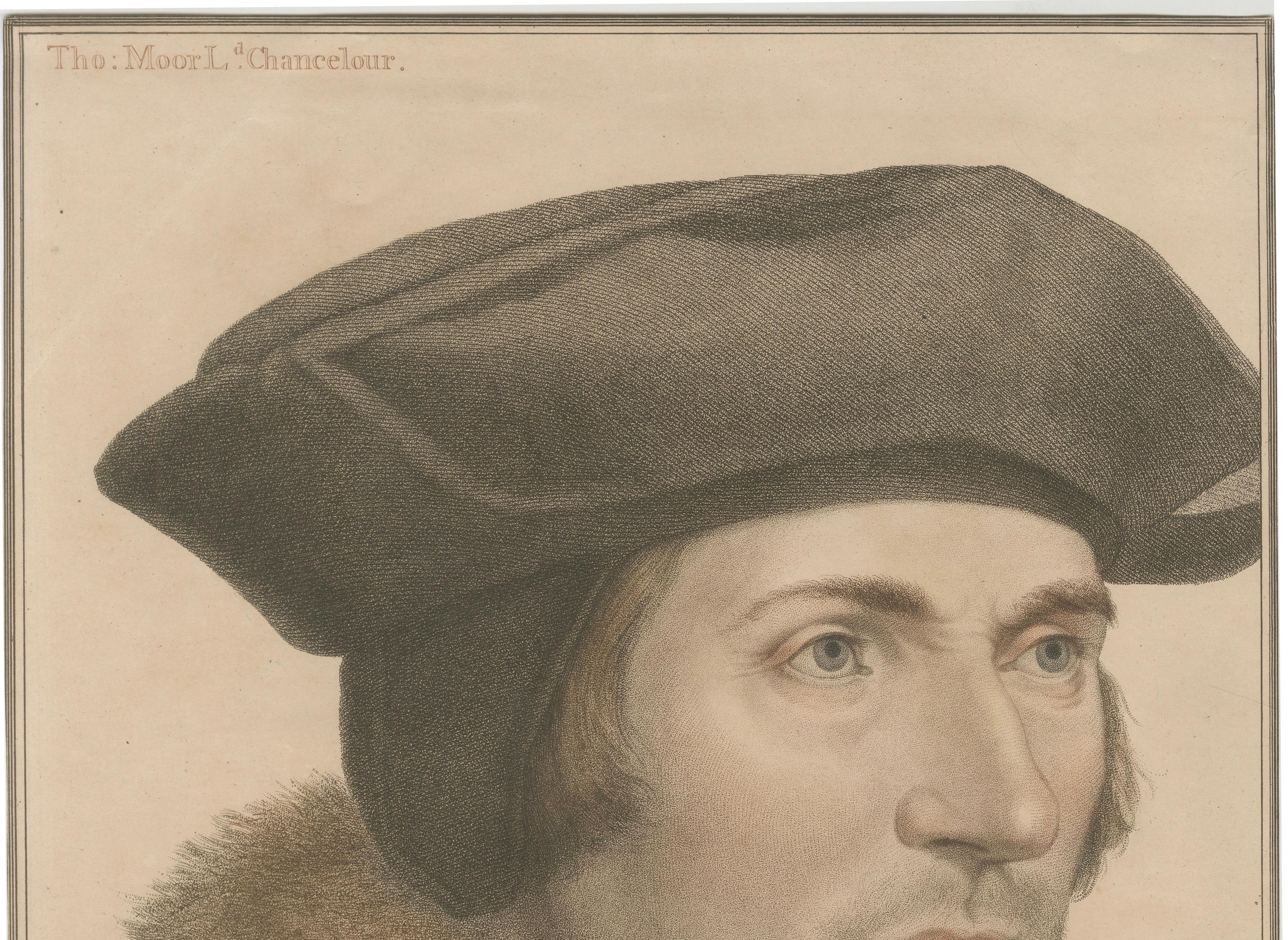
This refined late 18th-century stipple engraving depicts Sir Thomas More (1478–1535), one of the most celebrated intellectuals and statesmen of Tudor England. The portrait shows More in three-quarter profile wearing a soft black cap and a richly textured fur-lined robe, conveying both dignity and humanist scholarship. The inscription in the upper corner identifies him as “Tho. Moor Ld. Chancelour,” referring to his position as Lord Chancellor under King Henry VIII.
The print was engraved by Francesco Bartolozzi (1727–1815), one of the most accomplished engravers working in London during the late Georgian period. Bartolozzi was renowned for his mastery of the stipple engraving technique, a method that uses thousands of small dots to create subtle tonal transitions. This technique allowed engravers to reproduce the softness and painterly quality of drawings and paintings with remarkable delicacy, and Bartolozzi became the leading exponent of this style in Britain.
The image is based on a celebrated portrait drawing by Hans Holbein the Younger (c.1497–1543), the great German-Swiss Renaissance painter who served as court artist to Henry VIII. Holbein’s portraits of Tudor statesmen and courtiers are among the most iconic images of the English Renaissance, known for their extraordinary precision and psychological depth. His portrait of Thomas More is considered one of the defining representations of the famous humanist and has been widely reproduced in prints since the 18th century.
Sir Thomas More was an English lawyer, philosopher, diplomat, and author best known for his influential work *Utopia* (1516), in which he described an idealized society governed by reason and communal principles. As Lord Chancellor he was one of the most powerful men in England, but his refusal to accept Henry VIII as Supreme Head of the Church of England led to his imprisonment and eventual execution in 1535. He was later canonized as a saint by the Roman Catholic Church and remains an enduring symbol of intellectual integrity and moral conviction.
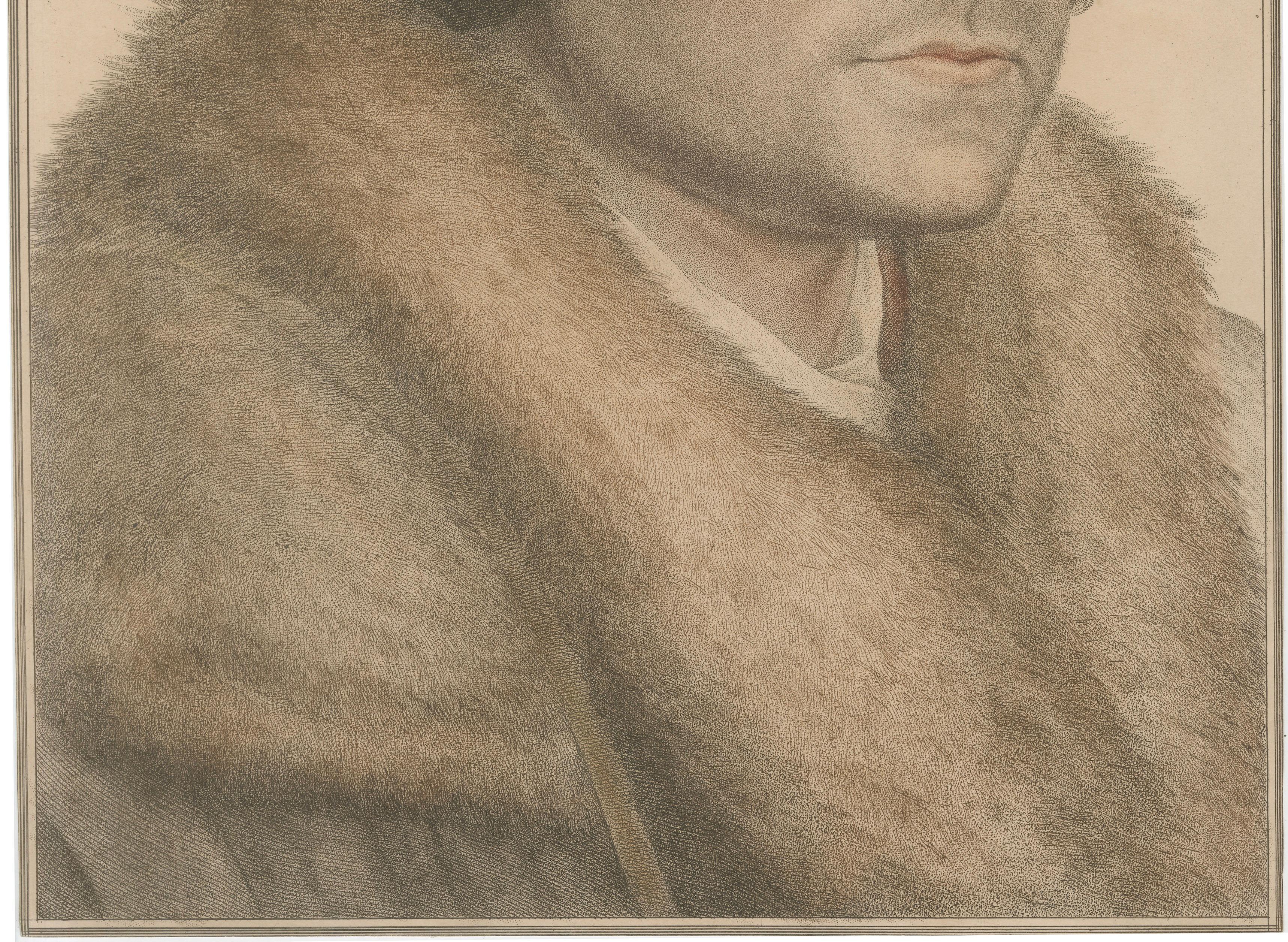
This engraving belongs to a group of fine portrait prints produced in London during the late 18th century that sought to reproduce the great historical portraits of the Tudor period. The delicate stipple technique beautifully captures the texture of the fur garment, the softness of the facial features, and the calm, thoughtful expression that Holbein’s original portrait conveys.
Condition: Good antique condition with light age-related toning and occasional faint spotting in the margins. The engraved surface remains clean and sharp, with strong tonal detail typical of Bartolozzi’s stipple work.
Framing tips: This portrait frames exceptionally well in a dark walnut, gilded, or ebonized frame with a wide museum-white or cream mat. The refined tonal engraving and dignified subject make it particularly suitable for display in a library, study, or traditional interior.
Technique: Stipple engraving
Maker: Francesco Bartolozzi after Hans Holbein the Younger, London, 1793