Anne Boleyn, Queen of England – Handcolored Engraving, ca. 1900
€ 290
Original antique · The actual sheet photographed · Certificate of authenticity on request · Sold unframed · Worldwide shipping from € 15 (rates)
Date
1900
Mapmaker / artist
Georges Jacques Gatine after Louis Marie Lanté, reprint Paris, ca. 1900
Technique
Handcolored engraving
Sheet size
33.5 × 25 cm (13.2 × 9.8 in)
Reference
BG-13158-33
What the condition grades mean
Excellent
Bright and clean, with no faults worth mentioning.
Very good
Only light signs of age, such as faint toning.
Good
Normal signs of age for a sheet of this period: toning, some foxing, small marks or neat old repairs.
Fair
Clear faults such as staining, tears or repairs, priced to match.
Every fault we see is written in the condition note, and the whole sheet is shown uncropped in the photos.
Condition
Very good. Light toning and minor wear to margin edge, not affecting the image. Strong hand coloring and impression. Blank verso.
About this sheet
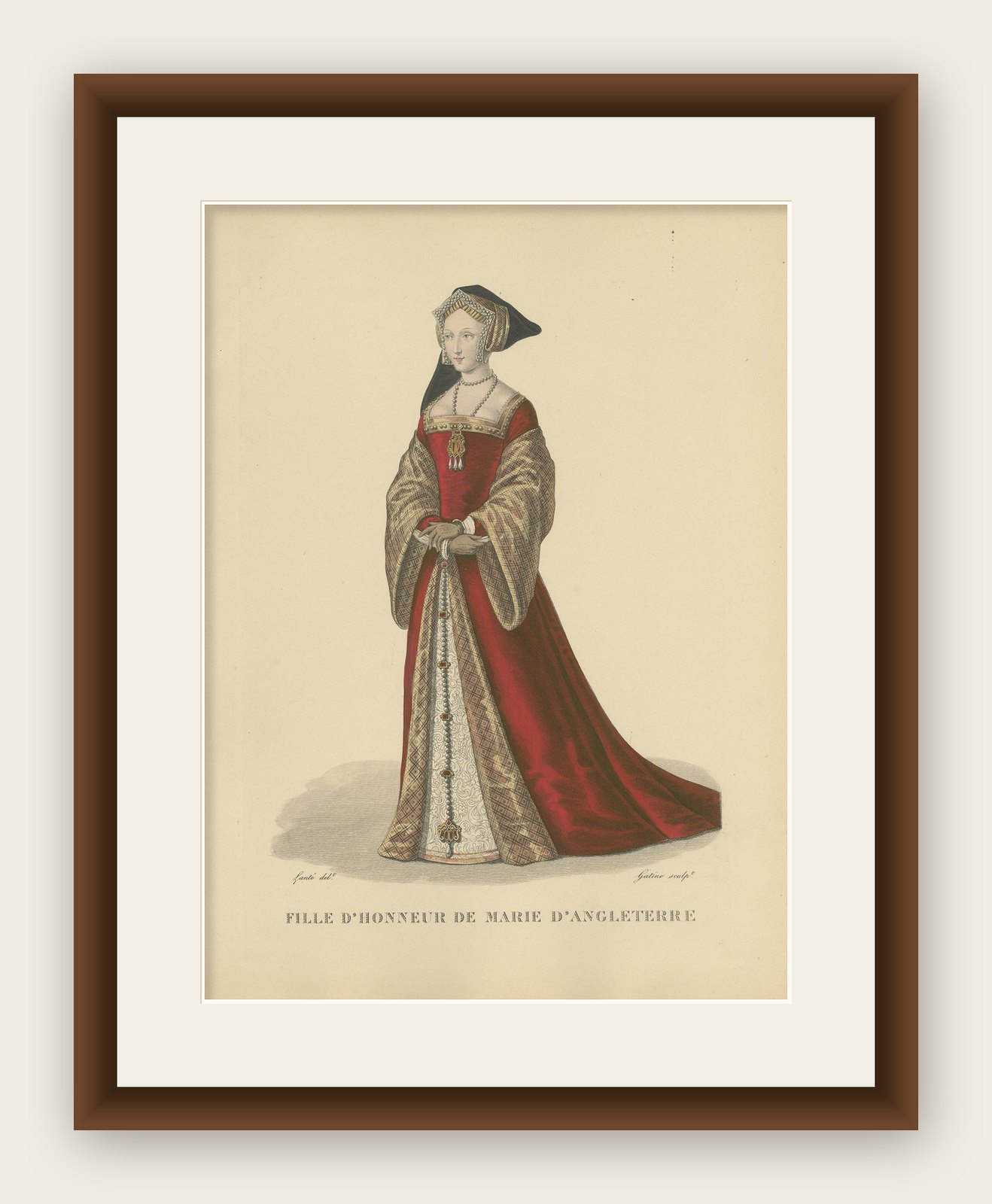
Anne Boleyn, Queen of England – Handcolored Engraving, ca. 1900
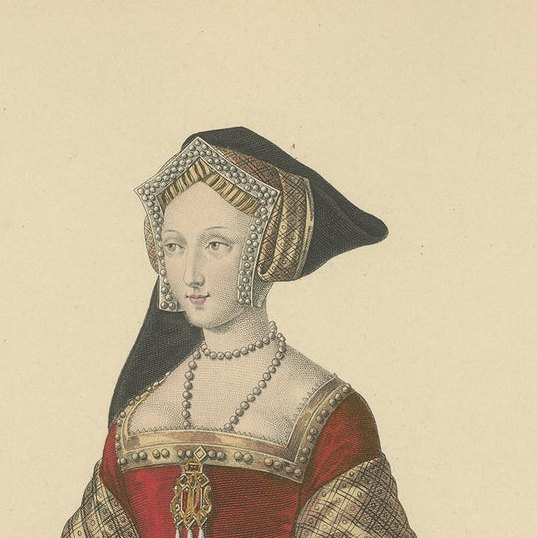
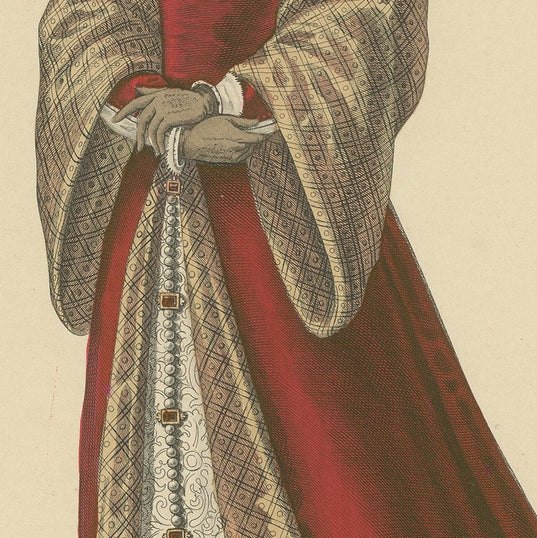
Elegant handcolored engraving of Anne Boleyn (c.1501–1536), Queen of England and second wife of King Henry VIII. She is shown in a richly patterned crimson gown trimmed with ermine, a turquoise underskirt decorated with gold embroidery, and an elaborate French hood with veil. Jewelled belts, a pearl necklace, and a pendant complete her regal attire.
The caption identifies her as 'Anne de Boulen, Fille d’honneur de Marie d’Angleterre. Décapitée en 1536', highlighting both her position as maid of honor to Queen Mary Tudor and her dramatic fate. Anne’s marriage to Henry VIII was one of the most pivotal episodes in English history, leading to England’s break with Rome and the establishment of the Church of England.
This engraving is a ca. 1900 reprint after the 'Galerie Française de Femmes Célèbres', first published in Paris in 1827. Designed by Louis Marie Lanté and engraved by Georges Jacques Gatine, the series drew on sources from the antiquarian Roger de Gaignières, who preserved depictions of European nobility.
Though issued later, the print retains the fine detail, vivid coloring, and historical fascination of the original. It offers both decorative appeal and a glimpse into 19th-century interpretations of Tudor portraiture.
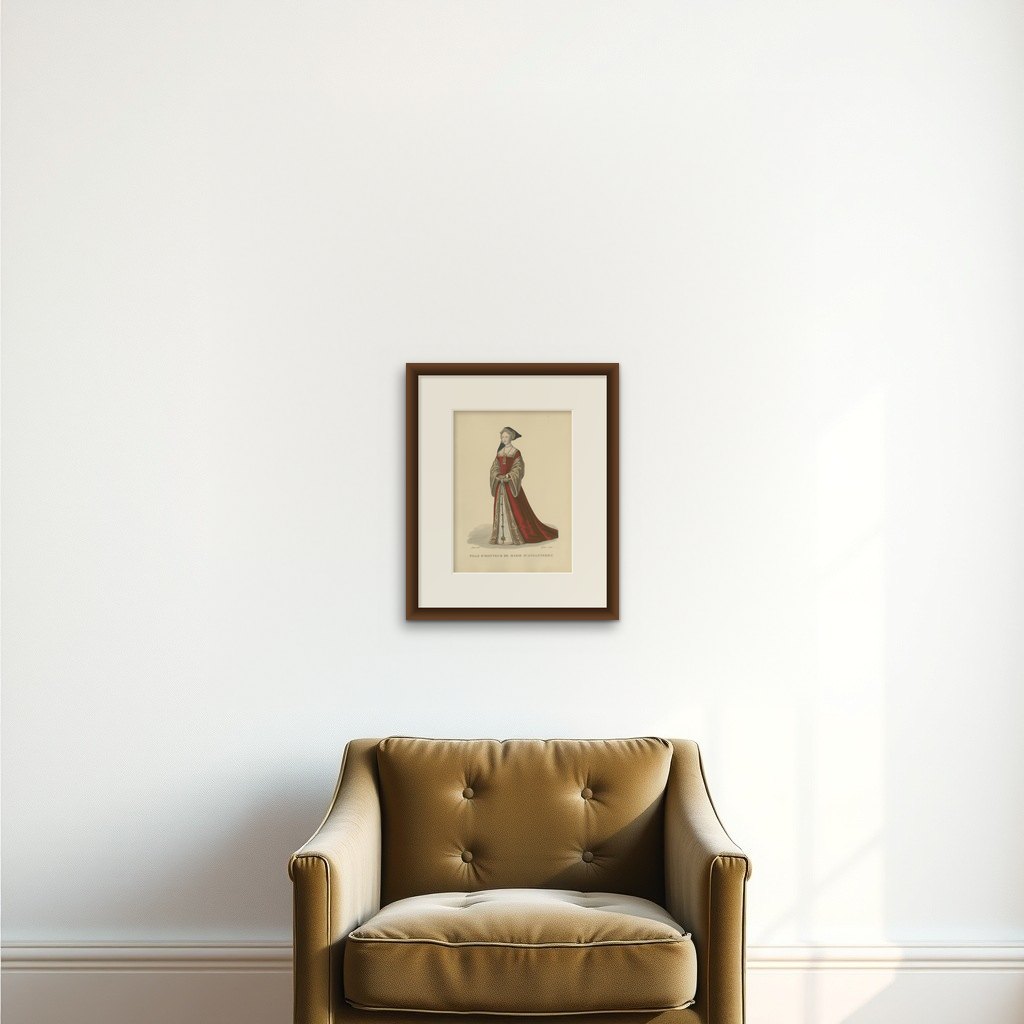
Framing tips: A wide ivory or cream mat will accentuate the ermine details, while a gilt frame will highlight the rich reds and gold embroidery. For a bold presentation, a dark wood frame with a narrow gilt liner would enhance the dramatic subject matter.