About this sheet
Antique Portrait of John the Evangelist – German Bible Illustration, 1708
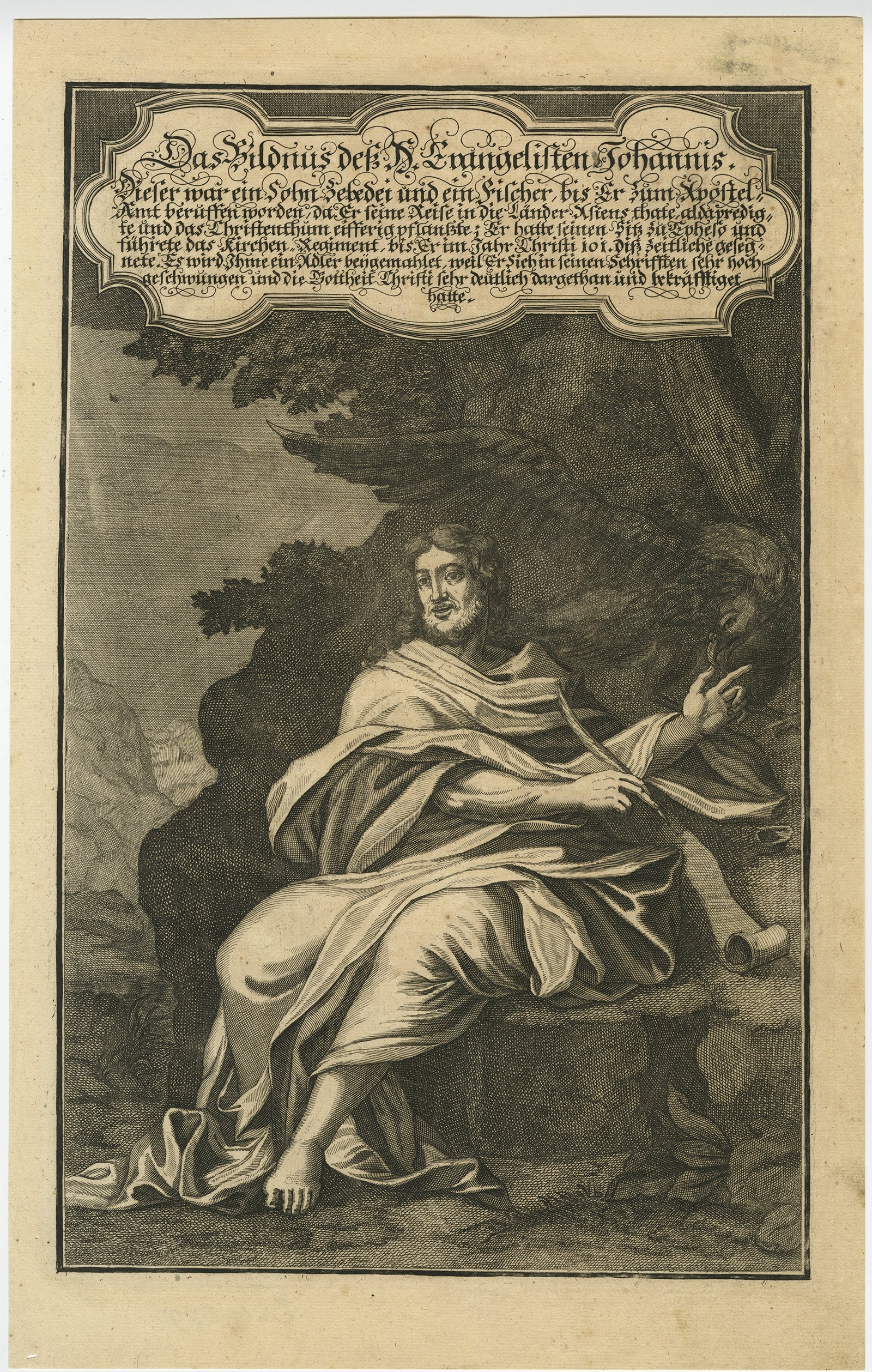
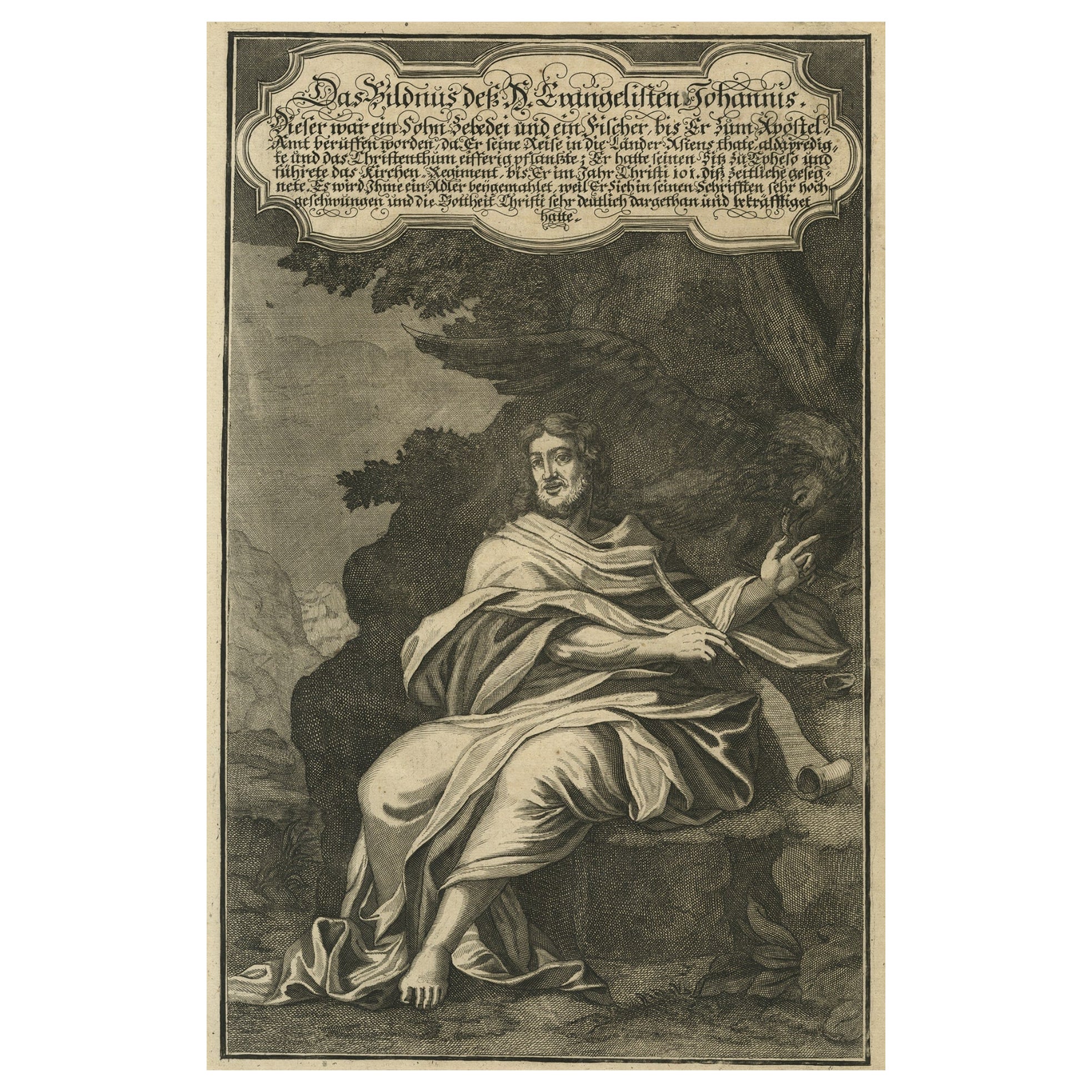
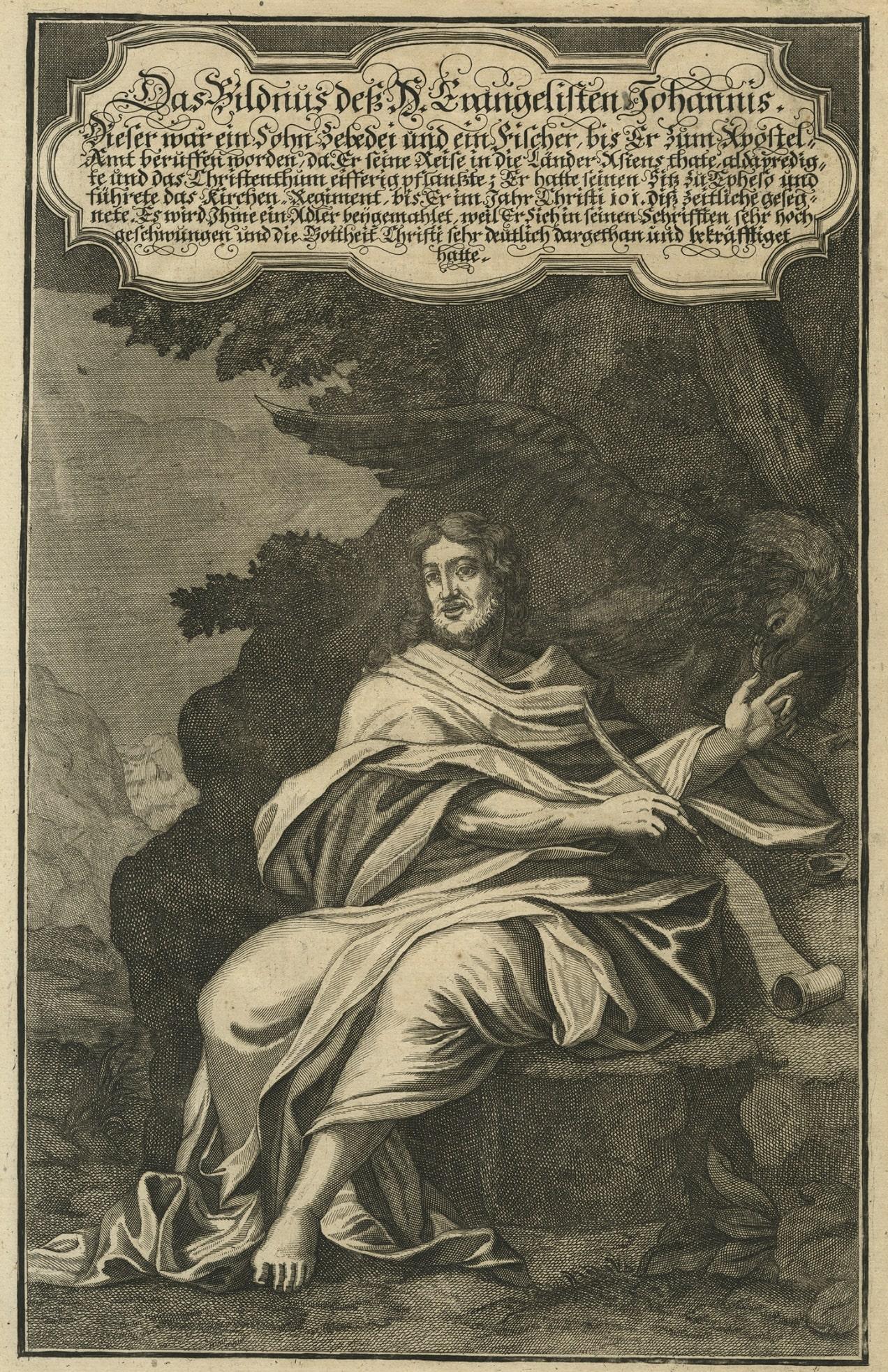
This finely engraved plate depicts John the Evangelist, one of the four Gospel writers, seated in a contemplative pose. Draped in flowing robes, John holds a scroll, symbolizing his Gospel, while an eagle – his traditional attribute – appears beside him, representing divine inspiration and the soaring vision of his writings. His thoughtful gaze and the dramatic landscape behind him underline both his role as an author of sacred scripture and as a witness to divine revelation.
The German text above the image, “Das Bildnus des H. Evangelisten Johannis,” identifies the figure and provides a short biography, describing John as a fisherman’s son, later called by Christ to be an apostle, and as a writer of inspired scriptures full of grace and truth.
This engraving originates from the 1708 edition of *Biblia: das ist die gantze Heilige Schrift, Altes und Neues Testaments*, Martin Luther’s German translation of the Bible, published in Nuremberg by Johann Andrea Endters Seel. Sohn und Erben. The Endter family were renowned Bible printers, active from the mid-17th century, and their richly illustrated editions were highly influential in German-speaking Europe. The first edition of this Bible appeared in 1641, and subsequent reprints included finely executed copperplate portraits of the Evangelists such as this one.
Such plates served both a devotional and didactic purpose: they provided readers with a visualization of the Gospel authors, reinforcing their spiritual authority while also making the sacred text more accessible to the faithful. Today, they stand as excellent examples of Lutheran print culture in Baroque Germany.
Condition: Good impression with strong contrasts. Some light age toning and minor handling marks consistent with age. Wide margins preserved. Plate mark visible.
Framing tips: A dark wooden frame with a cream or lightly toned mat will emphasize the richness of the engraving, while a gold-accented frame can highlight the Baroque character and the dramatic contrasts of light and shadow.