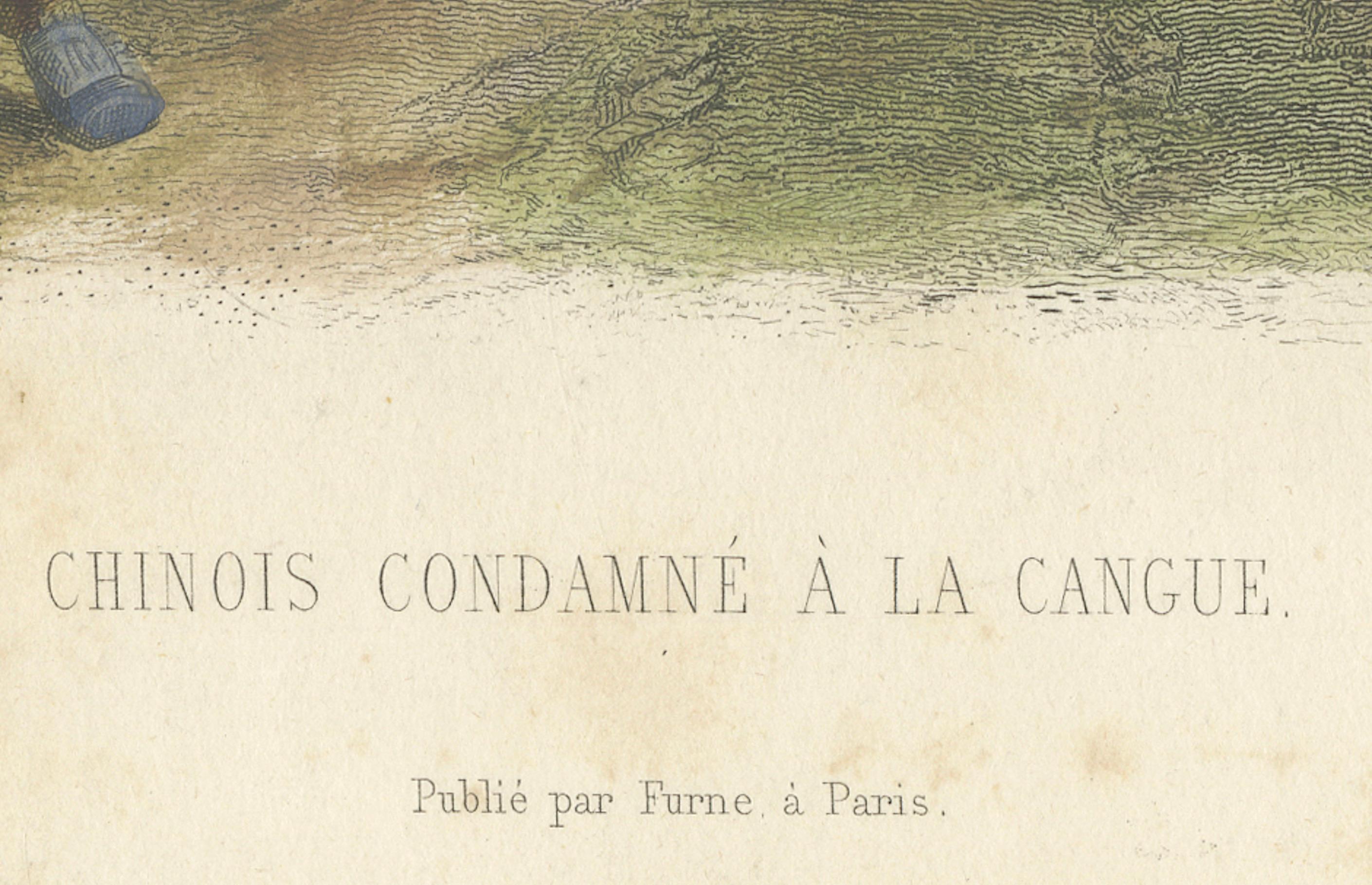
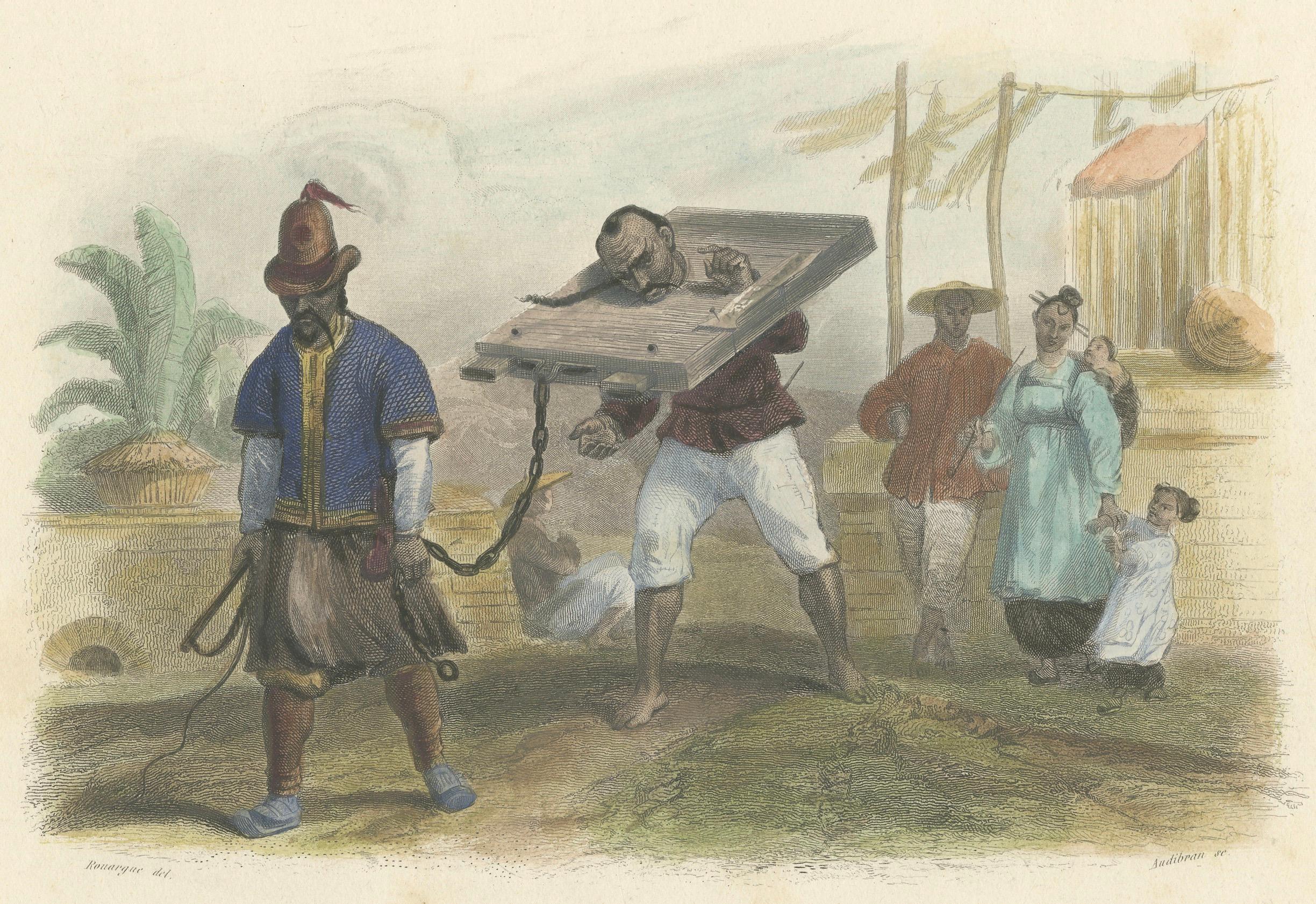
Chinois Condamné à la Cangue: Depiction of East Asian Corporal Punishment, 1860
€ 140
Original antique · The actual sheet photographed · Certificate of authenticity on request · Sold unframed · Worldwide shipping from € 15 (rates)
Date
1860
Sheet size
16.5 × 26 cm (6.5 × 10.2 in)
Condition
Good
Reference
JAK-500
Condition
Good, considering age. General age-related toning, foxing and/or occasional minor defects from handling, but mostly outside the image. Please study scan carefully.
About this sheet
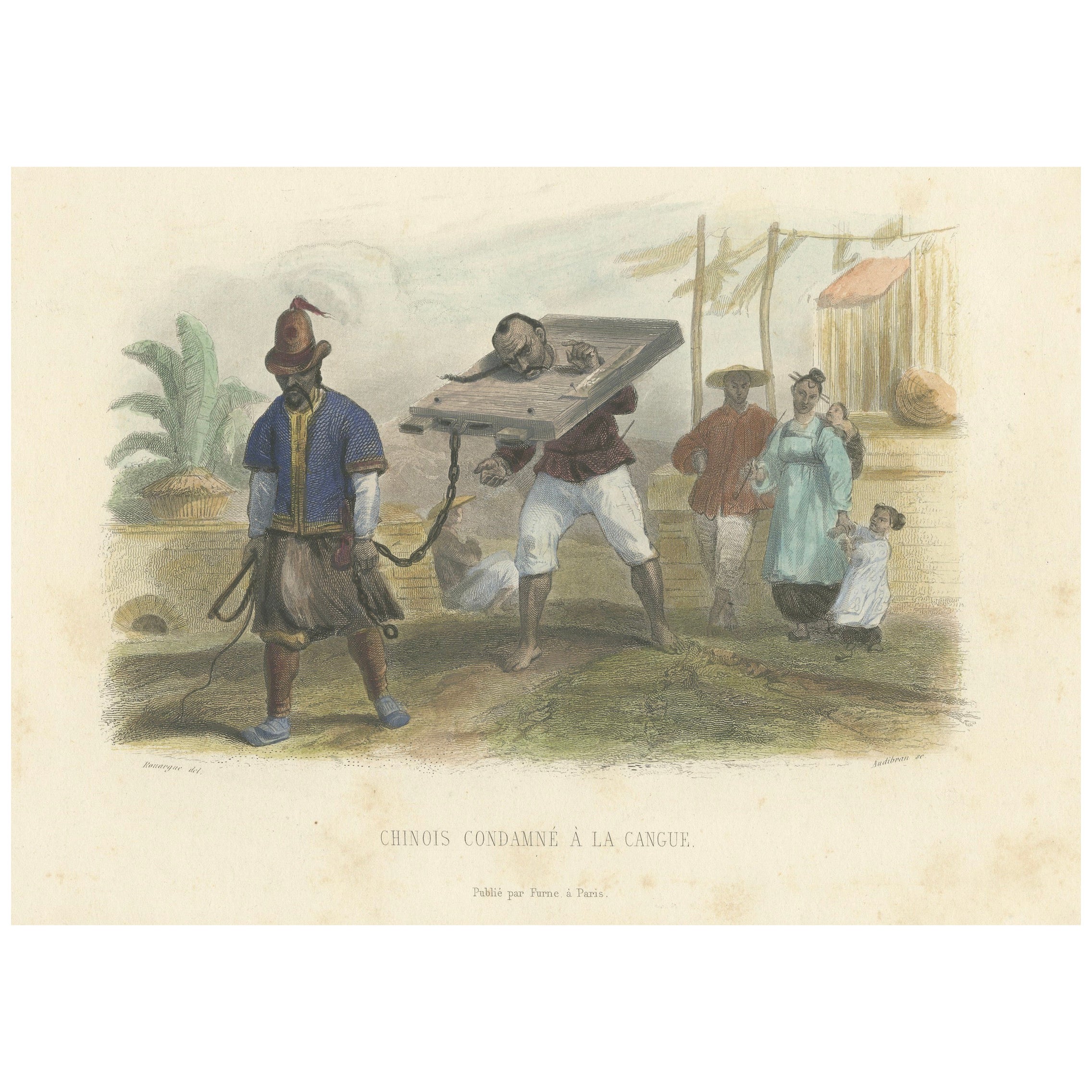
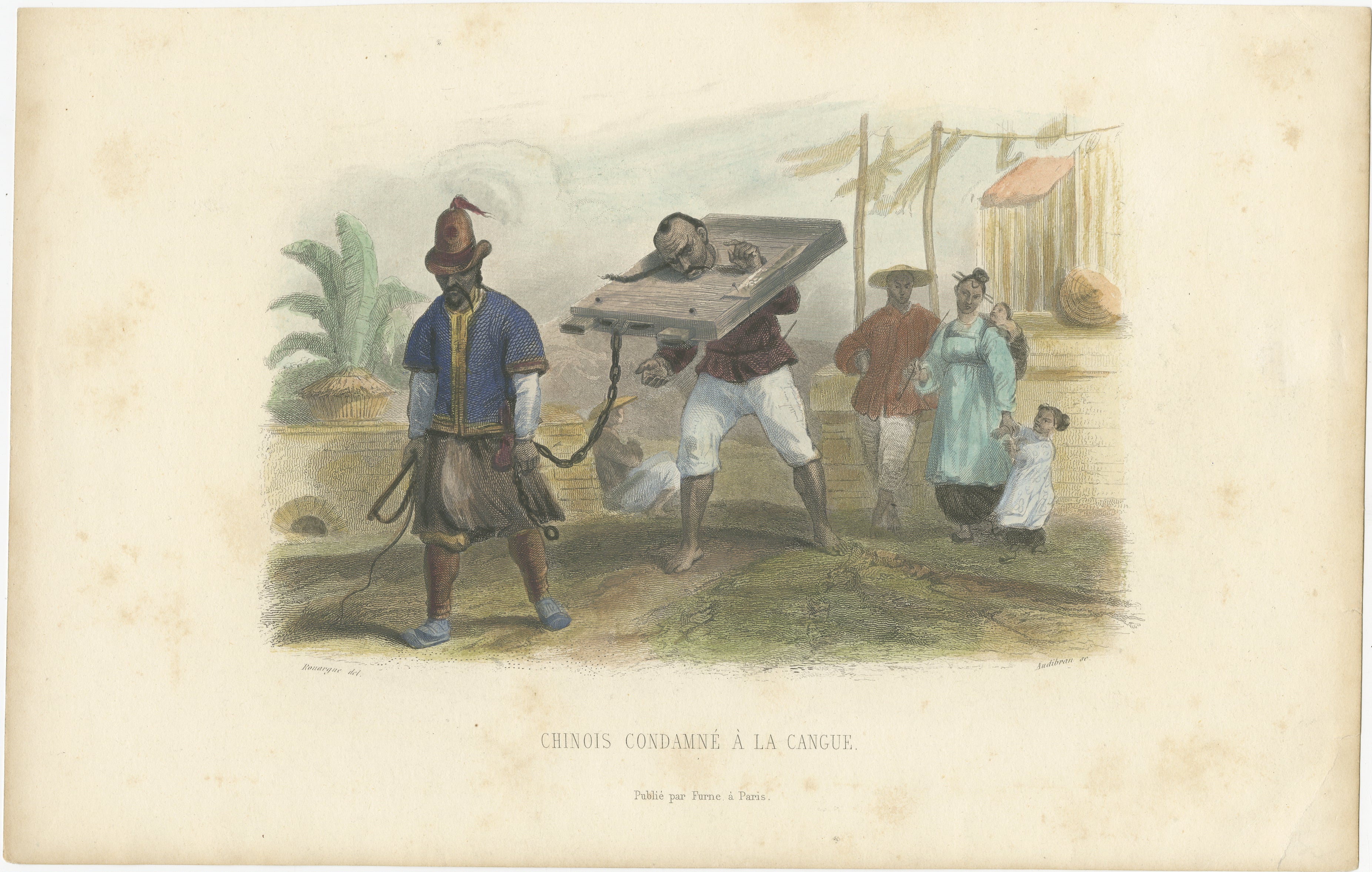
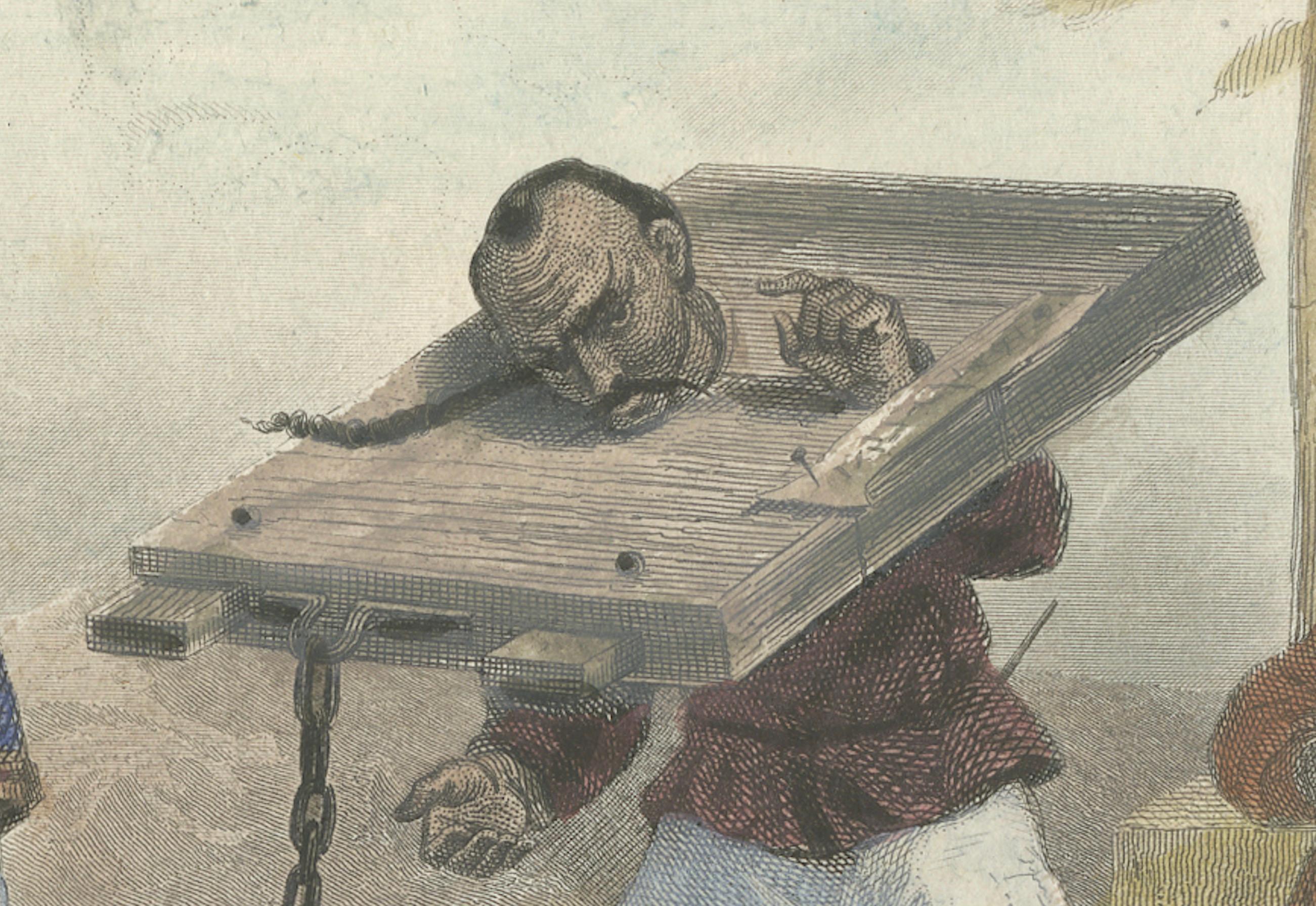
This antique print, titled "Chinois condamné à la Cangue," vividly illustrates a scene of corporal punishment in East Asia during the 19th century. The central figure in the image is a man wearing a **cangue**—a large, heavy wooden frame around his neck that severely restricts movement and serves as a tool for public humiliation. The cangue, sometimes referred to as a "tcha," was used as a form of punishment across East Asia and Southeast Asia and was notorious for the suffering it inflicted. Individuals subjected to this device were often left to the mercy of passersby, as they were unable to feed or care for themselves.
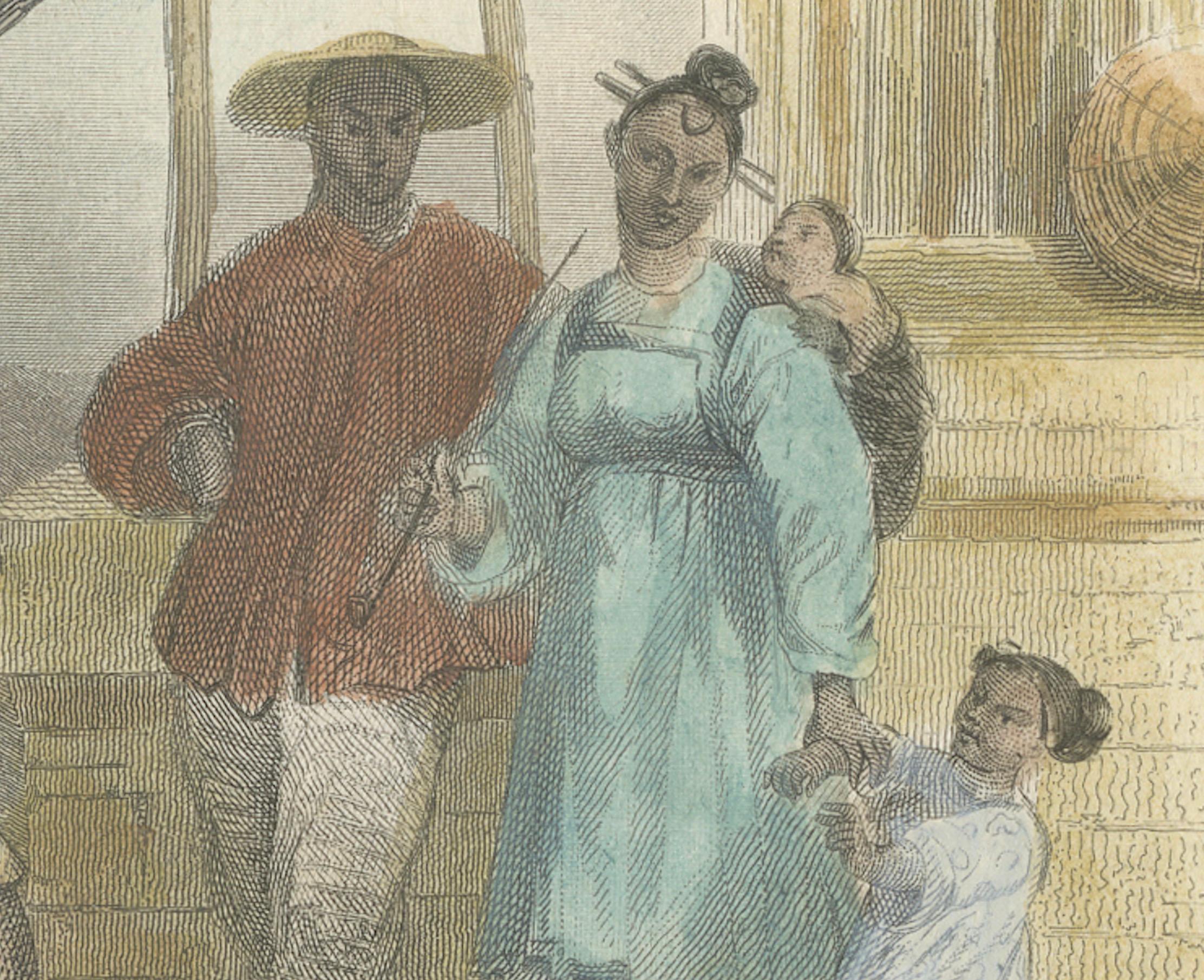
In the scene, the man appears to be in distress, his posture slumped under the weight of the cangue, while a guard or overseer stands nearby holding a whip. The guard is dressed in traditional clothing, including a conical hat, and exudes an air of authority. In the background, onlookers—consisting of men, women, and children—observe the scene, seemingly indifferent or resigned to the spectacle of punishment.
The setting is a rural area, with simple huts and foliage visible in the background, underscoring the everyday nature of such punishments during that period. The landscape is depicted in soft tones, contrasting with the darker, more somber colors used for the figures, emphasizing the harsh reality of the punishment.
This engraving was created by Audibran*after a design by Rouargue, and it was published around 1860. The overall condition of the print shows general age-related toning and some foxing, typical of its age. The blank verso and careful engraving style suggest it was intended for educational or illustrative purposes, perhaps to inform European audiences about the practices and customs of distant cultures.
The dimensions of the print are approximately 25.5 x 16.5 cm overall, with the image itself measuring 17 x 10 cm. Despite the toning and foxing, the print remains a poignant and detailed depiction of this form of punishment, offering insight into historical practices of justice and discipline in East Asia.