About this sheet
Traditional Headwear from Assisi, Naples, Viterbo, and Beyond – 1823 Print
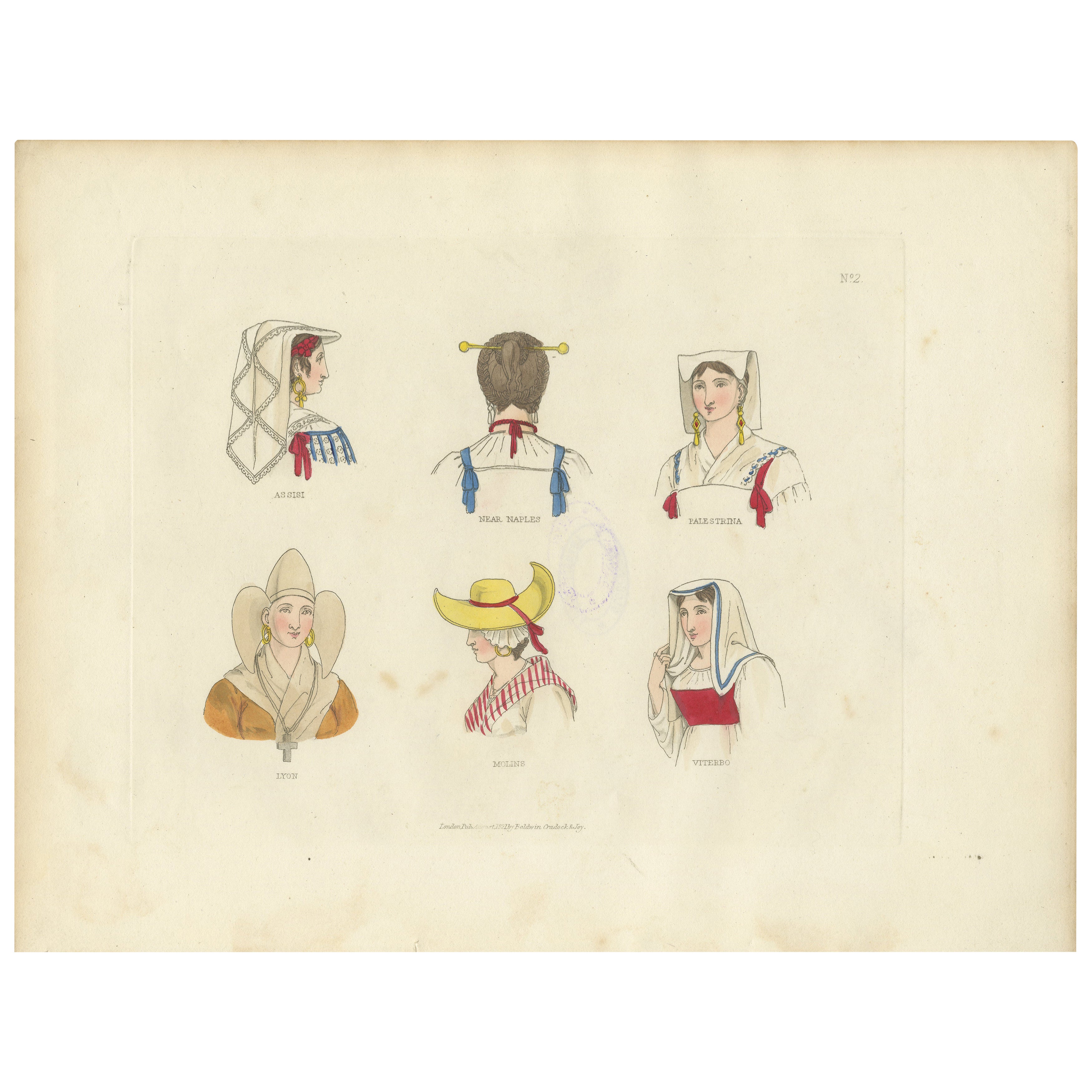
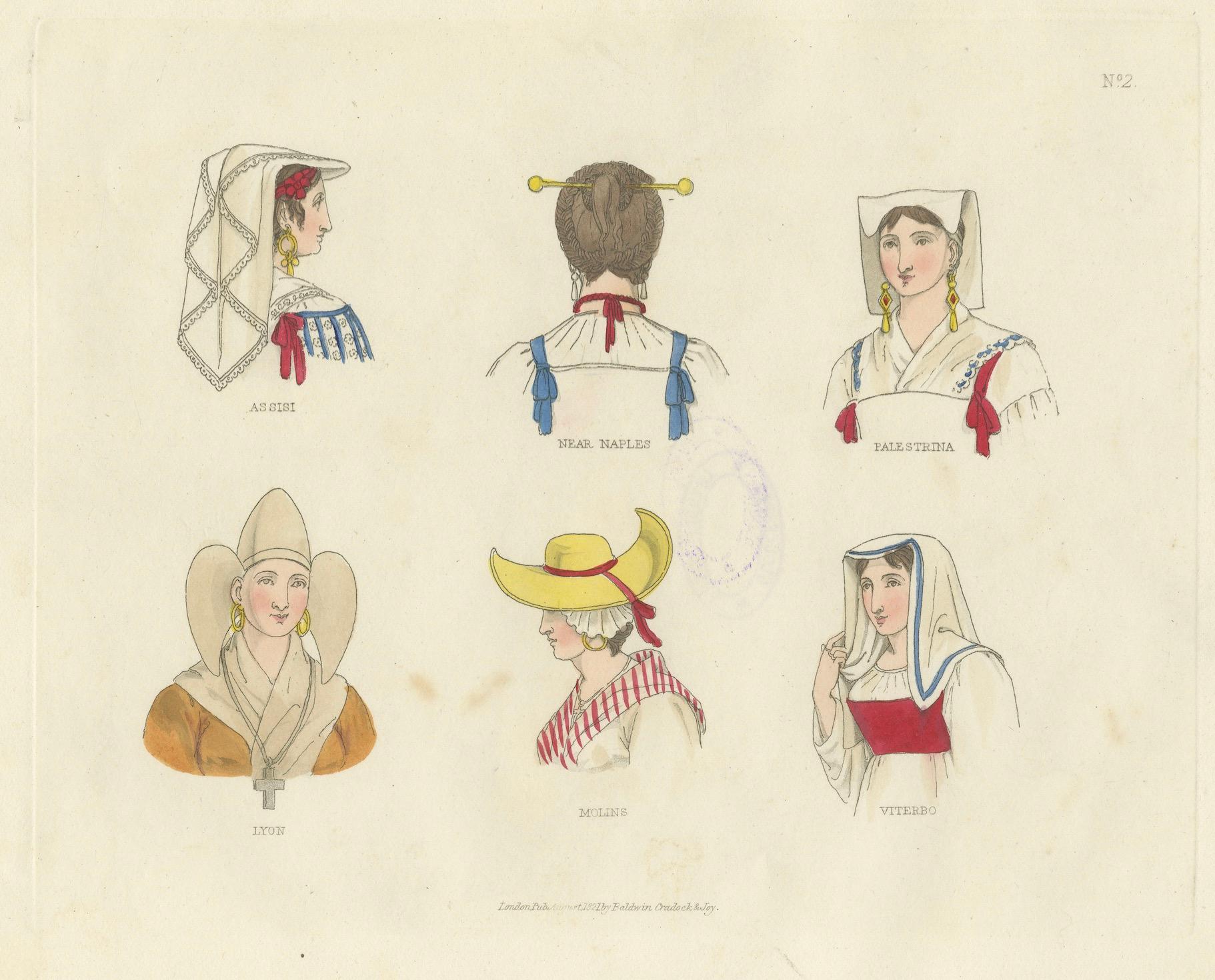
This charming hand-colored lithograph, labeled “No. 2,” is part of a series documenting traditional European costumes, focusing here on regional female headwear. Published in London on December 1, 1823, by Baldwin, Cradock & Joy, it was designed for an English audience eager to explore the rich cultural diversity of the Continent through costume.
The print features six finely rendered bust-length portraits of women from different locations in Italy and France, each showcasing distinctive regional headwear. Their names are labeled beneath each figure: Assisi, Near Naples, Vallestirna, Lyon, Meaux, and Viterbo.
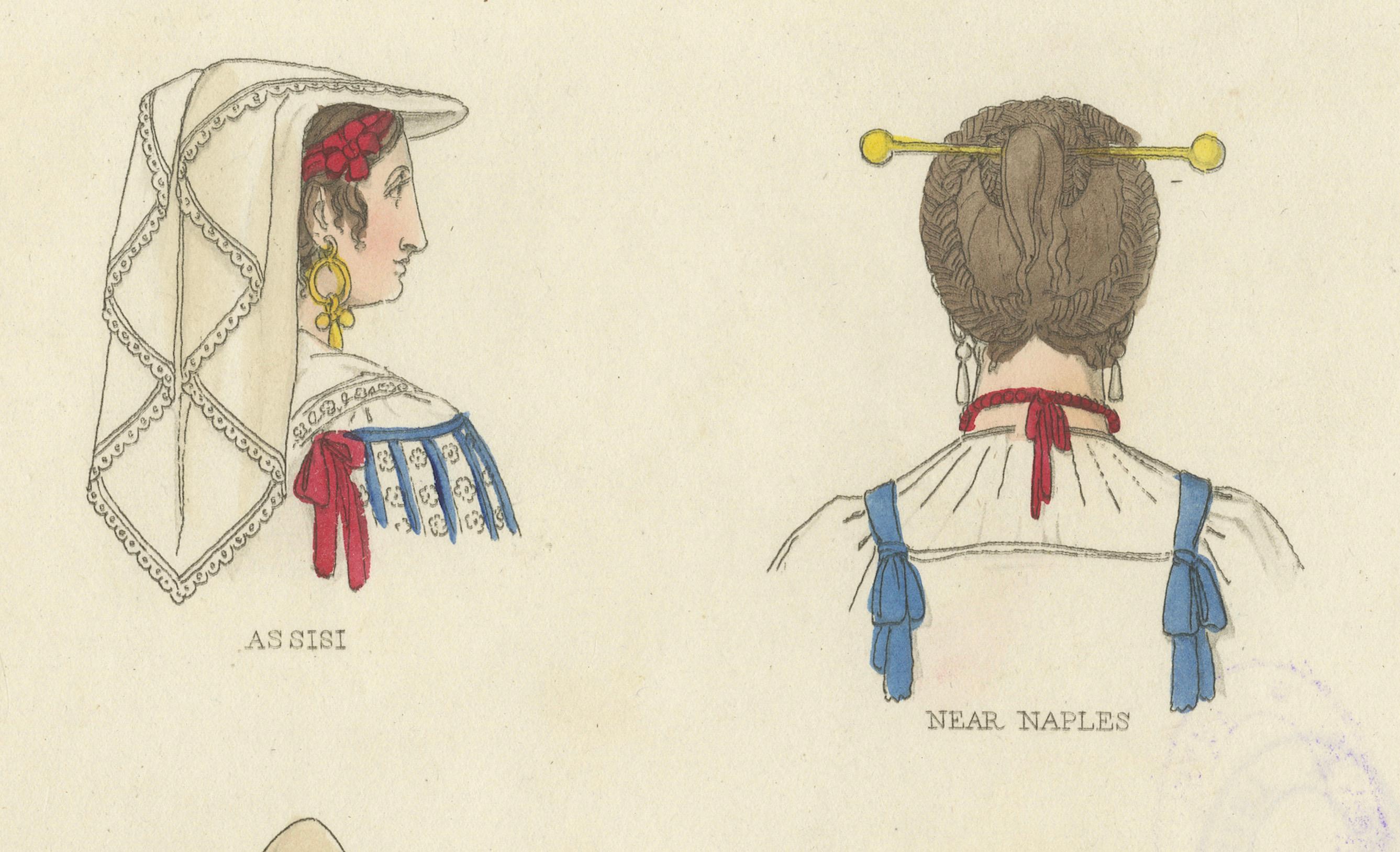
The woman from Assisi wears a delicate lace veil structured in a geometric latticework over her head, with a red flower tucked near her ear and golden hoop earrings adding warmth. Center top, the figure from Near Naples is seen from behind, with her hair elegantly coiled and secured by a horizontal golden pin, finished with blue and red shoulder ribbons—an unusual rear view that highlights hair arrangement and ornament.
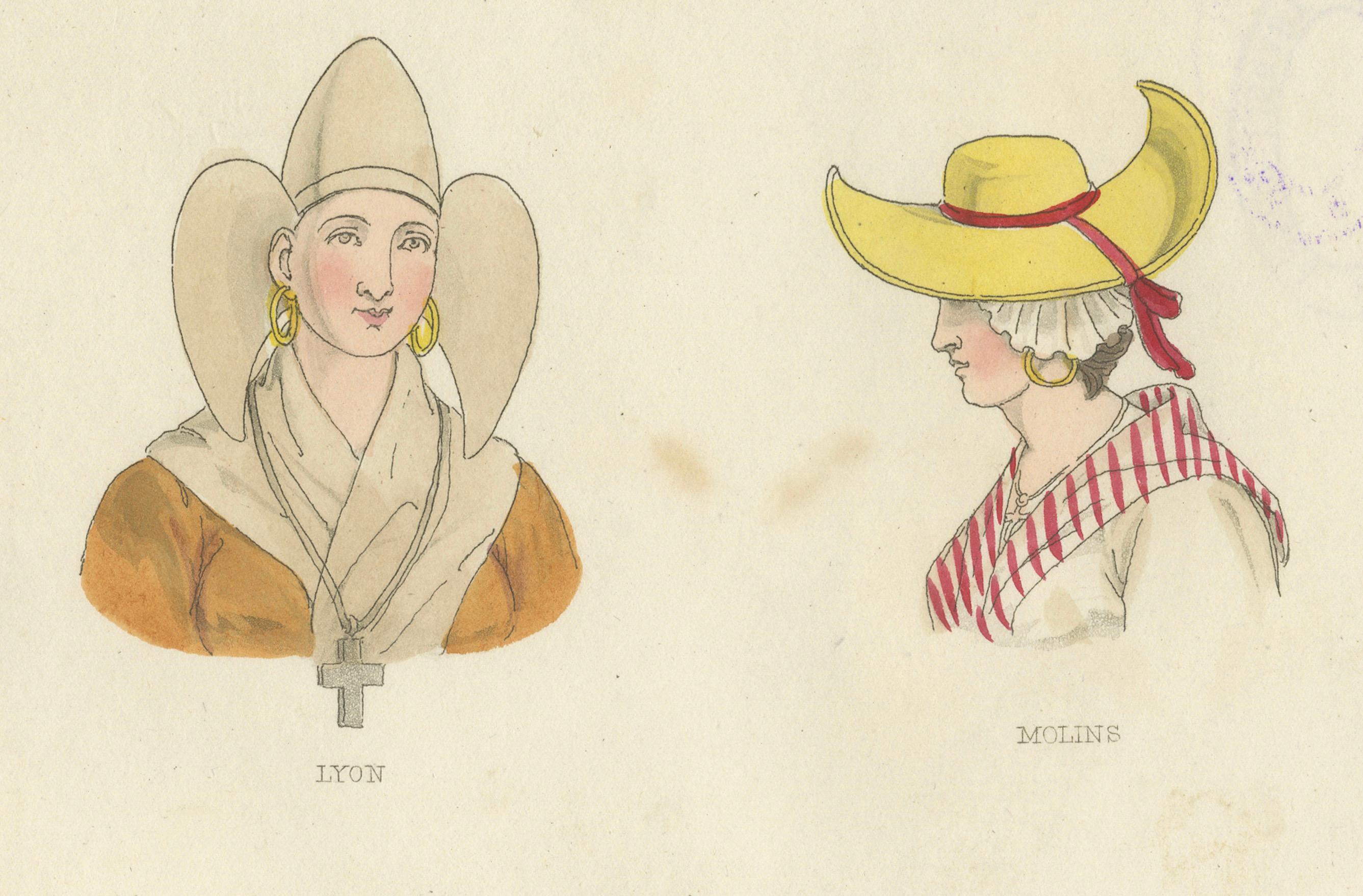
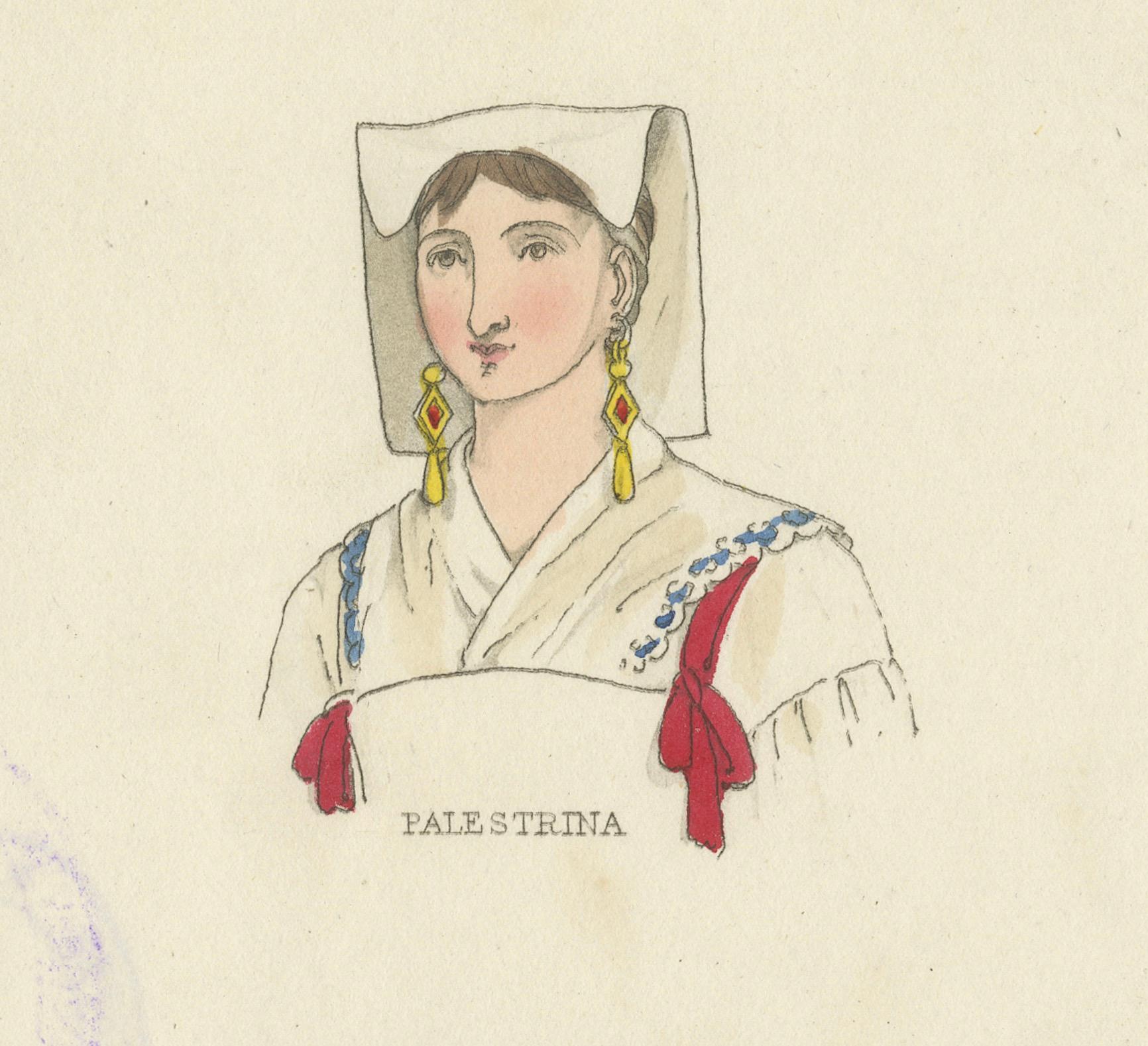
The woman from Vallestirna dons a sharply folded white headdress with decorative red and blue shoulder ties and pendant earrings. Her appearance is modest, yet festive. In contrast, the figure from Lyon (bottom left) is depicted in one of the most dramatic regional costumes, wearing a sculptural headdress resembling a bishop’s mitre, paired with a heavy cross pendant and ochre dress—a symbol of local tradition and religious identity.
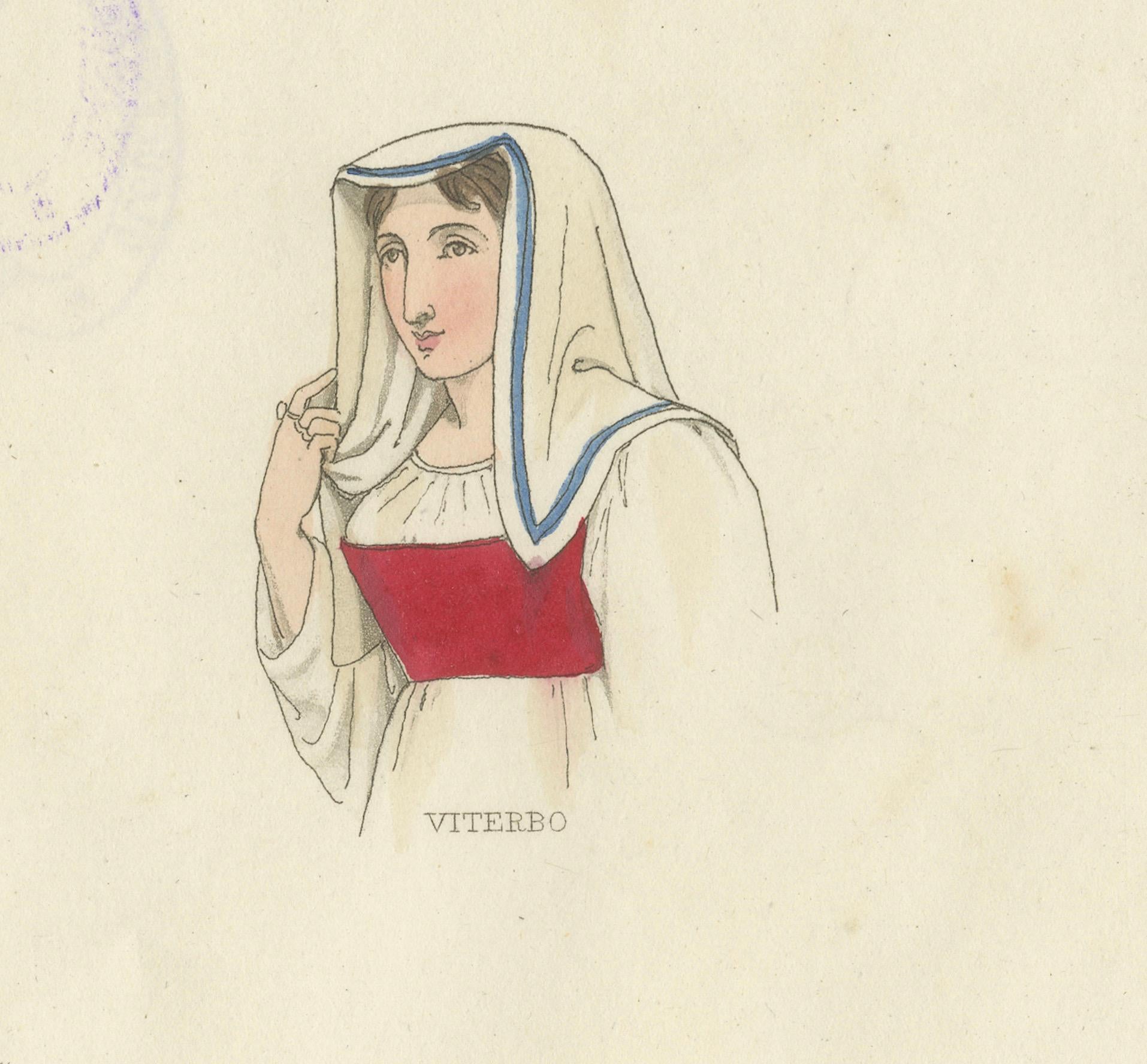
The Meaux woman is shown in profile wearing a wide-brimmed yellow hat trimmed in red, perched over a white lace bonnet. She wears a checkered red kerchief, giving her a bucolic charm. Finally, the woman from Viterbo wears a white veil with a blue border and a red bodice, her elegant pose suggesting dignity and devotion.
This print belongs to a genre that celebrated traditional dress during a time when rapid modernization was threatening to erase it. These costume studies are now valuable records of vanishing styles.
Condition Report:
Good condition with soft age-toning and a light central stamp mark. Minor foxing at the edges and faint handling wear. Color remains strong and the paper is well-preserved.
Framing Tips:
Use a light maple or gold frame with a wide ivory mat to balance the symmetrical composition. Museum glass will protect the soft hand-coloring. Ideal for pairing with others from the same series.