About this sheet
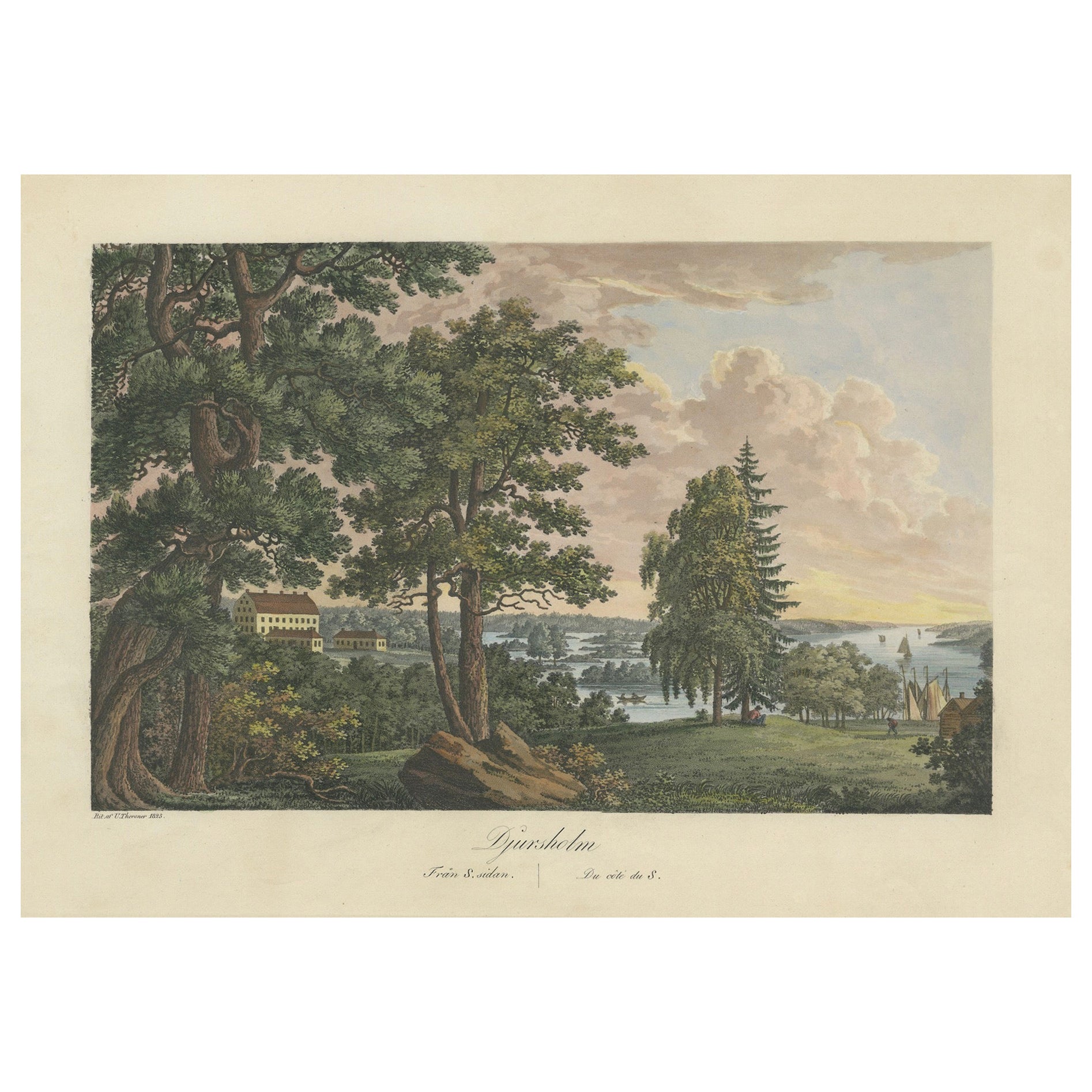

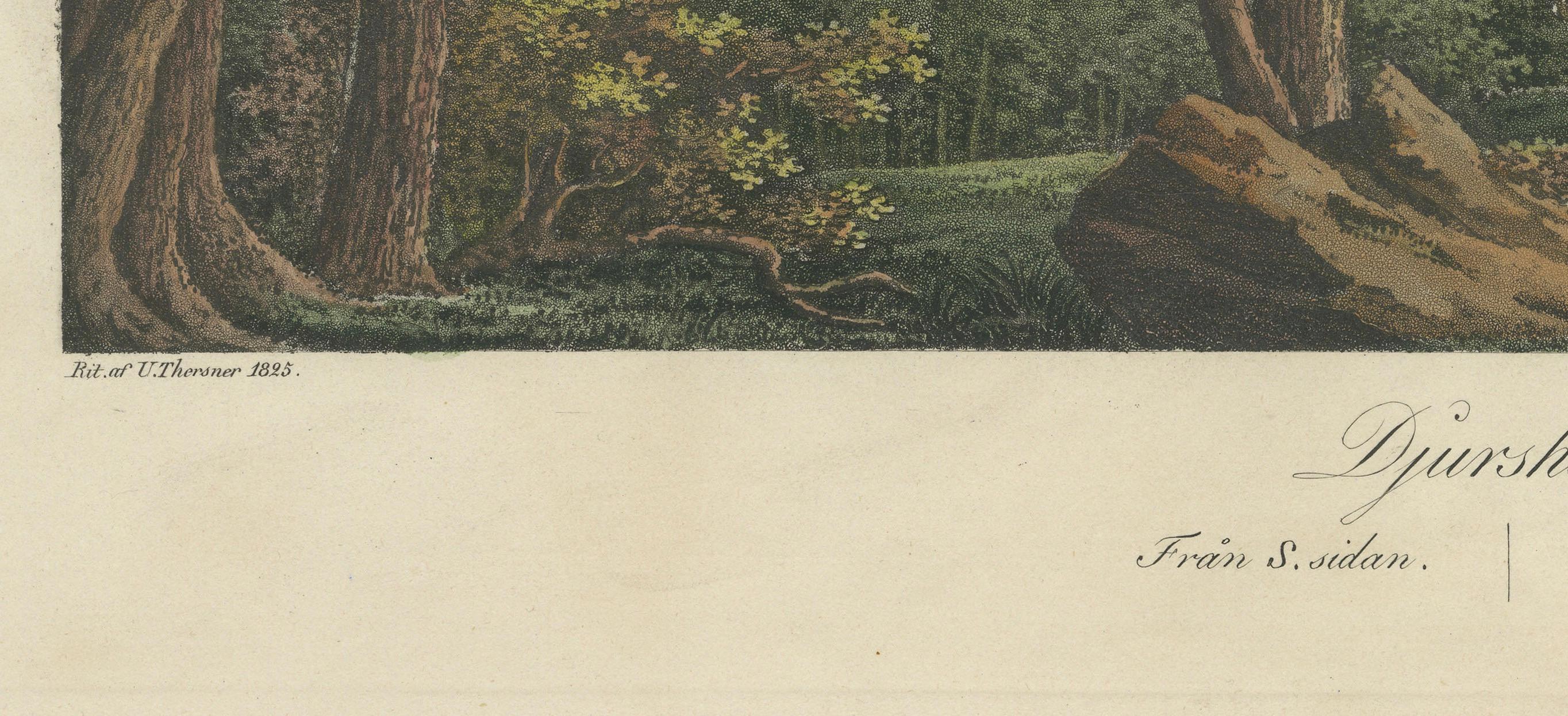
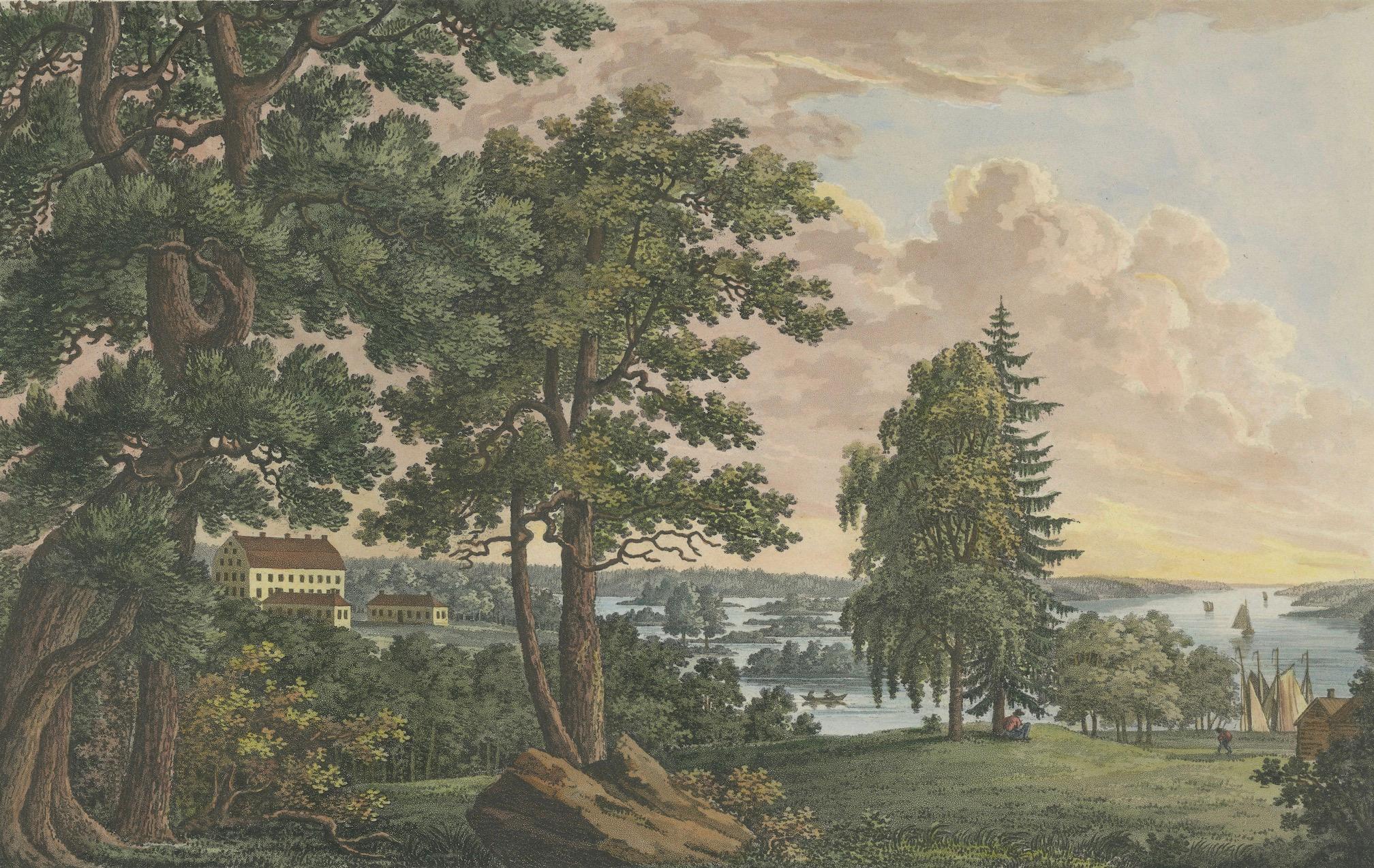
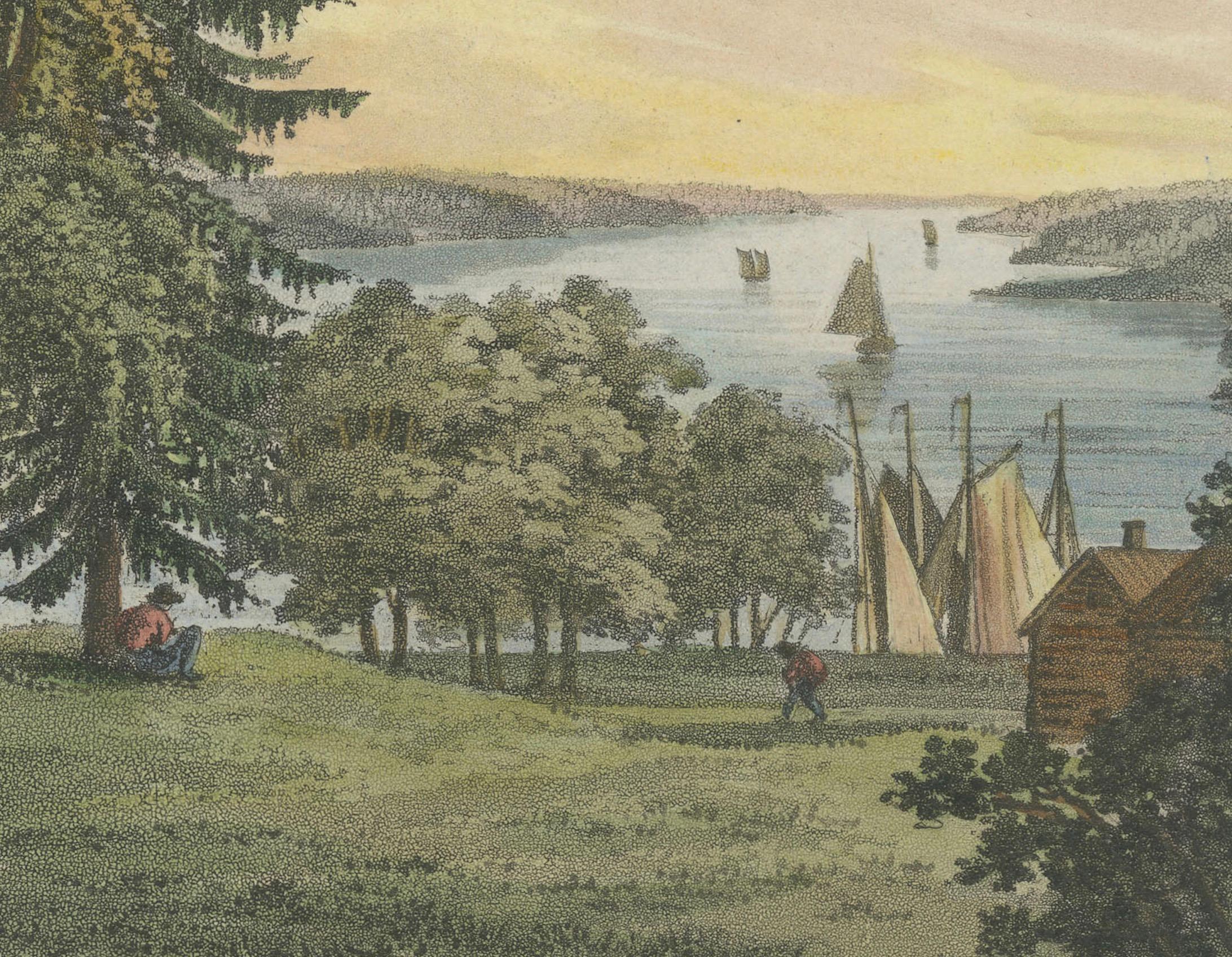
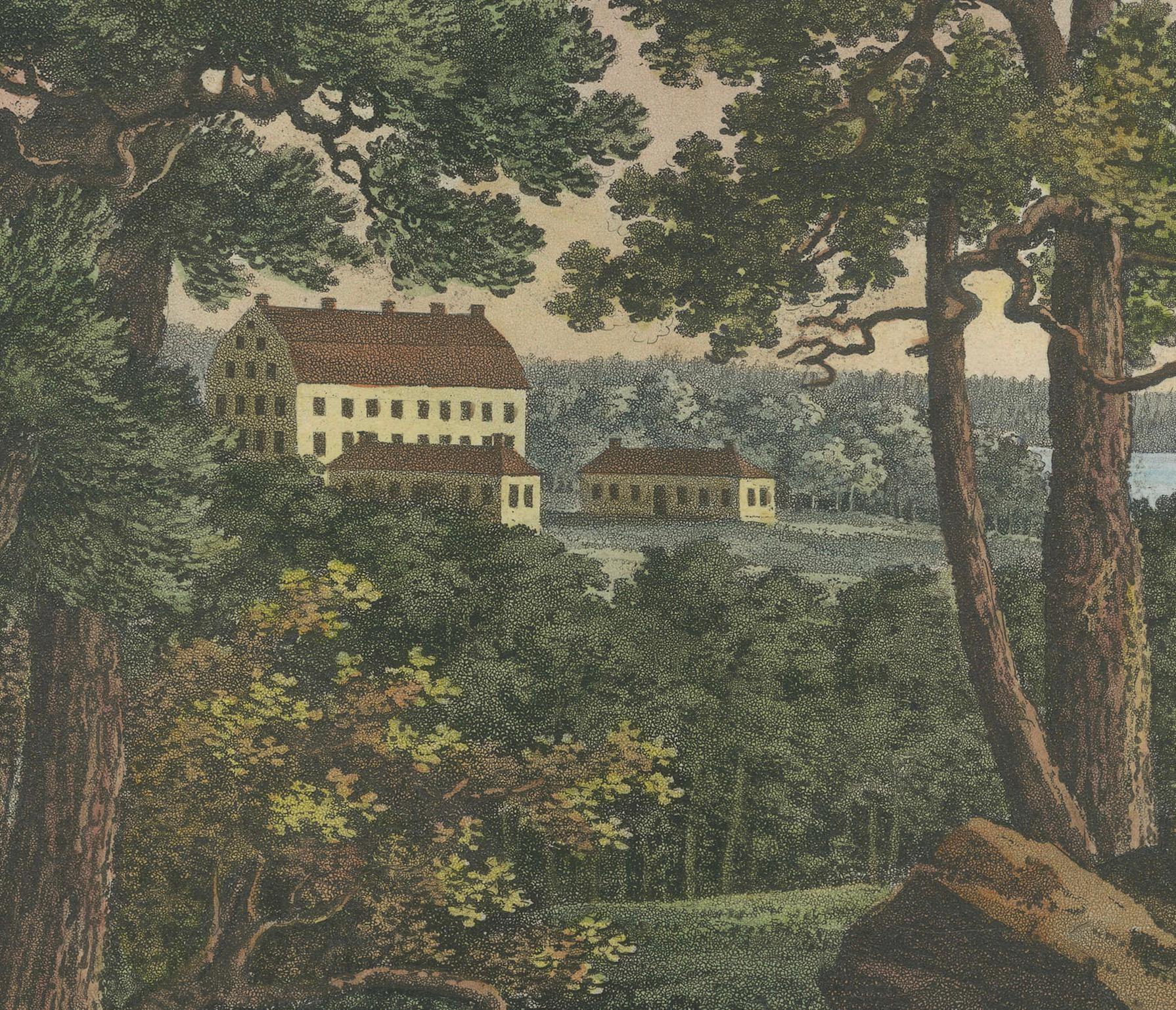
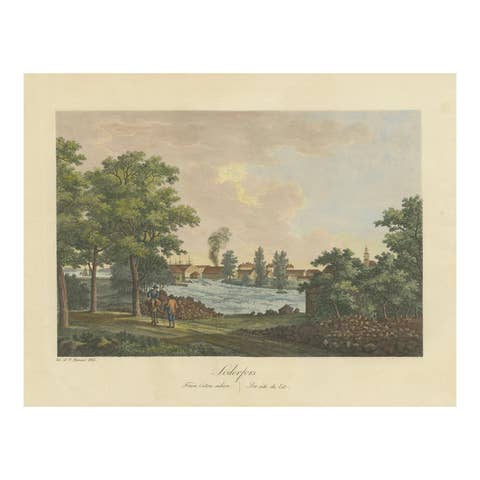
This hand-colored aquatint is a topographical view of Djursholm Castle in Danderyd, Sweden, and it is a part of Ulrik Thersner's ambitious project, "Fordna och närvarande Sverige" (Antiquity and Present Sweden). This work aimed to be a modern counterpart to Erik Dahlbergh's "Suecia antiqua et hodierna," a significant 17th-century work that showcased Sweden's historical and contemporary landscapes, buildings, and monuments through engravings.
Ulrik Thersner's endeavor in creating "Fordna och närvarande Sverige" involved drawing several mansions, among other subjects, and began publishing these works in 1817. The technique used, aquatint, is a form of etching that allows for the creation of images with tonal variations, resembling watercolor paintings, which makes it particularly suited for detailed and atmospheric topographical representations like the one of Djursholm Castle.
Carl Fredrik Akrell, a notable engraver, worked on engraving Thersner's images, which were then executed in aquatint, a process that allows for a rich gradation of tones and a painterly quality. Wilhelm Maximilian Carpelan later joined the publication effort, indicating a collaborative process in bringing Thersner's vision to fruition.
The parts of the series were published over a period, with Skåne completed in 1823, and the regions of Östergötland, Uppland, and Södermanland addressed in the years 1820 and 1824-25. Thersner's personal involvement in writing the text for the pictures underlines the detailed and scholarly approach taken in producing this series.
Thersner's "Fordna och närvarande Sverige" would have been an invaluable contribution to the documentation of Swedish cultural heritage and landscape during the early 19th century, providing a vivid pictorial record that would have appealed to both the scholarly community and the general public interested in the country's history and geography. The print of Djursholm Castle that you are referring to would be a part of this important series.
More about the maker:
Ulrik Thersner was a multifaceted individual, having an impactful military career alongside his work as a draftsman and topographer. Born on April 2, 1779, in Kyrkslätt parish in Finland, Thersner began his military service early, becoming a ship's boy in the Swedish navy at the tender age of seven. His naval service during Gustav III's Russian War marked the beginning of a lifelong commitment to the military.
In 1794, he advanced to the rank of sergeant in the Army's fleet and was appointed as an ensign five years later. His career took a significant turn in 1804 when he was appointed information officer at the Gothenburg squadron, a role that involved hydrographic measurements in Bohuslän.
Thersner's military engagements were diverse and geographically spread; in 1807, he transitioned to the Field Survey Corps, where he became a lieutenant in 1808. His expertise in surveying was put to use during the Finnish War, where he was involved in operations in Åland and battles at Sävar and Ratan. By 1810, Thersner had risen to the rank of captain and contributed to the border delineation between Sweden and Russia.
His membership in the Royal Academy of Military Sciences in 1811 further affirmed his academic and professional stature. During the war of 1813-14, Thersner held various commands and notably led the engineering efforts during the siege of Glückstadt.
Promoted to major in the Field Survey Brigade in 1814, Thersner post-war undertook triangulation measurements in Skåne from 1815 to 1817, demonstrating his proficiency in the practical applications of surveying and mapping. His retirement came in 1825, when he left the service with the rank of lieutenant colonel.
Beyond his military service, Thersner is most renowned for his authorship of "Fordna och närvarande Sverige" (Antiquity and Present Sweden), a work that illustrated Swedish estates and landscapes, reflecting both his artistic talent and his technical skills as a surveyor and cartographer. Thersner's artistic endeavors served as a historical record and a tribute to Sweden's cultural and geographic landscapes.
Thersner's life came to an end on September 2, 1828, in Västerås, Sweden. His dual legacy as a dedicated military officer and as an artist who meticulously recorded Sweden's geographical beauty ensures his enduring place in Swedish history.
More about the Castle:
Djursholm Castle (Djursholms slott) is located in Djursholm, Danderyd, just north of Stockholm, Sweden. It's not a castle in the medieval sense but rather a grand country house or mansion. Djursholm was originally built as a private residence for the affluent and has played a significant role in the area's development.
The estate was established in the late 15th century, and the original castle was built by the treasurer Gabriel Gustafsson Oxenstierna in 1640. Over the years, the castle has been renovated and expanded several times. In the 19th century, it was transformed into a...