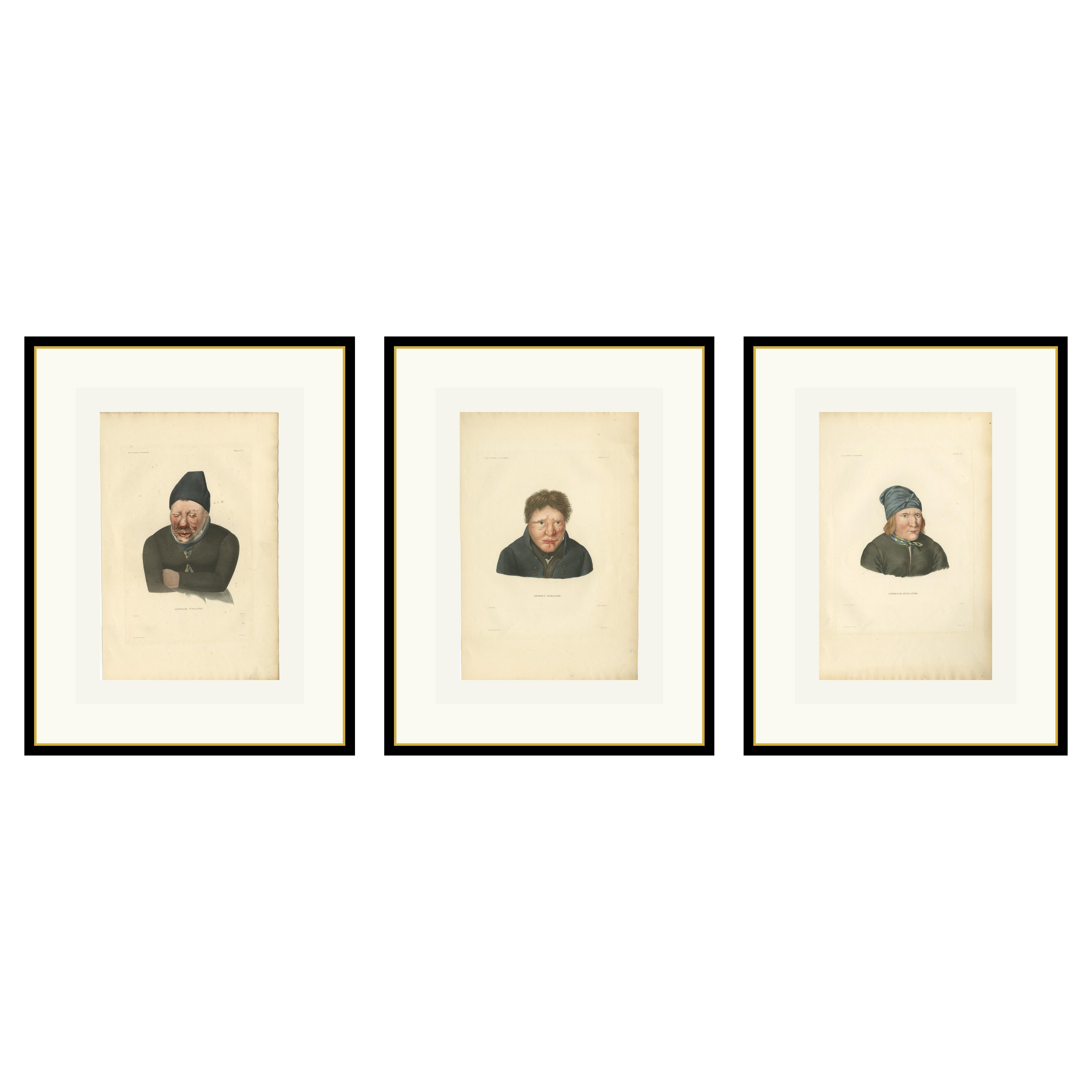
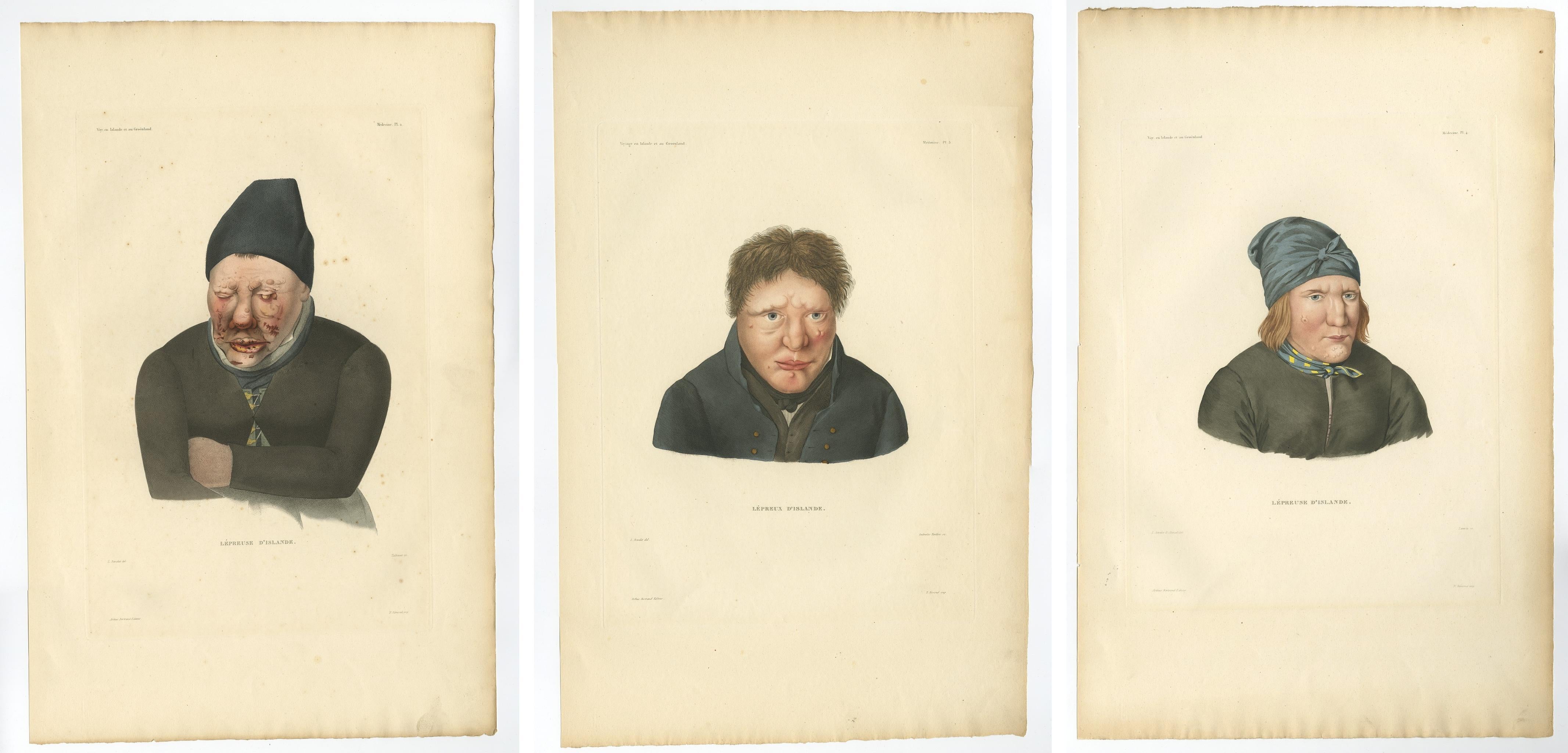
Set of Three Hand-Colored Lithographs of Lepers, Iceland, 1842
€ 1 520
Original antique · The actual sheet photographed · Certificate of authenticity on request · Sold unframed · Worldwide shipping from € 15 (rates)
Date
1842
Mapmaker / artist
Published in Voyage en Islande et au Groenland by Paul Gaimard, Paris, 1842
Technique
Hand-colored lithographs
Sheet size
54 × 35.5 cm (21.3 × 14.0 in)
Condition
Good
Reference
PCT-57769, -70, -71
What the condition grades mean
Excellent
Bright and clean, with no faults worth mentioning.
Very good
Only light signs of age, such as faint toning.
Good
Normal signs of age for a sheet of this period: toning, some foxing, small marks or neat old repairs.
Fair
Clear faults such as staining, tears or repairs, priced to match.
Every fault we see is written in the condition note, and the whole sheet is shown uncropped in the photos.
Condition
Good condition overall. Strong original coloring preserved. Scattered foxing, particularly in the margins, consistent with age. Wide margins intact. The central images remain vivid with some scattered foxing, adding to its patina.
About this sheet
Set of Three Antique Prints of Lepers from Iceland – Gaimard Voyage, 1842
The prints are sold without a framing or matting board.
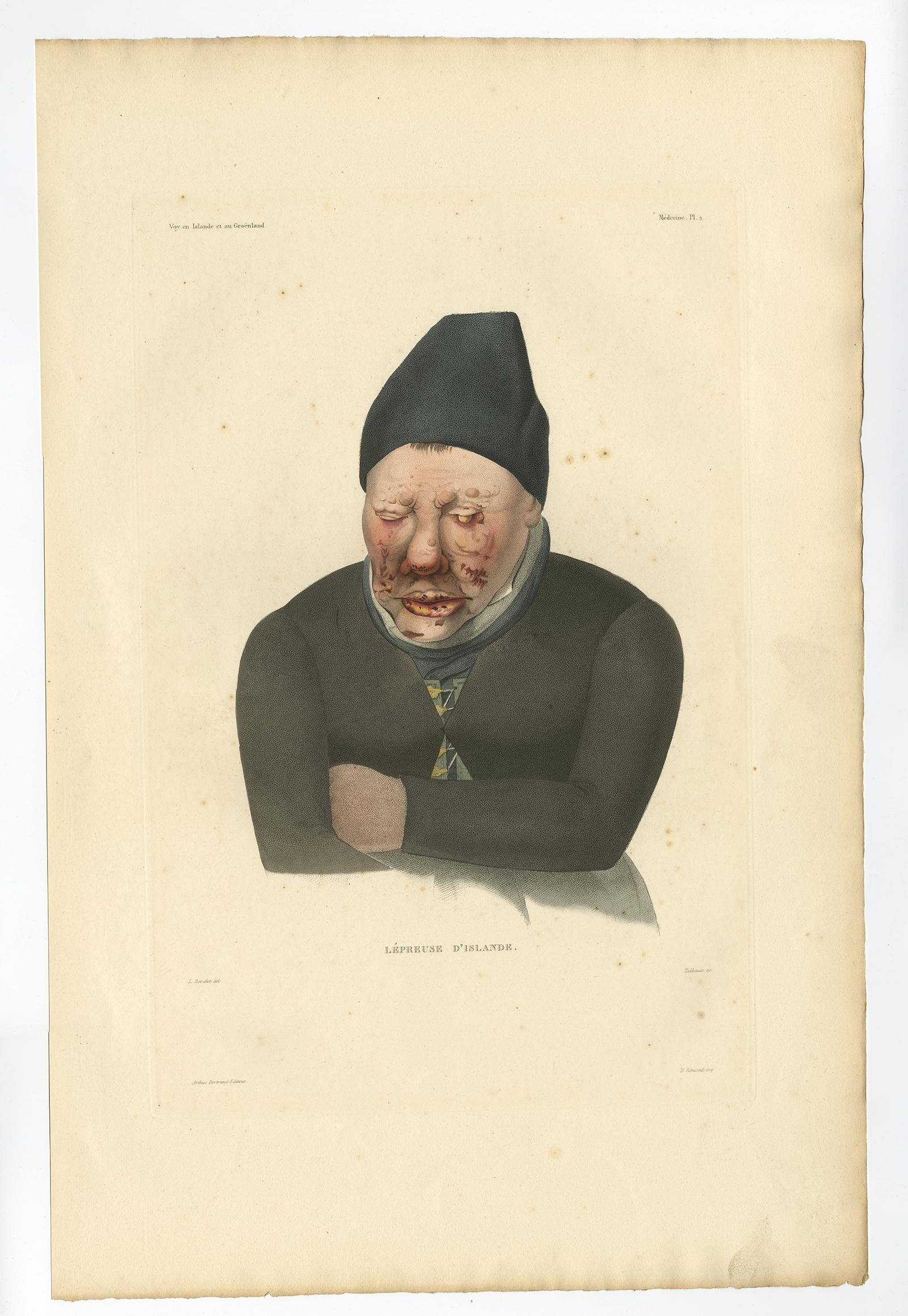
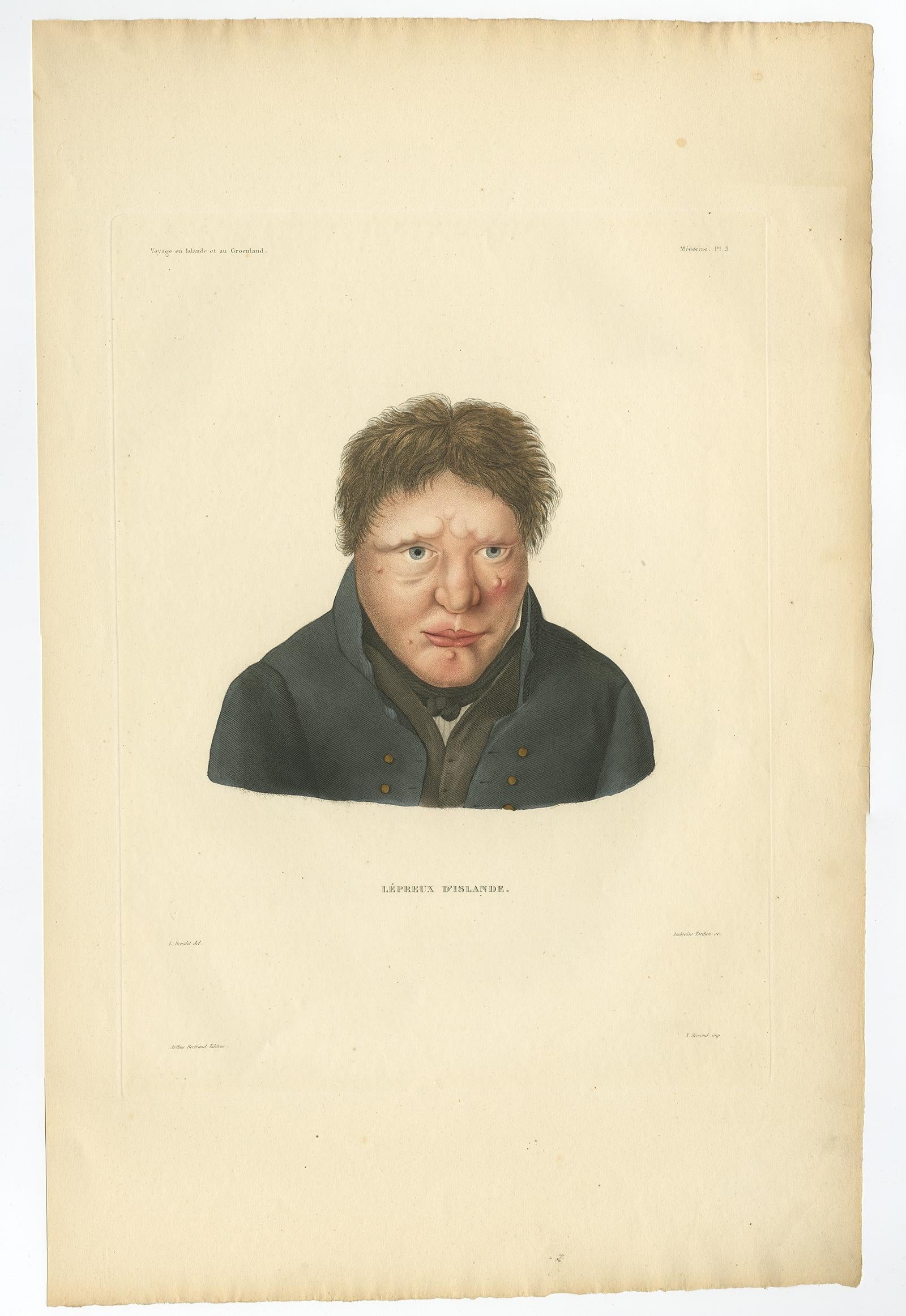
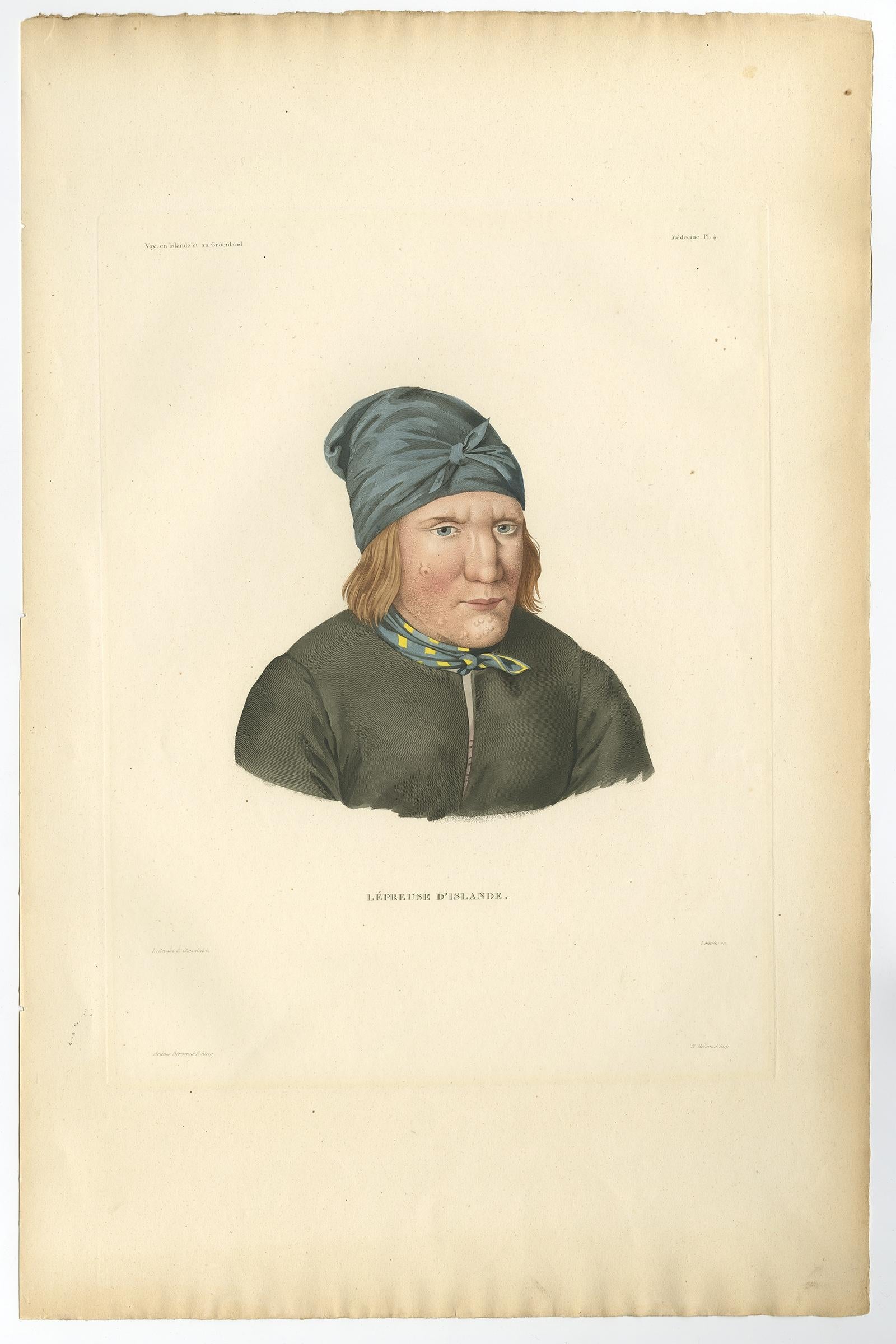
This rare set of three hand-colored lithographs, each titled “Lépreux d’Islande” (Leper from Iceland), was published in Paris in 1842 as part of Paul Gaimard’s monumental work Voyage en Islande et au Groenland. These striking medical and ethnographic plates document cases of leprosy encountered in Iceland during Gaimard’s scientific expedition of 1835–1836.
Each print portrays a different individual with remarkable detail: one showing advanced facial lesions, another a young man with swollen features, and a third presenting a woman in a blue headscarf. The portraits are executed with unflinching realism, providing an invaluable record of both medical observation and Icelandic costume of the early 19th century. Unlike many contemporary works that generalized or idealized subjects, these lithographs are rooted in scientific precision, showing the human face of disease with accuracy and empathy.
Paul Gaimard (1793–1858), a French naval surgeon and naturalist, participated in several major expeditions, including Freycinet’s circumnavigation on Uranie and Dumont d’Urville’s Astrolabe expedition in search of La Pérouse. His later voyage to Iceland was initially intended to seek news of the missing Jean de Blosseville expedition. Although no trace of Blosseville was found, Gaimard’s observations across Iceland and Greenland produced one of the most important scientific travel accounts of the 19th century, richly illustrated with ethnographic, medical, and landscape plates.
Such images are today highly valued not only for their rarity but also for their dual importance in the history of medicine and anthropology. They reveal how European science documented disease, while also capturing the individuality of Icelandic people living with illness. Complete sets of these lithographs are scarce and highly sought after by collectors of exploration, ethnography, and medical history.
Condition report: Good condition overall. Strong original coloring preserved. Scattered foxing, particularly in the margins, consistent with age. Wide margins intact. The central images remain vivid with some scattered foxing, adding to its patina.
Framing tips: These three prints can be framed individually or as a striking triptych. A soft cream or ivory mount helps balance the strong tones of the hand coloring, while dark wood or walnut frames add warmth and gravitas. For a museum-style presentation, simple black frames with narrow gilt fillets highlight the scientific importance of the set.