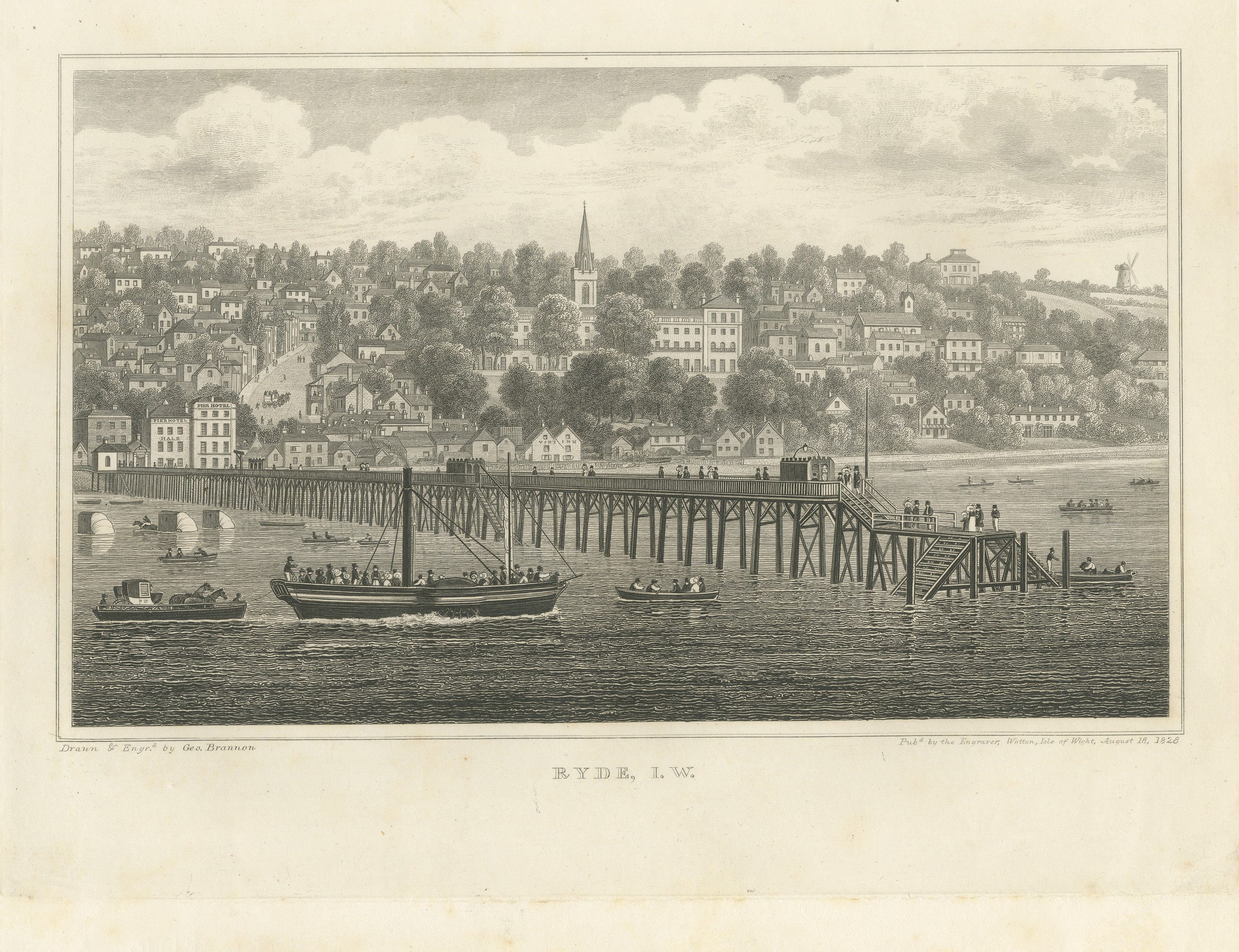
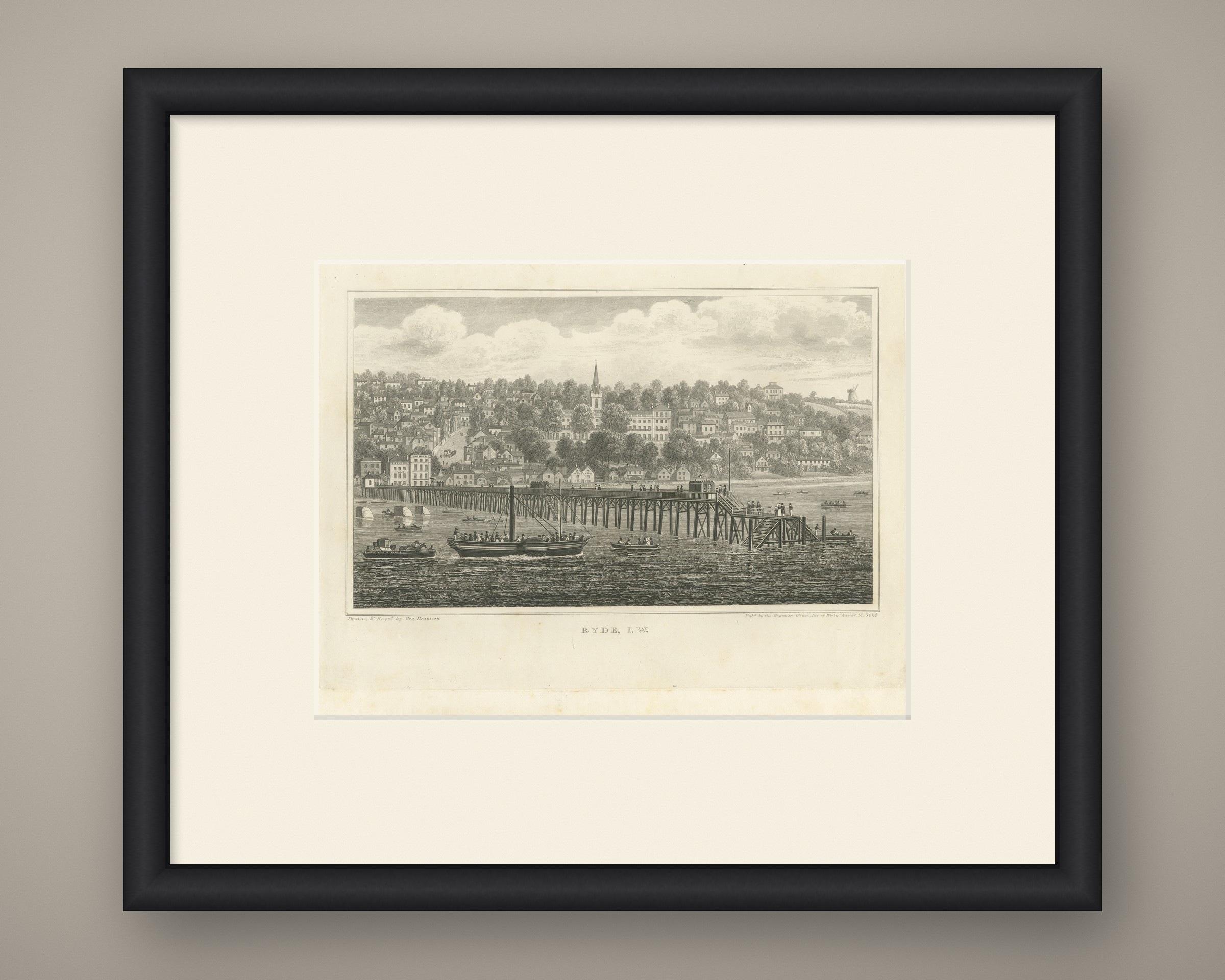
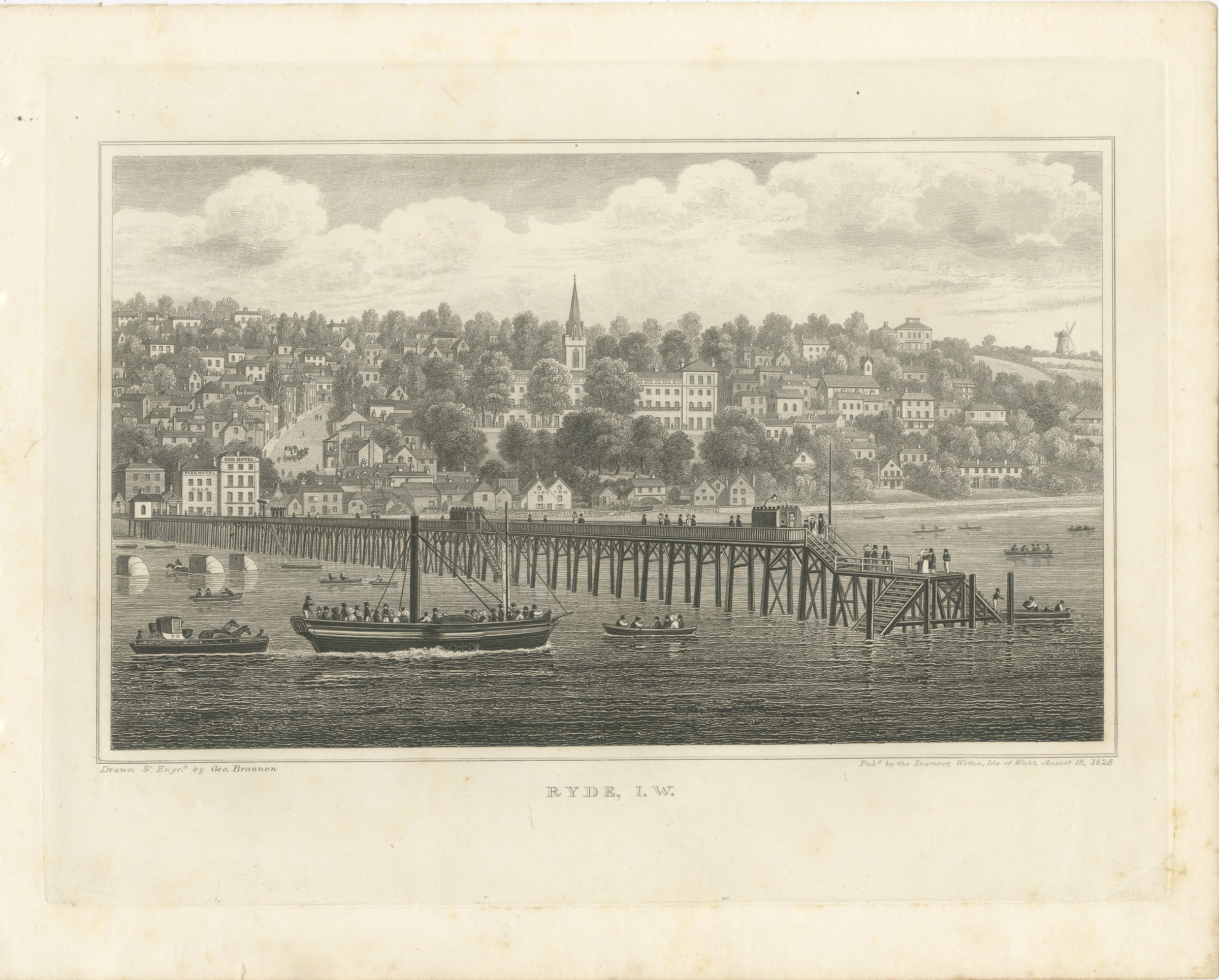
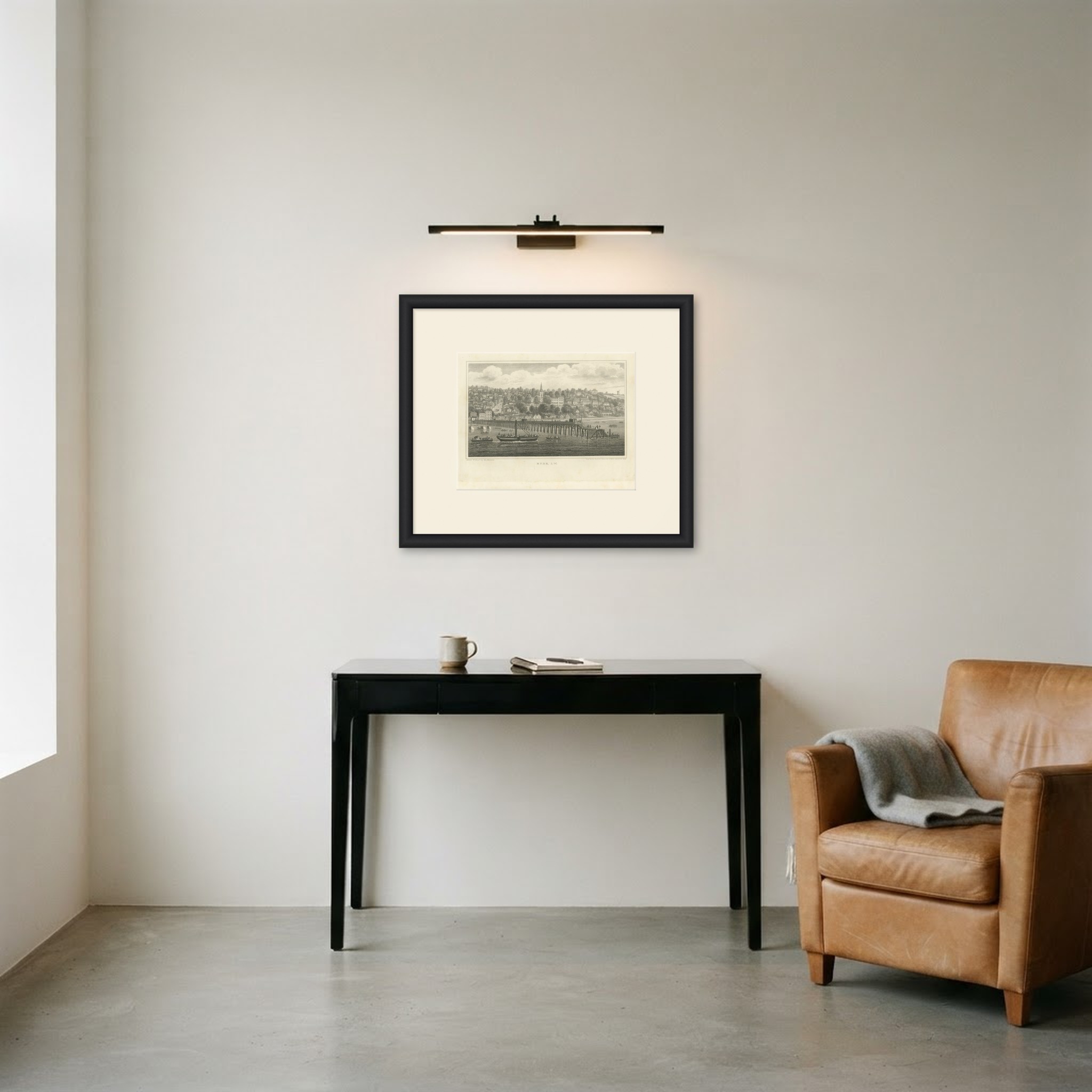
Paddle Steamer at Ryde Pier, England's First Pleasure Pier, Brannon, 1828
€ 300
Original antique · The actual sheet photographed · Certificate of authenticity on request · Sold unframed · Worldwide shipping from € 15 (rates)
Date
1828
Mapmaker / artist
George Brannon (draughtsman and engraver)
Publisher
George Brannon, Wotton Common, Isle of Wight
Technique
Copper Engraving
Coloring
Uncolored
Sheet size
23 × 30 cm (9.1 × 11.8 in)
Condition
Good
Reference
BG-14210-8
What the condition grades mean
Excellent
Bright and clean, with no faults worth mentioning.
Very good
Only light signs of age, such as faint toning.
Good
Normal signs of age for a sheet of this period: toning, some foxing, small marks or neat old repairs.
Fair
Clear faults such as staining, tears or repairs, priced to match.
Every fault we see is written in the condition note, and the whole sheet is shown uncropped in the photos.
Condition
Light uneven toning, browner towards the edges. Handling soiling along the bottom and right edges. Scattered foxing in the margin. All four corners complete.
About this sheet
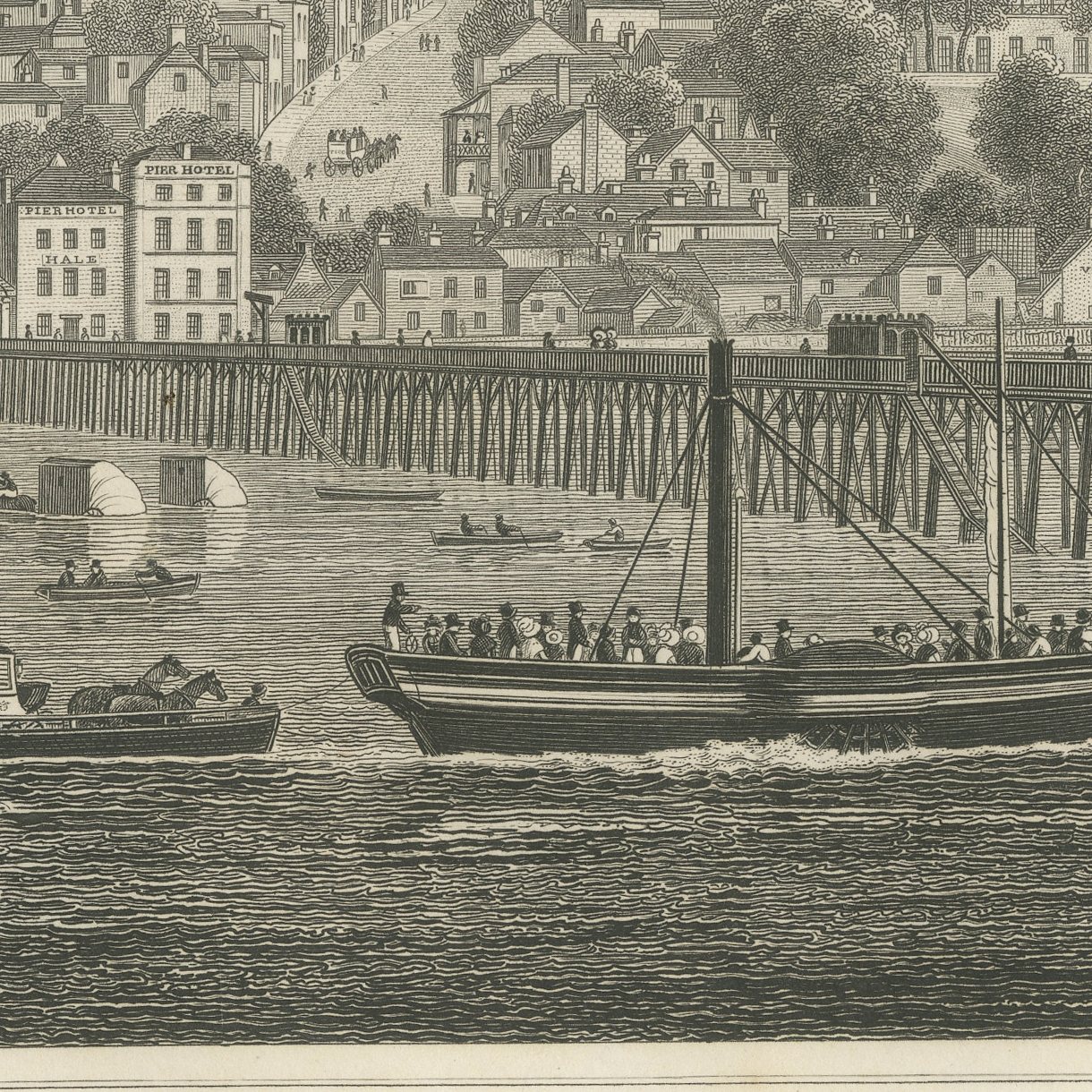
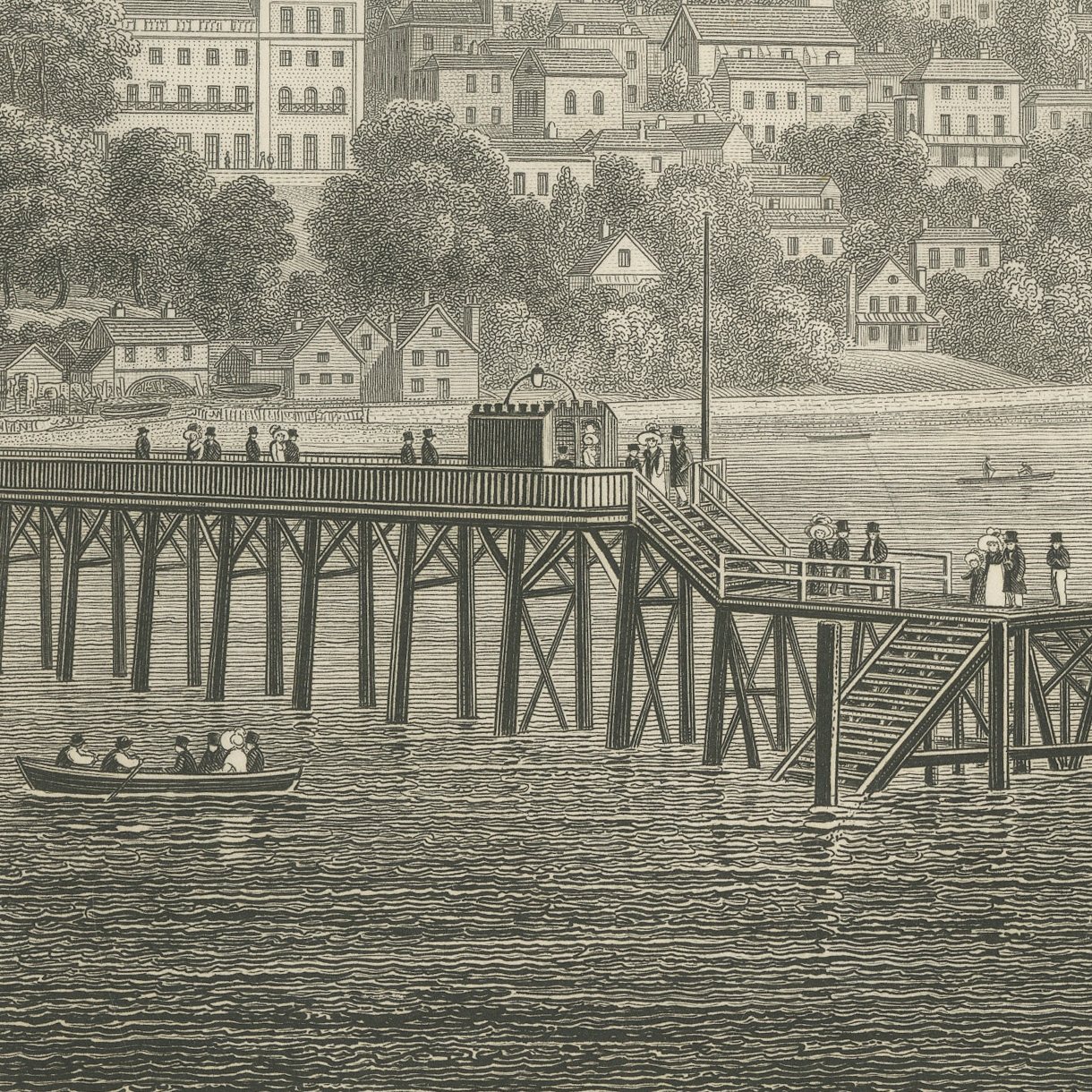
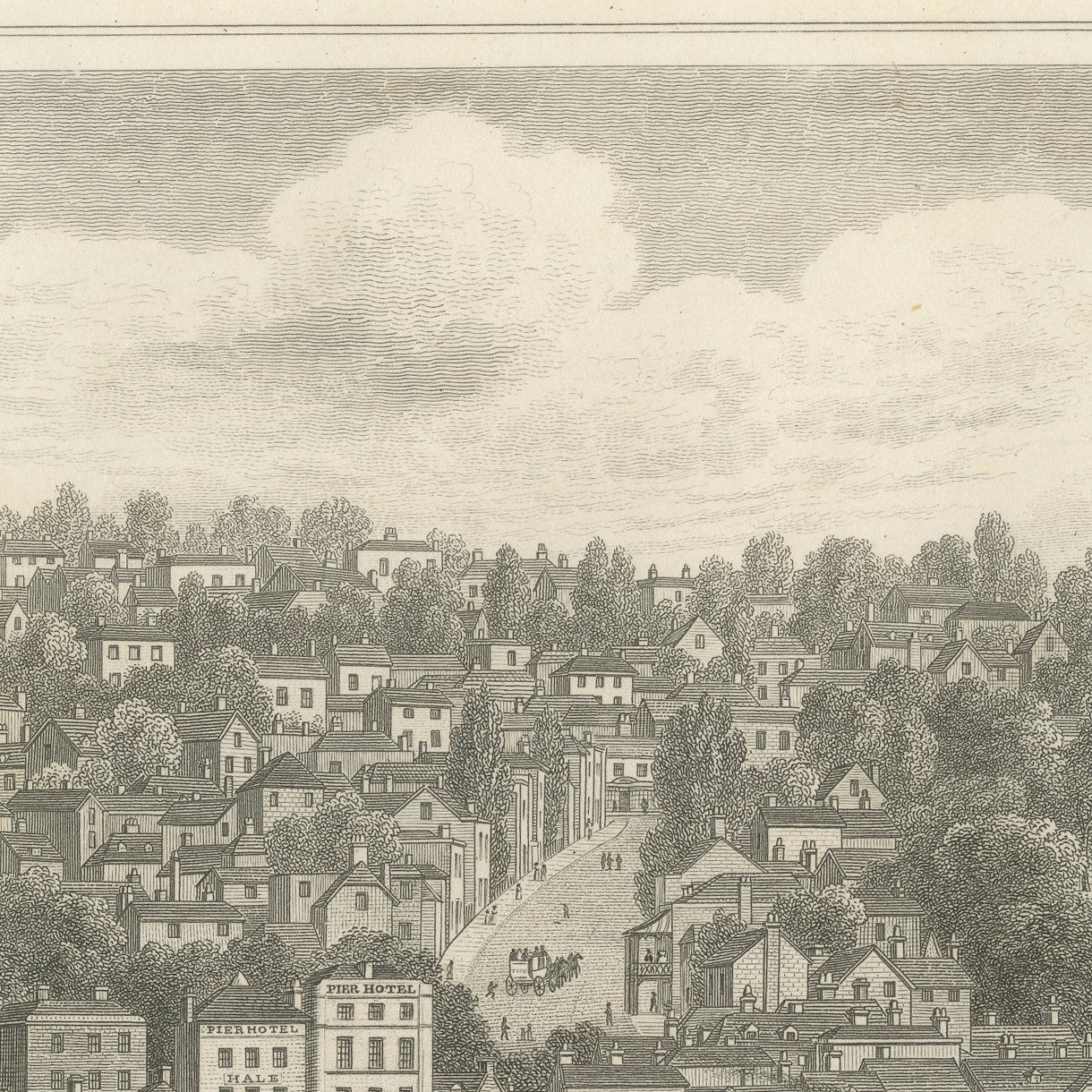
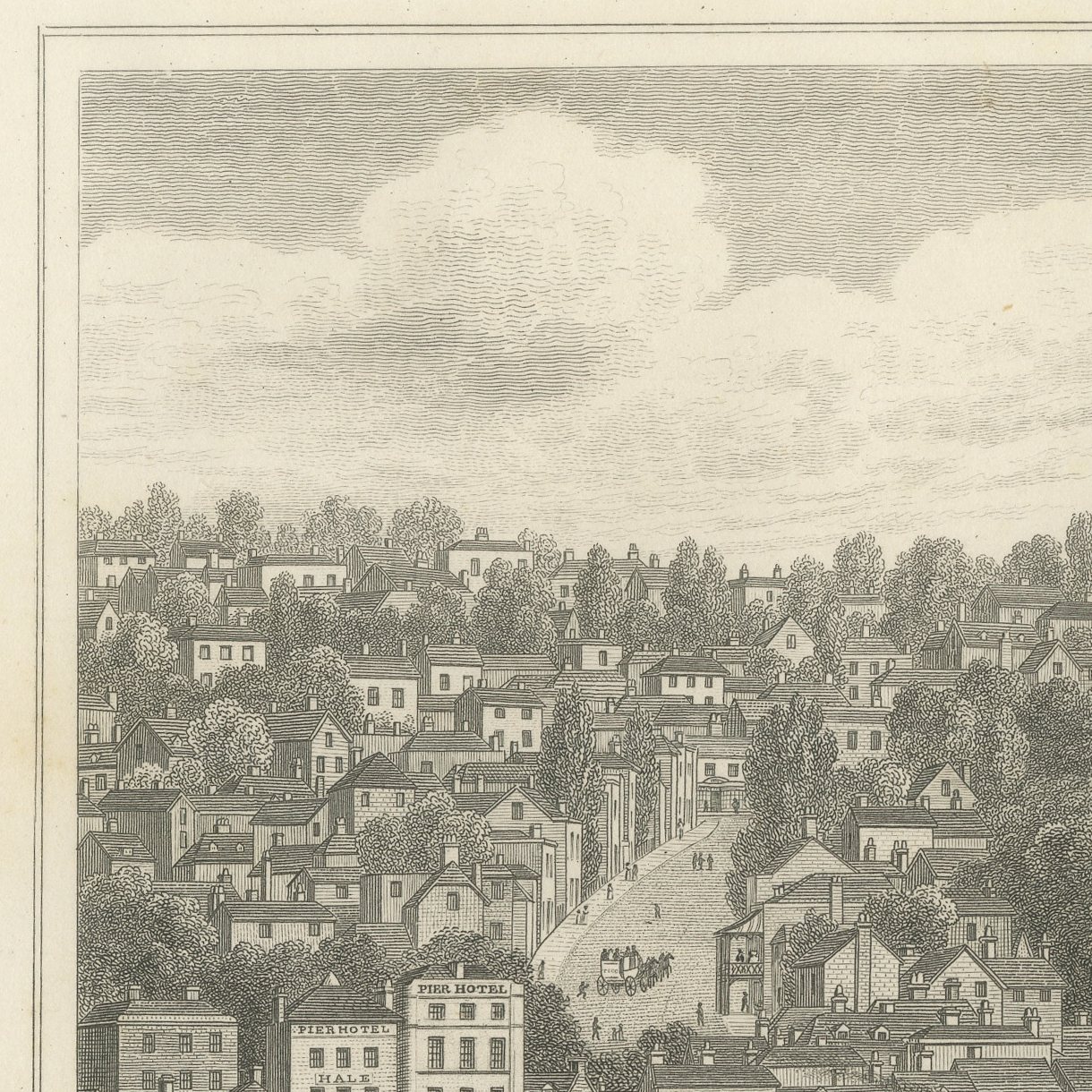
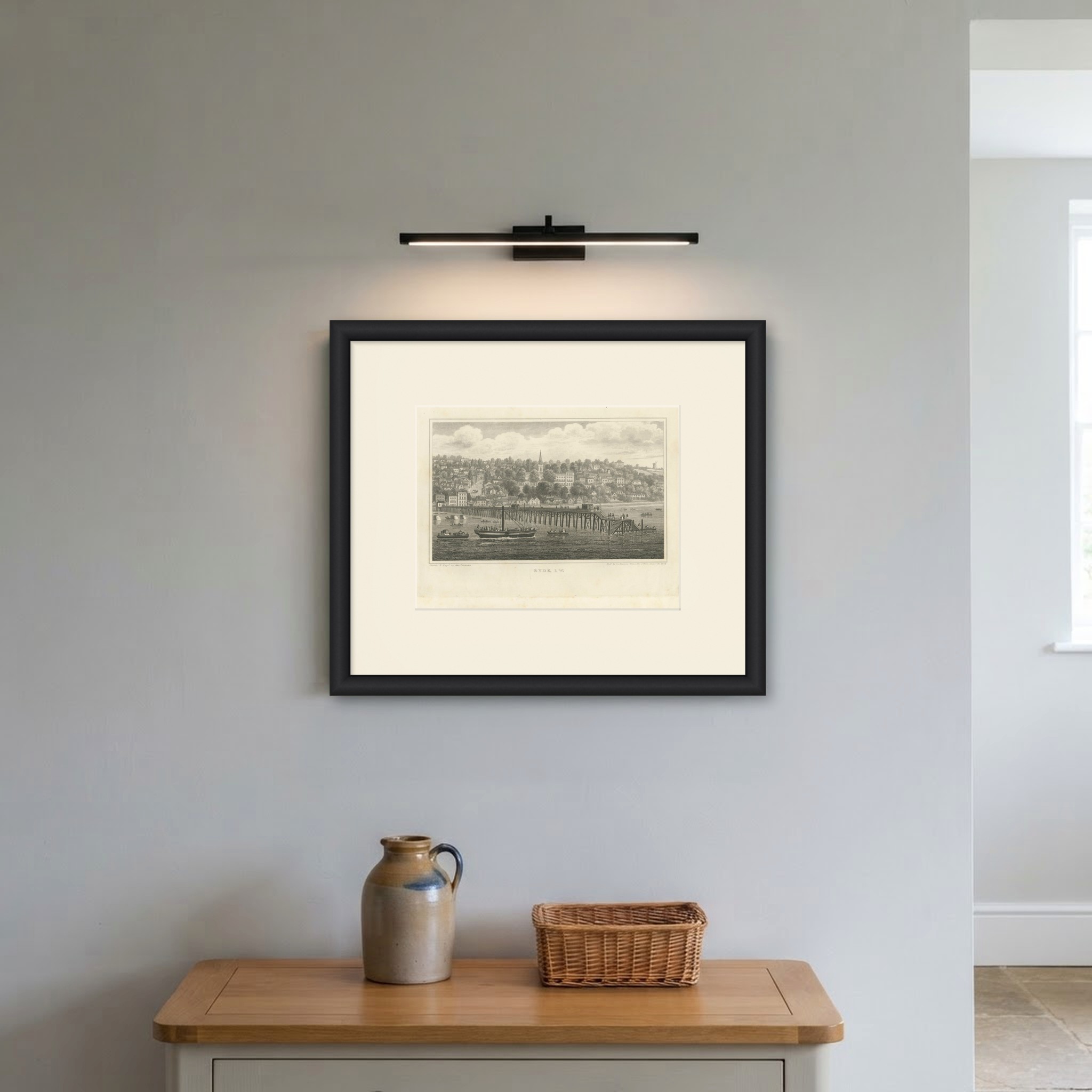
An antique engraved view of Ryde, Isle of Wight, with the long timber pier running out into the Solent, drawn and engraved by George Brannon and published at Wotton on the eighteenth of August 1828. A paddle steamer lies against the pier head with smoke at her funnel, rowing boats are drawn up on the sand, and passengers move along the deck of the pier toward the town, which rises in terraces behind. Ryde pier opened in 1814 and was the first seaside pleasure pier in England, so Brannon is engraving a genuine piece of transport history at work. The steam packet is the detail collectors look for: it places the scene in the first decade of regular steam crossings between Portsmouth and the island.
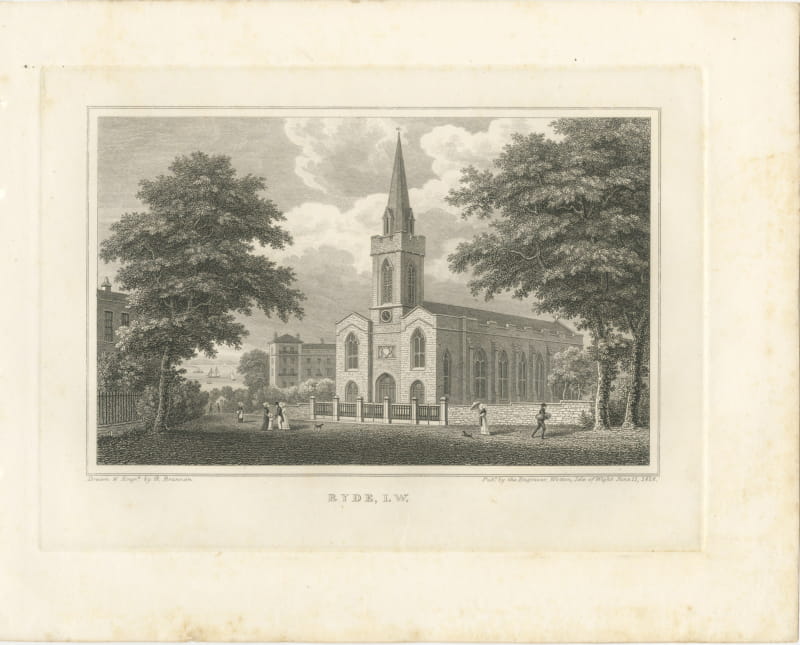
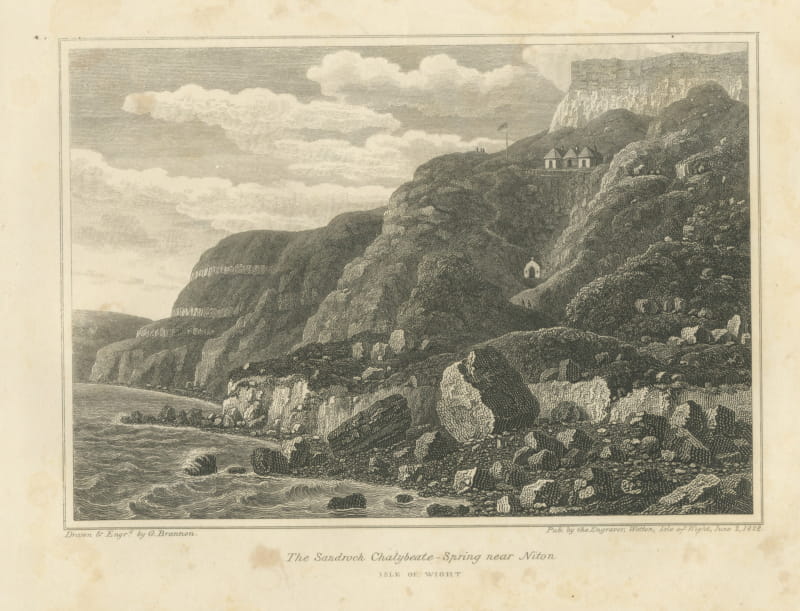
The view belongs to Vectis Scenery, George Brannon's series of original and select views of the Isle of Wight, printed and published by the engraver himself at Wotton Common on the island in 1829 and sold by the principal local booksellers. Brannon drew the subjects on the spot and cut the copper plates himself, so draughtsman and engraver are one man throughout. The volume's own advertisement leaf describes a first series of twenty-eight views with a map and letter-press, with a further twenty views issued separately as a Sequel. The technique is line engraving on copper. The views were issued uncolored, as line engravings on white paper, and this impression is uncolored.
Early views that show working steam alongside sail are collected in their own right, and this plate puts a paddle steamer, a pier and a growing resort town into one image at the moment all three were new. Ryde was built almost entirely in the first half of the nineteenth century as the island's gateway, and Brannon records the arrival point that every visitor used. It appeals equally to Isle of Wight collectors, to pier enthusiasts and to anyone drawn to early steam navigation. Hang it with the second Ryde plate from the same volume to show the pier and the town together.
Light uneven toning, browner towards the edges. Handling soiling along the bottom and right edges. Scattered foxing in the margin. All four corners complete.
This is an original antique print, not a modern reproduction. This item is sold unframed. Any framed or interior images are shown for presentation and inspiration only, unless the listing explicitly states that the item is sold framed.