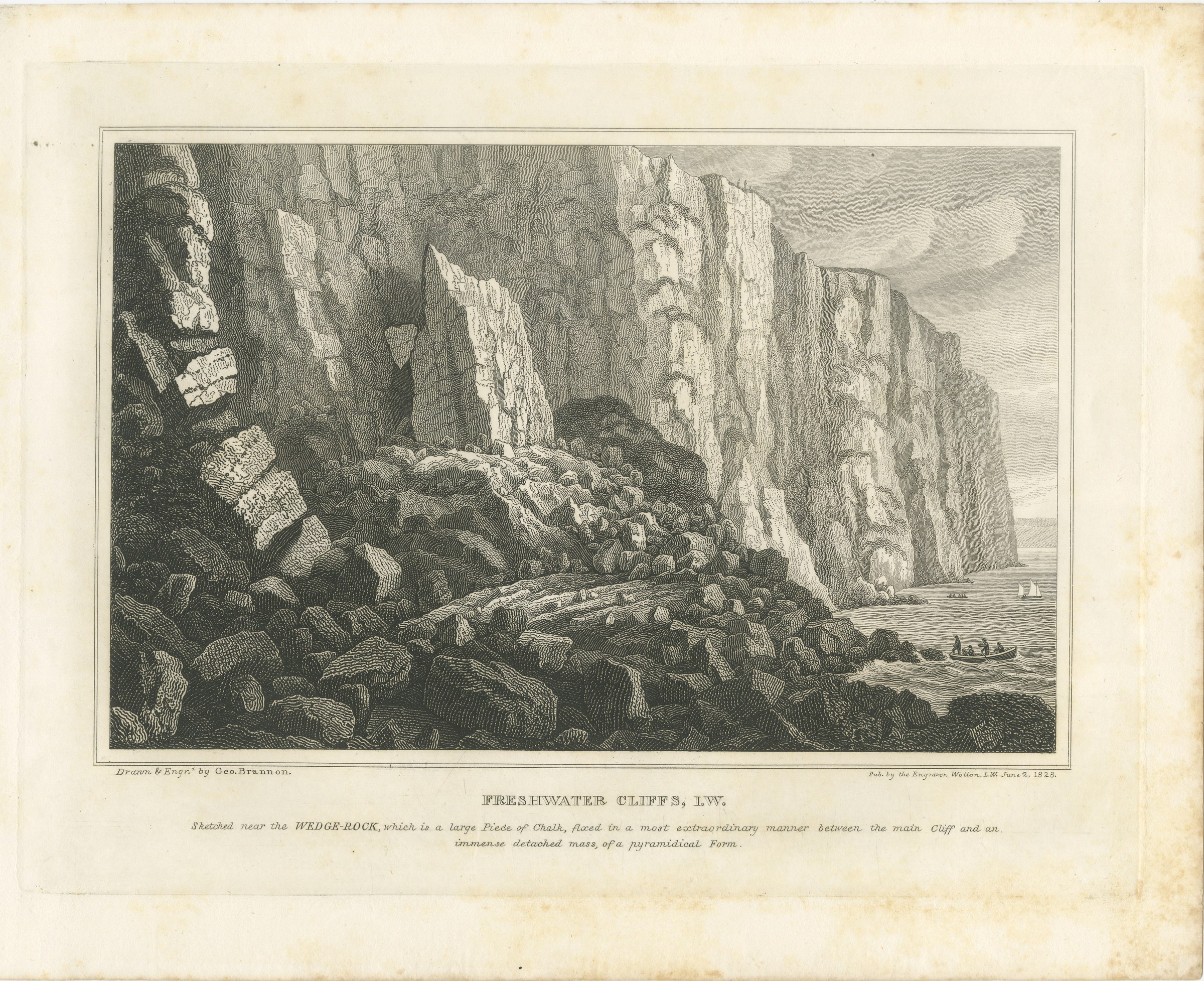
Freshwater Cliffs and the Extraordinary Wedge-Rock, Isle of Wight, 1828
€ 280
Original antique · The actual sheet photographed · Certificate of authenticity on request · Sold unframed · Worldwide shipping from € 15 (rates)
Date
1828
Mapmaker / artist
George Brannon (draughtsman and engraver)
Publisher
George Brannon, Wotton Common, Isle of Wight
Technique
Copper Engraving
Coloring
Uncolored
Sheet size
23 × 30 cm (9.1 × 11.8 in)
Condition
Good
Reference
BG-14210-27
What the condition grades mean
Excellent
Bright and clean, with no faults worth mentioning.
Very good
Only light signs of age, such as faint toning.
Good
Normal signs of age for a sheet of this period: toning, some foxing, small marks or neat old repairs.
Fair
Clear faults such as staining, tears or repairs, priced to match.
Every fault we see is written in the condition note, and the whole sheet is shown uncropped in the photos.
Condition
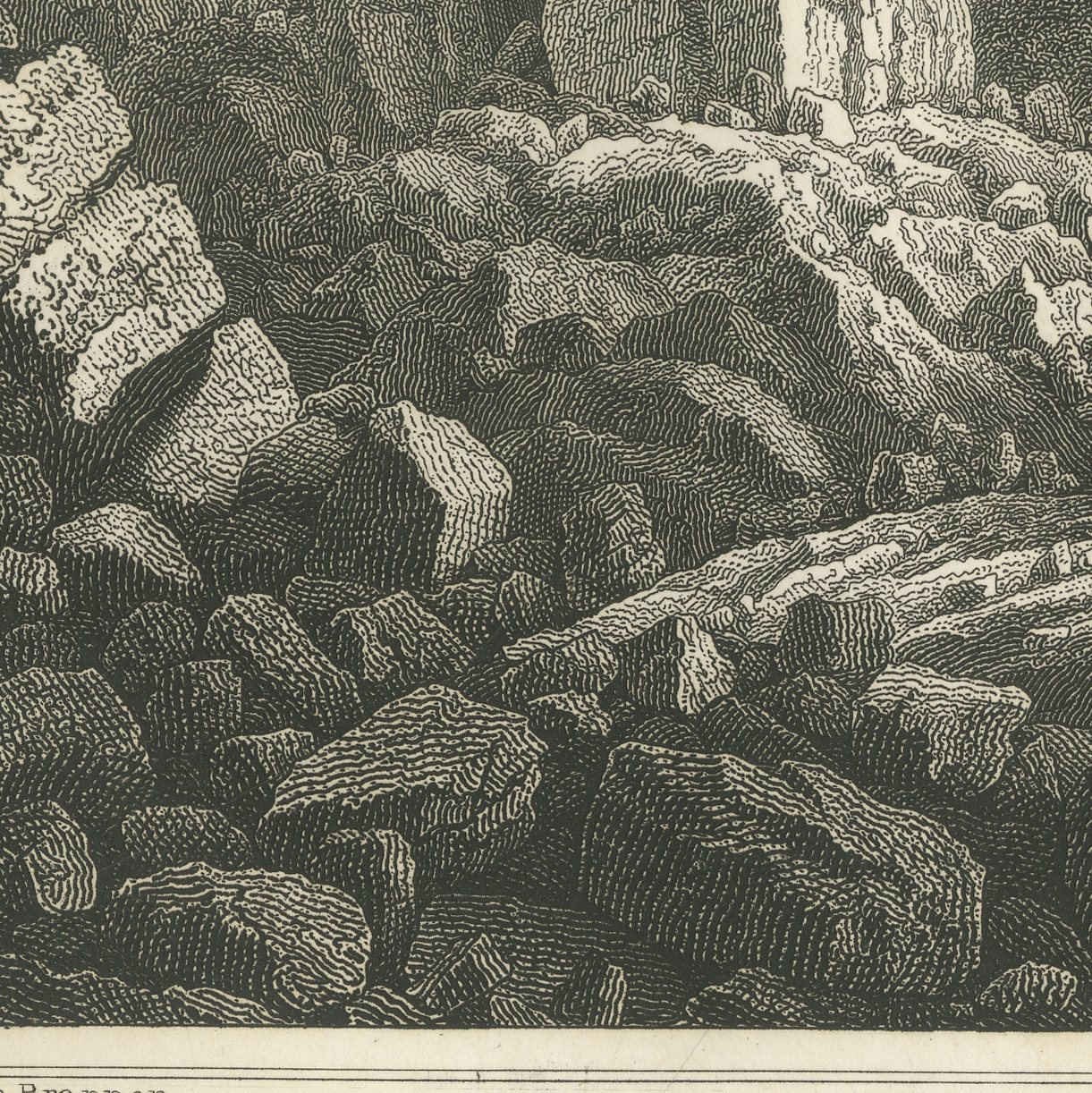
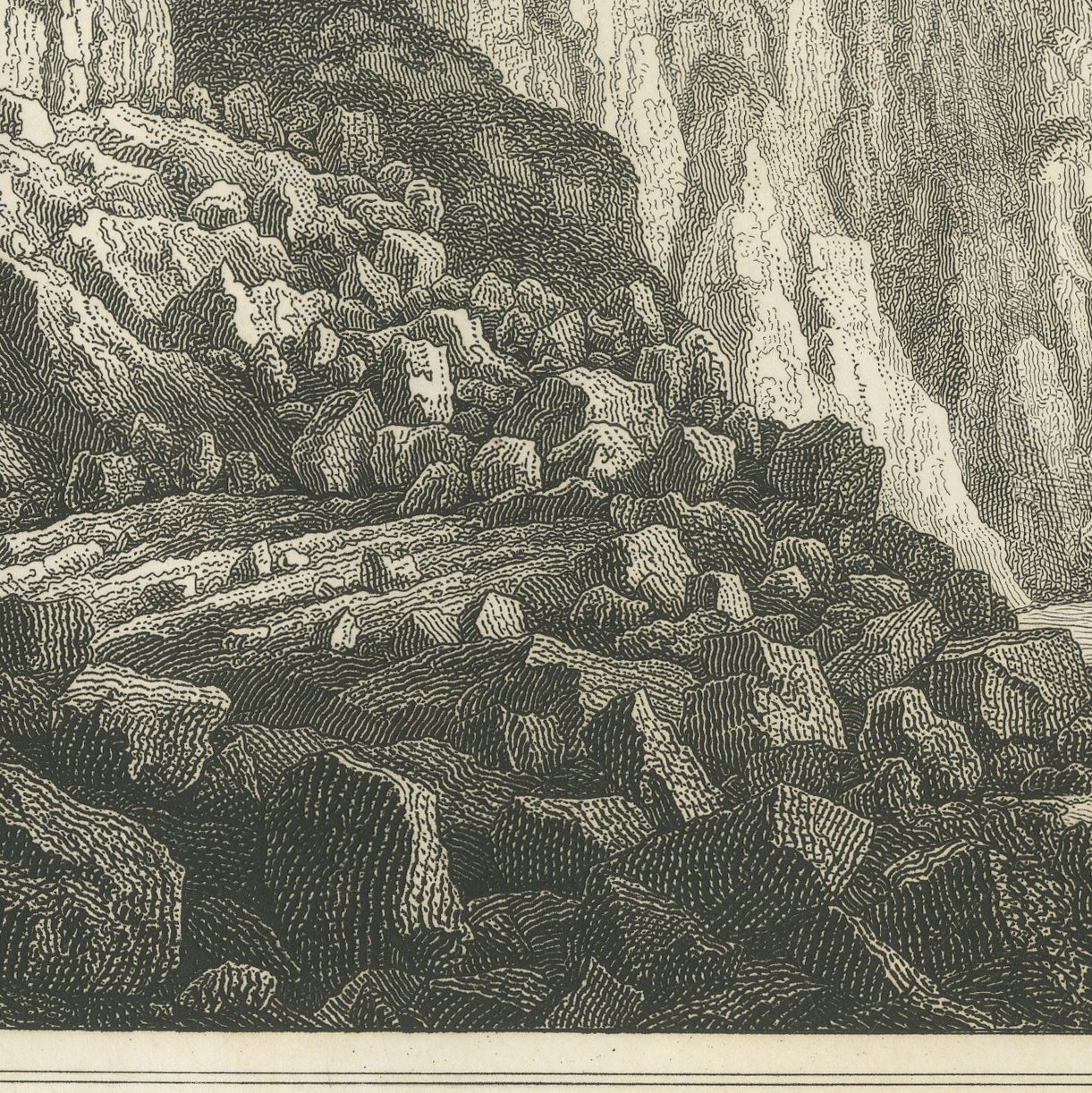
Light uneven toning, browner towards the edges. Marked handling soiling along the bottom, right and top edges. Scattered foxing in the margin. All four corners complete.
About this sheet
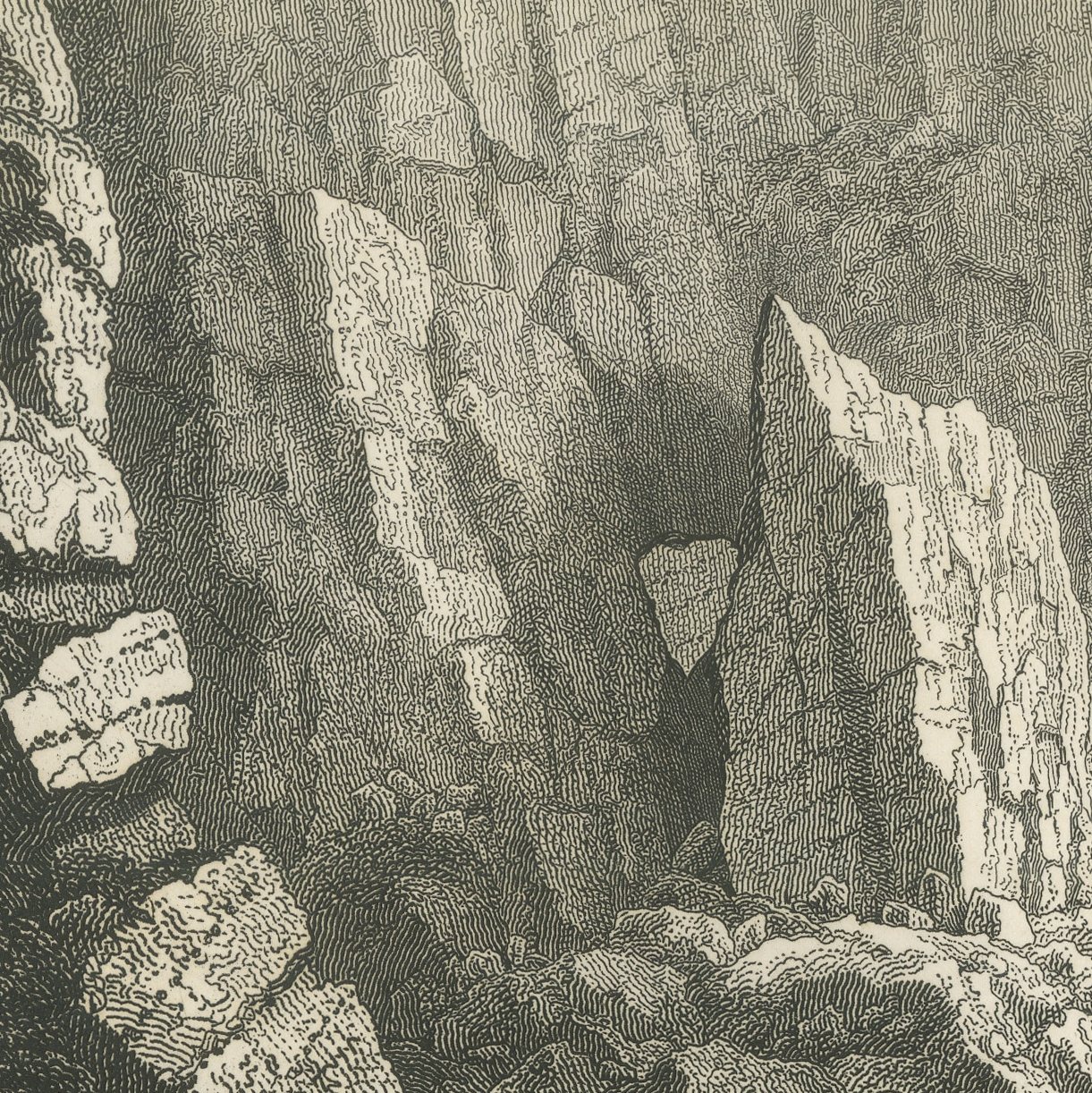
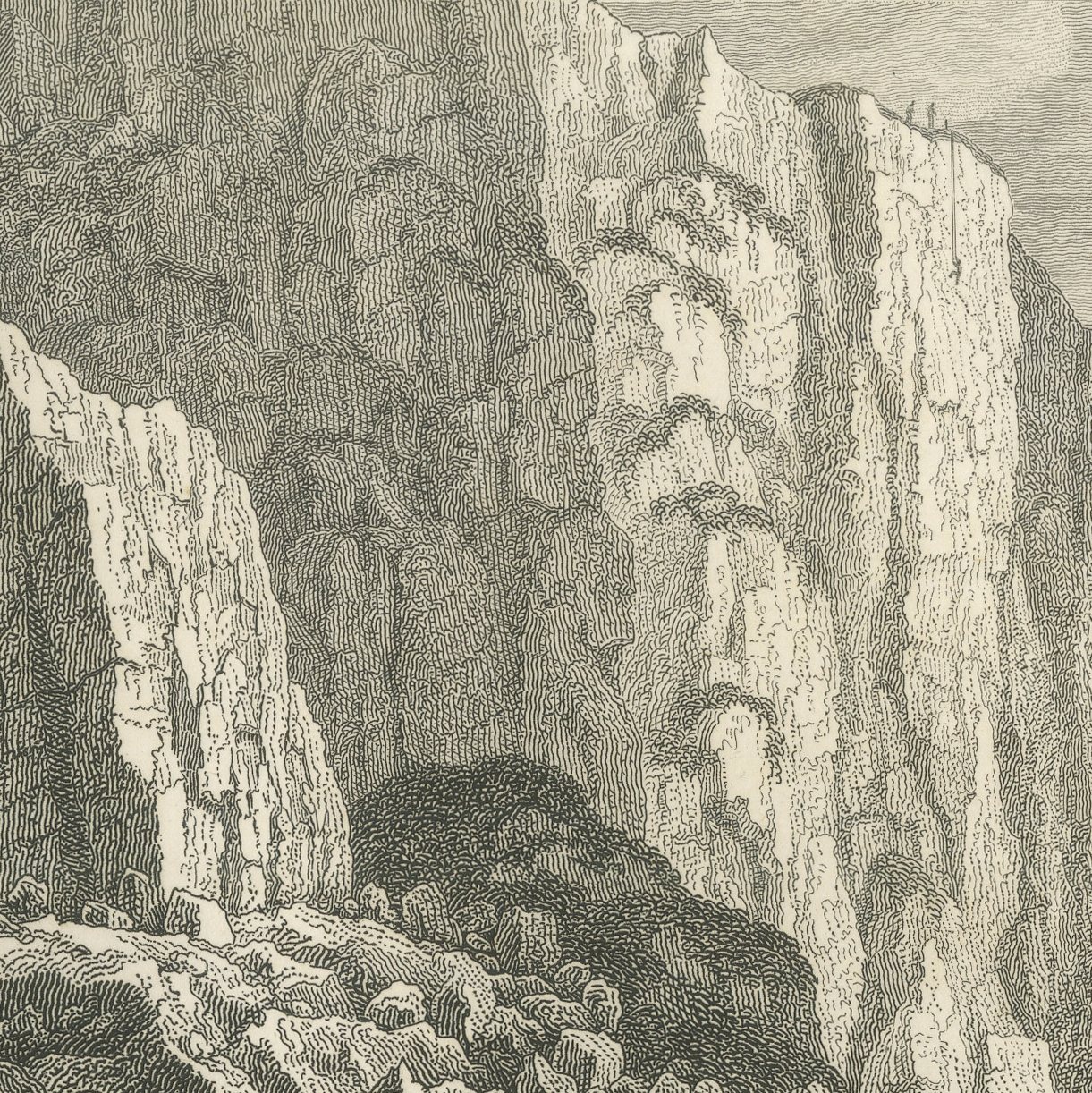
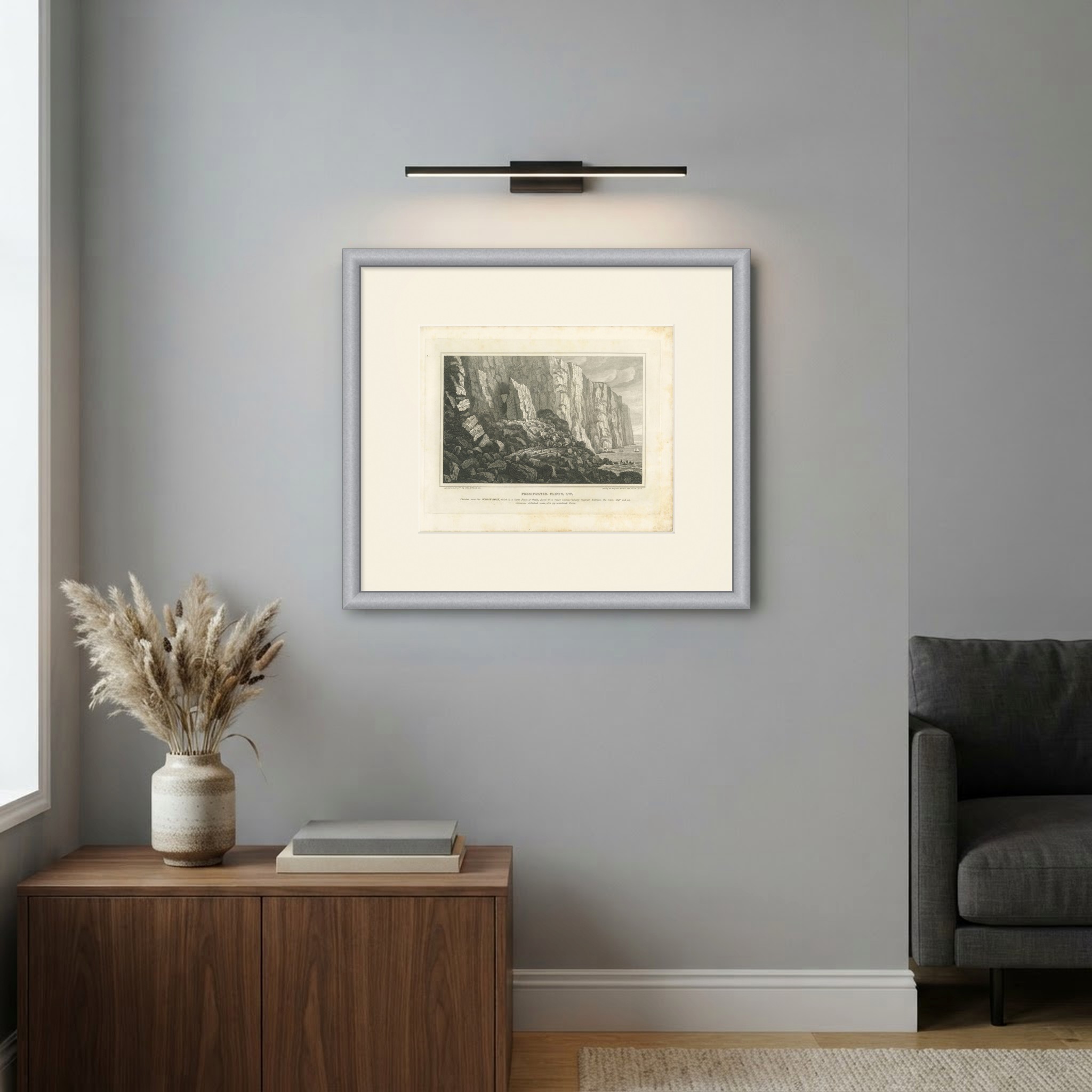
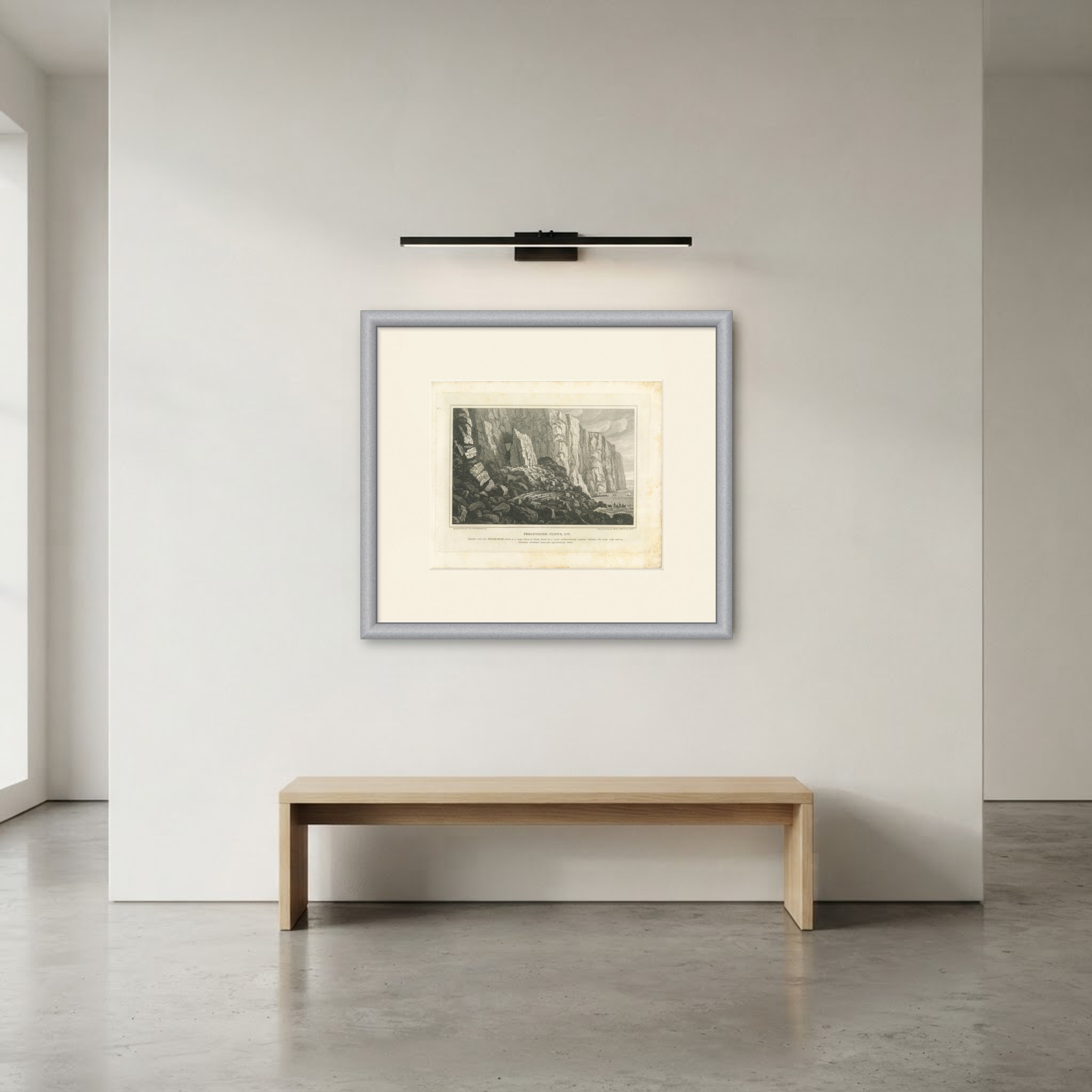
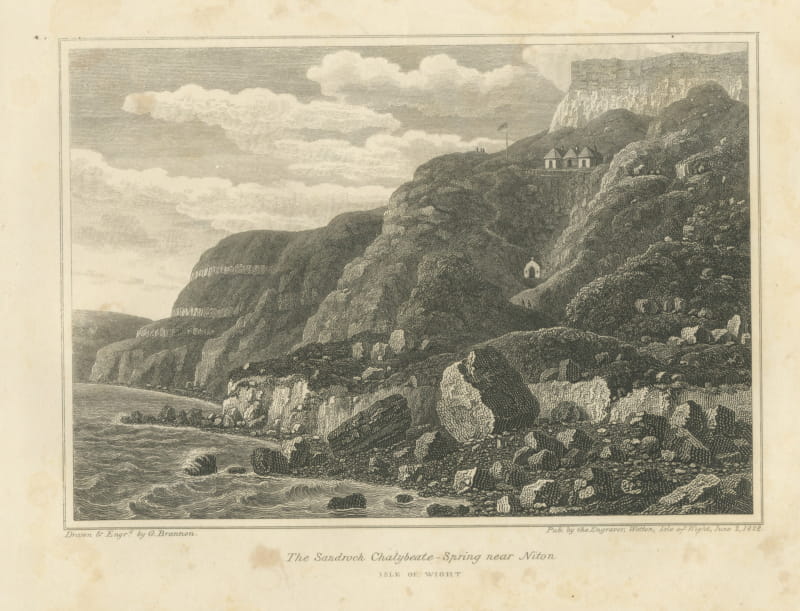
An uncolored copper engraving of the Freshwater cliffs, Isle of Wight, sketched near the Wedge-Rock by George Brannon and published at Wotton on the second of June 1828. The caption explains the oddity the plate was made for: a large piece of chalk fixed in a most extraordinary manner between the main cliff and an immense detached mass of a pyramidical form. Brannon shows the jammed block exactly, wedged high in the gap with daylight on either side of it, and the detached pyramid of chalk standing clear of the cliff wall on the right. The sea works at the foot of the rocks, and the figures in a boat below are kept small so that the mass of chalk above them reads at its full height.
This sheet is one of the plates of Vectis Scenery, the island views that George Brannon drew, engraved and published from his own house at Wotton Common in the Isle of Wight, the 1829 issue. Brannon worked without an intermediary: he made the drawing on the spot, cut the copper himself and sold the result through the island booksellers, which is unusual and is part of why the series ran for more than fifty years. The plates carry their own earlier publication dates because each view was first issued on its own. The technique is copper-plate line engraving. The views were issued uncolored, as line engravings on white paper, and this impression is uncolored.
Views made to record a geological curiosity sit at the point where topography meets natural science, and that is a field collectors have become much more interested in. The wedge of chalk drawn here was a passing accident of erosion and is unlikely to have survived long, so the plate preserves something that existed only briefly. It belongs with the other Freshwater and Needles subjects in the volume, and a run of three or four of these chalk cliff plates in plain frames gives a hallway or a coastal house a coherent wall.
Light uneven toning, browner towards the edges. Marked handling soiling along the bottom, right and top edges. Scattered foxing in the margin. All four corners complete.
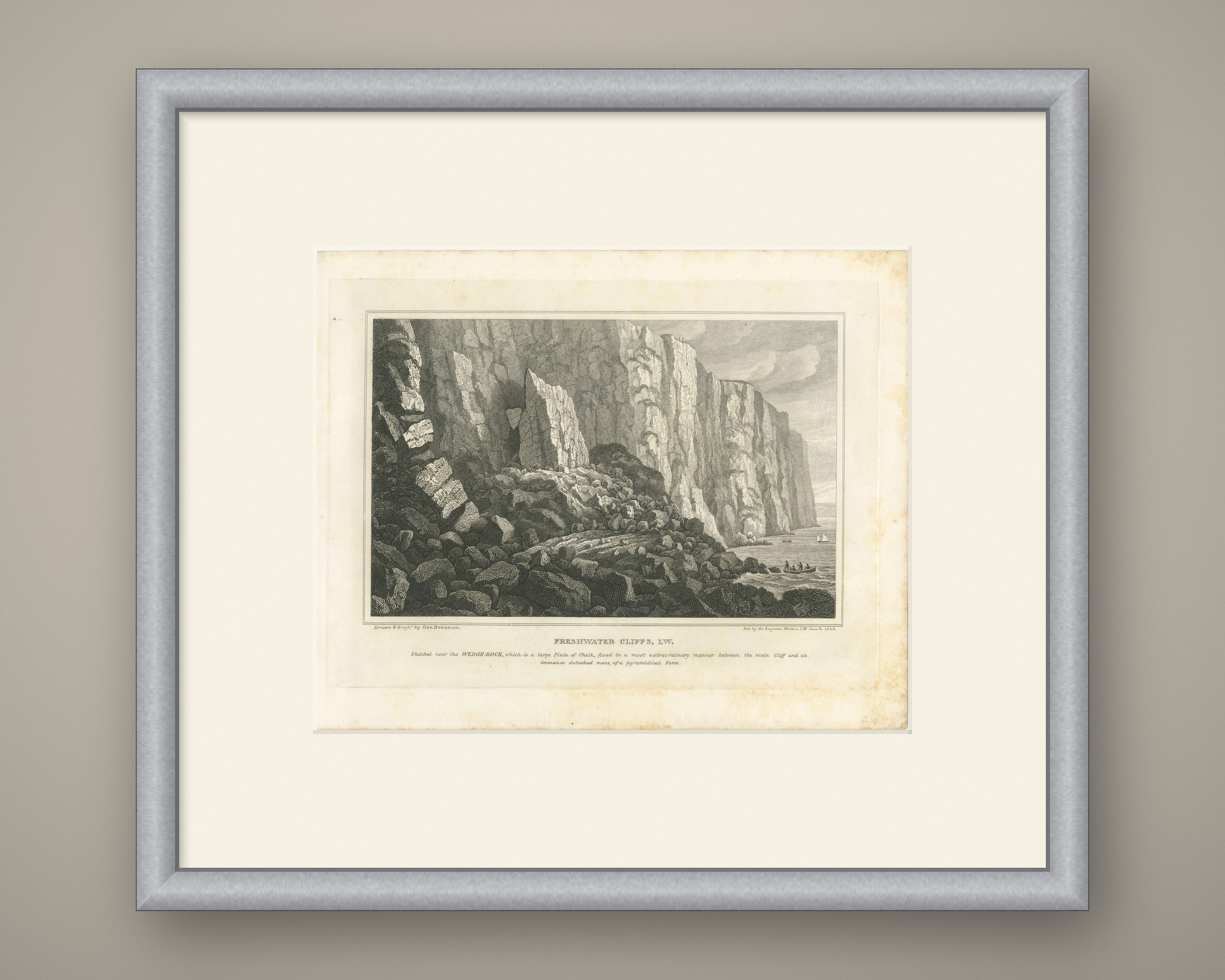
This is an original antique print, not a modern reproduction. This item is sold unframed. Any framed or interior images are shown for presentation and inspiration only, unless the listing explicitly states that the item is sold framed.