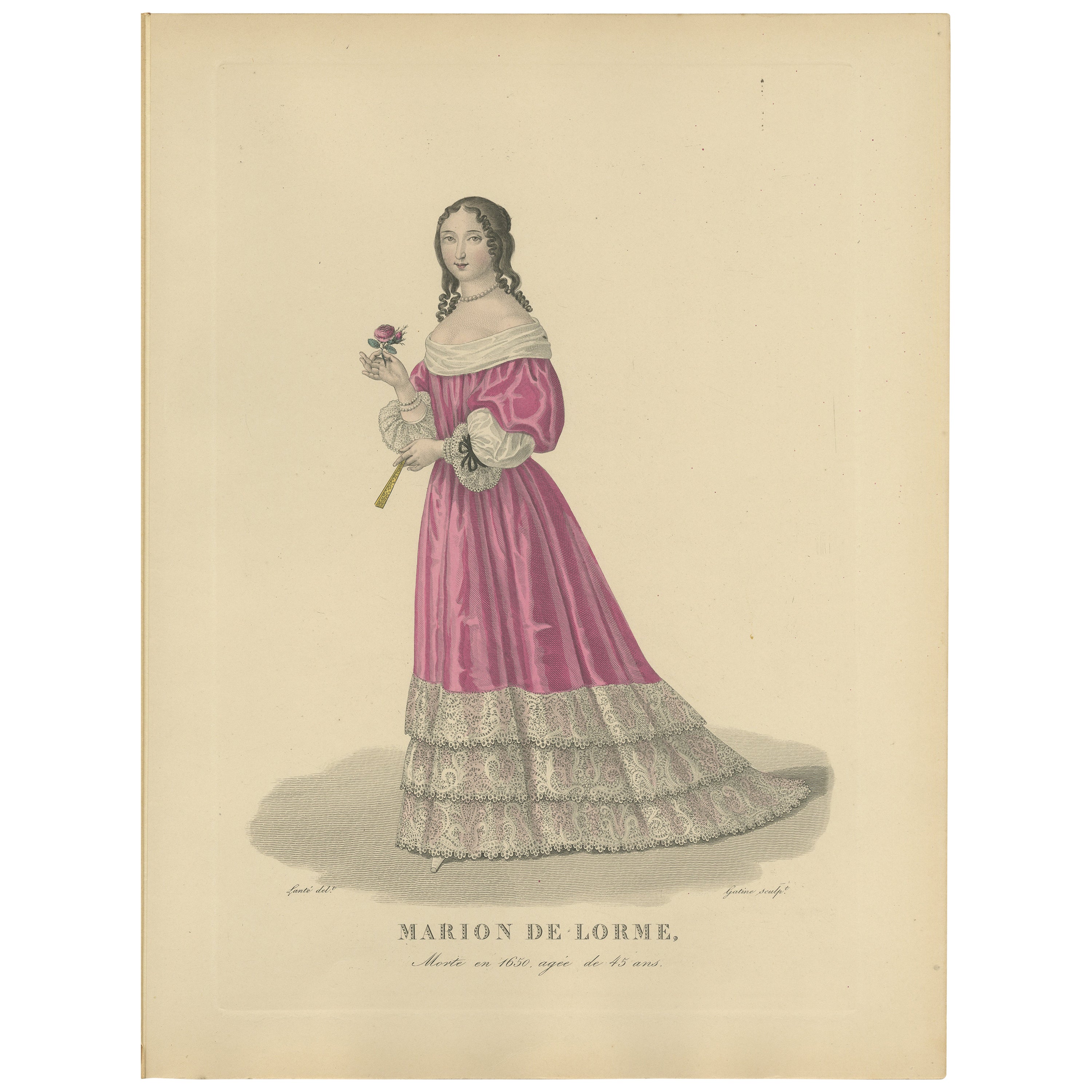
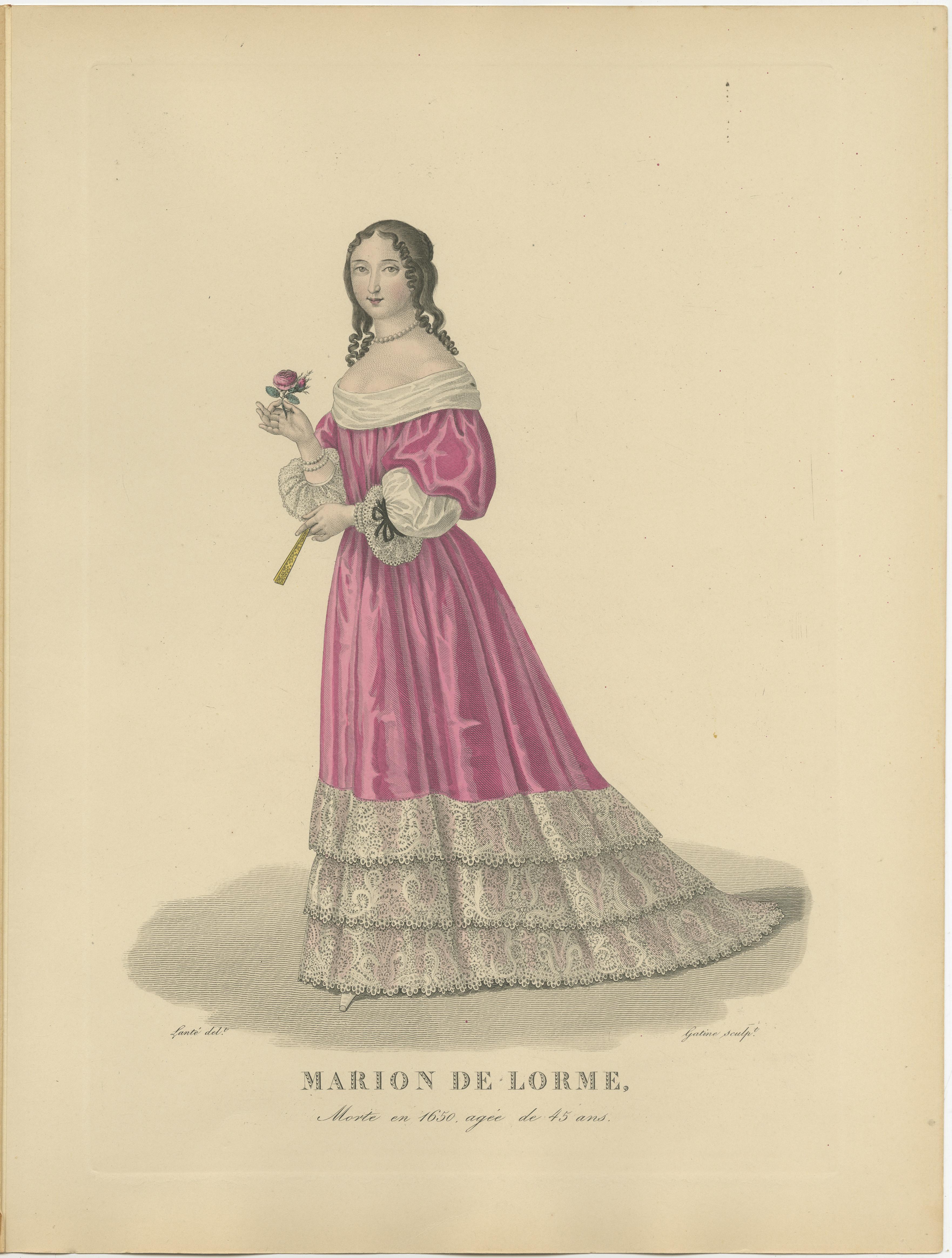
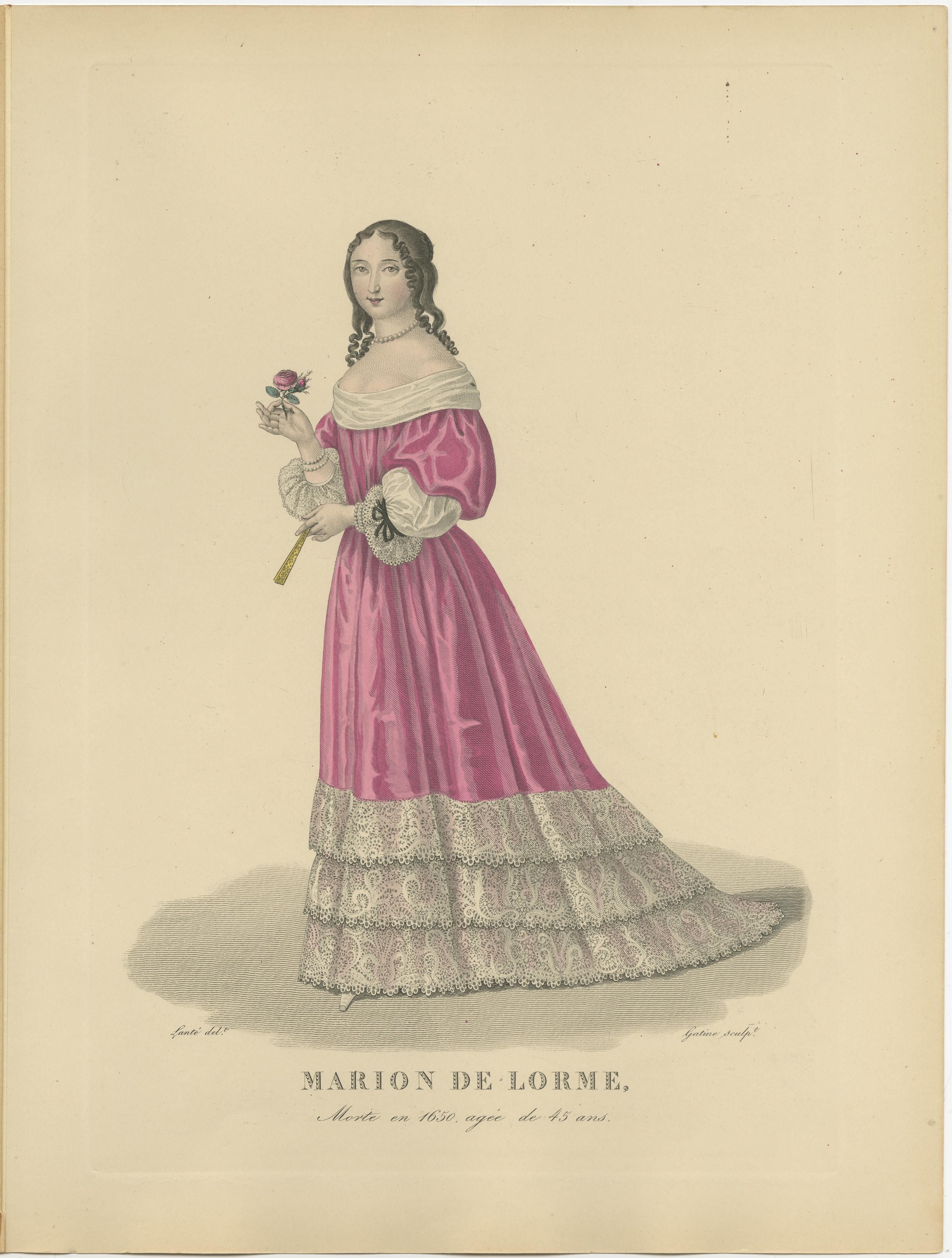
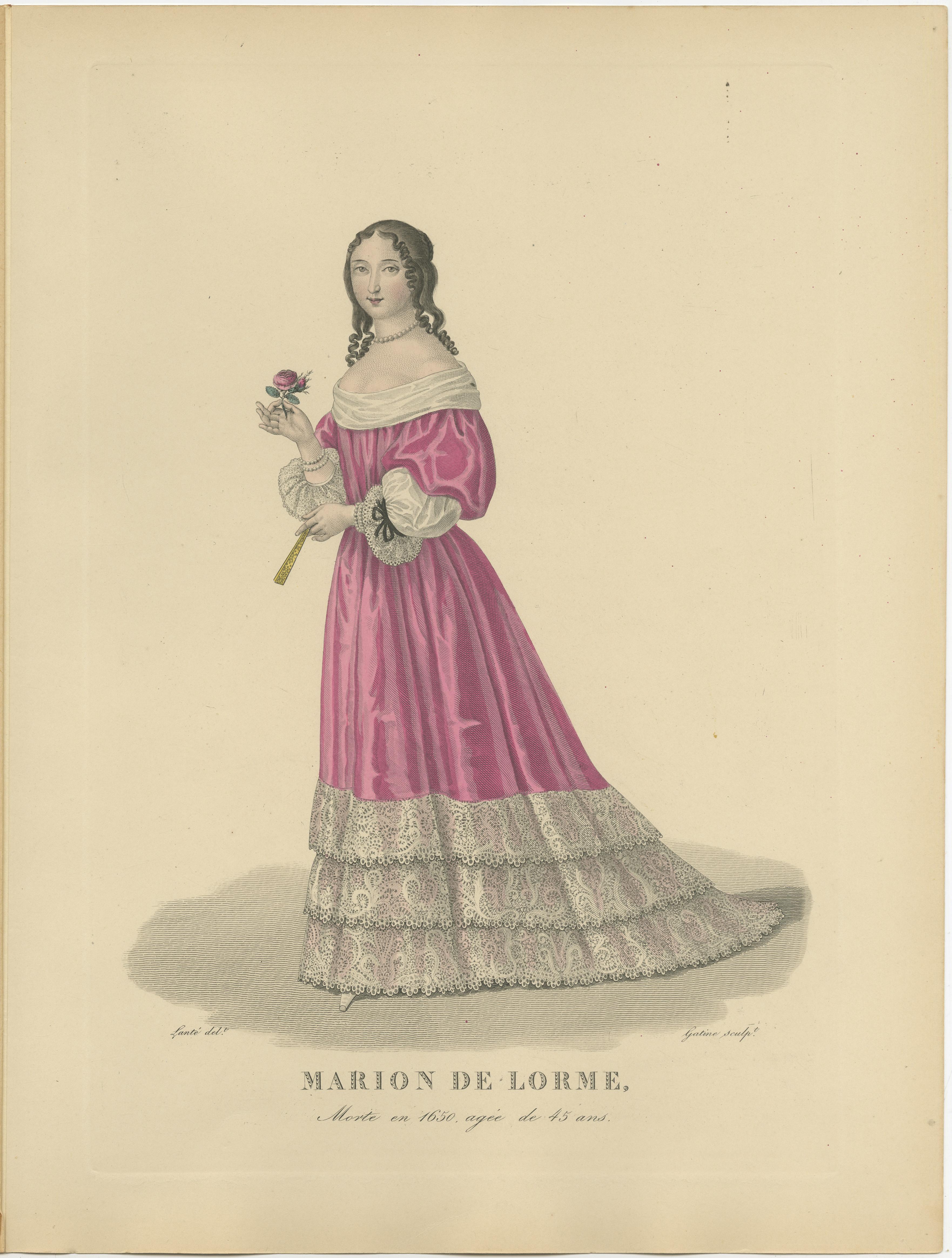
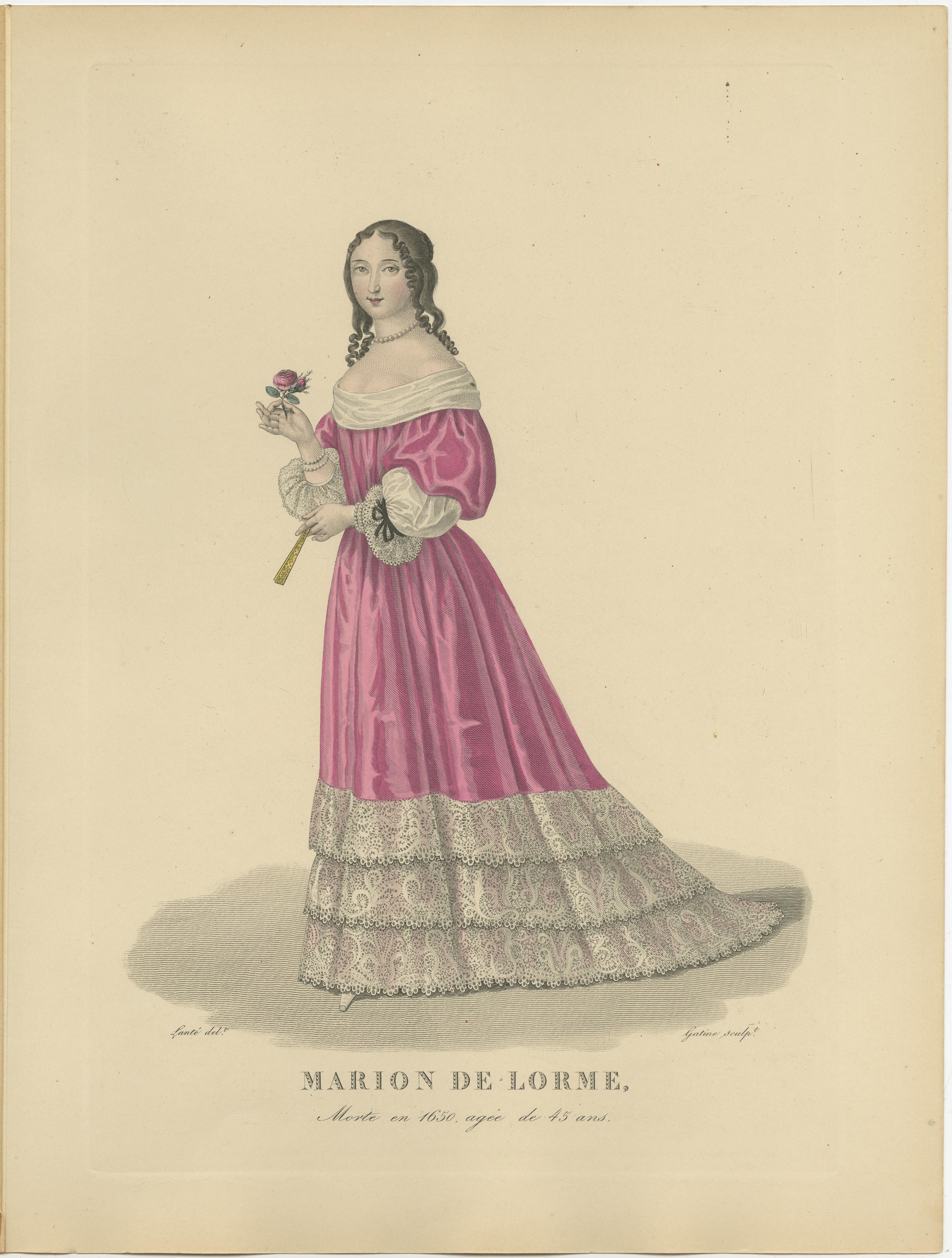
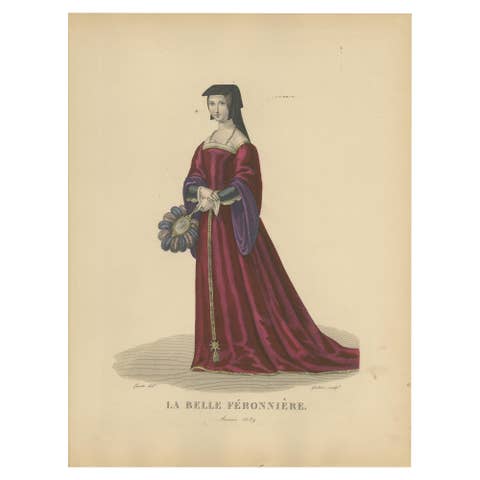
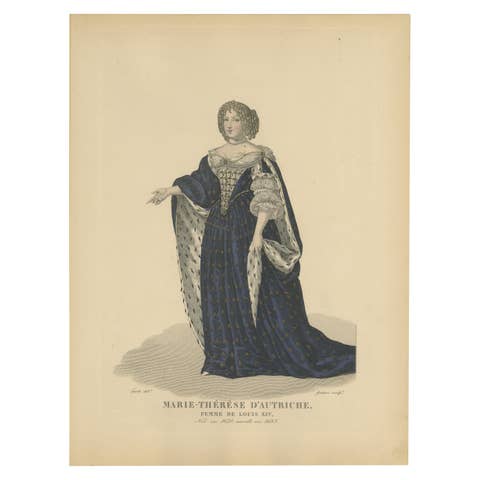
Hand Colored Engraving of Marion Delorme, a French courtesan, 1900
€ 230
One of a kind: this is the sheet in the photographs. Ships from Langweer, the Netherlands.
Date
1900
Technique
Engraved
Sheet size
33.5 × 25 cm (13.2 × 9.8 in)
Condition
Good
Reference
BG-13158-14
Condition
Original/contemporary hand coloring. General age-related toning, Minor wear and soiling, blank verso. Please study image carefully.
About this sheet
Antique print titled 'MARION DE LORME' Original antique print of Marion Delorme.
Marion Delorme (3 October 1613 – 2 July 1650) was a French courtesan known for her relationships with the important men of her time.
She was the daughter of Jean de Lou, sieur de l'Orme, president of the treasurers of France in Champagne, and of Marie Chastelain. She was born in a wealthy family at her father's château near Champaubert. Initiated into the philosophy of physical pleasures by the epicurean and atheist Jacques Vallée, Sieur Des Barreaux, she soon left him for Cinq Mars, at that time at the height of his popularity, and succeeded, it is said, in marrying him in secret. She began hosting a salon, and was introduced into the life of being a courtesan.
From this time Marion Delorme's salon became one of the most brilliant centres of elegant Parisian society. After the execution of Cinq Mars she is said to have numbered among her lovers and benefactors Charles de Saint-Évremond (1610-1703) the wit and litterateur, George Villiers, 2nd Duke of Buckingham, Louis II de Bourbon, Prince de Condé (called The Great Condé), and even Cardinal Richelieu. Under the Fronde her salon became a meeting place for the disaffected, and Mazarin is said to have sent officials to arrest her when she suddenly died. The cause of her death, and whether she actually did die then, or rather later, is still debated
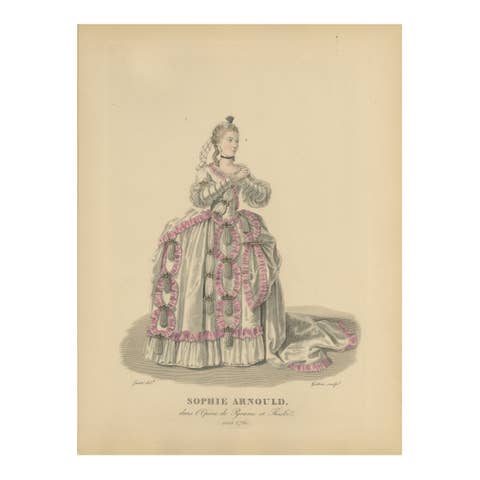
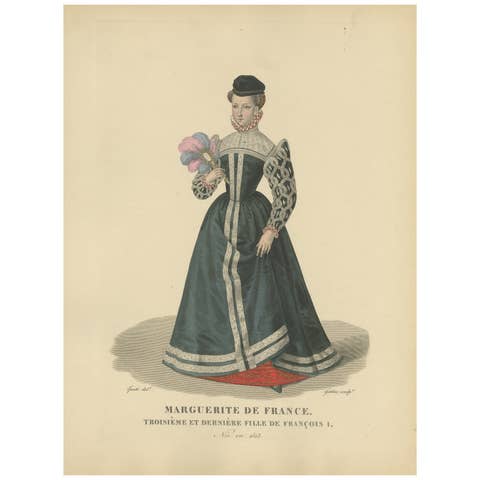
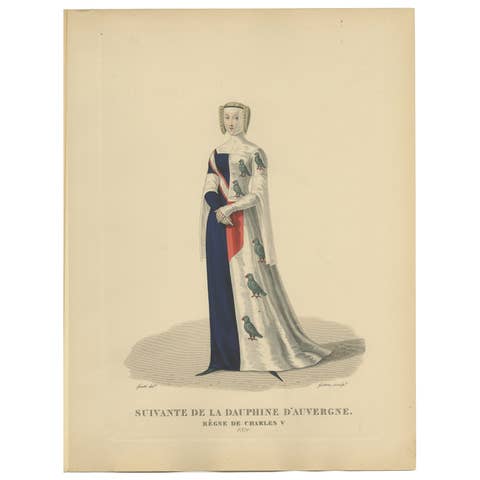
This print originates from ' LA MÉSANGÈRE, Pierre and LANTÉ, Louis Marie. Costumes des Femmes Françaises du XIIe au XVIIIe siècle. Paris: Librairie Charles Tallandier, 1900.
This beautiful work tracing changes in French costume from the 12th to 18th century, stunning folio-sized hand-colored engraved plates depicting period fashions on famous French women who were celebrated for their talent or their beauty in the relevant periods.