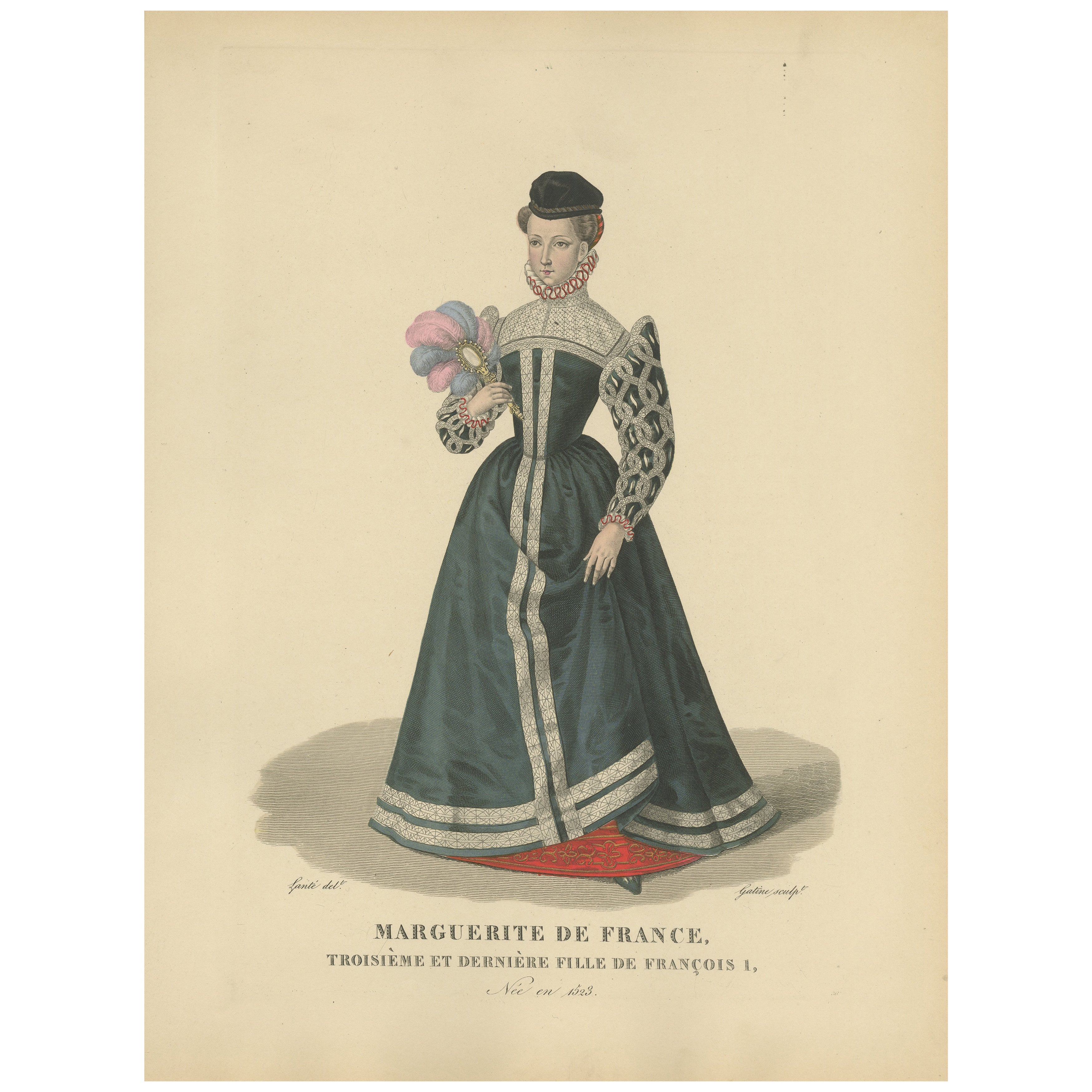
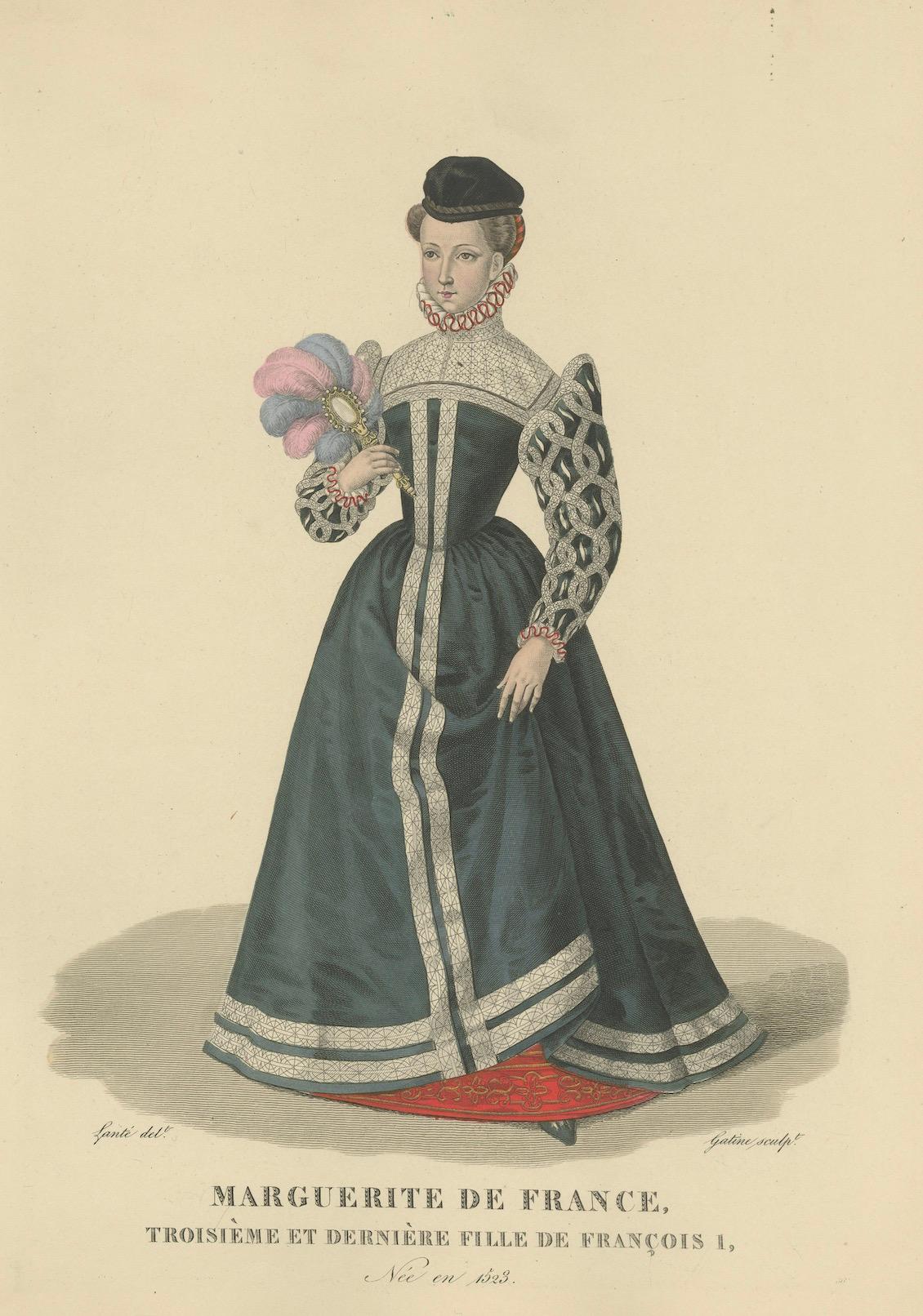
Hand-Colored Engraving of Marguerite de France, Daughter of François I, c.1900
€ 330
One of a kind: this is the sheet in the photographs. Ships from Langweer, the Netherlands.
Date
1900
Sheet size
33.5 × 25 cm (13.2 × 9.8 in)
Condition
Good
Reference
BG-13158-67
Condition
Condition report: Very good condition with strong, vivid hand-coloring and fine detail. Some light age toning consistent with age. Visible platemark, blank verso.
About this sheet
Hand-Colored Engraving of Marguerite de France, Daughter of François I, ca. 1900 edition
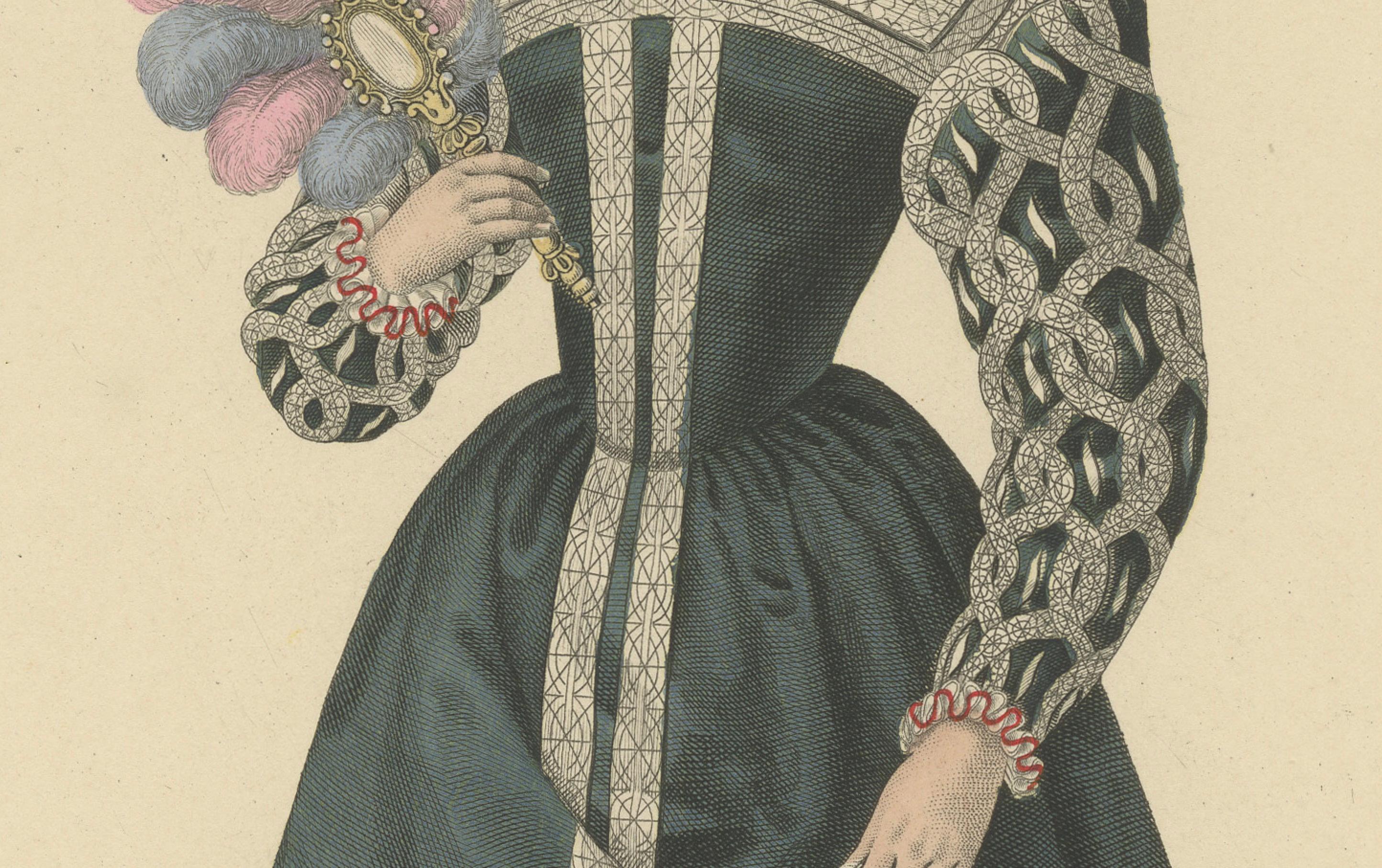
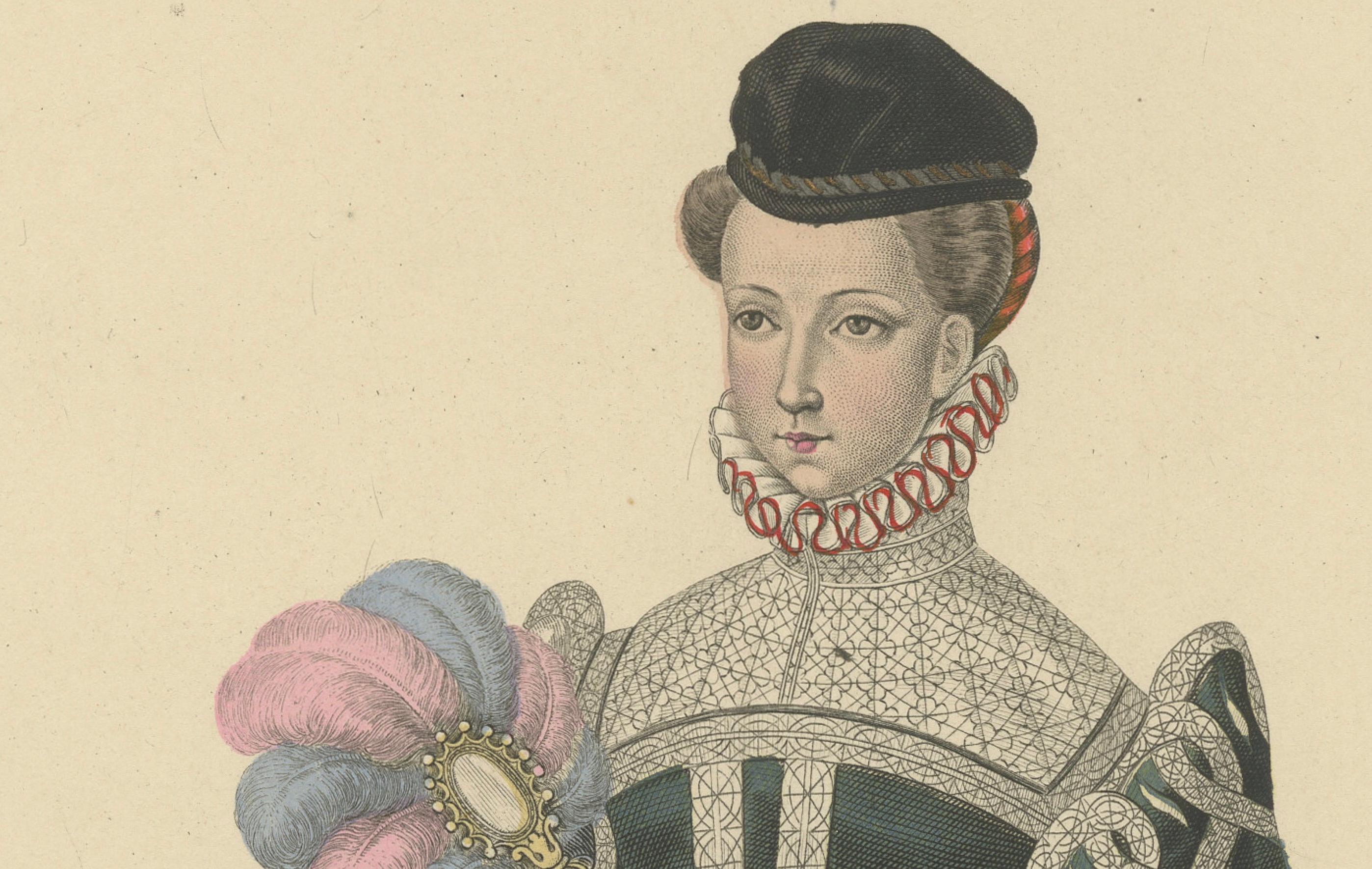
This fine hand-colored engraving depicts Marguerite de France (1523–1574), the youngest daughter of King François I of France and Queen Claude of France. She later became Duchess of Berry and Duchess of Savoy through her marriage to Emmanuel Philibert, Duke of Savoy. The portrait highlights her poised and dignified stance, holding a delicate fan adorned with pastel-colored plumes, a symbol of refinement and courtly grace.
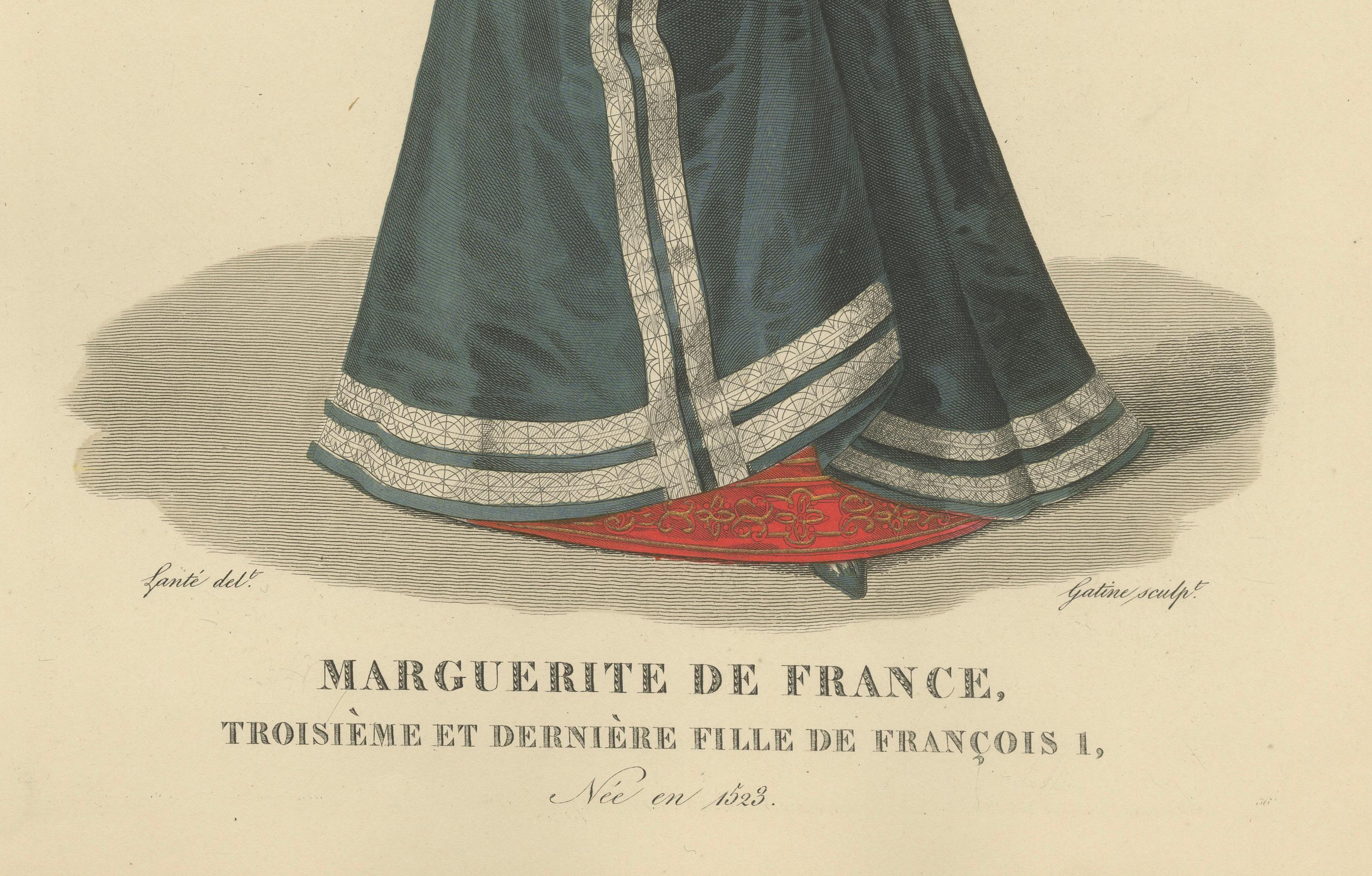
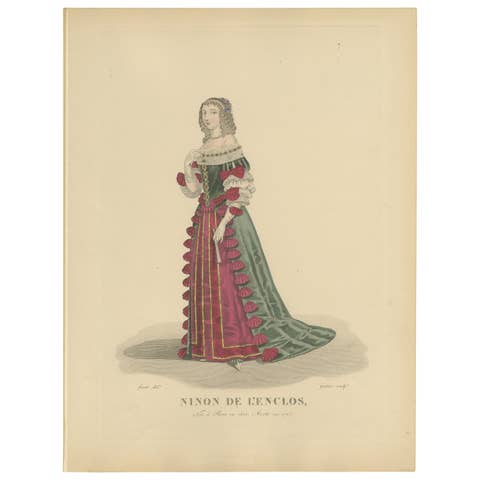
Marguerite is shown wearing an elegant deep green gown richly accented with silver embroidered borders, a crimson underskirt peeking beneath, and voluminous sleeves interlaced in a distinctive lattice design. Her high ruffled collar and headdress emphasize her noble status, reflecting the sophisticated fashion of the French Renaissance court during the mid-16th century.
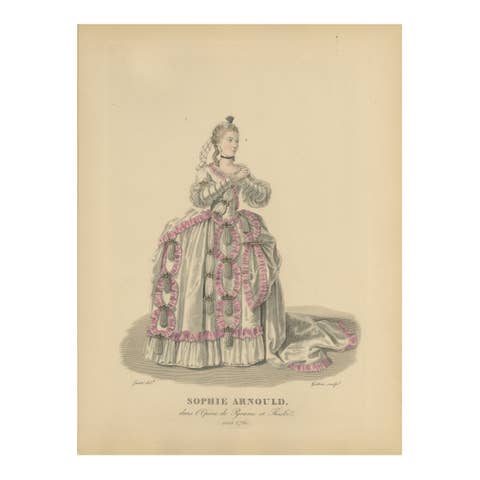
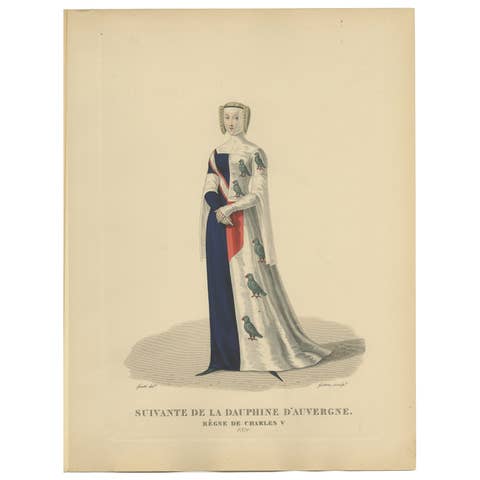
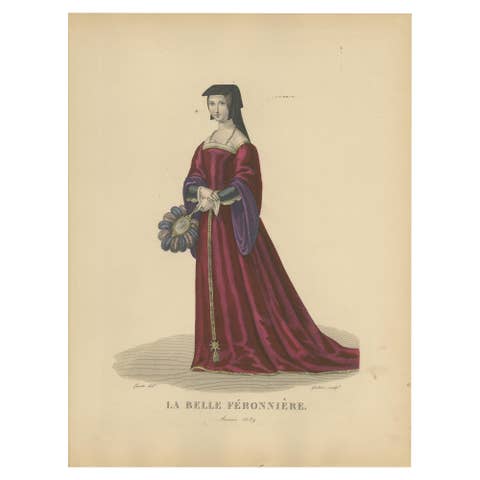
This engraving belongs to the series Galerie Française de Femmes Célèbres, first published in Paris in 1827, designed by Louis-Marie Lanté and engraved by Georges Jacques Gatine. The example here is a later impression from circa 1900, when the series was reissued to meet renewed interest in historical portraiture and costume.
Marguerite de France was an important political figure of her time, not only as a royal princess but also as a patron of the arts and a participant in dynastic alliances through her marriage. Her portrait reflects the splendor of François I’s legacy, under whose reign the French Renaissance reached its height.
Condition report: Very good condition with strong, vivid hand-coloring and fine detail. Some light age toning consistent with age. Visible platemark, blank verso.
Framing tips: Best suited to a gilt Renaissance-style frame with a cream or ivory mat to highlight the silver tones in the gown. Alternatively, a dark walnut frame with a subtle inner gilt lining would accentuate the depth of the green and red while keeping the focus on the refined elegance of the engraving.
Technique: Hand-colored engraving (later edition, ca. 1900) Maker: After Louis-Marie Lanté (artist) and Georges Jacques Gatine (engraver), Paris, 1827