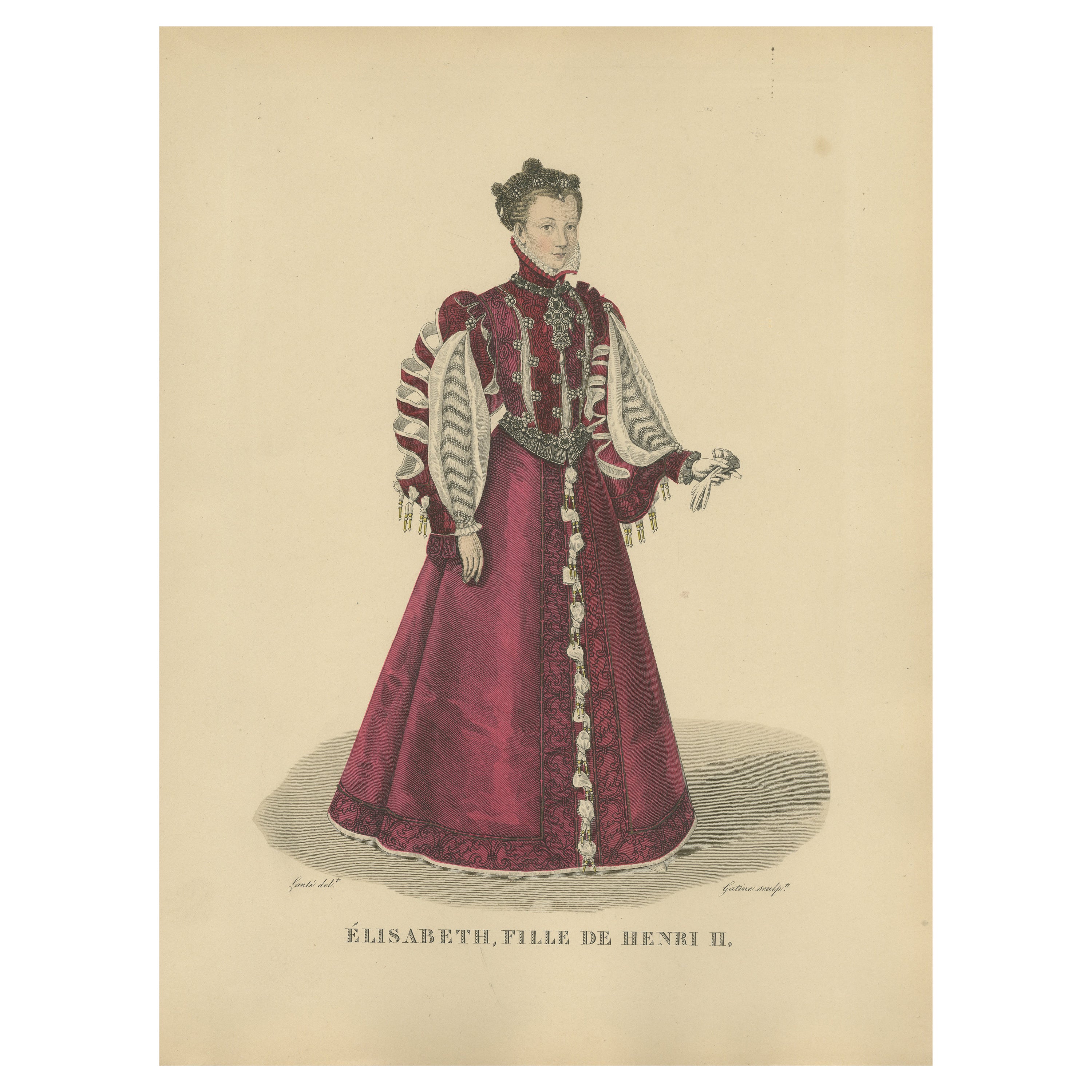
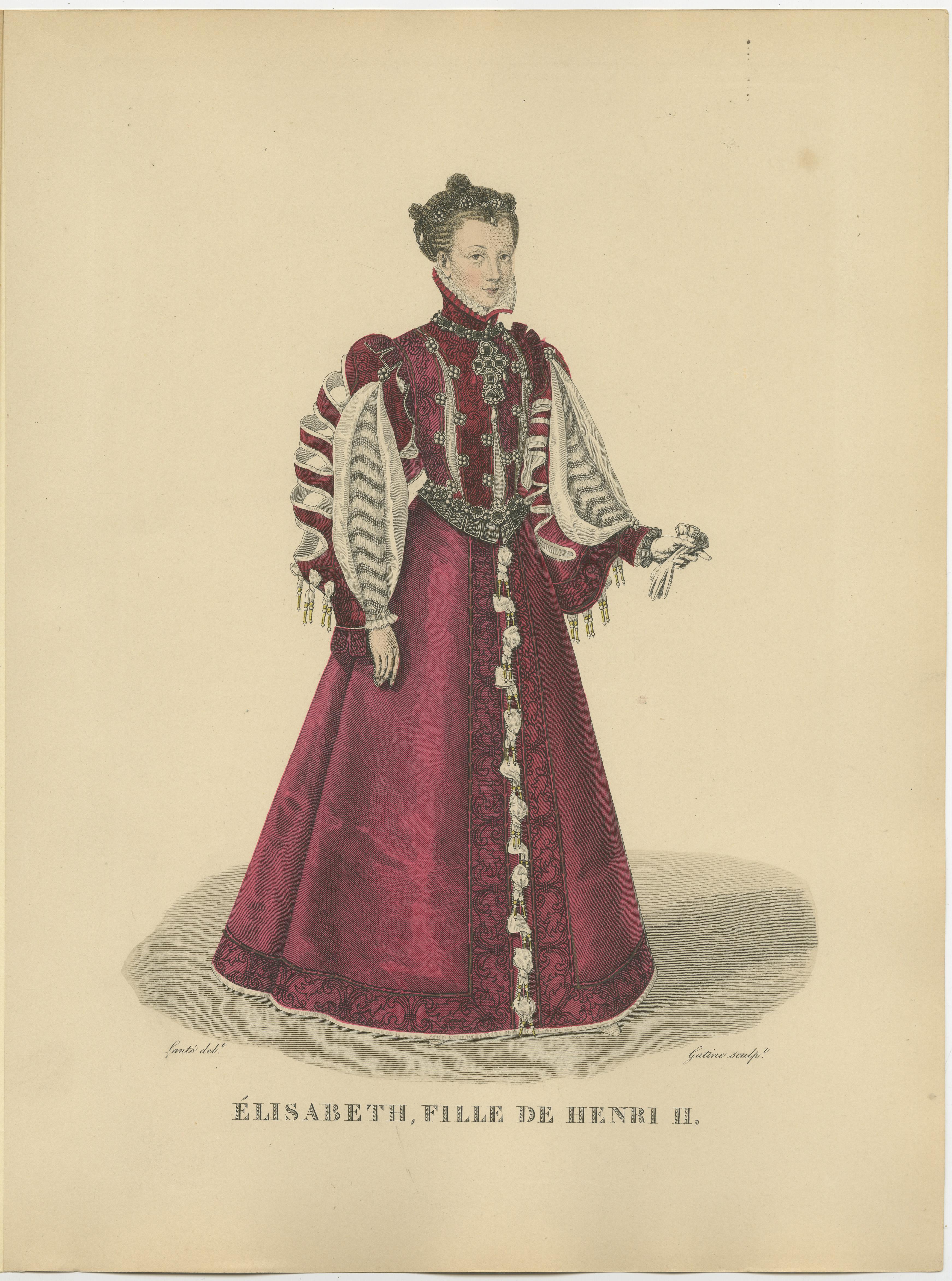
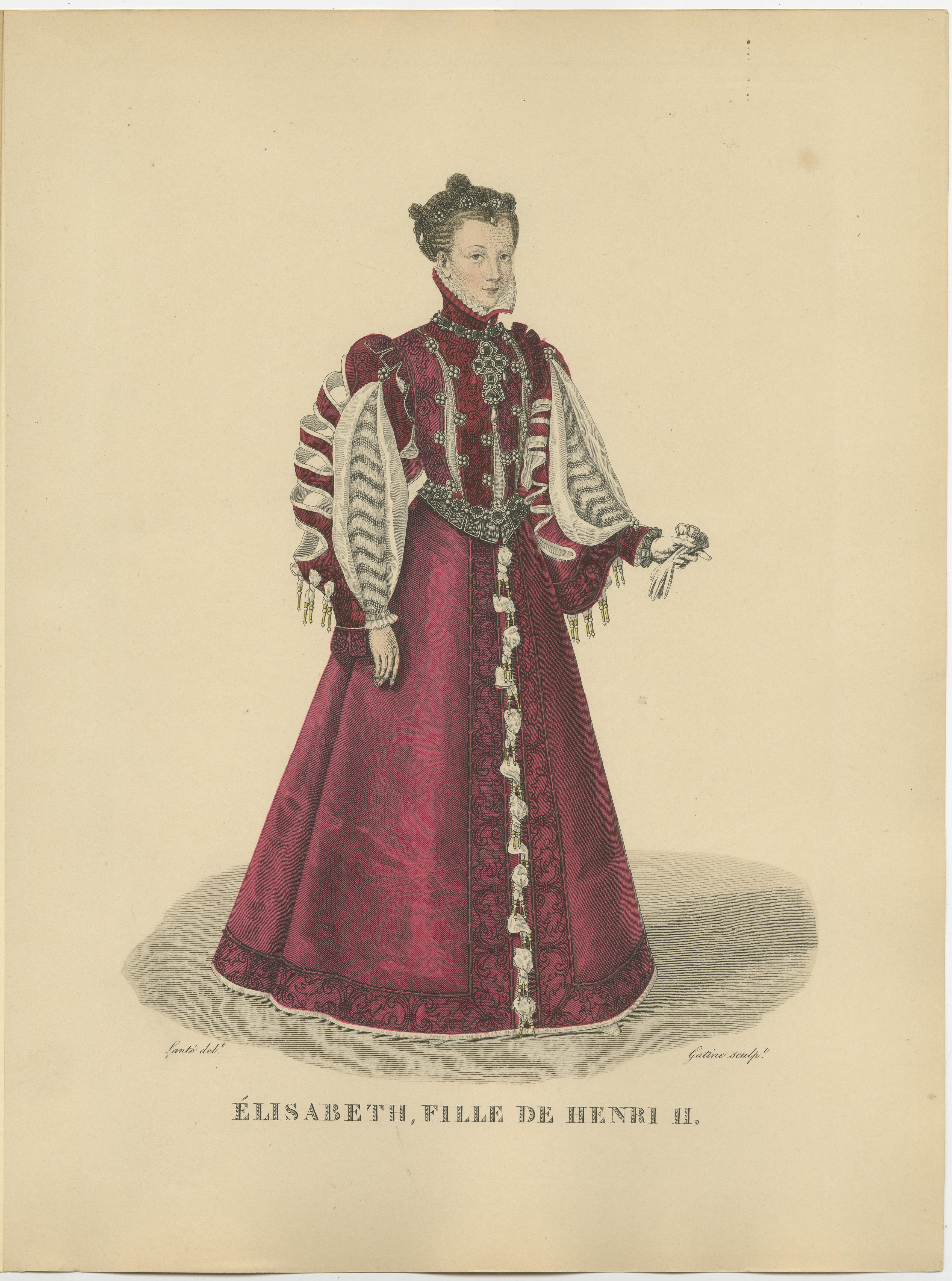
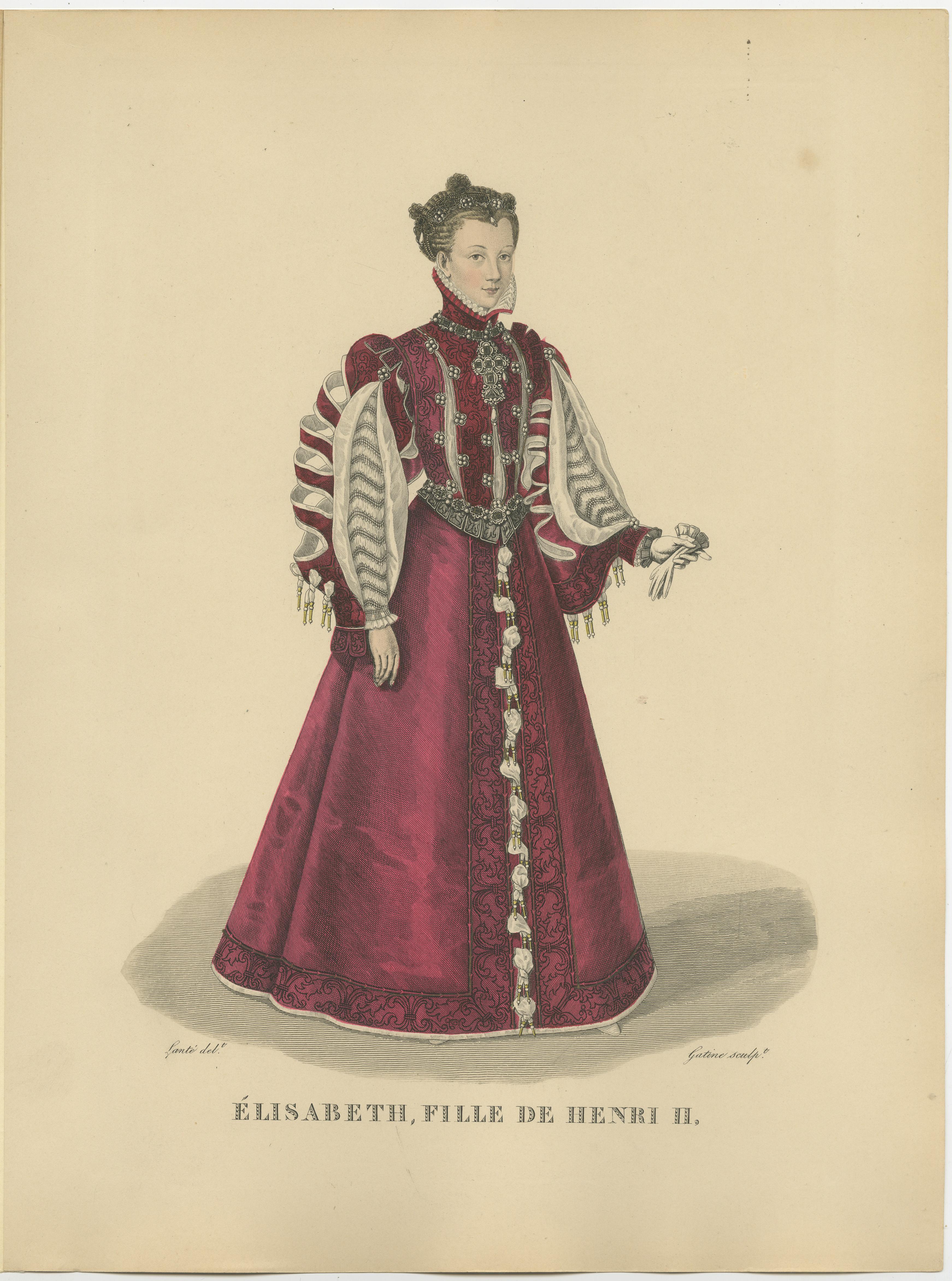
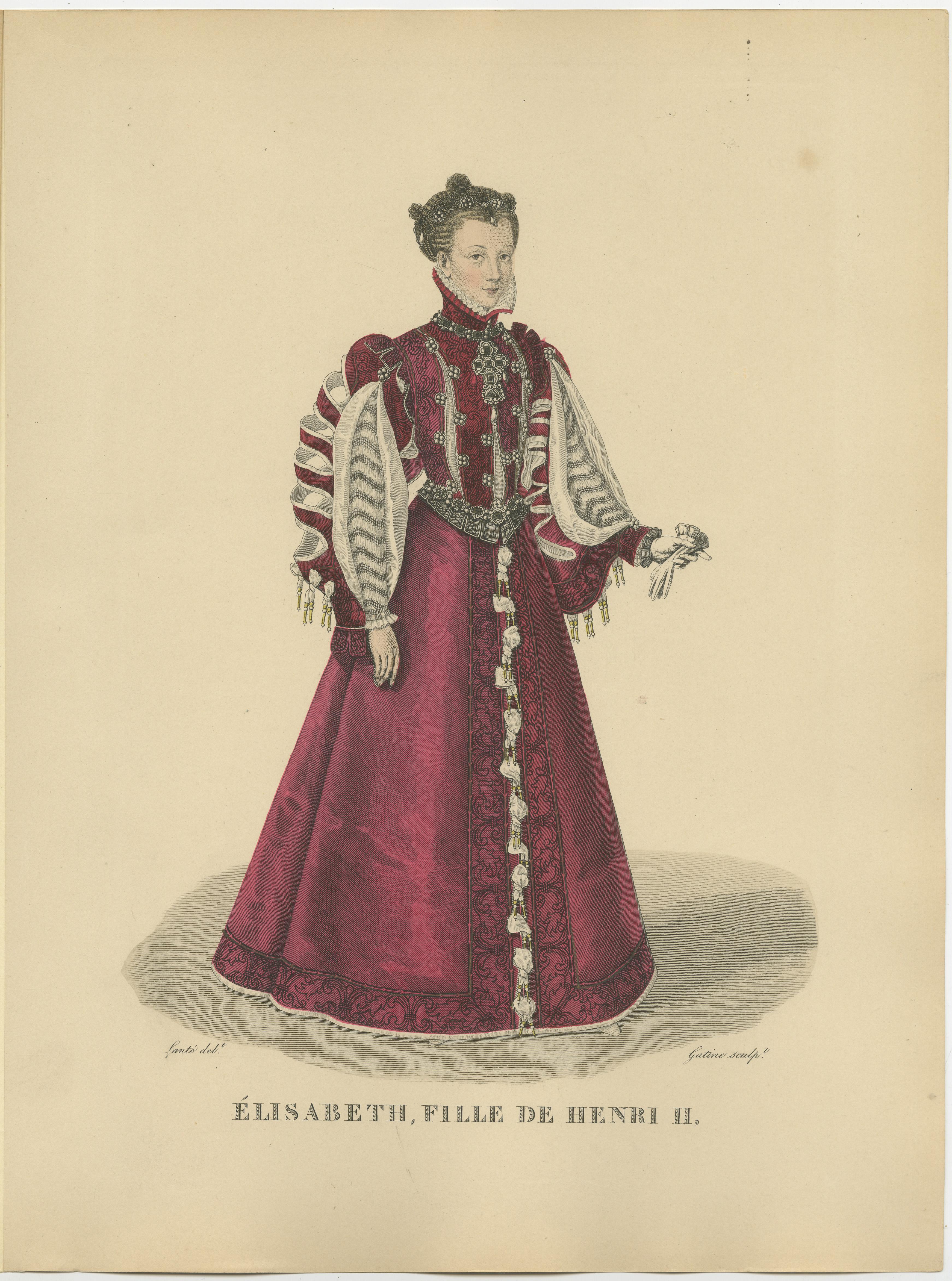
Hand Colored Engraving of Elisabeth of Valois, Daughter of Henry II, 1900
€ 220
One of a kind: this is the sheet in the photographs. Ships from Langweer, the Netherlands.
Date
1900
Technique
Engraved
Sheet size
33.5 × 25 cm (13.2 × 9.8 in)
Condition
Good
Reference
BG-13158-28
Condition
Original/contemporary hand coloring. General age-related toning, Minor wear and soiling, blank verso. Please study image carefully.
About this sheet
Antique print titled 'ELISABETH' Original antique print of Elisabeth, daughter of Henry II of France.
Elisabeth of France or Elisabeth of Valois (2 April 1545 – 3 October 1568) was Queen of Spain as the third spouse of Philip II of Spain. She was the eldest daughter of Henry II of France and Catherine de' Medici.
Elisabeth was born in the Château de Fontainebleau. She was raised under the supervision of the governor and governess of the royal children, Jean d'Humières and Françoise d'Humières.
Elisabeth's childhood was spent in the French royal nursery, where her father insisted she share her bedroom with her future sister-in-law, Mary, Queen of Scots, who was about three years older. Although Elisabeth had to give precedence to Mary (since Mary was already a crowned queen), the two would remain close friends for the rest of their lives.
Her lady-in-waiting, Claude de Vineulx, accompanied her to Spain and often wrote reports of Elisabeth's health to Catherine. She was described as being shy, timid and very much in awe of her formidable mother, even as there is evidence in letters that Catherine was tender and loving towards her. While it is acknowledged that her sister Margaret and her future sister-in-law Mary were both prettier than she, Elisabeth was nevertheless still considered one of Catherine's attractive daughters.
In 1550, Elisabeth's father, Henry, began negotiations for her marriage to Edward VI of England.This arrangement brought condemnation from Pope Julius III who reportedly stated that he would excommunicate both[a] if they married.Henry, undeterred, agreed to a 200,000 ecus dowry, which became irrelevant upon Edward's death in 1553.
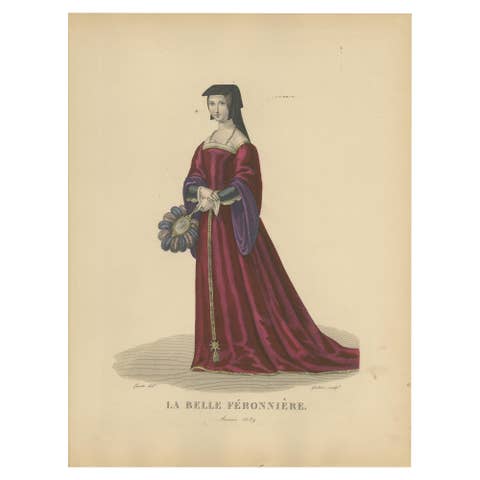
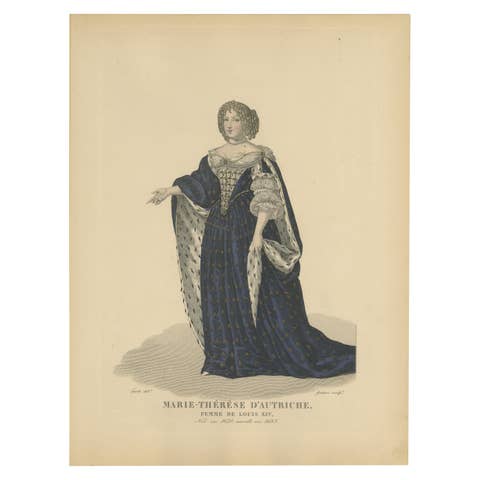
This print originates from ' LA MÉSANGÈRE, Pierre and LANTÉ, Louis Marie. Costumes des Femmes Françaises du XIIe au XVIIIe siècle. Paris: Librairie Charles Tallandier, 1900.
This beautiful work tracing changes in French costume from the 12th to 18th century, stunning folio-sized hand-colored engraved plates depicting period fashions on famous French women who were celebrated for their talent or their beauty in the relevant periods.