Cold Harbour Thames Street London, Boydell Engraving, 1818
€ 399
Original antique · The actual sheet photographed · Certificate of authenticity on request · Sold unframed · Worldwide shipping from € 15 (rates)
Date
1818
Mapmaker / artist
Published by Boydell & Co., London, dated 1818
Technique
Engraving
Sheet size
25 × 30.9 cm (9.8 × 12.2 in)
Condition
Good
Reference
BG-14273-8
What the condition grades mean
Excellent
Bright and clean, with no faults worth mentioning.
Very good
Only light signs of age, such as faint toning.
Good
Normal signs of age for a sheet of this period: toning, some foxing, small marks or neat old repairs.
Fair
Clear faults such as staining, tears or repairs, priced to match.
Every fault we see is written in the condition note, and the whole sheet is shown uncropped in the photos.
Condition
Good antique condition with even age toning and light scattered foxing. Strong impression with clear detail. Margins appear complete.
About this sheet
Cold Harbour Thames Street London, Boydell Engraving, 1818
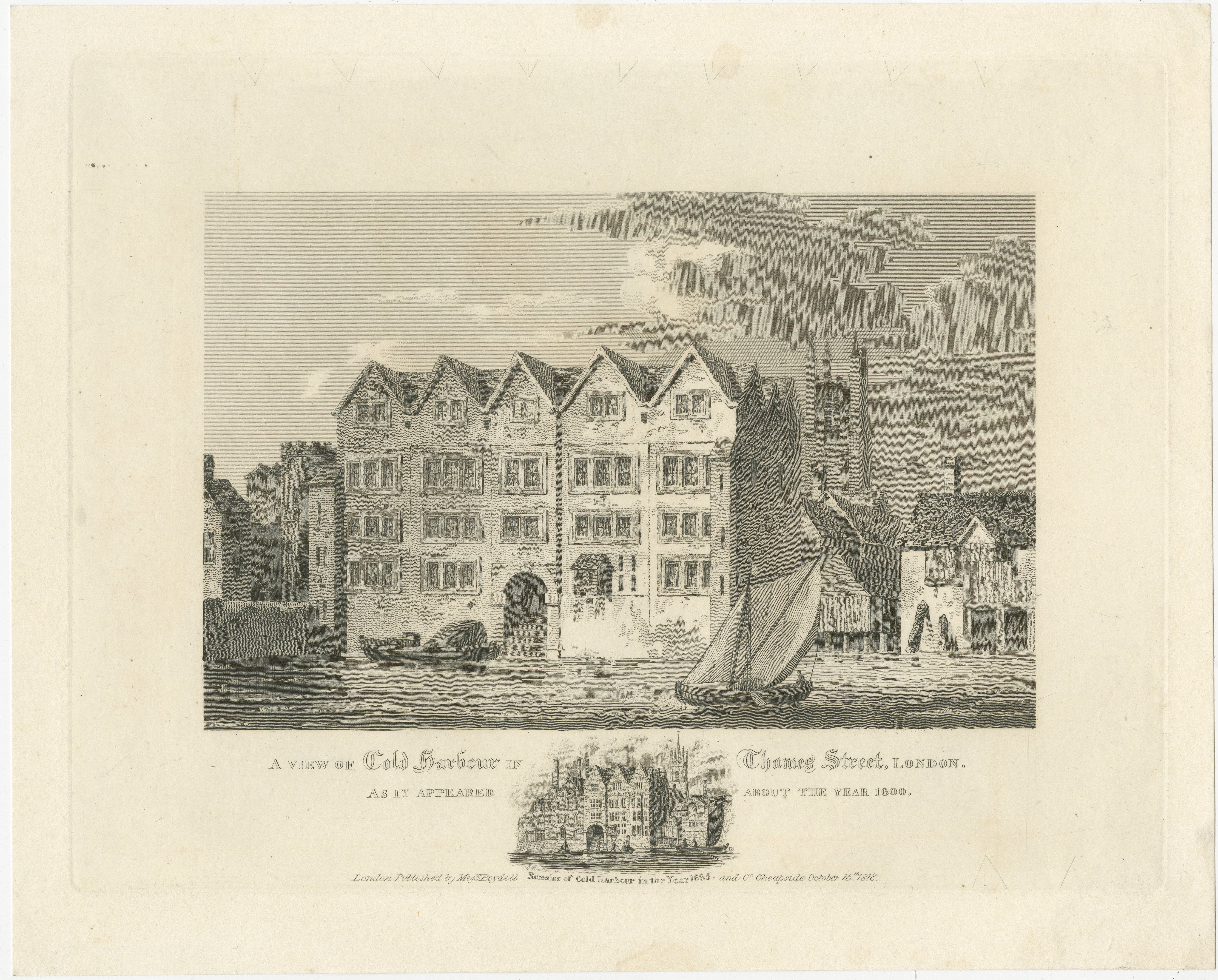
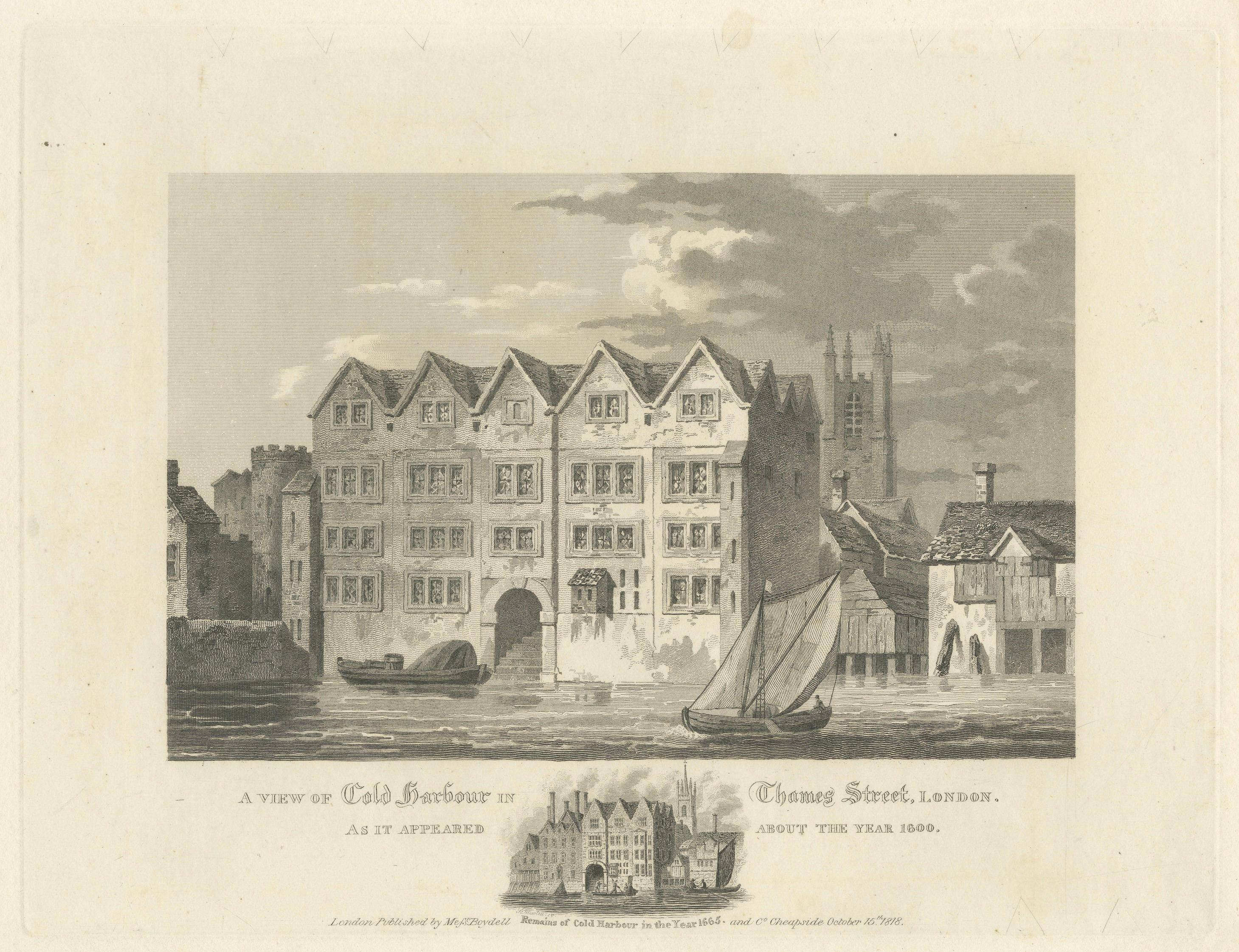
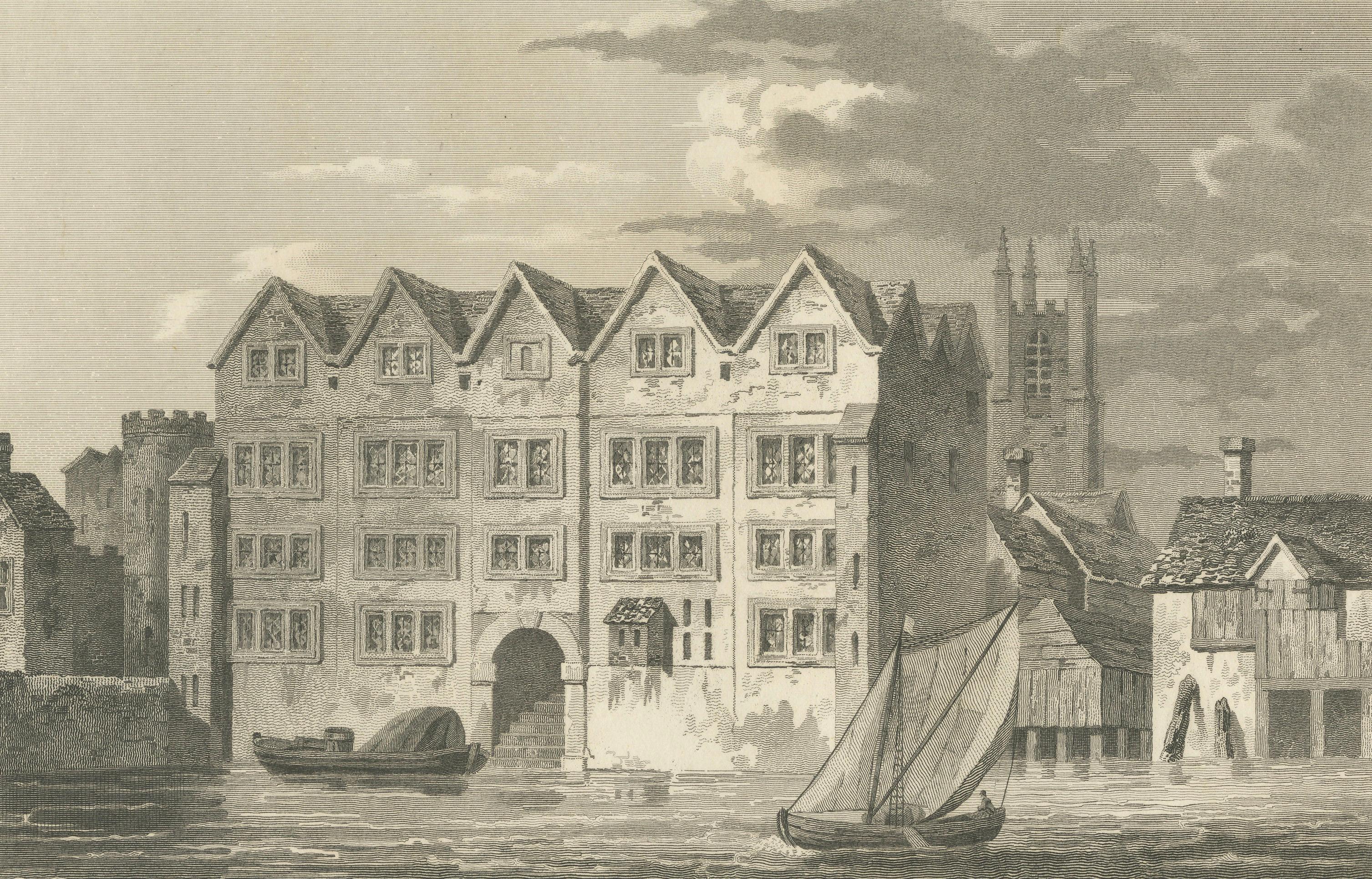
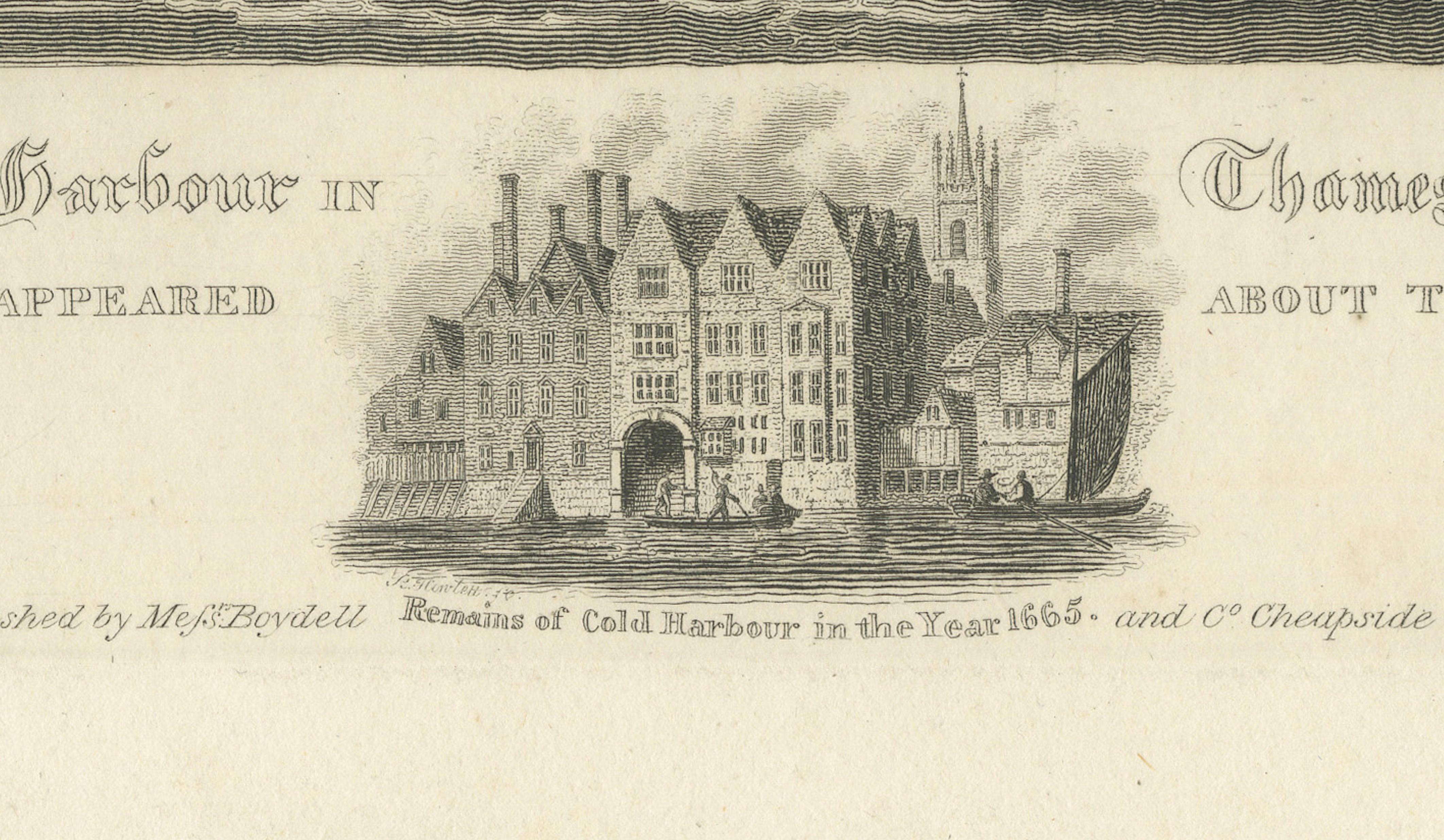
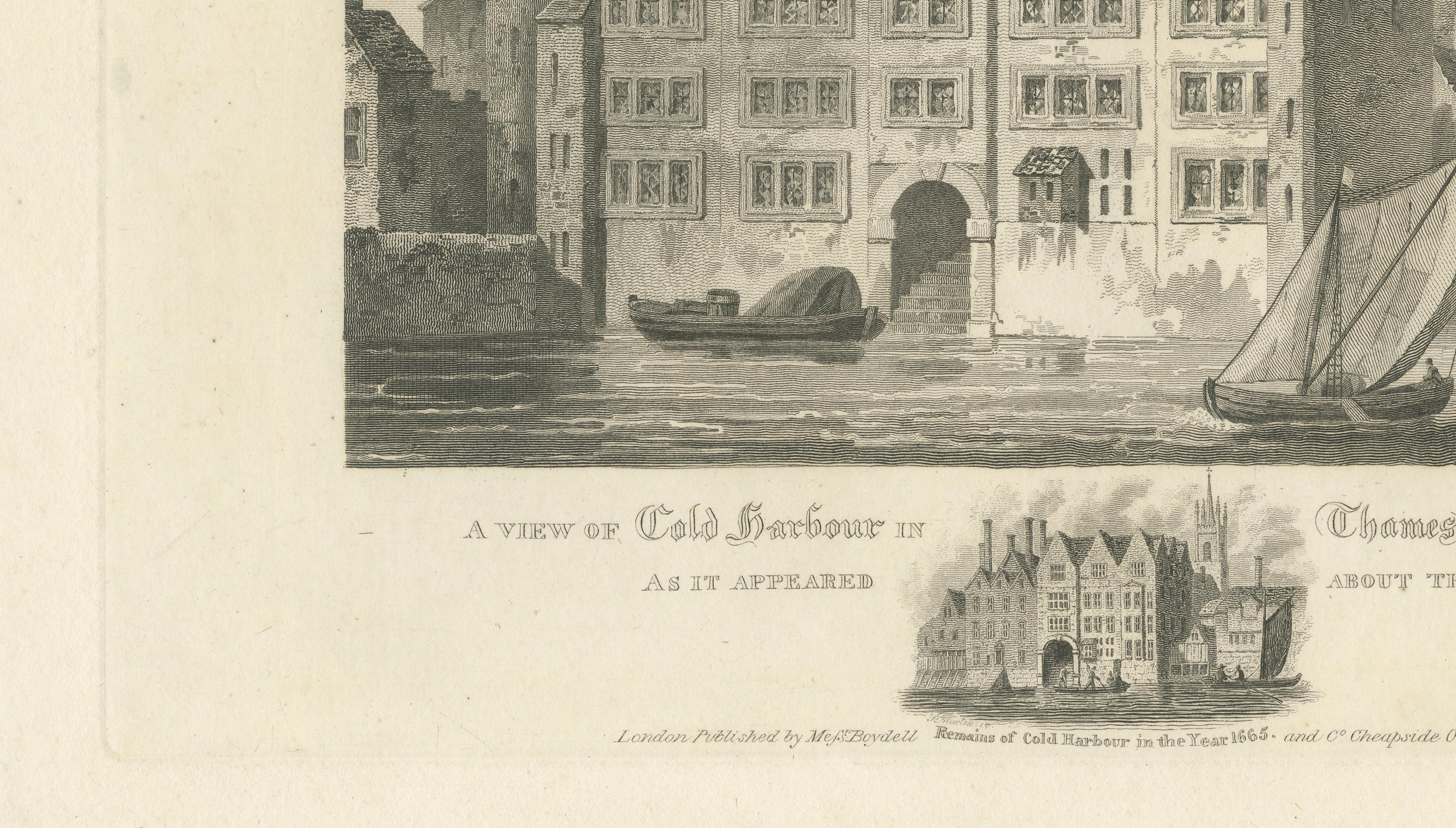
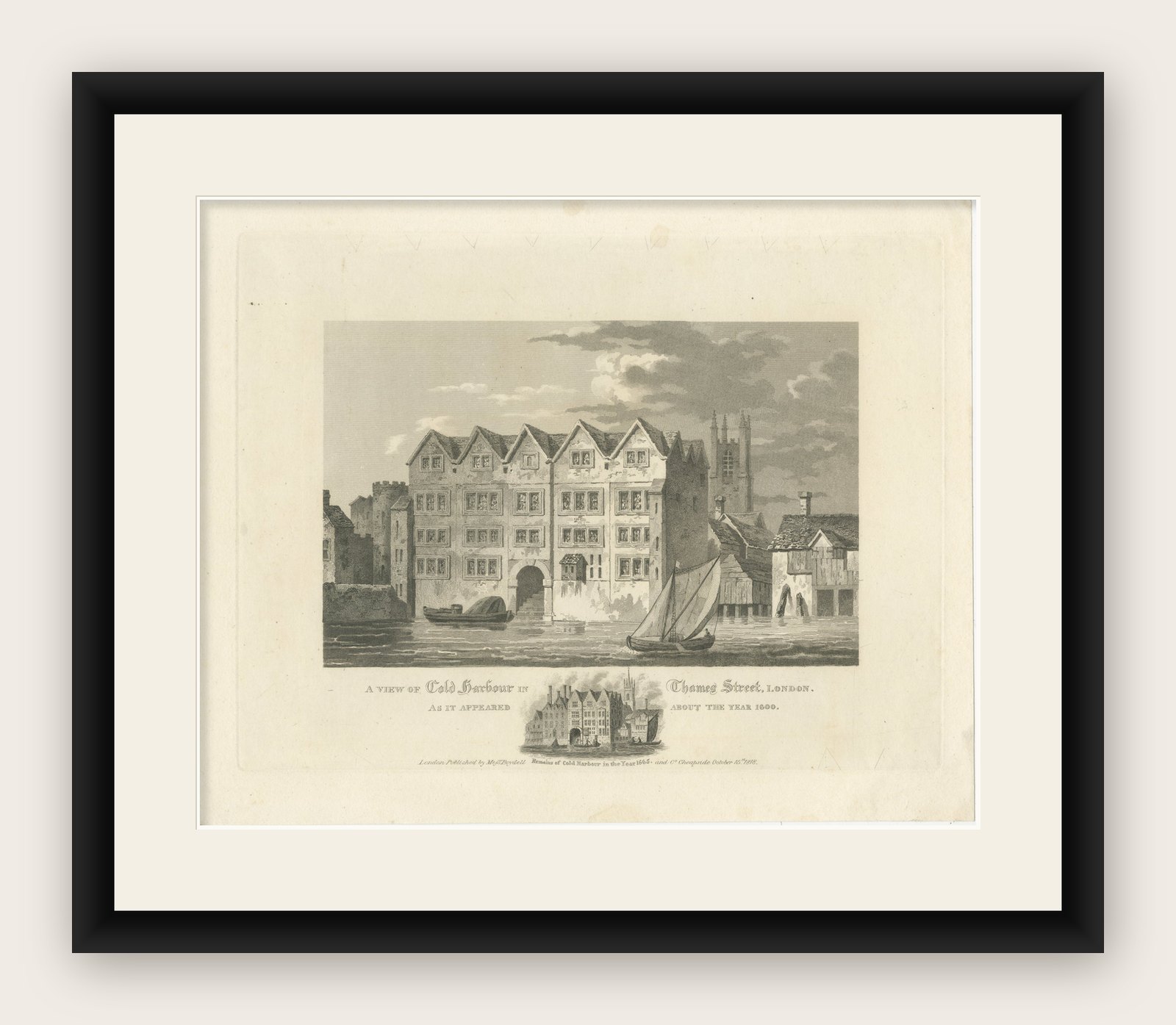
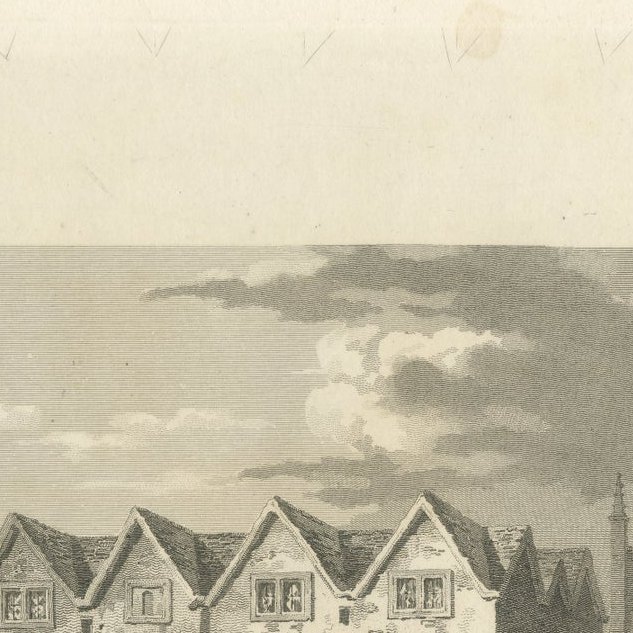
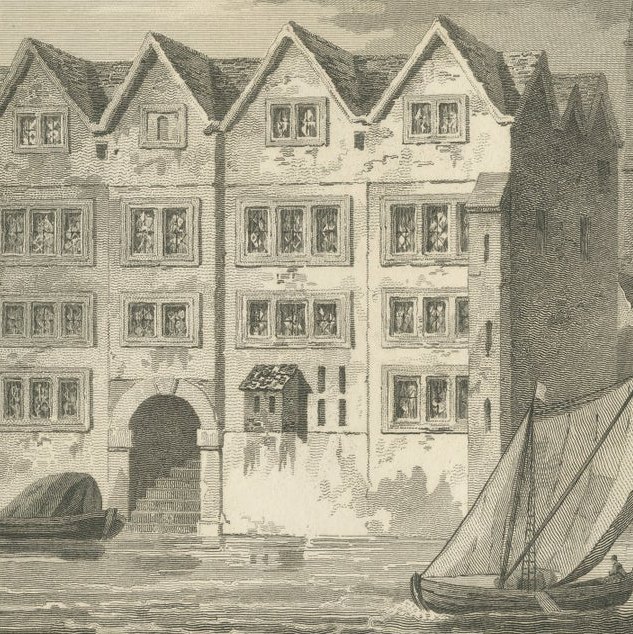
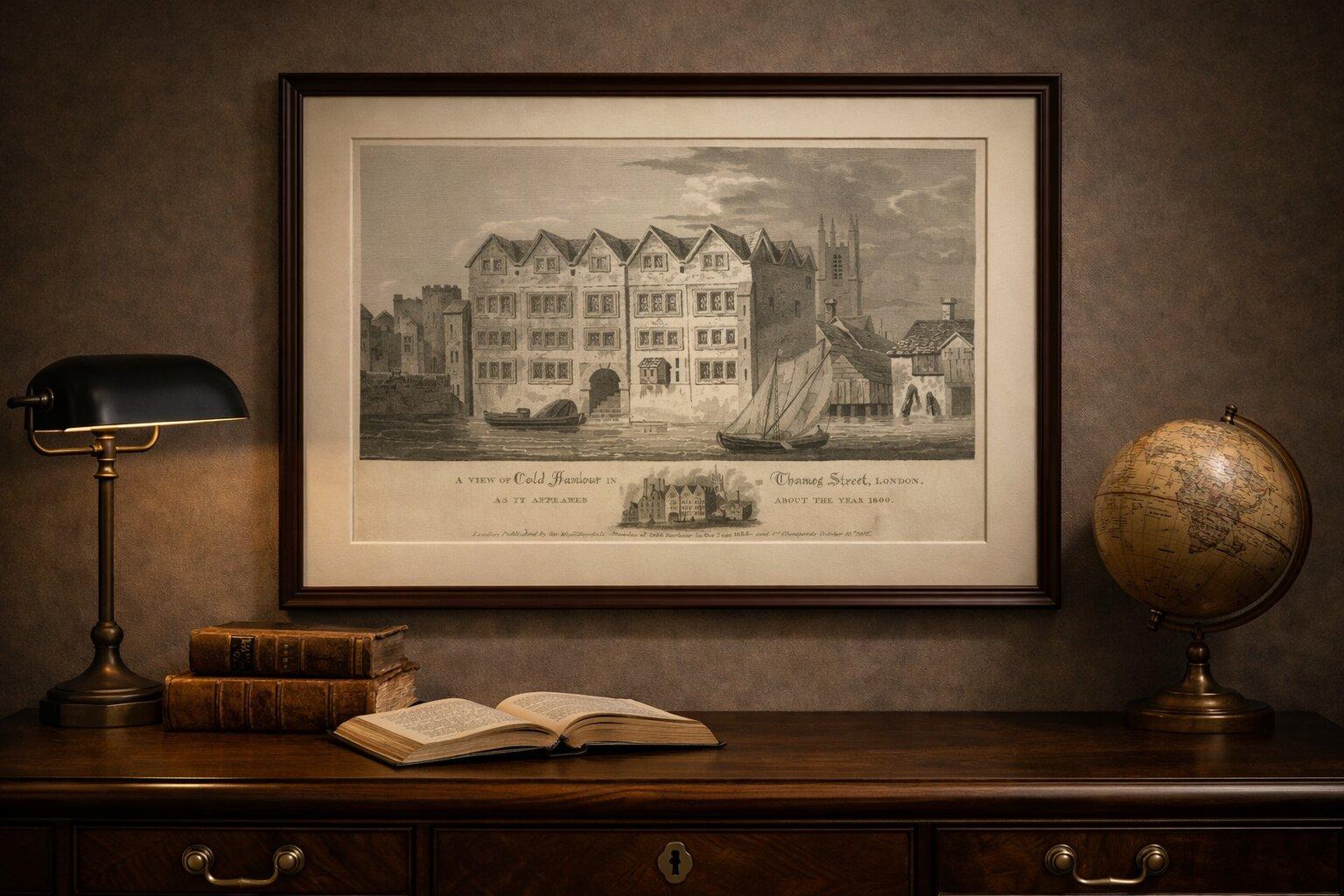
This finely engraved antique print depicts the historic riverside mansion known as Cold Harbour, situated along Thames Street in the City of London, as it appeared around the year 1600. The composition presents a rare reconstruction of Tudor London’s riverfront architecture, with the imposing gabled façade of the residence rising directly from the Thames.
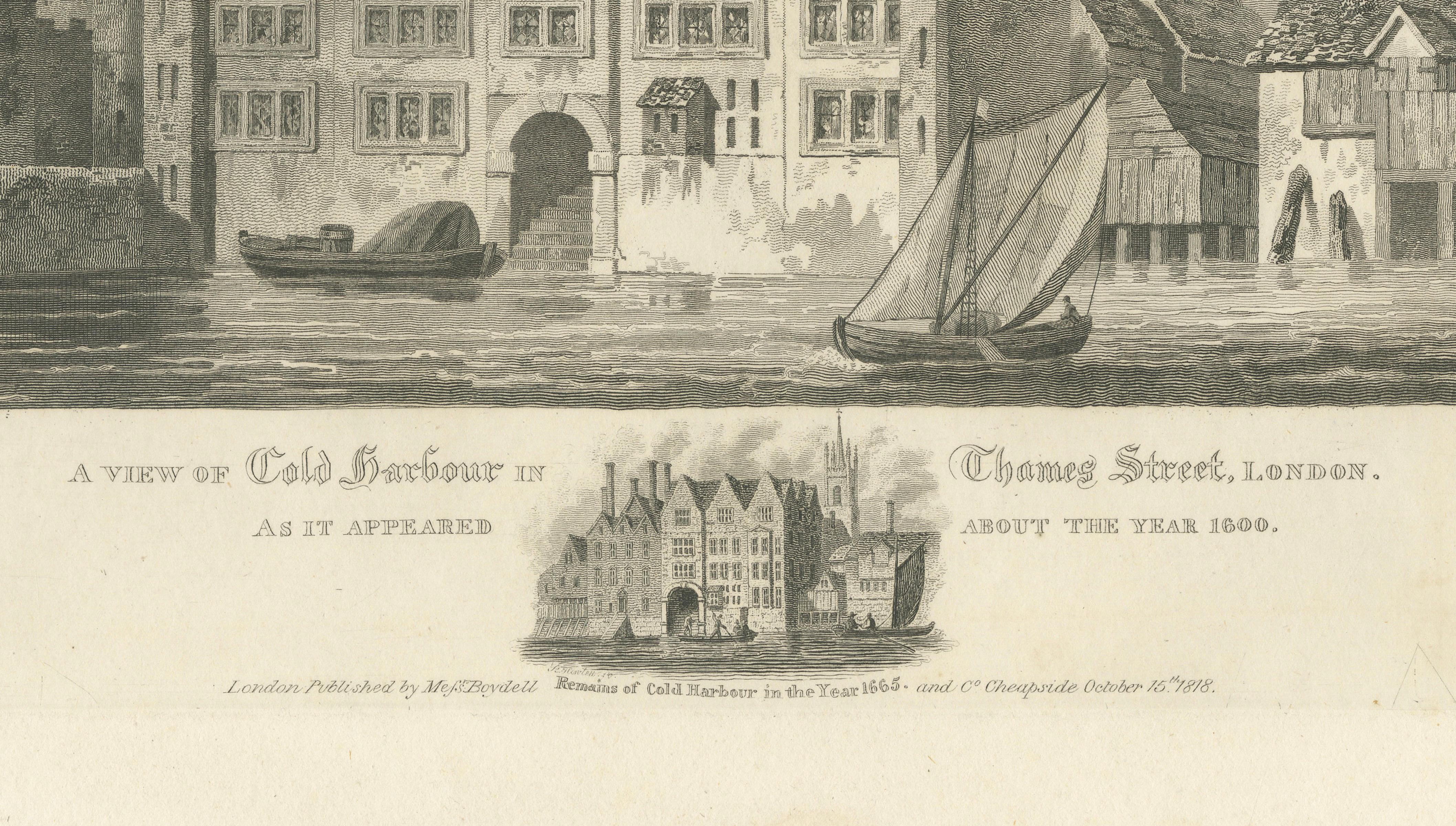
The plate is clearly dated October 15th, 1818 and published by Messrs. Boydell, Cheapside, London, placing it within the circle of Boydell & Co., one of the most important print publishing houses in late 18th- and early 19th-century England. Boydell editions are well regarded for their quality engraving and historical subject matter.
Cold Harbour was one of the most significant noble residences on the Thames during the late medieval and Tudor periods. Occupied by prominent aristocratic figures and royal officials, it functioned as both a prestigious home and an important riverside hub. Its direct access to the Thames is emphasized in the print by the presence of small sailing vessels and working river traffic in the foreground.
The building itself, with its distinctive stepped gables, mullioned windows, and central watergate, reflects the architectural character of London before the Great Fire of London, which ultimately destroyed the structure along with much of the surrounding city.
Stylistically, the engraving belongs to the early 19th-century antiquarian tradition, combining documentary precision with a refined aesthetic. Compared to later Victorian restrikes, Boydell impressions are typically sharper and more desirable to collectors.
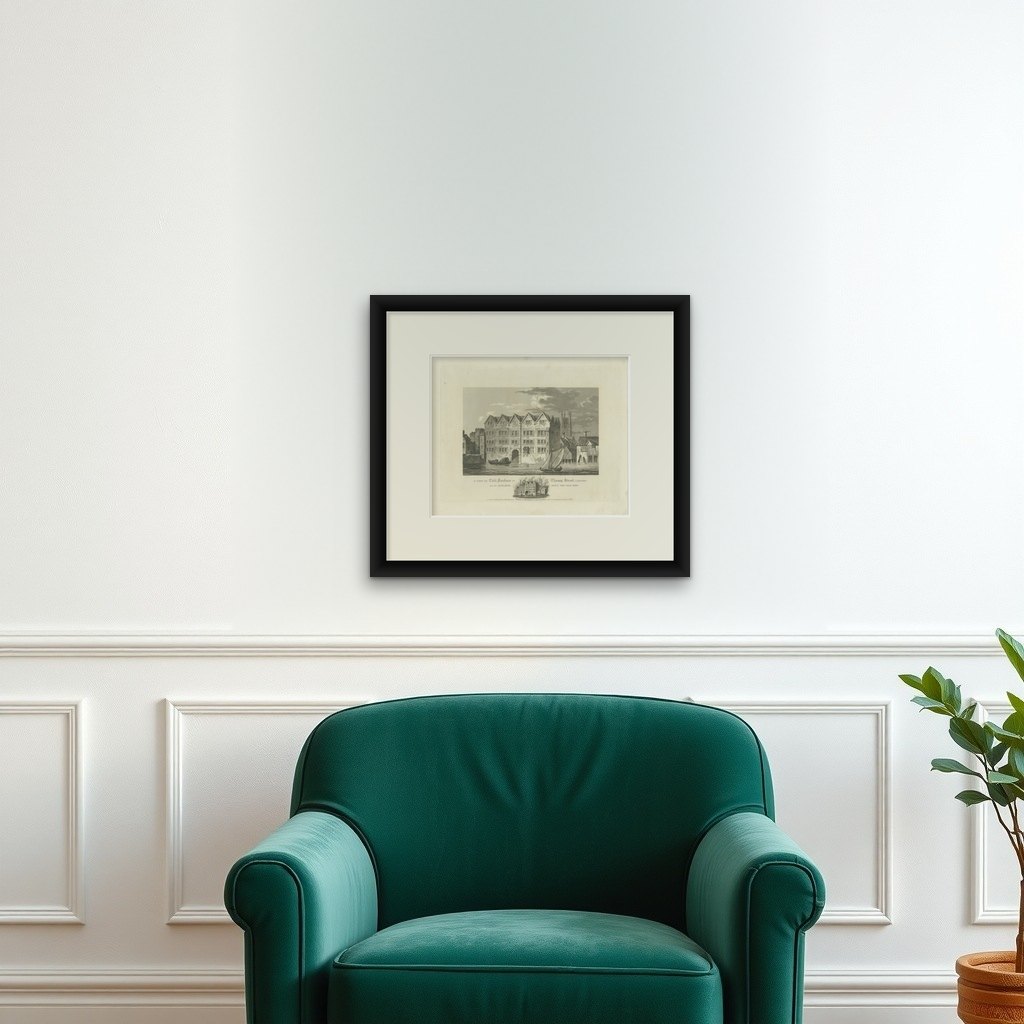
Framing tips: Ideal for a classic or study interior. A warm ivory mount paired with a dark wood or ebonized frame will enhance the tonal depth and architectural detail.