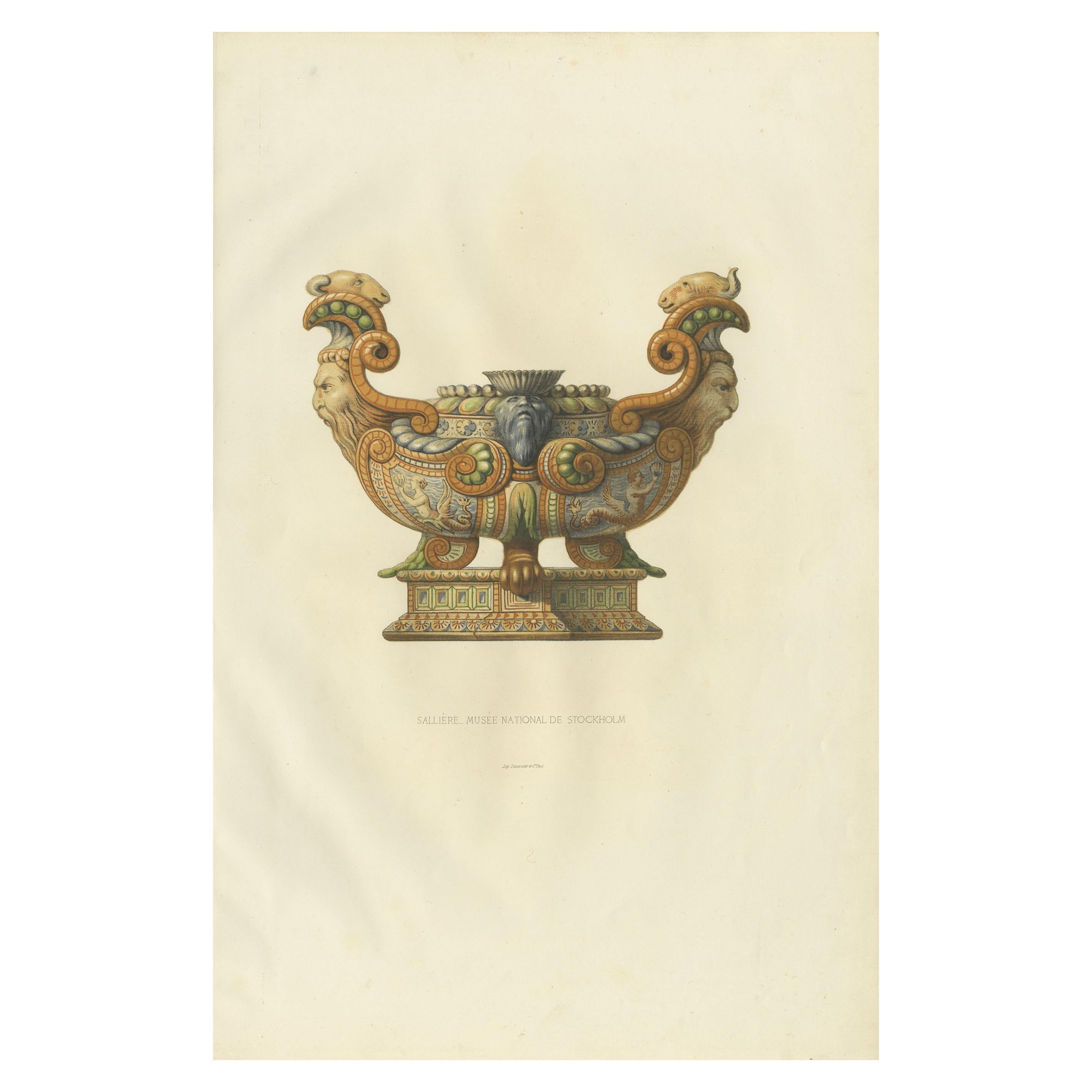
Antique Lithograph of Italian Faience Salière – Nationalmuseum Stockholm, 1869
€ 450
One of a kind: this is the sheet in the photographs. Ships from Langweer, the Netherlands.
Date
1869
Sheet size
53 × 35 cm (20.9 × 13.8 in)
Reference
BG-12770-96
Condition
Very good, with general age-related toning and some light scattered foxing, mainly in the margins. Plate mark visible. Strong and vibrant impression with original color preserved. Please study the image carefully.
About this sheet
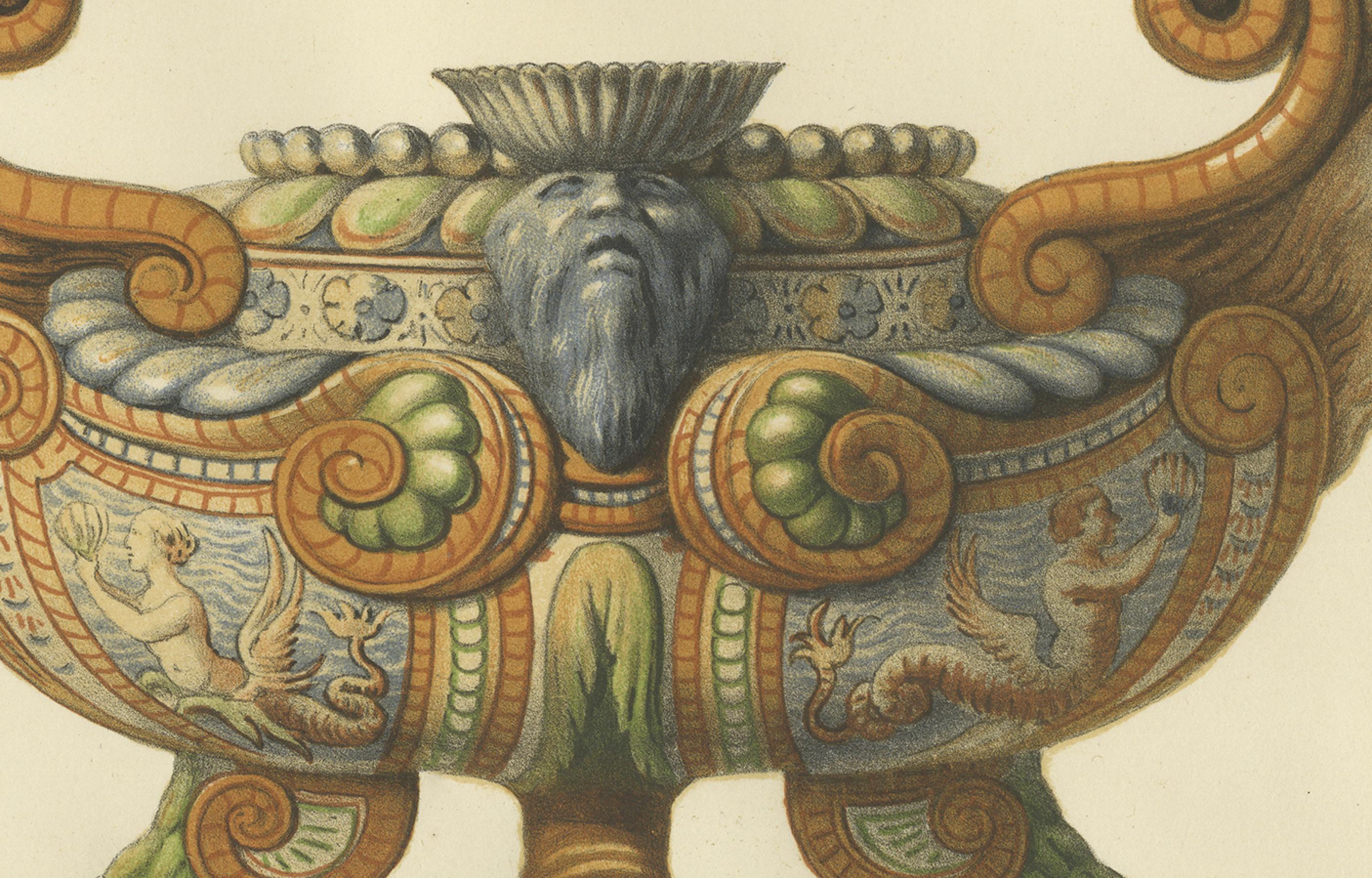
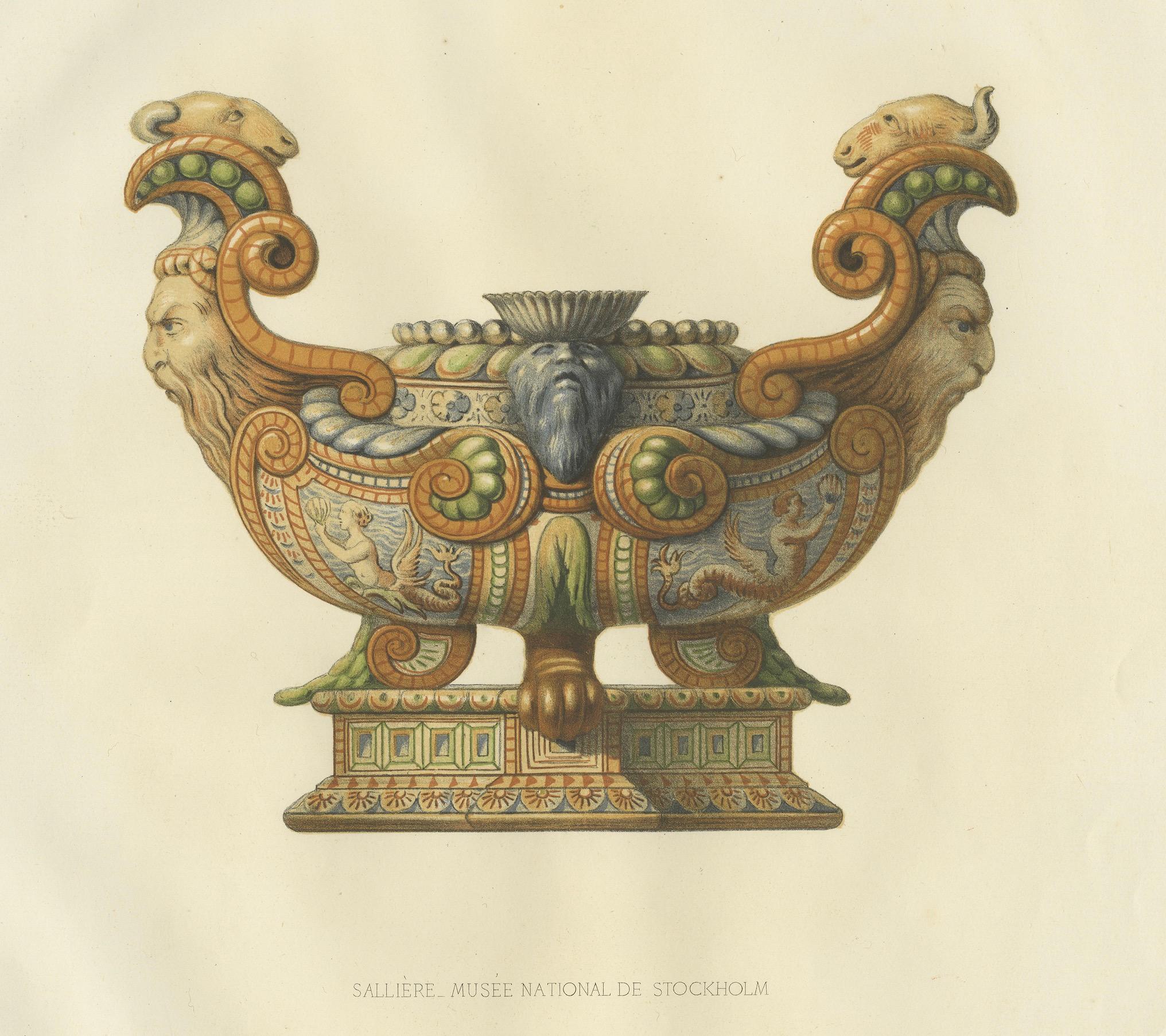
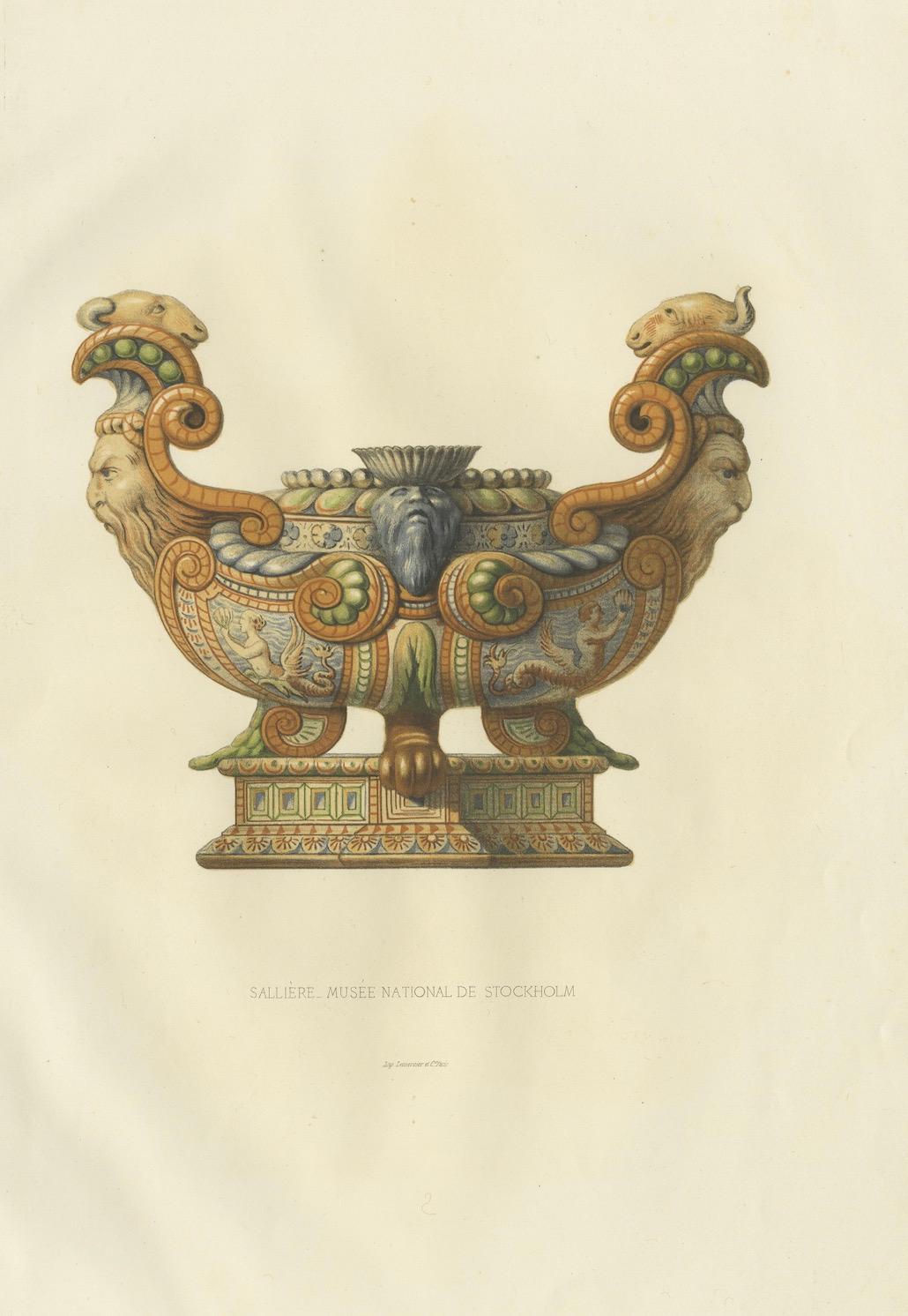
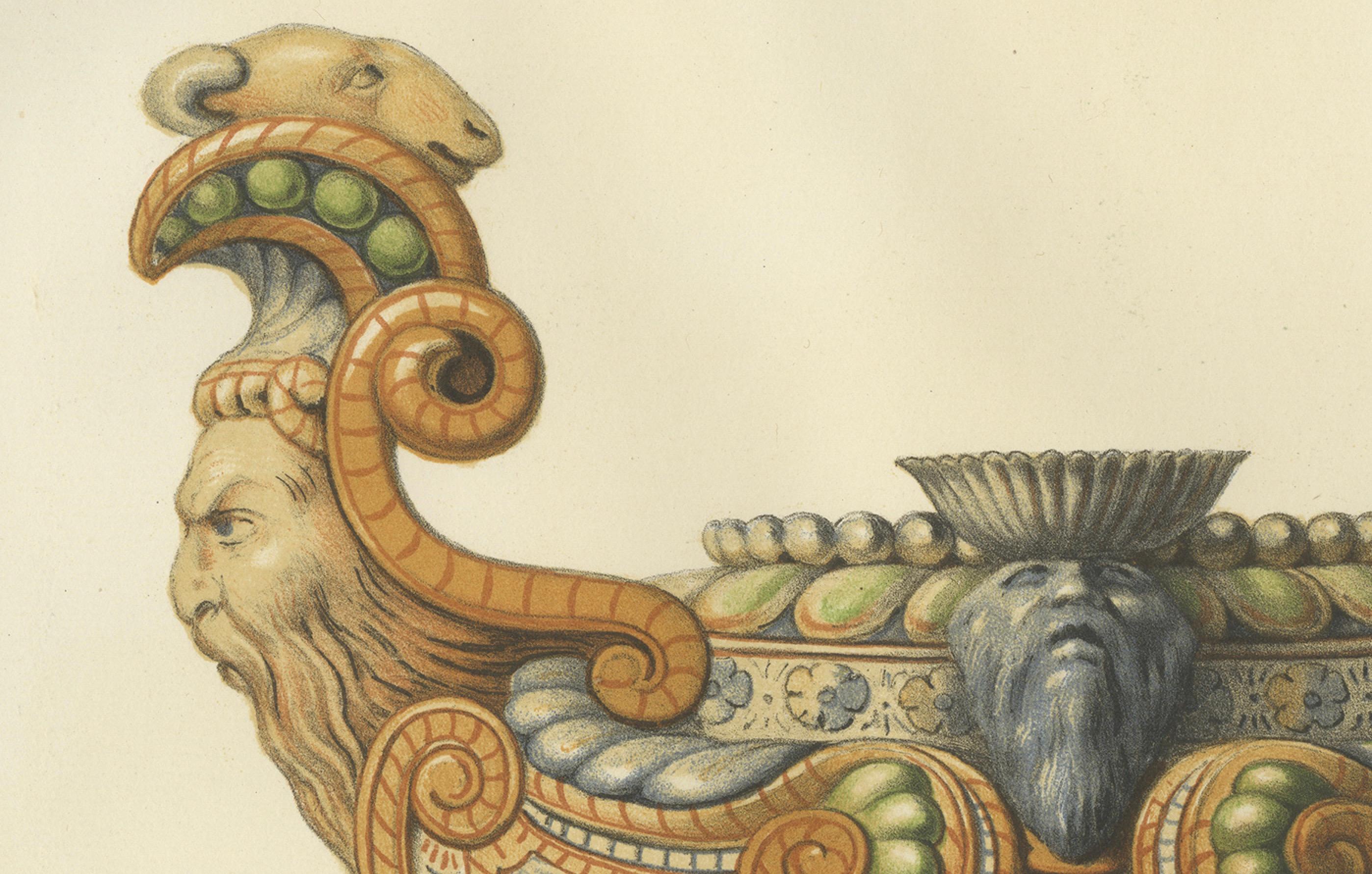
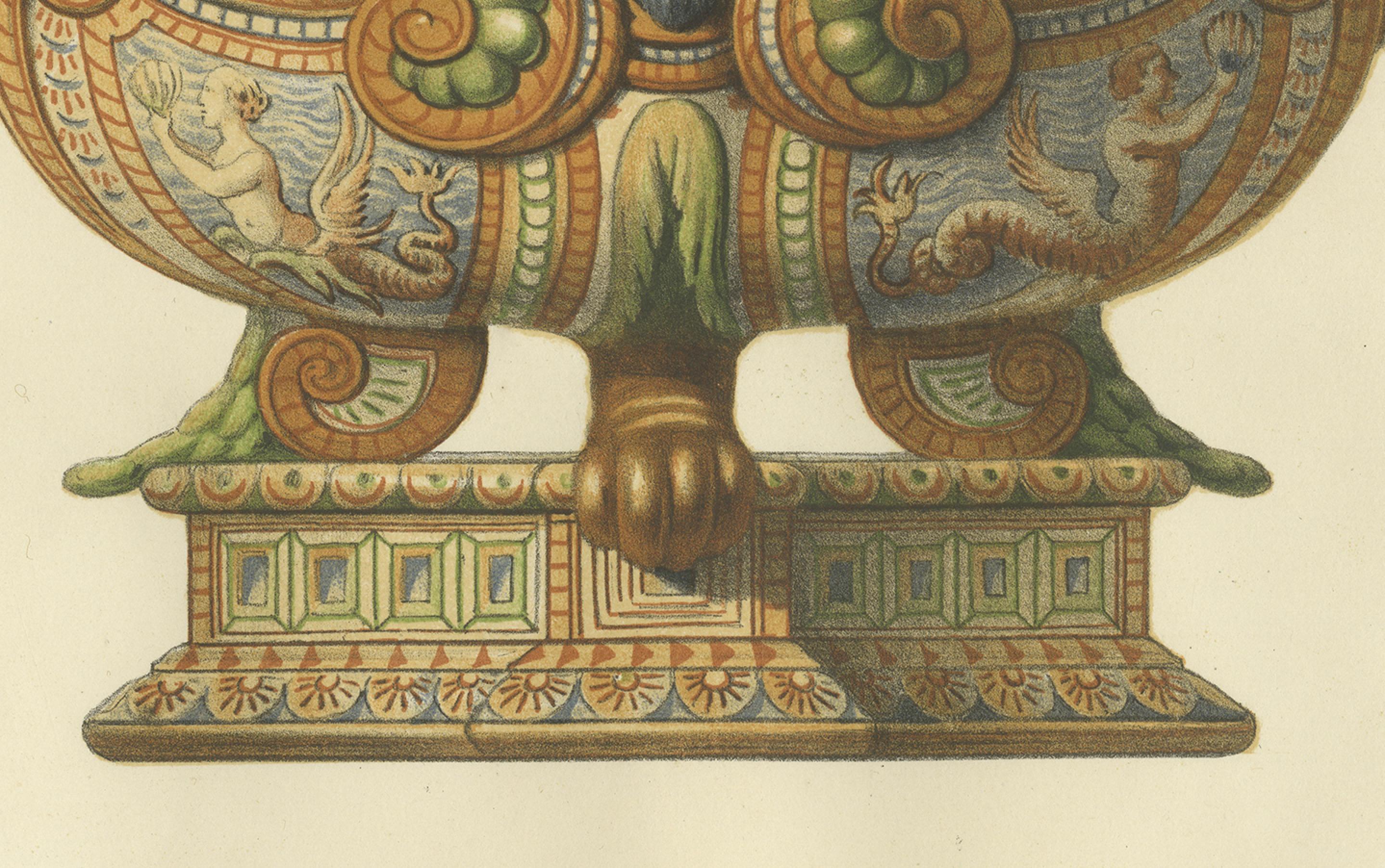
Antique Lithograph of Italian Faience Salière, Nationalmuseum Stockholm, 1869
Large format antique lithograph depicting a richly ornamented Italian faience salière (salt cellar) in the grotesque style, preserved in the collection of the Nationalmuseum in Stockholm. The vessel is conceived as a sculptural masterpiece: its sides are adorned with mythological and animal motifs, while human and leonine masks project dramatically from the handles and body. The form combines architectural solidity with imaginative Renaissance fantasy, making it both functional and decorative.
This image originates from Henri Delange’s 'Recueil de Faïences Italiennes des XVe, XVIe et XVIIe Siècles' (Paris, 1869), one of the most important 19th-century catalogues documenting Italian tin-glazed pottery. The volume recorded masterworks of maiolica held in leading European collections, ensuring their preservation in print for both scholarship and connoisseurship. The grotesque decoration reflects the Renaissance revival of ancient Roman wall paintings discovered in Nero’s Domus Aurea, where whimsical hybrids, arabesques, and fantastical faces inspired new ceramic artistry across Urbino, Faenza, and other centers of production.
Condition: Very good, with general age-related toning and some light scattered foxing, mainly in the margins. Plate mark visible. Strong and vibrant impression with original color preserved. Please study the image carefully.
Framing tips: This lithograph will be best highlighted by a broad ivory or cream mount, which will bring out the richness of the grotesque ornamentation. A gilt frame will echo the golden tones of the decoration, while a darker wooden frame will provide a strong contrast to the vivid palette. For an elegant accent, a double mat with a thin green or terracotta inner line can draw out the Renaissance colors.
Technique: Color lithograph Maker: Henri Delange, Paris, 1869